Feeds:
Posts
Comments

Archive for the ‘Offshore Energy – General’ Category

There is tremendous benefit from collaboration between governments and between industry and governments working together on a global scale. Half of the remaining oil and gas resources are located offshore, and the demand for energy continues to grow. While each country may have unique societal demands that must be addressed, we also share many common technical and environmental challenges as we continue to explore the deep water. Carolita Kallaur, 2001, London

Carolita Kallaur

Carolita Kallaur’s words ring stronger today than ever, and the need for international cooperation on offshore safety issues has never been clearer. Carolita, who directed the US offshore oil and gas program at the end of her outstanding career with the Department of the Interior, was the spirit of offshore safety.  Her highest priorities were improving international standards and working together on safety and pollution prevention matters, and she worked tirelessly to promote these objectives.

Carolita also believed in recognizing outstanding organizations and individuals who demonstrated exceptional commitment to safety achievement.  She was instrumental in establishing an awards program in Houston that honored these outstanding leaders.

Shortly after she retired in 2002, Carolita contracted amyotrophic lateral sclerosis, an incurable nervous system disorder that is commonly known as ALS or Lou Gehrig’s disease.  She died just before Christmas in 2003. Carolita’s indomitable spirit lives on with an awards program that honors outstanding offshore safety leaders. These awards were first presented at the International Regulators’ Offshore Safety Conference in London in 2005, and were again presented at the second conference in Miami in 2007.  The International Regulators’ Forum has completed its latest round of deliberations, and will again be presenting Carolita Kallaur Awards at the Vancouver conference on 18 October.

I look forward to joining international leaders in honoring Carolita’s legacy and recognizing the deserving winners of these prestigious safety awards.  See you in Vancouver!
Read Full Post »

While unveiling their “Guiding Principles,” Kathryn Klaber, Executive Director of the Marcellus Shale Coalition, said this:

We’re all in this together. We’re all only as good as whoever had a mistake this morning.

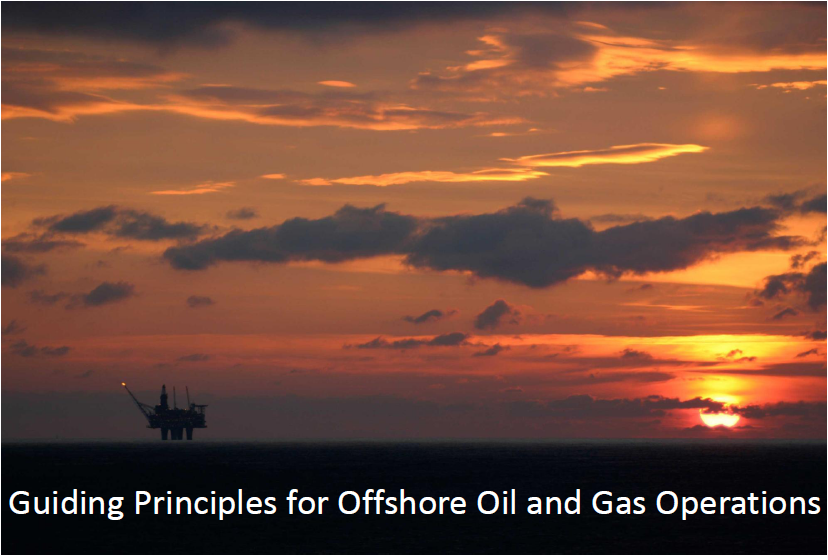
That this statement also applies to offshore oil and gas operations should now be painfully obvious to all.  Each company’s success is dependent upon every other company’s performance, not just in your region, but anywhere in the world.  The offshore industry needs to clearly and succinctly describe its universal commitment to safety and environmental protection.  Sweeping principles that guide all operations should be developed and endorsed by every operator and contractor.  The Marcellus document is a good starting point, but more details may be needed. Commitments to sharing and analyzing verified incident data, participating in standards development, assessing new technology, and sponsoring safety and environmental research should be included. Now is the time to act.  Who will provide the regional and international leadership?

Read Full Post »

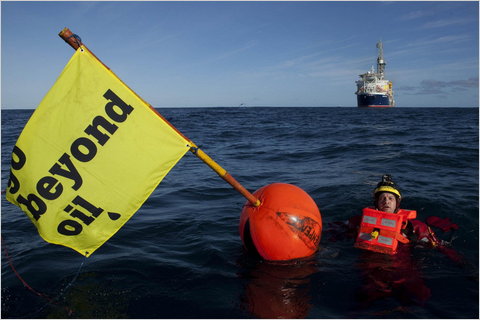
Greenpeace Photo

Despite protests, the UK has approved Chevron’s exploratory well in 1640′ of water west of the Shetland Islands.

It was a choice between producing oil and gas here in U.K. waters, where we have one of the most robust safety and regulatory regimes in the world, with all the economic benefits that will bring, or paying to import oil and gas from elsewhere. UK Department of Energy and Climate Change statement

It’s pretty hard to argue with that logic.

Read Full Post »

Today, BOEM released fact sheets describing the Drilling Safety and Safety and Environmental Management (SEMS) rules. The complete documents will be available for review as soon as they are published in the Federal Register.

Based on the fact sheet, the Drilling Safety Rule does not appear to include any significant surprises.  The rule seems to be generally consistent with the recommendations in Secretary Salazar’s 27 May Safety Measures Report to the President (the “30-Day Report”).  This is an Interim Final Rule that will be effective upon publication.

According to the fact sheet, the SEMS Rule will incorporate all elements of API RP 75 into BOEM regulations.  This is an improvement, in my opinion, from the proposed rule which incorporated only 4 elements of RP 75.  The effective date for this rule is not indicated in the fact sheet.

Read Full Post »

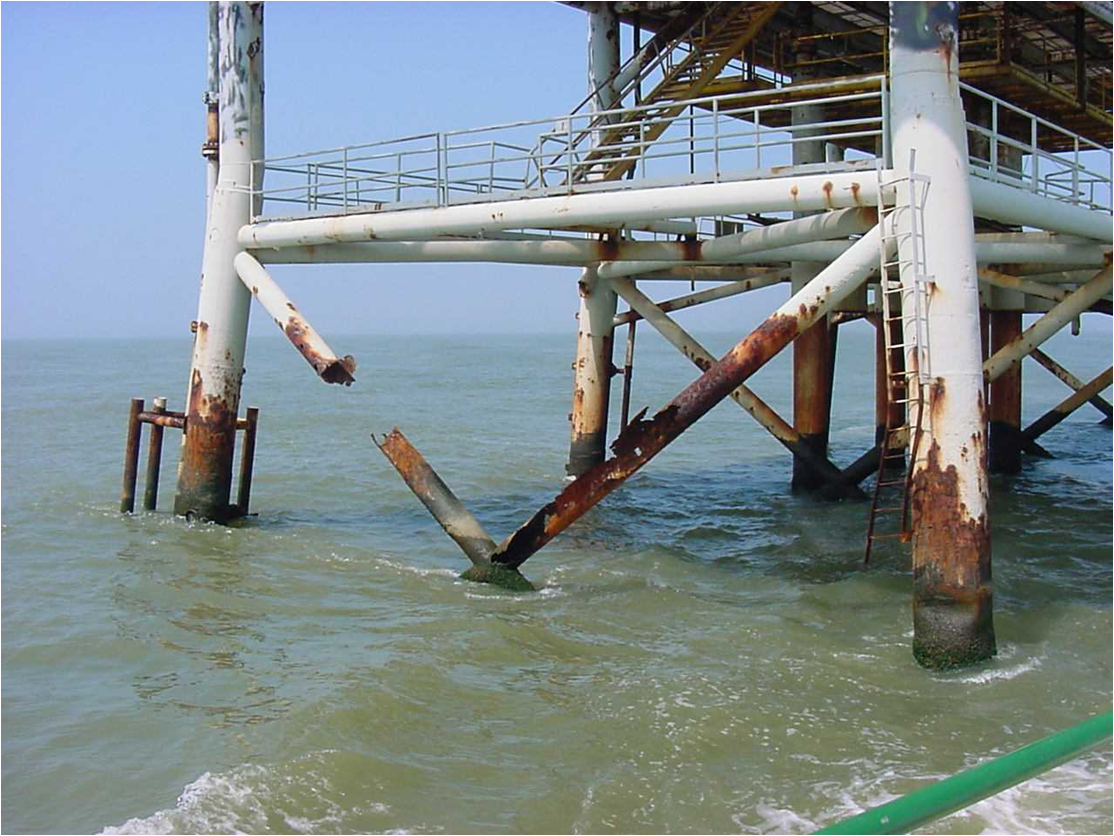
The Bureau of Ocean Energy Management, Regulation, and Enforcement (BOEMRE) has issued a Notice to Lessees and Operators (NTL) that specifies deadlines and other requirements for plugging and abandoning non-producing wells and removing platforms that no longer have utility. In my view, this regulatory action is necessary, appropriate, and consistent with authority provided in the Subpart Q (for quit :)) Decommissioning regulations. Post-hurricane experiences have demonstrated the enormous costs, operational challenges, and safety and environmental risks associated with plugging damaged wells and removing toppled platforms.

Read Full Post »

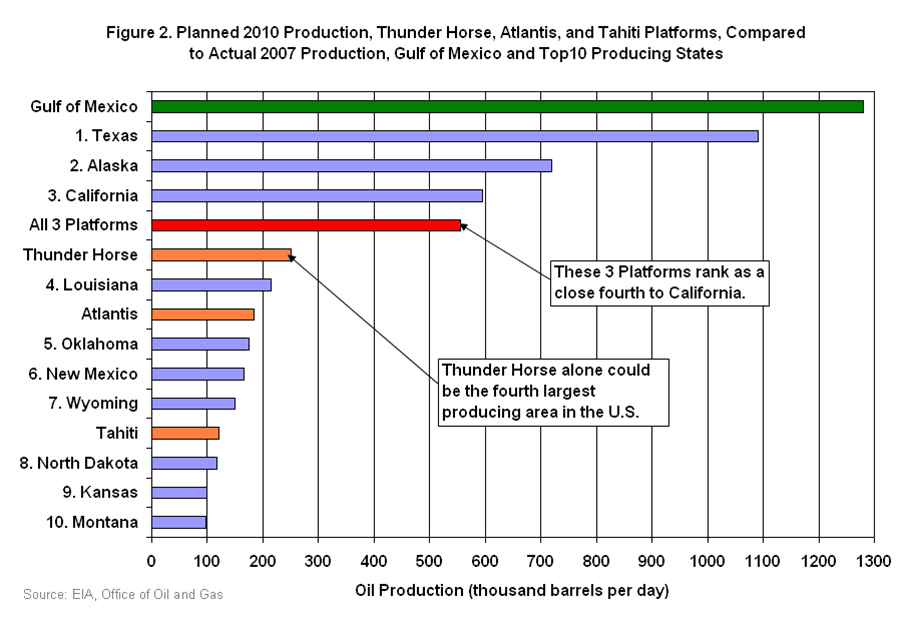
  1. 80% of Gulf of Mexico oil production or a quarter of total US production is from leases in greater than 1000 feet of water.
  2. Per the EIA chart above, a single deepwater Gulf platform (Thunderhorse) surpasses all but four states in oil production.  3 deepwater platforms outproduce all but 3 states.
  3. Total oil production from deepwater facilities approximates that of the State of Texas.

Read Full Post »


Vancouver, BC, Canada


The program for the International Regulators’ Offshore Safety Conference has been updated to include keynote presentations on the Montara and Macondo blowouts, and roundtable sessions that will address the lessons learned and how they should be applied by operators, contractors, and regulators.  The presentations, discussions, and debates are sure to be thought provoking and informative.  If you would like to participate, visit the conference website for more information.

Read Full Post »

My experience is that you unfortunately often need a major accident or even a disaster to engender political support for streamlining regulatory regimes.   Moreover, history shows that major accidents apparently must happen in your own jurisdiction to have such an effect on political support. Magne Ognedal

Magne’s astute comment repeatedly came to mind while I was reading the Montara testimony.  Our political systems are good at reacting, but are not so good at making tough decisions when the spotlight is elsewhere.  Crises provide the political capital needed to make major changes, but seldom yield the best solutions.

Will the Montara blowout provide the impetus needed for other countries to review and improve their offshore regulatory regimes?  These Montara issues should be of concern to all of us:

  1. Multiple regulators with unclear divisions of responsibility
  2. Regulatory gaps and overlap
  3. Ineffective use of standards and best practices
  4. Lack of clarity regarding operator and contractor responsibility and accountability
  5. Balancing goal-setting with prescription
  6. Monitoring operations effectively without taking “ownership”
  7. Applying regulatory resources efficiently and where the risk is greatest
  8. Absence of meaningful performance measures for operators and regulators
  9. Authority to remove rogue operators
  10. Ability to update standards and regulations in a timely manner
  11. Weaknesses in training programs for operators, contractors, and regulators

I’ll stop at ten (now eleven :)).

Many of these issues will be discussed at the International Regulators’ Offshore Safety Conference in Vancouver (18-20 October). I hope you plan to attend!

Read Full Post »

Given the complicated situations that can occur, I think that the key is in understanding what can happen on a particular well, given the well geometry and rig specifics, such that communications with the crew are simple and focused.  The key is playing the “what if” games before a real incident occurs. ~ Colin Leach

In light of BOE’s interest in drilling safety, we thought we would ask a few questions to Colin Leach, a well control expert and a partner in Argonauta Energy Services.   Colin has over 26 years of upstream experience with an emphasis on deepwater drilling, and is internationally recognized for the depth and breadth of his understanding of drilling systems.  Read Colin’s insightful comments here.

Read Full Post »

Mr Mueller likens the role of cementers in well construction to that of cornerbacks in football: “When we fall down and someone passes for a touchdown, everyone sees it. … When there’s a failure (in cementing), it’s typically quite noticeable and costly, even catastrophic. … You have to always ask yourself, ‘What haven’t I thought about? What can go wrong? If it does go wrong, how can we fix it?’ ”

In the wake of Montara, I recommend that you read an excellent article in the latest edition of Drilling Contractor magazine about Dan Mueller, a cementing specialist for ConocoPhillips.  Having read hundreds of pages about the cementing issues that appear to be the root-cause of the Montara blowout, it was refreshing to see Mr. Mueller’s comments and learn more about his company’s commitment to safe and effective cementing operations.  While incidents like Montara rightfully attract much of our attention, most companies understand the importance of cementing and provide the resources necessary to ensure success.  As the article reminds us:

The high stakes at play – plus the increasingly hostile conditions under which wells are drilled today – means that preplanning on a well-by-well basis is crucial. Thermal modeling, wellbore stress modeling, hydraulics modeling, computational dynamics modeling – everything that can be done has to be done to make sure nothing gets overlooked. In today’s complex wells, Mr Mueller explained, anything that’s an “unknown” has the potential to damage the cement’s effectiveness.

Read Full Post »

« Newer Posts - Older Posts »