Feeds:
Posts
Comments

Archive for the ‘Gulf of Mexico’ Category

Five projects have already been approved by FERC in Louisiana, with seven more in Texas and Mississippi.

New Fortress Energy’s Fast LNG liquefaction solution is particularly interesting.

New Fortress Energy Inc. (NASDAQ: NFE) (together with its affiliates, “NFE”) today announced that it has concurrently filed applications with the U.S. Maritime Administration, the U.S. Coast Guard and U.S. Department of Energy to request all necessary permits and regulatory approvals to site, construct and operate a new offshore LNG liquefaction terminal off the coast of Louisiana (“the Project”) with a capacity of exporting approximately 145 billion cubic feet of natural gas per year, equivalent to approximately 2.8 million tons per annum (MTPA) of LNG.

The Project will be located in federal waters approximately 16 miles off the southeast coast of Grand Isle, Louisiana, and will access abundant U.S. gas supply by leveraging existing infrastructure. Procurement of all long-lead materials is complete and modular assembly of equipment is underway. Subject to the receipt of all required permits and approvals, NFE targets beginning operations in the first quarter of 2023.

businesswire
Read Full Post »

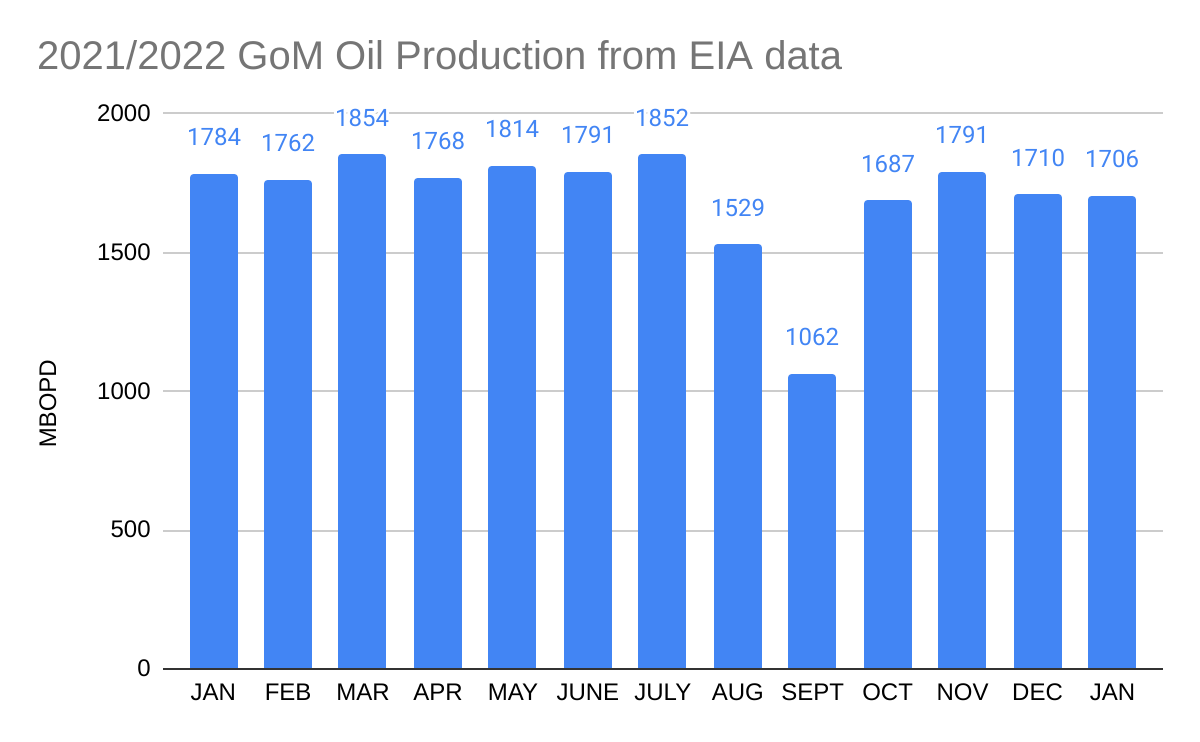
Even after full recovery from Hurricane Ida, Gulf of Mexico production remained well below the August 2019 monthly peak of 2.044 million BOPD. Production should trend upward in the near term as the Vito, Anchor, Argos, King’s Quay, and Whale floating production units come online. However, to sustain production near or above 2 million BOPD, exploration activity needs to be stimulated. This will be difficult given the suspension of leasing, and the continuous legal and administrative challenges.

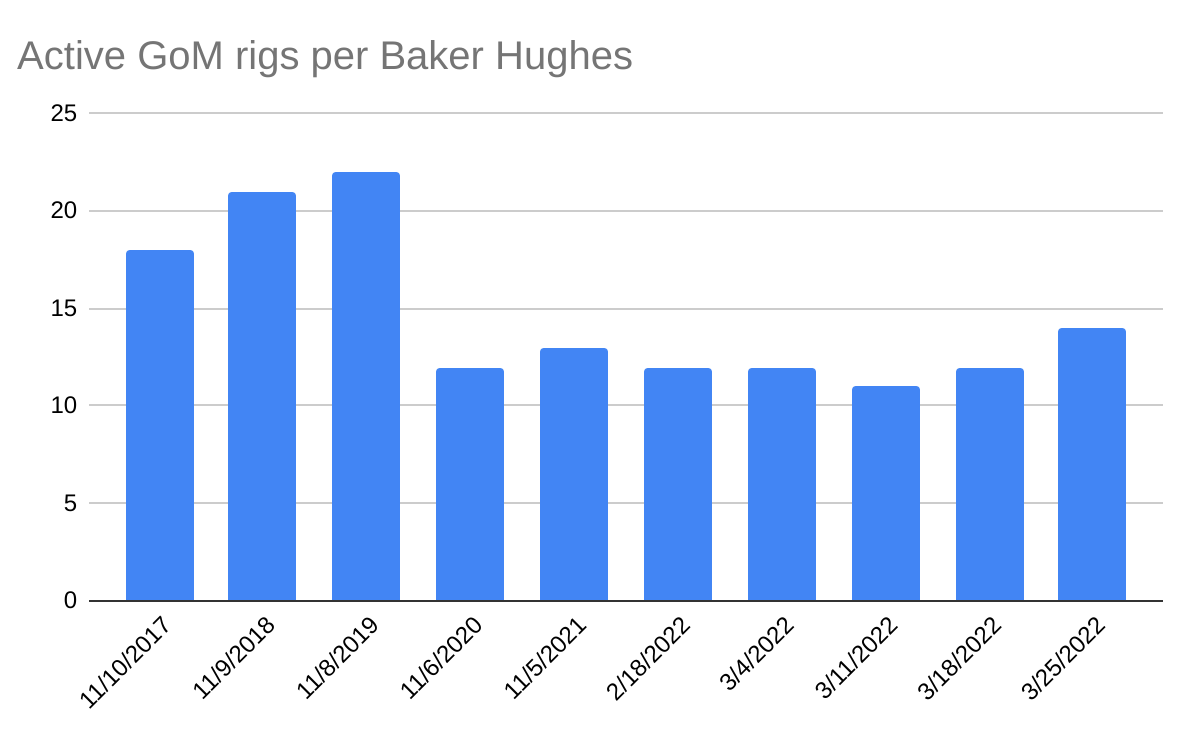
Meanwhile the April 1 rig count held steady at 14.

Read Full Post »

The current 5 year leasing program expires on June 30, 2022. Absent a new program, no lease sales may be held.

We are writing to urge you to develop and implement a new Five-Year Program for oil and gas production in the Gulf of Mexico without delay.

Read Full Post »

In addition to the obvious concerns about depleting the strategic petroleum reserve, further mortgaging our economic future, and increasing national security risks, the directive to withdrawal 1 million BOPD from the Strategic Petroleum Reserve for 6 months raises a few comments specific to US offshore production:

  • The 1 million BOPD withdrawal is equivalent to ~60% of the daily production from the entire Gulf of Mexico offshore sector. How will this massive 6-month withdrawal will effect regional markets and logistics?
  • Will the Dept. of Energy have to assess the GHG effects associated with their withdrawal of oil from the SPR? More specifically, will DOE be required to assess the increase in GHG emissions as a result of the increased foreign oil consumption that will result from the reduction in oil prices? This is what Judge Contreras ordered BOEM to do when he vacated Gulf of Mexico sale 257.
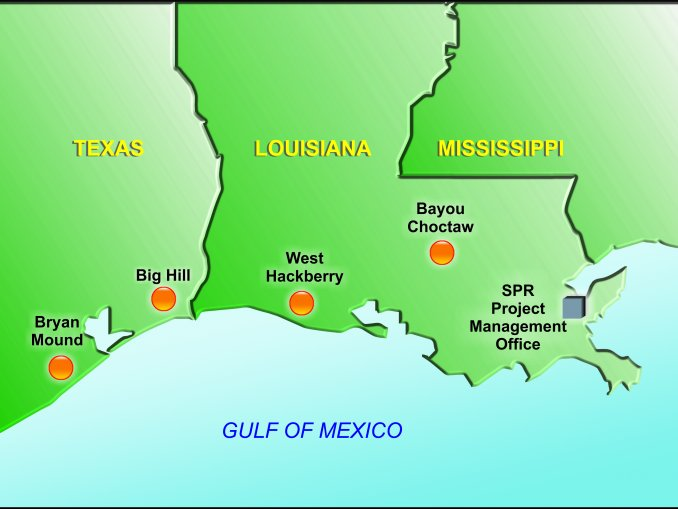
  • If it’s okay to produce and consume oil from the SPR facilities (mapped below), why is new leasing and exploration being constrained in the adjacent Gulf of Mexico?

Read Full Post »

Yesterday, EIAP issued a report for API and NOIA that estimates economic impacts from leasing program delays. The fundamental reason for regular sales has not received much public attention, but is summarized succinctly in the report:

In most cases, additional leases are required to produce an existing field fully or to underpin the economics of processing and transportation infrastructure. It is thus important for the industry to have continued opportunities to secure leases through a predictable leasing program.

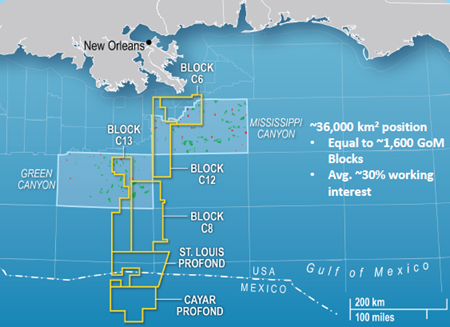
Keep in mind that US lease blocks are the smallest in the offshore world, too small for optimal development in deepwater and frontier areas. The smaller the blocks, the greater the importance of regular lease sales. Pictured below is a 2017 graphic graphic which superimposes Kosmos Energy’s blocks off Senegal and Mauritania on the Central Gulf of Mexico.  Note that the six West African blocks encompass 36,000 sq km and are the equivalent of 1600 GoM lease blocks.  

Read Full Post »

Read Full Post »

Mr. Domangue began his career with BSEE in 1997 and has more than 30 years of experience in the oil and gas industry. He has served as the Deputy Regional Director for Districts, Investigations, Environmental, and Enforcement (DIEE), as Senior Technical Advisor for the BSEE Gulf of Mexico Region and was the Acting Chief of the National Offshore Training Center. Mr. Domangue also previously served as Office Supervisor for Regional Operations, and as District Manager for the Houma District Office of the BSEE Gulf of Mexico OCS Region. He holds a BS degree in petroleum engineering from Louisiana State University.

BSEE

Read Full Post »

Read Full Post »

Shell Vit0
Chevron Anchor
BP’s Argos
Murphy’s King’s Quay

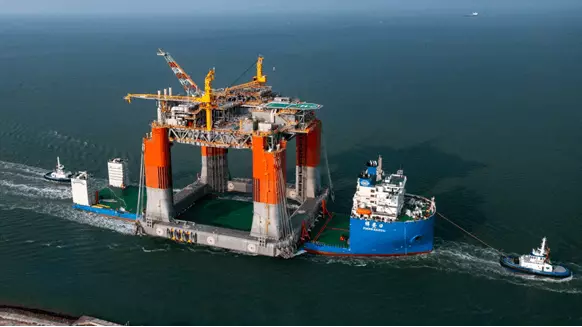
After a several year lag in deepwater Gulf of Mexico development, a new generation of projects is moving toward first production. Shell’s Vito and Whale, BP’s Argos, Chevron’s Anchor, and Murphy’s King’s Quay are similar in many ways including the following:

  • Floating production units
  • Lighter, smaller semisubmersible designs
  • Excellent structural integrity and storm performance characteristics
  • Lower project costs, shorter cycle times
  • 4000 to 8600′ water depth
  • Subsea wells, small surface footprint
  • High production rates anticipated: 100,000 – 150,000 BOE/D
  • Standardized equipment
  • Energy efficient gas turbines
  • Advanced remote monitoring, fewer onboard staff
  • Simpler = safer (assuming equivalent well and production safety system integrity)
  • Limited number of wells + high production rates/well + efficient power generation and processing equipment + restricted flaring + pipeline transportation = low GHG intensity production

Read Full Post »

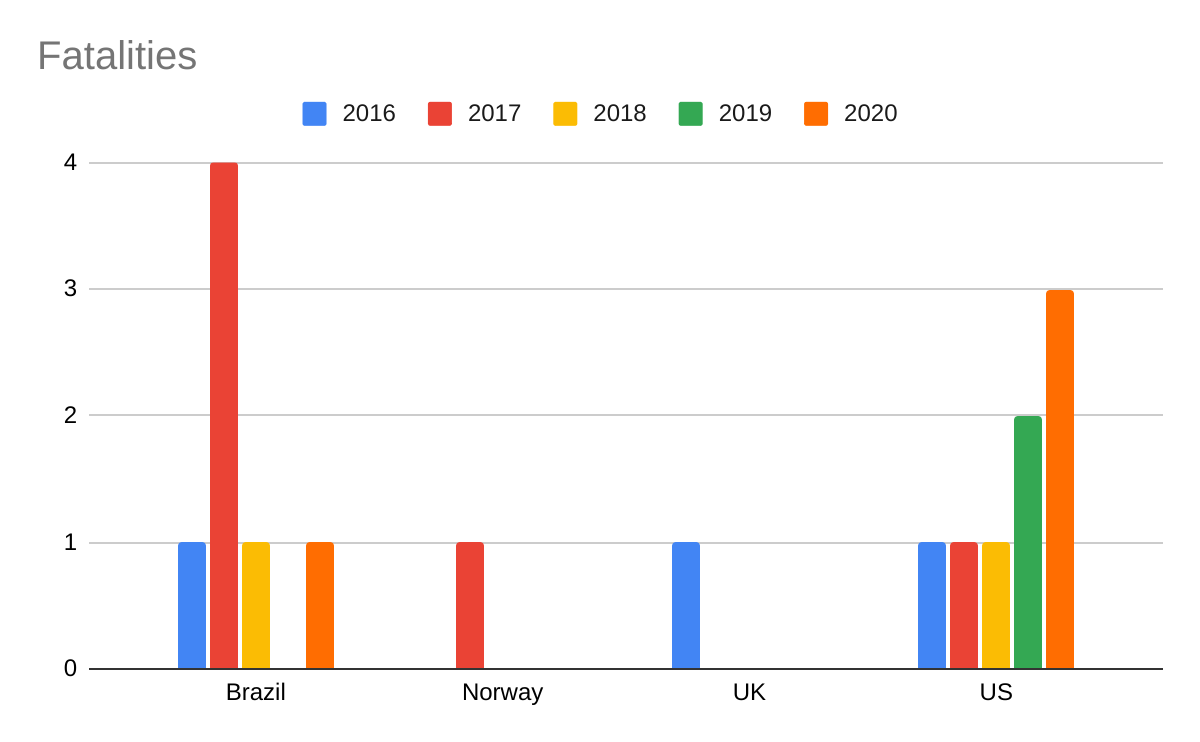
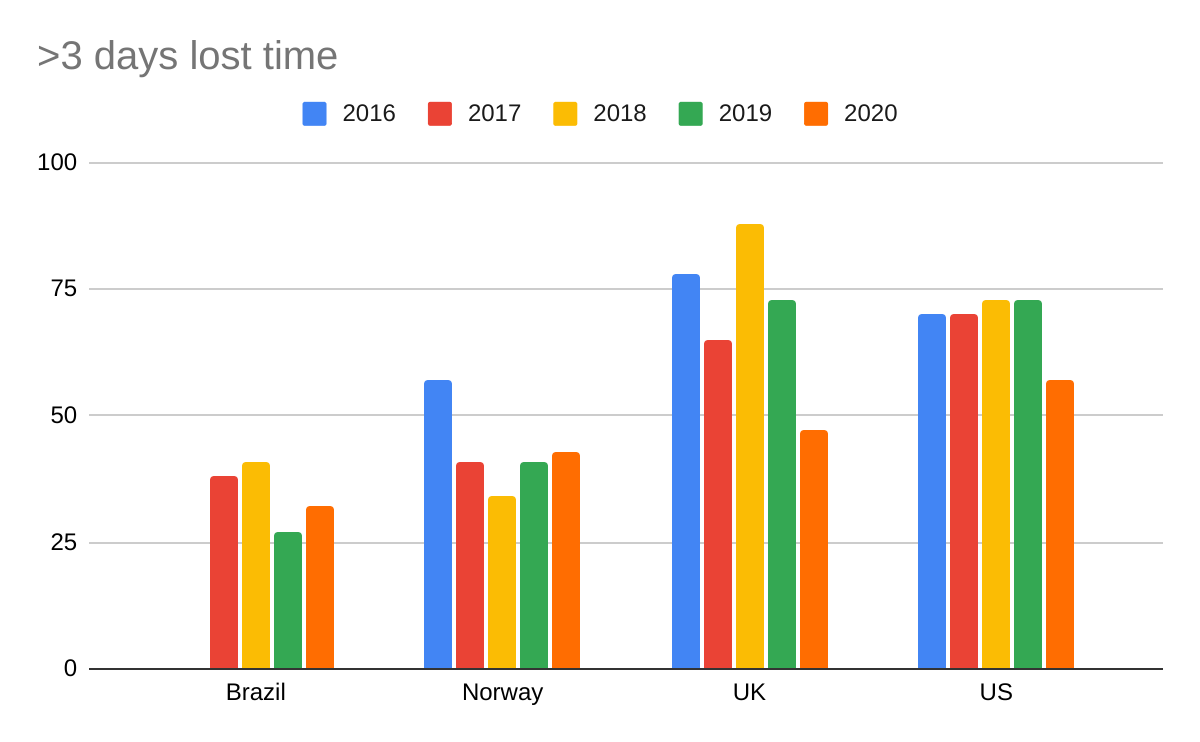
The International Regulators’ Forum (IRF) does a good job of compiling safety performance data for offshore oil and gas operations in member countries. Because these data are collected by the respective regulators and compiled in accordance with established guidelines, we consider the IRF compilations to be the most credible international incident summary data for the offshore industry.

BOE looked at the numbers for the IRF countries with the highest level of activity in terms of hours worked – Brazil, Norway, UK, and US. These countries accounted for 90% of the total hours worked in 2020, the last year for which data are available. The 2020 hours worked (millions) were also relatively similar for the 4 countries: Norway – 41.2, UK – 42.4, US – 50.4, Brazil – 50.7. The differences in hours worked were somewhat greater in the prior years, but not dramatically so.

We charted the fatality and lost-time (>3 days) data (below). Our intent at this point is to draw attention to the IRF data sets, not to assess and compare performance. We do think the overall safety performance in these and other IRF countries, while far from perfect, is quite good given the hundreds of millions of hours worked, complexity of operations, logistical challenges, and difficult operating environments. We recommend that the IRF prioritize the timely posting of these data, and begin providing causation information so that companies and other interested parties can better identify performance issues and safety trends.

Read Full Post »

« Newer Posts - Older Posts »