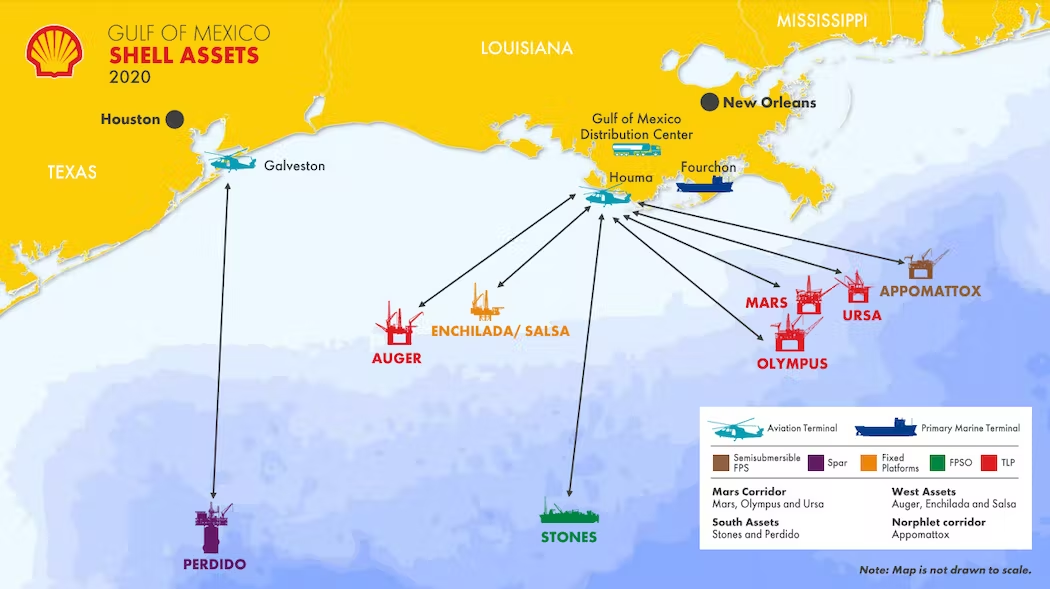
In particular, the Energy and Interior Secretaries would benefit from a visit to a deepwater production facility. They would no doubt be impressed and would be better able to make informed decisions affecting US offshore leasing, exploration, and development.
The offshore workers would be respectful and would welcome the opportunity to discuss the technology, safety precautions, and environmental protection measures.
“The (worldwide) drop in reserves is driven by the 30 billion barrels of oil produced last year, plus a significant reduction in undiscovered resources, to the tune of 120 billion barrels. The US offshore sector has contributed the largest total to that drop, where 20 billion barrels of oil will remain in the ground, largely thanks to leasing bans on federal land.“
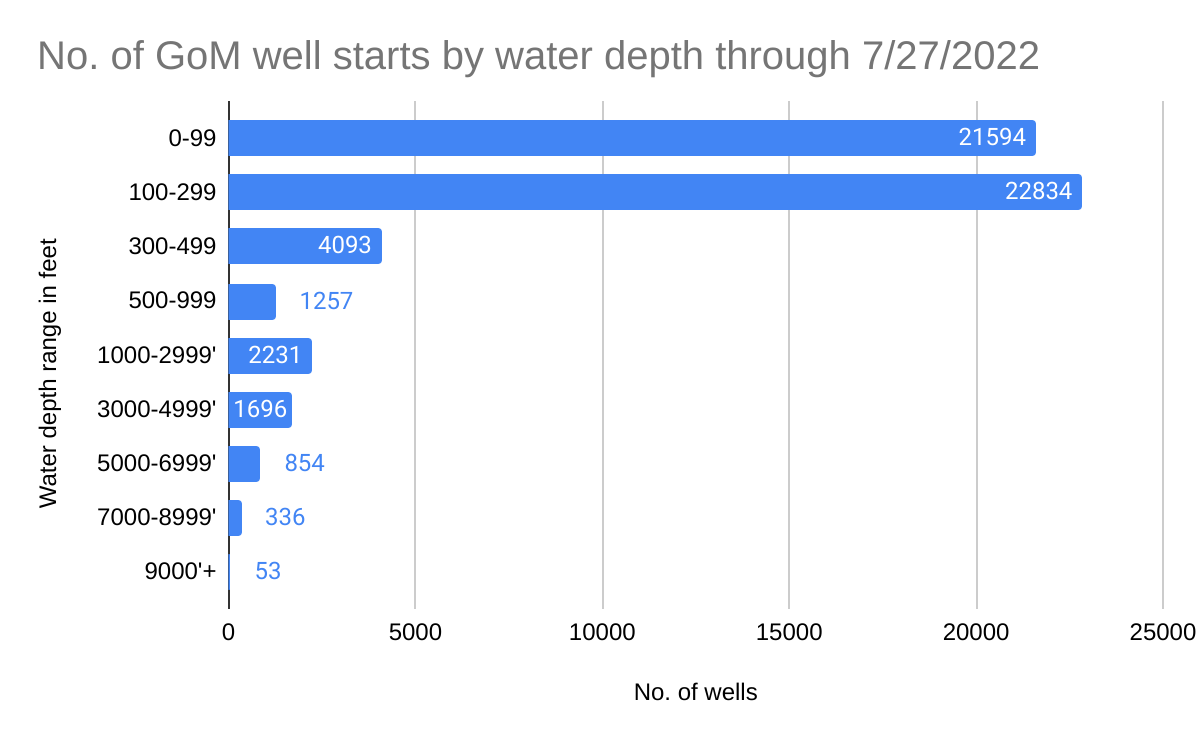
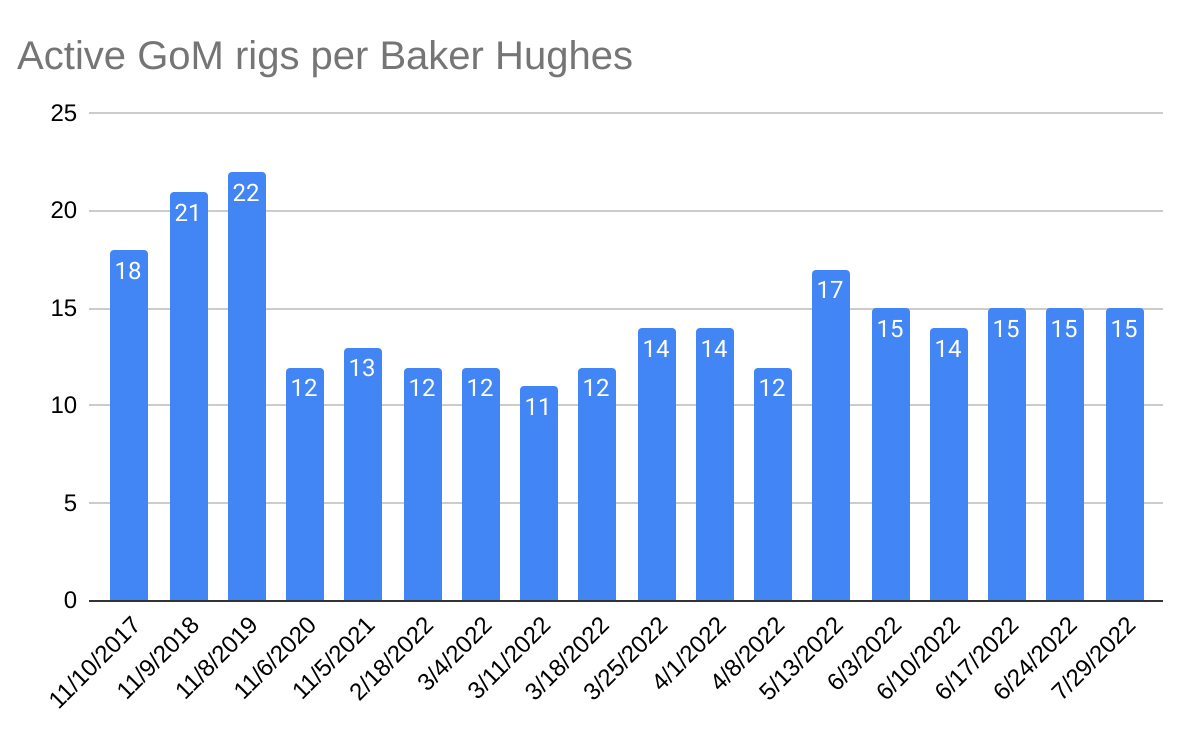
The decline in reserves should come as no surprise to those who follow the US offshore sector. Note the sharp decline in exploratory drilling in the (updated chart below) and the calls for action on this blog a year ago and more recently.
The OCS oil and gas program requires a sustained, consistent commitment by government and industry. Such a consistent commitment, even though required by legislation, is difficult to achieve in our political system, .
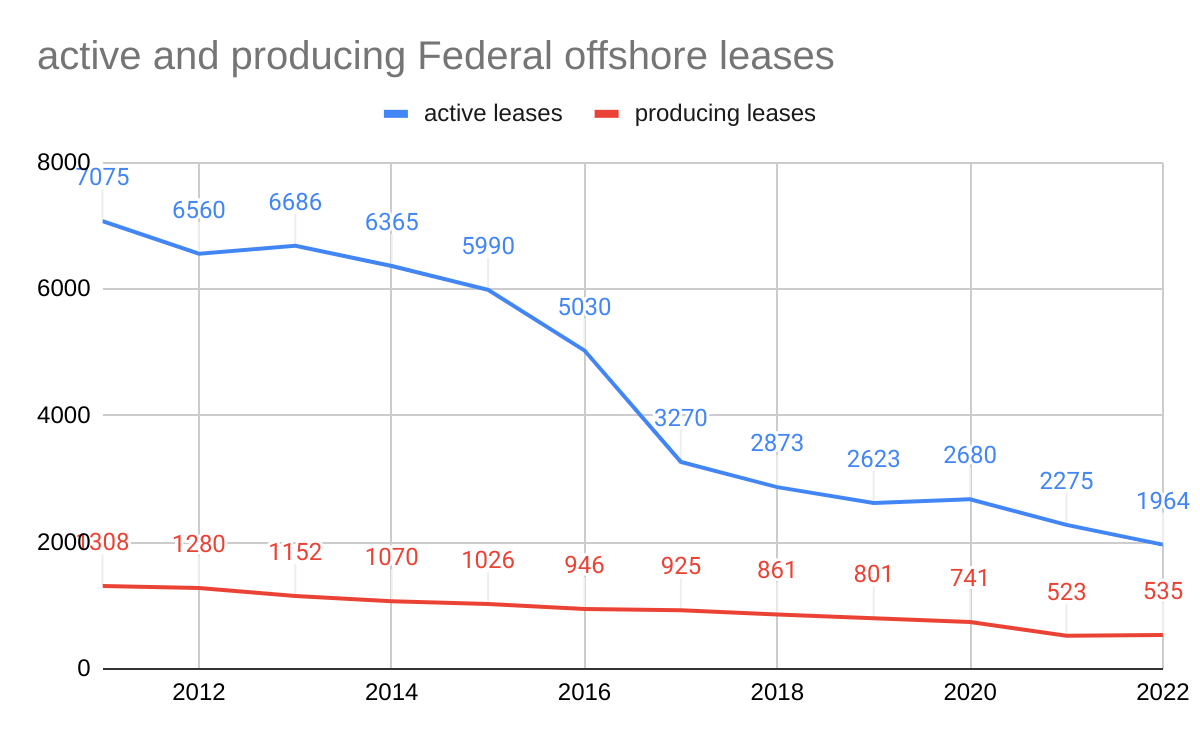
The commitment by the oil and gas industry has also been uneven and in some cases disappointing. BOE continues to be troubled by the reduction in exploration by some companies and the decision by others, including leading US companies with a long history of Gulf of Mexico operations, to exit the US offshore sector completely (see the chart below). The exploration decline began before the leasing shutdown (now 600 days in duration). Inconsistent signals from the Federal government and corporate directors, market considerations, and competing investment opportunities are major factors, but there are no doubt other considerations. Constructive dialogue to address these issues is badly needed.
“BOEM’s short-term (20-year) production forecast for existing leases shows steady growth from 2022 through 2024 and declining thereafter (see Section 5.2.1). The long-term nature of OCS oil and gas development, such that production on a lease can continue for decades makes consideration of future climate pathways relevant to the Secretary’s determinations with respect to how the OCS leasing program best meets the Nation’s energy needs.“
Basing leasing decisions on “future climate pathways” would seem to be a considerable stretch of the Secretary’s authority under the OCS Lands Act and may be inconsistent with the recent SCOTUS decision in West Virginia vs. EPA. A strategic shutdown of the offshore oil and gas program would dramatically increase energy supply and security risks going forward, and should be authorized by Congress.
WASHINGTON (May 19, 2022) — During testimony before the U.S Senate Committee on Energy and Natural Resources today, Secretary of the Interior Deb Haaland confirmed that, despite delays in implementation from the previous Administration, the Interior Department will release the Proposed Program – the next step in the five-year offshore energy planning process – by June 30, 2022, which is the expiration of the current program. A Proposed Program is not a decision to issue specific leases or to authorize any drilling or development.
When Congress seems slow to solve problems, it may be only natural that those in the Executive Branch might seek to take matters into their own hands. But the Constitution does not authorize agencies to use pen-and-phone regulations as substitutes for laws passed by the people’s representatives.
Capping carbon dioxide emissions at a level that will force a nationwide transition away from the use of coal to generate electricity may be a sensible “solution to the crisis of the day.” New York v. United States, 505 U. S. 144, 187 (1992). But it is not plausible that Congress gave EPA the authority to adopt on its own such a regulatory scheme in Section 111(d). A decision of such magnitude and consequence rests with Congress itself, or an agency acting pursuant to a clear delegation from that representative body.
At first glance, the SCOTUS decision would seem to affect the regulation of GHG emissions on the OCS and possibly the Lease Sale 257 decision (now being appeal), which was based on BOEM’s failure to estimate the effect of reduced OCS production on GHG emissions outside the US.
“According to EIA, declining production from existing Gulf of Mexico fields will largely offset the increases in oil production from the new fields, with natural gas production in the Gulf of Mexico continuing its three-year decline. During 2021, 15 percent of U.S. oil production and 2 percent of U.S. natural gas production was produced in the Gulf of Mexico.”
“The two-well subsea development is producing, in combination, approximately 16,000 barrels of oil per day and 13 million cubic feet of gas per day via a 14-mile subsea tieback to the EnVen-operated Lobster platform in EW 873. First production was achieved less than three years after the initial exploratory discovery well was drilled.”
The project owners (below) are all independent producers and private equity firms. Houston Energy, LLOG, Red Willow, EnVen, and Beacon were also among the high bidders in Lease Sale 257, which was vacated by a questionable court decision that the Federal government chose not to appeal.
The companies responsible for these important projects (see “simpler, safer, greener”) that have or will soon initiate production were also active bidders at Lease Sale 257. The absence of leasing has thus seriously handicapped the companies most responsible for the production surge to over 2 million BOPD in 2019 and for sustaining the current Gulf production rate of 1.7 million BOPD.