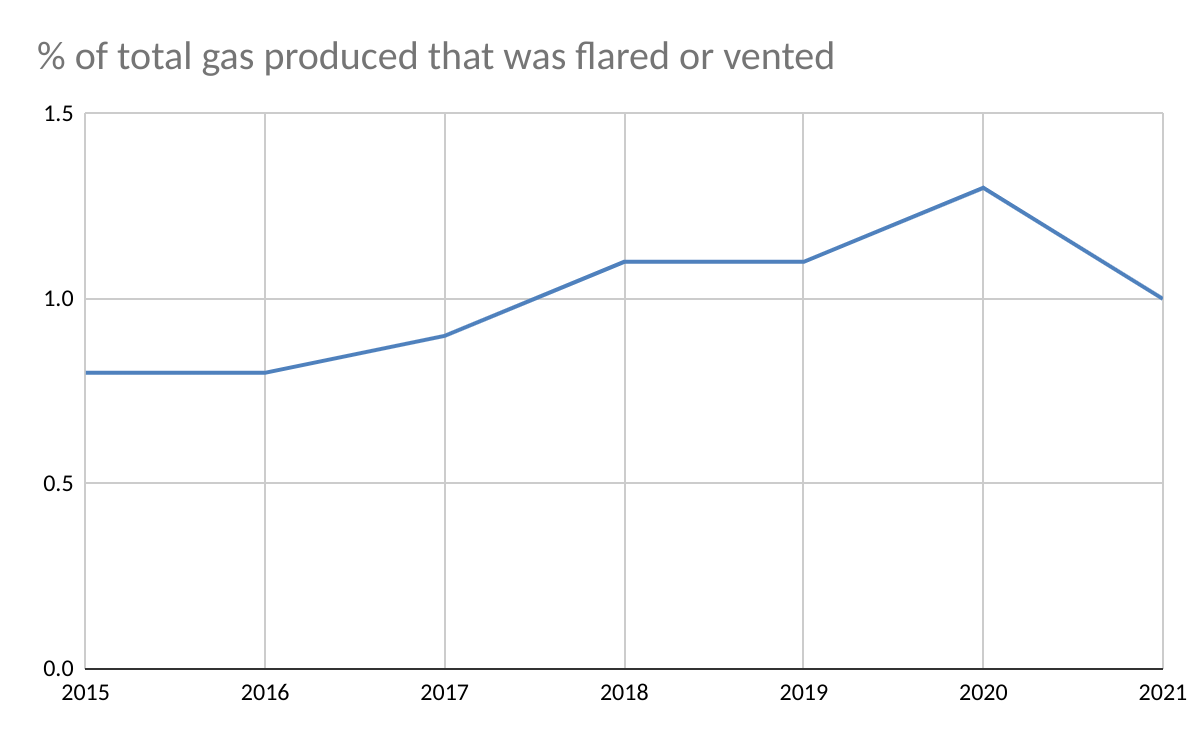
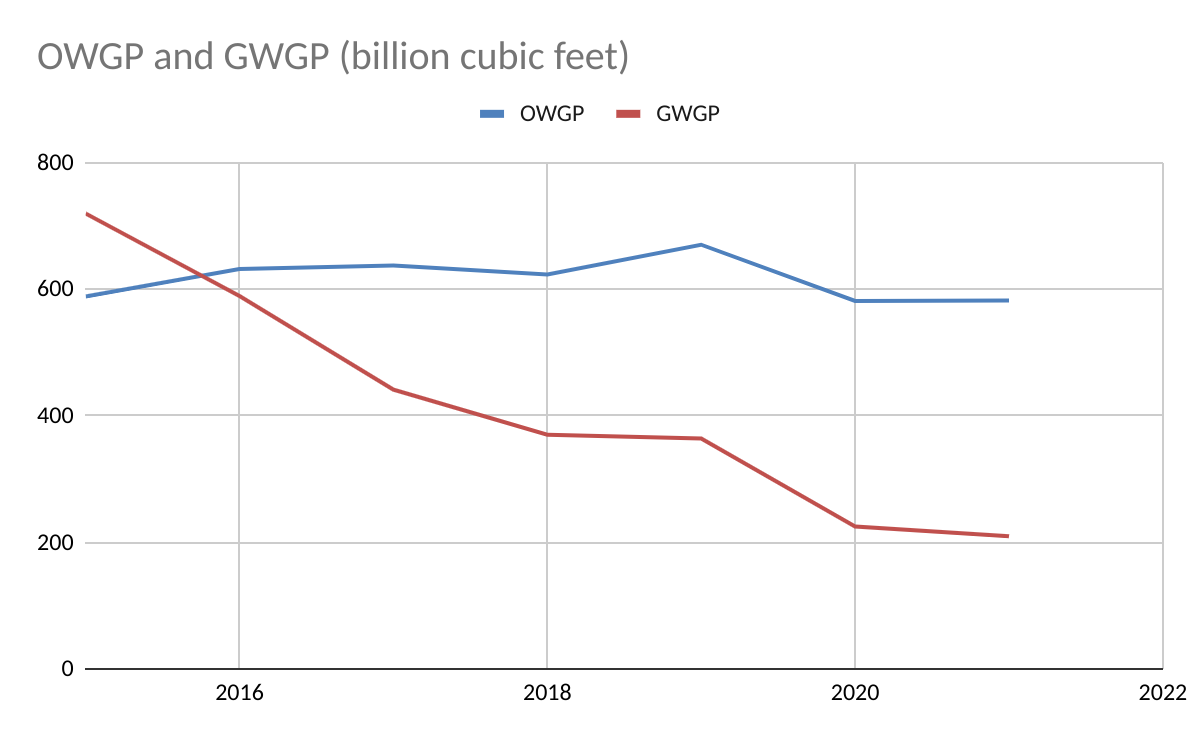
Gulf of Mexico flaring and venting data have been sorted for the years 2015-2021. The reporting of these data is mandatory and strictly enforced, so these ONRR numbers should be accurate.
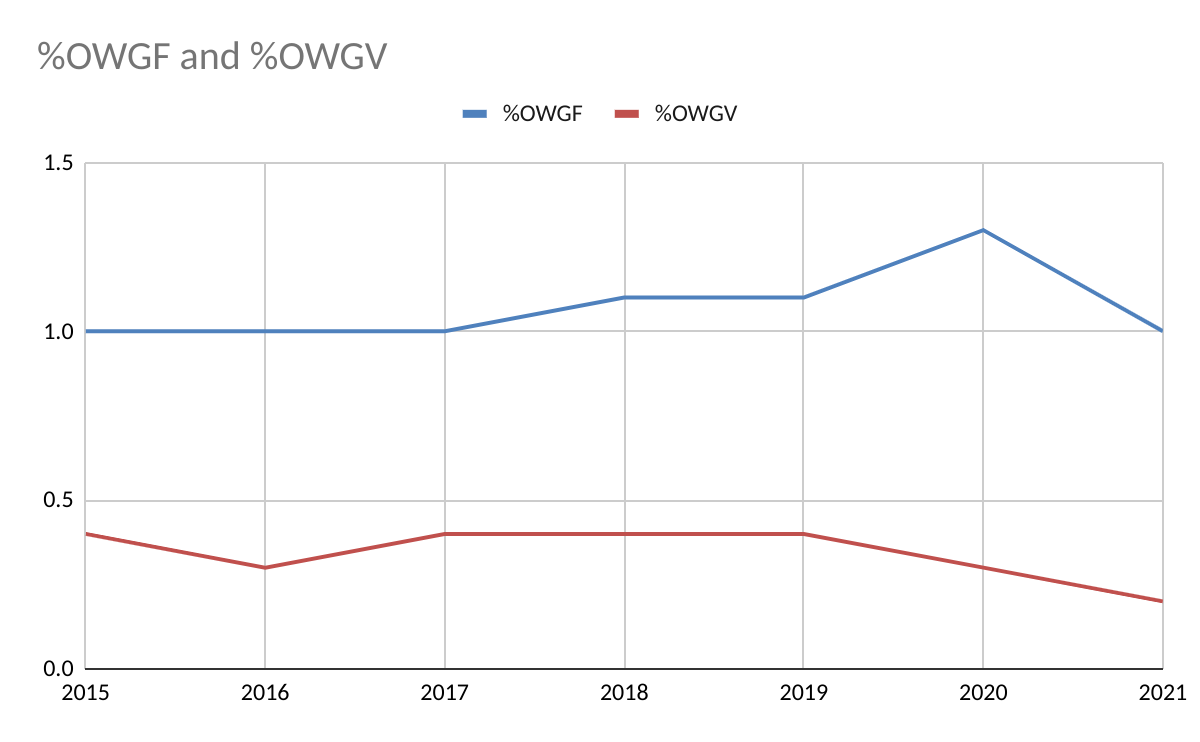
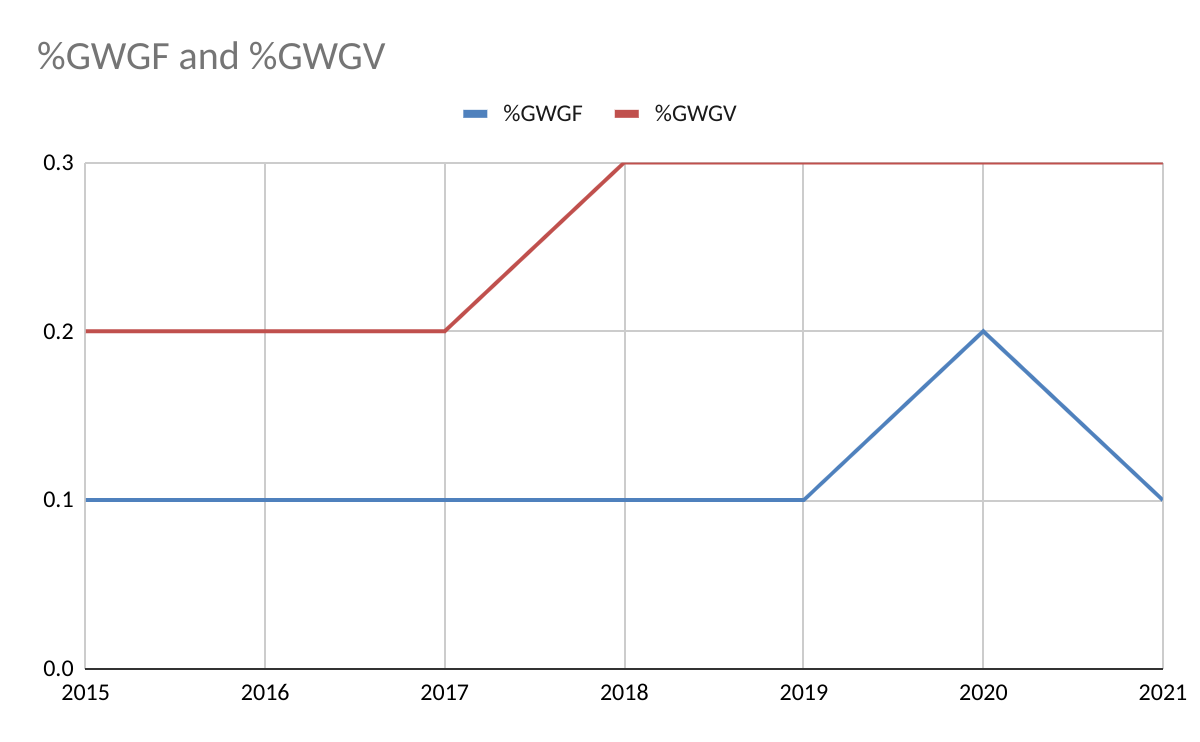
Biggest surprise: The biggest surprise is that there were no big surprises in the data. The % of gas flared and vented were generally consistent with expectations based on familiarity with historical data.
Encouraging sign: The % of oil-well gas vented has ticked down over the past 2 years which is encouraging from a GHG standpoint. This is presumably because most associated gas is produced on modern deepwater facilities equipped with flare booms. An astute politician would be rushing to take credit for this achievement.😀
By comparison, vented Gulf of Mexico methane emissions in 2021 totaled 1953 mmcf. This converts to 82 million pounds at atmospheric pressure and 60°F. The identified Turkmenistan sources would thus release the amount of methane in a month that all Gulf of Mexico facilities vent in a year (2021).
East of Hazar, Turkmenistan, a port city on the Caspian Sea, 12 plumes of methane stream westward. The plumes were detected by NASA’s Earth Surface Mineral Dust Source Investigation mission and some of them stretch for more than 20 miles (32 kilometers).
ONRR mandatory production reporting data are being sorted to assess GoM flaring and venting trends. This will help resolve inconsistencies previously identified. In the meantime, the table below summarizes the 2021 data. 1.03% of the gas produced that year was flared or vented. 0.25% of the gas production was vented.
Interestingly, more gas-well gas was vented than flared. This is presumably because older shelf facilities without flare booms still produce 25% of the gas (versus only 7% of the oil), mostly from gas wells. More to follow.
gas production
flared (%)
vented (%)
flared & vented (%)
OWG
582,204
5919 (1.01)
1405 (0.24)
7324 (1.26)
GWG
209,779
311 (0.15)
548 (0.26)
859 (0.41)
total
791,983
6230 (0.79)
1953 (0.25)
8183 (1.03)
OWG=oil well gas; GWG=gas well gas; all volumes are in MMCF
These oil and gas leases may not be repurposed for sequestration or other purposes unless an alternate use RUE is issued competitively in accordance with 30 CFR § 585.1007.
So what’s next for these 94 leases, 31% of the entire sale?
Kudos to ONRR for posting complete flaring and venting data for all oil and gas operations on US Federal and Indian lands. These data, which distinguish between oil-well gas and gas-well gas, are included in the large “Production Disposition by Month” file that can be downloaded here.
Where is the leadership? Offshore decommissioning costs should never fall on the taxpayer. See the attached notice (excerpt below) and a previous post on this topic.
BSEE intends to execute a multi-award IDIQ Quantity Contract inclusive of a Base Year and Four (4) Option Years; however, the government reserves the right to award the IDIQ contract to a single firm. Time & Material, Labor Hour, and/or firm-fixed price task orders will be awarded for Decommissioning Services necessary to take nine (9) orphaned facilities, located in the OCS of the Gulf of Mexico, to the point of Temporary Abandonment (TA). The estimated decommissioning cost for temporary abandonment is $10,000,000 to $20,000,000.
“The long-term nature of OCS oil and gas development, such that production on a lease can continue for decades makes consideration of future climate pathways relevant to the Secretary’s determinations with respect to how the OCS leasing program best meets the Nation’s energy needs.“
Basing offshore leasing decisions on “future climate pathways” is a high risk strategy that may be inconsistent with the recent SCOTUS decision in West Virginia vs. EPA. A planned or phased shutdown of the offshore oil and gas program would dramatically increase economic and security risks, and has not been authorized by legislation.




 Bud's Offshore Energy (BOE)