Feeds:
Posts
Comments

Archive for the ‘flaring and venting’ Category

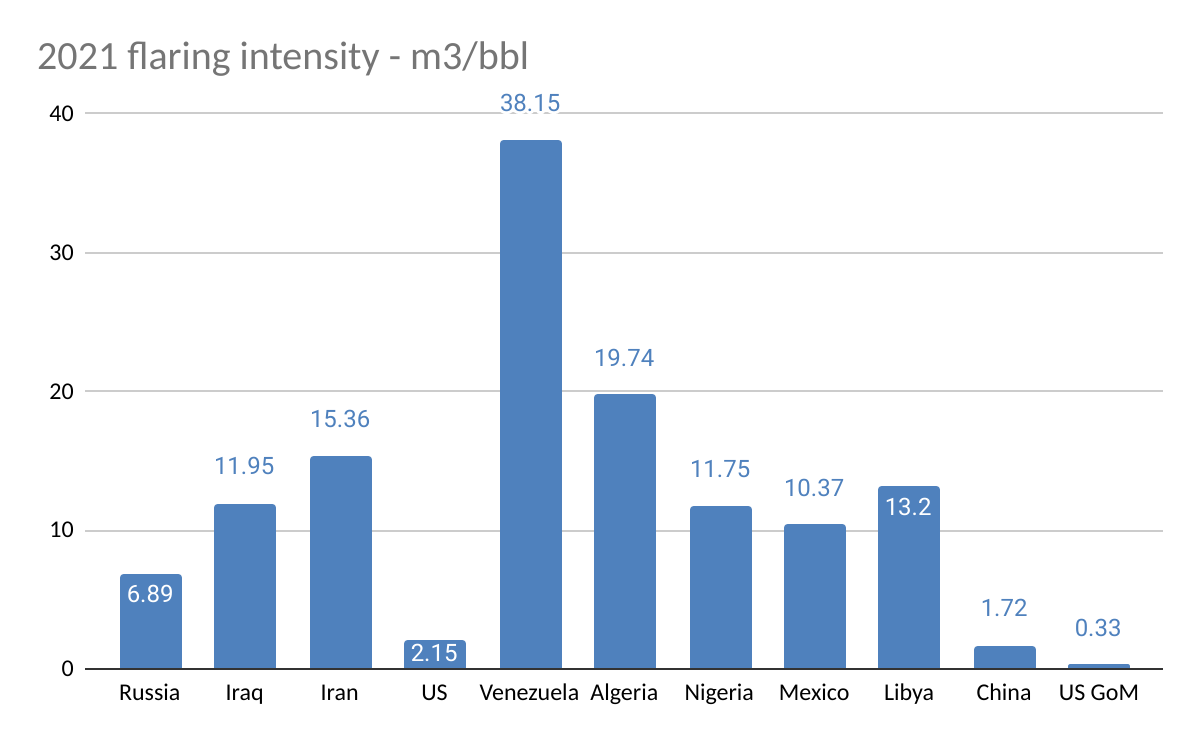
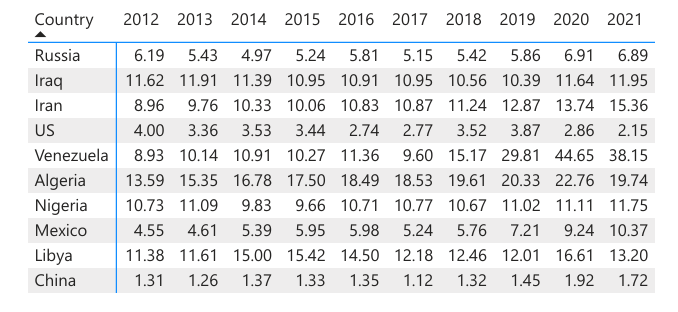
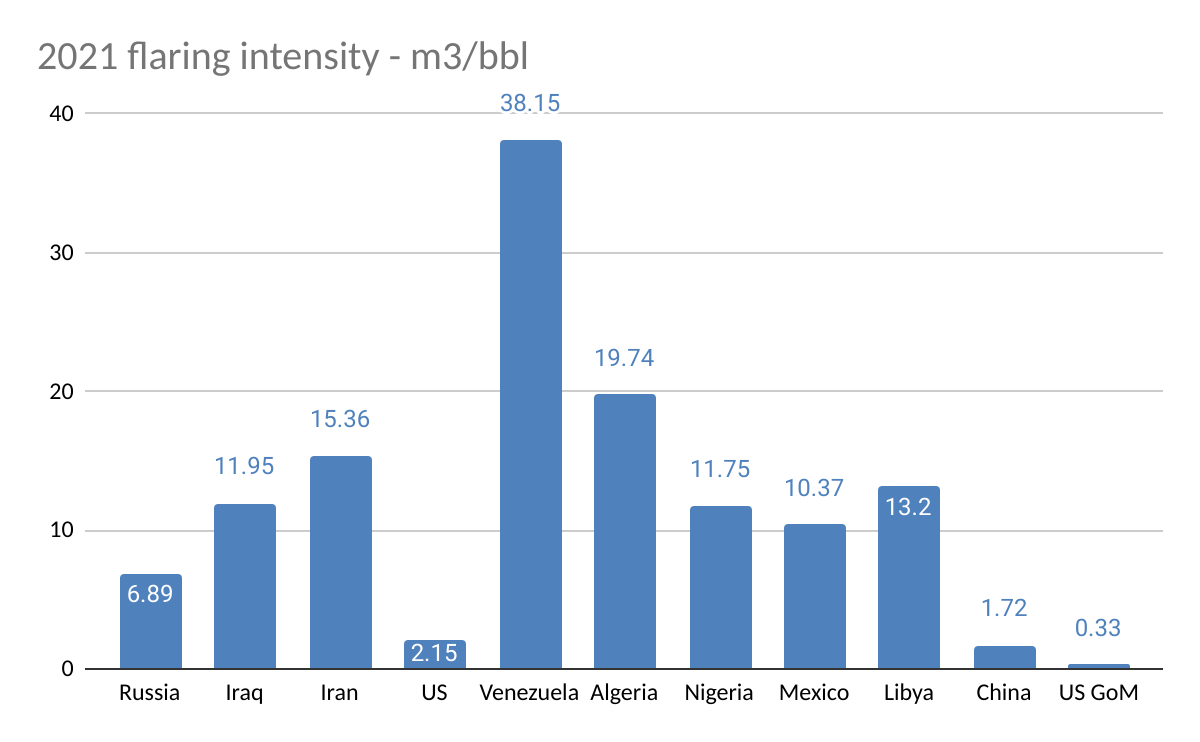
Using the World Bank’s worldwide flaring data and ONRR flaring and venting data for the GoM, I compared GoM flaring intensity for 2021 with that of the World Bank’s top ten flaring nations. This is just one example of why US offshore production is a preferred and vital component of our energy mix.

Further discussion: Kudos to the World Bank for their use of satellite data to estimate flaring volumes worldwide. Their primary performance indicator is flaring intensity (volume flared per bbl of oil produced). Absent better worldwide reporting regimes, satellite data are essential. However, there are issues with the World Bank’s system that merit further consideration:

  • Satellites miss some flares and vented gas (a more significant GHG concern) is not detected
  • A prior review of Gulf of Mexico data indicated that the World Bank flaring estimates are low.
  • The flaring intensity indicator penalizes higher gas-oil ratio (GOR) wells. Production upsets of the same duration yield higher flaring intensity scores at higher GOR facilities.
  • Associated gas is an environmentally favorable energy source that should not be discouraged. Most Gulf of Mexico gas production is now from oil wells. Efficient collection and utilization is the key.
  • There will always be some production upsets that result in flaring. The objective should be to minimize the % of oil-well and gas-well gas that is flared, irrespective of the amount of oil production. See the recent GoM summary data posted here and here.

Read Full Post »

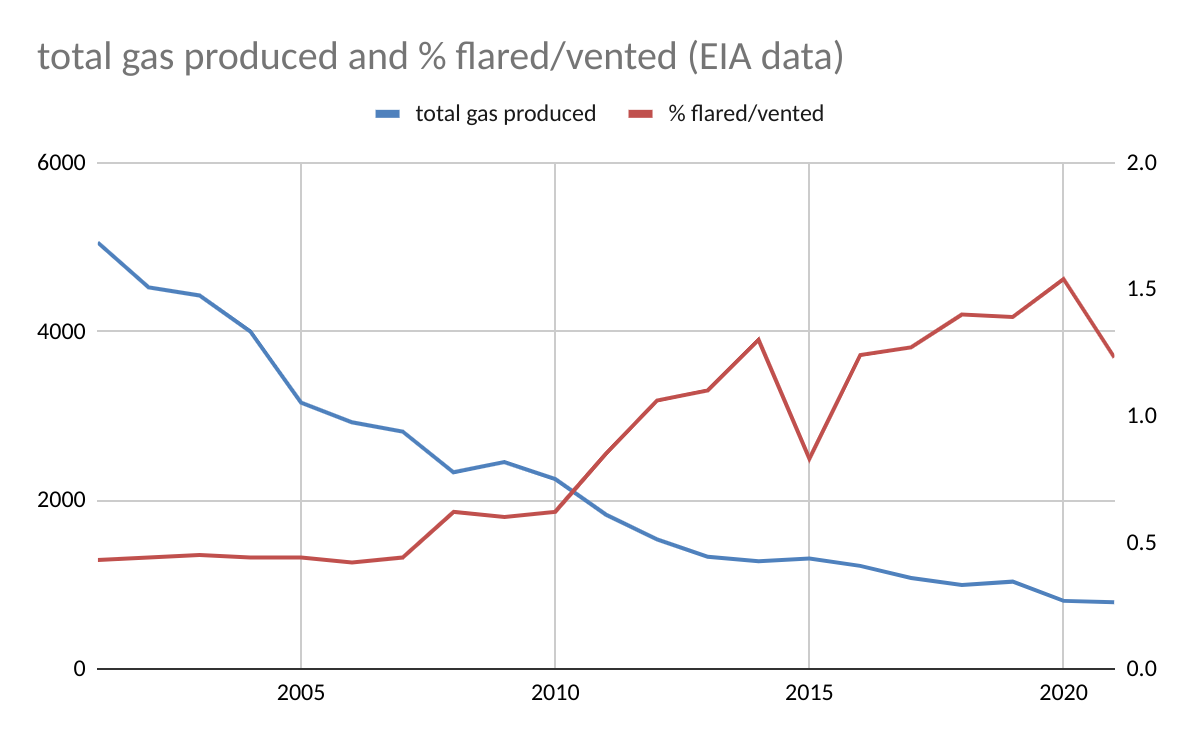
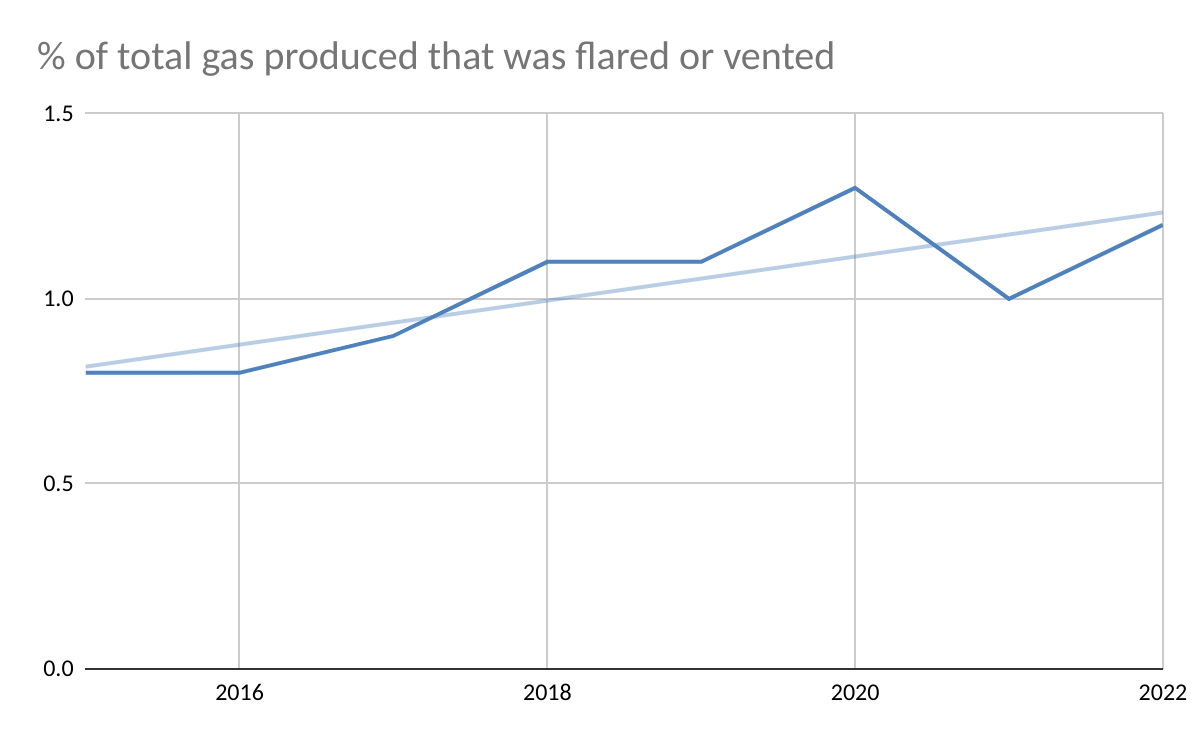
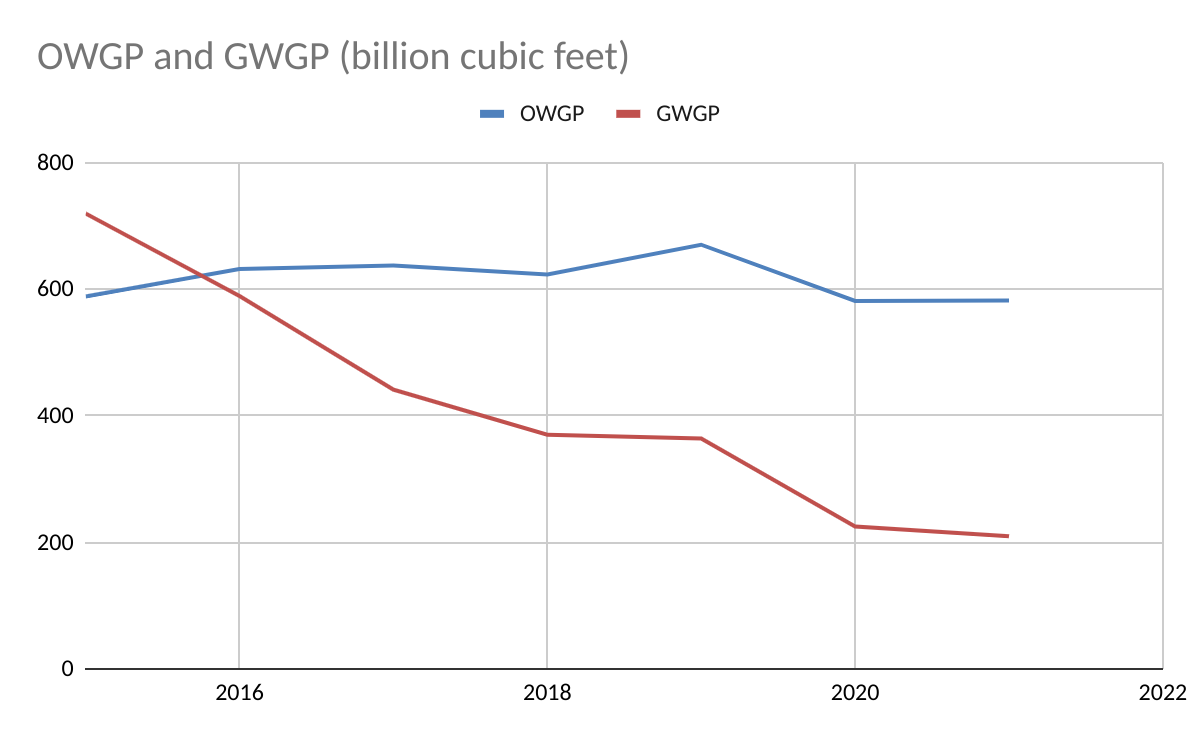
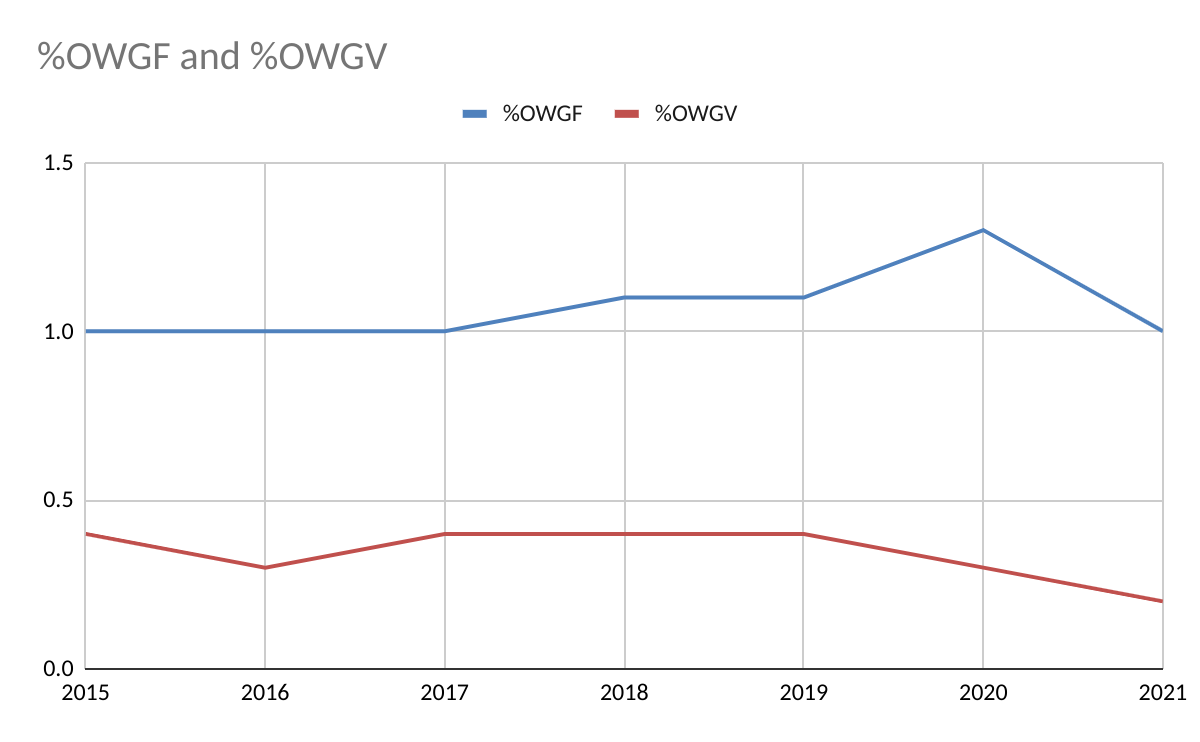
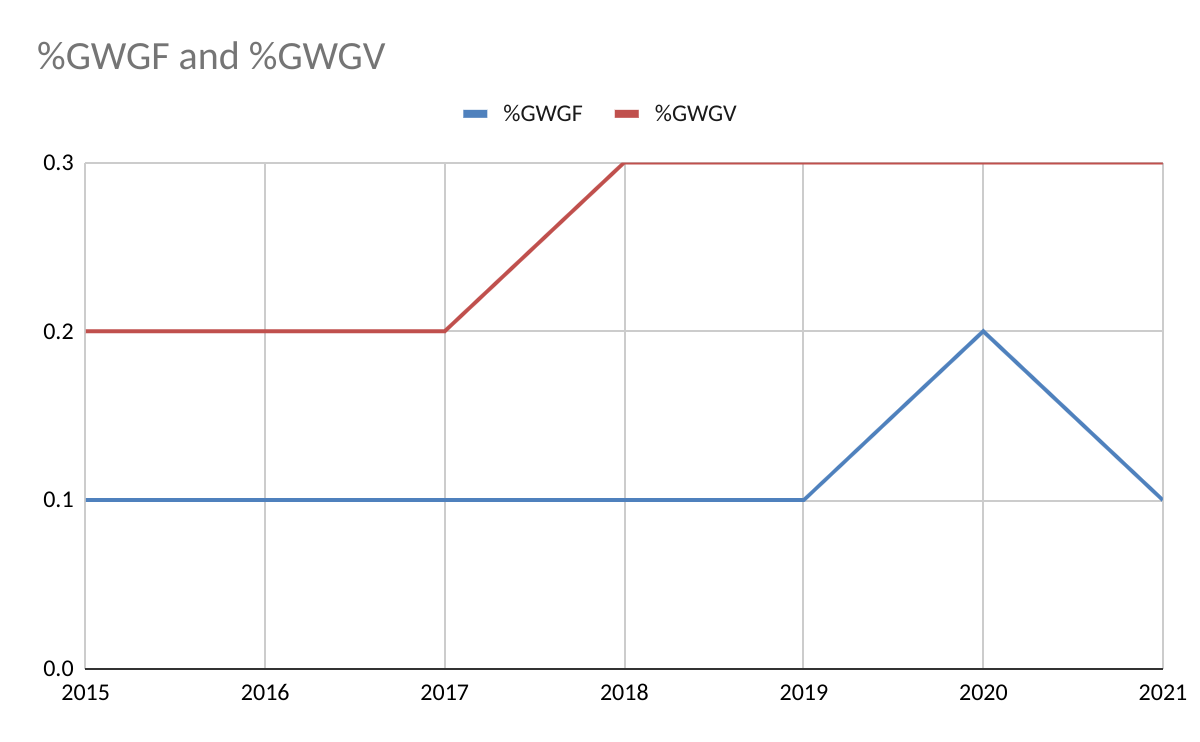
Gulf of Mexico flaring and venting data have been sorted for the years 2015-2021. The reporting of these data is mandatory and strictly enforced, so these ONRR numbers should be accurate.

Biggest surprise: The biggest surprise is that there were no big surprises in the data. The % of gas flared and vented were generally consistent with expectations based on familiarity with historical data.

Biggest disappointment: the continued sharp decline in nonassociated (gas-well) gas production. GoM gas well gas production exceeded 4 tcf annually in the 1990s and was still above one tcf ten years ago. Since then, GWG production has declined by 80%. Nonassociated offshore natural gas has important environmental advantages, so the decline in production should be a major concern to policy makers

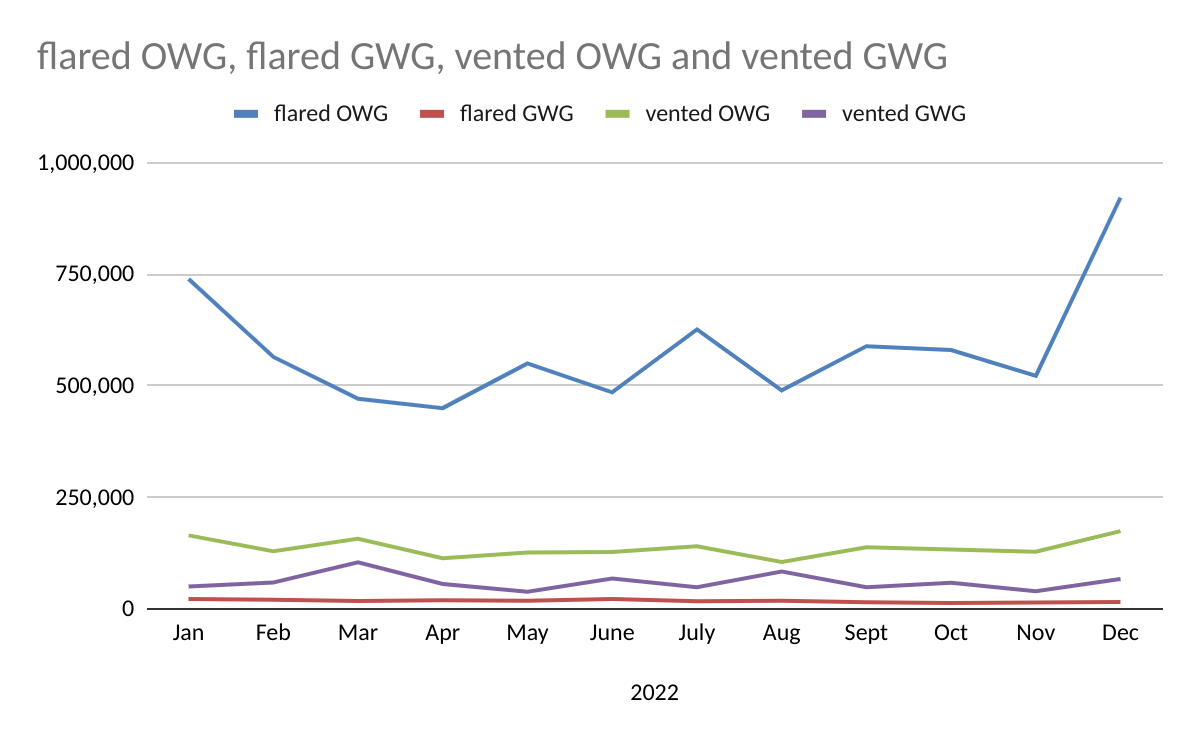
Encouraging sign: The % of oil-well gas vented has ticked down over the past 2 years which is encouraging from a GHG standpoint. This is presumably because most associated gas is produced on modern deepwater facilities equipped with flare booms. An astute politician would be rushing to take credit for this achievement.😀

Unfavorable ratio: Although the volumes are low (<1 Bcf combined in 2021), more gas-well gas was vented each year than flared. This is presumably because older shelf facilities without flare booms still produce much of the natural gas.

Abbreviations:

  • ONRR: Office of Natural Resources Revenue
  • GoM: Federal waters of the Gulf of Mexico
  • OWGP: oil-well gas production
  • GWGP: gas-well gas production
  • OWGF: oil-well gas flared
  • OWGV: oil-well gas vented
  • GWGF: gas-well gas flared
  • GWGV: gas-well gas vented

Read Full Post »

ONRR mandatory production reporting data are being sorted to assess GoM flaring and venting trends. This will help resolve inconsistencies previously identified. In the meantime, the table below summarizes the 2021 data. 1.03% of the gas produced that year was flared or vented. 0.25% of the gas production was vented.

Interestingly, more gas-well gas was vented than flared. This is presumably because older shelf facilities without flare booms still produce 25% of the gas (versus only 7% of the oil), mostly from gas wells. More to follow.

gas
production
flared (%)vented (%)flared &
vented (%)
OWG582,2045919 (1.01)1405 (0.24)7324 (1.26)
GWG209,779311 (0.15)548 (0.26)859 (0.41)
total 791,9836230 (0.79)1953 (0.25)8183 (1.03)
OWG=oil well gas; GWG=gas well gas; all volumes are in MMCF

Read Full Post »

Kudos to ONRR for posting complete flaring and venting data for all oil and gas operations on US Federal and Indian lands. These data, which distinguish between oil-well gas and gas-well gas, are included in the large “Production Disposition by Month” file that can be downloaded here.

The data should give us a good read on flaring and venting trends and help resolve the inconsistencies previously identified.

Read Full Post »

« Newer Posts