Feeds:
Posts
Comments

Archive for the ‘energy policy’ Category

The Jones Act, protectionism at its finest, was enacted 113 years ago, and stipulates that vessels which transport merchandise or people between two US points must be US built, flagged, owned, and crewed. Congress tightened the screws further by ordaining that offshore energy facilities, including wind farms, are US points. That precludes the transportation of wind turbine components from US ports to offshore wind farms.

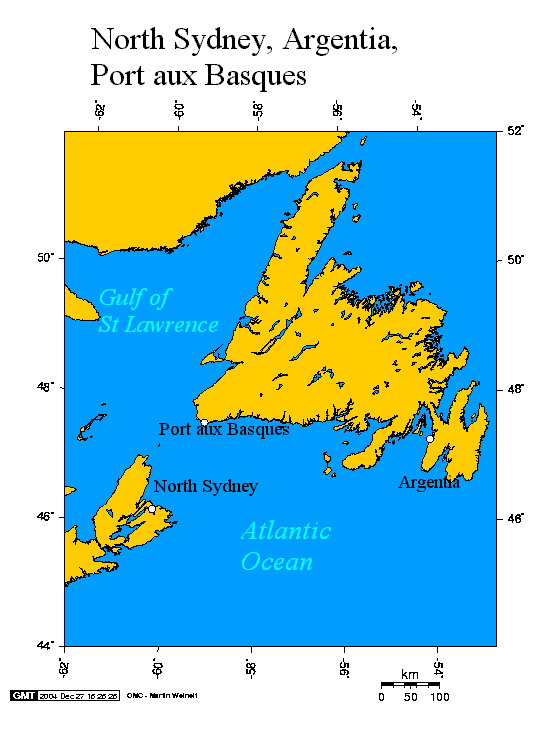
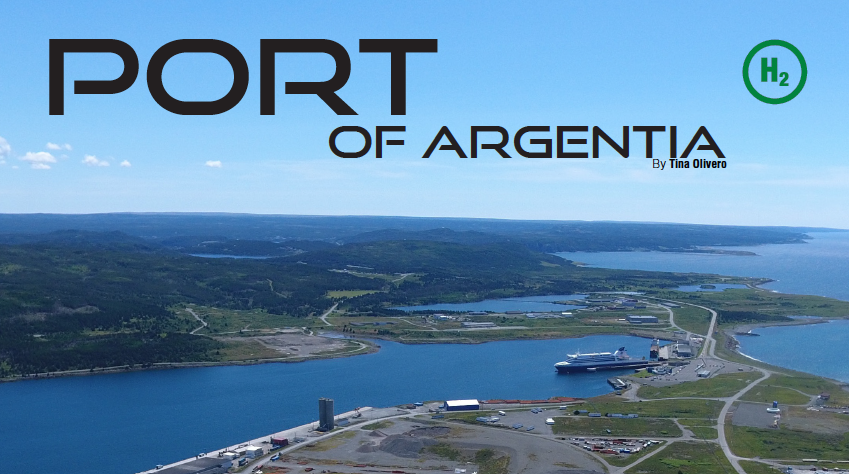
The Jones Act has thus provided an opportunity for the Port of Argentia, a former US Navy base in southeast Newfoundland, and the port is set to become a key node in the offshore wind supply chain. Monopiles constructed in Europe will be stored in Argentia, until they are delivered to US wind farms in the North Atlantic. Kudos to the folks at the Port of Argentia for taking advantage of this opportunity.

Dutch company Boskalis will be transporting the monopiles, which are expected to land in the Port of Argentia in a few weeks. (Boskalis)

Read Full Post »

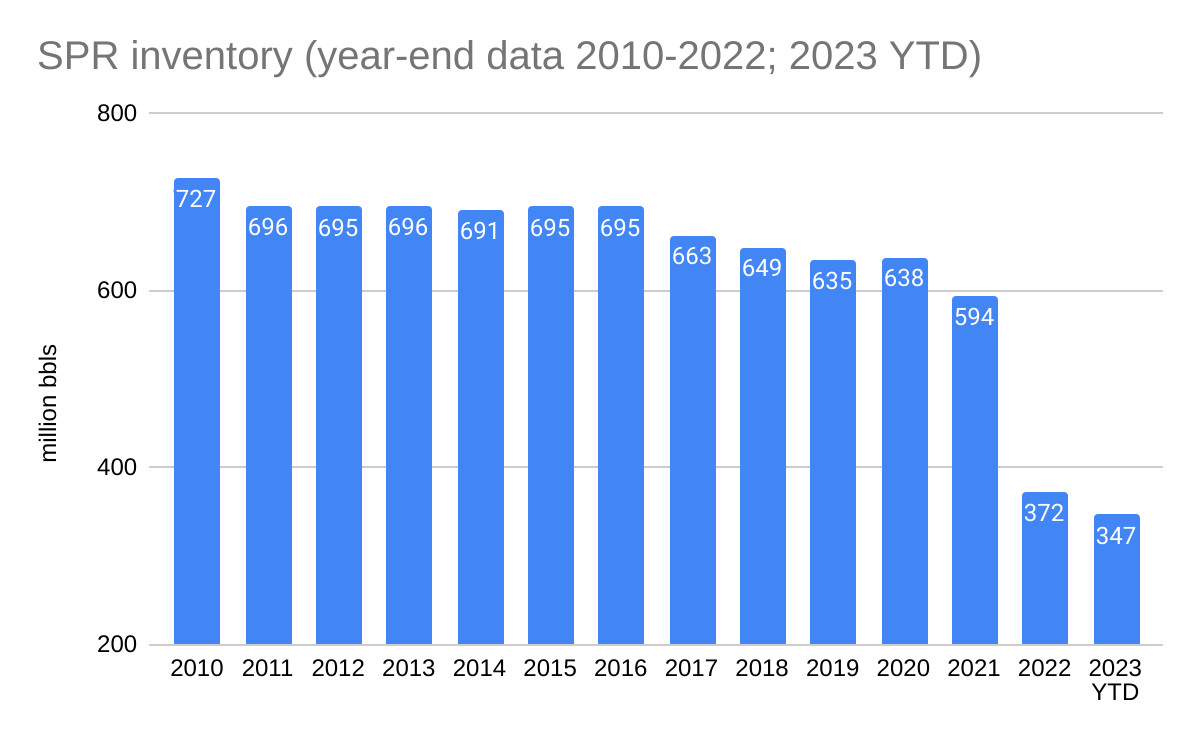
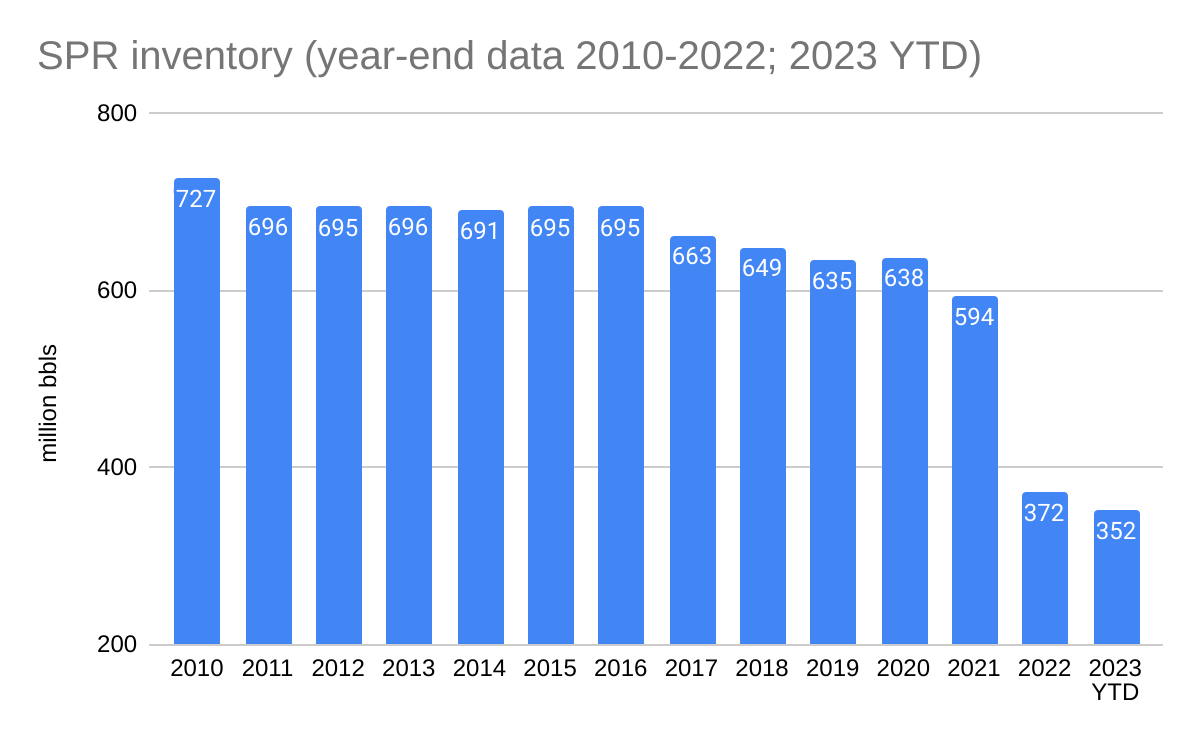
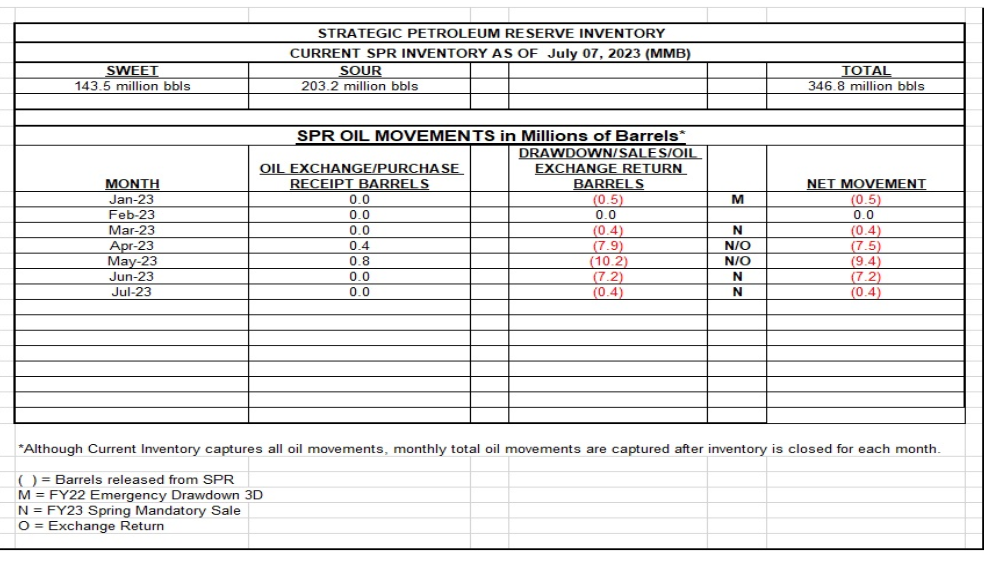
The Strategic Petroleum Reserve is ⬇ to 346.8 million barrels, the lowest volume since August 19, 1983, when the SPR was still being filled.

But fear not, 6 million barrels, which is less than 1/4 of the amount withdrawn just in 2023 YTD, are to be added in the fall, and Secretary Granholm assures us that the SPR will be refilled (but not completely and maybe not until the Administration’s second term 😀).

Keep in mind that DOE only intends to buy when prices are <$72/bbl, that the maximum refill rate is 685,000 bopd, and that acquisition, operational, and maintenance delays are to be expected .Filling the reserve to its 727 million barrel capacity was a 28 year process.

Read Full Post »

For the first time in the history of the US offshore oil and gas program, taxpayers will be funding the plugging of OCS wells. This should be viewed as a collective failure by government and industry. Nearly 34 years have passed since the Alliance bankruptcy, the first of many wake-up calls, and we still haven’t figured this out.

Per BSEE’s recent announcement, Federal funds will be used to plug wells in the Matagorda Island (MI) area of the Gulf of Mexico (see map below). Based on a BSEE presentation and BSEE borehole data, these wells were drilled by Matagorda Island Gas Operations LLC, a company that filed for bankruptcy in 2014.

Prior to the bankruptcy filing, Matagorda Island Gas was cited for 112 violations on 108 inspections. This INC/inspection rate is approximately double the Gulf of Mexico (all operators) rate in a typical year (0.52 in 2022), and is 4 to 25 times higher than the rate for the 2022 Honor Roll companies.

Read Full Post »

Some preliminary thoughts about BOEM’s proposed revision to the decommissioning financial assurance regulations for US offshore oil and gas operations:

  1. BOEM has rather surprisingly proposed to eliminate consideration of a company’s compliance record in determining the need for supplemental financial assurance. An opposing view will be posted tomorrow.
  2. If a lease has proved reserves with a value of at least three times that of the estimated decommissioning cost, no supplemental financial assurance would be required. Comparing two imprecise and variable estimates is neither a simple nor reliable method for determining the need for supplemental financial assurance. BOEM should look at the history of the Carpenteria field (Santa Barbara Channel) and the reserve estimates that were provided to discount decommissioning risks. More on this at a later date.
  3. Transferor liability applies only to those obligations existing at the time of transfer; new facilities, or additions to existing facilities, that were not in existence at the time of any lease transfer are not obligations of a predecessor company and are considered obligations of the party that built such new facilities and its co- and successor lessees. This is a good policy, but is difficult to implement. Some of the complexities may need to be addressed. More later.
  4. The “reverse chronological order” provision was withdrawn in April, so there is no defined process for issuing decommissioning orders to predecessor lessees. Is it good policy to first issue such orders to companies who may have owned leases decades ago, in some cases prior to the establishment of transferor liability in the 1997 MMS “bonding rule?”
  5. The proposed rule would clarify that BOEM will not approve the transfer of a lease interest until the transferee complies with all applicable regulations and orders, including the financial assurance requirements. BOEM needs to be firmly enforce this policy. See tomorrow’s post.
  6. The proposed rule would not allow BOEM to rely upon the financial strength of predecessor lessees when determining whether, or how much, supplemental financial assurance should be provided. This is a good provision.
  7. BOEM proposes to use the P70 probabilistic value to set the amount of any required supplemental financial assurance. These estimates do not seem sufficiently conservative to protect other parties and the public in the event of default. This is particularly true after storm damage which can increase plugging costs more than tenfold.
  8. The probabilistic cost estimates were updated in 2020 and are based on data submitted subsequent to 2016 and 2017 NTLs. How often will these estimates be updated?
  9. The final rule should specify that funds may not be withdrawn from decommissioning accounts for operational purposes, and that BOEM approval is required for such withdrawals.

Read Full Post »

As we approach the 4th of July, remember this:

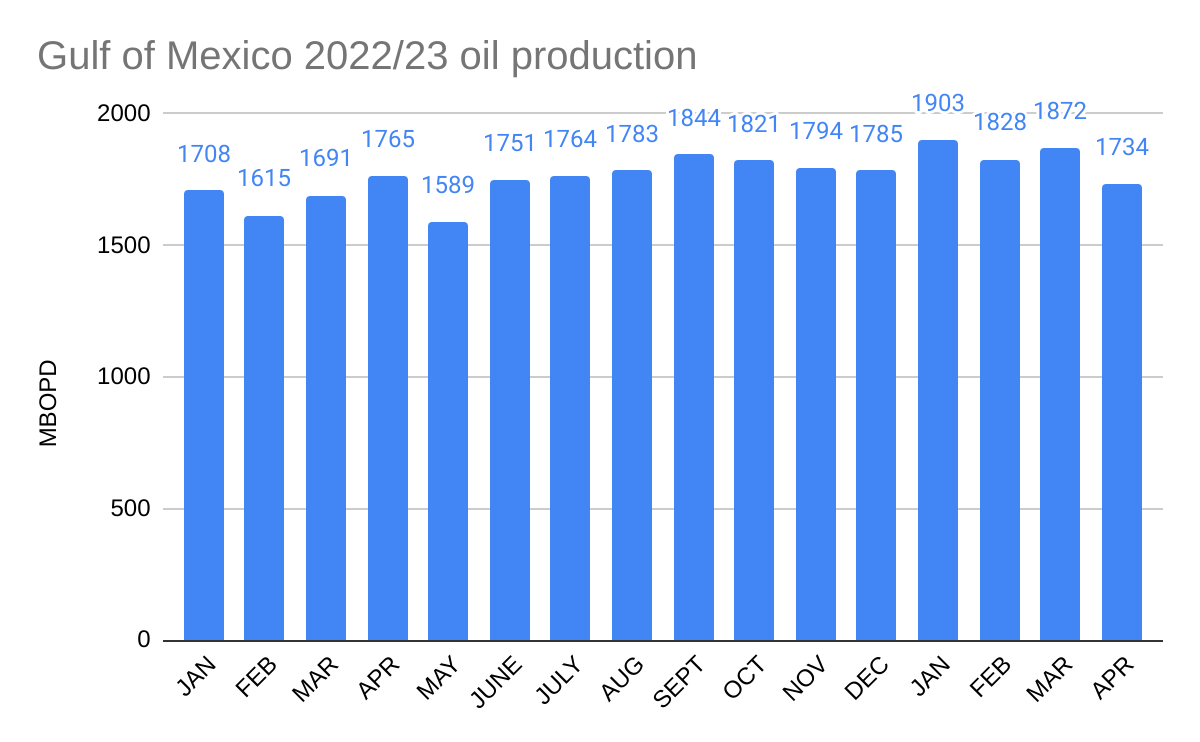
In 1979 Gulf of Mexico oil production had declined to 263 million barrels and many believed that further declines were inevitable. 40 years later, a record 693 million barrels were produced.

Onshore, lateral drilling and hydraulic fracturing capabilities are continuing. As a result, Exxon and others are predicting projecting higher recovery factors in the Permian Basin. Per Exxon CEO Darren Woods: “We are beginning to see the signs of some very promising new technologies that will significantly improve recovery.”

Opportunity + Ingenuity ➡ Energy Independence + Prosperity

Read Full Post »

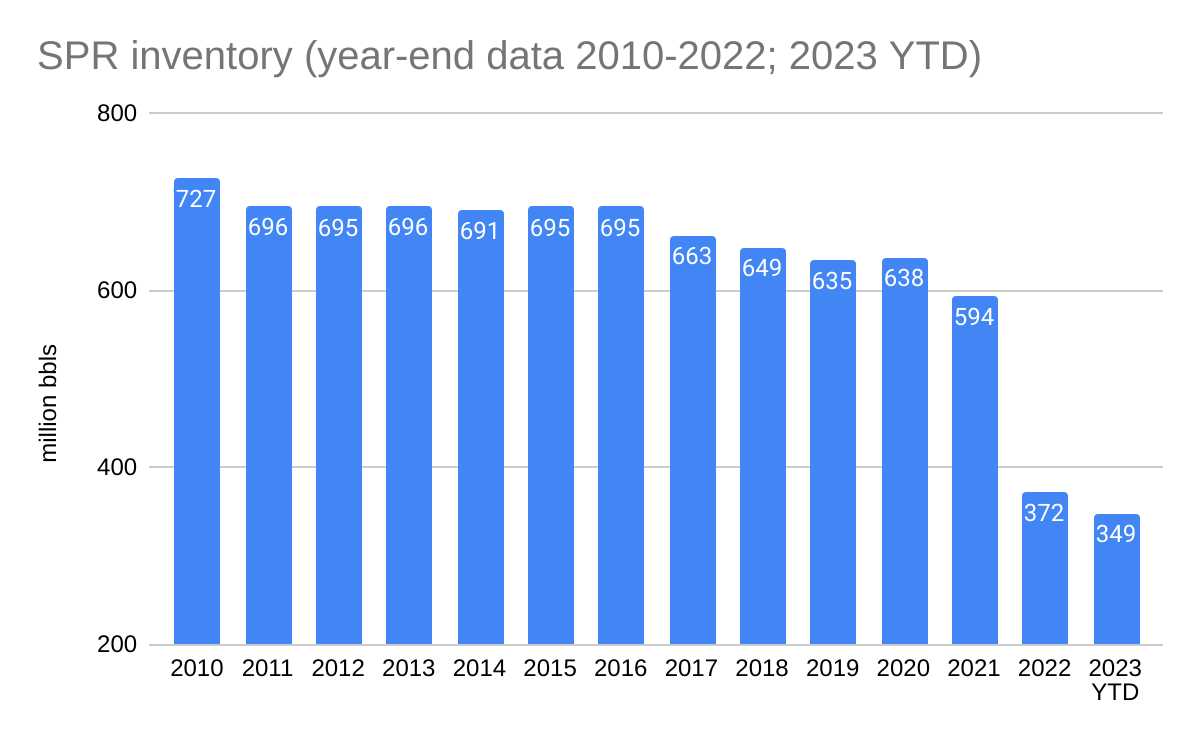
Meanwhile, the Strategic Petroleum Reserve is down to 348.6 million barrels as of June 23, but 6 million barrels, a relative drop in the bucket, are to be added in the fall.

Read Full Post »

Pangea
Quartz

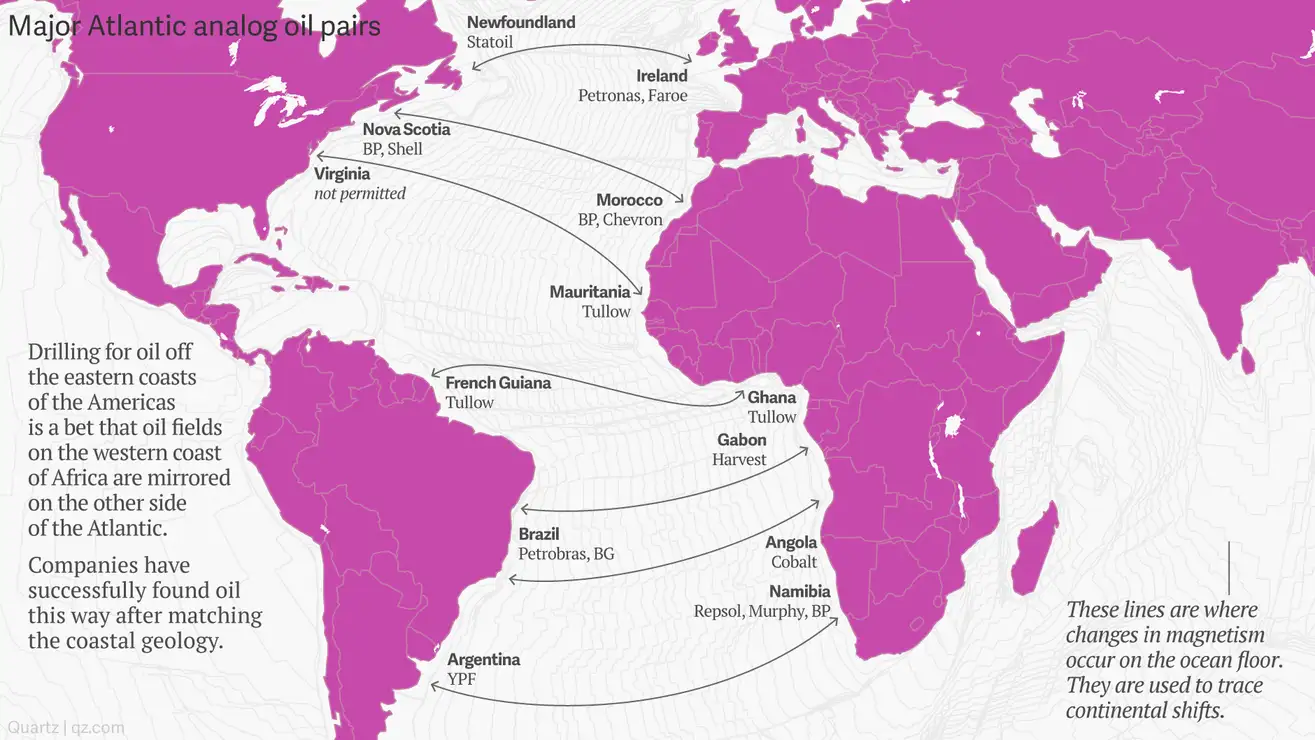
Until the late Triassic period, Virginia, the Carolinas, and Georgia were cojoined with Mauritania and Senegal as part of the Pangea super-continent. These Pangea neighbors share a common ancient geology.

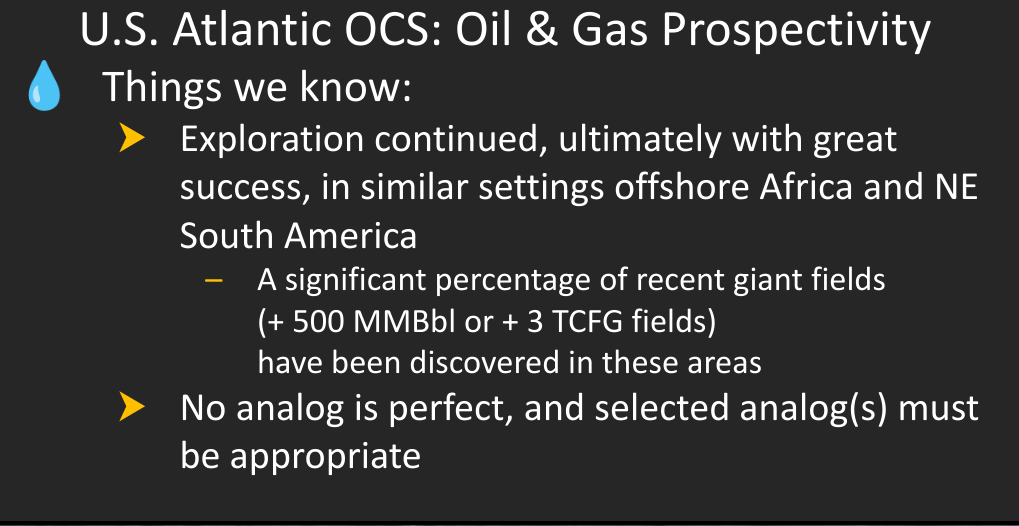
Paul Post believed the untested West African analogs in the US Atlantic were highly prospective, and could contain >20 billion BOE. Paul was not alone in his thinking about Atlantic resource potential. Sadly, Paul is no longer with us 😥, so I’m sharing a few of his slides as a reminder of his important work. I have also attached his 2016 report and am linking the 2021 update.

Given the current Atlantic moratoriums and the steep legal, social, and political barriers that would have to be cleared, evaluating the US Atlantic is not imminent. However, nearly all Atlantic nations and their Caribbean and North Sea cousins have exploration programs and some have been wildly successful. Oil and gas consumption will be stable or growing for the foreseeable future, and it’s important to better understand the petroleum potential of our Atlantic continental margin.

Read Full Post »

Last week, BOEM announced the acceptance of all 69 of Exxon’s Sale 259 carbon sequestration bids. This is despite these facts: (1) Exxon’s intentions were known, (2) there were no provisions for CCS bidding in the Notice of Sale, (3) no environmental review of CCS leasing was conducted, and (4) there are no procedures for evaluating CCS bids.

Absent some type of legislative maneuver, carbon sequestration is not authorized under these leases. If Exxon is just acquiring the leases for evaluation purposes in preparation for a possible CCS sale in the future, their lease acquisitions may be okay. If they are planning on retaining these leases for actual sequestration operations, that is not okay, at least not until a competitive process has been established for awarding or reclassifying such leases.

It’s also noteworthy that there was a second bidder for th blocks (in red above). Presumably that company, Focus Exploration, was interested in acquiring the tract for oil and gas exploration purposes. However, the Focus bid was a bit lower, so Exxon got the tract.

Read Full Post »

WASHINGTON, D.C. — Today, the U.S. Department of Energy’s (DOE) Office of Petroleum Reserves announced that contracts have been awarded for the acquisition of 3 million barrels of U.S. produced crude oil for the Strategic Petroleum Reserve (SPR).  These contracts follow the Request for Proposal that was announced on May 15, 2023. Furthering the Biden-Harris Administration’s three-part replenishment plan, DOE also announced a new Notice of Solicitation to purchase approximately 3.1 million additional barrels of crude oil to the Big Hill SPR site this September.

DOE (6/9/2023)

The Strategic Petroleum Reserve is now down to 351.7 million bbls, the lowest since 8/26/1983. The 6 million bbls in contracted and proposed purchases will replace only 30% of the oil withdrawn just in 2023 YTD, 2.0% of the amount withdrawn since 1/1/2021, and 1.6% of the volume needed to refill the SPR to capacity.

Given that 2024 is an election year, the prospects for substantial purchases next year would seem to be poor.

Read Full Post »

Per an announcement by his family, former Secretary of the Interior James Watt passed away on May 27. The Washington Post provides a good overview of his tenure at DOI during the Reagan administration.

Watt was an outspoken and controversial figure. His aggressive mineral leasing policies proved not to be in the best long-term interest of the OCS program. As their principal target, Watt became an unintended fundraiser for opponents of energy development.

Watt’s indirect Beach Boys ban, which didn’t sit well with Ronald and Nancy Reagan, was perhaps his best remembered faux pas. Per the WP:

He did not explicitly mention the Beach Boys, but they had performed at previous July 4 events, and the group became the focus of outrage over Mr. Watt’s pronouncement. President Reagan called the interior secretary to the Oval Office and presented him with a plaster foot bearing a bullet hole to humorously — but unambiguously — convey the message that he had shot himself in the foot.

Watt’s hideous and insensitive comment about the composition of the Linowes Commission seemed to be the final straw, and he resigned shortly after he made those comments. The “cripple” in that remark happened to be someone I knew, a highly regarded mineral economist named Richard Gordon who was one of my favorite graduate school professors.

Lots of James Watt jokes circulated during his tenure. One that I found amusing went something like this: James loved baseball and dreamed of someday standing in center field at Yankee Stadium ….. drilling for oil 😀.

RIP Secretary Watt.

Read Full Post »

« Newer Posts - Older Posts »