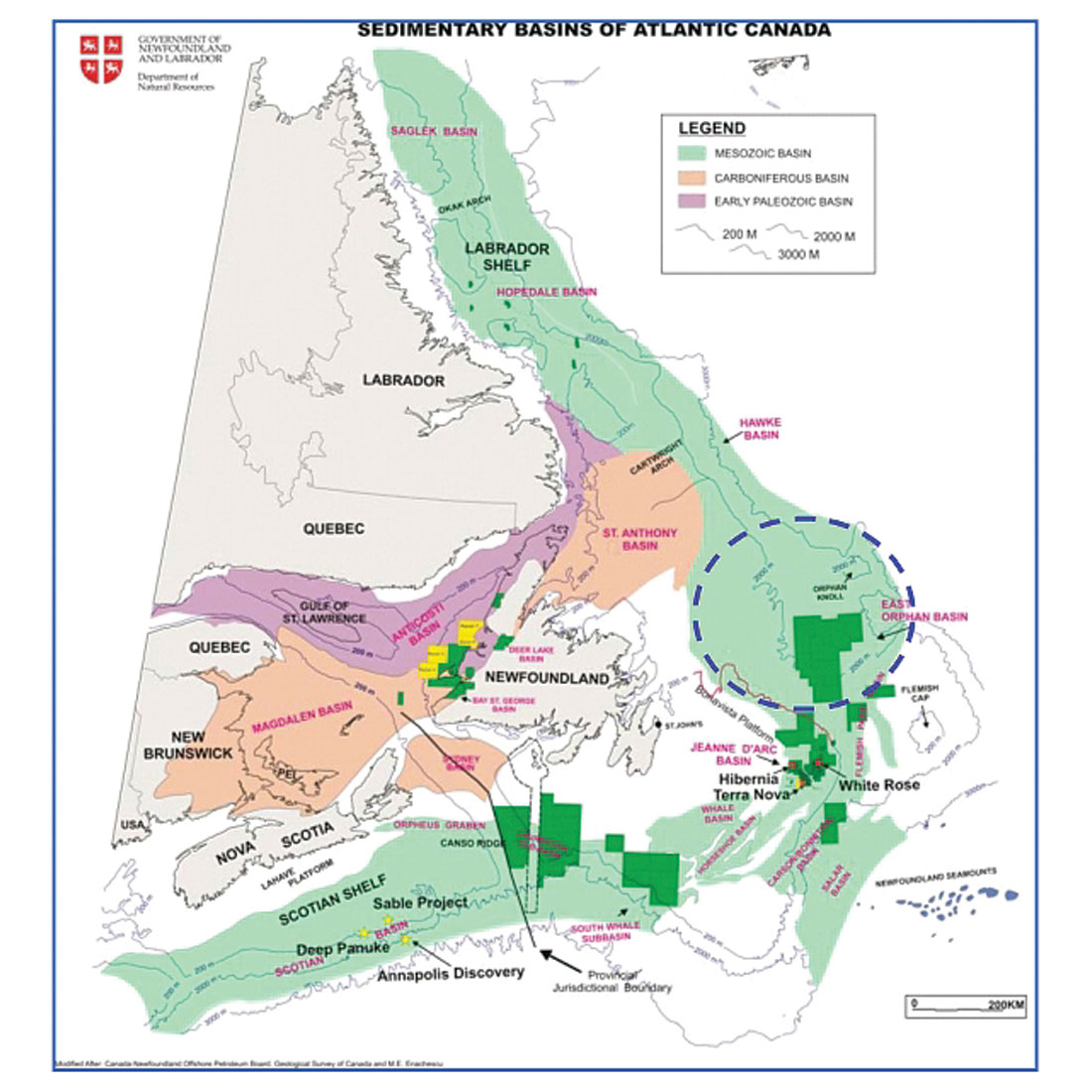
The DrillMAX is en route from Guyana to drill the Persephone wildcat well 500 km NE of Newfoundland in the highly prospective Orphan basin (3000 m water depth). This looks like the farthest from shore any well has been drilled in the Atlantic. The late spring date is prudent.This is definitely a well to watch because of the resource potential and difficult operating conditions.
Canadian and US approvals were granted and CNOOC acquired Nexen (Canada) in 2013.
Nexen’s Guyana interest was not mentioned in the press announcement, and appears to have been a rather minor consideration in the acquisition.
So, an apparent afterthought in CNOOC’s takeover of Nexen has (1) proven to be extremely profitable, (2) given the company and the Chinese government leverage in the Exxon-Chevron supermajor dispute, and (3) opened the door for CNOOC to increase their interest in the massive Stabroek field.
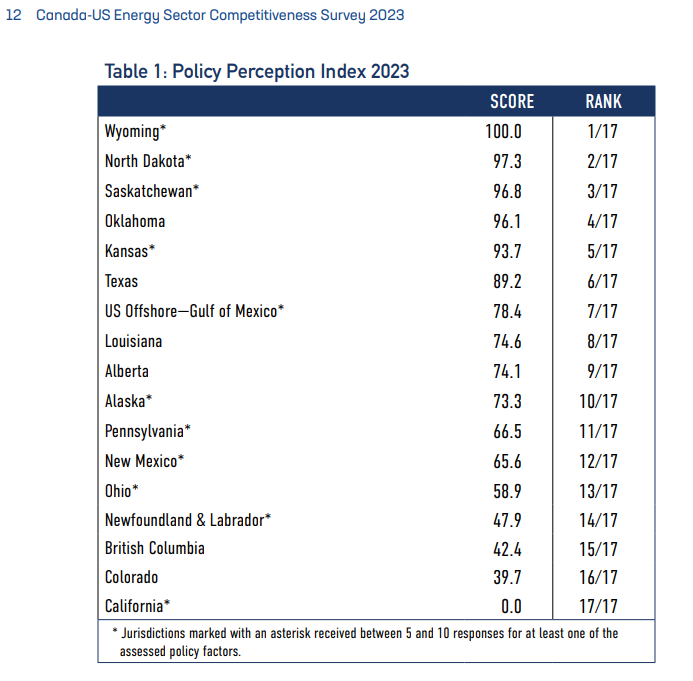
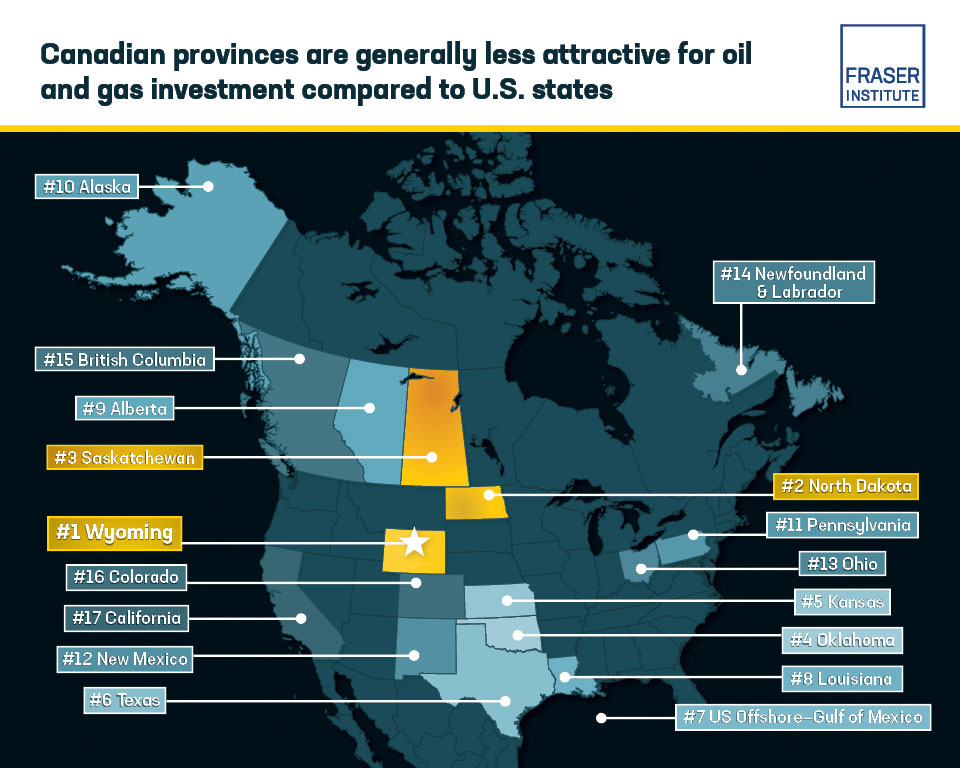
The Fraser Institute’s 2023 Canada-US Energy Sector Survey of senior executives in the upstream oil and gas sector provided data for assessing the competitiveness of US and Canadian jurisdictions. The resulting perception index (below) ranked Wyoming at the top with a score of 100.0 and California at the bottom with a score of 0.0. Perhaps one or more of the respondents have been mired in the California decommissioning quagmire. ☹
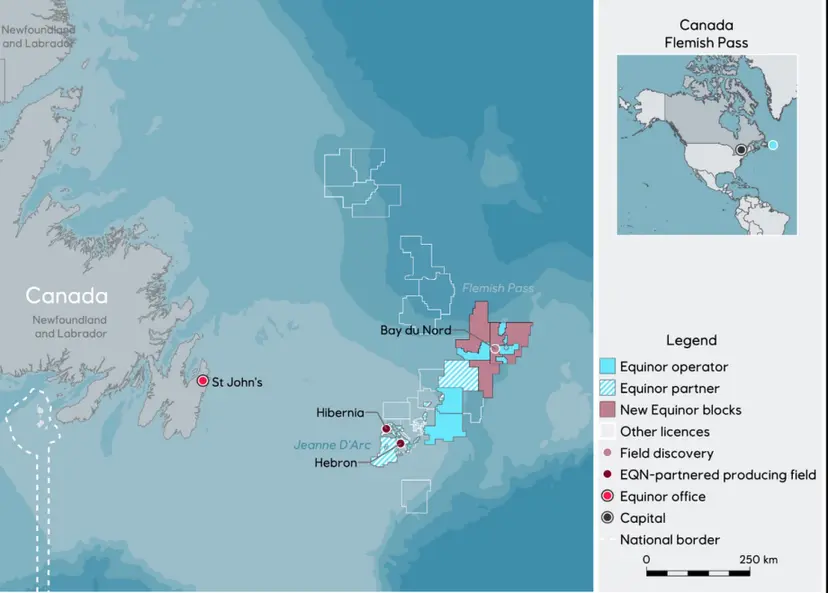
The CNLOPB has announced contingent resources of 340 million bbls for the Cambriol discovery which would be co-developed with 2 nearby discoveries as part of Equinor’s Bay du Nord project. Per CNLOPB estimates, this brings the Bay du Nord resource total to 1.132 billion bbls. Equinor has announced that 2 exploratory wells will be spudded this summer. Positive results would further strengthen the case for Bay du Nord development.
contingent resources per CNLOPB (million bbls)
Bay du Nord
407
Cappahayden
385
Cambriol
340
project areatotal
1132
“Contingent Resources” are volumes of hydrocarbons, expressed at 50% probability, assessed to be technically recoverable that have not been delineated and have unknown economic viability.
Meanwhile, Terra Nova production is ramping up after a long hiatus for FPSO refurbishment, remarkable Hibernia has produced more than double the original resource estimate of 520 million bbls and is still producing about 60,000-70,000 bopd, and Hebron is impressively producing about 120,000 bopd on average.
There is indeed reason for optimism about North America’s only Atlantic production in what is arguably the continent’s (world’s?) most challenging operating environment.
Edward J. Tennyson passed away last Friday at his Smith Mountain Lake, Virginia home. Ed worked in the Department of the Interior’s offshore program for more than 20 years, and arguably has done more than any single individual to advance oil spill response capabilities. A few of Ed’s many achievements:
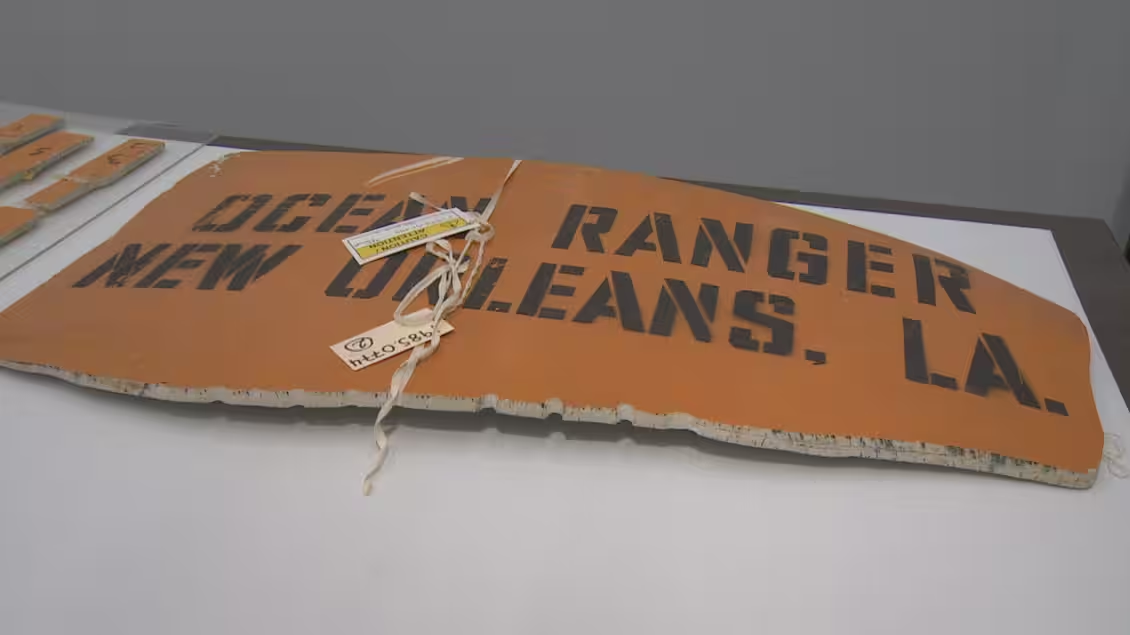
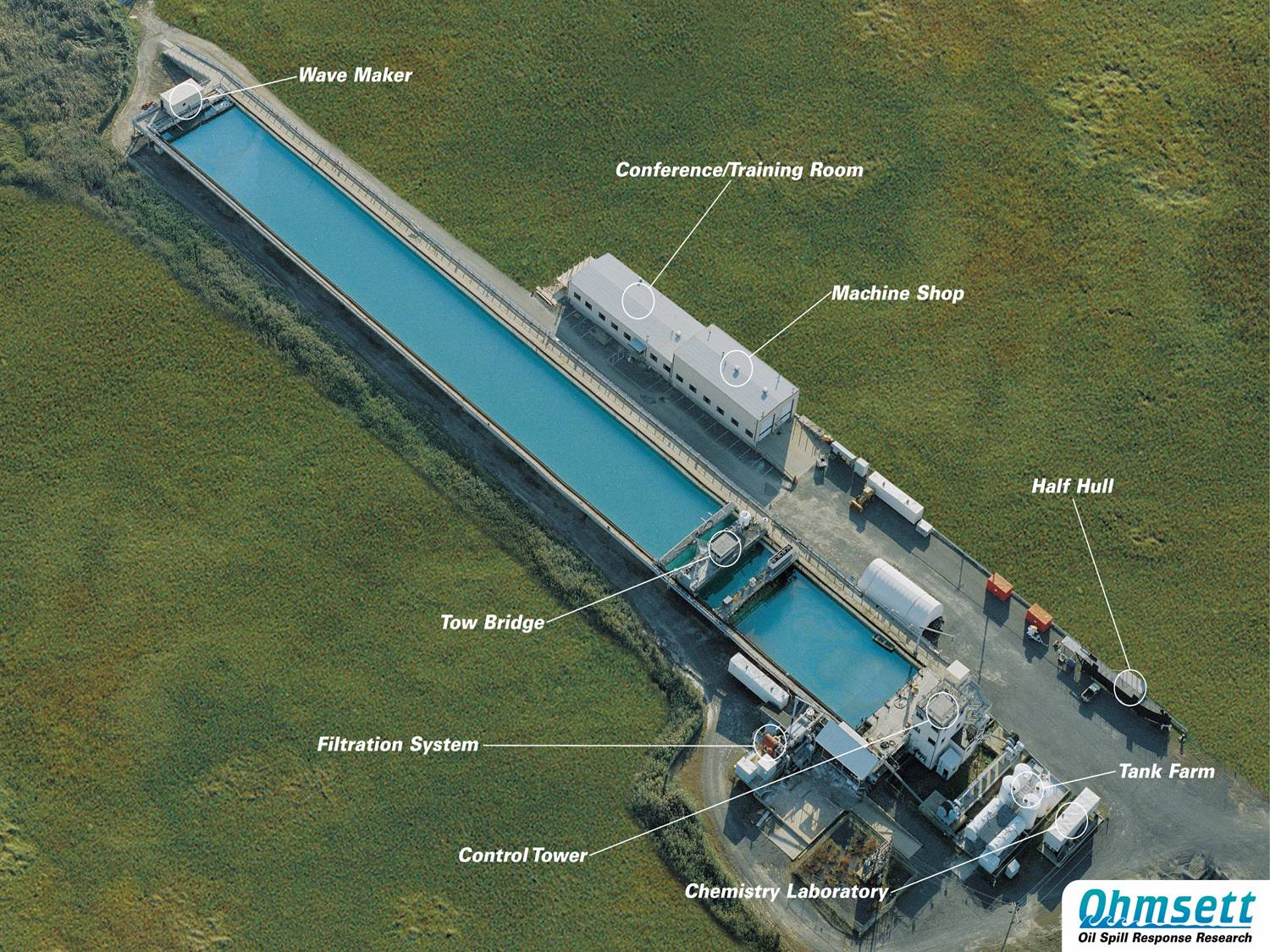
Ohmsett: EPA operated the Ohmsett spill response test tank in Leonardo, New Jersey, beginning in the early 1970s, but the facility fell into disrepair in the 1980s. Thanks to Ed’s vision and persistence, and the enactment of the Oil Pollution Act of 1990, the Minerals Management Service (MMS) began restoring the facility. Ed led the effort and did everything from operating forklifts to designing upgrades. Senator Frank Lautenberg (NJ) and a host of dignitaries participated in the grand reopening event in 1992. It was an amazing day, and Ohmsett, MMS’s only industrial facility, has exceeded even Ed’s lofty expectations.
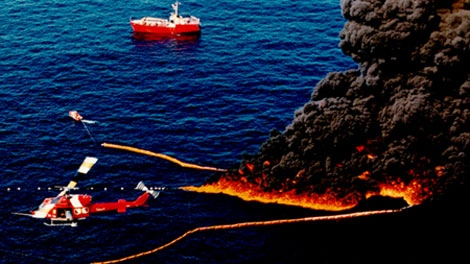
Burning oil slicks: Ed and a few of his US and international partners were the first to consider in situ burning as an oil spill response method. After some lab work, Ed proposed larger scale testing at Ohmsett in the presence of ice. The testing was amazingly successful, removing almost all of the oil. When Ed told a leading skeptic about the impressive results, his response was “you didn’t do it right.” 😀
Newfoundland burn: Because research spills were prohibited in US waters, Ed worked with his Canadian partners to conduct an in situ burning test offshore Newfoundland in 1993. Ed was an amazing leader during any kind of field trials, and was always the first person on the dock directing team members to their stations!
Remote sensing: Ed’s research led to a patent on the use of shipborne radar for locating oil slicks. Ed greatly advanced this capability by developing tools for airborne mapping and thickness determinations. As Ed frequently said, “90% of the oil is in 10% of the area.” By identifying where the oil was thickest, you could optimize spill response. (Ed was also an expert at identifying slicks with what he called his mach 20 eyeball 😀).
Chemical treatment: Ed was a leader in researching dispersants, herding agents, and other chemical methods for preventing spills from impacting shorelines or other sensitive areas.
Ed was an entertaining and informative speaker and was often called upon to brief congressional panels, and discuss his research at public meetings and professional conferences. He was rightfully a media darling and was often contacted for comments on oil spill response matters. Perhaps his most famous quote was in the Wall Street Journal during the Valdez spill in Prince William Sound. Ed described the spill response as follows: “Like mowing a 40 acre field with a 1/4 inch lawn mower.” 😉
The latest World Bank data tell us that significant gas flaring issues persist. Worldwide, 138,549 million m3 of gas were flared in 2022. This equates to a massive 4 tcf, the equivalent of the reserves in a major gas field and more than 5 times the total gas production in the Gulf of Mexico in 2022.
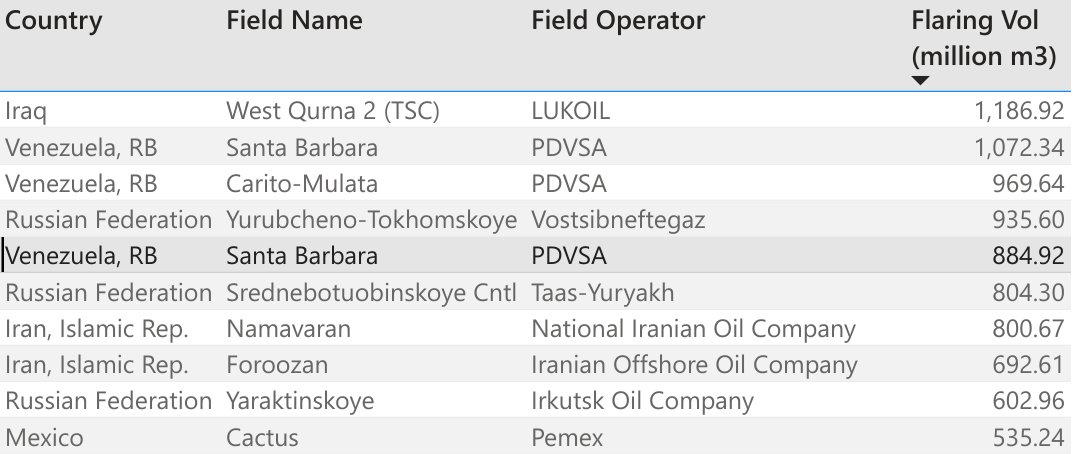
The top ten “flarers” are listed below. Each of these fields flared from 19 to 42 bcf. For comparison, the top ten GoM gas producers in 2022 produced 10 to 57 bcf, so single fields are flaring more than GoM companies are producing in total. Assuming for discussion purposes a gas-oil ratio of 1000 cu ft/bbl, all of the gas associated with 19 million to 42 million barrels of oil production was wasted from each field.
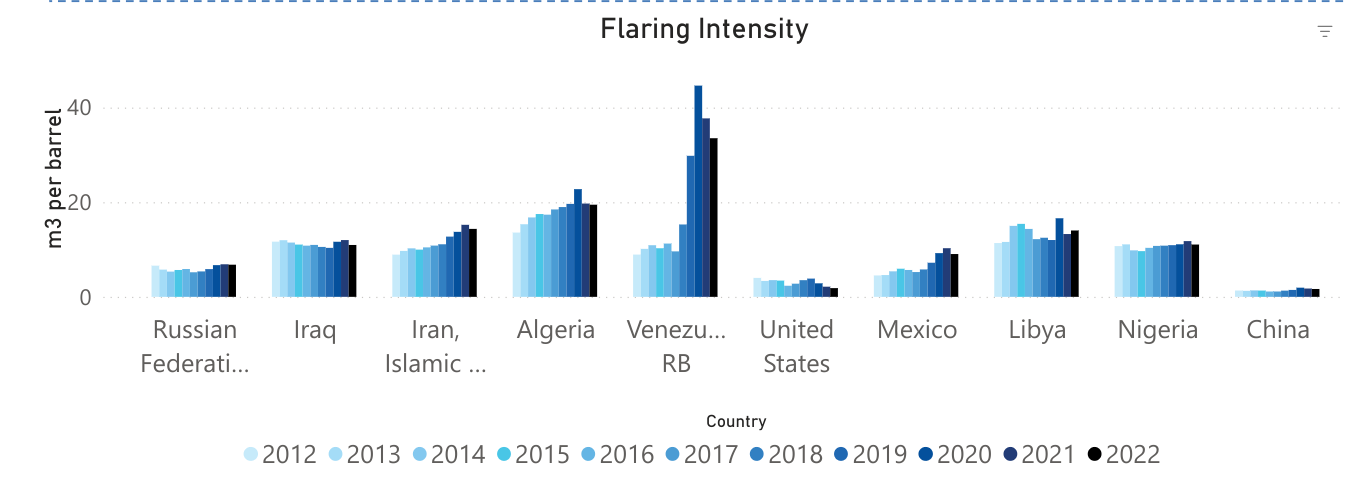
Posted below are the World Bank’s flaring intensity data (m3 of gas flared per bbl of oil produced) for the 10 countries with the highest flaring volumes. Venezuela’s flaring intensity rose to 44.6 m3/bbl in 2020, before declining moderately the following 2 years. 44.6 m3/bbl equates to 1575 cu ft/bbl. This gas flaring to oil production ratio implies that a very high percentage of Venezuela’s associated gas production was flared.
Here in North America, we have flaring issues of our own. Mexico’s Cactus Field is a top ten flarer (first table above) with 534.5 million m3 flared in 2022. The World Bank also lists 6 Permian Basin fields with >50 million m3 of gas flared in 2022.
Zeroing in on the US/Canada offshore sectors, fields with >1 million m3 of gas flared (2022) are listed below. Four of the top 7 are offshore Alaska and Newfoundland where the gas cannot currently be marketed and reinjection, field use, and flaring are the only options. Can production from these fields be better managed to reduce flaring volumes?
The Jones Act, protectionism at its finest, was enacted 113 years ago, and stipulates that vessels which transport merchandise or people between two US points must be US built, flagged, owned, and crewed. Congress tightened the screws further by ordaining that offshore energy facilities, including wind farms, are US points. That precludes the transportation of wind turbine components from US ports to offshore wind farms.
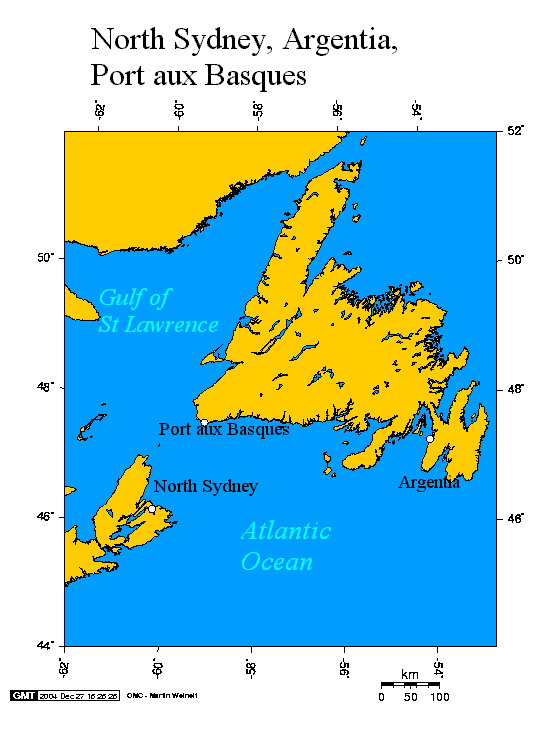
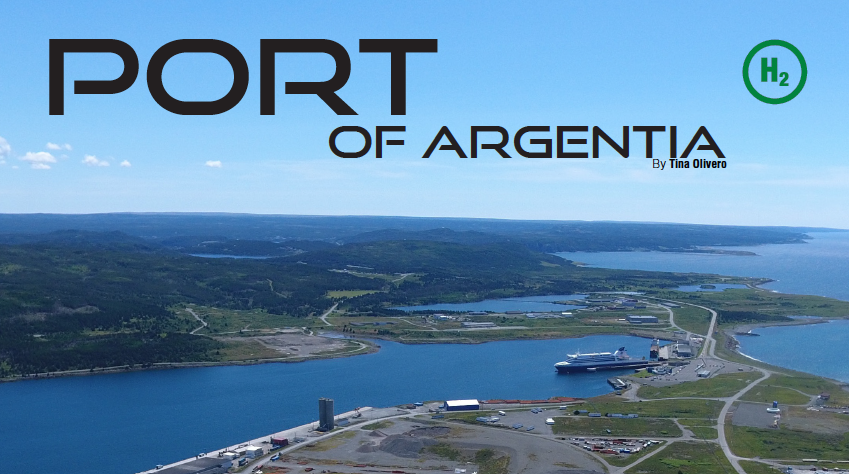
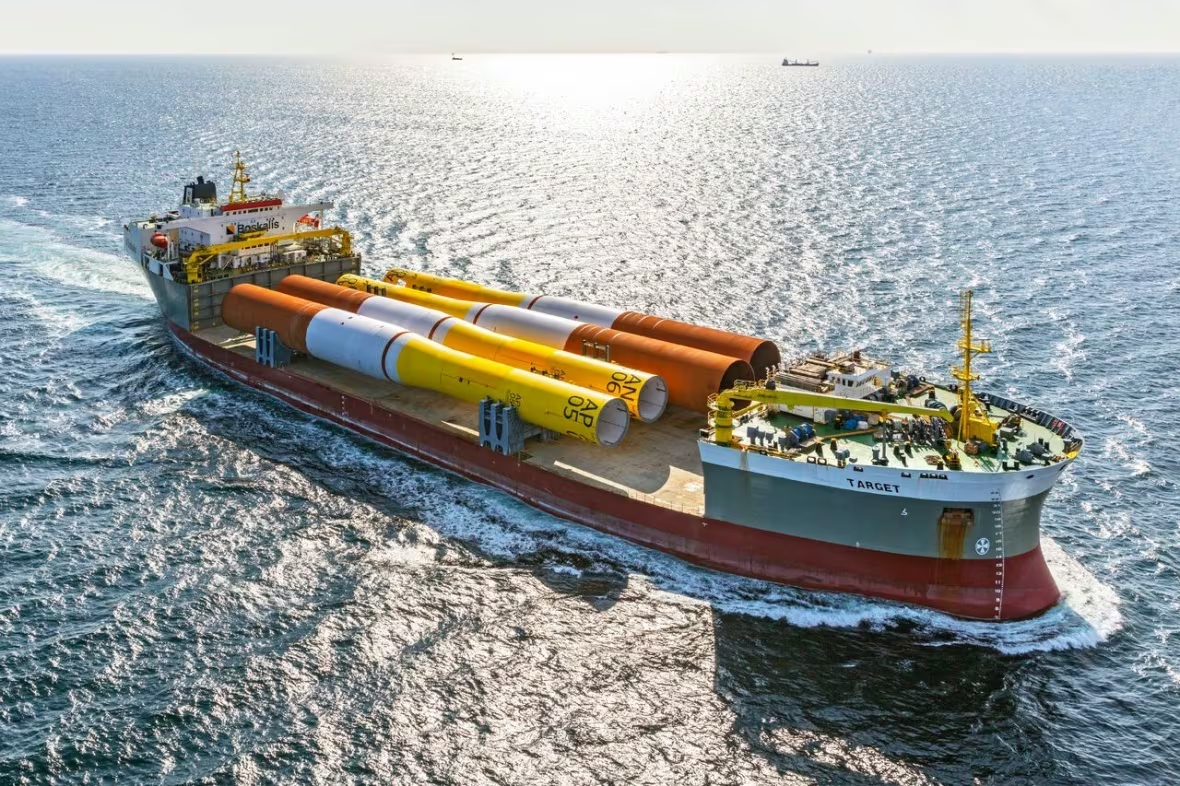
The Jones Act has thus provided an opportunity for the Port of Argentia, a former US Navy base in southeast Newfoundland, and the port is set to become a key node in the offshore wind supply chain. Monopiles constructed in Europe will be stored in Argentia, until they are delivered to US wind farms in the North Atlantic. Kudos to the folks at the Port of Argentia for taking advantage of this opportunity.
Dutch company Boskalis will be transporting the monopiles, which are expected to land in the Port of Argentia in a few weeks. (Boskalis)
An international regulatory colleague brought this puzzling RigZone article to my attention. Quotes:
“From one perspective, one can look at the overall absence of risk – from this perspective, we can easily say that either the United Kingdom’s North Sea or Canada’s Nova Scotian continental shelfis the safest region for offshore oil and gas operations right now,” Robak told Rigzone.
“Canada’s offshore industry accounts for approximately one million barrels per day, and its geographic location along the Nova Scotian continental shelf has been a benefit in that there is little to no risk to its continued operation on a day-to-day basis,” Robak said.
Comments:
Scotian shelf production ceased in 2018. All facilities were fully abandoned and decommissioned by November 2020. So yes, Scotian shelf oil and gas operations are the safest in the world, along with operations in the US Atlantic and other regions where there is zero activity.





 Bud's Offshore Energy (BOE)