Feeds:
Posts
Comments

Archive for the ‘accidents’ Category

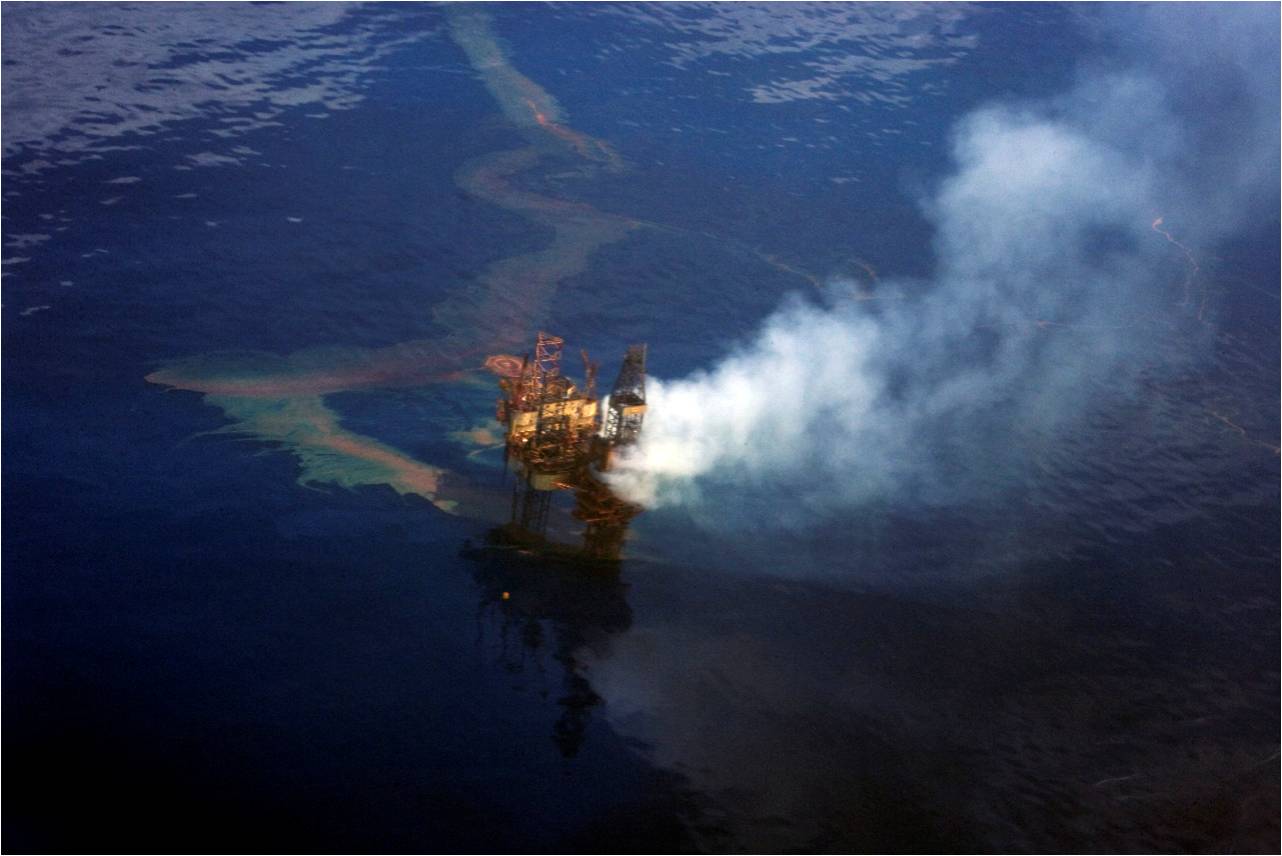
Those who read this obscure blog regularly know that we have been railing about the release of the Montara Inquiry Report since it was delivered to Energy Minister Ferguson on 18 June 2010. The report has now sat on the Minister’s desk for nearly twice as long as the Montara well flowed into the Timor Sea at an announced rate (cough, cough) of 400 barrels per day.

BOE wants to thank Minister Ferguson for helping teach us the virtue of patience, an important life skill that some of us had not previously mastered. In our newly enlightened state, we are becoming more observant. As a result, we noticed that the Australian Senate has already passed legislation strengthening the National Offshore Petroleum Safety Authority (NOPSA).

After reviewing information about the legislation here and here, I am a bit confused about the changes being enacted.  However, if the concerns (below) of Tina Hunter, an Assistant Professor at Bond University who had previously submitted testimony to the Montara Inquiry, have not been yet been addressed, Parliament needs to revise the legislation.  Multiple regulators are a problem, not a solution.  (The US needs to take notice.)

These legislative changes proposed will still split the responsibilities for Well Operations Management Plans between NOPSA and the responsible Delegated Authority (who assesses the well design and construction and drilling applications)….Furthermore, the regulatory amendments do not consider the environmental regulation of well operations and integrity, which also remains with the relevant Commonwealth or State Authority. Therefore, whilst in principle these proposed legislative amendments will provide benefits for the regulation of well integrity, it will still split the regulatory responsibility of well integrity between multiple regulators. Tina Hunter

Read Full Post »

BP is now estimating total Macondo response and damage costs at $39.9 billion. I would guess that only 4 or 5 other operating companies could have survived this type of hit.

Hopefully, every offshore operator is keeping this in mind when formulating safety management programs and training, research, and standards budgets.  Companies claiming that such disasters couldn’t happen to them are simply demonstrating that they could, because no company with a proper safety culture would make such a statement.

Read Full Post »

The above slide is excerpted from Torleif Husebo’s presentation at the Vancouver conference.  Since Piper Alpha in 1988, offshore safety leaders have been gathering and assessing hydrocarbon release data.  Norway, the UK, Australia, the Netherlands and other nations track these data because they are an important indicator of fire and explosion risks. The IRF reports these data as part of their performance measurement project.

Obviously, when hydrocarbons are unintentionally released at an offshore facility you have the potential for a very dangerous situation.   However, because of objections voiced when the MMS updated incident reporting requirements 5 years ago, the US government does not collect the detailed information needed to track the size and cause of these releases.  The US is thus unable to monitor trends and benchmark against other nations around the world.

Offshore companies have done well in responding to the drilling issues raised following the blowout.  However, the post-Macondo offshore industry needs to provide broad safety leadership.  A commitment to collecting performance data and assessing risk trends at OCS oil and gas facilities is absolutely essential.  A good place to start would be to initiate a cooperative hydrocarbon release data gathering program.

Read Full Post »

This slide presented by Dr. Mark Fleming during his excellent presentation in Vancouver piqued my interest, so I looked for a bit more information.  I found this interesting observation in a paper by Gonzales and Sawicka:

The role of risk perception is particularly interesting. First, performance in both safety and security settings is well characterized by the “unrocked boat” metaphor: Organizations become accustomed to their apparently safe state, thus misperceiving risk and allowing themselves to drift into regions of greater vulnerability, until (near) accidents temporarily induce greater risk awareness. The resulting pattern is oscillatory, with varying amplitude and typically leading to disaster.

The above quote seems to describe the situation on the Deepwater Horizon. Perhaps there was a sense of invulnerability among some employees (including managers) and finishing the job took precedence over safety.  As Mark Fleming remarked in his presentation, offshore workers know their employer is in business to produce barrels of oil, not barrels of safety.  Concerns about production (or in this case timely suspension of the well) can easily supersede concerns about safety.

A very important paper by James Reason, the person responsible for the “Unrocked Boat” diagram, had this to say:

The same cultural drivers-time pressure, cost-cutting, indifference to hazards and the blinkered pursuit of commercial advantage-act to propel different people down the same error-provoking pathways to suffer the same kinds of accidents. Each organization gets the repeated accidents it deserves. Unless these drivers are changed and the local traps removed, the same accidents will continue to happen.

Reason goes on to recommend a data collection program that is currently absent, at least on an industry-wide basis:

In the absence of sufficient accidents to steer by, the only way to sustain a level of intelligent and respectful wariness is by creating a safety information system that collects, analyzes, and disseminates the knowledge gained from accidents, near misses, and other sources of ‘free lessons.’

I would suggest that another way to sustain wariness is to present information on past accidents and why they can happen again. How many industry employees know what happened at Santa Barbara, Bay Marchand, Main Pass 41, Ixtoc, the Alexander Kielland, Ocean Ranger, Brent B, South Pass 60 B, and even Piper Alpha?

Finally, Reason reaches this critically important and completely relevant conclusion (keep in mind that this paper is 12-years old):

It need not be necessary to suffer a corporate near-death experience before acknowledging the threat of operational dangers-though that does appear to have been the norm in the past. If we understand what comprises an informed culture, we can socially engineer its development. Achieving a safe culture does not have to be akin to a religious conversion-as it is sometimes represented. There is nothing mystical about it. It can be acquired through the day-to-day application of practical down-to-earth measures. Nor is safety culture a single entity. It is made up of a number of interacting elements, or ways of doing, thinking and managing, that have enhanced resistance to operational dangers as their natural by-product.

Read Full Post »

National Commission letter

Chevron Cement Report

Chevron’s report states, among other things, that its lab personnel were unable to generate stable foam cement in the laboratory using the materials provided by Halliburton and available design information regarding the slurry used at the Macondo well. Although laboratory foam stability tests cannot replicate field conditions perfectly, these data strongly suggest that the foam cement used at Macondo was unstable. This may have contributed to the blowout.

Further:

The documents provided to us by Halliburton show, among other things, that its personnel conducted at least four foam stability tests relevant to the Macondo cement slurry. The first two tests were conducted in February 2010 using different well design parameters and a slightly different slurry recipe than was finally used. Both tests indicated that this foam slurry design was unstable.

Read Full Post »

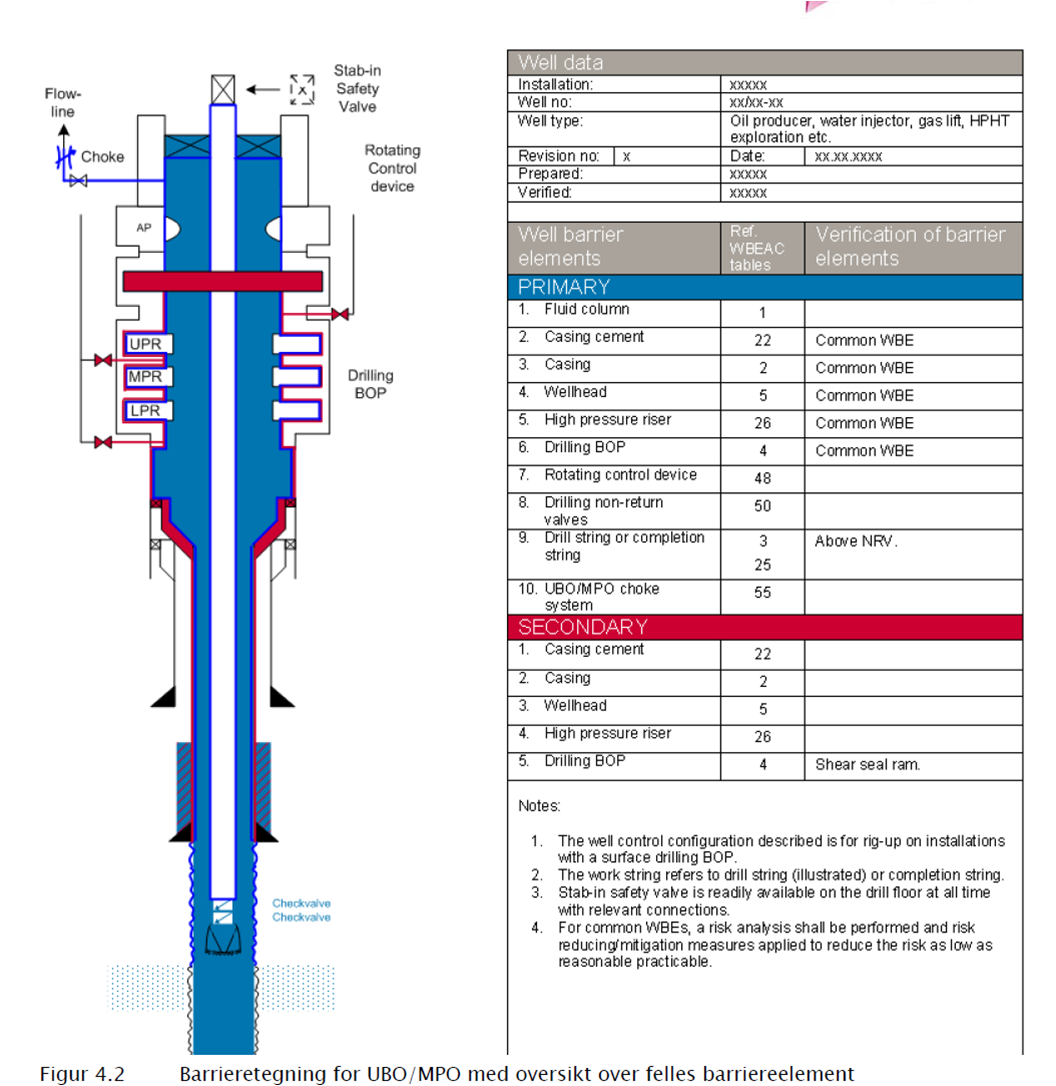
With all the discussion about risk management, what should government and industry be doing to identify and address potential weaknesses in drilling and production systems?  A good place to start would be to review the reports that have been prepared by the Petroleum Safety Authority – Norway (PSA) for the past ten years. These reports use a variety of indicators to assess safety risks on the Norwegian Continental Shelf. Torleif Husebo presented a summary of PSA’s risk program at the Vancouver conference. The full text of their latest report can be viewed here.

As was noted in Vancouver, we need to continue to develop and assess new indicators for possible use in risk management programs.

According to PSA:

No single indicator can pick up all relevant aspects of risk. Developments are accordingly measured by utilising a number of relevant indicators and methods, such as the collection and analysis of incident indicators and barrier data, interviews with key informants and a major questionnaire survey every other year.

Risk management is complex and there is no cookbook.  Technological, human, organizational, and procedural factors must all be considered, and everyone needs to be engaged.

Read Full Post »

1. BP CEO Bob Dudley pokes media, politicians and oil industry:

A great rush to judgment by a fair number of observers before the full facts could possibly be known, even from some in our industry.

Comment: Bob Dudley is correct, but the attacks and distortions were entirely predictable.  Human responses to high-profile disasters will always be excessive, and you won’t have a lot of friends when you are a public target. Add this negative outcome to the list of more important reasons for avoiding offshore disasters – protecting workers, preventing pollution, and preserving assets.

2. PTT and Indonesia continue to battle over Montara damages.

Comment: This will be a long and interesting international battle.  I wonder if PTT has any assets in Indonesia?  I can’t really tell from their website.

Read Full Post »

Bad News from Burma

Odd Finnestad alerted me to this tragic incident reported in the Bangkok Post:

At least 14 people have been killed and 58 more injured in a fire at an oil well in central Burma, an official in the military-ruled country said Monday.

Will we ever learn the details?

Read Full Post »

Helicopter Crash

From the Fresno Bee (18 Oct).  Click on visual to enlarge:


Read Full Post »

Now that Chile, with the help of the international community (including two companies from the Commonwealth of Pennsylvania where the drilling industry began), has rescued the 33 miners, can we drill into the Australian government and rescue the Montara and Varanus Island reports?

While we are at it, can we learn more about these accidents?

Let’s learn from past accidents, so we don’t need dramatic rescues in the future.

The offshore safety record will be suspect until industry and governments have credible, internationally accepted programs and policies for ensuring that accidents are independently investigated and that investigation updates and reports are released in a timely manner.

Read Full Post »

« Newer Posts - Older Posts »