Feeds:
Posts
Comments

Archive for the ‘accidents’ Category

Judge Wells’ report is quite expansive in a way that may be unprecedented for a helicopter accident review.  His commission delves into cultural and organizational issues and regulatory philosophy. Consistent with the international trend, the commission recommends a separate safety authority (page 302):

It is recommended that a new, independent, and stand alone Safety Regulator be established to regulate safety in the C-NL offshore. Such a Safety Regulator would have to be established, mandated, and funded by both Governments by way of legislative amendment, regulation, or memorandum ofunderstanding, or other means.

In his background remarks, Judge Wells makes this comment on regulatory culuture:

I have come to believe that regulation to be effective must encompass more than a list of do’s and don’ts. It must set in place and lead an inclusive regime of many players, some very important, others less so. All the available knowledge, skills, and wisdom of all participant sshould be harnessed in the safety cause.
Read Full Post »

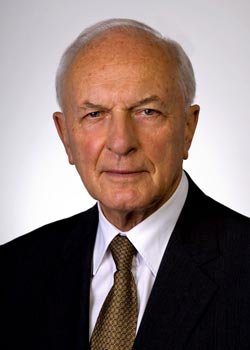
Robert Wells

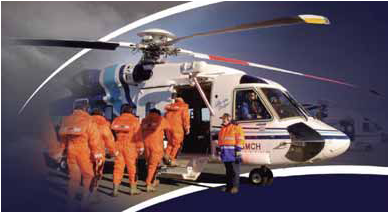
On March 12, 2009, 17 lives were lost when a Sikorsky S-92-A helicopter crashed offshore Newfoundland.  The helicopter was en route to the Sea Rose FPSO via the Hibernia platform. The Honorable Robert Wells, a very impressive judge who spoke at the Vancouver regulators conference, directed an official inquiry into the aspects of the crash that were not related to the helicopter’s airworthiness.  The airworthiness issues are being investigated by the Canadian aviation authorities. Mr. Wells’ report was released today. If you don’t have time to read the entire report, I suggest that you go to the recommendations beginning on page 289 of volume 1.

Passengers boarding an S-92A helicopter

Read Full Post »

Link

The National Academy of Engineering and the National Research Council have released the interim report of the Committee on the Analysis of Causes of the Deepwater Horizon Explosion, Fire, and Oil Spill to Identify Measures to Prevent Similar Accidents in the Future. The interim report includes the committee’s preliminary findings and observations on various actions and decisions including well design, cementing operations, well monitoring, and well control actions. The interim report also considers management, oversight, and regulation of offshore operations.

Comment: No significant surprises.

Read Full Post »

In conveying our deep condolences and solidarity to the United States Government and while sharing in the anguish of those whose livelihoods had been seriously affected, I asked that the report ofthe investigation into the accident be submitted to IMO as soon as possible after it has been concluded, so that we may move swiftly to introduce, into the regulatory regime of the Organization, whatever lessons may be learned from the incident in order to enhance safetyand environmental protection in the offshore industry and strengthen, should that prove necessary, the provisions of any relevant IMO instrument. Remarks by Secretary-General Efthimios Mitropoulos

The Secretary-General seems to be committed to an expanded role for IMO in regulating offshore oil and gas facilities.  Questions:

  1. Is an organization with a shipping history and culture the right body to be regulating drilling and production operations? While IMO has experience with mobile drilling units, primarily the vessel aspects, the organization has had little or no involvement with well construction and integrity, production operations or pipelines.
  2. What would an expanded IMO role  mean for existing offshore regulators and their cooperative efforts (primarily through the International Regulators’ Forum) to coordinate activities and improve safety performance?  Generally speaking, the principal safety regulators for offshore facilities have had a very limited role in IMO activities.

Read Full Post »

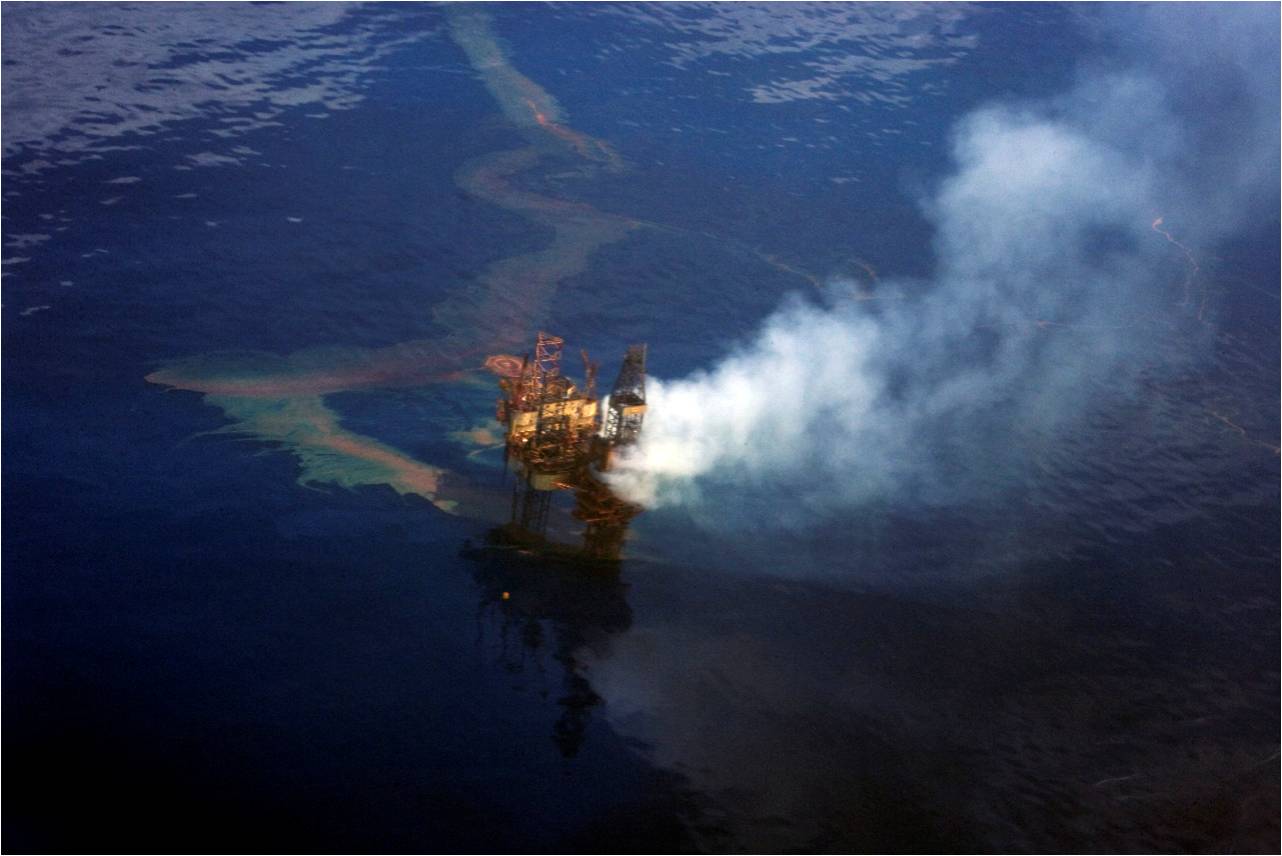
Montara Blowout - Timor Sea - 2009

A spokesman for PTTEP says the damaged rig will be towed away next month and a replacement will be in place by June next year subject to government approvals. ABC-Australia

Food for thought:

  • Should a major blowout automatically disqualify a company from further exploration and development within that field?
  • Should PTTEP have voluntarily agreed to (been required to) assign their Montara rights to another company?
  • Should leases or operating licenses be automatically suspended after such major accidents?
  • Shouldn’t exploration and development rights be contingent on safe and responsible operating practices?
  • Do PTTEP and other operators deserve a second chance under such circumstances? Third chance? How many?

Read Full Post »

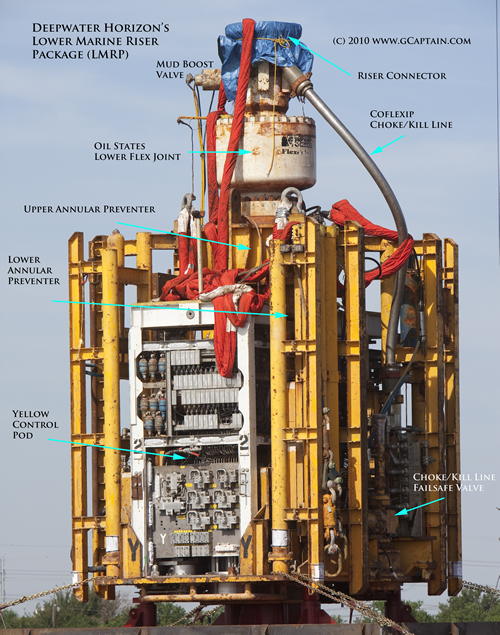
BOP stack awaiting post-Macondo inspection (from gCaptain.com)

Other than the mildly amusing skirmish about the positioning of representatives of the various factions during the inspection process (Hey, how about access for bloggers!) and some silly comments about the independence of the inspection contractor, there has been very little attention paid to the Deepwater Horizon BOP examination that is scheduled to begin today at NASA’s Michoud facility in New Orleans. The absence of media interest is surprising given the importance of this part of the Macondo investigation. Presumably, there will be more extensive coverage beginning today.

While the inspection and testing will be quite technical, some important aspects should be rather straightforward.  What is the position of the rams, particularly the shear ram?  What is the condition of the ram elements and annular preventer?  Is there evidence of control line leakage?  What can be determined about the electronics and the sequencing system designed to automatically actuate the shear ram when power is lost or when the riser is disconnected?

Hopefully, the official investigation website, which currently has no information on the BOP inspection program, will provide updates.  While we don’t expect immediate information on the findings, there should be reports explaining how the inspection program is being conducted and what has been accomplished.

Read Full Post »


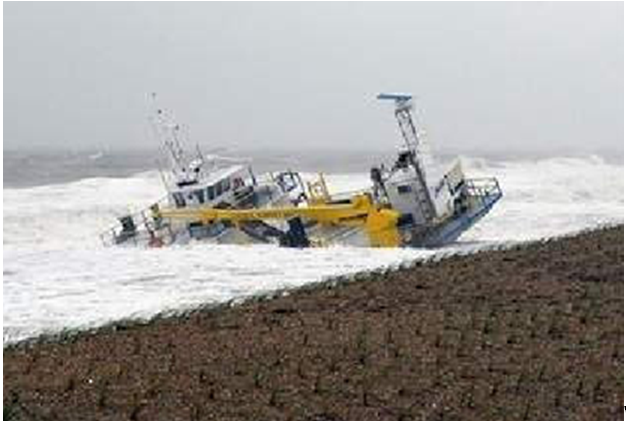
Liftboat Russell Peterson, May 12, 2008


Malcolm Sharples reminds us that the Coast Guard still hasn’t completed the investigation of the tragic liftboat accident in May 2008. The boat was conducting research for a proposed offshore wind project.  Why the delay?

Here is more information from Malcolm:

Liftboat  Russell W. Peterson damaged in storm, 1 person died, 1 person injured ; “One dead, one rescued as research vessel sinks off Rehoboth”.  One crewman died today after gale force winds pounded a specialized research ship that was launched in March to study Delaware’s offshore wind power resources, forcing the Coast Guard to pull two crewmen from the sinking vessel. Coast Guard Petty Officer Nick Cangemi said one of the two crew members of the RV Russell W. Peterson did not have any vital signs when a helicopter arrived on the scene this morning. “We took both people to the hospital in Maryland, where the hospital declared one of the gentlemen deceased,” Cangemi said. They were taken to Peninsula Regional Medical Center in Salisbury, MD.  The ship was left adrift and ran aground at Bethany Beach.

Read Full Post »

Our 15 September post suggested that a properly conducted and interpreted negative pressure test would likely have prevented both the Macondo and Montara blowouts. As more information about Macondo surfaces, there is no dispute about the significance of the negative pressure test errors.  Despite differences of opinion about the contributing factors, all companies involved with the blowout seem to agree that a properly conducted and interpreted negative pressure test would likely have prevented the blowout.

Read Full Post »

I hate to say nice things about lawyers :), but the Commission attorneys handled the two days of hearings very effectively.  The outstanding staff preparation and support were quite obvious.

BOE has have long advocated more industry leadership on guiding principles, incident data gathering and verification, risk assessment, peer-audits, standards improvements, cooperative research, and failure data for critical equipment.  In that regard, we are pleased that Chairmen Reilly and Graham, the other Commissioners, and the industry and government witnesses commented positively on some of these important programs.

We need to effectively manage the safety and environmental risks associated with offshore exploration and production, because we can’t afford the economic and security risks associated with a diminished offshore oil and gas program. BOE advocates conservation and renewables, but projections by IEA and other leading energy forecasters make it clear that oil and gas will continue to be an important part of our energy mix for decades.

Read Full Post »

With all of the discussion about the float collar issues, I thought I was listening to the Montara hearings this morning.   I’m surprised that neither the Commission questioners nor the panelists have mentioned Montara. When you have two major blowouts within 8 months and they have very similar root causes, the similarities should be of enormous interest. The absence of information transfer that might have prevented Macondo should be a major consideration in these and other hearings.

We have been talking about the similarities between Montara and Macondo for months.  Colin Leach’s 28 September post draws further attention to this issue.  Colin also hit the nail on the head with his comment that an additional barrier should have been installed above the float collar before proceeding.

Read Full Post »

« Newer Posts - Older Posts »