Feeds:
Posts
Comments

Archive for the ‘accidents’ Category

This useful SafeOCS report summarizes and itemizes well control equipment failures associated with well operations on the Gulf of Mexico OCS in 2020. Of particular note was the absence of any loss of containment (leak of wellbore fluids) events in 2020 or the prior two years.

Unfortunately, there appear to be significant reporting gaps despite the fact that reporting of these data is required by regulation (30 CFR 250.730(c)). The reporting issues are particularly serious for surface systems (surface BOP and associated equipment). Per SafeOCS, surface rig reports were received from less than 50% of active operators and rigs. Reporting for subsea systems (subsea BOP and associated equipment) was much better with 85% of the active rigs represented.

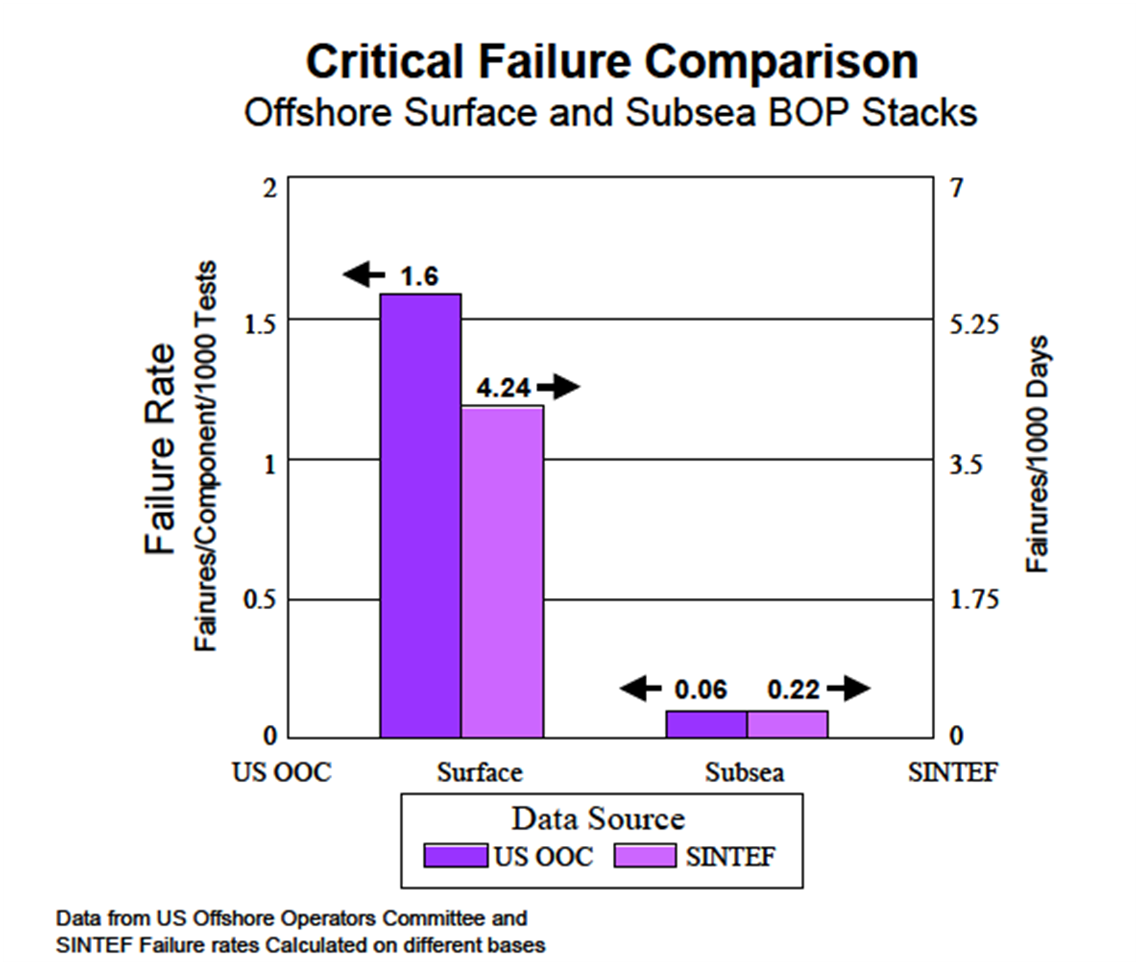
Of further concern with regard to the reporting of surface equipment events, the data indicate only 5.3 events per 1000 hours for surface systems vs. 71.5 for subsea systems. While subsea systems are more complex, the cost of pulling and repairing subsea equipment dictates newer, better maintained equipment. As a result, surface BOPs have historically had higher failure rates than subsea BOPs. The data below are from a presentation to MMS approximately 15 years ago. Both the Sintef and OOC data show higher failure rates for surface BOPs.

The SafeOCS team did a very good job of analyzing the reports and presenting the data. However, the reporting issues need to be investigated and resolved to get maximum value from this very important work.

Read Full Post »

This is inexcusable if true:

A federal investigation into the October oil spill that paved the Orange County coast has been stalled for several months as authorities await approval to cut, remove and analyze part of the ruptured pipeline.

LA Times

Coast Guard and National Transportation Safety Board investigators currently have to rely on video captured during underwater pipeline inspections. Without a more detailed forensic examination of the damage in a lab, investigators won’t know whether to continue with their original investigation or move the investigation in a new direction.

LA Times

It’s not good when bureaucratic processes stall an important investigation. Hopefully the responsible agencies will be sufficiently embarrassed to get the investigation moving.

Read Full Post »

The New York Times calls out the CDC for not releasing Covid data:

Kristen Nordlund, a spokeswoman for the C.D.C., said the agency has been slow to release the different streams of data “because basically, at the end of the day, it’s not yet ready for prime time.” She said the agency’s “priority when gathering any data is to ensure that it’s accurate and actionable.”

Another reason is fear that the information might be misinterpreted, Ms. Nordlund said.

“The C.D.C. is a political organization as much as it is a public health organization,” said Samuel Scarpino, managing director of pathogen surveillance at the Rockefeller Foundation’s Pandemic Prevention Institute. “The steps that it takes to get something like this released are often well outside of the control of many of the scientists that work at the C.D.C.”

BOE and others interested in offshore safety have expressed similar frustration over delays in the release of incident data and reports by BSEE and the Coast Guard, and the limited inspection data that are publicly available. As is the case with the CDC, we suspect these issues have more to do with bureaucratic obstacles than technical limitations or staff reluctance.

Read Full Post »

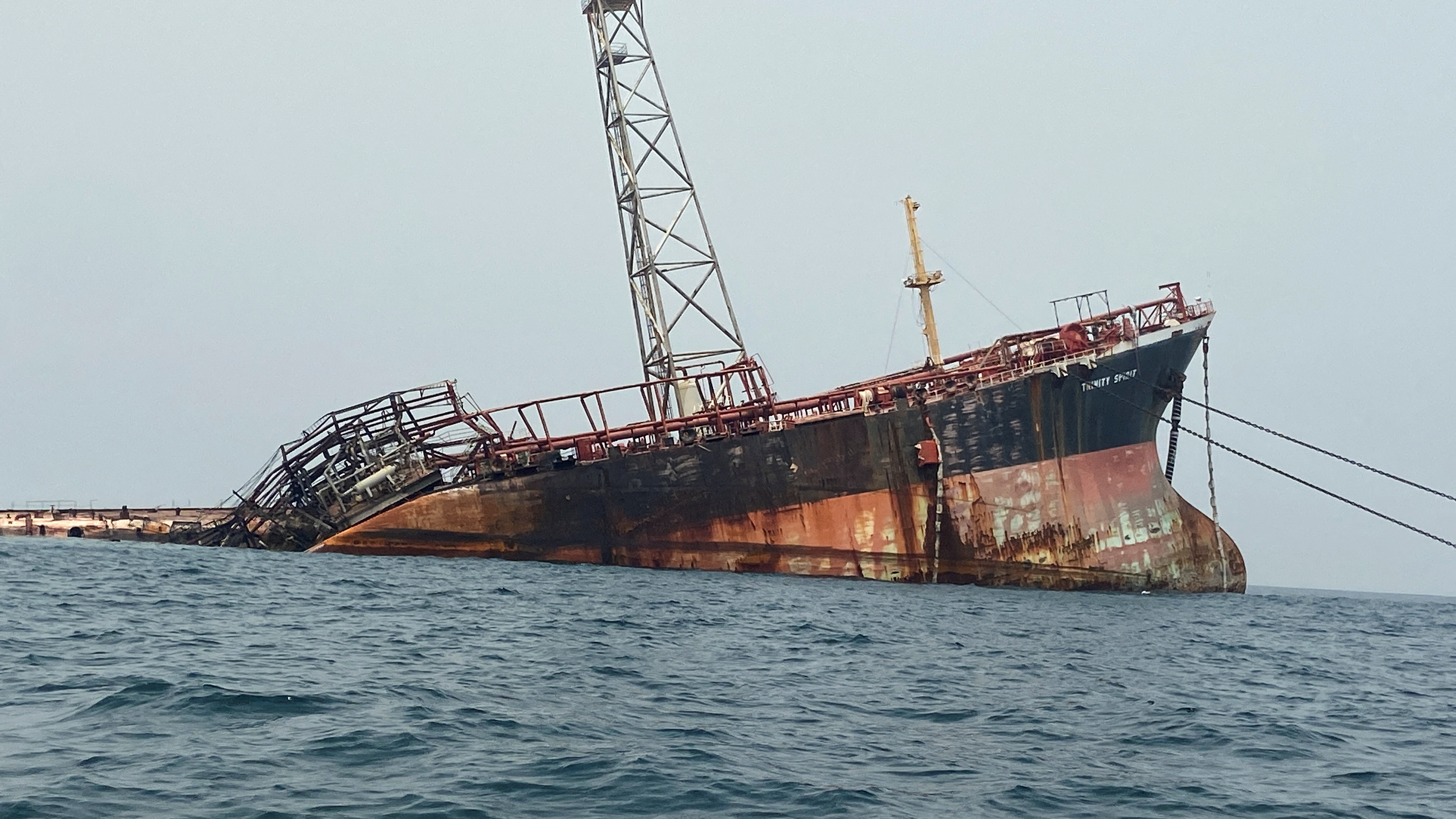
Wreckage of theTrinity Spirit floating production, storage and offloading (FPSO) vessel is seen after an explosion and fire broke out at Shebah Exploration & Production Company Ltd (SEPCOL) offshore production site on Wednesday, in Warri, Nigeria February 4, 2022. REUTERS/Tife Owolabi
Trinity Spirit FPSO

Two weeks after the Trinity Spirit FPSO fire offshore Nigeria we still don’t know the fate of the crew. Neither the operator nor the regulator websites include any mention of the fire. The last operator statement (more than a week ago) advised that 3 workers were confirmed dead and others were still missing. There has been no subsequent update and the media have moved on, as is usually the case when there is no ongoing oil spill.

The absence of transparency in reporting major incidents and subsequent findings is not unique to Nigeria. BOE has commented on US shortcomings in that regard and the failure to release important information about past incidents worldwide.

We need an international standard that identifies incident information to be publicly disclosed and specifies the timeframes and methods for releasing this information. An API or ISO committee would seem to be the best means of developing such a standard. If these organizations are unwilling to take the lead, perhaps the International Regulators’ Forum can do so. The credibility of the offshore industry is at stake.

Read Full Post »

Howard Pike forwarded this comprehensive Ocean Ranger video. Worth watching.

Read Full Post »

This is an excellent tribute written by two brothers who lost their father in the Ocean Ranger tragedy. I highly recommend that you listen and reflect.

Ocean Ranger Memorial Will Look a Little Different This Year
Ocean Ranger
Hibernia Oil Field
Heritage, Newfoundland & Labrador

Condensed below is important background information from my notes and from an outstanding presentation by Howard Pike in St. John’s Newfoundland in 2017.

  • 84 men aboard; no survivors
  • Largest semisubmersible drilling rig of its day
  • US registered MODU
  • The “unsinkable” rig had weathered more than 50 significant storms
  • Unlike most semisubmersibles, the ballast control room was located in one of the legs (starboard column No.3). At drilling draft, it was just 28 feet above mean sea level.
  • Water depth was 240′, rig was moored with 12 anchors
  • Ballast control operators had minimal training
  • Incident with the ballast control system just a week before the disaster.
  • On February 14th, the Ocean Ranger was battered by a severe storm; wave heights up to 21m; rogue wave damaged deck items on nearby Sedco 706
  • Crew stopped drilling when the heave exceeded 15′, forced to shear the drill pipe during the disconnect process
  • Crew did not deballast to the storm draft from the 80′ drilling draft
  • Waves broke portlight in the ballast control room
  • Salt water soaked the ballast control console
  • Short circuits or inadvertent operator commands caused ballast tank valves in the bow to open.
  • Water flooded the forward ballast tanks, and the rig began to list toward the bow.
  • Crew inadvertently opened more pontoon valves
  • Forward list passed the point of recovery
  • The Ranger’s standby vessel, the Seaforth Highlander, was contacted but was delayed by sea conditions
  • At approximately 1:10 a.m. on February 15 th , the Ocean Ranger began sending mayday signals.
  • Zapata Ugland and Sedco 706, working in the area, sent their standby vessels
  • At 1:30 a.m. the Ocean Ranger’s radio man sent his final transmission. The crew was boarding the lifeboats.
  • Investigators later determined that as the lifeboats descended, violent winds threw them against the side of the rig, damaging some lifeboat hulls before they ever touched the water.
  • Crew did not have survival suits
  • Seaforth Highlander attempted unsuccessfully to rescue survivors from a damaged lifeboat
No. 3 represents the location of the Ocean Ranger control room

At the time of the Ocean Ranger tragedy, 3 rigs – the Alaskan Star, Rowan Midland, and Zapata Saratoga were working on Georges Bank in the US North Atlantic. The nor’easter had passed over Georges Bank before strengthening as it moved toward the Grand Banks. Among the small Georges Bank drilling community there was a kinship with those working in the even harsher environment on the Grand Banks. 40 years later, we are still greatly saddened by what transpired. Many lessons were learned and applied, but the ocean is unforgiving and we must continue to assess storm preparedness. Reflection on past tragedies is an important part of the process.

Read Full Post »

Ikemefuna Okafor, the executive officer of Shebah Exploration & Production Company Ltd (SEPCOL), the vessel owner, said late Sunday “three crew members have been found alive in the community”.

Barron’s

Read Full Post »

The incident occurred last Wednesday (2/2), but the only public statement from the operator was the following day:

“At this time there are no reported fatalities but we can confirm that there were 10 crewmen on board the vessel prior to the incident and we are prioritising investigations with respect to their safety and security,” SEPCOL Chief Executive Ikemefuna Okafor said in a statement.

That statement has been contradicted by at least 2 Nigerian press reports:

Meanwhile, three persons have been confirmed dead while eleven others declared missing following the explosion. Sources told reporters in Warri yesterday that three bodies had been recovered while 12 others were yet to be accounted for at the time of filing this report. 

This Day

Daily Trust had, however, gathered that three Seafarers working onboard the Floating Production Storage and Offloading (FPSO) facility may have lost their lives in the fire

Daily Trust

The only public statement by the Nigerian regulator (NUPRC) echoed the SEPCOL statement:

There has been no report of any casualties or fatalities and the Commission will take necessary measures to ensure that all safety and environmental measures in line with global best practices to safeguard lives and the environment are put in place.”

Comments:

  • Apparently, the fate of the workers was unknown, and the “no report of any casualties” comments were misleading and inappropriate given the gravity of the situation.
  • Neither the operator nor the regulator have provided any update on the number of workers safely recovered or missing, or the status of any ongoing search.
  • There is not a single mention of the fire on either the operator or regulator website.
  • There seems to be uncertainty about the size of the crew at the time of the incident.

Troubling comment from a ship captain quoted in the Daily Trust article:

It was an accident waiting to happen since 2017. It should not even have been allowed to stay or operate in Nigerian waters.

AFP

Read Full Post »

This Nigerian source is now reporting that there are 3 confirmed deaths, and 11 workers declared missing. No other sources are reporting casualties at this time.

The latest AFP report indicates that the fire has been extinguished.

Read Full Post »

The Nigerian Upstream Petroleum Regulatory Commission (NUPRC) Thursday disclosed that it had commenced an investigation into the circumstances surrounding the explosion of a Floating Production, Storage and Offloading (FPSO) vessel in Warri, Delta State.

This Day, Lagos
  • Still no report of any casualties
  • Industry source indicated that the FPSO was not producing at the time and had about 50,000 barrels in storage
  • No indication that any wells are on fire
  • Per Rystad the FPSO has not been producing since 2019 and was being used solely for storage.
  • Per Reuters, SEPCOL is the technical operator of the block though the production licence was held by consortium member Express Petroleum. SEPCOL’s production license had reportedly been revoked in 2019 for legacy debts.
  • Lots of important technical, operational, and management aspects to this major incident. Hopefully, NUPRC’s report will be publicly available at the conclusion of their investigation.

Read Full Post »

« Newer Posts - Older Posts »