As a result, on Sept. 29 Sable Offshore filed a declaratory judgement action against the State of California in Kern County. Sable is asking the court to confirm that the objectionable permitting provisions of SB 237 do not apply to their Las Flores Pipeline System.
Also, on Oct. 6 Sable filed a motion increasing the monetary damages in its ongoing case against the California Coastal Commission to $347 million. Sable asserts that their pipeline repair program was authorized by existing permits issued by the County of Santa Barbara under its Local Coastal Program and delegated Coastal Act authority.
These seem like good tactical moves on the part of Sable.
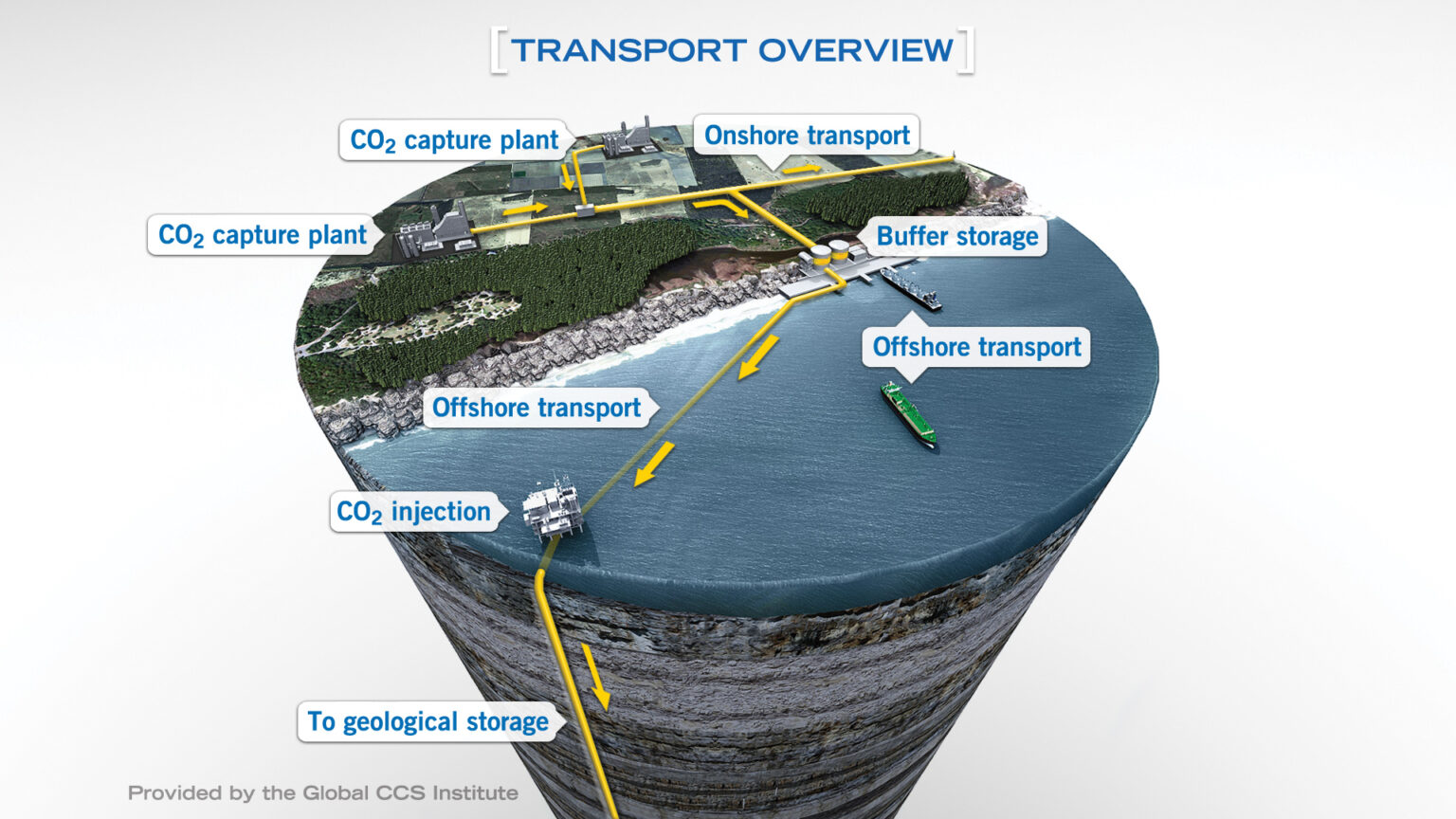
Unsurprisingly, the carbon capture and sequestration (CCS) hype is fading fast. No other carbon strategy is so strongly opposed by both climate change activists and skeptics.
Support for CCS seems to be limited to those seeking to profit from subsidies, mandates, and disposal fees. In 2022, Exxon projected a $4 trillion CCS market by 2050. Pipe dream?
“Highlights” of the Gulf of America OCS carbon disposal era:
amended the OCS Lands act to authorize “the injection of a carbon dioxide stream to sub-seabed geologic formations for the purpose of long-term carbon sequestration.”
exempted CO2 injection from the restrictions on ocean dumping by stipulating that such injection “shall not be considered to be material (as defined in section 3 of the Marine Protection, Research, and Sanctuaries Act of 1972.” Without this exemption, CO2 streams would clearly be “material,” as defined in 33 U.S.C. 1402, and would be subject to the stringent requirements of that act.
directed that “not later than 1 year after the date of enactment of this Act, the Secretary of the Interior shall promulgate regulations to carry out the amendments made by this section.” (This deadline is long past, which is not uncommon for such legislative directives.)
11/17/2021: Not coincidentally, two days after the enactment of this legislation, Exxon was the sole bidder on 94 nearshore tracts with very limited oil and gas production potential. This was an oil and gas lease sale and there were no provisions for carbon sequestration leasing. Nonetheless, Exxon was awarded leases for all 94 tracts. As a result of litigation delaying the issuance of Sale 257 leases until Oct.1, 2022, those 5 year leases will expire in 2027.
3/29/23: Exxon bid at Sale 259 on 69 nearshore tracts with little oil and gas potential. Once again, this was strictly an oil and gas lease sale and Exxon’s CCS intentions were clear. Nonetheless, the leases were awarded.
6/25/2025: For the first time ever, the Federal government felt compelled to stipulate the obvious (proposed lease sale notice for OCS Sale 262) – that an Oil and Gas Lease Sale is only for oil and gas exploration and development.
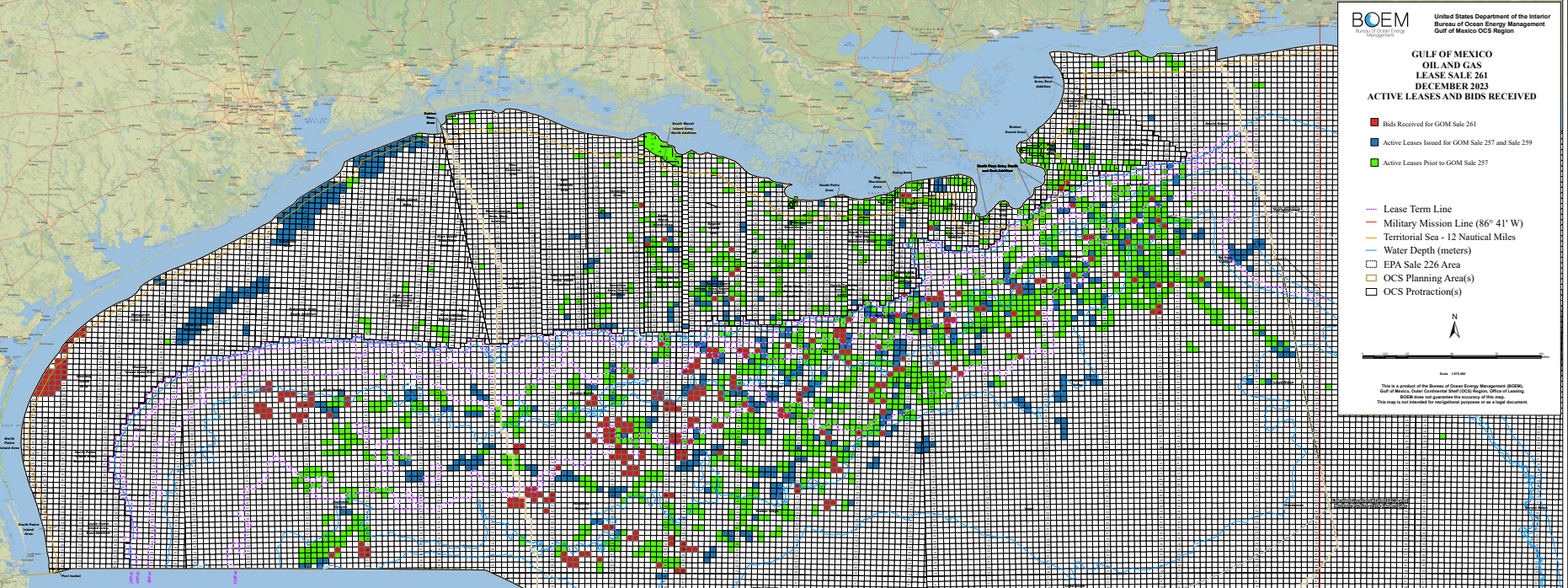
Gulf of America lease map: 199 oil and gas leases were wrongfully acquired for carbon disposal purposes. At Sale 261, Repsol acquired 36 nearshore Texas tracts in the Mustang Island and Matagorda Island areas (red blocks at the western end of the map above). Exxon had acquired 163 nearshore Texas tracts (blue in map above) at Sales 257 (94) and 259 (69).
Even those of us who are supporters of responsible offshore oil and gas production find it a bit unsavory that some companies are looking to cash in on (and virtue signal about) carbon collection and disposal at the public’s expense. Perhaps companies that believe oil and gas consumption is harmful to society should be seeking to reduce production rather than engaging in enterprises intended to sustain it.
Congratulations to Dr. Ned Mamula on his confirmation as Director of the US Geological Survey. I had the pleasure of working with Ned when he was a young geologist in the Conservation Division (CD) of USGS. At the time, CD was the safety and environmental regulator for OCS oil and gas operations. Ned is a great guy and a dedicated geologist!
Ned’s statement at his confirmation hearing is attached. “Map Baby Map!”
Quaise Energy: “Millimeter wave drilling is the most transformational drilling technology since the drill bit was introduced to the world in the 1930s. It’s the key that finally unlocks superhot geothermal energy worldwide, and we’re already getting started on our first power project in the western United States.
Millimeter wave drilling is what makes geothermal universal, not niche. It’s far more than just a new tool. It’s as consequential as peering into the atom, going into orbit, and mapping the human genome. And, it can open the door to terawatts of geothermal power for the entire world.“
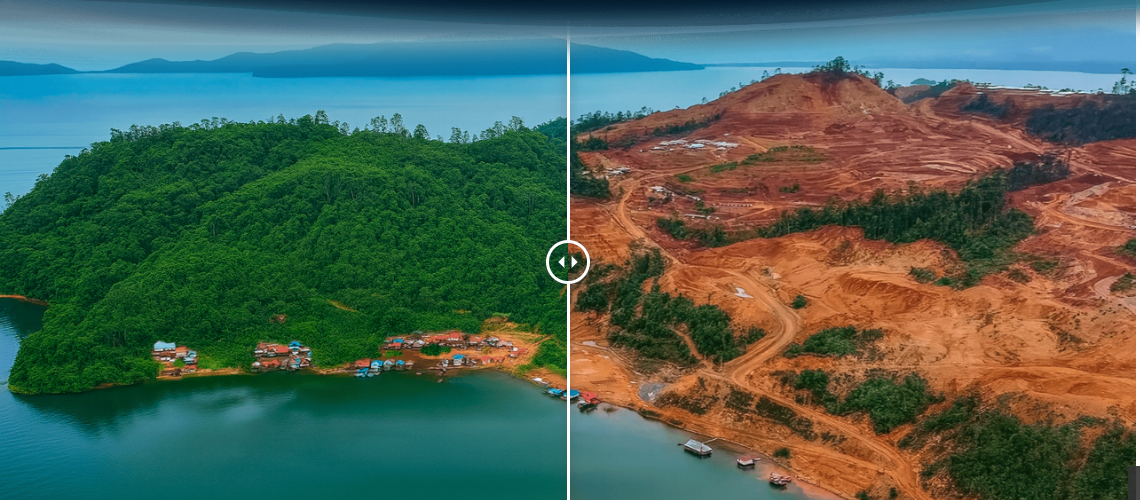
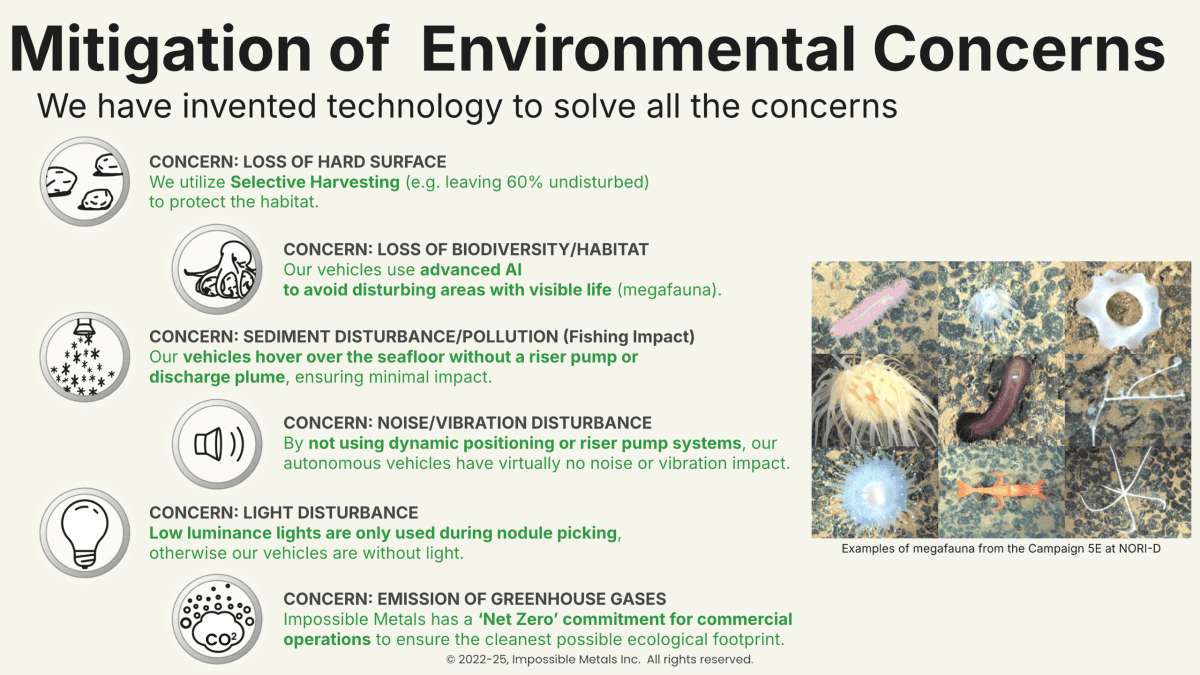
Terrestrial Indonesian nickel mine site before and after miningBefore and after: terrestrial Chilean copper mine siteDeep-sea nodule field before and after collection by Impossible Metals
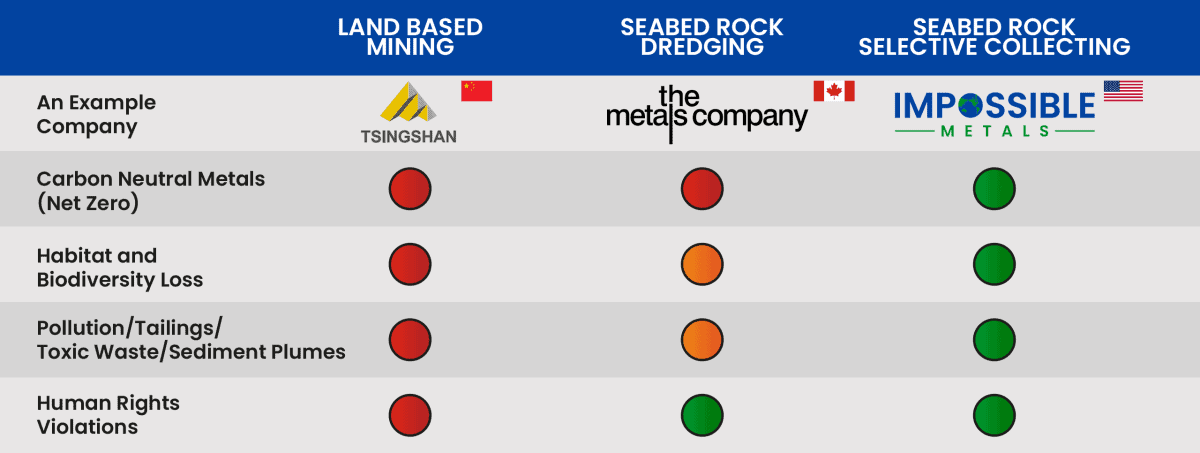
An Impossible Metals table (below) understandably favors their methods vs. those employed by deep-sea mining rival The Metals Company. However, both approaches are far preferable, environmentally and socially, to onshore metal mining.
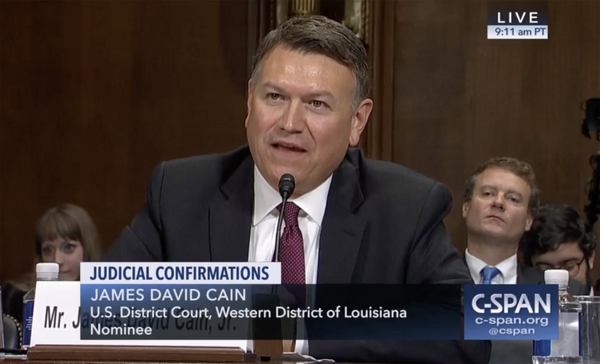
Although President Trump rescinded Biden’s action via executive order on January 21, 2025, the court proceeded with the case, acknowledging the high likelihood of similar actions in the future.
Judge Cain concluded that Biden departed from historical executive practice and exceeded statutory limits under OCSLA Section 12(a), which allows the president to “withdraw from disposition any of the unleased lands of the outer Continental Shelf,” but does not explicitly authorize permanent or irrevocable bans.
The judge emphasized that prior withdrawals were typically temporary or modifiable, and attempts to make them permanent encroached on congressional powers.
The ruling reinforces that OCSLA withdrawals must be revocable by future presidents, limiting executive power to bind successors on public lands disposition. The ruling should prevent future reliance on leasing bans.
Judge Cain’s decision is important because leasing bans should be carefully considered and should not be executed casually at the end of a term for purely political purposes.
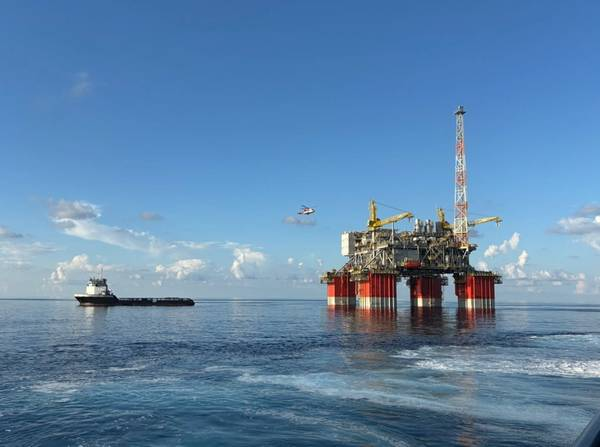
Every deepwater platform installed since Feb. 2018, when Chevron installed its Big Foot tension leg platform (TLP), has been a Floating Production Unit (aka FPU or production semisubmersible). During that period, no new SPARs, FPSOs, or TLPs were installed.
The list (below) of these simpler, safer, greener FPUs has grown by two with the initiation of production at Shenandoah and Salamanca. Note the water depth range from 3725 to 8600 ft.
platform
operator
water depth (ft)
first production
Appomattox
Shell
7400
May 2019
King’s Quay
Murphy
3725
April 2022
Vito
Shell
4050
Feb 2023
Argos
bp
4440
April 2023
Anchor
Chevron
4600
Aug 2024
Whale
Shell
8600
Jan 2025
Shenandoah
Beacon
5840
July 2025
Salamanca
LLOG
6405
Sept 2025
The efficiencies achieved with the simpler platform designs combined with the high pressure (>15,000 psi) technology developed over the past 2 decades is facilitatihg production from the highly prospective Paleogene (Wilcox) deepwater fans. (For those interested in learning more about the geology, see the excellent presentation by Dr. Mike Sweet, Univ. of Texas, that is embedded in this post.)
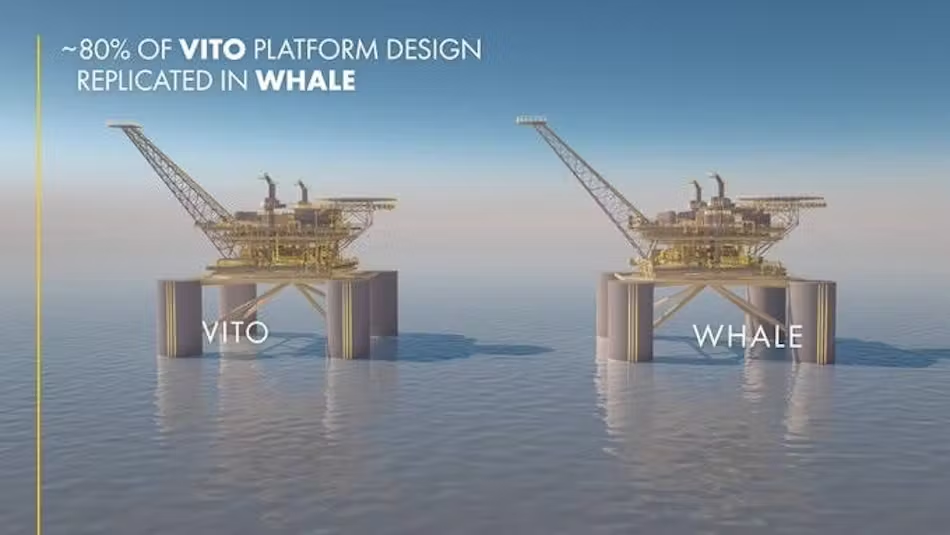
All of the operators note the cost-saving similarities in their FPU designs. For example, Vito and Whale are very much the same despite the 4550′ difference in water depth.
Phil also believes SYU production would reduce natural seepage: “UCSB and State Lands Commission studies (Quigley, Luyendyk, Hornafius, Peltonen, and others) have shown that when oil production is active, reservoir pressure is reduced and natural seepage declines by up to 50%. That means: •Cleaner beaches (less tar and oil) •Cleaner ocean surface (fewer sheens) •Healthier marine life with reduced chronic stress“
Note that those studies are specific to Platform Holly and the Coal Oil Point area. To the best of my knowledge, no studies have associated SYU production with a reduction in natural seepage.
While Platform Holly may be a negative spillage facility (i.e. Holly’s seep reduction may significantly exceed the platform’s production spillage), this type of seepage reduction has not been demonstrated at other platforms. Decisions on offshore exploration and development should be driven by the economic, energy security, and environmental benefits. To the extent that production reduces natural seepage, all the better. However, seepage reduction is not a primary reason for producing offshore oil and gas.
Option 1 (use of existing onshore infrastructure) is preferable from cost, air emissions, spill risk, State and local revenue, and regional energy supply standpoints. This is the only option that makes sense despite the enormous permitting challenges.
Option 2 (floating processing facility and tankers) would literally be an “in your face” act of defiance given the coastal visibility of the offshore facilities. Supporters of this option should be aware that there was no Coastal Zone Management Act when Exxon produced from Platform Hondo (the only SYU platform at the time) to the Offshore Storage and Treatment (OS&T) vessel in the 1980s. An EIS would not favor this option, and the California Coastal Commission would surely rule that this option was inconsistent with their CZM plan. The Secretary of Commerce could overrule the Commission’s decision, but legal objections to the override would seem to have a good chance of success.
The only reasonable path forward is to do the right thing and continue to pursue the State pipeline/onshore approvals. Although these approvals are substantively warranted, more litigation is probably inevitable. It will be far better to defend a good project (option 1) than a contrived workaround (option 2).
Meanwhile, two new floating production units, Beacon’s Shenandoah and LLOG’s Salamanca are now on line. More on this and bp’s Tiber announcement in an upcoming post.





 Bud's Offshore Energy (BOE)