Feeds:
Posts
Comments

Archive for May, 2025

National Marine Fisheries Service (NMFS) biological opinion dated 5/20/2025

Background:

  • Section 7(a)(4) of the Endangered Species Act (ESA) requires federal agencies to confer with NMFS on any action that is likely to jeopardize the continued existence of proposed species or result in the destruction or adverse modification of proposed critical habitat.
  • Section 7(b)(3) of the ESA requires that at the conclusion of consultation, NMFS provides an opinion stating whether the Federal agency’s action is likely to jeopardize ESA-listed species or destroy or adversely modify designated critical habitat.
  • Last year, the U.S. District Court for the District of Maryland vacated the NMFS 2020 Biological Opinion for Gulf of Mexico Oil and Gas activities effective May 21, 2025, so failure to complete the opinion by that date would have jeopardized oil and gas operations in the Gulf.

Key points in the biological opinion:

  • p. 598: The proposed action is not likely to jeopardize the continued existence of sperm whale, Northwest Atlantic loggerhead sea turtle, Kemp’s ridley sea turtle, North Atlantic DPS green sea turtle, leatherback sea turtle, hawksbill sea turtle, or Gulf sturgeon.
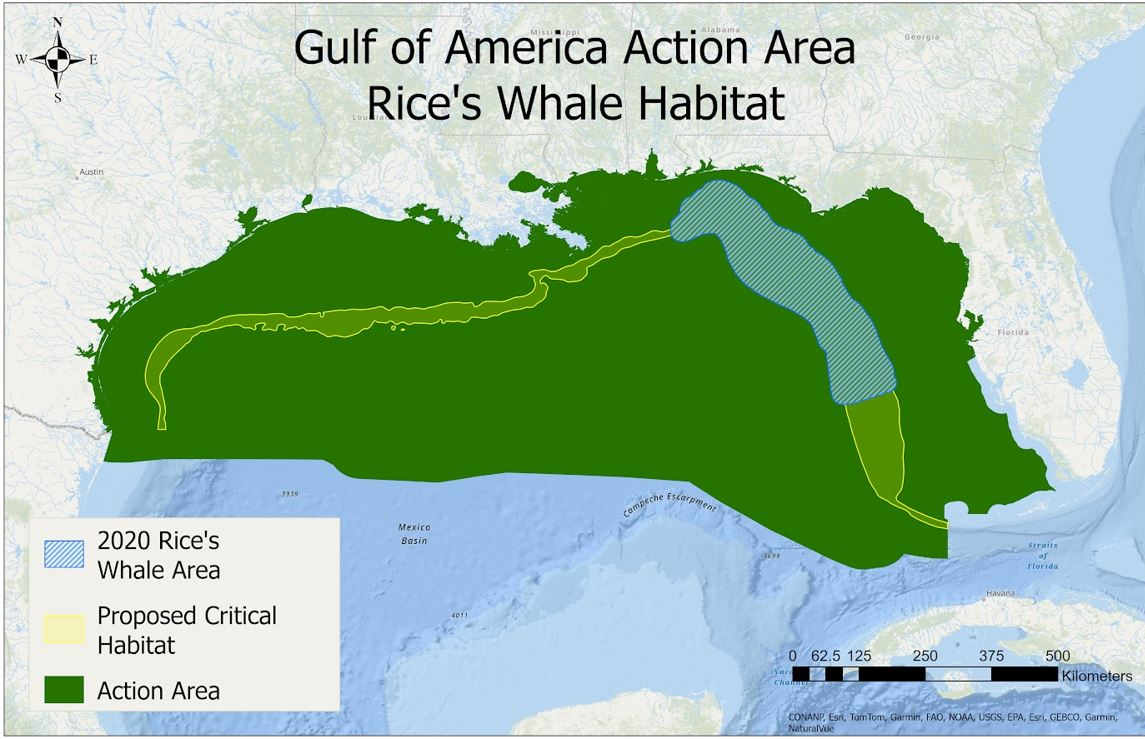
  • The proposed action is not likely to destroy or adversely modify loggerhead or Gulf sturgeon designated critical habitat, or proposed critical habitat for green sea turtle North Atlantic DPS or Rice’s whale.
  • p. 599: The operation of oil and gas vessels in the Gulf of America, in an area where the endangered Rice’s whale occurs, is likely to jeopardize the continued existence of the whale due to the risk of vessel strike.

According to NMFS, the reasonable and prudent alternative (see below) reduces or avoids the primary threat to Rice’s whales, the risk of injurious and lethal vessel strike interaction. The impacts of other stressors are more limited in space and time, diffuse, or not likely to result in adverse effects to Rice’s whale.

The reasonable and prudent alternative (RPA) requires the following as it relates to vessel activity in the action area. More detail on p. 601:

  1. Immediately begin to use technology to enable Rice’s whale vessel strike avoidance and monitoring of presence of Rice’s whale.
  2. Establish an expert working group to support development and implementation of a Rice’s whale vessel strike avoidance technology plan (RW Tech Plan)
  3. Improve understanding of Rice’s whale vessel strike risk associated with the proposed action
  4. Develop a Rice’s whale vessel strike avoidance technology plan (RW Tech Plan)
  5. Undertake independent peer review
  6. Implement Rice’s whale vessel strike technology plan
  7. Monitor Rice’s whales to ensure no likelihood of jeopardy during RPA implementation

Comment: Because the risk to the Rice’s whale in the central and northwestern GoA is highly speculative (see analysis by Darren Ireland), the RPA is arguably excessive. However, I like the RPA’s technological and management system focus.

Unsurprisingly, Earth Justice et al found the NMFS opinion inadequate and filed a suit (attached) in Maryland calling on the court to vacate the opinion and grant injunctive relief.

How can they sue in a Federal court in Maryland, far away from the Gulf? The venue was ostensibly chosen because NMFS headquarters are located in a Maryland suburb of DC. The Maryland court is also likely to favor the plaintiffs, which may have been a factor in the choice of venue. It’s a great country! 😉

Read Full Post »

John Smith’s excellent decommissioning presentation at the recent Western States Petroleum Assoc. luncheon in Santa Barbara is attached. John used an amended version of Bob Byrd’s OTC powerpoint, adding slides on the proposed California Marine Legacy Act amendments.

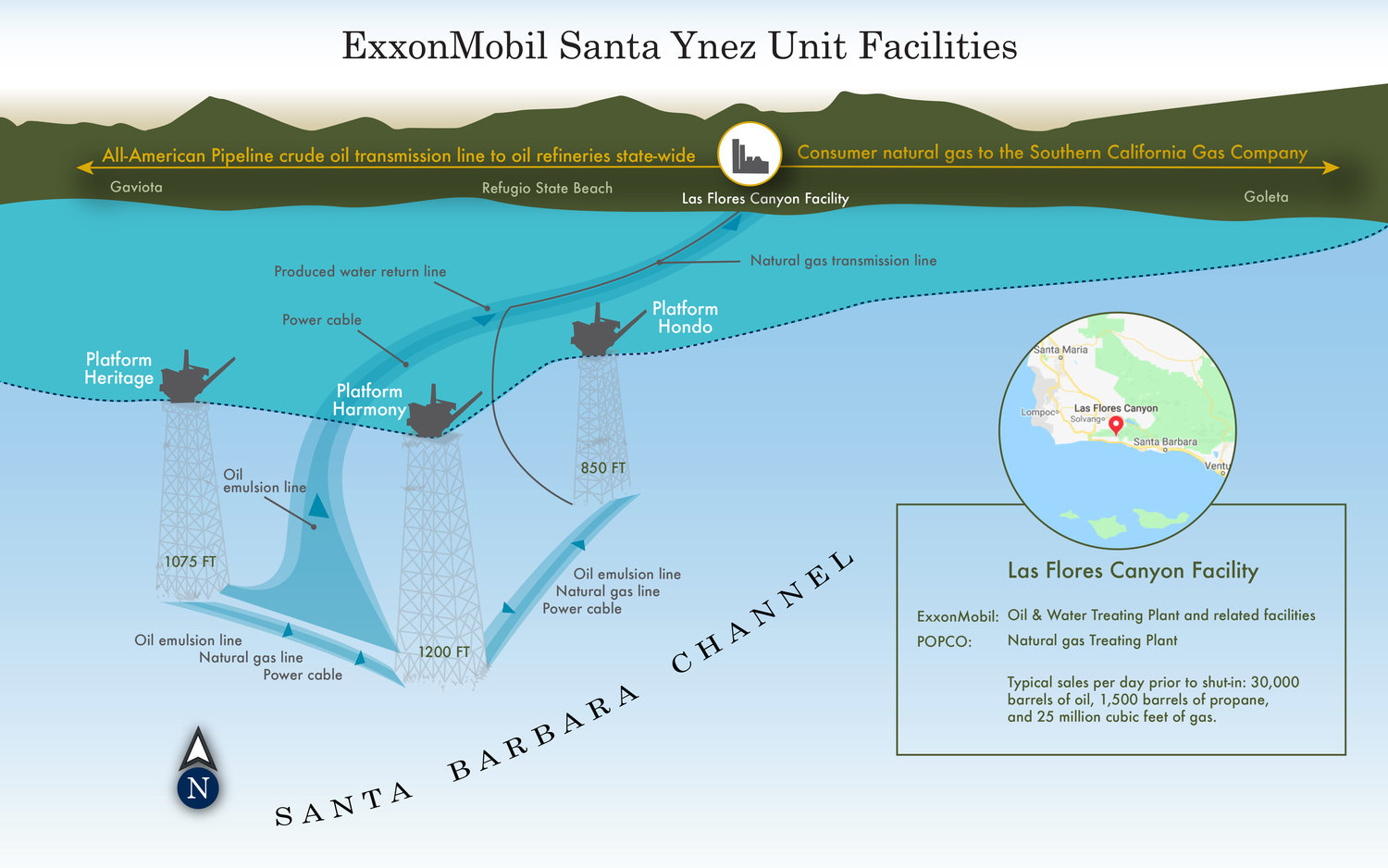
For those who have been following the Santa Ynez Unit story, Harmony, Heritage, and Hondo are the platforms in that unit. Platform Harmony, where production resumed on the date of John’s presentation (5/15), is in 1198′ of water and is one of the world’s largest offshore structures.

Read Full Post »

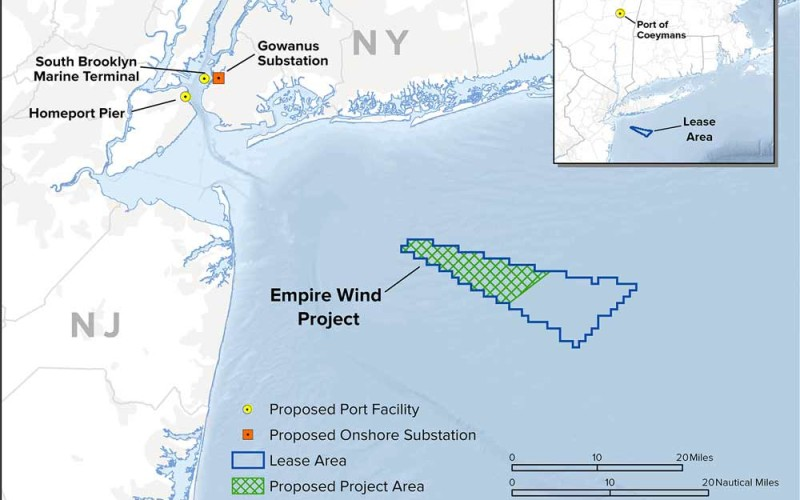
The Administration has not yet explained the decision to allow the Empire Wind project to go forward. I suspect the following points apply:

  1. Attorneys advised, probably correctly, that the Administration would likely lose this case in the courts. Although the Secretary of the Interior has broad authority under OCSLA to suspend operations, he would need strong justification to do so indefinitely. Equinor has invested $billions in the project and their contractual rights would be difficult to abrogate.
  2. Equinor is 2/3 owned by the Norwegian govt, which engaged in diplomacy on Equinor’s behalf. Jens Stoltenberg, former PM of Norway and NATO chief, commented on X: “I commend the Trump Administration for our great cooperation in reaching an energy deal that allows Equinor to resume construction of Empire Wind. This will benefit both our countries & deliver energy to thousands of US households.”
  3. The project has strong support from trade unions.
  4. NY Gov. Hochul appears to have relaxed her position on gas pipelines: “I also reaffirmed that New York will work with the Administration and private entities on new energy projects that meet the legal requirements under New York law.” 

A post on X by Protect Our Coast NJ summarizes the position of project opponents: “There are no words. There was a shocking announcement last night that the federal government reversed course on the Empire Wind Project. We were stunned to see this news. We believe that offshore wind anywhere is a terrible idea. And this project off New York and New Jersey lies in an especially important area—from a national security, environmental and economic perspective. We supported the President’s policy against offshore wind development. And we celebrated Secretary Bergum’s decision to stop the Empire Wind project a few weeks ago. At the time, he said Equinor ‘rushed through by the prior administration without sufficient analysis or consultation among the relevant agencies as relates to the potential effects from the project.’ What changed in the past six weeks? Offshore wind is an extremely expensive, inefficient and unreliable source of power. It harms wildlife, including some of the most endangered mammals on planet Earth. We will fight to protect our coastal and marine ecosystems from the devastation brought by offshore wind construction and operations. We won’t stop until every scrap of steel is removed from the ocean. And we will work to ensure that government officials fully understand the ramifications to public safety, commerce and national defense Empire Wind represents.

There are also concerns among Norwegian investors about this project:

Read Full Post »

Read Full Post »

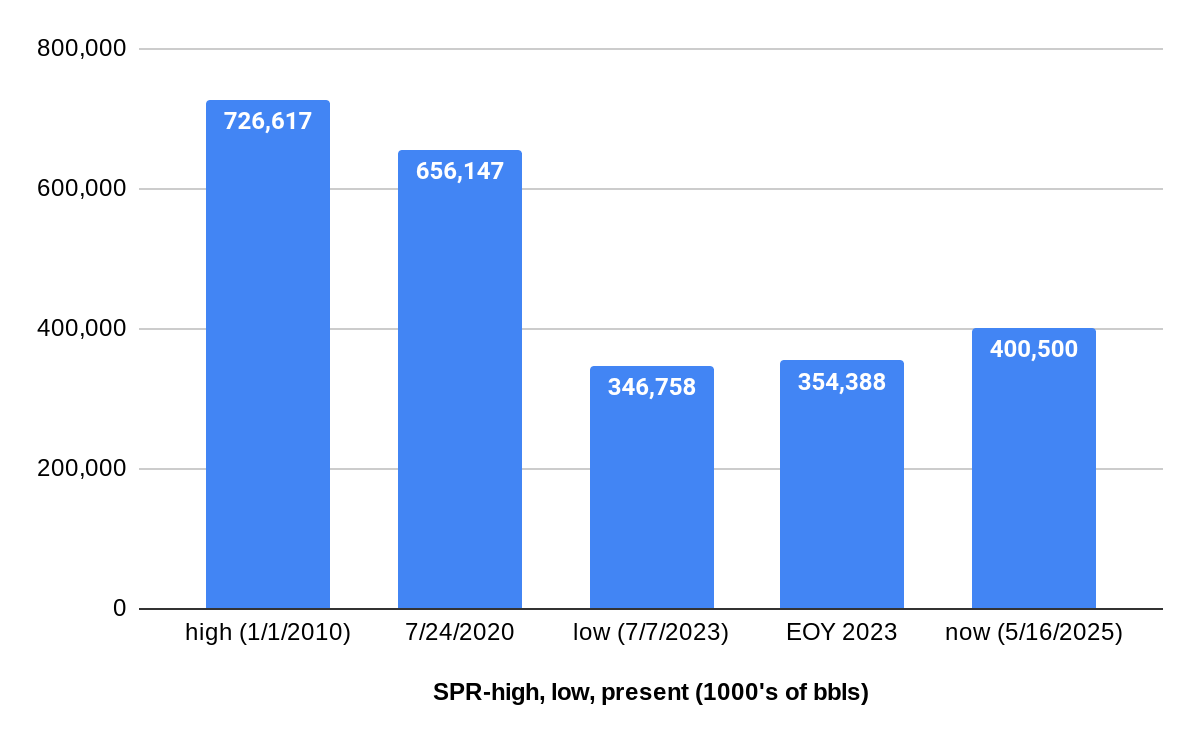
The House Energy and Commerce Committee has proposed $2 billion to repair, replenish, and maintain the Strategic Petroleum Reserve. The proposal includes $1.32 billion for oil purchases and $218 m for maintenance, with the remaining funding allocated for the buyback of previously mandated SPR sales.

Energy Sec. Wright has called for the SPR to be refilled, for the infrastructure to be reviewed, and for plans to be developed to safeguard this strategically important asset.

Although not ostensibly a reason for refilling the reserve, doing so will reduce the risk of a freefall in oil prices and the associated economic turmoil.

Read Full Post »

05/19/2025

HOUSTON–(BUSINESS WIRE)— Sable Offshore Corp. (“Sable,” or the “Company”)(NYSE: SOC) today announced that as of May 15, 2025, it has restarted production at the Santa Ynez Unit (“SYU”) and has begun flowing oil production to Las Flores Canyon (“LFC”). Additionally, with the completion of the Gaviota State Park anomaly repairs on the Las Flores Pipeline System (the “Onshore Pipeline”) on May 18, 2025, Sable has now completed its anomaly repair program on the Onshore Pipeline as specified by the Consent Decree, the governing document for the restart and operations of the Onshore Pipeline.

Seven of the eight sections of the Onshore Pipeline have been successfully hydrotested. Sable will complete the final hydrotest in order to meet the final operational condition to restart the Onshore Pipeline as outlined in the Consent Decree. Sable expects to fill the ~540,000 barrels of crude oil storage capacity at LFC by the middle of June 2025 and subsequently recommence oil sales in July 2025.

Production Restart

  • On May 15, 2025, Sable initiated the flow of oil production from six wells on Platform Harmony of the SYU to LFC at a rate of ~6,000 barrels of oil per day.
  • Sable has been testing wells on Platform Harmony throughout May 2025 and the well tests have performed consistently stronger than they did at the time of shut-in on May 19, 2015 when the SYU produced approximately 45,000 barrels of oil equivalent per day.
  • Approximately 30% of the 32 producing wells at Platform Harmony have been tested as of May 18, 2025 with the remaining Platform Harmony wells projected to be tested over the course of the next several days.
  • Sable expects to initiate production from the additional 44 wells on Platform Heritage and the additional 26 wells on Platform Hondo in July 2025 and August 2025, respectively.

Read Full Post »

Best wishes to our Norwegian friends on their National Day, which celebrates the signing of their Constitution on May 17, 1814. Gratulerer med dagen!

Read Full Post »

Need to update the risk assessments!

Read Full Post »

Kathryn Porter is a well informed and articulate energy consultant. This video linked below is highly recommended.

Read Full Post »

In 1904 the famous “Old Maud” well (pictured) in Orcutt, Santa Barbara County, produced a million barrels in the first 100 days.

This week, the Santa Barbara County Board of Supervisors voted 3-1 to establish a framework to prohibit new oil and gas operations and phase out existing operations.

Given the industry’s long history in the County, one would have expected consultation with the remaining companies prior to that decision.

County staff informed Supervisor Bob Nelson, who voted against the ordinance, that they had not reached out to oil companies. Nelson described the ordinance as the nuclear option.

Charles Katherman, who started his own company in Santa Barbara 40 years ago, criticized the county for a lack of communication leading up to the ordinance. “What you’re proposing or looking at to vote on is a euthanasia of my industry,” Katherman said.

When John Smith told me about the County’s decision, I wondered what the late Darwin Sainz would think. Darwin was a proud 8th generation Californian, a well known rancher and oil industry veteran, a community leader, and Citizen of the Year in the Santa Maria Valley. His grandfather worked on the famous Old Maud well. Darwin was effective at reaching out to parties with opposing views and promoting dialogue and compromise. Sadly, reasoned dialogue no longer seems to be an option.

Darwin Sainz

Read Full Post »

« Newer Posts - Older Posts »