“Blackrock, Vanguard, and State Street utilized the Climate Action 100 and the Net Zero Asset Managers Initiative to signal their mutual intent to reduce the output of thermal coal, which predictably increased the cost of electricity for Americans across the United States.
These firms also deceived thousands of investors who elected to invest in non-ESG funds to maximize their profits. Yet these funds pursued ESG strategies notwithstanding the defendants’ representations to the contrary.”
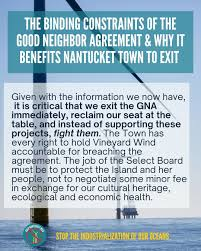
A recent Nantucket Current piece criticizes the Nantucket Select Board for failing to address community concerns about the attached Good Neighbor Agreement (GNA) with Vineyard Wind. In particular, any discussion about the GNA was throttled at a recent public forum on the SouthCoast Wind project.
Some key points from the article and related thoughts:
The GNA established a long-term relationship between Vineyard Wind and Nantucket. In essence, Nantucket became a partner and an advocate for the projects.
Sections 5.2 and 5.3 of the GNA are particularly striking and believed to be unprecedented in the history of Federal offshore energy programs.
Section 5.3 stipulates that “the Nantucket Parties shall use their reasonable best efforts to inform federal, state, and local elected officials of their support for the Projects” throughout the environmental, historical, and state review processes. Wow, nothing subtle about that directive!
By signing the GNA with Vineyard Wind, Nantucket withdrew from the important National Historic Preservation Act consulting process for these projects.
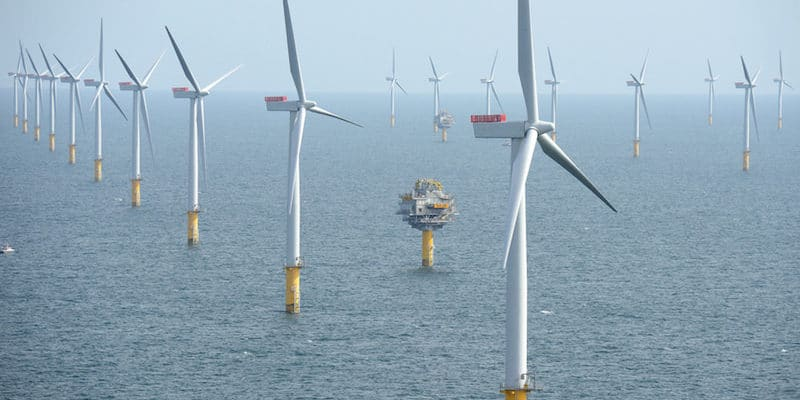
Vineyard Wind, New England Wind, and the other projects that are covered under the GNA will add approximately 350 turbines off Nantucket’s south shore beaches.
Given the partnership with Vineyard Wind, it’s difficult for Nantucket to challenge the mitigations for another project, SouthCoast Wind, which is not covered by the GNA.
The Nantucket GNA controversy should be carefully considered by other communities that are tempted by developer incentives to enter into agreements that may not be in their best long-term interest.
Will Nantucket exit (Nexit) the GNA? The pressure is building.
Vom Winde verweht: Germany will pay as much as €20 billion to wind and solar operators through the end of 2024, twice what grid operators had forecast in last October.
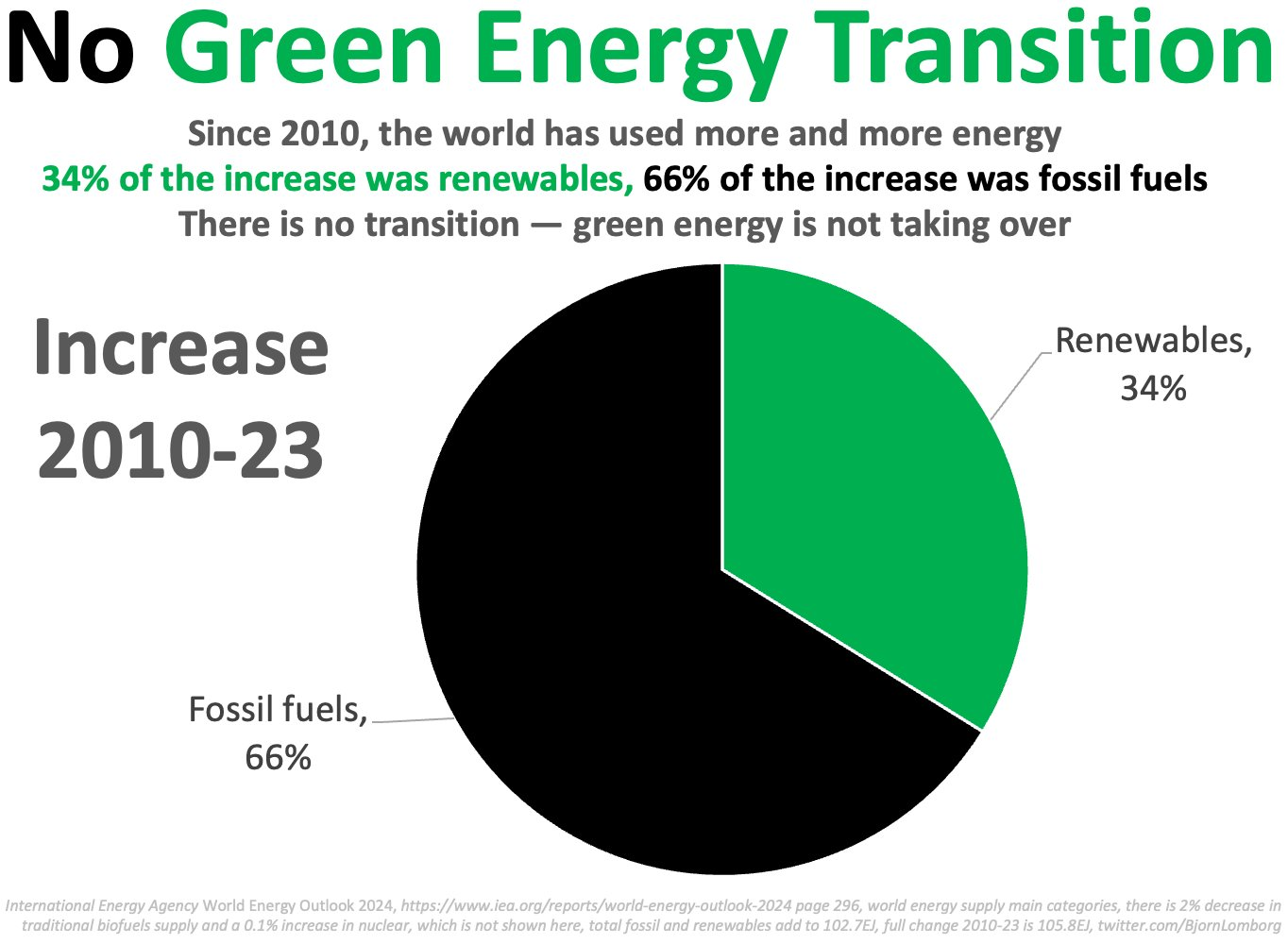
The 19th century is known as the “century of coal,” but, as the technology scholar Vaclav Smil has noted, not until the beginning of the 20th century did coal actually overtake wood as the world’s No. 1 energy source. Moreover, past energy transitions have also been “energy additions”—one source atop another. Oil, discovered in 1859, did not surpass coal as the world’s primary energy source until the 1960s, yet today the world uses almost three times as much coal as it did in the ’60s.
Aissatou Sophie Gladima, the energy minister of Senegal, put it more pithily: Restricting lending for oil and gas development, she said, “is like removing the ladder and asking us to jump or fly.”
Christyan Malek, JPMorgan’s top energy strategist: That intrinsic demand that is not visible is so significant that we don’t see demand peaking – I don’t think we’ll see [oil] demand peaking in our lifetimes,” he said. “Particularly as demand growth in [emerging markets] continues to surprise the upside.”
American businessman Stephen Lynch wants to acquire the Swiss company that controls the Nord Stream 2 pipeline.
From his investment firm’s website: Over the last twenty years, Mr. Lynch has acquired and managed distressed assets in Eastern Europe, Central Asia, Russia, and Ukraine. He specializes in securing cross-border collaboration on transactions and settlements around special situations and corporate conflicts. Lynch is a life member of the Council on Foreign Relations.
Lynch has worked closely with the US Department of The Treasury’s Office of Foreign Assets Control (OFAC) to acquire and de-Russify important industrial assets in U.S. partner nations.
With regard to Nord Stream: “The bottom line is this: This is a once-in-a-generation opportunity for American and European control over European energy supply for the rest of the fossil-fuel era,” Lynch told the Wall Street Journal.
Nord Stream 2 bankruptcy proceedings are scheduled to begin in January.
A “US official” told the Washington Post that a Nord Stream revival is not in the US interest right now. However, a resumption of the flow of Nord Stream gas could be a significant consideration in talks to end the Ukraine – Russian war. Also, in light of economic and energy supply challenges, there is growing German interest in restoring ties with Russia.
This appears to be a serious initiative on the part of Mr. Lynch that should not be discounted.
Attached is an excellent Scientific American article featuring BOE contributor and decommissioning specialist John Smith, former colleague and marine biologist Dr. Ann Bull, and Dr. Milton Love, the leading authority on California’s offshore platform ecosystems.
I had the pleasure of taking a highly informative boat tour around Platform Holly with Dr. Love and a group of international visitors. Holly, which is pictured at sunset in the BOE header, is among the platforms awaiting decommissioning.
Dr. Love on the total removal of California offshore platforms:
“As a biologist, I just give people facts,” he says. “But I have my own view as a citizen, which is: I just think it’s criminal to kill huge numbers of animals because they settled on a piece of steel instead of a rock.”
Der Spiegel: “Wie ein ukrainisches Geheimkommando Nord Stream sprengte“
Observations:
Der Spiegel’s detailed account is based on interviews with the perpetrators whose identities are being withheld.
~a dozen men and one woman, all Ukrainians, were involved in the sabotage. Some were soldiers, some were civilians; some had past connections with the CIA.
<$300,000 budget funded by a Ukrainian businessman
Saboteurs received no payments
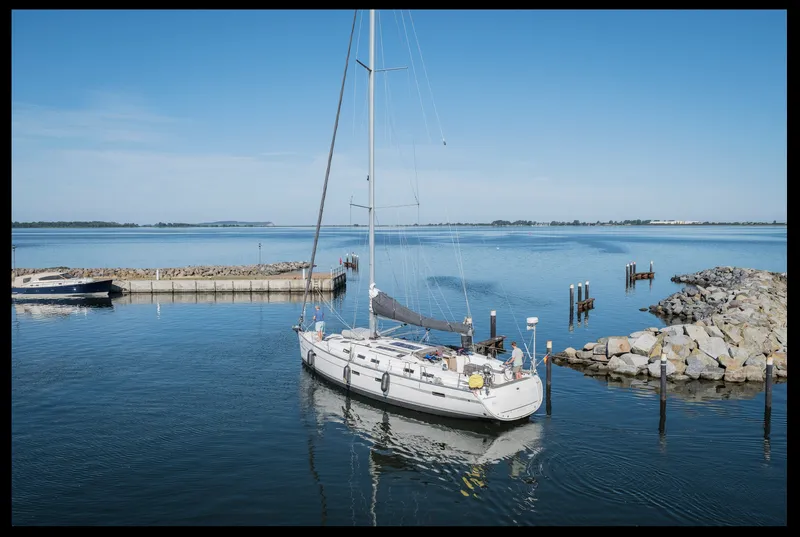
Low tech operation using the sailboat Andromeda
The article includes details on how the mission was accomplished.
To the commandos, Nord Stream sabotage was viewed as a military objective, a legitimate act of self defense.
The team understood that only a small hole in the outer wall would suffice to burst the pipe given the gas pressure in the lines.
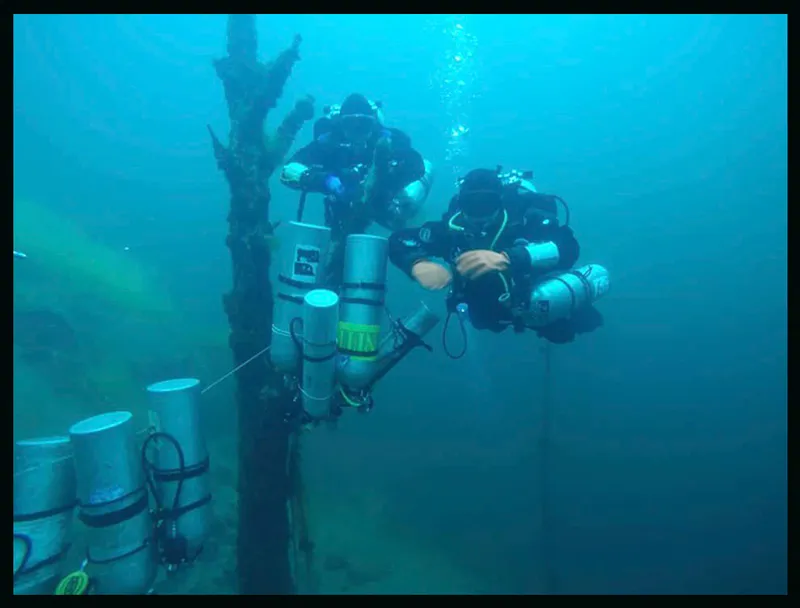
Tested bomb designs in a lake, and trained in a flooded mine to depths of 100 m.
Zelensky was not fully trusted and was intentionally not informed of the plan. (However, the authors are not completely ruling out some Zelensky involvement in the planning.)
Western intelligence heard about the plan 3 months before the operation. Zelensky was then informed by a CIA officer in Kiev.
A CIA agent contacted one of the commandos who he knew. To protect the mission, the commando said he didn’t know anything about such a plan, but would inquire further.
The commandos decided they needed to get on with the operation before sea conditions worsened in the fall.
6 bombs were planted under sometimes difficult conditions. One did not explode, so the Nord Stream 2 B pipeline remained intact.
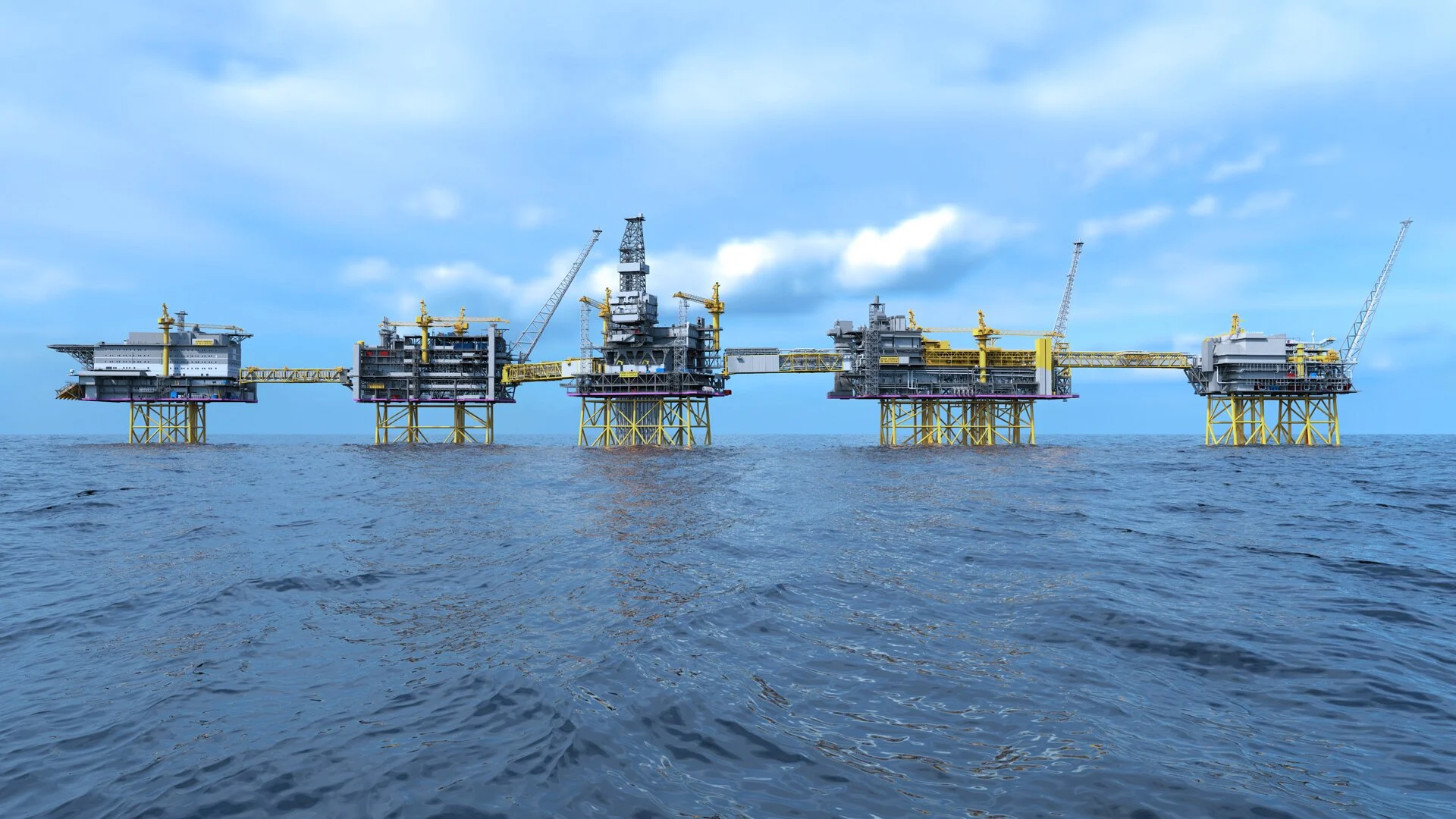
Production from Equinor’s important Johan Sverdrup field, which accounts for 755,000 bopd (36% of Norway’s oil production), was shut-in on Monday as a result of a power outage. Production was in the process of being restored on Tuesday.
According to Equinor, the outage was caused by overheating at an electric converter station onshore.
A 2022 BOE post questioned Norway’s push to power offshore platforms with electricity transmitted from shore. This incident reinforces those concerns. Summary:
Most offshore platforms produce sufficient gas to support their power demands
Assuming gas that is not used to power a platform is marketed and consumed elsewhere, the net (global) reduction in CO2 emissions from electrifying offshore platforms is negligible. (Perhaps there is actually a small increase in net emissions given the power required to transport the gas to markets and the emissions associated with onshore power generation).
Offshore power demands are highly variable, especially when drilling operations are being conducted.
Gas turbines are reliable, and capable of responding to variable power demand. Excess generation capacity is typically provided.
Power from shore increases the cost of platform operations and could decrease ultimate recovery of oil and gas resources.
Per NPD, electrification of the shelf will increase electricity prices for onshore consumers and increase the need for onshore facility investment.
Gas turbines or diesel generators are still necessary to satisfy emergency power needs at the platforms.
Long power cables are vulnerable to damage (accidental or intentional), as are onshore power stations.
I hope the investigation of this incident considers some of these broader electrification policy issues.
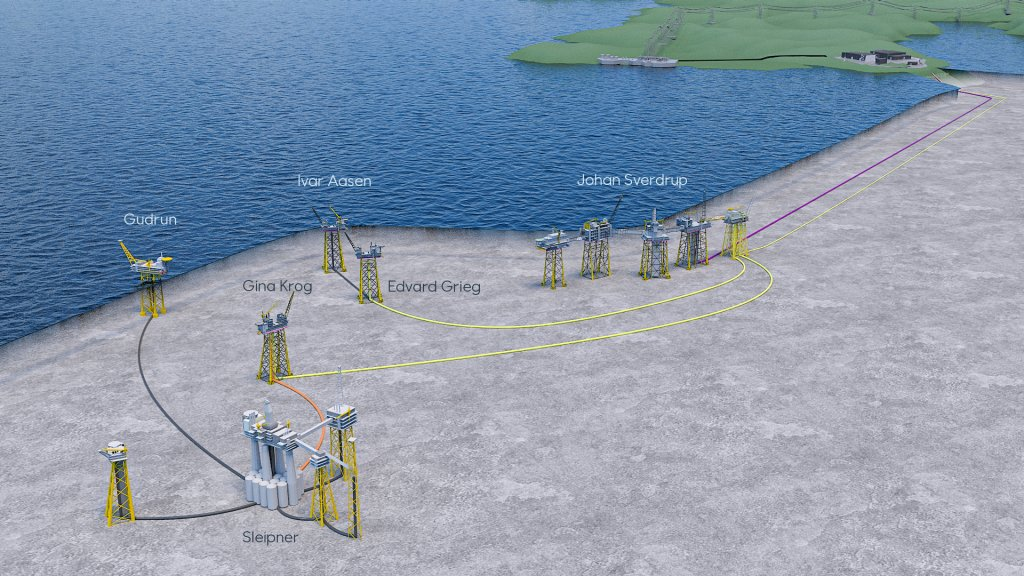
Equinor diagram: The purple cable shows power from shore to Johan Sverdrup phase 1, established in 2018. The yellow power cable shows power from shore to Johan Sverdrup phase 2 and the Utsira High area solution, from 2022. The orange cable shows power from shore to the Sleipner field centre and connected fields from late 2022. Black cable shows existing power cables at Sleipner field centre and to the Gudrun installation.
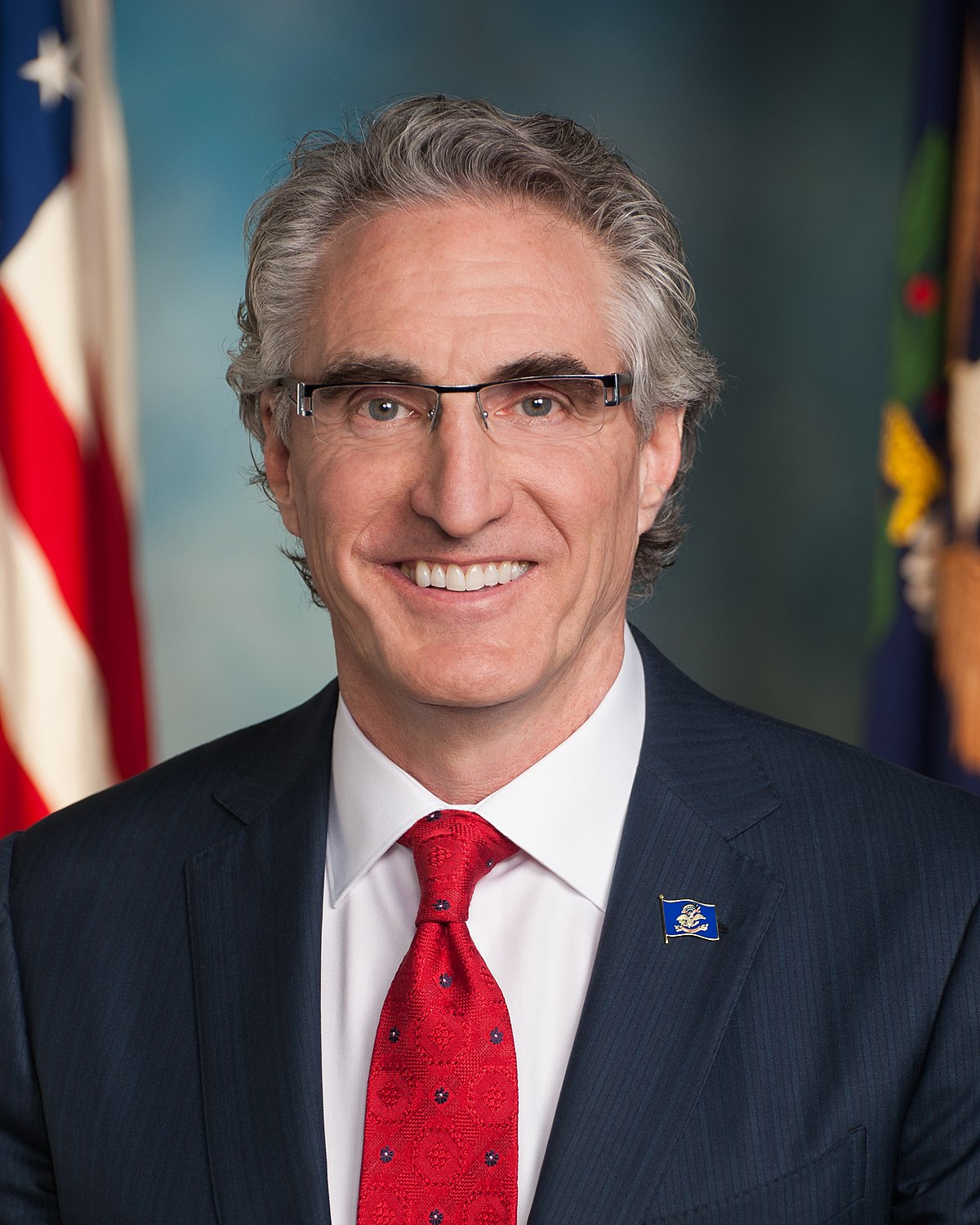
The Secretary of the Interior is the most important energy production position in the US govt, particularly for the offshore sector.
In recent years energy policy has been increasingly influenced (if not directed) by White House staff, most notably the White House Climate Office. Given that Burgum will also lead the new created National Energy Council, direction from White House staffers or other departments should not be an issue.
Burgum should work effectively with Dept. of Energy appointee Chris Wright, an engineer who understands energy production.
There is no apparent Republican dissent, so Burgum should have no problem being confirmed.
All of the offshore policy forecasts in the post-election post still stand.
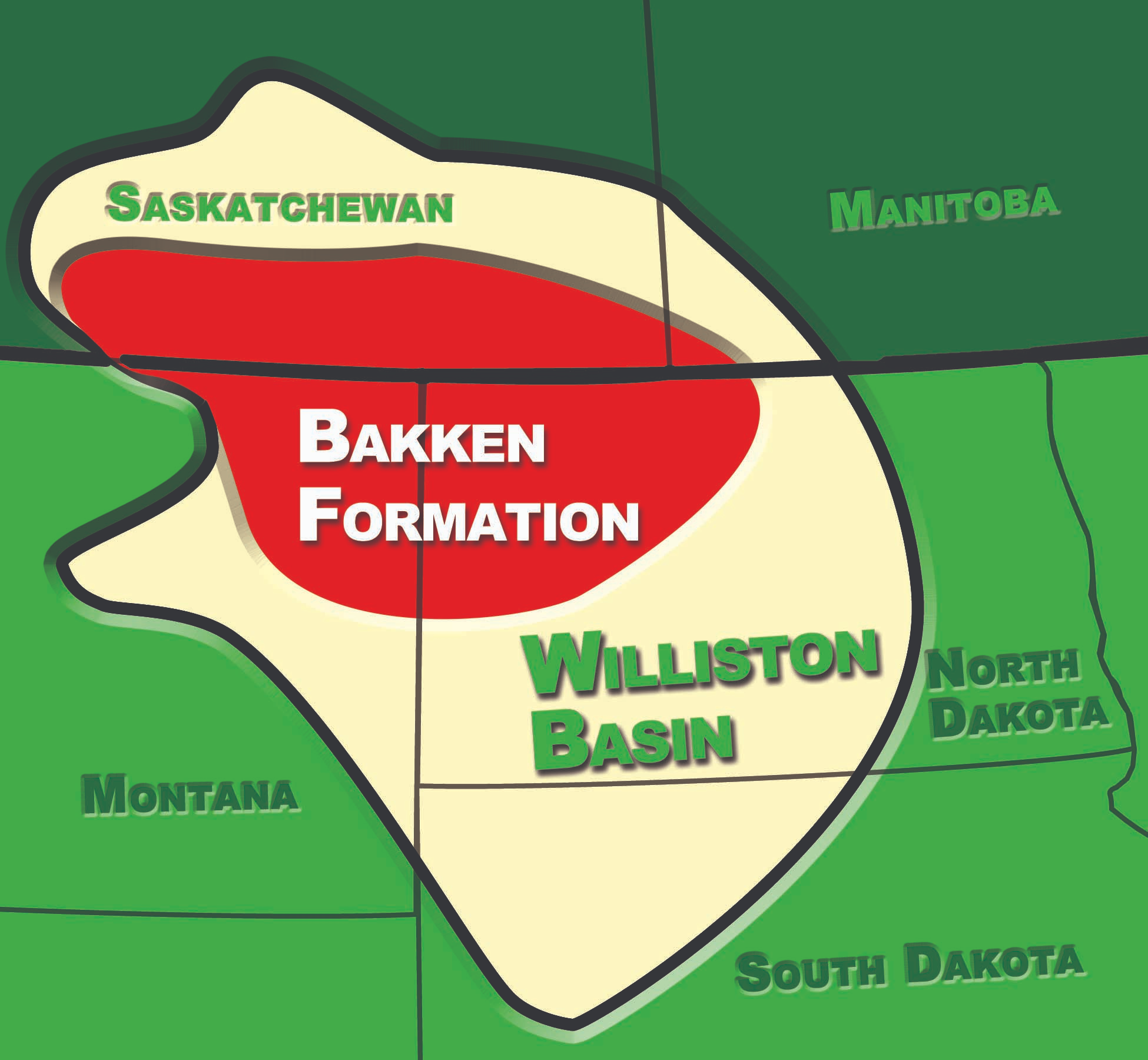
Burgum is currently the Governor of North Dakota. Some energy production stats for the state:
ND ranks 4th if the OCS, for which Bergum will soon be responsible, is included. The OCS ranked 2nd in oil production, behind only TX, despite seemingly being managed to fail.
Wind: In 2023, wind was the second-largest electricity generating source in ND behind coal. At the beginning of 2024, ND had about 4,000 megawatts of installed wind power generating capacity.
What about carbon sequestration (disposal)?
As Governor, Burgum supported CCS projects that could be lucrative for North Dakota.
As Interior Secretary and Energy Czar, he will have to consider the high Federal subsidy costs, efficacy, and net environmental benefits.
Companies looking to benefit from publicly financed CCS projects will lobby hard for Federal support. Budget hawks and most environmental activists will be strongly opposed. It will be interesting to see who prevails.

 Bud's Offshore Energy (BOE)