Some of us remember the Brent Spar saga (1995). The subsequent Brent field decommissioning activities have been less controversial, including the removal of the Brent C topsides on July 9. The Allseas single lift technology is most impressive. Check out the video!
Archive for July, 2024
Impressive Brent C decommissioning video – heaviest ever offshore lift – 31,000 tonnes
Posted in decommissioning, Offshore Energy - General, UK, tagged Allseas, Brent C decommissioning, Brent Spar, Pioneering Spirit, record lift, Shell on July 12, 2024| Leave a Comment »
JL Daeschler – Renaissance Man
Posted in Offshore Energy - General, UK, Uncategorized, tagged art, France, JL Daeschler, National Assembly, subsea engineer, Total, UK, Zapata on July 12, 2024| Leave a Comment »
Jean-Louis Daeschler, is an artist and pioneering subsea engineer. A native of France (Brittany), he has worked in the offshore industry worldwide and lives in Scotland. His wife is from Singapore and his children and grandchildren live in England and Canada.
Before beginning his engineering career, JL had the distinct honor of exhibiting his artwork at the French National Assembly (Parliament) in Paris (article below). How many offshore engineers can say that? None would be a good guess.
JL also exhibited in le Havre, Singapore, Houston, Edinburgh, Calgary, and elsewhere. He works mainly with acrylics, and his preferred subjects are boats, maritime scenes, harbors and the working environment associated with the sea. Of course!
JL worked on an early semi-submersible rig offshore Malaysia in 1969 (see his account of a serious near-miss), met with George HW Bush when he was building a new rig for Zapata Offshore, was instrumental in the first production in the UK sector of the North Sea (1975) from a converted semi-submersible drilling rig in the Argyll Field, designed a new BOP concept, and holds patents for seabed drilling templates and subsea control systems.
When he was called upon to work in Total’s onshore office, his boss told him “the best offshore job is in the office!” The photo below suggests that JL made the most of those onshore assignments! 😀

Congratulations to JL on his many contributions to the offshore industry, art, and society!
The opinions of State and local govts and tribes are fully considered ….
Posted in Alaska, energy policy, Regulation, tagged Alaska, BLM, Inupiat, lawsuit, Mayor Patkotak, North Slope Borough, NPR-A on July 11, 2024| 3 Comments »
….as long as they are aligned with the preordained political decision. 😠
No where has this been more apparent over the years than in Alaska. Most recently, the North Slope Borough filed suit to challenge the Bureau of Land Management (BLM) rule making the National Petroleum Reserve in Alaska (NPR-A) off limits to oil and gas development.

“The rule would significantly and irrevocably harm the North Slope’s right to self-determination and ability to provide essential services for residents. This suit is filed alongside the complaints of the Voice of the Arctic Inupiat and the State of Alaska, demonstrating the unity of North Slope communities and Alaskans in opposing the BLM’s unjust and unilateral action to harm the livelihoods of the residents of the North Slope,” the borough explained in a press statement.
“When I was sworn in as Mayor of the North Slope Borough, I made a solemn promise to protect and provide essential services for the people of the North Slope Borough. The BLM claims to act on our behalf but what they are truly doing is undermining my ability to fulfill that fiduciary obligation,” said Mayor Josiah Patkotak. “We on the North Slope don’t have the luxury of keeping quiet and waiting for a new industry to swoop in and replace our largest economic driver. We have to speak up for our future as a people.”
Other important points raised in the Must Read Alaska article:
- NPR-A is entirely within the boundaries of the North Slope Borough (NSB).
- The NSB represents the ancestral homelands of the Inupiat people.
- The NSB is the largest employer in the region and provides the majority of essential services depended upon by residents.
- Taxes on infrastructure account for 95% of the Borough’s revenue.
- Members of the North Slope Inupiat Tribes, Village Corporations, Regional Corporations, and their elected leaders have been unanimous in their opposition to the rule.
- The Supreme Court’s decision in Loper, which removed the Chevron Deference, restricts the authority of Federal agencies to take regulatory actions without clear legislative authority.
- The State of Alaska also filed a lawsuit claiming that the Fed govt had not consulted with affected parties, and that the BLM had exceeded its congressional authorization.
This should be an easy win for Alaska and the NSB.
Offshore wind development is rich in structures. Are the financial assurance provisions adequate?
Posted in decommissioning, Offshore Wind, Regulation, tagged Atlantic wind, BOEM, financial assurance, offshore substations, Vineyard Wind, wind decommissioning, wind turbines on July 10, 2024| 2 Comments »
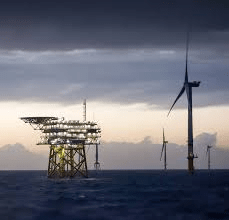
BOEM’s land rush approach to offshore wind leasing will add up to 1086 turbine towers and 28 offshore substations (OSSs) in the Atlantic just from active projects with approved Records of Decision (RODs). (See the table below.) Another 17 active Atlantic commercial projects have yet to reach the ROD stage. Those projects should increase the total number of structures to >3000. Five more Atlantic wind lease sales are scheduled.
| project | turbine towers | offshore substations |
| Coastal VA Offshore Wind | 202 | 3 |
| Revolution Wind | 100 | 2 |
| Sunrise Wind | 94 | 1 |
| Atlantic Shores South | 200 | up to 10 |
| Ocean Wind 1 | 98 | up to 3 |
| Vineyard Wind 1 | 100 | 2 |
| Empire Wind 1 & 2 | 147 | 2 |
| New England Wind (phases 1&2) | 150 | 5 |
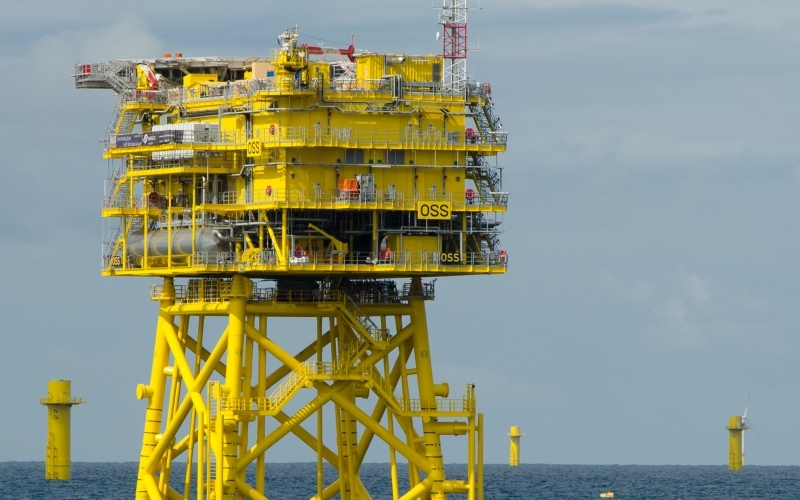
Per the Construction and Operations Plan (COP) for Vineyard Wind, the topsides for a conventional electrical service platform (ESP) (also known as an offshore substation or OSS) are 45 x 70 x 38 m, which is larger in surface area than a typical 6-pile oil and gas platform (~30 x 30 m), and is comparable in size to a large jackup drilling rig.
The Atlantic Shores plan calls for 10 small, 5 medium, or 4 large OSSs. (Uncertainty regarding the number and types of structures seems rather common in wind COPs.) The large OSSs have topsides that are 90 m by 50 m and rise to 63 m above MLLW. These are large offshore structures whether for wind or oil and gas.
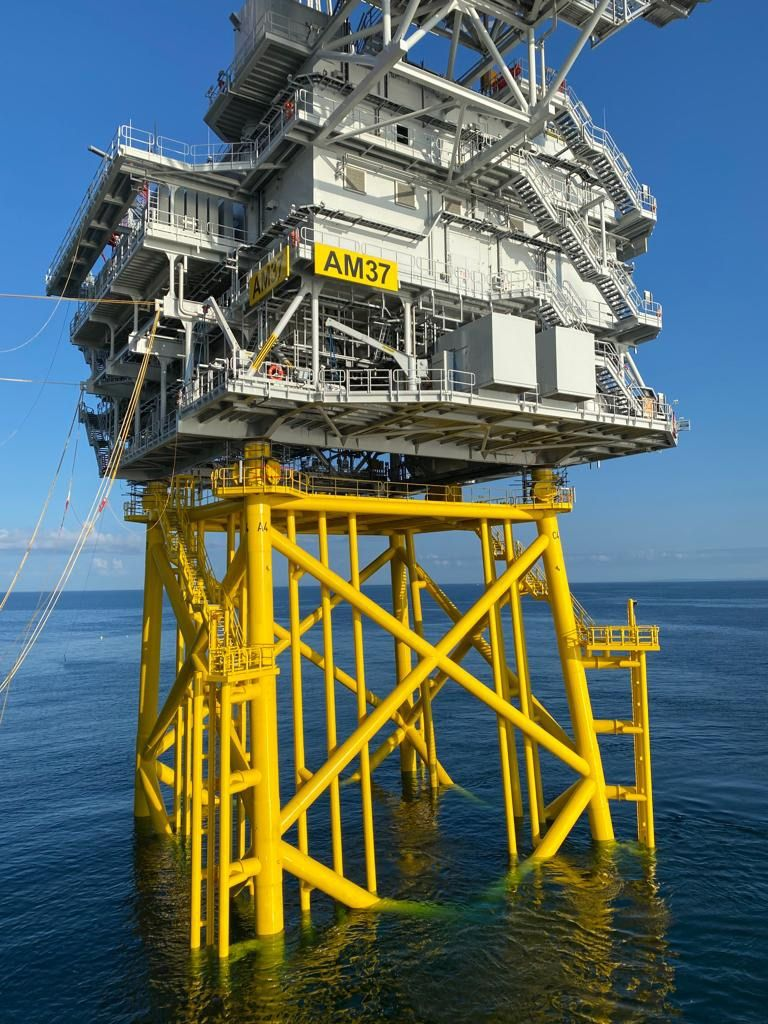
Despite the looming decommissioning obligations, BOEM’s financial assurance requirements have been relaxed to facilitate wind development.
Per BOEM, the “Rule to Streamline and Modernize Offshore Renewable Energy Development” is intended to “make offshore renewable energy development more efficient, [and] save billions of dollars. Unfortunately, the savings associated with relaxed financial assurance requirements translates to increased risk for power customers and taxpayers.
BOEM signaled their intentions on offshore wind (OSW) decommissioning three years ago when they granted a precedent setting financial assurance waiver to Vineyard Wind. Despite compelling concerns raised by commenters, the “streamlining” regulations codified this decision.
No one knows what the financial future will be for wind projects and the responsible companies. Financial assurance should therefore be established when the structures are installed, not years into the future as allowed by the revised regulations. What leverage will BOEM have then?
Why have the evacuation and production shut-in data for Hurricane Beryl not been posted?
Posted in Gulf of Mexico, hurricanes, Offshore Energy - General, Regulation, tagged BSEE, Gulf of Mexico producion, Hurricane Beryl, platform evacuations, production curtailment on July 8, 2024| Leave a Comment »

For decades, Gulf of Mexico operators have reported facility evacuation and production curtailment data to MMS/BSEE as tropical storms or hurricanes approached. Requirements for this reporting are found in the regulations (30 CFR 250.192(a)) supplemented by NTL 20I5-G02.
Operators must submit reports by 11:00 a.m. (CT) daily throughout the period of evacuation and shut-in with the understanding that BSEE will post the compiled data by 1 pm CT. This reporting has been diligently accomplished for decades and MMS/BSEE posted the data each day, including weekends and holidays, without fail. Everyone in industry and government understood the importance of safely evacuating personnel, shutting down production, and ensuring that these hurricane data were made available to the public each day. (All of the daily updates for 2011 onward can be found here.)
On Wednesday, July 3, Shell informed the media that they had begun evacuating non-essential personnel and shutting-in production at certain facilities. Both Shell and Chevron issued general statements on the status of their operations on Thursday, July 4. Both companies no doubt submitted the required reports to BSEE, as did other companies with operations near the projected path of the storm.
BSEE failed to post any evacuation and shut-in data on any date from July 3 through today (July 8).
Beryl missed the heart of the Gulf of Mexico basin, but Shell and other companies with facilities in the more westerly areas evacuated personnel and curtailed production. BSEE’s unprecedented failure to post this information needs to be addressed before more significant storms threaten offshore personnel and production in the Gulf.

Tough on cows, soft on Nord Stream saboteurs
Posted in climate, energy policy, natural gas, pipelines, tagged Denmark, Gulf of Mexico methane, livestock emissions, methane tax, Nord Stream on July 8, 2024| Leave a Comment »

Danish Tax Minister Jeppe Bruus boasts that other countries will be inspired by the world’s first tax on livestock emissions. Are you inspired?
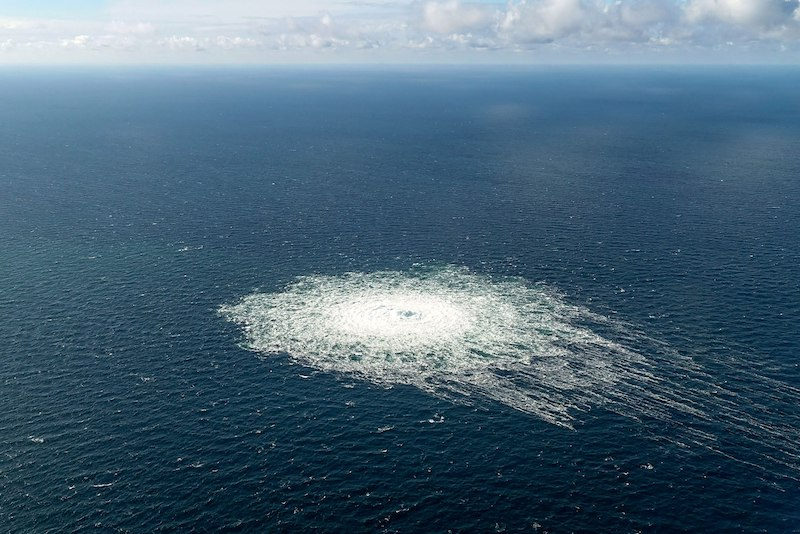
Not at all inspiring was Denmark’s weak-kneed response to the sabotage of the Nord Stream pipelines near the Danish island of Bornholm. After 17 months of investigation, Denmark meekly declined to pursue criminal charges or even to release a report on their findings. How does the “world’s climate leader” simply shrug its shoulders after investigating a massive methane release in their waters?
A recent professional paper concludes that 478,000 tons of methane were released to the atmosphere as a result of the Nord Stream sabotage, making this “the world’s largest natural gas leak.” The Nord Stream sabotage thus released 3.6 times the amount of methane (133,000 tons) contributed by Danish livestock in an entire year. The total amount of methane released by the Nord Stream pipelines is also 2.5 times the entire amount attributed by EPA to all Gulf of Mexico producers in 2020.
Denmark and Sweden have concluded that “there was deliberate sabotage of the gas pipelines.” The Nord Stream insurers claim that “a government did it.” So which government was it? Why are sovereign governments of affected nations afraid or otherwise unwilling to comment on such a consequential attack?
Ray Charles continues to light up the Fourth!
Posted in Uncategorized, tagged America the Beautiful, Fourth of July, Ray Charles on July 4, 2024| Leave a Comment »
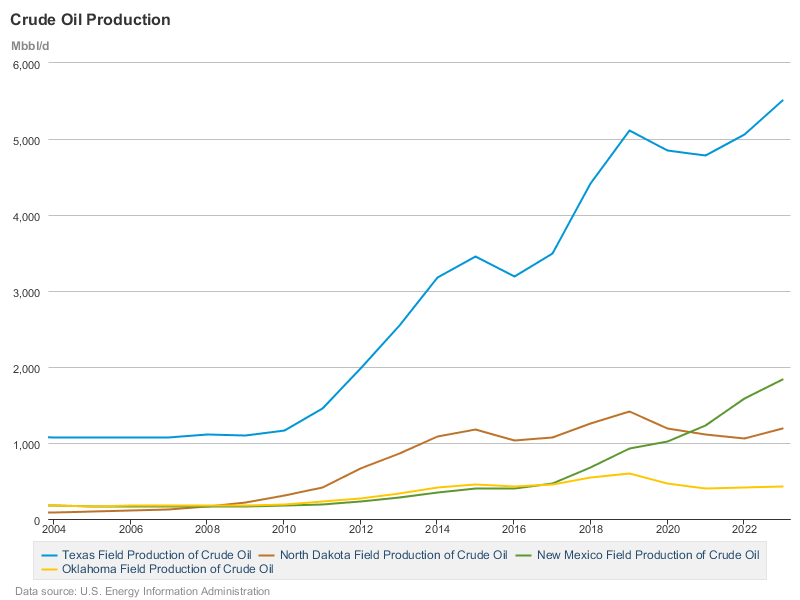
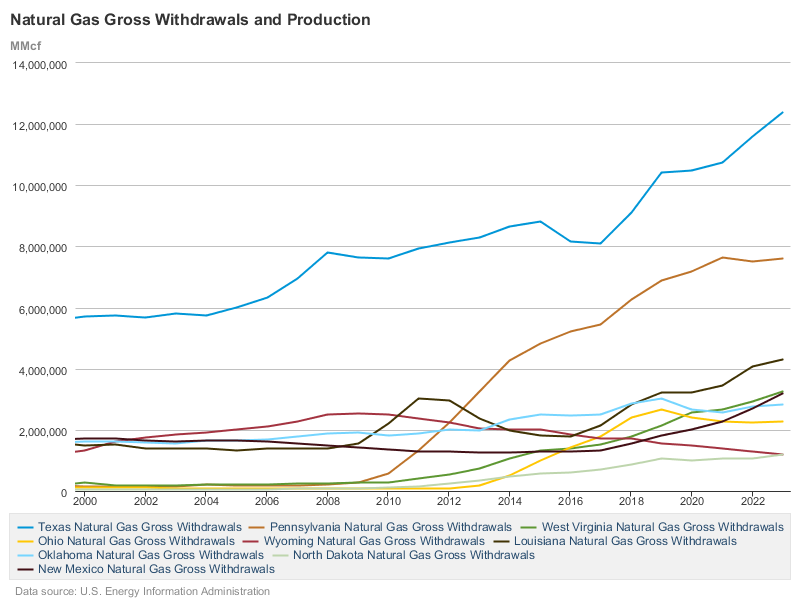
On the 4th of July 🇺🇸 this is what independence looks like
Posted in energy policy, Uncategorized, tagged 4th of July, Independence Day, natural gas production, ND, oil production, PA, private land, technology, TX on July 4, 2024| Leave a Comment »
Independents’ Day 😀
Posted in Gulf of Mexico, Offshore Energy - General, tagged Alta Mar, Beacon Offshore, CSL Exploration, first production, Gulf of Mexico, Heldelberg platform, independents' day, Kosmos Energy, Red Willow, Westlawn, Winterfell field on July 3, 2024| Leave a Comment »

Beacon Offshore Energy (BOE, but not this blog 😉) and its partners, all independent producers, have initiated production at the Winterfell project in the Green Canyon area of the Gulf of Mexico. The 3 initial wells are expected to produce 20,000 bbls of oil equivalent (again BOE 😉) per day. The Winterfell partners are:
- Beacon Offshore Energy, operator
- Kosmos Energy
- Westlawn Americas Offshore
- Red Willow Offshore
- Alta Mar Energy
- CSL Exploration
Judge Cain suspends the LNG export ban. Expanding gas markets is important to OCS producers.
Posted in energy policy, Gulf of Mexico, natural gas, Offshore Energy - General, tagged court order, injunction, Judge Cain, LNG exports, OCS gas production on July 3, 2024| Leave a Comment »
On July 1, U.S. Federal Judge James Cain Jr. (Western District of Louisiana) issued a preliminary injunction suspending DOE’s LNG exports “pause.” The judge’s full ruling is attached.
Judge Cain: “It appears that the DOE’s decision to halt the permit approval process for entities to export LNG to non-FTA countries is completely without reason or logic and is perhaps the epiphany of ideocracy.”
Nothing subtle about that comment 😉
Despite the court order, the Administration seems intent on keeping the “pause” in place. Per White House spokesperson Angelo Fernández Hernández, “We remain committed to informing our decisions with the best available economic and environmental analysis, underpinned by sound science.” ????
Nearly 80% of current OCS gas production is from deepwater leases. This production is primarily associated (oil-well) gas that operators are rightfully required to market for resource conservation and environmental reasons. Expanding LNG marketing opportunities could thus improve the economics of deepwater development.
The other 20% of OCS gas production is largely from gas-well (non-associated) gas produced by independent companies that continue to operate in the shallower waters on the shelf. LNG sales could improve the challenging economics for these producers and increase the ultimate recovery of shelf resources.
 Bud's Offshore Energy (BOE)