Feeds:
Posts
Comments

Archive for December, 2023

This impressive NOAA study confirms the importance of Nantucket Shoals as a feeding ground for right whales and implies a need for protective measures in months (October through December) when the existing restrictions do not apply.

The importance of Nantucket Shoals as a feeding ground for the critically endangered North Atlantic right whales within the southern New England wind energy is well understood (Leiter et al., 2017; Quintana-Rizzo et al., 2021; Estabrook et al., 2022). Similarly, year round presence of this species has been demonstrated since as early as 2011 (Quintana-Rizzo et al., 2021; Estabrook et al., 2022), showing that North Atlantic right whales have consistently used this region for well over a decade. Currently, the National Marine Fisheries Services and Bureau of Ocean Energy Managements policy is to exclude pile driving during the months of January through April in the southern New England wind energy area. Evaluation of the need for further management protections are needed for North Atlantic right whales especially in October through December, along with further assessment of risk to this species (Southall et al., 2023).

A map of the southern New England planned offshore wind energy lease areas off the East Coast of the United States (insert). Passive acoustic recorders (SoundTrap and F-POD recorders) were deployed for varying time periods (see Table 1) between January 2020 and November 2022 at seven sites surrounding the wind energy areas.

Note (below) the acoustic presence of the North Atlantic Right Whale (NARW) from Oct. through April.

Weekly acoustic presence summary of eight cetacean species (harbour porpoise, sperm whale, humpback whale, minke whale, North Atlantic right whale (NARW), sei whale, fin whale, blue whale) and one family (Delphinid sp.). The boxplots represent the median number of days of acoustic presence per calendar week across all data at four recording sites, in the southern New England offshore wind energy area. Only recorders with 2 or more years of data (NS01, NS02, COX01, and COX02) were used. Horizontal lines within the boxes indicate the median, box boundaries indicate the 25th (lower quartile) and 75th (upper quartile) percentiles, vertical lines indicate the largest (upper whisker) and smallest (lower whisker) values no further than 1.5 times the interquartile range, and black dots represent outliers.

Read Full Post »

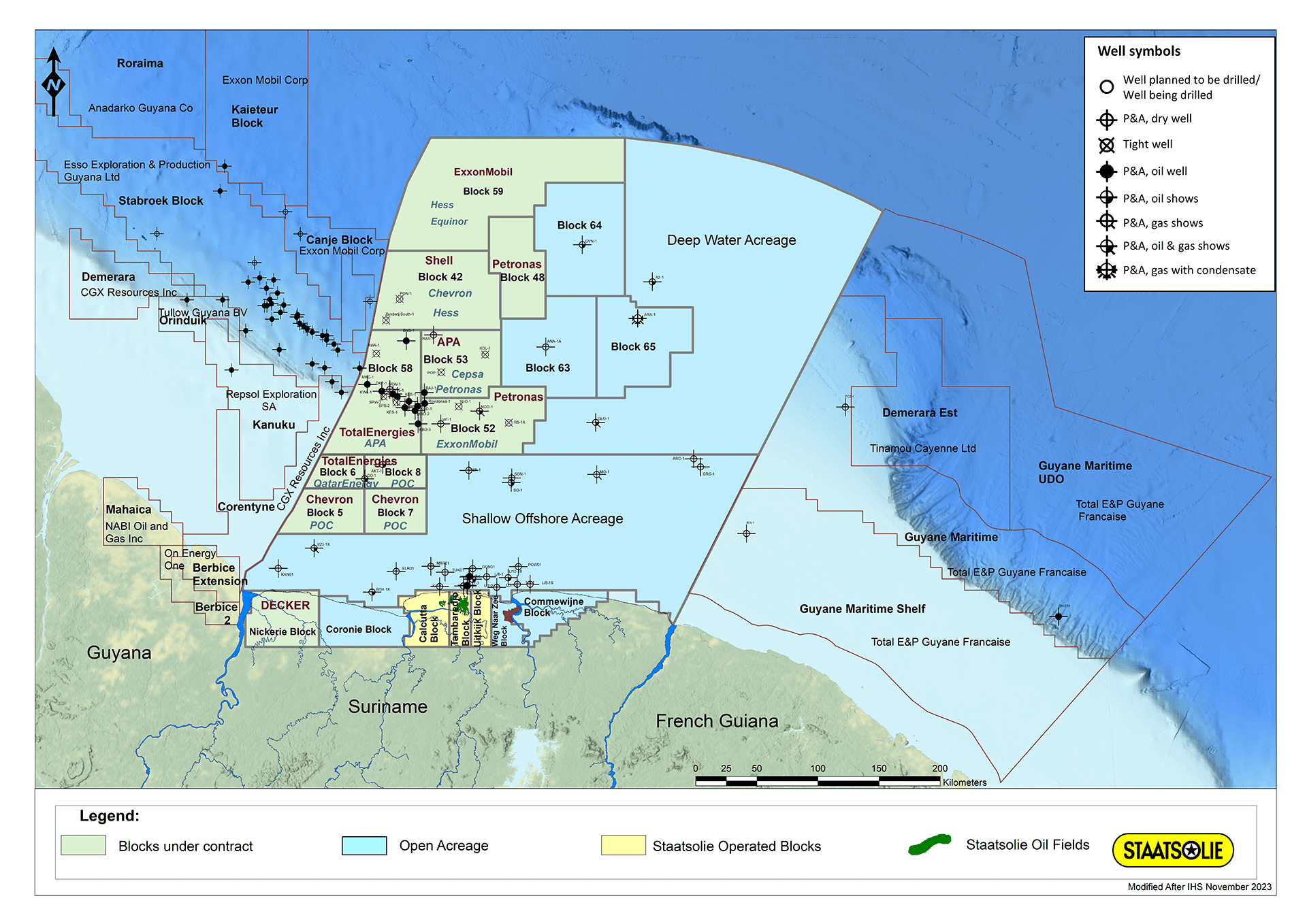
BlockOperatorPartnerswater depth (m)area (sq km)
63Petronas (100%)<13005425
64Total (40%)Qatar Energy (30%)
Petronas (30%)
1300-17006262
65Shell (60%)Qatar Energy (40%)1300-17005000+

Through the PSCs, Staatsolie extends the rights for exploration, development and production to these companies. The costs and risks during the exploration period are fully covered by the latter. The exploration period consists of three phases and will last seven years. An exploration well will be drilled in both Block 64 and Block 65 in the first phase, which will last three years. In Block 63 the first exploration well follows in the second phase of the exploration period. In the event of an oil or gas discovery that is declared commercial, Staatsolie has the right to participate in all three blocks for a maximum of twenty percent from the development period

Staatsolie

Read Full Post »

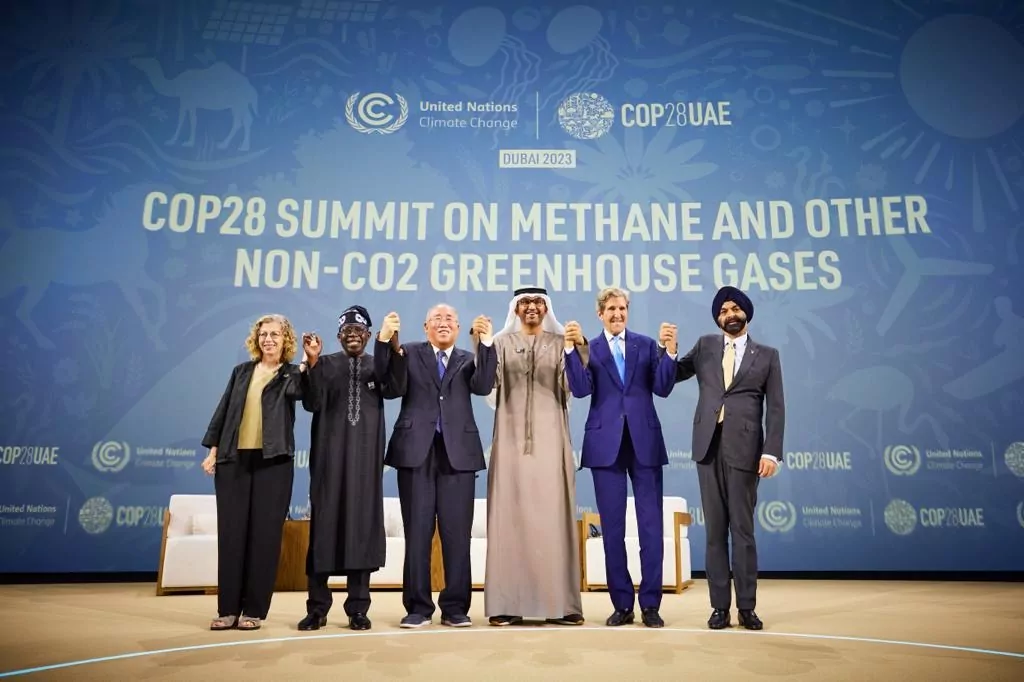
COP28:

The United Nations Climate Change Conference (COP28) closed today with an agreement that signals the “beginning of the end” of the fossil fuel era by laying the ground for a swift, just and equitable transition, underpinned by deep emissions cuts and scaled-up finance.

UN Climate Change News, 12/13/2023

Real world:

“That intrinsic demand that is not visible is so significant that we don’t see demand peaking – I don’t think we’ll see [oil] demand peaking in our lifetimes,” he said. “Particularly as demand growth in [emerging markets] continues to surprise the upside.” 

Christyan Malek, JPMorgan’s top energy strategist

The 19th century is known as the “century of coal,” but, as the technology scholar Vaclav Smil has noted, not until the beginning of the 20th century did coal actually overtake wood as the world’s No. 1 energy source. Moreover, past energy transitions have also been “energy additions”—one source atop another. Oil, discovered in 1859, did not surpass coal as the world’s primary energy source until the 1960s, yet today the world uses almost three times as much coal as it did in the ’60s.

Dan Yergin

You be the judge.

Read Full Post »

The Gulf of Mexico and Norwegian branches of the offshore family have a long record of technological innovation and production leadership.

As a followup to our last GoM-Norway update, the respective oil production rates are presented below. The Gulf of Mexico now has a small edge as a result of new production from deepwater facilities.

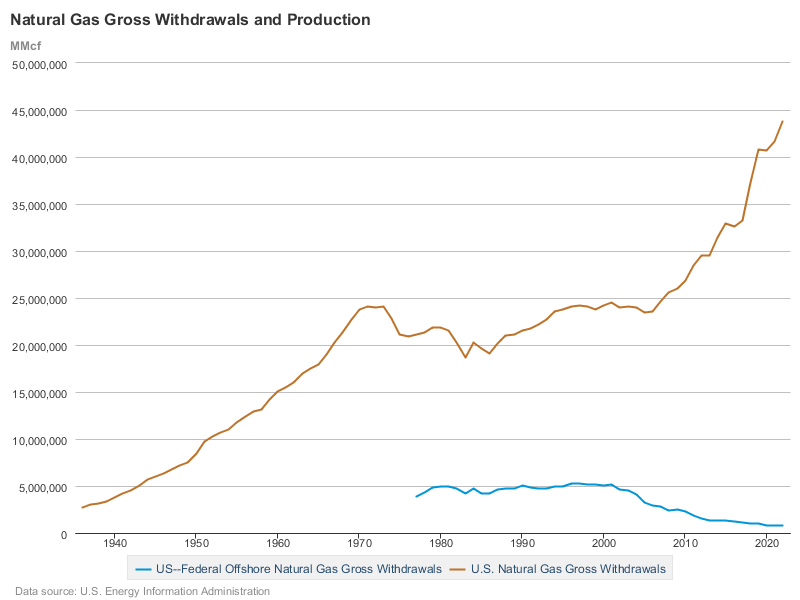
Natural gas is a different story, and Norway’s offshore gas production is much higher. US gas production (second chart below) has been dominated by the onshore sector since advances in horizontal drilling and well stimulation procedures triggered the shale gas revolution twenty years ago.

If you get a chance to visit Stavanger, the Norwegian Oil Museum is highly recommended. See the short video below.

Read Full Post »

This should be an interesting sale. Below are some of the questions that may be answered:

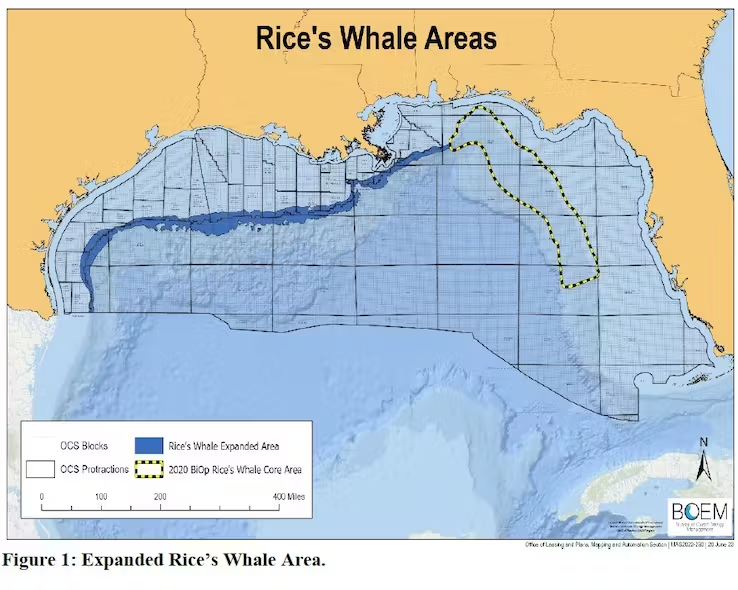
  • Will the Rice’s whale issues affect bidding for deepwater leases? The 5th Circuit’s ruling removes the Rice’s whale lease stipulation. However, BOEM’s Notice to Lessees and Operators (NTL) includes the same provisions and still stands pending further consultations with NOAA. Although the NTL is a “guidance document” (wink-wink), there are ways of making it stick through the plan approval process. Even without binding requirements, companies might choose to fully comply with the NTL to minimize legal risks.
  • Will the uncertainty about future sales spur or constrain bidding? Absent legislative action, no sale will be held in 2025.
  • Will the 14 blocks with rejected high bids at Sale 259 receive bids at Sale 261? If so, will the bids be higher or lower? Is it prudent to reject high bids without knowing when the next sale might be held?
  • Will bp, Chevron, Shell, Equinor, Oxy, and Woodside continue to be bullish on the GoM?
  • Will Red Willow Offshore, owned by the Southern Ute tribe, again be an active bidder?
  • Will Exxon again seek to acquire carbon sequestration leases at an oil and gas lease sale? After a long absence, it would be good to see the US super-major acquire leases for oil and gas purposes. Ditto for ConocoPhillips.
  • How many companies will participate in the sale? 30-35 would be a nice outcome.
  • What will be the sum of the high bids? >$300 million would be a solid result.

BOEM will live stream the opening of bids at 9 am CDT on Dec. 20, 2023

BOEM

Read Full Post »

Regardless of one’s opinion about the causes of climate change, minimizing methane emissions makes good safety, conservation, and environmental sense. The emerging international consensus on methane emission reductions thus merits broad industry and governmental support.

Because of the resource conservation mandate in the OCS Lands Act, minimizing the waste of natural gas has been a point of emphasis in the US offshore program for 50+ years. If you couldn’t utilize or market the natural gas, your project wouldn’t be approved. This requirement delayed the entry of some floating production systems into the Gulf of Mexico, but the pipeline network ultimately expanded to support deepwater development with floating units. Those associated with the offshore program are rightfully proud of their success in prohibiting the waste of gas and minimizing flaring and venting.

Despite the historical commitment to restricting flaring and venting, the data suggest that further improvement may be needed. The concerns listed below are based on the compilation and review of flaring and venting data that operators are required to report to ONRR.

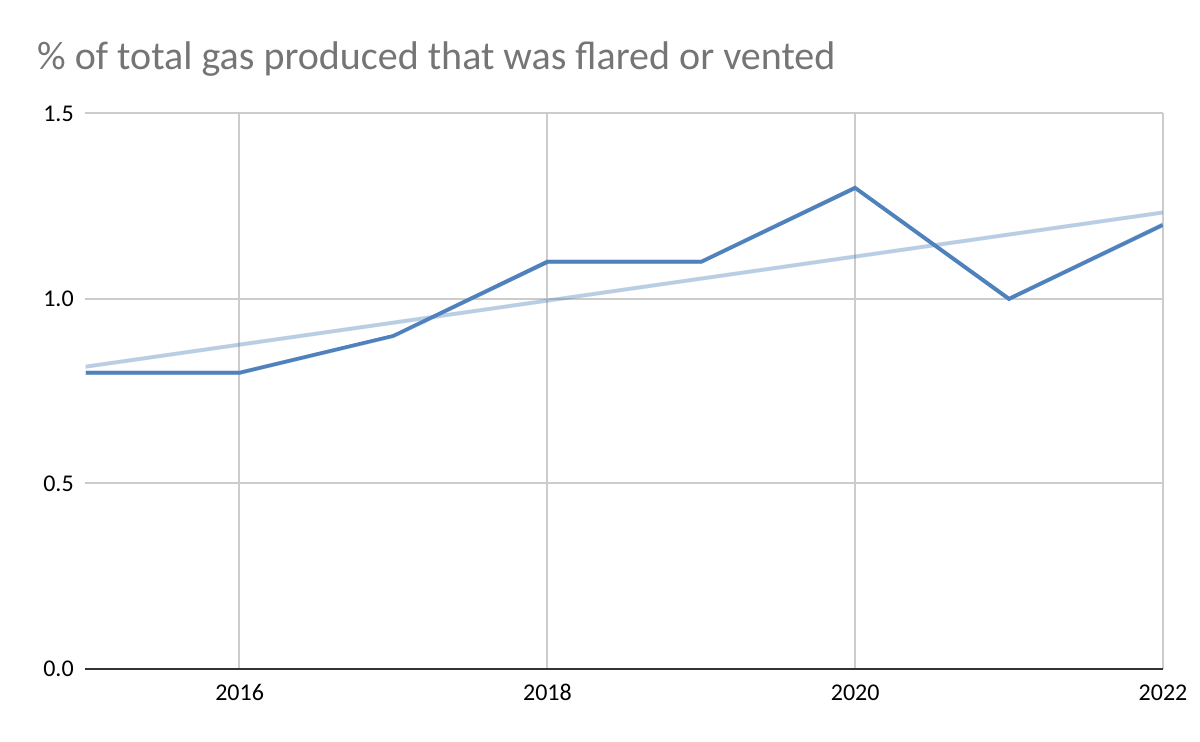
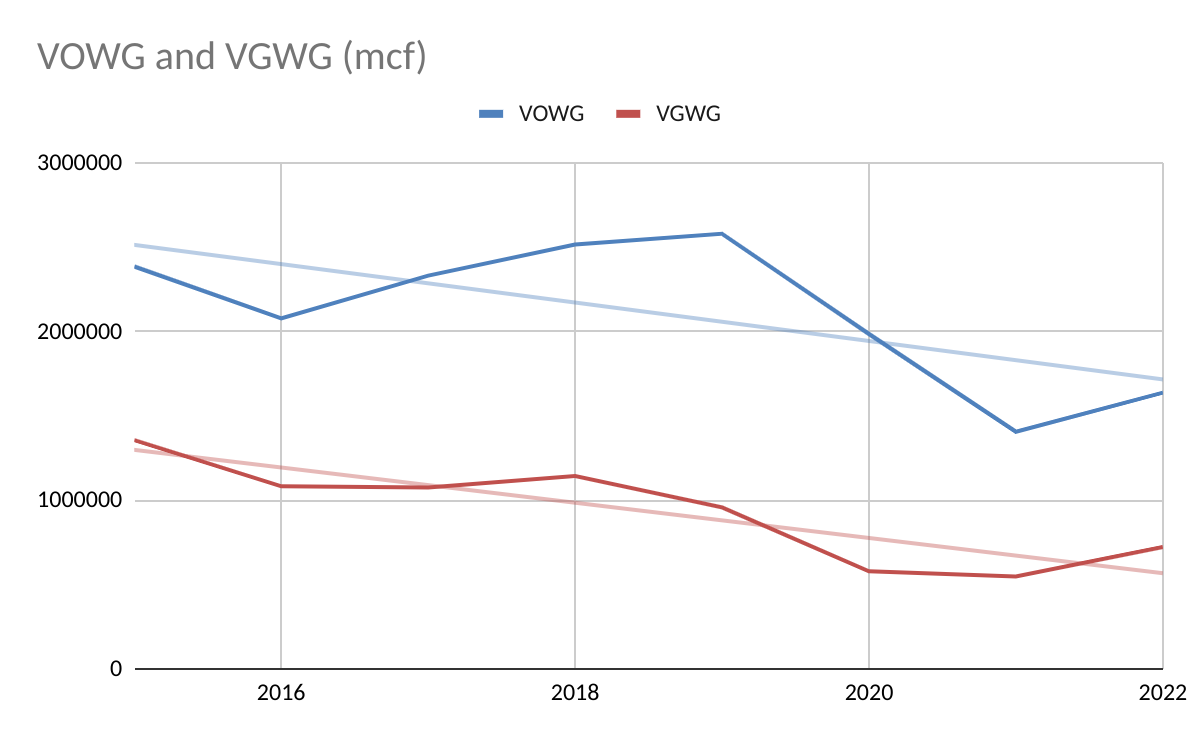
  • The % of US OCS gas produced that is flared or vented is trending upward (first chart below).
  • Both the gas flaring and venting volumes were higher in 2022 (vs. 2021) despite lower gas production.
  • 2022 oil well gas (OWG) flaring volume increased by 18% vs. 2022 despite nearly identical total oil production
  • More regulator/industry transparency on flaring episodes is needed, particularly in light of the PNAS paper and the June 2022 Inspector General Report.
  • In particular, there should be a process for explaining large spikes in monthly flaring and venting volumes. Were these spikes associated with production startups, major compressor issues, administrative corrections, or other factors?
  • Venting, which is a more significant environmental concern than flaring, increased by 407 million cu ft (21%) in 2023 vs. 2022. Although the overall venting trend is still favorable (second chart), the 2022 jump should be explained.
  • The previously noted inconsistencies in flaring data sets remain a concern.
  • The fact that more gas-well gas (GWG) is being vented then flared implies that most such venting is on older shelf platforms (where there are more gas wells).
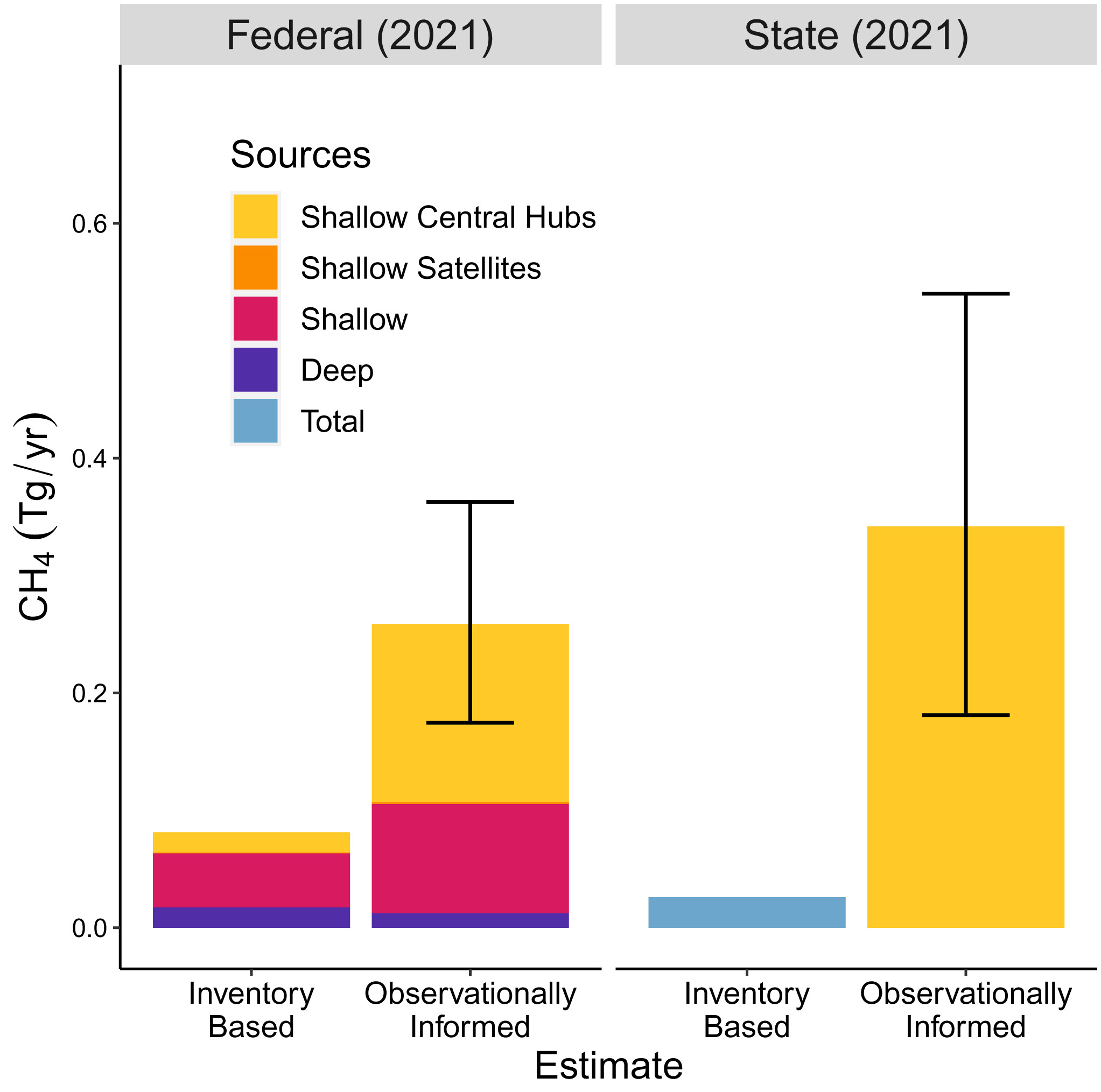
  • As summarized in the third chart below, deepwater facility methane emissions are consistent with the reported inventories, but shelf emissions in State and Federal waters differ significantly.
  • Regulating venting from older shelf platforms is difficult. About 15 years ago, the Federal government (MMS) considered requiring that older production platforms be retrofitted with flare booms, but safety, space limitations, and cost considerations precluded such a regulation. Instead, additional flaring/venting limits, and measurement and reporting requirements were imposed. What is next for these facilities?
  • Compiling and posting flaring and venting data should be a priority for BOEM/BSEE.
vented oil-well gas (VOWG) and vented gas-well gas (VGWG) vs. time
Total CH4 emissions for the GOM from inventories and observations for federal waters (Left) and state waters (Right). Observationally informed emissions are shown for the resampling of absolute flux rates (resampling approach A), with a mean and 95% confidence interval. The inventory estimates represent values adjusted for the year 2021. PNAS, 2023

Read Full Post »

BOEM diminishes the credibility of their important (and generally excellent) scientific, lease administration, and regulatory work with over-the-top wind energy promotion. The tweet below is a recent example.

This is not a good look for the bureau that is expected to objectively evaluate offshore wind projects. Leave the hype to the wind industry and its NGO supporters.

Read Full Post »

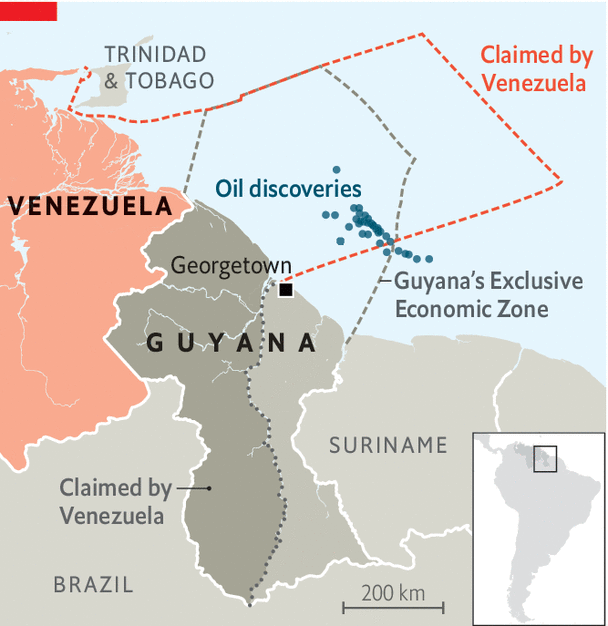
If we pause any of our developments, Maduro succeeds. He has no right in international law to tell the people of Guyana, a sovereign country, how to pursue its affairs.

And that is why we are forging ahead with our development in all 83,000 square miles…if we get paralyzed by this at the government level then we will fall prey to what he is trying to achieve.

Guyana’s Vice President, Dr. Bharrat Jagdeo

Read Full Post »

MPOG System in red

On Nov. 17, the Coast Guard reported a “crude oil release” in the Gulf of Mexico near the Main Pass Oil Gathering (MPOG) company’s pipeline system southeast of New Orleans. After 3 weeks of investigation, no pipeline leak has been identified.

The cause and source of the incident remain under investigation. The entire length of the main pipeline has been assessed to date, along with 22.16 miles of surrounding pipelines with no damage or indications of a leak identified. Remotely operated vehicles (ROVs) and divers continue to reassess the main pipeline and surrounding pipelines as a sustained effort to locate the source of the suspected release.

US Coast Guard

So what was the source of the spill? Another pipeline? Vessel?

Read Full Post »

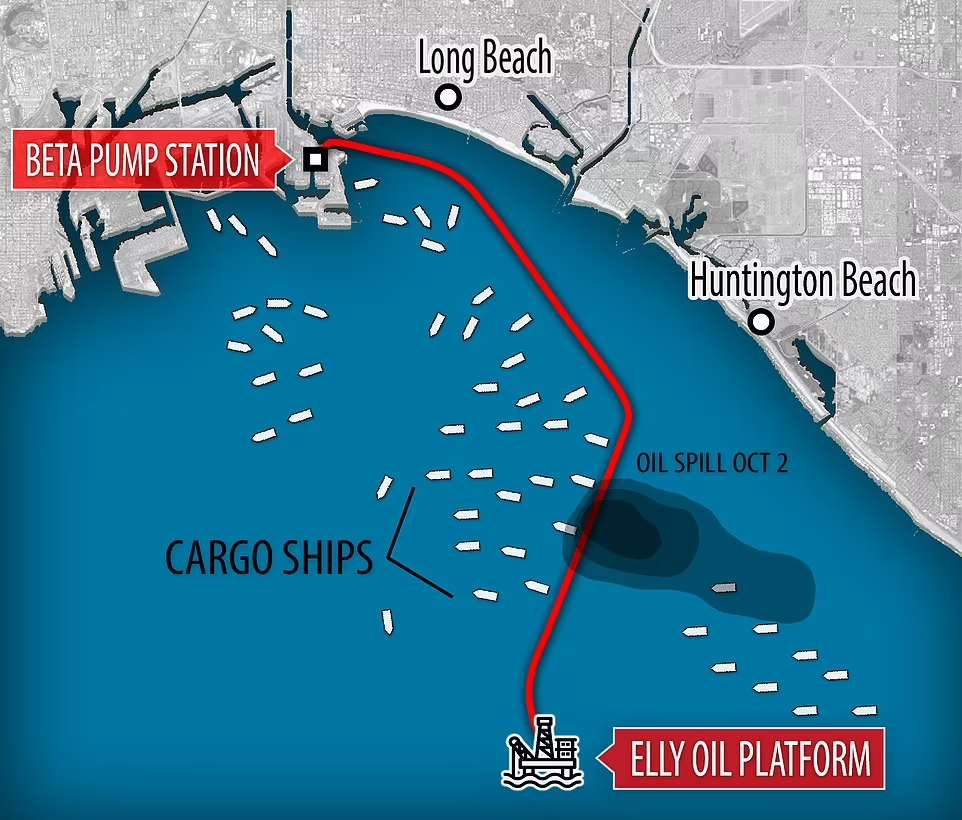
NTSB findings; no surprises.

Postaccident investigation determined that the containerships MSC Danit and Beijing had dragged anchor near the pipeline months before the oil release, on January 25, 2021.

previous posts on this incident

Read Full Post »

« Newer Posts - Older Posts »