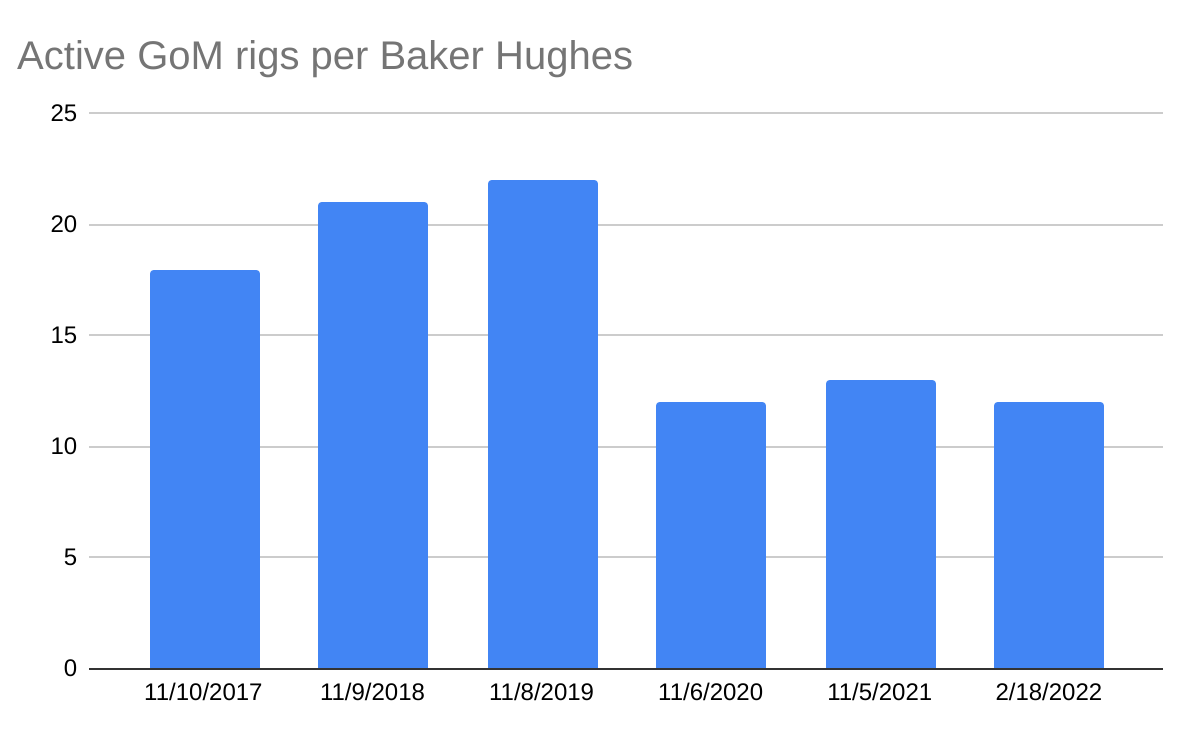
The rig count remains low at 12 (see the updated chart below). Per BSEE’s borehole file, only 3 deepwater exploratory wells have been spudded in 2022 YTD (2/21) – one each for Shell, Hess, and Anadarko.
What’s going on? Better opportunities elsewhere? Uncertainty about lease sales? Concerns about legal challenges and the future of the US offshore program?
Meanwhile, however, drillers may be running out of sweet spots in the shale basins of the country. In an article citing well data, the Wall Street Journal reported earlier this month that because of the quick depletion rates of shale wells, low-cost resources are giving way to higher-cost deposits. And this is motivating a warier approach to production growth.
The shale revolution made the US a net oil exporter, but skepticism about shale production forecasts suggests the need for other supply sources. Given the shale uncertainty and the unrealistic expectations regarding the energy transition, greater US dependence on imported oil is on the horizon. This bodes well for OPEC, but not so well for US and international consumers.
On 2/11/2022 Judge Cain (Western District of Louisiana) issued ruled that a Biden executive order contradicts Congress’ intent regarding the consideration of global effects:
The Court finds that EO 13990 contradicts Congress’ intent regarding legislative rulemaking by mandating consideration of the global effects. The Court further finds that the President lacks power to promulgate fundamentally transformative legislative rules in areas of vast political, social, and economic importance, thus, the issuance of EO 13990 violates the major questions doctrine.
Judge Cain’s order seems, at least to this non-lawyer, to contradict the 1/27/2022 ruling by Judge Contreras, DC Federal Court, that BOEM “acted arbitrarily and capriciously in excluding foreign consumption from their greenhouse gas emissions calculation.” The plaintiffs had asserted that BOEM failed to consider the effect that reduced US offshore production (and higher prices) would have on foreign consumption and the associated GHG emissions. (Poverty is good?)
For a second time this week, Fatih Birol, the executive director of the International Energy Agency (IEA), called on the OPEC+ group on Wednesday to narrow the widening gap between its production quotas and the much lower actual supply to the market.
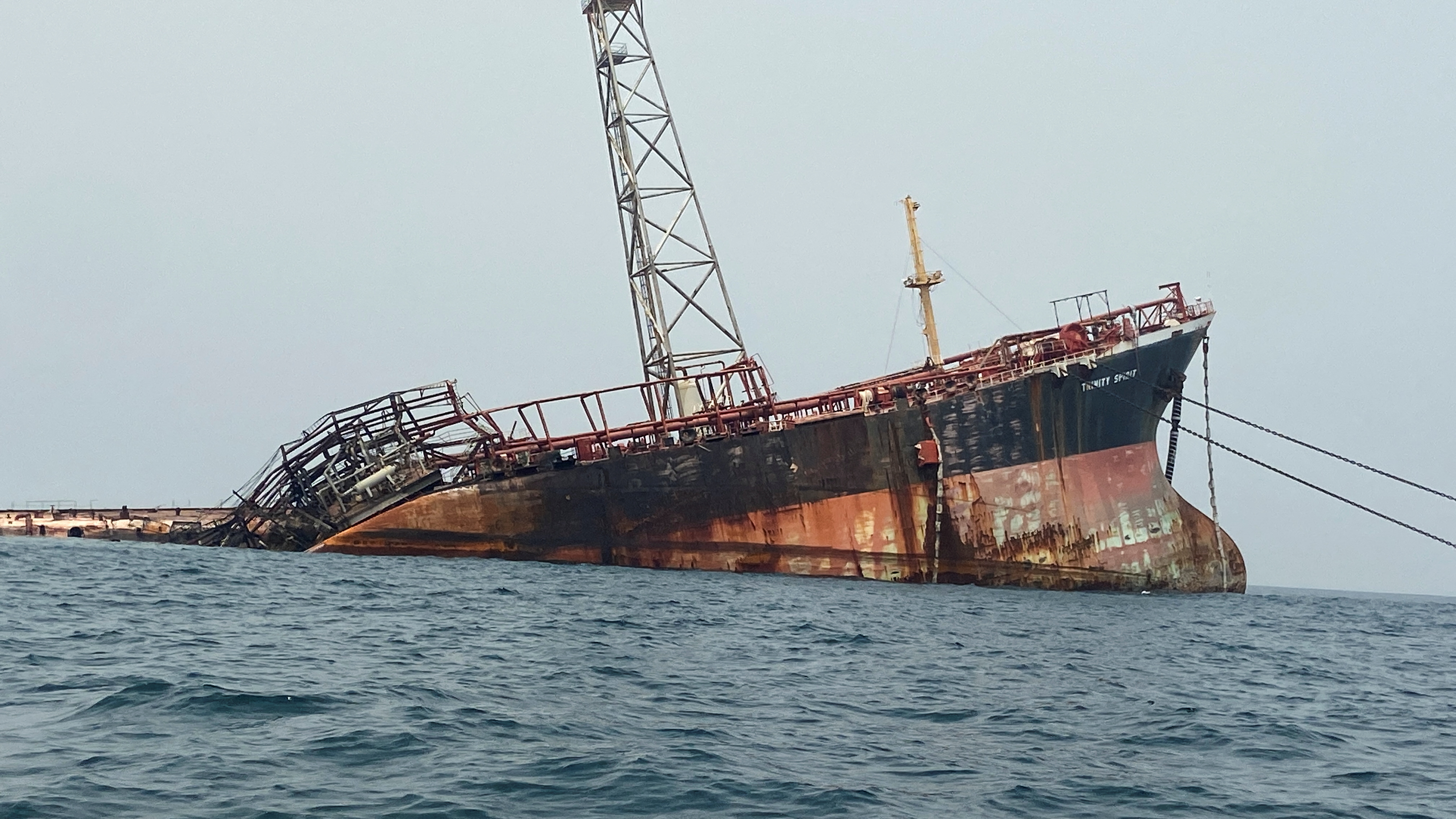
Two weeks after the Trinity Spirit FPSO fire offshore Nigeria we still don’t know the fate of the crew. Neither the operator nor the regulator websites include any mention of the fire. The last operator statement (more than a week ago) advised that 3 workers were confirmed dead and others were still missing. There has been no subsequent update and the media have moved on, as is usually the case when there is no ongoing oil spill.
We need an international standard that identifies incident information to be publicly disclosed and specifies the timeframes and methods for releasing this information. An API or ISO committee would seem to be the best means of developing such a standard. If these organizations are unwilling to take the lead, perhaps the International Regulators’ Forum can do so. The credibility of the offshore industry is at stake.
This is an excellent tribute written by two brothers who lost their father in the Ocean Ranger tragedy. I highly recommend that you listen and reflect.
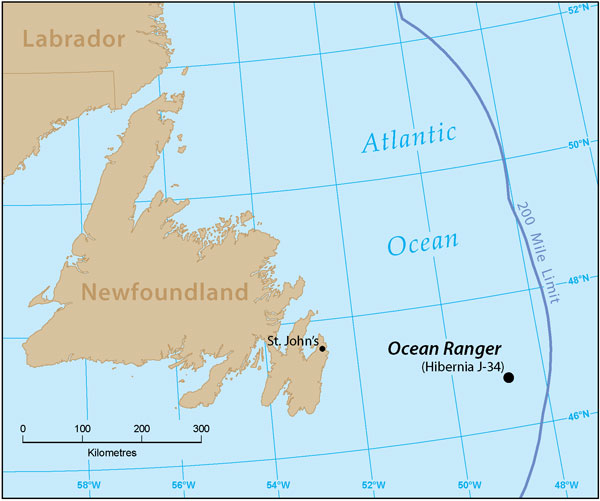
Condensed below is important background information from my notes and from an outstanding presentation by Howard Pike in St. John’s Newfoundland in 2017.
84 men aboard; no survivors
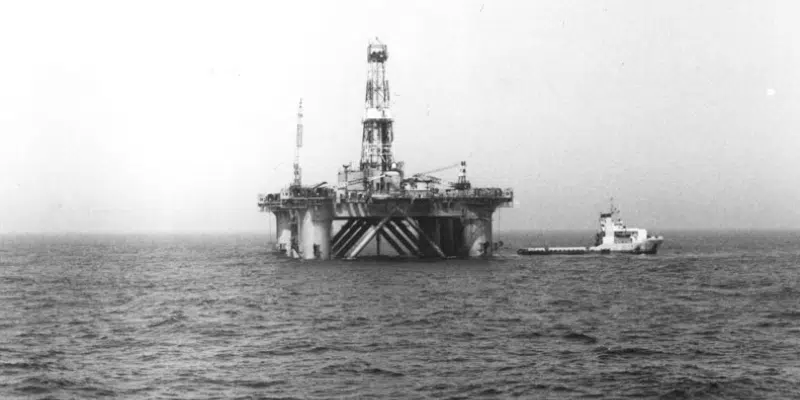
Largest semisubmersible drilling rig of its day
US registered MODU
The “unsinkable” rig had weathered more than 50 significant storms
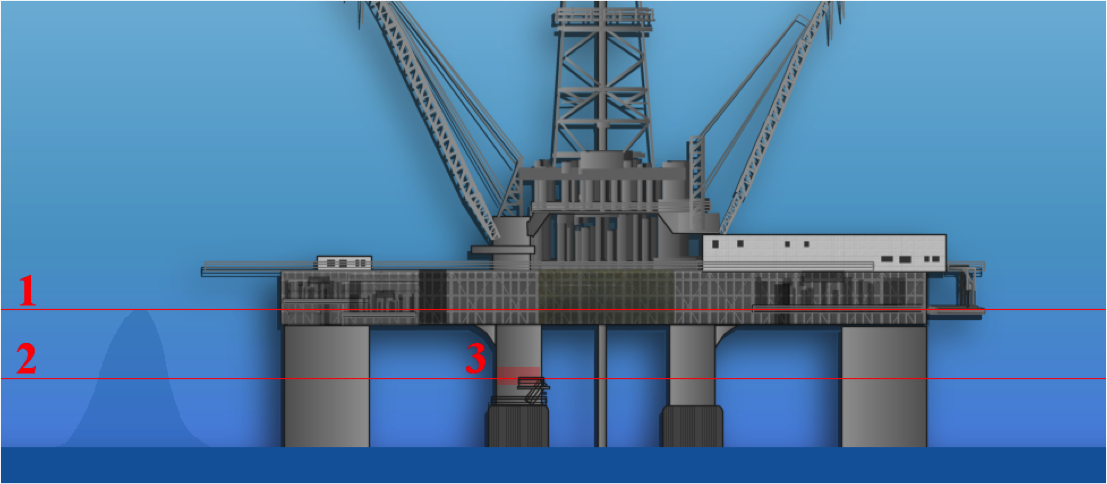
Unlike most semisubmersibles, the ballast control room was located in one of the legs (starboard column No.3). At drilling draft, it was just 28 feet above mean sea level.
Water depth was 240′, rig was moored with 12 anchors
Ballast control operators had minimal training
Incident with the ballast control system just a week before the disaster.
On February 14th, the Ocean Ranger was battered by a severe storm; wave heights up to 21m; rogue wave damaged deck items on nearby Sedco 706
Crew stopped drilling when the heave exceeded 15′, forced to shear the drill pipe during the disconnect process
Crew did not deballast to the storm draft from the 80′ drilling draft
Waves broke portlight in the ballast control room
Salt water soaked the ballast control console
Short circuits or inadvertent operator commands caused ballast tank valves in the bow to open.
Water flooded the forward ballast tanks, and the rig began to list toward the bow.
Crew inadvertently opened more pontoon valves
Forward list passed the point of recovery
The Ranger’s standby vessel, the Seaforth Highlander, was contacted but was delayed by sea conditions
At approximately 1:10 a.m. on February 15 th , the Ocean Ranger began sending mayday signals.
Zapata Ugland and Sedco 706, working in the area, sent their standby vessels
At 1:30 a.m. the Ocean Ranger’s radio man sent his final transmission. The crew was boarding the lifeboats.
Investigators later determined that as the lifeboats descended, violent winds threw them against the side of the rig, damaging some lifeboat hulls before they ever touched the water.
Crew did not have survival suits
Seaforth Highlander attempted unsuccessfully to rescue survivors from a damaged lifeboat
At the time of the Ocean Ranger tragedy, 3 rigs – the Alaskan Star, Rowan Midland, and Zapata Saratoga were working on Georges Bank in the US North Atlantic. The nor’easter had passed over Georges Bank before strengthening as it moved toward the Grand Banks. Among the small Georges Bank drilling community there was a kinship with those working in the even harsher environment on the Grand Banks. 40 years later, we are still greatly saddened by what transpired. Many lessons were learned and applied, but the ocean is unforgiving and we must continue to assess storm preparedness. Reflection on past tragedies is an important part of the process.
“At a time of rising energy costs and heightened geopolitical tensions, the misguided decision to cancel the only lease sale held last year is contributing to significant uncertainty for U.S. natural gas and oil producers and limiting access to the affordable, reliable energy that’s needed here in the U.S. and around the world. We call on the Department of Interior to join us in this effort and appeal the court’s ruling …
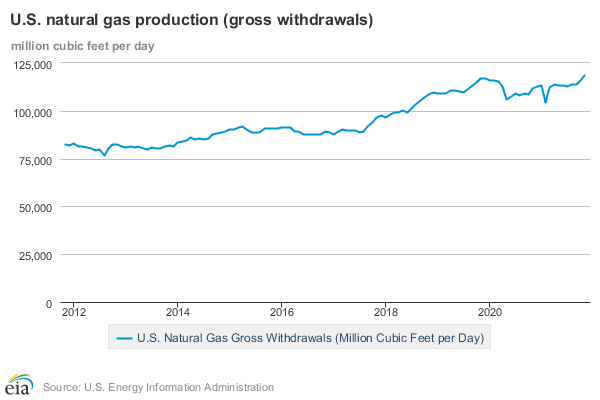
My home State (Commonwealth) of Pennsylvania is producing nearly 10 times as much natural gas as the US OCS (Federal offshore). Who would have dreamed this was possible 20 years ago? Among the states, PA is second to Texas in gas production.
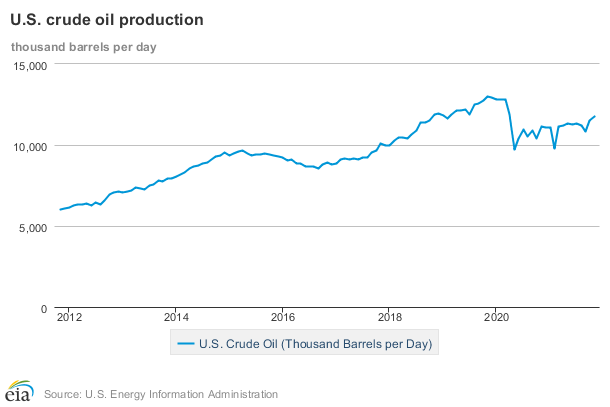
Oil production in Texas is now nearly 3 times as high as on the OCS. In 2010, US offshore production was substantially higher (567 million barrels vs. 427 million barrels).
Thanks largely to Texas, North Dakota, and New Mexico, US oil production is rebounding.
Thanks to TX, PA, LA, AK, WV, OK, NM, and OH, US gas production has also strengthened.
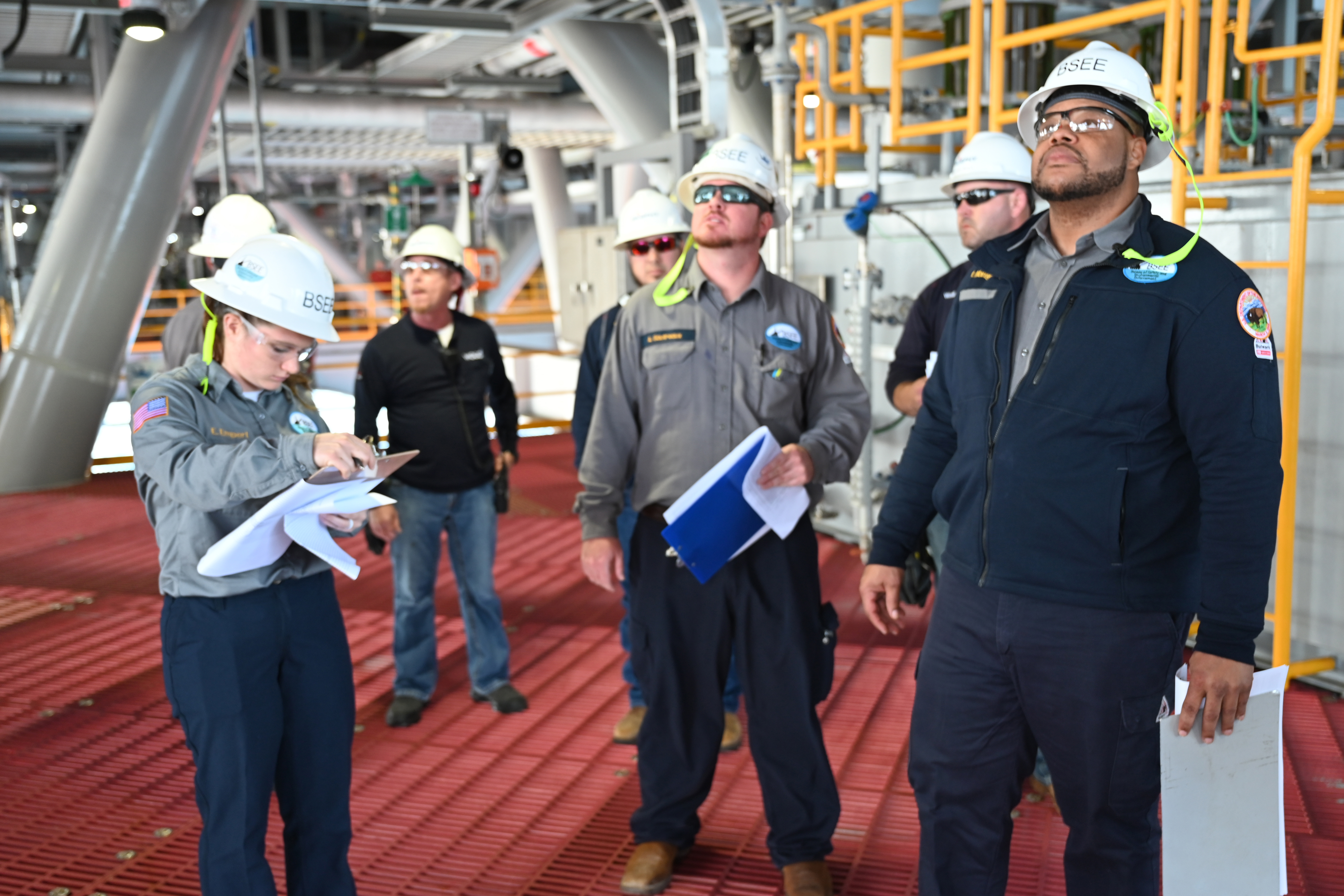
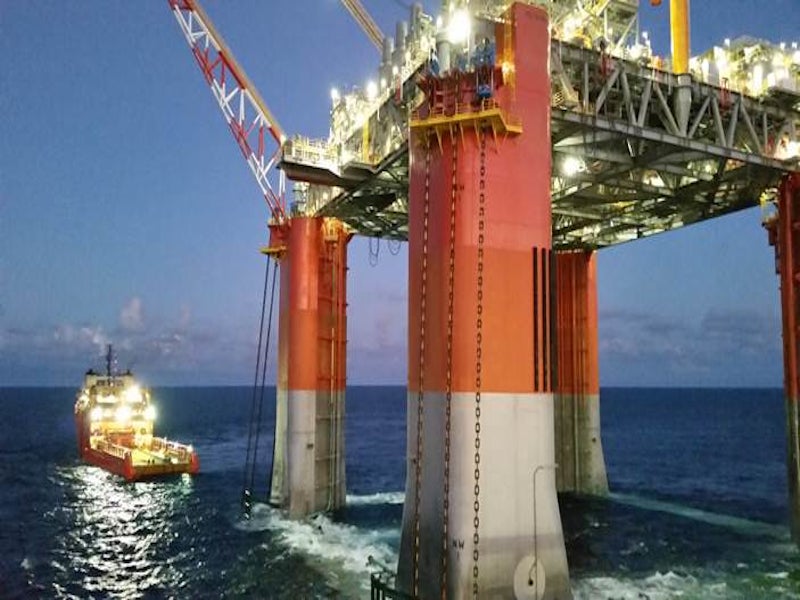
Pictured above are BSEE inspectors from the famed Houma District conducting one of their (always) thorough pre-production inspections at Murphy’s King’s Quay semisubmersible production platform in the Gulf of Mexico. [Trivia question: Who was the first Houma District Supervisor?]
King’s Quay is one of six deepwater platforms expected to begin production in the Gulf over the next several years. Others include Shell’s Vito and Whale, BP’s Argos, Chevron’s Anchor, and Beacon’s Shenadoah. All are semisubmersible platforms, the current design of choice for the deepwater Gulf. Production semis have become smaller and more efficient, greatly improving the economics of deepwater projects.
These platforms feature efficient gas turbines and compression systems that should increase the GHG intensity advantage of deepwater Gulf production.
These are the first deepwater production structures to be installed in the Gulf since Shell’s Appomattox in 2018. Per our previous post on this topic, current GoM production rates are not sustainable without regular, predictable lease sales and increased exploration.
 Bud's Offshore Energy (BOE)