Feeds:
Posts
Comments

Archive for November, 2010

From Western Australia Business News:

The gulf between the Western Australian government and Canberra continues to widen, with state mines and petroleum minister Norman Moore writing to local oil and gas companies for support to block plans for a single national oil regulator.

Comment: What is Mr. Moore offering the companies in return for their support? This “turf” battle shows why you can’t have multiple authorities regulating the same facilities.  Disputes, self-interest, conflicting agendas and priorities,  and “turf” issues drain too much energy from the regulators and the industry being regulated.  Concerns about critical operational risks are superseded by coordination activities and debates about who is in charge.

Read Full Post »

Those who read this obscure blog regularly know that we have been railing about the release of the Montara Inquiry Report since it was delivered to Energy Minister Ferguson on 18 June 2010. The report has now sat on the Minister’s desk for nearly twice as long as the Montara well flowed into the Timor Sea at an announced rate (cough, cough) of 400 barrels per day.

BOE wants to thank Minister Ferguson for helping teach us the virtue of patience, an important life skill that some of us had not previously mastered. In our newly enlightened state, we are becoming more observant. As a result, we noticed that the Australian Senate has already passed legislation strengthening the National Offshore Petroleum Safety Authority (NOPSA).

After reviewing information about the legislation here and here, I am a bit confused about the changes being enacted.  However, if the concerns (below) of Tina Hunter, an Assistant Professor at Bond University who had previously submitted testimony to the Montara Inquiry, have not been yet been addressed, Parliament needs to revise the legislation.  Multiple regulators are a problem, not a solution.  (The US needs to take notice.)

These legislative changes proposed will still split the responsibilities for Well Operations Management Plans between NOPSA and the responsible Delegated Authority (who assesses the well design and construction and drilling applications)….Furthermore, the regulatory amendments do not consider the environmental regulation of well operations and integrity, which also remains with the relevant Commonwealth or State Authority. Therefore, whilst in principle these proposed legislative amendments will provide benefits for the regulation of well integrity, it will still split the regulatory responsibility of well integrity between multiple regulators. Tina Hunter

Read Full Post »

The conference summary is now posted.

Presentations

Read Full Post »

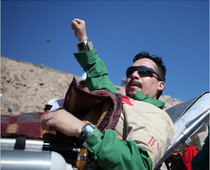
Rescued Chilean miner Edison Pena

Jared with Meb Keflezighi

Forget about the guys up front, this will be the marquis race in NYC on Sunday!

Read Full Post »

Joe Barton (R-Texas) is definitely interested.

He will face a growing field of senior House GOP lawmakers with their sights set on serving atop the powerful Energy and Commerce panel, including Rep. John Shimkus (R-Ill.) and Fred Upton (R-Mich.)

Read Full Post »

The following are the consensus findings and recommendations of the 200 operations, safety, and regulatory specialists who participated in the International Regulators’ Offshore Safety Conference (18-20 October, Vancouver):

  • Regulatory regimes function most effectively when a single entity has broad safety and pollution prevention responsibility.  Gaps, overlap, and confusion are not in the interest of safety or regulatory efficiency.
  • The regulator’s core responsibilities and objectives must be clearly identified.  Managers must minimize distractions so that regulatory personnel can focus on these objectives.
  • Safety management and regulatory priorities should be identified through a comprehensive risk assessment program.   Training and competency development programs should be updated to reflect the new risk information.  Contracting strategies should be reviewed to assess their safety and risk implications.
  • Government and industry should promote an improvement mentality, not a compliance mentality. Continuous communication among regulators, operators, contractors, workers, industry associations and public interest groups is essential for continuous improvement.
  • Operators and contractors must manage their companies to achieve safety objectives and must continually assess the effectiveness of their management programs. Regulators should challenge industry to resolve potential safety problems rather than seek to resolve the problems for them.
  • Regulators should serve as catalysts for learning by distributing information, hosting workshops, participating in research, and identifying gaps in standards and best practices.  Wherever possible, the best standards should be identified and applied internationally.
  • Accident investigations should be conducted independently and findings should be promptly and broadly distributed.  Industry or government should maintain comprehensive and verified incident data bases.  Offshore companies should regularly discuss the causes and implications of past accidents with their employees.
  • Industry and government cannot rely solely on incident data to identify risks.  New indicators must be explored and assessed, particularly for major hazards and safety culture. Worker input is also essential.
  • Peer-based audit programs should be considered for both regulators and operators.
  • Industry and regulators should make better use of technology for real time monitoring of safety parameters.
  • Sustaining outstanding safety performance is critical to the reputation of industry and government.  All personnel should be trained to be safety leaders and should be empowered to stop work without blame.
  • Industry and government should Investigate other actions and programs that might help promote, sustain, and monitor a culture of safety achievement.

This is very good, fundamental guidance for all governments and companies.

Read Full Post »

Read Full Post »

BP is now estimating total Macondo response and damage costs at $39.9 billion. I would guess that only 4 or 5 other operating companies could have survived this type of hit.

Hopefully, every offshore operator is keeping this in mind when formulating safety management programs and training, research, and standards budgets.  Companies claiming that such disasters couldn’t happen to them are simply demonstrating that they could, because no company with a proper safety culture would make such a statement.

Read Full Post »

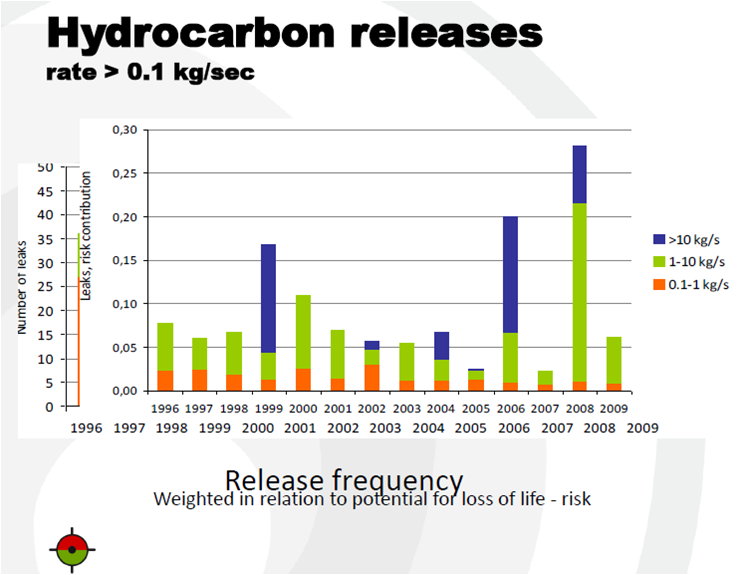
The above slide is excerpted from Torleif Husebo’s presentation at the Vancouver conference.  Since Piper Alpha in 1988, offshore safety leaders have been gathering and assessing hydrocarbon release data.  Norway, the UK, Australia, the Netherlands and other nations track these data because they are an important indicator of fire and explosion risks. The IRF reports these data as part of their performance measurement project.

Obviously, when hydrocarbons are unintentionally released at an offshore facility you have the potential for a very dangerous situation.   However, because of objections voiced when the MMS updated incident reporting requirements 5 years ago, the US government does not collect the detailed information needed to track the size and cause of these releases.  The US is thus unable to monitor trends and benchmark against other nations around the world.

Offshore companies have done well in responding to the drilling issues raised following the blowout.  However, the post-Macondo offshore industry needs to provide broad safety leadership.  A commitment to collecting performance data and assessing risk trends at OCS oil and gas facilities is absolutely essential.  A good place to start would be to initiate a cooperative hydrocarbon release data gathering program.

Read Full Post »


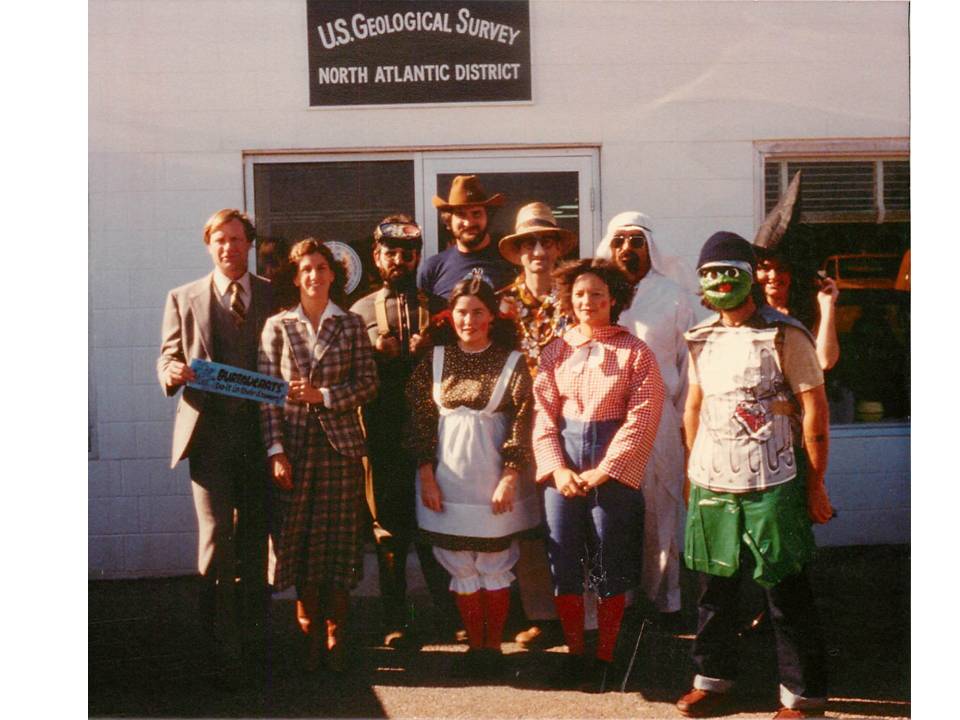
Hyannis Halloween - 1981


Note the sign (above) on our office at Barnstable Municipal Airport in Hyannis. Prior to 1982 when the Minerals Management Service was formed, the OCS regulatory program was part of the US Geological Survey (Conservation Division) and the leasing program was in the Bureau of Land Management. After a 28-year marriage, these functions are again being separated.

As one who worked in the OCS program for 10 years prior to the formation of MMS, I think the the pre-1982 framework is conceptually preferable. However, unless the separation is carefully executed, disruptive conflicts between the two organizations are guaranteed.  Such conflicts were common in the pre-MMS days, and the Department of the Interior had to set up a special office to coordinate activities and manage disputes.

In addition to being independent, the new regulatory authority must be fully responsible (without interference) for all regulatory actions from plan approval through abandonment.  Without such independence and authority, the separation will only add to the regulatory confusion that has handicapped the OCS program throughout its history.

Technical and scientific personnel in the OCS regulatory program must be freed from non-productive and time-consuming internal disputes and coordination responsibilities so they can concentrate on performance measurement, risk assessment, safety leadership, standards, and technical studies.

Read Full Post »

« Newer Posts