All eyes are on the 9th Circuit. No injunction yet. Will the Court intervene to block Sable?
No evidence of intervention by the State.
Does Sable restart production tomorrow?
Traders on edge. Bulls are feeling optimistic. See X post below. 😉
Spend my barrel, parked in a harbor ‘Neath the platform spotlight Pump it up tight, let the oil start flowin’ A little crude movin’ on a federal green light Fits my life, oh so right My Sable Offshore Delight— Victory II (@VictoryII1) December 30, 2025
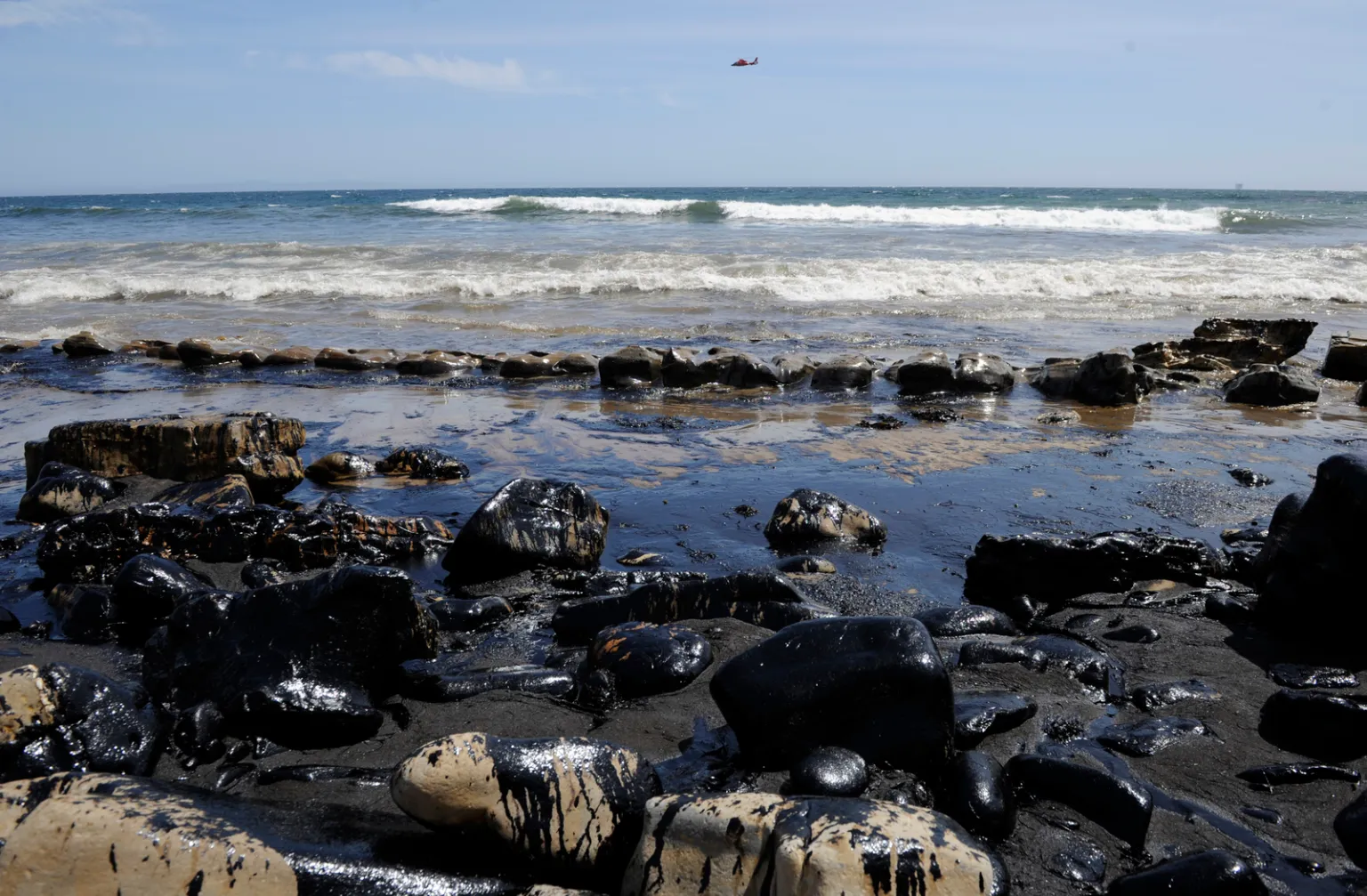
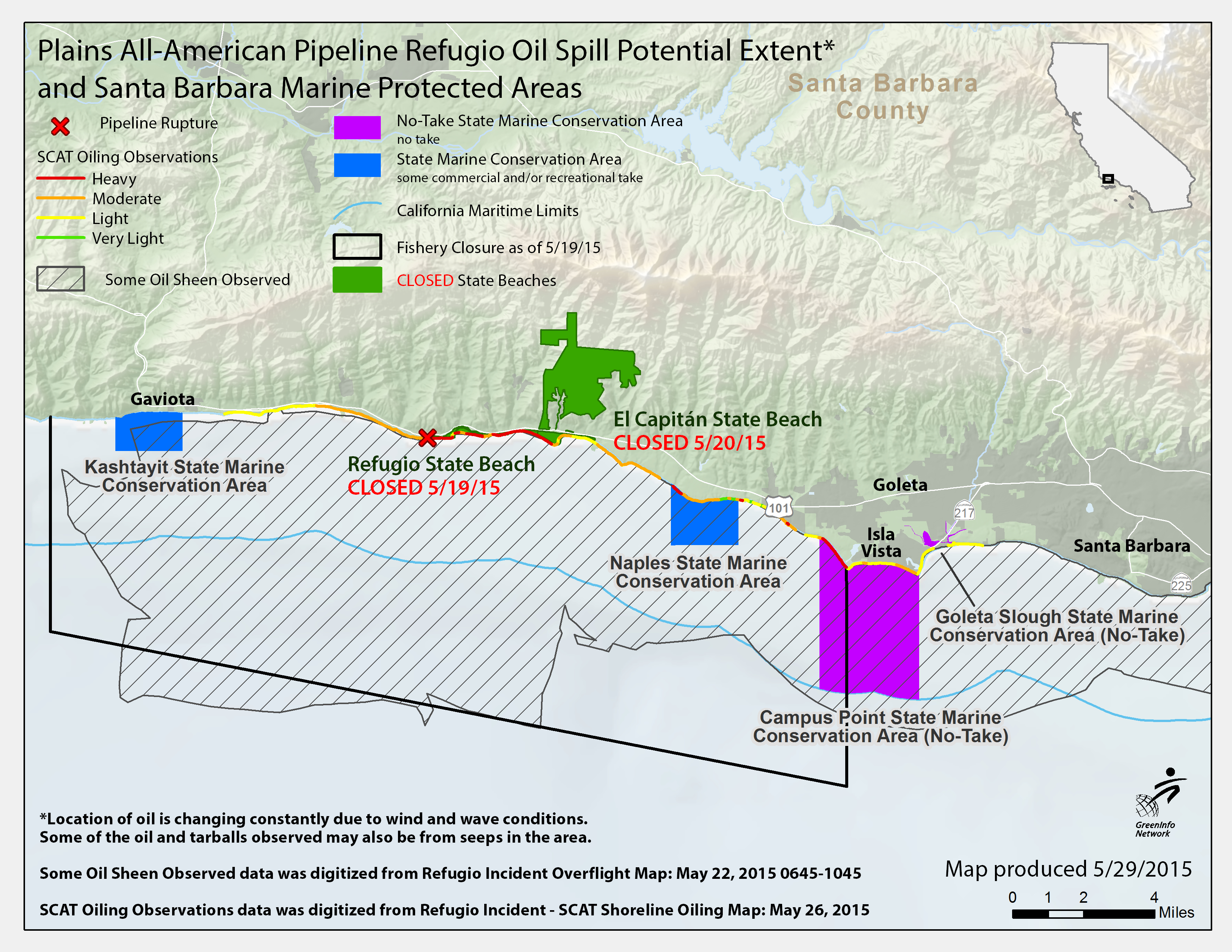
The pipeline spill just north of Refugio State Beach on May 19, 2015, coated miles of shoreline and marine habitat, and dolphins, elephant seals, sea lions, pelicans and other birds. | Santa Barbara Independent
We can scream all we want (with some justification) about the California Coastal Commission, Santa Barbara County, and intractable environmental organizations, but the Santa Ynez Unit would still be producing today were it not for an ugly, preventable pipeline spill.
At approximately 10:55 a.m. Pacific Daylight Time (PDT) on May 19, 2015, the Plains Pipeline, LP (Plains), Line 901 pipeline in Santa Barbara County, CA, ruptured, resulting in the release of approximately 2,934 barrels (bbl) of heavy crude oil. An estimated 500 bbl of crude oil entered the Pacific Ocean.
1) Ineffective protection against external corrosion of the pipeline The condition of the pipeline’s coating and insulation system fostered an environment that led to the external corrosion. The pipeline’s cathodic protection (CP) system was not effective in preventing corrosion from occurring beneath the pipeline’s coating/insulation system. 2) Failure by Plains to detect and mitigate the corrosion The in-line inspection (ILI) tool and subsequent analysis of ILI data did not characterize the extent and depth of the external corrosion accurately. 3) Lack of timely detection of and response to the rupture The pipeline supervisory control and data acquisition (SCADA) system did not have safety-related alarms established at values sufficient to alert the control room staff to the release at this location. Control room staff did not detect the abnormal conditions in regards to the release as they occurred. This resulted in a delayed shutdown of the pipeline. The pipeline controller restarted the Line 901 pipeline after the release occurred. The pipeline’s leak detection system lacked instrumentation and associated calculations to monitor line pack (the total volume of liquid present in a pipeline section) along all portions of the pipeline when it was operating or shut down. Control room staff training lacked formalized and succinct requirements, including emergency shutdown and leak detection system functions such as alarms.
Plains Pipeline was the responsible party, but that doesn’t absolve the companies that were dependent on Plains to transport their production. Given the organized opposition that emerged following the Santa Barbara blowout in 1969 (the result of a reckless well plan), the integrity of that pipeline was critical to their business strategy and they should have exercised some oversight.
Offshore disasters have had enormous consequences for the oil and gas industry in terms of lost opportunities. Think about this: prior to the Macondo blowout, the Obama administration had proposed an oil and gas lease sale in the Atlantic and the Florida Senate was holding hearings about leasing in Florida State waters. Such lease sales are now completely out of the question.
Regulations and standards are not enough. We need open discussion about incidents, large and small, and a willingness to be critical of the responsible parties.
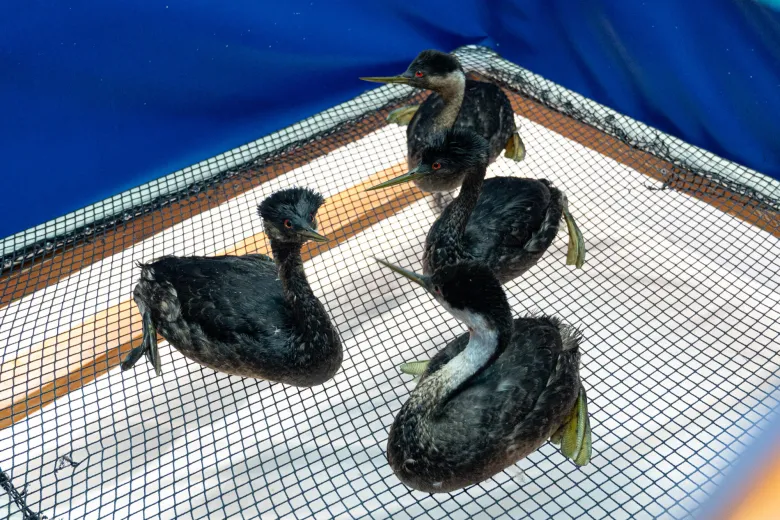
International Bird Rescue photo: seabirds coated in oil off the Santa Barbara coast
Noozhawk: “A natural oil seep off the Santa Barbara coast has coated more than 100 seabirds in oil, leaving them in a life-threatening state, according to the nonprofit International Bird Rescue.”
For more about natural seeps, see “Slick Talk About Seeps.” The attached Oil Spill Fact Sheet (2002) by Cheryl Anderson, the world’s foremost authority on oil spill occurrence rates, and a 2012 update, may also be of interest.
As a result, on Sept. 29 Sable Offshore filed a declaratory judgement action against the State of California in Kern County. Sable is asking the court to confirm that the objectionable permitting provisions of SB 237 do not apply to their Las Flores Pipeline System.
Also, on Oct. 6 Sable filed a motion increasing the monetary damages in its ongoing case against the California Coastal Commission to $347 million. Sable asserts that their pipeline repair program was authorized by existing permits issued by the County of Santa Barbara under its Local Coastal Program and delegated Coastal Act authority.
These seem like good tactical moves on the part of Sable.
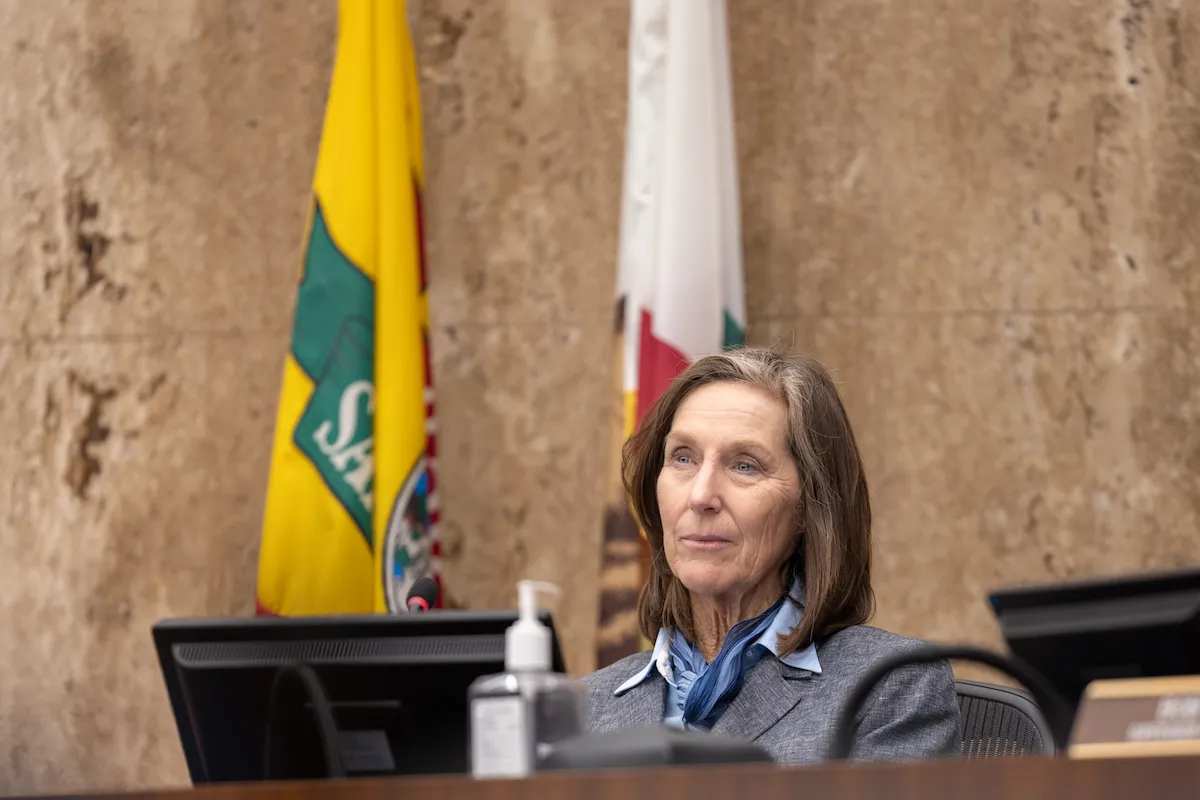
Per the Independent, the alleged conflict of interest that prevented County Supervisor Joan Hartmann from voting on Sable oil matters has been reevaluated. She is now legally permitted full voting rights.
With Hartmann recusing herself, the supervisors had been deadlocked in a perpetual 2-2 tie when voting on issues concerning Sable. Supervisor Hartmann’s participation is not good for Sable given her public comments in opposition to the Santa Ynez Unit restart.
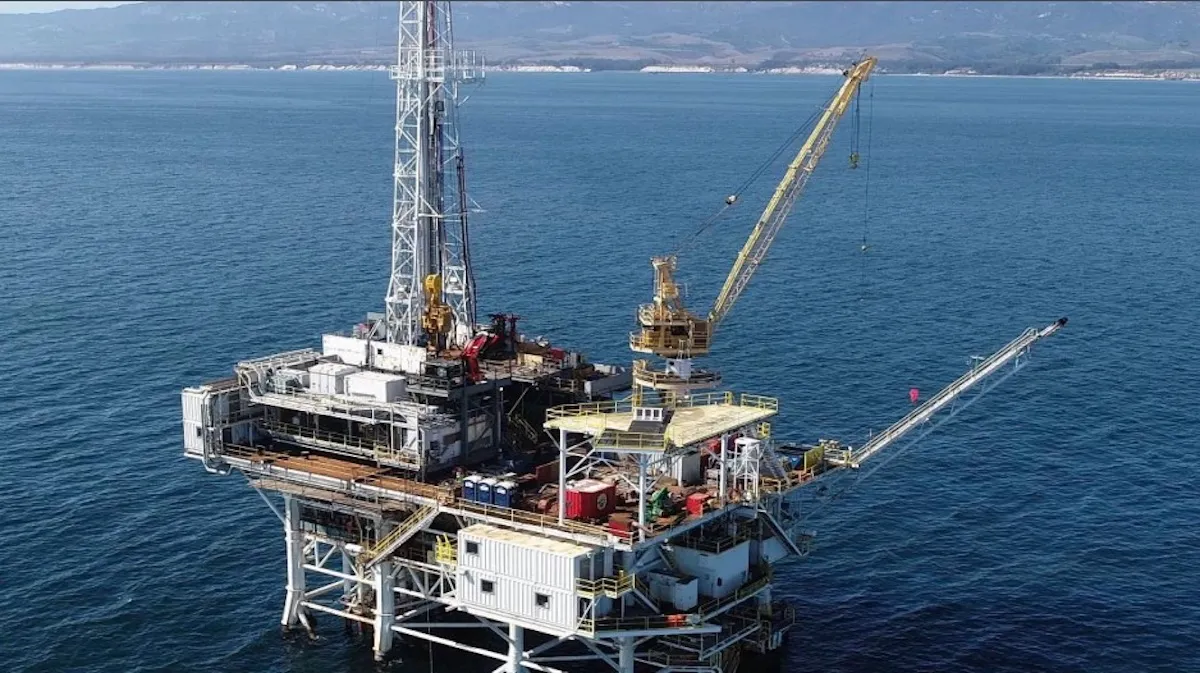
Platform Holly, California State waters in the Santa Barbara Channel, formerly operated by Venoco
Platform Holly sits immediately offshore from the Univ. of California at Santa Barbara, and UCSB scientists have studied the platform and surrounding ecology extensively. Multiple studies have shown that production from Holly reduced natural seepage and methane pollution from shallow formations beneath the Channel. Platform Holly was thus a “net negative” hydrocarbon polluter.
The natural seepage in the Santa Barbara Channel was important to the earliest inhabitants of the area. The Chumash used the tar for binding and sealing purposes, including caulking their canoes. Since Holly shut down in 2015 following the Refugio pipeline spill, offshore workers and supply boat crews have reported a considerable increase in gas seepage.
Earlier this month, it was reported that well plugging operations at Holly had now been completed, but decisions regarding the final decommissioning of the platform remain.
Venoco declared bankruptcy in 2015 and the State of California became the platform owner. According to the State Lands Commission, Exxon will pay the costs for decommissioning the platform. This is because Exxon acquisition Mobil operated the platform from 1993-1997 before Venoco became owner.
The most recent Holly development is that Venoco has settled its law suit with Plains, the company responsible for the 2015 Refugio pipeline spill that halted production from Holly. Terms of the settlement have not been disclosed.
Note: As an aside, I’m curious as to whether Mobil provided a decommissioning guarantee as part of the sale to Venoco or whether the State is simply holding ExxonMobil accountable as a legacy owner. If it’s the latter, why isn’t bp (bp acquisition Arco was Holly’s operator from 1966-1993) also liable? Is it a matter of Mobil being the more recent predecessor owner?
An MH-65 helicopter flew over the area Wednesday evening just before sunset but did not spot any spill or sheen, or any other oiled birds. Coast Guard officials tell KEY News they have contacted the owners of the oil platforms in the channel but none of them have reported a spill or had transferred any fuel or oil in the past day.
This is the nightmare scenario that we supporters of offshore oil and gas development dreaded and worked so hard to prevent – workers missing, fire raging, and oil flowing. Santa Barbara, Ixtoc, and most recently Montara were horrible drilling blowouts, but no lives were lost. Barring an Earth Day miracle, or series of miracles, that will not be the case this time.
BP and Transocean are not rogue companies. BP had a near flawless safety and compliance record in US waters over the past 2 years. Transocean is a respected drilling contractor. The Deepwater Horizon is a modern mobile drilling unit, and was staffed with a skilled and competent crew. So what went wrong? Is the challenge of drilling deep beneath the earth from a floating facility in thousands of feet of water too great to achieve the level of perfection that is necessary and expected? I don’t think so, but we clearly have a lot of soul searching to do.
For now, the focus must be on the search for the missing workers and regaining control of the well. We can count on the Coast Guard, which is once again providing outstanding leadership during a crisis, to do everything possible to find the workers. With regard to the well, an ROV must successfully actuate a ram on a BOP stack located on the ocean floor. If that doesn’t work, we are in for a long siege.

 Bud's Offshore Energy (BOE)