Feeds:
Posts
Comments

Posts Tagged ‘safety management’

I never liked the label “slips, trips, and falls” (STFs) because the words “slips and trips” trivialize the most common cause of serious offshore casualties. Perhaps, the name of this category should be simplified to “falls,” because that is the consequence of concern.

Unfortunately, STFs persist at an unacceptably high rate. In the attached Safety Alert, BSEE informs that between May 2024 and April 2025, 22% of all injuries were attributed to STFs. Many of these injuries were classified as major.

BSEE conducted focused inspections of 19 facilities (17 different operators) to better assess the STF problem. They found common deficiencies in training, hazard identification, and other preventive measures. These deficiencies and the associated safety management recommendations are listed in the Safety Alert.

Kudos to BSEE for their excellent Safety Alert program. Unfortunately, unacceptable delays in updating their incident tables and OCS performance measures data make it difficult to assess industry wide safety performance trends. The most recent data are for 2023, and some of those data raise concerns. For example, the number of fires (152) was the highest in the history of the performance measures data set (dates back to 1996) by some margin. What happened in 2024 and the first half of 2025? These data should be readily available and posted in a timely manner. No offshore facility fire is trivial.

Read Full Post »

As explained in the attached Safety Alert, BSEE’s risk-based inspection program has identified deficiencies in safety device bypass practices including:

  • inadequate documentation
  • inoperative data history software
  • bypassing more devices than is necessary
  • bypassing devices for longer than necessary
  • missing audit documentation
  • mistakenly bypassing the entire safety system during production

The regulations restricting the bypassing of safety devices are core elements of OCS regulatory and operator management programs. Because they are critical to process safety, these requirements are widely supported and strictly enforced.

Read Full Post »

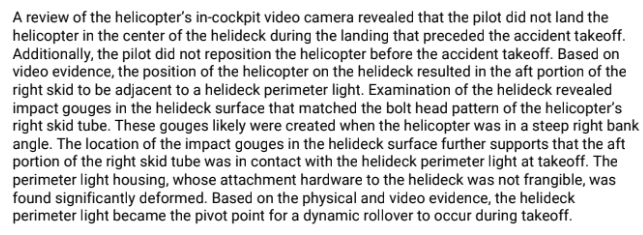
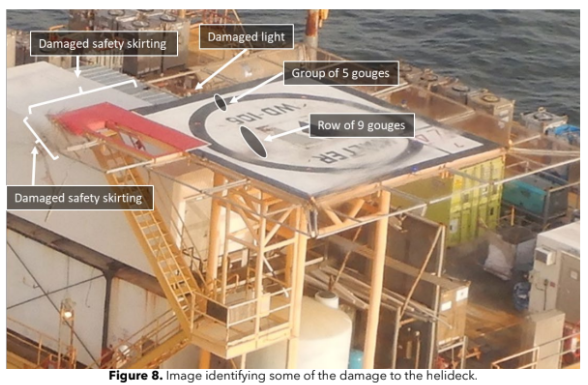
The NTSB has finally issued their report (attached) on the 12/29/2022 helicopter crash that resulted in 4 fatalities at Walter’s West Delta 106 A platform. The NTSB report on the Huntington Beach pipeline spill took a comparable amount of time (26 months) to complete. By comparison, the lengthy and complex National Commission, BOEMRE, Chief Counsel, and NAE reports on the Macondo blowout were published 6 to to 17 months after the well was shut-in.

The gist of the NTSB’s findings is pasted below.

The report summarizes operations standards, but does not consider the associated operator/contractor safety management systems that are intended to prevent such incidents. The report notes that:

Was the contractor/operator aware of these deviations from company policy? Should they have been?

The report implies that human (pilot) error was the cause of the dynamic rollover, but fails to assess the organizational controls that are intended to prevent such errors. How was a pilot with 1667.8 flight hours (1343.8 as the PIC), who had made 23 trips to this platform, repeatedly making fundamental positioning and takeoff errors?

The report also notes that:

This is interesting wording given that the perimeter light was identified as the pivot point, one of the 3 requirements for a dynamic rollover. Why wasn’t that violation observed by the operator/contractor and corrected? What helideck inspection procedures were in place? Did NTSB consider the fragmented regulatory regime for helicopter safety, particularly with regard to helidecks?

Read Full Post »

NAE announcement

As the Minerals Management Service’s liaison to the Marine Board of the National Academies and subsequently as a Marine Board member, I had the privilege of working with many outstanding engineers on matters related to offshore safety and environmental protection. Dr. Martha Grabowski was a clear standout because of her exceptional leadership and communications skills, modest ego, and willingness to assist.

Dr. Grabowski excels in analyzing and mitigating operational risks including those associated with human and organizational factors. As such, she was a great resource in our work on safety management and culture.

Congratulations to Dr. Grabowski!

Read Full Post »

Below is the promotional video produced by SafetyCulture for the tournament. Their products seem to be similar to the safety management software used by offshore operators and contractors. SEMPCheck was a pioneer in that regard.

Read Full Post »

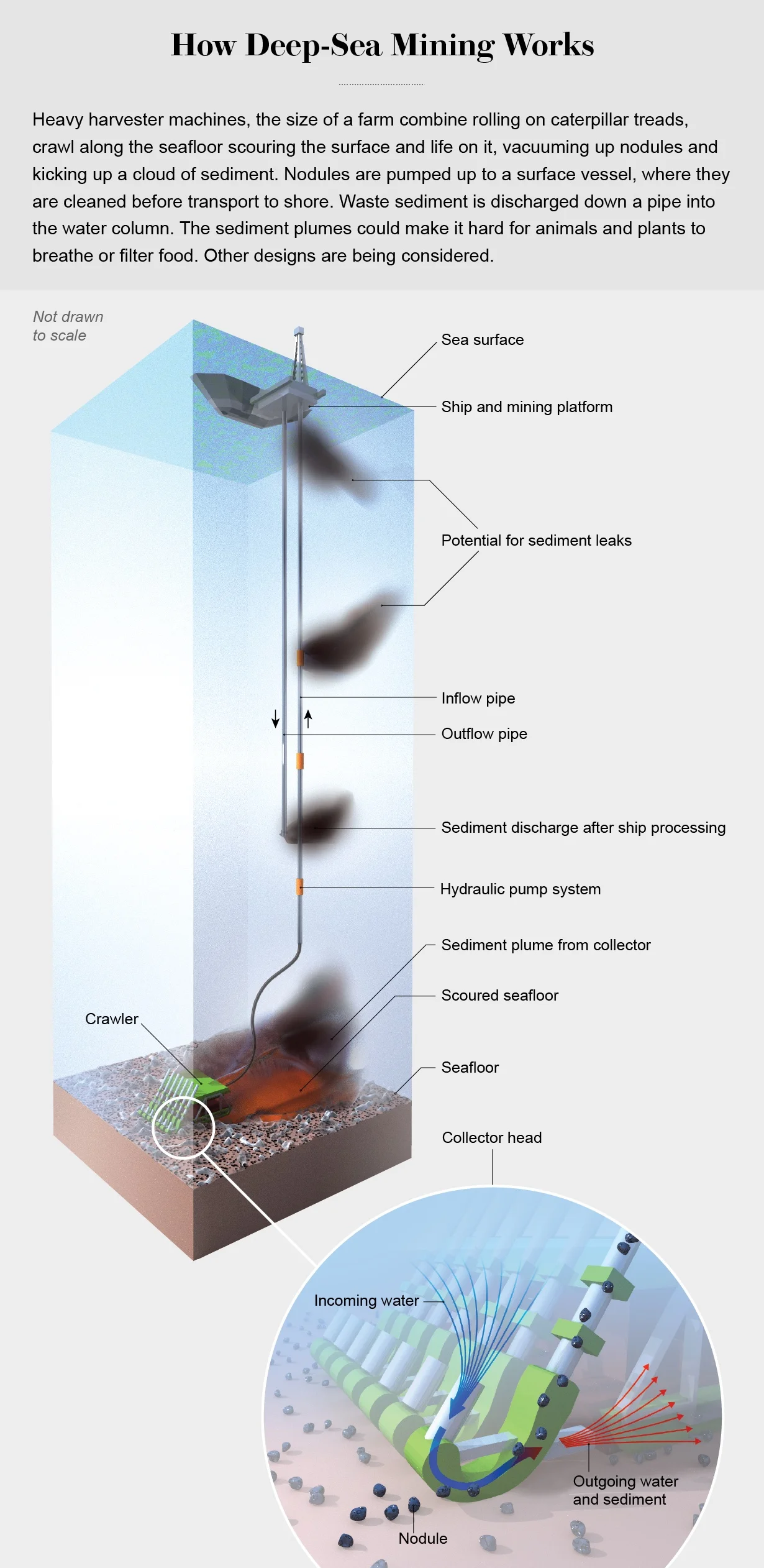
This interesting Scientific American article ends with a short paragraph that our regulatory scholars may want to ponder:

Mining’s larger future will rest largely on how ISA (the International Seabed Authority) finalizes its rule book amid the rush to scour the seafloor. ISA has a rare chance to regulate an industry before the industry has begun.

Thoughts:

  • Deep sea mining is not an entirely new industry. The technology and procedures evolved from other industries, most notably deepwater drilling, and from decades of ocean exploration. Keep in mind that the Hidden Gem mining vessel is a converted deepwater drillship.
  • The offshore oil and gas industry’s risk assessment and safety management practices can be adapted to deep-sea mining.  
  • Effective regulations are not static. The deep-sea mining regulations should not be considered “final” when they are blessed by ISA and the governing body.
  • Before permits are issued, ISA can establish general safety and environmental management requirements, and should specify planning, monitoring, reporting, and liability requirements. (ISA appears to have made an extensive effort on these elements of the regulatory program.)
  • The more prescriptive elements of regulations are dependent on operational experience, observations, and performance data. These must evolve over time.
  • Timely revisions to equipment and procedural requirements through updates to operator management systems and industry standards are critical. In most cases, formally revising regulations takes much too long and is an ineffective means of mitigating emerging risks.
  • Long, detailed regulations are indicative of a weak regulatory regime, not a strong one.  Optimal regulations specify goals, not methods, and are implemented by focused regulators who inquire, challenge, analyze, and where necessary penalize.
  • The respective roles of the operating companies and the regulating authority must be clearly articulated.
  • With continuous improvement as the primary objective, the regulator should develop a strategy for measuring safety and environmental performance.


Read Full Post »

Today, BOEM released fact sheets describing the Drilling Safety and Safety and Environmental Management (SEMS) rules. The complete documents will be available for review as soon as they are published in the Federal Register.

Based on the fact sheet, the Drilling Safety Rule does not appear to include any significant surprises.  The rule seems to be generally consistent with the recommendations in Secretary Salazar’s 27 May Safety Measures Report to the President (the “30-Day Report”).  This is an Interim Final Rule that will be effective upon publication.

According to the fact sheet, the SEMS Rule will incorporate all elements of API RP 75 into BOEM regulations.  This is an improvement, in my opinion, from the proposed rule which incorporated only 4 elements of RP 75.  The effective date for this rule is not indicated in the fact sheet.

Read Full Post »