Feeds:
Posts
Comments

Posts Tagged ‘Deepwater Horizon’

Kent Well’s response to a reporter’s question and Colin Leach’s comment on BOE seem to give credence to our suspicion that the flow path for the Macondo well was inside the production casing!  If true, this is enormously significant for the following reasons:

  1. The root cause of Macondo is eerily similar to that at Montara in that oil and gas entered the well via compromised cement in the casing shoe and a failed float.  Did the BP engineers and TO crew even know about Montara?  This shows why accident information must be promptly circulated and brought to the attention of key personnel everywhere in the world. It also demonstrates why the Montara report needs to be released without further delay.
  2. Presumed contributing factors that would be irrelevant or less significant: the long string vs. liner/tieback decision, and the failure to run a Cement Bond Log, additional centralizers, or a lockdown sleeve on the casing seal.
  3. Contributing factors that would have even greater importance: selection of the casing point (integrity at the base of the well), waiting on cement time, timing of the positive and negative pressure tests (this is a topic that warrants much more scrutiny and discussion), and failure to set a cement plug before displacing the mud with sea water.

Read Full Post »

Click to read the full “Oil Budget” report (just released).

The vast majority of the oil from the BP oil spill has either evaporated or been burned, skimmed, recovered from the wellhead or dispersed – much of which is in the process of being degraded.

Read Full Post »

In the less than 3 week period since Macondo was capped, we have transitioned from “doom and gloom” to “all is well.”  What next?

Click to read an interesting USA Today article.

“Oil doesn’t really kill marsh plants,” says John Pardue, director of Louisiana State University’s Hazardous Substance Research Center, who has studied the effects of oil on marshes. “You can put several inches of oil on the vegetation surface and you won’t kill the plants.”

Read Full Post »

Those are the latest official numbers provided by the Unified Command’s Scientific Teams. Once again, no assumptions or calculations are provided. Why? What was the range of estimates for the different methods (videos analyses, reservoir modeling, acoustics, and extrapolations based on recovery volumes)? Show us the data!

Read Full Post »

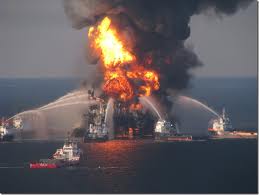
Fighting Deepwater Horizon Fire

This question is receiving a lot of attention since the topic was discussed at the Department of the Interior – Coast Guard investigation.

To the best of my knowledge, this concern was first raised by a one of our very smart and experienced contributors, Dr. Malcolm Sharples, who did not wish to be identified at the time.  Malcolm is now comfortable being identified, and I thought I would draw attention to his insightful comment.  See item 3 in this 30 April post.

Read Full Post »

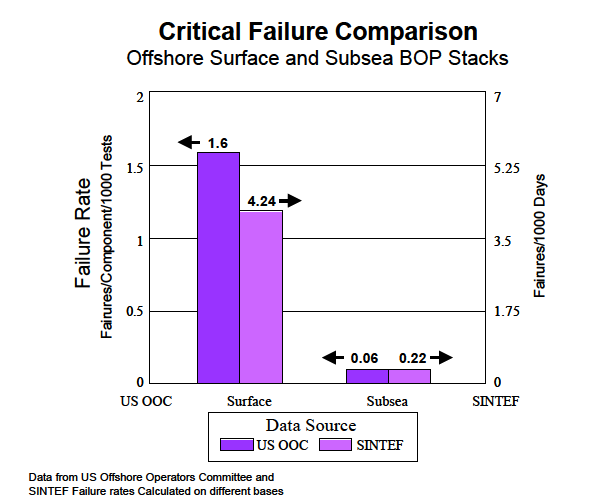
As promised in “Deepwater is Not the Problem,” comparative performance data for surface and seafloor BOPs follow.  Every study and informal review that I have seen has indicated that subsea BOPs are more reliable than surface BOPs. These data are not surprising.  Because of the time and cost involved in pulling and repairing subsea stacks, preventive maintenance programs tend to be more comprehensive.

The studies cited below were completed 10+ years ago, but to the best of my knowledge the conclusions are still valid.  If there are any more recent studies, BOE would like to hear about them.

West Engineering Chart

West Engineering Paper

Recent data indicate surface BOP reliability is only one-tenth that of subsea BOP equipment.

Tertrahedron Study

Subsea BOPs have smaller failure rate than surface BOPs.

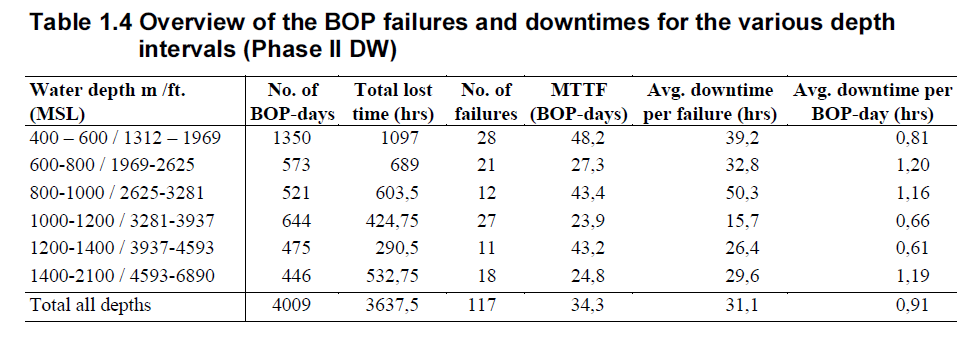
SINTEF study: This study is limited to seafloor stacks, and shows there is no difference between failure rates for deepwater and ultra-deepwater wells.

(For wells in >400 m WD) It seems that there is no correlation at all between the failure rate and the downtime related to the water depth.

SINTEF

Sintef Subsea BOP Reliability Study (click to enlarge)


Read Full Post »

In the Gulf of Mexico, deepwater drilling is more risky because that is where the high-rate wells are, not because the water is deep.
  • Water depth had little to do with the well integrity problems at Macondo. Similar errors in planning and execution would have yielded similar results in any water depth or on land.  Has Montara already been forgotten?
  • Subsea BOP stacks have a much better performance record than the surface stacks used in shallow water drilling (more on this later in the week).
  • Historical data indicate that blowouts occur less frequently in deep water, not more frequently (more to follow).
  • Obviously, blowouts involving high-rate wells are likely to do more damage.   This applies regardless of the water depth.   You can reduce the spill risk by prohibiting drilling in the areas with the highest production potential, but that wouldn’t be very sound energy policy and you won’t find many buyers for the leases.
  • It is safer to conduct intervention and capping operations on subsea wells.  Regulators would not even allow surface capping to be considered at Montara because of the high risk to workers.  The subsurface ROV work is perhaps the biggest Macondo success story.
  • If the Macondo well was in shallow water (with the wellhead above the water surface), and well integrity concerns precluded a risky surface capping operation, how would the flow have been contained and collected?
  • Other things being equal, the environmental risk is less at deepwater locations which tend to be farther from shore.

Water depth is just one well planning consideration.  Abnormal pressures and temperatures, shallow gas, hydrogen sulfide, ice, permafrost, storms, currents, extended reach targets, and horizontal completions are some of the others.  To prevent another Macondo, in the US or anywhere else in the world, we need to focus our attention on the 3 categories of issues listed below.  These issues are important in all water depths and in all environments.

  1. Well integrity including design, construction, barriers, verification, and monitoring.
  2. BOPE performance and reliability under all conditions.
  3. Capping, containing, and collecting oil in the event of a blowout.

Read Full Post »

Energy Training and Resources Macondo Well Diagram

A former colleague sent me a link to this comprehensive ETR report on Macondo.  The report provides a good primer on drilling and the issues associated with the blowout. Nicely done!

Read Full Post »

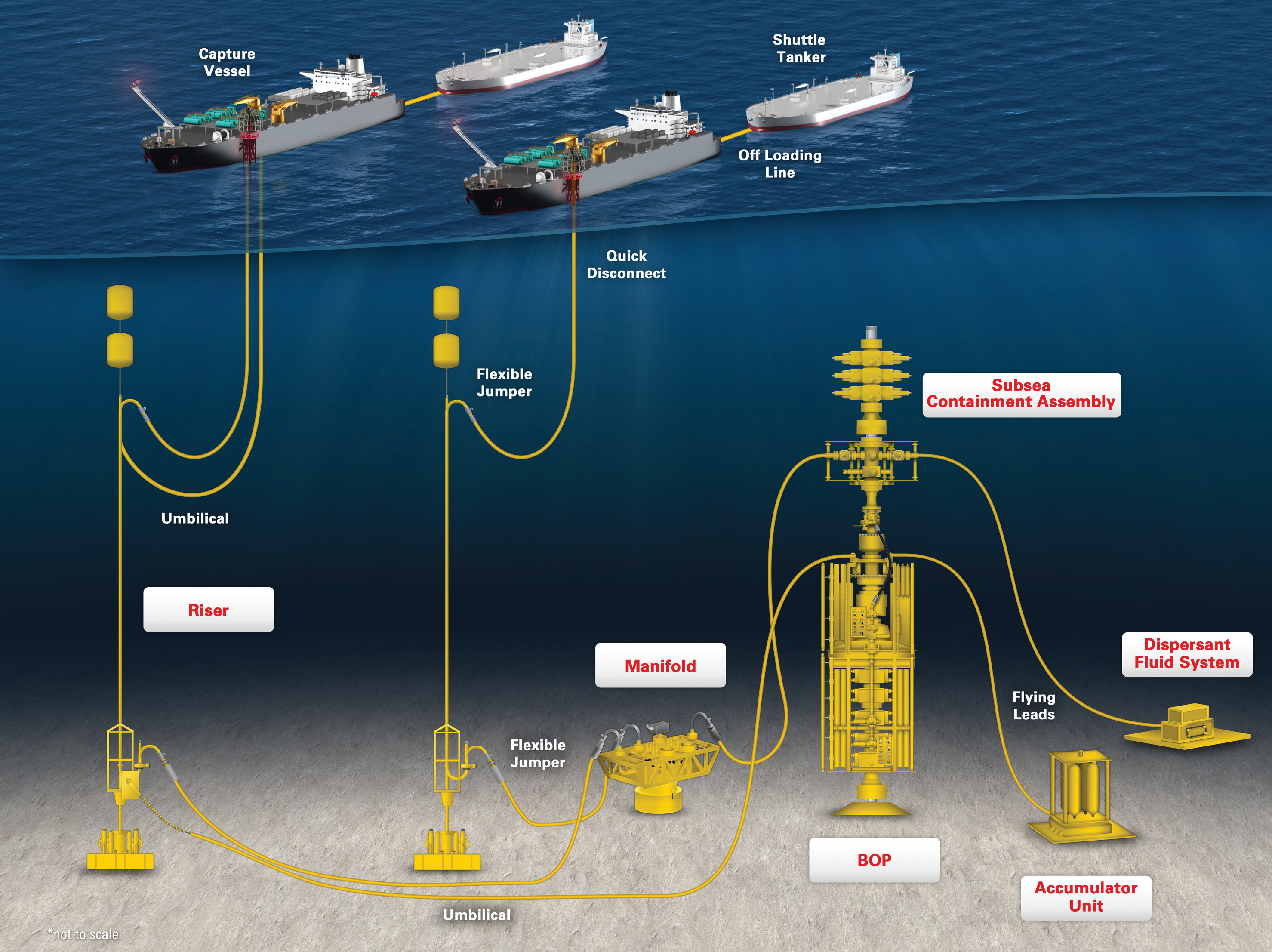
Click on photo to enlarge.  MWCC information sheet.

Read Full Post »

link

Exxon, Shell, Chevron Corp. and ConocoPhilips will each give $250 million to establish a non-profit organization, the Marine Well Containment Co., to produce and manage the equipment. The system will be designed and built over the next 12 to 18 months to handle spills of 100,000 barrels a day in waters as deep as 10,000 feet (3,048 meters), the companies said in a statement yesterday.

Comments:

  1. Excellent and necessary initiative.
  2. Will other GoM operators participate?  Unless they can provide a similar capability, they will probably have no choice.
  3. It may be difficult to manage a capability that will probably (hopefully) never be used?  Realistic simulations and drills will be critical.
  4. Could major components of this capability be used for other purposes?  Colin Leach has suggested that an FPSO (Cascade-Chinook?) might provide the necessary collection and processing capability.  Such an FPSO could be promptly relocated to the site of a blowout.
  5. More on this later, but there are advantages to a seafloor blowout (as opposed to a blowout from a surface wellhead), particularly from a safety standpoint.  Also, seafloor BOPE has a better historicial performance record than surface BOPE.  This new capability will address the major subsea well deficiencies –  intervention, containment, and collection. 
  6. I don’t think surface wellheads should be left out of the picture.  A surface capping operation on a platform or jack-up rig is far from a slam dunk, and is more hazardous than a subsurface capping operation.
  7. Well integrity is, of course, critical to the success of any well containment operation, and that should be the primary area of consideration for all offshore operators.

Read Full Post »

« Newer Posts - Older Posts »