Feeds:
Posts
Comments

Posts Tagged ‘BSEE’

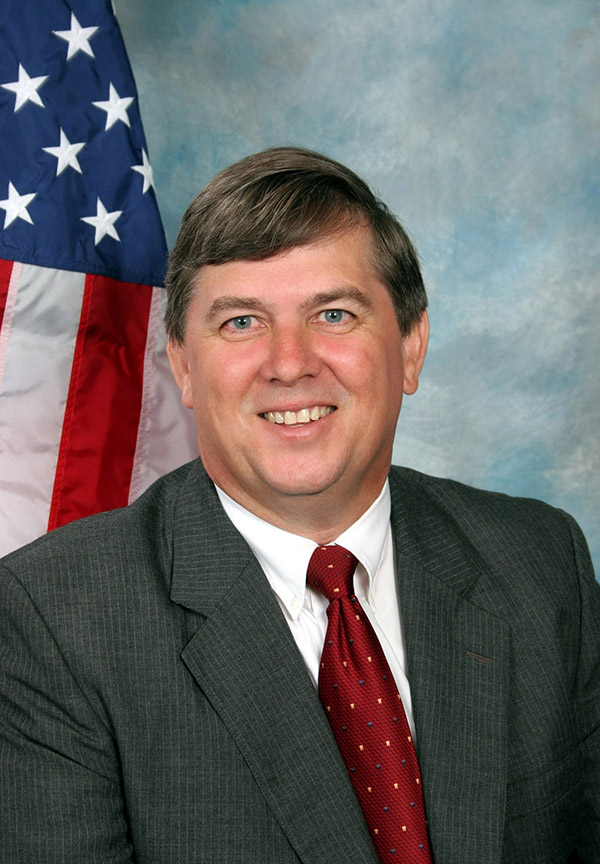
After an amazing 38 year career with MMS and BSEE, Lars Herbst has announced that he will retire at the end of 2021. Lars had important technical and managerial roles in the development of the deepwater Gulf of Mexico, the response to major hurricanes including Ivan, Katrina, and Rita, controlling the Macondo blowout and addressing the related regulatory issues, and the offshore industry’s response to the COVID-19. Lars was an active participant in the International Regulator’s Forum and is recognized worldwide for his operational and regulatory expertise. Best wishes to Lars as he transitions to the next phase of his life.

Read Full Post »

Comprehensive and timely incident data are critical for risk assessments, preventing recurrences, training and safety management programs, assessing the performance of the industry and individual companies, and driving safety culture. The National Academies 2021 review of BSEE’s inspection program included a number of recommendations related to data management including this one:

Recommendation 2. To further its goal of increasing data transparency and facilitating its internal and external use, BSEE should invest in more advanced and creative data collection, analytic and visualization tools, and infrastructure; corresponding data management, analysis, and evaluation capabilities among its personnel; and an outward-facing, online data system that can be navigated with ease and kept current across all fields for the purpose of encouraging and facilitating safety analyses.

National Academies Report, 2021

Unfortunately, BSEE’s incident data are not updated and posted in a timely manner. As we approach September 2021, the 2020 incident statistics are still not publicly available. These incidents include at least one rig fatality that neither BSEE nor the Coast Guard announced at the time of occurrence one year ago today (8/23/2020) or subsequently. The only public information about this fatality is the following self-serving statement by the operator:

“This is a routine operation that was executed with no time pressure as the rig disconnection had been decided well in advance,” Total said.

Upstream

A 37-year old man died, but according to the operator there is nothing to see here. This is not the type of statement you would expect from a company with a leading safety culture.

The keystone of BSEE’s primary mission, protecting workers and the environment, is timely incident information that is regularly reviewed and updated. Continuous improvements in safety are dependent on continuous improvements in data management and analysis. BSEE can do much better, as can other regulators, the offshore industry, and those of us who are interested and concerned observers.

Read Full Post »

A recent Washington Post (WP) article, based in part on a March 2021 General Accountability Office (GAO) report, raises interesting pipeline decommissioning issues, but might benefit from some additional context, which I have attempted to provide below:

  • Decommissioning liability issues are not simply a matter of “companies trying to get out of that obligation.” Much of the complexity is associated with decades-long chains of lease ownership and the respective responsibilities of prior lessees. Pertinent questions include the following:
    • If a company sold a lease decades ago and there have since been multiple owners, to what extent is the original owner still liable for decommissioning lease facilities? (Note that guidance from the Federal government has not been entirely consistent over the decades.)
    • If current leaseholders fail to fulfill their obligations, who is next in line and why?
    • To what extent are prior lessees liable for wells and structures constructed subsequent to their ownership?
    • Knowing that decommissioning costs can vary significantly, what amounts of security should be required? How should these funds be protected or managed? Should an assigning company also collect funds to protect their interest?
    • How do inconsistent Federal policies and financial assurance requirements, and improper practices by subsequent owners, affect the liability of prior lessees? In that regard, the case of Platforms Hogan and Houchin in the Pacific OCS Region is interesting and pertinent.
  • Per the WP, “Federal regulations require the removal of offshore pipelines once they are decommissioned, but the rules are rarely enforced.” This statement is doubly incorrect.
    • 30 CFR § 250.1750 provides for decommissioning pipelines in place when the Regional Supervisor (BSEE) determines that the pipeline does not constitute a hazard (obstruction) to navigation and commercial fishing operations, unduly interfere with other uses of the OCS, or have adverse environmental effects. The consensus opinion of the regulators’ engineers and scientists has been that the safety and environmental risks associated with pipeline removal were significantly greater than those for decommissioning in place in accordance with the procedures specified in 250.1751.
    • The comment about enforcement is unfounded. BSEE and its predecessors have strictly enforced decommissioning requirements despite the challenges related to inconsistent policy direction, industry downturns, and hurricane damage. BSEE has an effective program to ensure that idle wells are plugged and platforms are removed in a timely manner. For this reason, 3315 platforms have been removed since 2001; 1933 since 2010. Only about 1800 platforms remain. This very significant loss of habitat is a concern to fishing organizations, another factor that complicates decommissioning policy.
  • In situ decommissioning of buried or trenched offshore pipelines is the standard throughout the world. The seafloor disturbance and safety risks associated with the removal of such pipelines are universally viewed as unwarranted. The pipeline decommissioning procedures followed elsewhere are similar to those described in 30 CFR 250.1751. In the Gulf of Mexico, pipelines installed in less that 200′ of water are typically buried (30 CFR 250.1003) to minimize interference with commercial fishing and other activities.
  • The decommissioning of wind turbines, which are typically more densely located and closer to shore, and their attendant power cables and substructures, will also be challenging. In their 9/16/2019 Congressional testimony, the Responsible Offshore Development Alliance expressed concern about the practice of leaving structural foundations when turbines are abandoned.

In remarks to the WP, Syed Khalil, a coastal restoration geologist for the State of Louisiana, commented that they have enough sand to meet their short term needs, but future needs were a major concern. The Gulf of Mexico Offshore Sand Management Working Group would seem to be the best mechanism for timely action and a workable, long-term action plan. The minutes of their meetings are quite instructive. Rulemaking is not a solution unless the parties want to tie their fate to both the 25 year pipeline rule rewrite (draft published in 2007, another draft coming? final?) and the contentious and similarly interminable financial assurance rule.

Read Full Post »

In the early 1990’s, Department of the Interior (DOI) and Department of Energy (DOE) leadership dabbled at re-branding the OCS Oil and Gas Program by reversing the order of the words. Clever? Perhaps by Washington public relations standards. One senior manager even changed his license plate from “OCS OIL” to “MMS GAS” (not much competition for those tags 😃). Technical staff were less enthused about this simplistic marketing gimmick that misrepresented the historical and scientific facts about oil and gas production. For many years, natural gas was a byproduct of oil production that was commonly flared. (This practice continues in some regions of the world, although to a lesser extent than in the past.)

Understandably, the Oil and Gas Journal wasn’t very impressed by the change. I saved a copy of their 1/24/1994 editorial (attached) on the subject. Per the OGJ:

We at the Journal love natural gas. But that doesn’t warrant an attempt to repeal the laws of nature and ignore the weight of tradition by renaming everything “gas and oil” this and that.

John L. Kennedy, Editor, Oil and Gas Journal, 1/24/1994)

To their credit, BOEM and BSEE web pages and announcements during recent administrations (both parties) indicate a preference for the more traditional “oil and gas.” (The DOE website largely ignores the existence of either oil or natural gas.) Surprisingly, the American Petroleum Institute (API), an industry trade organization with more than 100 years of history, is now consistently using “natural gas and oil.” This rearrangement of words is not entirely consistent with the interest of API’s members. In the offshore sector, the primary interest of API members is in finding and producing oil. if you think otherwise, look at the EIA GoM gas production data. Most of the Gulf’s declining gas production is now associated with deepwater oil production, and BSEE rightfully requires that this gas be used for fuel or transported for sale. Similarly, gas is a secondary consideration for API members exploring in Alaska given that 35 trillion cu ft of North Slope gas still awaits a pipeline.

Oil companies, and those who represent them, should be proud of their current and historical role in producing oil (and gas) for our economy, security, and way of life; and of the men and women who have toiled to locate and produce petroleum resources for the benefit of society. Are there better energy alternatives? Perhaps, but issues with these alternatives remain to be resolved, and oil and gas will continue to be important. Let’s focus on producing these resources as safely, cleanly, and reliably as possible.

Read Full Post »
Continuous improvement has to be the primary objective of offshore safety leaders, and this independent blog is committed to recognizing initiatives that further reduce safety and environmental risks. Australia’s collaborative mental survey project is an interesting such initiative in its early stages. Two other important initiatives are noted below.

BSEE’s Dropped Object Risk-Based Inspection initiative: As has been the case for 50 years, most offshore fatalities and serious injuries are associated with falls or falling and moving objects/equipment. BSEE’s Dropped Objects initiative, as described in a presentation by Jason Mathews during a recent Center for Offshore Safety (COS) webinar is intended to draw further attention to and better manage these risks. In addition to BSEE’s focused inspections, the “Good Practices” being followed by some operators and contractors, as described on pages 40-50 of the presentation, are encouraging. These types of initiatives are necessary if we are to achieve the elusive “zero fatality” year on the US OCS.

IOGP process safety guidance, Report 456 v.2 : Contrary to some post-Macondo narratives, process safety and well control were always the primary focus of the US OCS regulatory program. In 1974, my boss Richard Krahl (known as “Mr. OCS” for his commitment to offshore safety) dropped a copy of the first edition of API RP 14C (Analysis, Design, Installation, and Testing of Safety Systems for Offshore Production Facilities) on my desk and told me it was an excellent document that I should read. RP 14 C and other process safety standards were incorporated into the USGS OCS Orders (regulations) in the 1970’s. For decades, the USGS and MMS were leaders in well control and production safety research and training. That said, better indicators and improved approaches to offshore facility process safety were needed, and the International Association of Oil and Gas Producers report has provided an excellent framework. Report 456 is comprehensive and technically sound, and provides excellent guidance and examples. Very well done!

Read Full Post »

Link

Salazar and Bromwich also announced that they are establishing a permanent advisory body through which the nation’s leading scientific, engineering, and technical experts will provide input on improving offshore drilling safety, well containment, and spill response. Secretary Salazar has asked former Sandia National Laboratory Director Tom Hunter to lead the body, which will be called the Offshore Energy Safety Advisory Committee (Safety Committee).

The new Bureau of Ocean Energy Management (BOEM) will be responsible for managing development of the nation’s offshore resources in an environmentally and economically responsible way. Functions will include: Leasing, Plan Administration, Environmental Studies, National Environmental Policy Act (NEPA) Analysis, Resource Evaluation, Economic Analysis and the Renewable Energy Program.

The new Bureau of Safety and Environmental Enforcement (BSEE) will enforce safety and environmental regulations. Functions will include: All field operations including Permitting and Research, Inspections, Offshore Regulatory Programs, Oil Spill Response, and newly formed Training and Environmental Compliance functions.


Read Full Post »

« Newer Posts