Feeds:
Posts
Comments

Posts Tagged ‘air emissions’

In February, EPA Region 2 asked the agency’s Environmental Appeals Board to remand Atlantic Shores’ air emissions permit back to the Region for reconsideration. That remand (attached) was granted on 14 March over the objections of Atlantic Shores Offshore Wind.
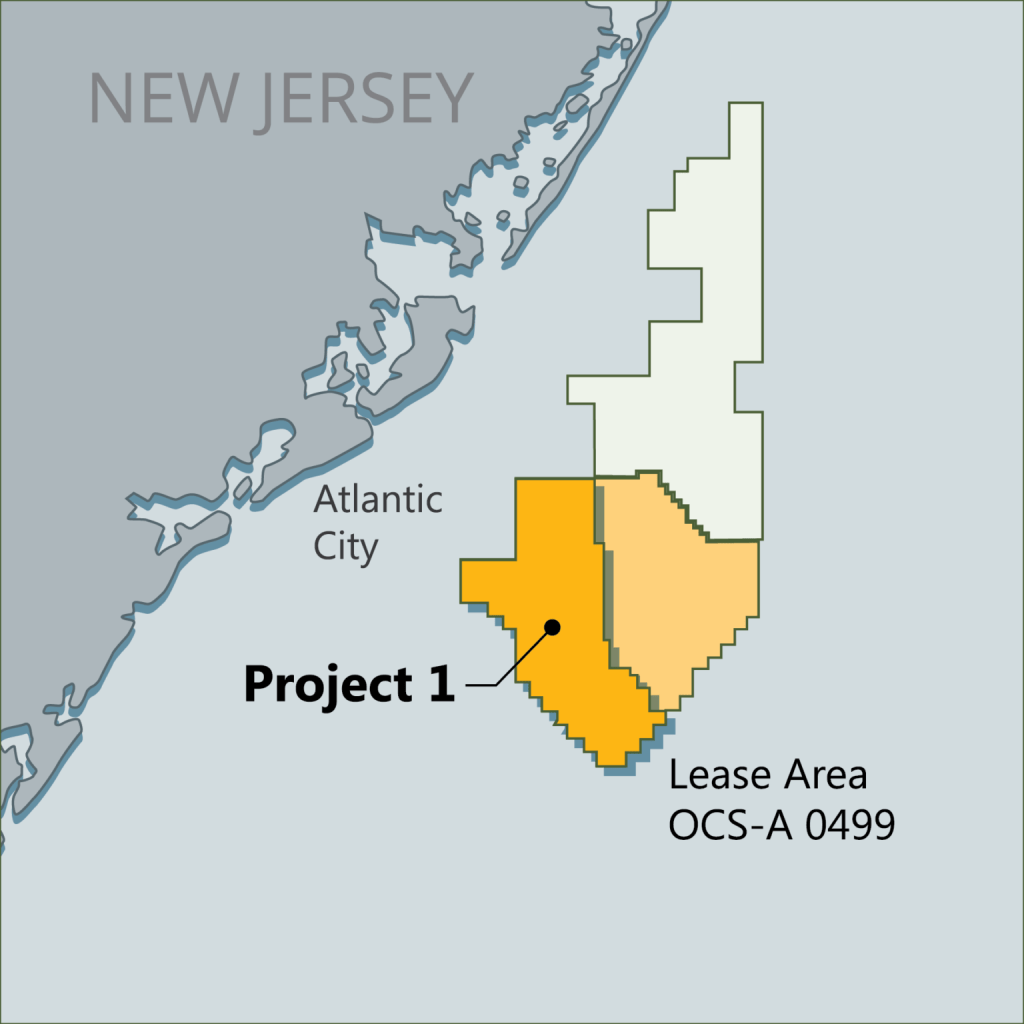
Atlantic Shores Offshore Wind still exists despite the exit of 50% partner Shell and a $940 million write down by the remaining owner EDF. The diagram depicts Atlantic Shores South (0499) and North (0549) lease areas.

EDF intends “to preserve the company and its future development.” Whether or not they can hold the leases indefinitely without pursuing development remains to be seen. BOEM’s diligence regulations for offshore wind projects are vague, and neither the Construction and Operations Plans nor BOEM’s Record of Decision (Atlantic Shores South) include work schedules.

Does EDF have the right to sit on the lease until the financial and regulatory environment is attractive? That is not allowed for oil and gas leases, and rightfully so. (See a related post on Total’s wind lease.)

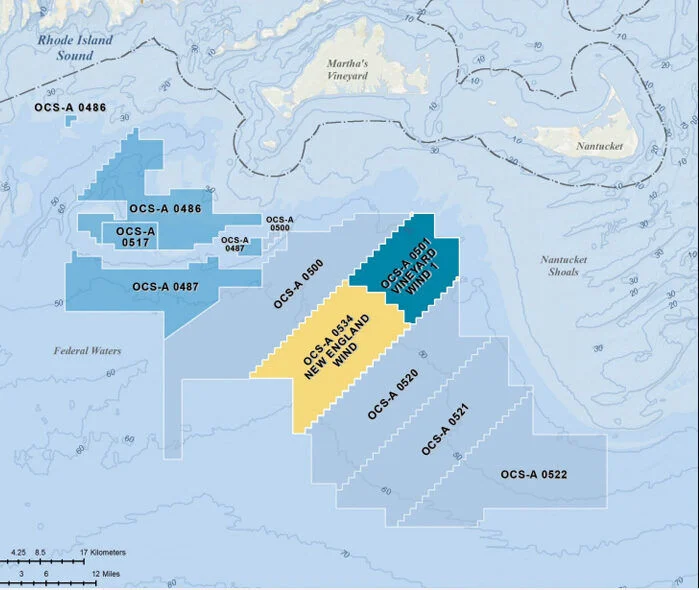
Meanwhile, ACK for Whales has petitioned EPA Region 1 to reopen and reanalyze the air permits for permits for the New England Wind 1 and 2 projects asserting that:

  • The analysis does account for emissions related to and resulting from blade failures, which would warrant emergency repairs or replacement activities.
  • The decision to group Vineyard Wind 1, New England Wind 1 and New England Wind 2, as a single stationary source is both legally questionable and could have the effect of masking localized emission spikes.
  • Insufficient consideration of cumulative vessel emissions could lead to 1-hour NO₂ exceedances.
  • The emissions from pile driving are not adequately modeled in isolation or synergistically.
Read Full Post »

An interesting study published in the Proceedings of the National Academy of Sciences (PNAS) was brought to my attention by leading offshore energy historian Tyler Priest. The study used airborne observations and emissions reports to measure the carbon intensity (CI) of Gulf of Mexico oil and gas production. Their CI measure is grams of CO2 equivalent of greenhouse gas emissions per megajoule of energy produced.

The authors conclude that inventory emissions of CO2 (as reported to BOEM) “are generally consistent with observations from our aircraft survey, suggesting that combustion is well represented in the federal inventory.

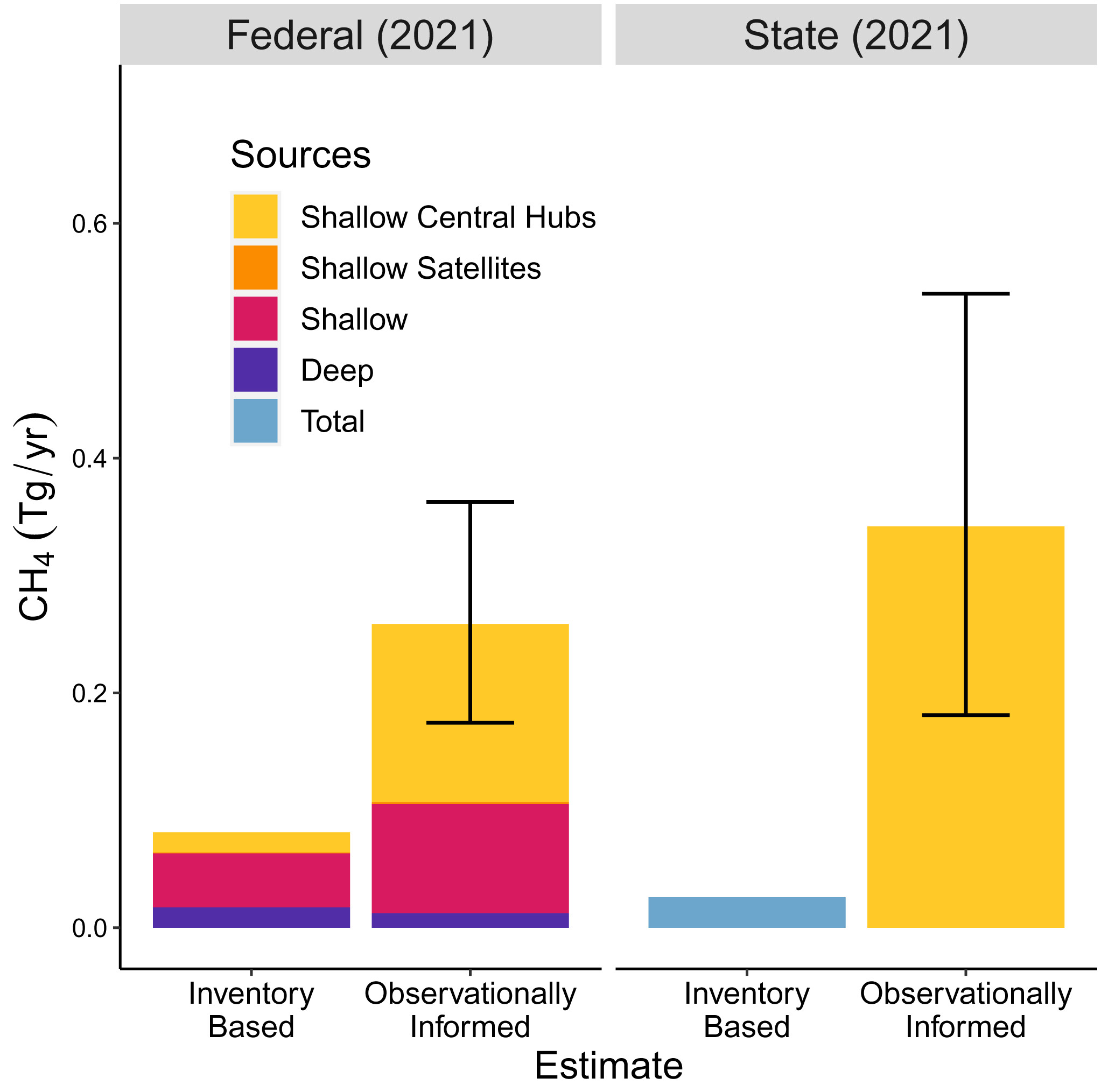
However, that is not the case for methane (CH4) emissions which are underestimated by the Federal inventories. As summarized in the chart below, deepwater facility methane emissions are consistent with the reported inventories, but shelf emissions in State and Federal waters differ significantly.

Comments:

  • As previously discussed, the lower CI for deepwater production is entirely consistent with expectations. When the most modern 5% (57) of GoM platforms are producing 93% of the oil and 76% of the gas, their CI should be impressive (which indeed it is).
  • As summarized using ONRR data, more gas-well gas was vented from 2015-2021 than was flared, which is not what you want from a GHG standpoint. Gas wells are predominantly at shallow water facilities, many of which are not equipped with flare booms.
  • Oil-well gas, most of which is produced at deepwater platforms, is flared rather than vented by a ratio of approximately 4 to 1.
  • About 15 years ago, the Federal government (MMS) considered requiring that older production platforms be retrofitted with flare booms, but safety, space limitations, and cost considerations precluded such a regulation. Instead, additional flaring/venting limits, and measurement and reporting requirements were imposed.
  • One bad actor may have been a major contributor to the shelf methane emissions observed during the study’s observational flights. That company entered into bankruptcy proceedings. Presumably those issues have been resolved and more rigorous monitoring and enforcement practices have been implemented. I’ll be looking at the 2022 ONRR flaring and venting data for evidence of such improvement. The remainder of the 2022 data should be available in May.
  • The subject study’s only observational measurements were in August 2020. Followup airborne measurements would be helpful.
  • The study only considered production emissions. Shelf facilities are primarily natural gas producers and would thus have a lower relative CI when consumed.
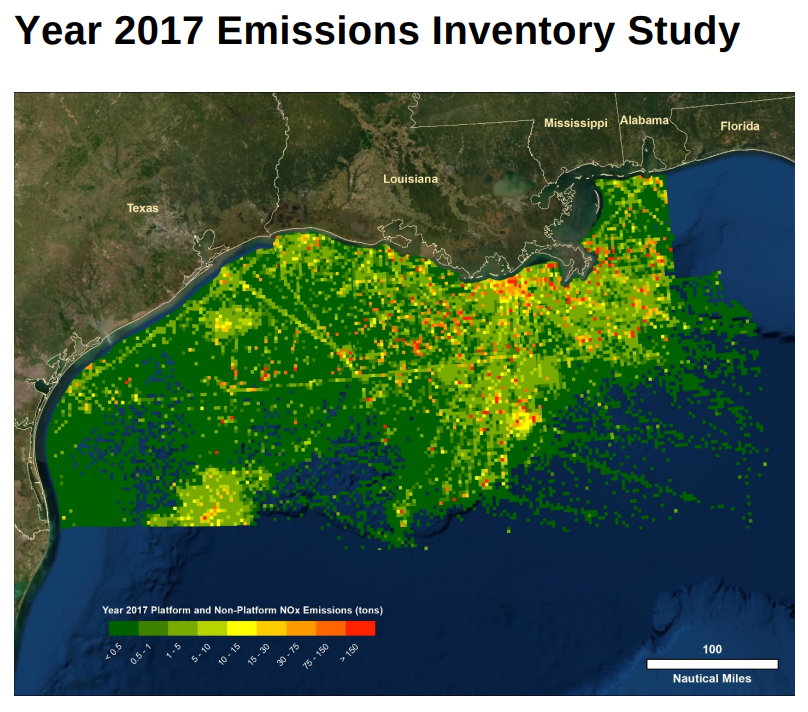
  • When will updated BOEM GOADS flaring and venting data be available? The latest data are for 2017 (cover below)? Are GOADS data being compared with ONRR and World Bank data?

Read Full Post »