 BOE has received unconfirmed reports that BP’s internal investigation into the causes of the Macondo blowout will be released on Wednesday (8 September) in Washington, DC. The investigation team of more than 70 engineers and other staff has been headed by Mark Bly, BP’s Group VP for Safety and Operations. Stay tuned!
Posts Tagged ‘accidents’
Rumor: BP’s internal report to be released on Wednesday.
Posted in accidents, well control incidents, tagged accidents, blowouts, Bly Report, BOE, bp, Deepwater Horizon, drilling, Gulf of Mexico, macondo, offshore oil, safety, well control on September 6, 2010| Leave a Comment »
Deepwater Horizon BOP Recovered
Posted in accidents, well control incidents, tagged accidents, blowouts, BOP, Deepwater Horizon, drilling, Gulf of Mexico, macondo, oil spill, safety, well control on September 5, 2010| Leave a Comment »
if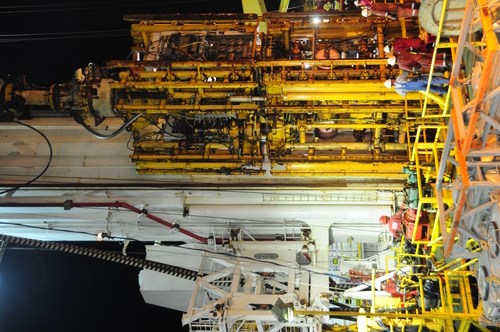
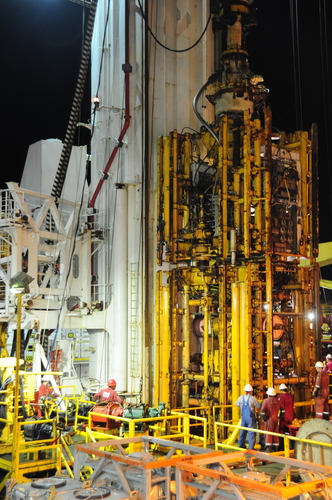
Deepwater Horizon BOP Stack
Oh, what might have been …..
If this BOP had prevented the explosion, fire, and blowout, 11 offshore workers would still be alive, a mega-spill would have been prevented, tens of billions of dollars would have been saved, the Gulf region would have avoided a major crisis, the national economy would be stronger, and our energy future would be much brighter.
New Orleans Times-Picayune Article
Posted in accidents, well control incidents, tagged accidents, blowouts, Deepwater Horizon, drilling, Gulf of Mexico, macondo, Montara, offshore oil, oil spill, safety, well control on September 5, 2010| Leave a Comment »

This article is nicely done, but like most commentary on the factors contributing to the Macondo blowout, it assumes that the well flowed in the annulus outside the production casing. Steps 1-3 would be irrelevant if the well flowed up through the shoe track and inside the production casing (ala Montara).
BP Issues Report on Macondo Response
Posted in accidents, well control incidents, tagged accidents, blowouts, bp, Coast Guard, Deepwater Horizon, drilling, Gulf of Mexico, macondo, offshore oil, oil spill, relief well, safety, unified command, well control on September 3, 2010| Leave a Comment »
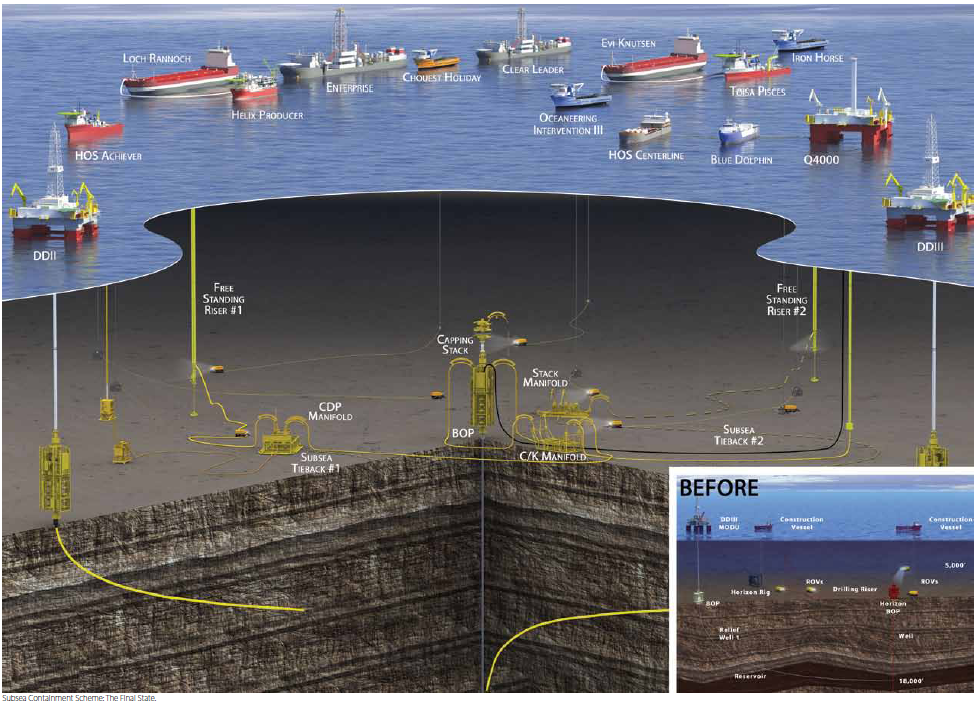
BP has issued a report on the response capabilities and innovative new technology and procedures demonstrated following the Macondo blowout. While the report is somewhat promotional (understandably), the information is summarized and compiled in a useful manner and underscores the magnitude of the response. Although most close observers probably have issues with certain actions taken by BP or the Unified Command, one cannot deny the unprecedented size and complexity of the response. We can only imagine how chaotic this response could have been if the operator did not have the resources and the will to mount such an enormous effort.
I hope BP will be similarly forthcoming with the results of their internal review of the blowout’s causes. When will that very important report be released?
At some point, BP’s candid observations on the functioning and effectiveness of the Unified Command system would also be helpful. The more we can learn about the differences of opinion and problems that arose during the response, the better we can prepare for future incidents. Will any of the official investigations be looking into these aspects of the response? At BOE, we are particularly interested in the well intervention, capping, containment, and relief well decisions.
Fire on Mariner Platform (updated on 3 Sept at 0500 ET)
Posted in accidents, tagged accidents, fire, Gulf of Mexico, Mariner Energy on September 2, 2010| Leave a Comment »
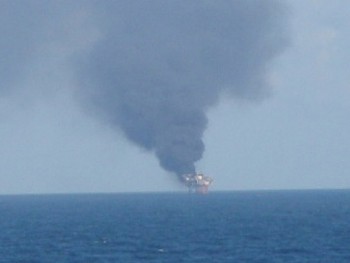
Fire on Mariner Platform, Vermilion 380 from CultureMap.com
Summary of what we know:
-Mariner Energy production platform in Vermilion Block 380 in the Gulf of Mexico
-13 workers rescued; no reported casualties
– light sheen one mile long by 100′ wide was reported (the Coast Guard subsequently said there was no spill)
-fire was extinguished Thursday afternoon
-recent production rate reported to be 9.2 million cubic feet of gas per day and 1400 barrels of oil per day
-water depth of approximately 340,’ about 100 miles offshore
-fire reported to have started on a platform deck away from the wellheads at 0930 CDT
-crew reported to have been painting and sandblasting at the time.
-fire reported to have been from flammable material in storage on the platform
-wells have been shut-in (presumably ESD actuated subsurface safety valves)
-The Coast Guard and BOEMRE will investigate
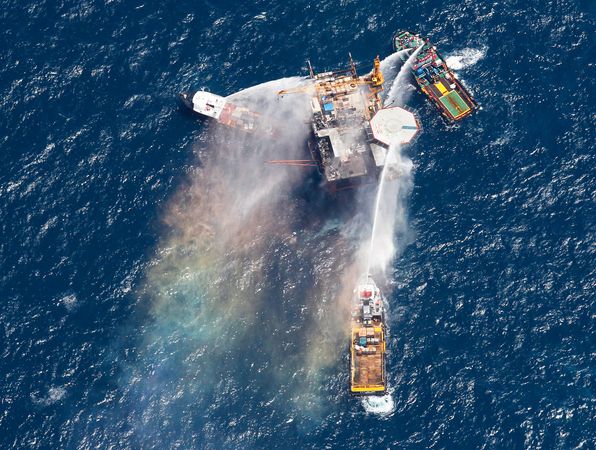
picture from NationalGeographic.com
Acona Wellpro on Macondo
Posted in accidents, well control incidents, tagged accidents, blowouts, BOE, Deepwater Horizon, drilling, Gulf of Mexico, macondo, Montara, offshore oil, oil spill, safety, well control on September 2, 2010| 1 Comment »
While there are no new details on the causes of the blowout, available information on the possible contributing factors is nicely summarized. The presentation also includes a very good summary of risk management considerations.
Barriers against accidents are not only technical and operational and “physical” but are also non-physical built around strategic and organizational measures and decisions
During the Montara hearings and later in Macondo discussions, we raised concerns about the timing of the production casing pressure test. This issue has not received enough attention in our view, possibly because most of the Macondo focus has been on annulus flow and barriers. It was good to see this comment in the presentation:
Pressure tested well far too early – could have blown out cement of shoe track
Official Macondo Investigations
Posted in Uncategorized, tagged accidents, blowouts, chemical safety board, Deepwater Horizon, drilling, Gulf of Mexico, macondo, national academies, National Commission, offshore oil, safety, well control on September 1, 2010| 1 Comment »
Some readers have suggested links and information on the official US investigations of the Macondo blowout. Some basic information is provided below. The links will be added to the blogroll in the right column.

We will be examining the relevant facts and circumstances concerning the root causes of the Deepwater Horizon explosion and developing options to guard against, and mitigate the impact of, any oil spills associated with offshore drilling in the future. This may include recommending improvements to federal laws, regulations, and industry practices.
Joint BOMRE – Coast Guard Investigation
The purpose of this joint investigation is to develop conclusions and recommendations as they relate to the Deepwater Horizon Mobile Offshore Drilling Unit (MODU) explosion and loss of life on April 20, 2010. The facts collected at this hearing, along with the lead investigators’ conclusions and recommendations will be forwarded to Coast Guard Headquarters and Minerals Management Service (MMS) for approval. Once approved, the final investigative report will be made available to the public and the media. No analysis or conclusions will be presented during the hearing.

This study will address the performance of technologies and practices involved in the probable causes of the Macondo well blowout and explosion on the Deepwater Horizon. It will also identify and recommend available technology, industry best practices, best available standards, and other measures in use around the world in deepwater exploratory drilling and well completion to avoid future occurrence of such events.

The CSB intends to proceed with an investigation of the root causes of the accidental chemical release that destroyed the Deepwater Horizon rig and took the lives of 11 workers. The investigation will include the key investigators who were involved in the CSB’s 2005-2007 investigation of the March 23, 2005, explosion at the BP Texas City refinery.
Various congressional committees are also reviewing issues associated with the blowout, most notably the Senate Committee on Energy and Natural Resources and the House Committee on Energy and Commerce. As time permits, BOE will post updates on post-Macondo legislative actions.
While BOE was on vacation
Posted in accidents, well control incidents, tagged accidents, blowouts, BOE, Deepwater Horizon, drilling, Gulf of Mexico, macondo, offshore oil, safety, well control on August 30, 2010| Leave a Comment »
- They spent the week fishing (for drill pipe) at Macondo, without much success.
- More negative pressure tests have confirmed that the well is dead.
- The objectives of the relief well intercept are still a bit of a mystery. As we have previously discussed, there are other (better?) means of ensuring that the production casing annulus is plugged. Is the intercept just a risky and expensive ceremony? Not according to BP CEO Bob Dudley who offered the following explanation: “there are several reasons for the relief well to be completed, including demonstrating that the difficult procedure can be done, providing more scientific data about the leak and giving closure to an oil-weary public.” The first and third reasons confirm the “ceremony” theory. We don’t need to prove that you can complete a relief well, and the public needs solutions, not symbolic gestures. With regard to the “scientific data” argument, the intercept may provide some limited information on the condition of the annulus that will help to better understand the cause of the blowout. Whether that information is sufficiently important to justify the delays and added risks remains to be seen.
- The hurricane season continued to be kind. Will the good luck hold? While time has been less critical since the well was capped on 15 July and the endgame should not be rushed, we are surprised by the absence of urgency.
- We continue to wonder what the response would have been like if the responsible party was not a supermajor.
- BP and the Unified Command have still not given us their latest thinking on the Macondo flow path, even though some legislative and regulatory actions are being driven by flow path assumptions and speculation.
- Another garbage article about MMS’s “flawed culture” appeared in a major newspaper. These articles are great theater; too bad their major premise isn’t true.
- A few former government officials, who showed little or no interest in offshore safety during their careers, have emerged to criticize the OCS oil and gas program. Where was the criticism during the 40-year period when all was going well? Why are the officials who have publicly voiced strong support for MMS personnel not being quoted? These supportive comments have received almost no coverage. Also, why are the Inspector General quotes limited to those that paint the worst possible picture of the offshore program and MMS? These same Inspectors General have praised the overwhelming majority of MMS personnel. Finally, those calling for more inspectors and other regulatory personnel might want to start by showing some respect and support for the staff that is already onboard.
- More silly comments about the evils of “industry standards” have appeared in the press. BOE will address this nonsense later in the week.
More on Montara
Posted in accidents, well control incidents, tagged accidents, Australia, blowouts, Montara, offshore oil, safety, well control on August 29, 2010| Leave a Comment »
Since it’s already Monday morning in Oz, our Australian bureau has returned to work and is eager to pass on some news:
- The sense in Australia seems to be that sensitive regulatory issues delayed the release of the Montara report until after the election (and perhaps much longer if another election is needed to resolve the stalemate).
We received this comment from an oil industry manager in Australia:
The Montara report damns the regulatory agency and there are many that think that is not appropriate. That is the reason for the holdup.
Comment: I assume the report’s criticism is primarily directed at the Northern Territory regulator. In defense of the regulators, the current division of responsibilities between the Federal government and the States is unworkable. You can’t have one agency responsible for well integrity and another responsible for rig and facility safety. The US has similar issues with the division of safety authority among the Departments of Interior and Transportation (pipelines), and the Coast Guard. If the regulatory responsibilities of the former MMS are not retained in a single bureau, but divided between the two new Interior bureaus, these problems could be exacerbated. Most of the recommendations in my 11 May testimony before the Senate Committee on Energy and Natural Resources have received at least some attention. One very important recommendation (no. 1) calling for a streamlined OCS regulatory regime, has not been addressed.
West Polaris Incidents
Posted in accidents, tagged accidents, Brazil, Petrobras, safety, Seadrill, West Polaris on August 29, 2010| Leave a Comment »

The above photo, which was sent to BOE in an email message, illustrates that BOP tests are not risk free. Apparently a pipe ram was blown out of the BOP during a stump (pressure) test prior to running the stack. Fortunately, no injuries were reported.
Also (below), the 36″ conductor casing was flattened when the casing was run without ensuring that it was filled with sea water.
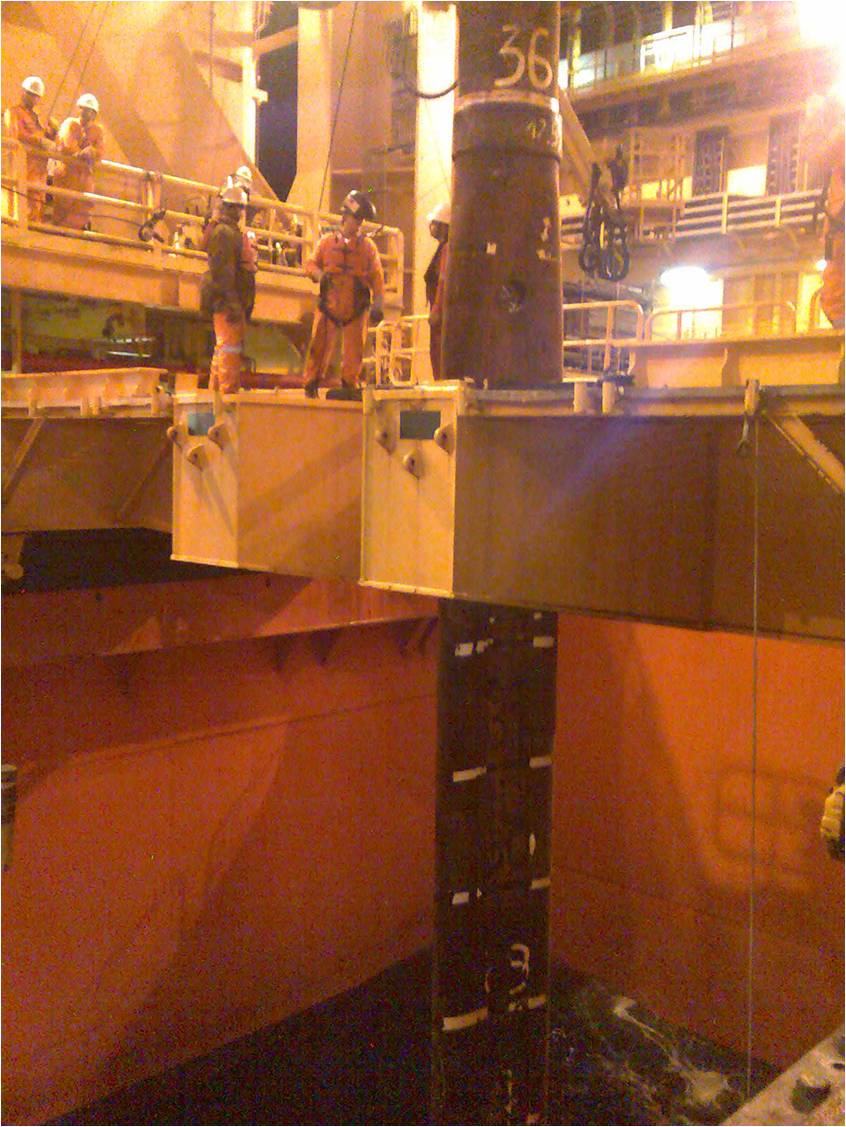
According to RigZone, the West Polaris is working for Petrobras offshore Brazil.
 Bud's Offshore Energy (BOE)