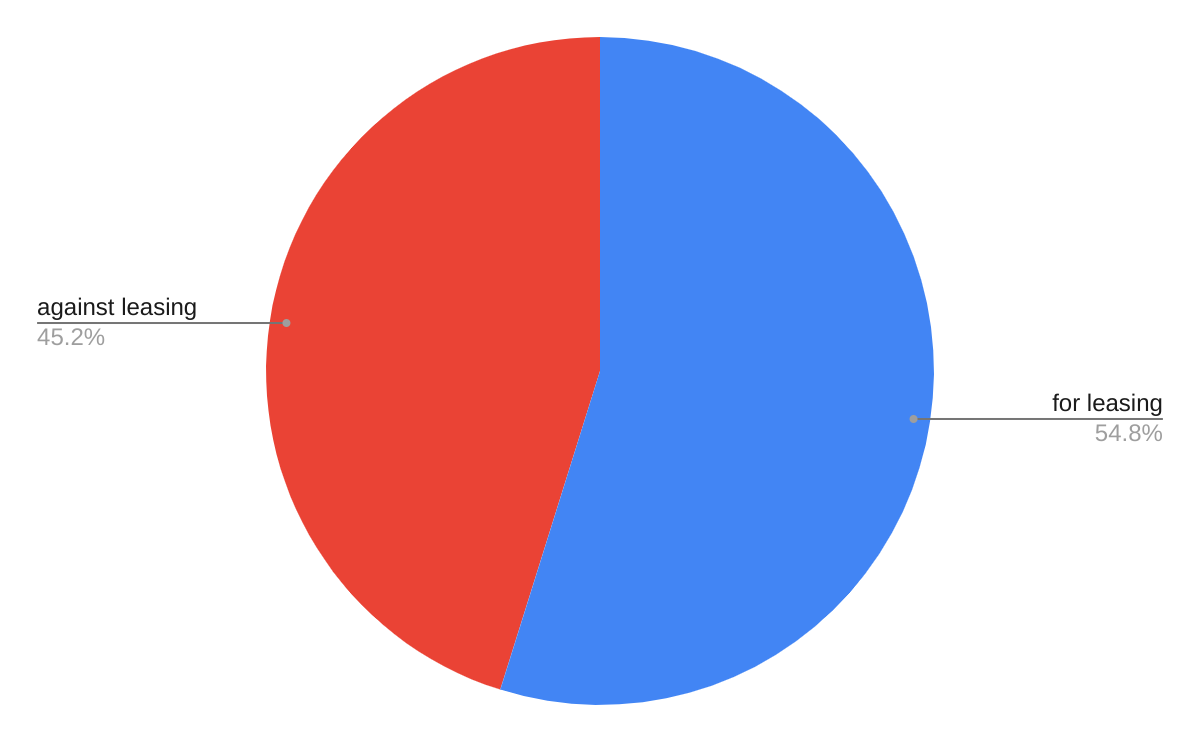
BOEM’s five year plan presented one of the few recent opportunities to “vote” solely on the issue of offshore oil and gas leasing. Advocates facilitated the voting process by providing form letters for and against leasing. Both opponents and supporters are quite good at these campaigns, so neither side had a significant organizational advantage.
BOEM summarized (Table A-11 of the plan) the public comments, and I tabulated the 748,719 letters on the attached spreadsheet. The number of letters supporting oil and gas lease sales exceeded those opposed by 72,383 or 21.4%. The supporters campaign also had more breadth in that there were 49 separate campaigns vs. 45 for leasing opponents.
The NRDC demonstrated their organizational clout with the largest single campaign (107,355 letters). Denise Neal, a name that is unfamiliar to me, impressively organized the largest proponent campaign (61,122 letters).
Summary:
letters supporting offshore oil and gas leasing: 410,551
letters opposing offshore oil and gas leasing: 338,168
letter campaigns supporting leasing: 49
letter campaigns opposing leasing: 45
largest campaign: NRDC – 107,355 letters in opposition (32% of all such letters)
largest pro-leasing campaign: Denise Neal – 61,122 letters in support (15% of all letters in support)
reduce energy costs, farming costs, prices of gasoline and other goods
climate
jobs
environmental justice, local communities
energy independence
fisheries
intl competitiveness
marine environment
national security
marine mammals
GoM production is lower in carbon intensity, higher US environmental stds.
fossil fuel dependency, unnecessary to meet energy needs, oppose new fossil fuel investments, leasing “would not reduce gas prices”
domestic oil and gas preferable during transition
oil spill risks
help improve supply chain
air pollution
help address inflation
stockpiling ocean space, energy price gouging
Interesting contradiction: Opponents of Sale 257 argued in Federal Court that BOEM failed to consider the positive GHG effect that higher prices (the logical result of lower production) would have as a result of reduced demand. The judge agreed with that argument and vacated the sale. Some of the same groups have now commented (per the BOEM summary) that additional leasing “would not reduce gas prices.”
The current leasing policy as articulated in both the draft and final proposed program is to phase out oil and gas production:
The long-term nature of OCS oil and gas development, such that production on a lease may not begin for a decade or more after lease issuance and can continue for decades, makes consideration of net-zero pathways relevant to the Secretary’s determinations on how the National OCS Program best meets the Nation’s energy needs.
Basing leasing decisions on highly uncertain “net-zero pathways” would seem to be a considerable stretch of the Secretary’s authority under the OCS Lands Act. A strategic shutdown of the offshore oil and gas program, which would dramatically increase energy supply and security risks going forward, should be authorized by Congress. Even the threat of such a shutdown could have major economic implications.
The Proposed Final Program includes a maximum of three potential oil and gas lease sales – the fewest oil and gas lease sales in history – in the Gulf of Mexico Program Area scheduled in 2025, 2027 and 2029.
The plan looks good. It appears to be consistent with previous contingency plans. Offshore operations should not be impacted.
“During the shutdown BSEE will continue critical permitting, oversight, preparedness verification, and related activities that are necessary to protect workers and the environment from operations associated with conventional and renewable energy development on the Outer Continental Shelf. Approximately 40% of the 851 BSEE employees will be retained to accomplish these activities and will be designated as exempt, as their salaries will be funded from non-lapsing prior year carryover. Should an extended shutdown occur, exhausting current funding sources, all the exempt personnel would be designated as excepted as they are essential for life and safety.”
Federal funding lapses, real or threatened, are rather common. They range from false alarms to the extended shutdown of 35 days that occurred in 2018-19. In no case have offshore oil and gas operations been significantly affected. BSEE and its predecessors developed and implemented contingency plans that identified “essential employees” needed to monitor operations and review necessary permits.
Hopefully, DOI will provide clarity on these matters today, since a Federal government shutdown could begin at midnight tomorrow. Needless to say, any disruption in ongoing oil and gas production operations would have significant safety and economic implications.
OilNow photo: Dianna Persaud (left) and Kavita Singh
Per OilNow, Noble Corp. is awarding 4 scholarships to 4 students to attend Massachusetts Maritime Academy to earn degrees in Maritime Transportation or Maritime Engineering. The first 2 students are pictured above at Mass Maritime.
The selection process was highly competitive, as it should be, with more than 100 applicants.
The students will intern for Noble in the summers, and have positions with the company after graduation. This is a great opportunity for the students and a smart move by Noble.
(As an aside, my wife, whom I met during the exploratory drilling on Georges Bank in the 1980s, is a native Cape Codder, and her mother once taught at Mass Maritime. I’m sure the students from Guyana will do well there, and will adapt to the brisk Buzzards Bay winters 😀)
How does a Coast Guard station casually post an endangered species observation on Facebook before confirming the accuracy of the sighting?
Even if the species identity had been confirmed, is a Facebook post an appropriate means of making such announcements?
Shouldn’t the observation have been reported to NOAA for any further action?
Was the Coast Guard station aware of Lease Sale 261 and the related Rice’s whale litigation?
Did the Coast Guard station understand the potential economic implications of the alleged sighting, not just for offshore oil and gas but for all commercial activities in the GoM?
Why did so many media outlets run with the Facebook post without confirmation from the Coast Guard or NOAA?
Why has only one organization, the Miami Herald, published the corrected information?
Why has there been no public statement from the Coast Guard?
Over the weekend, the Coast Guard station in Venice, LA rather recklessly announced the following on Facebook: “CRITICALLY ENDANGERED SPECIES SIGHTING: Station Venice presents to you……. Rice’s Whale.”The Facebook comment captioned a 16-second video of the whales swimming nearby, reportedly in the Mississippi Canyon area of the Gulf of Mexico. The video was removed on Tuesday. CBS reported on the Facebook post but was unable to obtain confirmation from the Coast Guard.
Given the timing and significance of the Coast Guard announcement relative to Lease Sale 261, this was a massive report. However, we now learn that the whales were incorrectly identified. Both the Coast Guard and NOAA are confirming that the whales were misidentified as Rice’s whales and were actually sperm whales.
CLARIFICATION: This story has been updated to reflect that Coast Guard officials identified the whales spotted in the Gulf of Mexico as sperm whales after previously identifying them as critically endangered Rice’s whales. The National Oceanic and Atmospheric Administration also told McClatchy News in a statement that they are sperm whales.
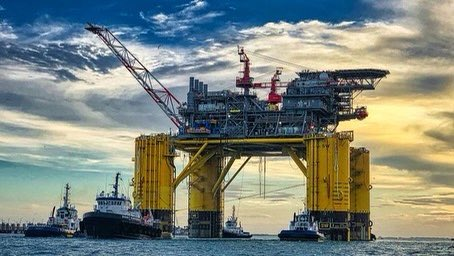
Pictured: Transocean’s Deepwater Proteus. T/O should name one of their drillships Deepwater Diligence 😉
Seven of the deepwater exploratory wells drilled in the Gulf of Mexico in 2023 (YTD) were spudded within 4.5 years of the effective date of their leases. Three of these wells were spudded within 3 years of their lease effective dates (see table below).
These are impressive achievements when you consider the time required for consultation with partners (if any) and contractors, site surveys, exploration plan development and approval, well planning, and drilling permit preparation and approval.
The subject wells accounted for 28% of thedeepwater exploratory well starts in 2023 (25 net YTD wells after subtracting restarts at the same location).
date lease effective
spud date
elapsed time (months)
water depth (ft)
operator
3/1/2021
8/27/2023
30
6498
Shell
8/1/2020
5/21/2023
34
2211
Talos
8/1/2020
3/15/2023
31
3338
Talos
12/1/2019
6/5/2023
42
4228
Chevron
11/1/2019
6/1/2023
43
4603
Hess
7/1/2019
7/11/2023
48
7486
Kosmos
12/1/2018
6/6/2023
54
4127
bp
Below are the exploration plan (EP) and permit (APD) approval timeframes for these 7 wells. With the exception of the Kosmos EP which required a number of modifications, the regulator actions appear to have been timely. For the bp, Shell, and Chevron wells, only 4-6 months elapsed between EP submittal and APD approval.
operator
block
date EP received
date EP approved
APD received
APD approved
Shell
WR 365
3/1/2023
5/17/2023
5/11/2023
8/8/2023
Talos
GC 78
1/19/2021
4/16/2021
3/8/2023
5/26/2023
Talos
MC 162
4/1/2022
7/13/2022
8/2/2022
3/2/2023
Chevron
MC 937
12/7/2022
5/19/2023
4/21/2023
5/21/2023
Hess
MC 727
8/30/2022
11/3/2022
12/21/2022
4/24/2023
Kosmos
KC 964
1/3/2020
10/12/2022
4/18/2023
7/3/2023
bp
GC 436
1/18/2023
4/14/2023
3/29/2023
6/5/2023
Notes: EP=Exploration Plan, APD=Application for Permit to Drill, WR=Walker Ridge, GC=Green Canyon, MC=Mississippi Canyon, KC=Keathley Canyon




 Bud's Offshore Energy (BOE)