Top 5 Gainer Stocks for May 19, 2025$UNH UnitedHealth Group Incorporated 8.21%$BGC BGC Group, Inc 8.90%$HSAI Hesai Group 10.07%$ZI ZoomInfo Technologies Inc. 10.27%$SOC Sable Offshore Corp. 14.41%#stocks #stockmarketcrash #StocksToWatch #StockMarket #StocksToBuy… pic.twitter.com/CMieHfpbJU
— AryaFin (@AryaFintech) May 19, 2025
Posted in California, Offshore Energy - General | Tagged production restart, Sable Offshore, Santa Ynez Unit | 2 Comments »
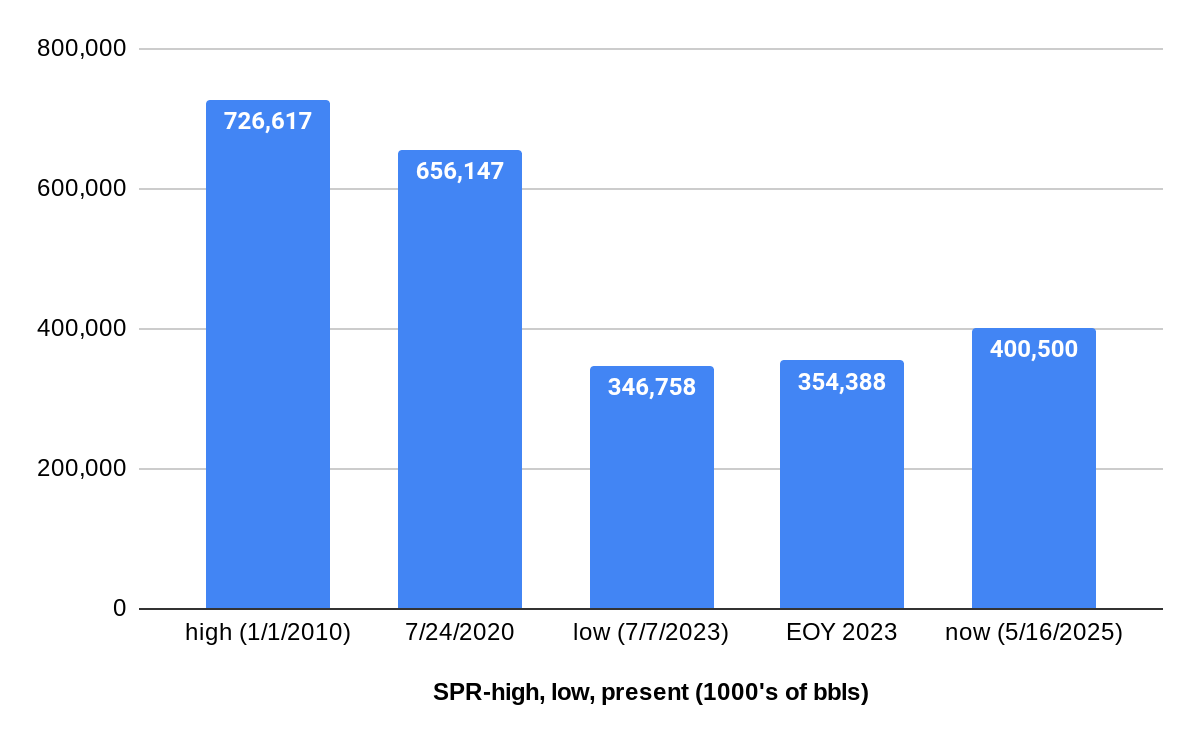
The House Energy and Commerce Committee has proposed $2 billion to repair, replenish, and maintain the Strategic Petroleum Reserve. The proposal includes $1.32 billion for oil purchases and $218 m for maintenance, with the remaining funding allocated for the buyback of previously mandated SPR sales.
Energy Sec. Wright has called for the SPR to be refilled, for the infrastructure to be reviewed, and for plans to be developed to safeguard this strategically important asset.
Although not ostensibly a reason for refilling the reserve, doing so will reduce the risk of a freefall in oil prices and the associated economic turmoil.
Posted in energy policy | Tagged 400 million bbls, Chris Wright, Energy Secretary, SPR refill, Strategic Petroleum Reserve | Leave a Comment »
05/19/2025
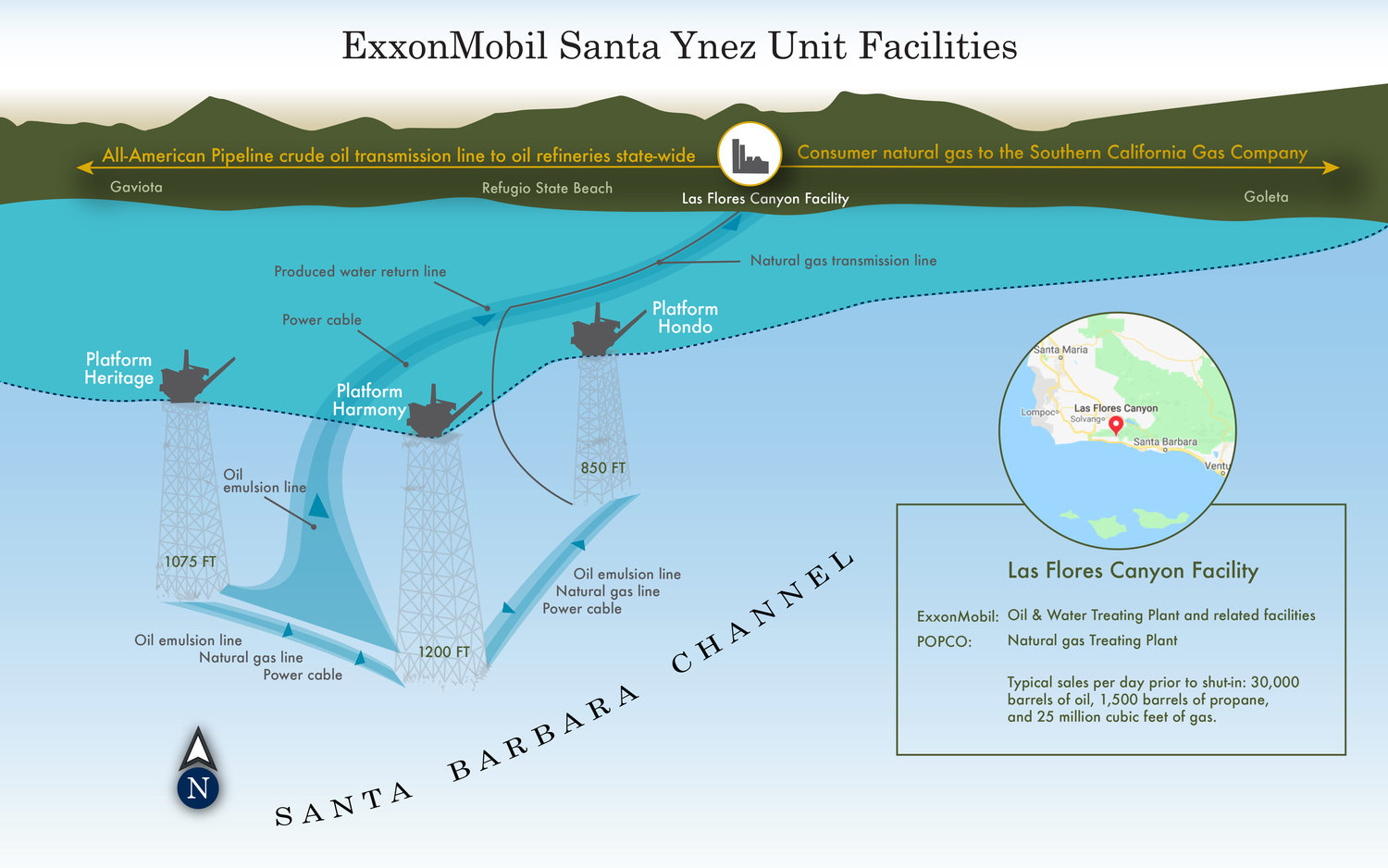
HOUSTON–(BUSINESS WIRE)— Sable Offshore Corp. (“Sable,” or the “Company”)(NYSE: SOC) today announced that as of May 15, 2025, it has restarted production at the Santa Ynez Unit (“SYU”) and has begun flowing oil production to Las Flores Canyon (“LFC”). Additionally, with the completion of the Gaviota State Park anomaly repairs on the Las Flores Pipeline System (the “Onshore Pipeline”) on May 18, 2025, Sable has now completed its anomaly repair program on the Onshore Pipeline as specified by the Consent Decree, the governing document for the restart and operations of the Onshore Pipeline.
Seven of the eight sections of the Onshore Pipeline have been successfully hydrotested. Sable will complete the final hydrotest in order to meet the final operational condition to restart the Onshore Pipeline as outlined in the Consent Decree. Sable expects to fill the ~540,000 barrels of crude oil storage capacity at LFC by the middle of June 2025 and subsequently recommence oil sales in July 2025.
Production Restart
- On May 15, 2025, Sable initiated the flow of oil production from six wells on Platform Harmony of the SYU to LFC at a rate of ~6,000 barrels of oil per day.
- Sable has been testing wells on Platform Harmony throughout May 2025 and the well tests have performed consistently stronger than they did at the time of shut-in on May 19, 2015 when the SYU produced approximately 45,000 barrels of oil equivalent per day.
- Approximately 30% of the 32 producing wells at Platform Harmony have been tested as of May 18, 2025 with the remaining Platform Harmony wells projected to be tested over the course of the next several days.
- Sable expects to initiate production from the additional 44 wells on Platform Heritage and the additional 26 wells on Platform Hondo in July 2025 and August 2025, respectively.
Posted in California, Offshore Energy - General, pipelines | Tagged 5/15/2025, onshore pipeline, production restart, Sable Offshore, Santa Ynez Unit | Leave a Comment »
Best wishes to our Norwegian friends on their National Day, which celebrates the signing of their Constitution on May 17, 1814. Gratulerer med dagen!

Posted in Norway | Tagged National Day, Norway, Syttende Mai | Leave a Comment »
Need to update the risk assessments!
Posted in accidents, Wind Energy | Tagged Australia, bridge accident, highway blocked, turbine blocks highway | Leave a Comment »
Kathryn Porter is a well informed and articulate energy consultant. This video linked below is highly recommended.
Posted in climate, energy policy, UK | Tagged decarbonization, expensive renewables, financial costs, Kathryn Porter, UK | Leave a Comment »

In 1904 the famous “Old Maud” well (pictured) in Orcutt, Santa Barbara County, produced a million barrels in the first 100 days.
This week, the Santa Barbara County Board of Supervisors voted 3-1 to establish a framework to prohibit new oil and gas operations and phase out existing operations.
Given the industry’s long history in the County, one would have expected consultation with the remaining companies prior to that decision.
County staff informed Supervisor Bob Nelson, who voted against the ordinance, that they had not reached out to oil companies. Nelson described the ordinance as the nuclear option.
Charles Katherman, who started his own company in Santa Barbara 40 years ago, criticized the county for a lack of communication leading up to the ordinance. “What you’re proposing or looking at to vote on is a euthanasia of my industry,” Katherman said.
When John Smith told me about the County’s decision, I wondered what the late Darwin Sainz would think. Darwin was a proud 8th generation Californian, a well known rancher and oil industry veteran, a community leader, and Citizen of the Year in the Santa Maria Valley. His grandfather worked on the famous Old Maud well. Darwin was effective at reaching out to parties with opposing views and promoting dialogue and compromise. Sadly, reasoned dialogue no longer seems to be an option.

Posted in California, energy policy | Tagged Charles Katerman, Darwin Sainz, oil industry dismissed, Old Maud, Santa Maria, Supervisor Bob Nelson | Leave a Comment »

JL Daeschler comments that after crucifying the North Sea oil workers who saved the country in the 1970’s, the perpetrators are calling for £1.9 billion in emergency funding to help their victims transition to green energy jobs. How noble of them! How much of the funding will be provided by those responsible for the industry’s premature death? 😡
Times columnist Gillian Blowditch got it right:
“It is difficult to imagine a world in which it makes sense to import oil and gas but not produce it, while forcing our skilled workforce to work offshore in far flung corners of the globe, especially when we are importing from Norway, which is extracting oil and gas from the same seabed for which we are refusing to grant licences.”
How many jobs are being created by government-driven energy transitions that seem to be moving in reverse? Where are those jobs?
Posted in energy policy, UK | Tagged Aberdeen, emergency funding, energy transition, loss of jobs, oil capital, training workers | Leave a Comment »
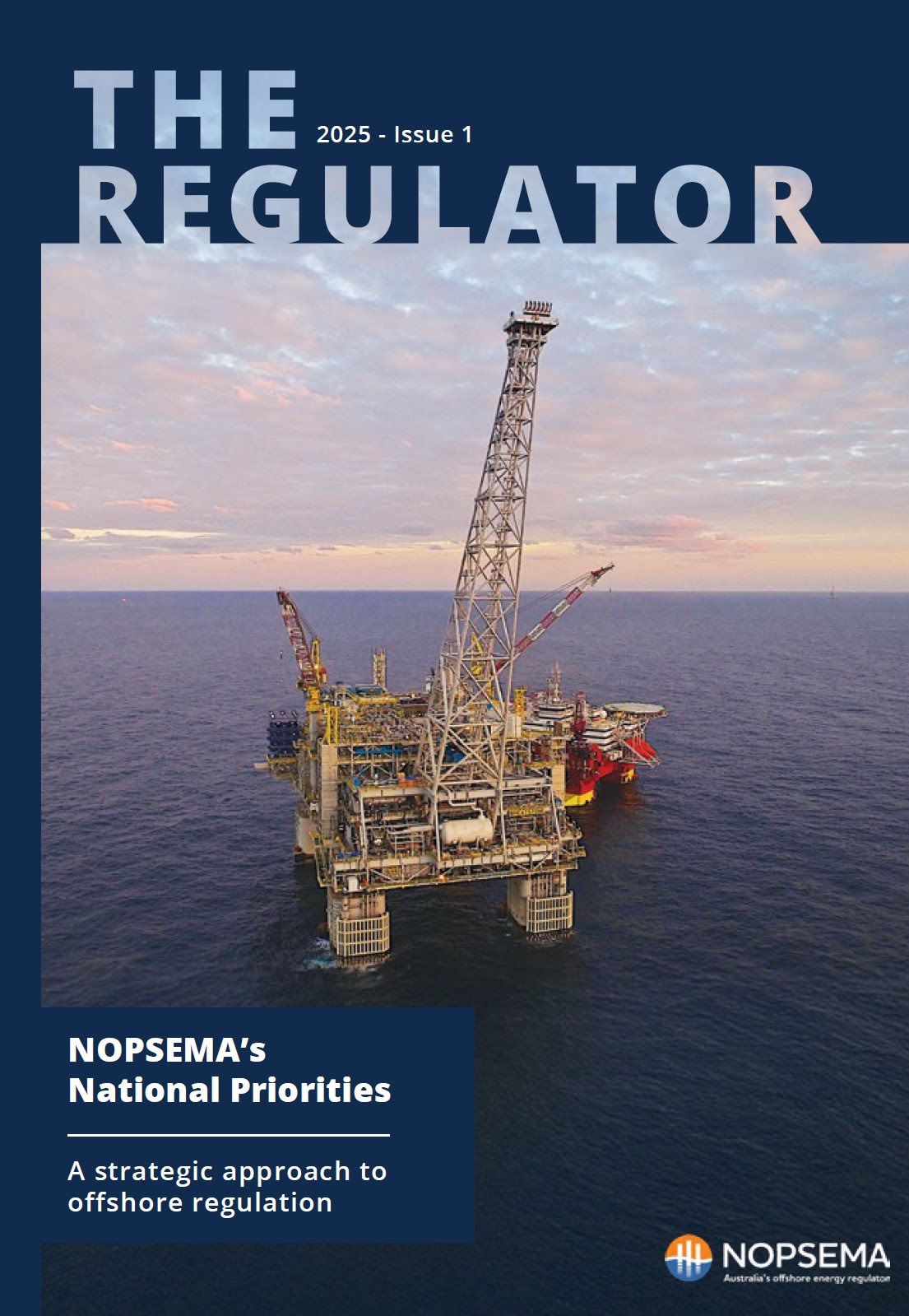
Firstly, BOE applauds NOPSEMA for being the only offshore safety regulator to publish a newsletter on a regular basis.
Their latest issue identifies and explains their five National Priorities. These priorities could apply worldwide:
- Structural integrity – Ensuring offshore assets remain safe and well maintained.
- Addressing redundant wells – Strengthening oversight to ensure wells are decommissioned responsibly.
- Psychosocial health – Protection of worker mental health and well being.
- Control of work – Promoting effective systems to ensure work is carried out safely and we learn from incidents to continually improve.
- Leadership and management – Sharing how decision-making impacts safety and environmental outcomes on offshore facilities
I also strongly support their commitment to investigating non-work related fatalities at offshore facilities. These incidents should not simply be classified as non-occupational with no further explanation. NOPSEMA’s investigation of these fatalities involves the following steps:
- Identify the circumstances of the reported death.
- Assess the immediate response to the reported death.
- Identify any work related causal factors present prior to the reported death.
- Identify the cause of death as provided by the relevant Coroner or medical practitioner
Lastly, I like the name of their newsletter, which shows pride in being an offshore safety regulator. Safety regulators facilitate offshore energy development by identifying and mitigating safety and environmental risks. With few exceptions, they perform their legislatively mandated duties effectively and efficiently. I’m proud to have been an offshore safety regulator for many years.
Posted in Australia, NOPSEMA, Offshore Energy - General | Tagged Georges Bank Monitor, non-occupational fatalities, NOPSEMA, offshore safety, priorities, The Regulator | Leave a Comment »
A good Nick Welsh, Santa Barbara Independent article has been brought to my attention by John Smith. Bonus points for the baseball analogy:

“In baseball, ties famously go to the baserunner, but in county government it’s forced a legal fight in the courts.”
“The oil company Sable Offshore is insisting that when the County Board of Supervisors voted 2-2 on whether or not to allow another oil company, Exxon, to transfer its permits to Sable, the tie goes to Sable.”
“Accordingly, Sable — much in the limelight recently — just filed a lawsuit against the Santa Barbara County Board of Supervisors in federal court to make that point. Joining Sable in this dispute is ExxonMobil, the oil giant that sold Sable its three offshore platforms, its 120-mile pipeline, and its onshore oil storage and processing facilities known as the Santa Ynez Unit two years ago.”
Because the Planning Commission had voted 3-1 to allow the transfer, Sable argues that the 2-2 Supervisors vote upholds the Planning Commission decision.
Never a dull moment in the Santa Ynez Unit restart doneybrook. More on the tie vote here and here.
Posted in California, Offshore Energy - General, Regulation | Tagged Exxon, litigation, Sable Offshore, Santa Barbara County, Santa Ynez Unit, tie vote | Leave a Comment »
 Bud's Offshore Energy (BOE)