The Petroleum Safety Authority Norway (PSA) has initiated an investigation following an incident in connection with a lifting operation on the Gullfaks A facility on 28 February 2011.
Posted in accidents, Norway | Tagged Gullfaks, lifting, Norway, safety, safety culture | 1 Comment »

From PSA’s recent Safety Forum:
Over the last few years, there have been a great number of incidents in the industry related to loss of position, including dynamic positioning. A project has been started under the direction of the rig industry and the Norwegian Shipowners’ Association in order to reduce the number of serious anchoring incidents on the Norwegian shelf.
The project, which is being led by an Anchoring forum, has an ambition of a 75 percent reduction in serious anchoring incidents on the Norwegian shelf by 2010, compared with 2006. A status report will be given regarding goal achievement at the next Safety Forum meeting.
Given the US experience with hurricane mooring issues, the recent Gryphon Alpha incident, and other station keeping failures around the world, this is an excellent opportunity for international cooperation.
Posted in Uncategorized | Leave a Comment »
Rep. Tim Murphy’s (R-Pa.) bill states that companies with drilling permits approved before early May 2010 can proceed with exploration or production “without further review” by the Interior Department, and “without further review or delay” under various environmental laws. The Hill.com
Posted in drilling, Offshore Energy - General, Regulation | Tagged Deepwater Horizon, drilling, Gulf of Mexico, House of Representatives, macondo, safety, Tim Murphy | Leave a Comment »
GAO’s report entitled “Opportunities to Reduce Potential Duplication in Government Programs, Save Tax Dollars, and Enhance Revenue” has just been released. The report identifies $billions in potential savings that could be realized by reducing program duplication.
Comments:
- Not only could taxpayer dollars be saved by reducing overlap and duplication, but greater efficiencies and safety benefits would be achieved. As BOE has frequently noted, a single agency should be responsible and accountable for safety and pollution prevention at offshore facilities. For regulators, “overlap means underlap.” Important issues are sure to be overlooked, misunderstood, or confused. Jurisdictional redundancy inevitably results in unnecessary complexity, and regulatory and industry personnel are required to spend too much time resolving and coordinating administrative and procedural matters. This time would be better spent focusing on mission critical safety issues.
- Much of the duplication among agencies is the result of the overlapping responsibilities of congressional committees, complex and poorly crafted legislation, and insufficient emphasis on function-based management.
- Program savings achieved by one government unit are immediately absorbed by another, discouraging cost-effective management practices. Senior and mid-level Federal managers should be able to transfer savings directly to a debt reduction fund that cannot be used for any other purpose. Federal managers should receive positive recognition for savings and efficiency, not criticism or immediate budget reductions.
Posted in Regulation | Tagged GAO, government waste, Regulation, safety | Leave a Comment »
From Platts Oilgram News:
The well had previously been drilled to a depth of 13,585 feet at the time of the moratorium, Noble said. Drilling is expected to resume in late March, targeting total drilling depth of about 19,000 feet, Noble said. Results are expected by the end of May. Noble said it will use the Ensco 8501 rig for the project.
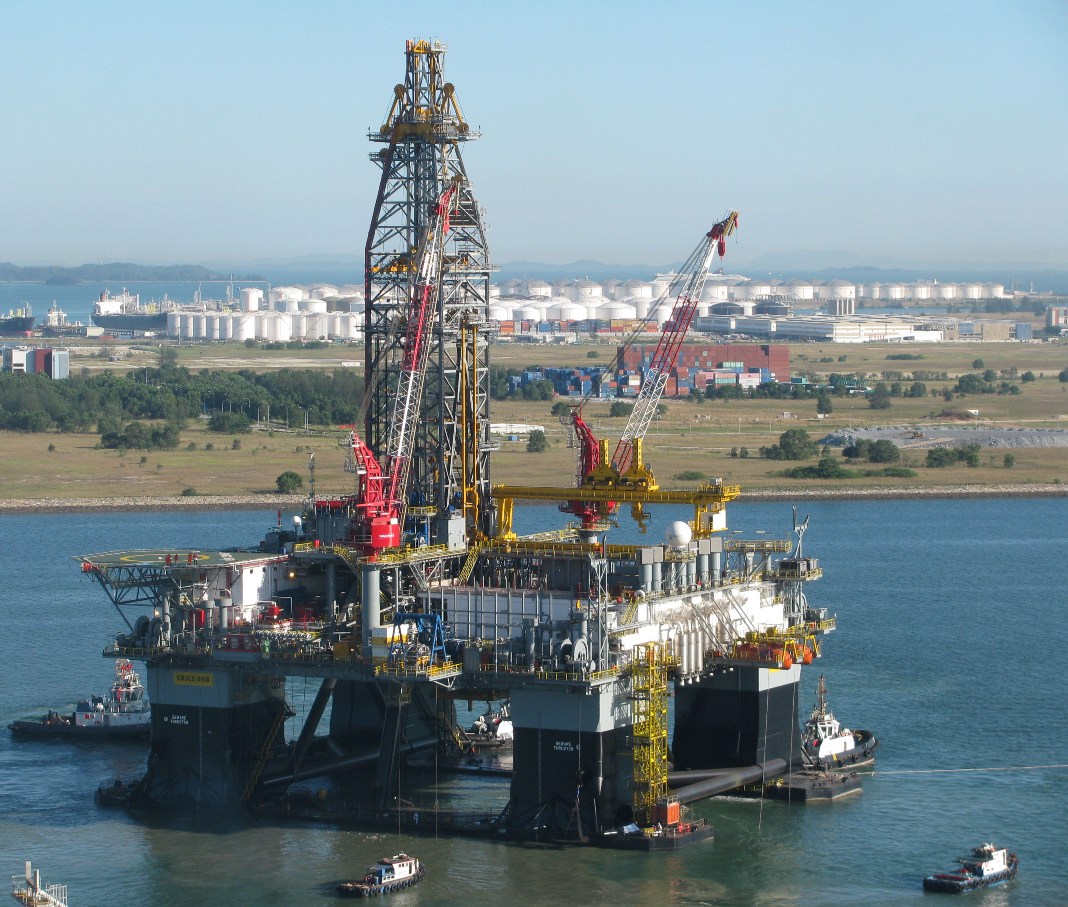
Ensco 8501
Posted in drilling, Offshore Energy - General | Tagged Deepwater, Ensco, Gulf of Mexico, Noble | Leave a Comment »
 Charlie Sheen, currently unemployed, is being recruited to direct BOE’s Not My Job Awards program.
Charlie has repeatedly demonstrated habits and personality traits that make him uniquely qualified to serve as our Not My Job Awards program director. He is a hero to Not My Jobbers worldwide and would elevate that program to the next level. BOE Management
Posted in Uncategorized | Tagged Charlie Sheen, Not My Job Award | Leave a Comment »

Secretary Salazar will appear before the Senate Energy and Natural Resources Committee on Wednesday (2 March) at 10:00 am ET and the House Natural Resources on Thursday (3 March) at 10:00 am ET. Expect deepwater drilling and other offshore energy questions. Both hearings will be streamed live at the respective websites.
Posted in drilling, Offshore Energy - General, Uncategorized | Tagged House Natural Resources Committee, Senate Energy and Natural Resources | Leave a Comment »
Transocean Ltd., the world’s largest offshore oil driller, may attempt to recover some or all of the Deepwater Horizon rig that exploded and sank during last year’s Macondo well disaster. Bloomberg
U.S. Attorney Steve Overholt told District Judge Carl Barbier that testing of the failed blowout preventor (BOP) that led to the Deepwater Horizon oilrig explosion should be done by the end of this week. Louisiana Record
Posted in accidents, well control incidents | Tagged accidents, blowouts, BOP, Deepwater Horizon, Gulf of Mexico, macondo, offshore oil, transocean, well control | Leave a Comment »
The Bureau of Ocean Energy Management, Regulation and Enforcement (BOEMRE) today approved the first deepwater drilling permit since the Deepwater Horizon explosion and resulting oil spill. Noble Energy’s application for a permit to bypass is for Well #2 in Mississippi Canyon Block 519, approximately 70 miles south east of Venice, La.
Many thanks to Gary Gentile, Platts, for bringing this to our attention.
Posted in Uncategorized | Leave a Comment »

Good Nola.com article on the well containment systems
Comments on well capping and containment:
- Capping and containment systems, while important and necessary, are for blowout response, not blowout prevention. Their use, successful or otherwise, would only occur after a series of unacceptable failures.
- Having two capping and containment consortia in the Gulf of Mexico (and none anywhere else in the world) does not seem to be very cost effective or efficient.
- What are the plans for subsea capping and containment systems elsewhere?
- A capping/containment capability would not have saved a single life on the Deepwater Horizon. Verified barriers must be in place to prevent flow from the well bore.
- The well responsible for our other major drilling blowout spill (Santa Barbara – 1969), was capped at the surface by closing the blind ram on the BOP shortly after flow began. However, capping doesn’t work if you don’t have a competent well bore. The well flowed through numerous channels back to the seafloor.
- Capping subsea wells is safer than capping surface wells.
- Capping the Montara blowout (2009) in only 80m of water was neither safe nor technically feasible because of the way the well was suspended. Despite the complete absence of a capping option at Montara, the capping of surface wells has received little attention.
- The more critical, but less publicized, post-Macondo initiatives pertain to well design, construction, and verification. In that regard, important new standards, including the Well Construction Interface Document, are scheduled to be completed soon. That work must not be delayed.
- While capping stacks and containment systems will only be used in the event of a series of major failures, design and construction procedures are critical every time a well is drilled. The importance of the initial design decisions continues into the production phase and beyond, even after the well has been plugged and abandoned.
Posted in accidents, Uncategorized, well control incidents | Tagged accidents, blowouts, capping and containment, drilling, Gulf of Mexico, Helix, macondo, Marine Well Containment Company, Montara, offshore oil, oil spill, well control | 2 Comments »

