The 16” oil pipeline was found to be in good condition with no visible damage or anomalies. One (1) CP test point that was installed in 2014 was found to be displaced from its location on the pipeline (this was also noted in the 2018 survey), and no damage was noted at the location (Fix #101).
Aqueos inspection report, May 2020
Pipe‐to‐electrolyte potential values recorded were: ‐ 921 millivolts (mV) on the 6” gas pipeline ‐ 910 millivolts (mV) on the 10” water pipeline ‐ 963 millivolts (mV) on the 10” gross fluids pipeline ‐ 906 millivolts (mV) on the 16” oil pipeline
As the NACE Standard SP0169‐2013 “Control of External Corrosion on Underground or Submerged Metallic Pipelines” criterion is ‐800 mV, all readings indicate that Cathodic Potential is within specifications.
Aqueos inspection report, May 2020
Metal loss data from Baker Hughes internal inspection (12/2019):
The metal loss findings are consistent with those reported in a previous internal inspection (Baker Hughes, 11/2017).
BSEE has general authority to require pipeline inspections under 30 CFR 250.1005. BSEE, the State Lands Commission, and the operator appear to have implemented an effective inspection program for the Beta Unit.
Establishing an OSHA rule takes an average of 7 years, and the process has ranged from 15 months to 19 years between 1981 and 2010, the Government Accountability Office (GAO) reported to Congress in 2012
OSHA’s long rule promulgation timeframes are actually quite typical for US regulatory agencies. In some cases, employees work on a single rule for most of their careers! On the plus side, the rigorous internal and public review processes help prevent arbitrary and capricious actions by regulators. However, the long promulgation process often results in regulations that are outdated before they are published. As a result, the entire process repeats and you have a regulatory “do loop.”
To avoid the daunting rulemaking process, regulators often resort to issuing notices, letters, or conditions of approval that accomplish some of their objectives. However, these actions are not always consistent with the rule promulgation requirements of the Administrative Procedures Act and other directives, and are less likely to survive legal challenges.
The optimal approach is for the regulator to establish clear objectives for the operating companies and a schedule for achieving those objectives. This approach was demonstrated following the 2005 hurricane season (Katrina and Rita) when numerous mooring system and other stationkeeping issues were identified. In a face-to-face meeting, Department of the Interior Secretary Gale Norton outlined her concerns and informed offshore operators that there would be no drilling from moored MODUs or jackups during hurricane season until the issues identified during Hurricanes Katrina and Rita were addressed.
The collaborative effort that followed was a resounding success. In addition to addressing station keeping concerns, a comprehensive list of hurricane issues was developed. Industry and government then worked together to assess mitigations and develop new standards and procedures. The essential MODU standards were completed before the 2006 hurricane season, and all of the related concerns were effectively addressed prior to the 2009 hurricane season. Had the government elected to promulgate regulations to address all of these issues, much of this work would have never been completed.
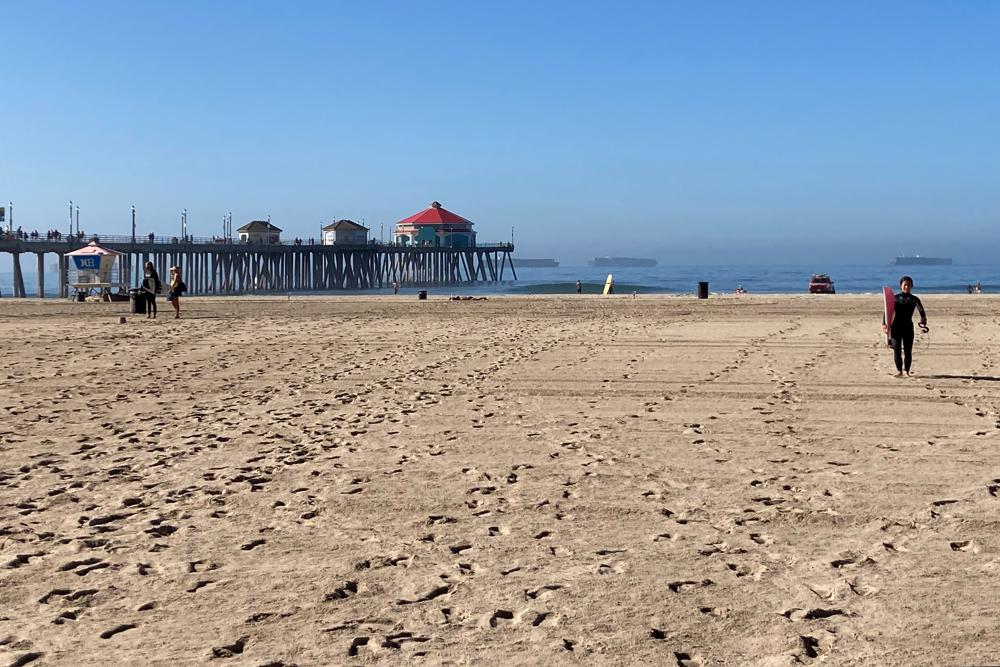
Matt Harty, a 61-year-old retired construction supervisor from the nearby community of Seal Beach, said he was glad to return to the waves in Huntington Beach with other early morning surfers. He said he’s seen oil spills before and this one didn’t seem that bad, and in fact, the beach looks great.
“This is the cleanest I’ve seen the beach in years, right, because there’s been nobody here for a week,” Harty said. “I think they cleaned it up really well.”
While the size of the spill isn’t known, the Coast Guard on Thursday slightly revised the parameters of the estimates to at least about 25,000 gallons (95,000 liters) and no more than 132,000 gallons (500,000 liters).
So far the impact on wildlife has been minimal – 10 dead birds and another 25 recovered alive and treated – but environmentalists caution the long-term impacts could be much greater.
AP 10/9
Comment: One gets the sense that some anti-production activists are disappointed that the spill is not the environmental disaster needed to end oil and gas production in U.S. offshore waters, that the pipeline operator is (at most) only partially responsible, and that the primary regulators have been doing their job despite outdated regulations and jurisdictional uncertainty.
So far, two proposed class-action lawsuits have been filed on behalf of a disc jockey who runs beachfront events in Huntington Beach and a surf school that operates in the city known as “Surf City USA.”
Look at the US Dept. of Energy homepage and I think you’ll get a better sense of the imbalanced energy policies, in the US and elsewhere, that are contributing to the emerging energy crisis.
There isn’t a single mention of oil or natural gas on the Dept. of Energy homepage. DOE’s priorities are “Combating the Climate Crisis” (embellished with a satellite image of Hurricane Andrew), “Creating Clean Energy Union Jobs” (other energy jobs aren’t important?), and “Promoting Energy Justice.” With regard to the latter, how is driving up energy prices “energy justice?” How is importing more of the oil that we consume “energy justice.” Affordable energy has increased economic opportunities for all and enabled us to better protect our environment. In that regard, this Petr Beckmann slide holds true:
As the global economy recovers and global leaders prepare to gather for a landmark conference on climate change, the sudden energy crunch hitting the world is threatening already stressed supply chains, stirring geopolitical tensions and raising questions about whether the world is ready for the green energy revolution when it’s having trouble powering itself right now.
In the United States, which as an energy producer has been spared the worst consequences of the crisis even as gasoline prices have hit their highest mark since 2014, Energy Secretary Jennifer Granholm suggested Wednesday that the Biden administration might sell off part of the country’s Strategic Oil Reserve or ban exports of crude oil.
Energy analysts warned that such moves could be self-defeating, and on Thursday the department backpedaled.
Energy analysts argue that Europe moved too quickly away from fossil-fueled power, before ensuring that sufficient renewable sources could take up the slack in an emergency. Caught halfway in a transition that should take decades, they say, Europe is now scrambling to find coal and gas to burn in its remaining traditional plants.
In Guangdong, China’s most populous province, authorities have banned the use of elevators in office buildings for the third floor and below, encouraged residents to use natural light as much as possible, and asked for air conditioners to be adjusted to higher temperatures. Beijing and Shanghai canceled annual light shows during the Golden Week holiday that spanned the first week of October.
As we have been suggesting for several days, the initial spill estimate was too conservative (high) and assumed near total losses from the pipeline. The Coast Guard has now established a “minimum” estimate which is identical to the spill volume cited in footnote 2 of the PHMSA Order. This estimate was presumably determined after a review of meter data.
Coast Guard Capt. Rebecca Ore said at a media briefing that officials “have assessed and verified pipeline data, and made a determination that the minimum amount of crude oil released from that pipeline is 588 barrels of oil,” which equals about 24,696 gallons.
Asked whether the lower estimate of oil released could mean beaches reopen sooner, Huntington Beach Mayor Kim Carr said she was “cautiously optimistic that it will be sooner than later.”
“My experience suggests this would be a darned hard leak to remotely determine quickly,” said Richard Kuprewicz, a private pipeline accident investigator and consultant. “An opening of this type, on a 17-mile-long (27-kilometer) underwater pipe is very hard to spot by remote indications. These crack-type releases are lower rate and can go for quite a while.”
Jonathan Stewart, a professor of civil and environmental engineering at the University of California, Los Angeles, said he was surprised the damage wasn’t more severe given how far the pipe was moved.
“My first reaction when I heard that it is displaced so far was that it’s remarkable that it’s even intact at all,” Stewart said.
The type of crack seen in the Coast Guard video is big enough to allow some oil to escape to potentially trigger the low pressure alarm, Kuprewicz said. But because the pipeline was operating under relatively low pressure, the control room operator may have simply dismissed the alarm because the pressure was not very high to begin, he said.
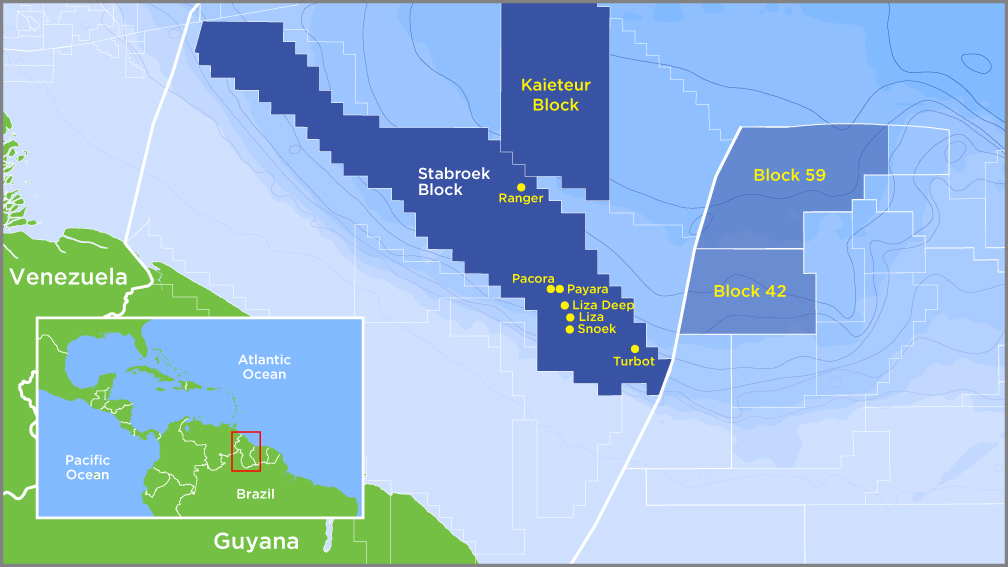
IRVING, Texas – ExxonMobil increased its estimate of the discovered recoverable resource for the Stabroek Block offshore Guyana to approximately 10 billion oil-equivalent barrels.
BSEE data indicate that the operator of the Beta Unit facilities (Platforms Ellen, Elly, and Eureka, and the associated pipelines) had a good compliance and safety record.
Since 1/1/2015 Beta facilities were inspected 262 times and 49 Incidents of Non-Compliance (INCs) were issued.
The ratio of 0.19 INCs/inspection was better than the average for the Pacific Region (0.29 INCs/inspection).
No facility shut-in orders were issued during that period.
BSEE assesses civil penalties for violations that constitute a serious threat to safety or the environment. Since 1/1/2015, Beta has not been assessed any civil penalties.
BSEE incident data are badly out-of-date (no data posted for 2020 or 2021), but the most recent incidents at the Beta Unit facilities were 2 minor injuries (no lost time) in 2019, a small dryer fire in 2018, a minor injury (no lost time) in 2017, and a lost time injury (fall) in 2016.
BSEE’s oil spill data are even more out-of-date (no data posted since 2013) so it is difficult to assess Beta’s performance in that category.
With regard to the Huntington Beach pipeline spill, the evidence to date seems to confirm that the pipeline damage was caused by anchor dragging. Beta’s response to the PHMSA preliminary finding on their delayed response to the low pressure alarm (see previous post) will be of great interest. Alarm issues are not always straightforward. PHMSA’s 12-page order was issued on Monday (10/4), only 2 days after the spill was reported. The investigation will no doubt carefully consider the pressure and alarm history for the pipeline, data for 10/1 and 10/2, and input from those working in the control room.