Dan starts by retelling the story about the North Face hypocrisy that earned the company the Colorado Oil and Gas Association’s first ever Customer Appreciation Award for being an extraordinary oil and gas customer. This award rivals the Not My Job Award as a means of recognizing extraordinary individual and organizational chutzpah. North Face refused to sell jackets to an oil industry service company because doing so would be counter to its “goals and commitments surrounding sustainability and environmental protection.” As the Colorado Oil and Gas Assoc. pointed out:
At least 90 percent of the materials in North Face jackets are made from petrochemicals derived from oil and natural gas. Moreover, many of its jackets and the materials that go into them are made in countries such as China, Vietnam, and Bangladesh, and then shipped to the United States in vessels that are powered by oil. To muddy matters further, not long before North Face rejected the request, its corporate owner had built a new hangar at a Denver airport for its corporate jets, all of which run on jet fuel.
Yergin goes on to point out the extraordinary complexities of energy transitions particularly for developing nations:
Aissatou Sophie Gladima, the energy minister of Senegal, put it more pithily: Restricting lending for oil and gas development, she said, “is like removing the ladder and asking us to jump or fly.”
The 19th century is known as the “century of coal,” but, as the technology scholar Vaclav Smil has noted, not until the beginning of the 20th century did coal actually overtake wood as the world’s No. 1 energy source. Moreover, past energy transitions have also been “energy additions”—one source atop another. Oil, discovered in 1859, did not surpass coal as the world’s primary energy source until the 1960s, yet today the world uses almost three times as much coal as it did in the ’60s.
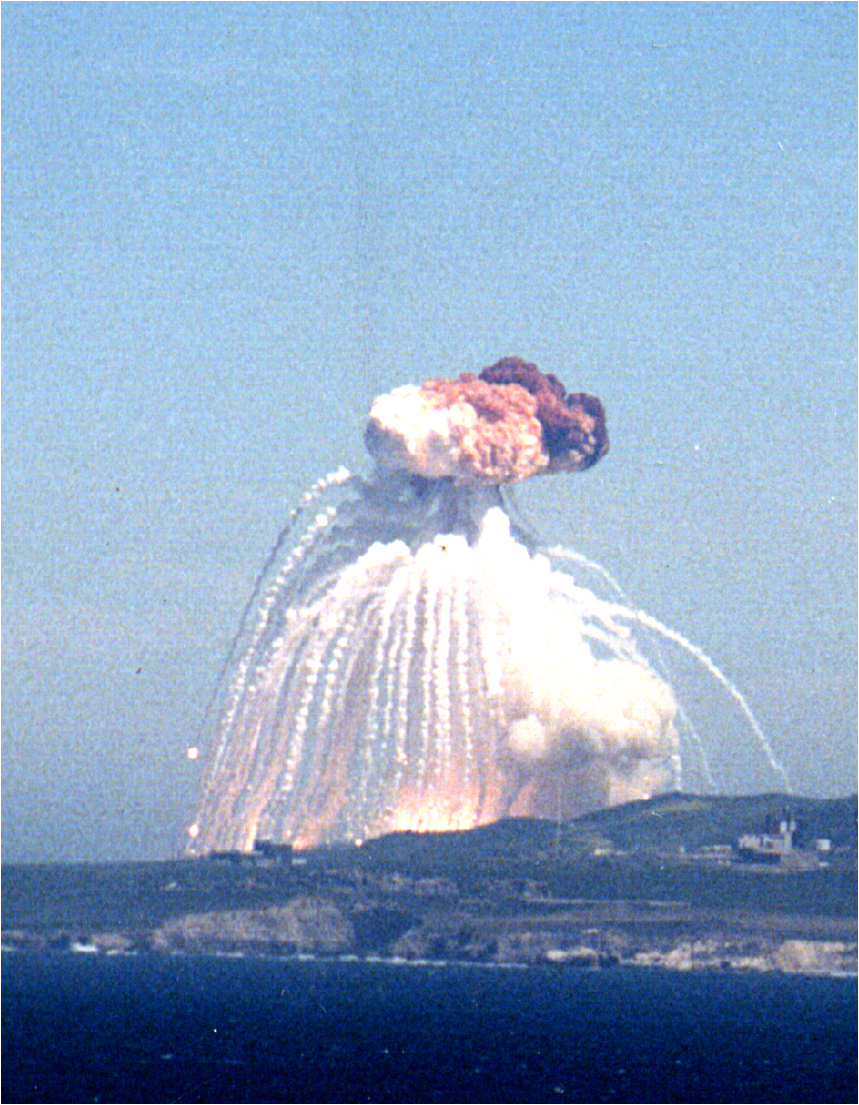
Last week’s successful Falcon 9 launch from Vandenberg Space Force Base (formerly Air Force Base) brought back memories of a less successful Vandenberg launch on April 18, 1986. I was just offshore from the base on Texaco’s Platform Harvest at the time. That is where the photo below was taken.
The Titan rocket carrying a secret spy satellite exploded in a huge orange cloud seconds after the launch. Because this was a classified mission, few residents knew that a launch was occurring. Fifty-eight people were treated for skin and eye irritation. Not a shining moment for the space program, particularly given the Titan failure the previous August and the tragic Challenger disaster earlier in 1986.
More than half of GoM oil production was shut-in for 13 days in September and several hundred thousand BOPD were shut-in for the rest of the month. The result was a 42% reduction in production from pre-Ida (July) levels.
All production has now been restored so the December EIA figures should give us a good read on stablized post-Ida production.
Despite scientific support, California’s “rigs to reefs” program has made little progress. Comments in yesterday’s LA Times article help explain why:
Fed by concerns from some environmental advocates and a skepticism about the motives of California’s billion-dollar oil industry, the Rigs to Reefs program that passed in 2010 was so complicated by political compromise that the permitting process became almost unworkable, (State Sen.) Hertzberg said.
Not a single oil company has applied in the history of the program, according to the State Lands Commission, which has jurisdiction over state waters.
“Oil companies want a clear path to compliance,” he said. “They’re operating in many cases at a loss, but it’s cheaper to operate at a loss than it is to face millions for decommissioning.”
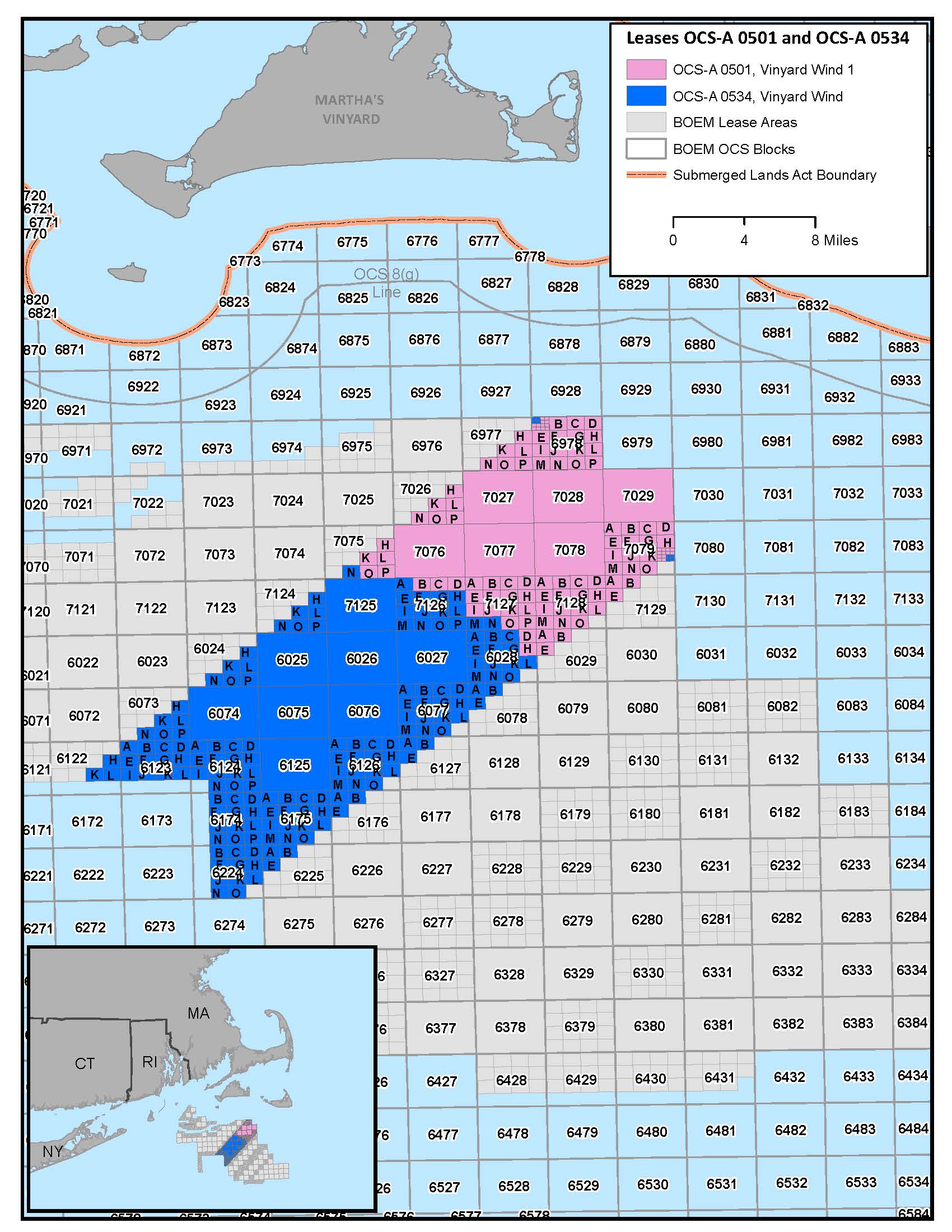
South Fork Wind: 19 miles southeast of Block Island, Rhode Island
12 or fewer Siemens-Gamesa’s 11-megawatt turbines
BOEM approved the larger (62 turbine) Vineyard Wind 1 project on July 15, 2021. Those turbines will be located approximately 15 miles south of Martha’s Vineyard and Nantucket. On Oct. 19, the Responsible Offshore Development Alliance (RODA) filed a 60-day Notice of Intent to Sue the Federal Government over violations of lease management and environmental statutes.
From an offshore perspective, this report is more moderate than expected. No major complaints.
The report was issued the Friday after Thanksgiving. Was there a desire to minimize attention?
The report does not include a recommendation on raising royalty rates. DOI will continue to study such actions (prudent decision).
BSEE estimates current liability for “orphaned infrastructure” at only $65 million. They must be using a very narrow definition of orphaned infrastructure.
“Financial assurance coverage should be strengthened.” (Few would argue with that statement.)
“BSEE and BOEM will carefully consider comments on the 2020 proposed financial assurance rule.” (Deja vu? Expect a long, slow process.)
BOEM will establish a “fitness to operate standard.” Comments: (1) This is an old concept that has proven to be difficult to execute. Hold companies accountable, make them demonstrate financial assurance, and don’t pander to bad actors (see the case of Hogan and Houchin) (2) Why is BOEM establishing this standard and not BSEE, the safety bureau? (The division of responsibilities between BOEM and BSEE has created serious overlap, inefficiency, and confusion and needs to be addressed.)
“BOEM should consider advancing alternatives to the practice of area-wide leasing.” Tract selection makes sense in frontier areas with little operational history. It would have been perfect for the Mid- or South Atlantic or the EGoM, all of which were cynically removed from future leasing consideration by the previous President just before the 2020 election. The Central and Western Gulf of Mexico is too mature for a return to tract selection; employing that approach after 40 years of area-wide leasing is likely to generate less revenue and production.
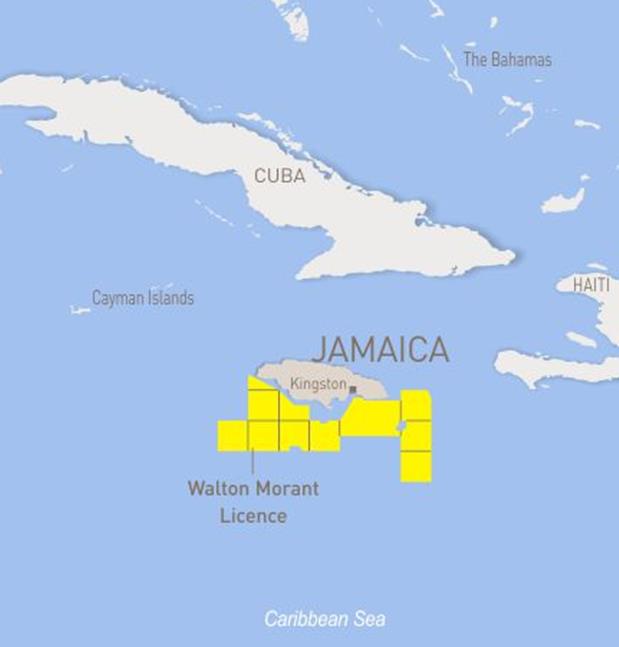
United Oil & Gas is looking for partners to drill the promising Colibri prospect offshore Jamaica. United’s exploration license has been extended after the completion of Jamaica’s first 3-D seismic survey. The results were encouraging as indicated in the video below. High risk, high reward opportunity!
The text below, excerpted from the Infrastructure Bill (signed 2 days before Sale 257), requires the Federal government to provide funding for commercial CCS projects. $2.5 billion is appropriated. Given these incentives, how does BOEM possibly issue leases for CCS purposes when there was no public notice (as required by 30 CFR § 556.308) that CCS bids would be accepted at the oil and gas lease sale?
SEC. 40305.
e) Large-scale Carbon Storage Commercialization Program.--
        ``(1) In general.--The Secretary shall establish a commercialization program under which the Secretary shall provide funding for the development of new or expanded commercial large-scale carbon sequestration projects and associated carbon dioxide transport infrastructure, including funding for the feasibility,site characterization, permitting, and construction stages of project development.
(h) Authorization of Appropriations.--There is authorized to be appropriated to the Secretary to carry out this section $2,500,000,000 for the period of fiscal years 2022 through 2026.
WASHINGTON, D.C.— At the direction of President Biden, U.S. Secretary of Energy Jennifer M. Granholm authorized that 50 million barrels of crude oil from the U.S. Department of Energy’s (DOE) Strategic Petroleum Reserve (SPR) be made available.
Not a fan of this decision. Using the SPR in an attempt to manipulate prices discourages the investment needed to ensure ample secure oil supplies in the future.
Will OPEC respond?
“The battle lines are being drawn,” said John Kilduff, founding partner at Again Capital LLC. “Certainly, OPEC and the Saudis can win this in that they are holding all the cards. They can keep more oil off the market than a SPR release can put on the market. If you see WTI get under $70, then I would expect a response from OPEC+.”
Were it not for the surprising CCS bidding, which was accomplished without public notice, last week’s Gulf of Mexico sale would have been pretty ordinary – $177 million on 214 tracts.
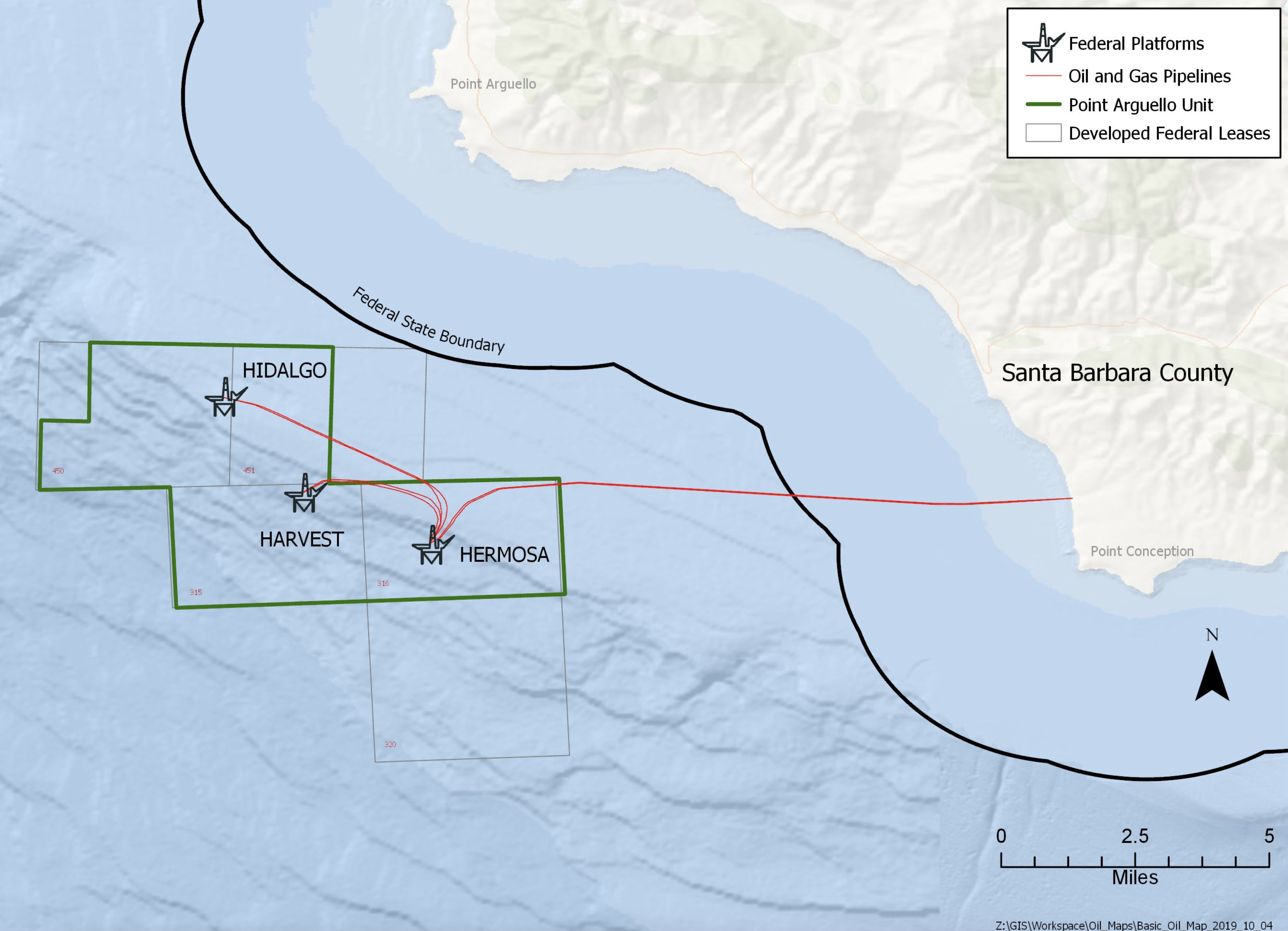
A 1981 lease sale offshore California was quite another matter. That sale (no. 53) set records that will never be surpassed. A single lease (OCS-P 0450) encompassing a little more than 5000 acres was sold to Chevron and Phillips for an astounding $333 million. This equates to$1.013 billion in 2021 dollars. That single bid (in 1981 dollars) exceeds the total high bids for any Gulf of Mexico sale since 2015.
High bids for Sale 53 totaled $2.3 billion ($7.0 billion in 2021 dollars!) for only 81 tracts. A GoM sale in 2008 received $3.7 billion in high bids, but that was for 603 tracts.
Unfortunately, production from lease 0450 never met expectations. Platform Hidalgo (0450) and the other two Pt. Arguello field platforms (Harvest and Hermosa) are no longer producing and are in the process of being decommissioned. An interesting criminal case involving Platform Harvest, then operated by Texaco, will be discussed at a later date.