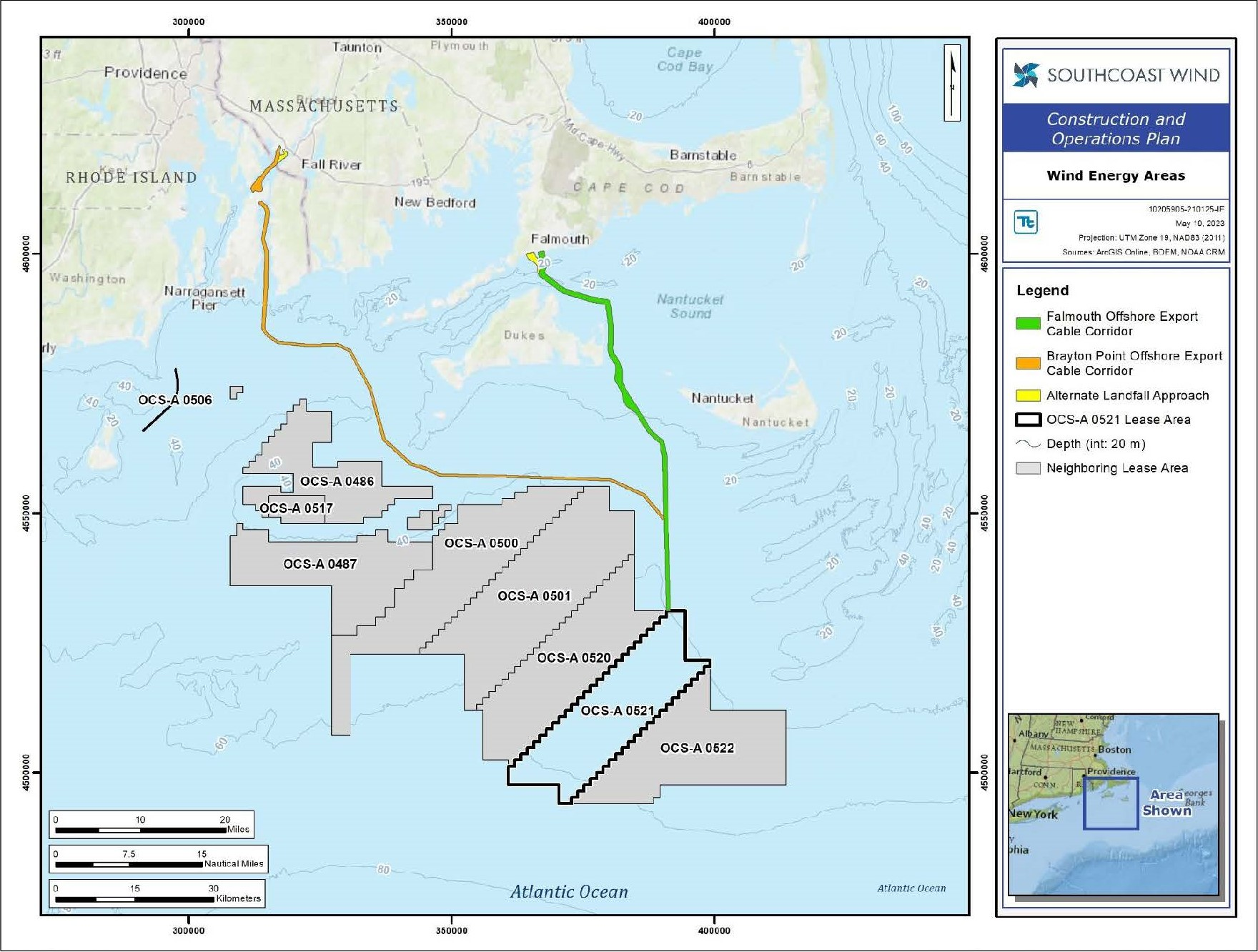
The Construction and Operations Plan (COP) for the SouthCoast Wind project was approved during the last week of the Biden Administration. That approval has been challenged by the Town and County of Nantucket. Ocean Wind, a joint venture of EDP Renewables (Portugal) and ENGIE (France), is the leaseholder.
It is ORDERED that the case be REMANDED to BOEM for reconsideration of its decision and that proceedings in this court are STAYED until further order of the court. It is further ORDERED that, on or before January 3, 2026, and every 60 days thereafter, the parties shall file a joint status report indicating the status of BOEM’s remand proceedings. It is further ORDERED that on or before 30 days following the issuance of a decision by BOEM, the parties shall file a joint status report informing the court if further proceedings are necessary and, if so, providing a proposed schedule for those proceedings.
The UK Met Office told Recharge that the historic trend of wind speeds in Britain was downwards. “The UK annual mean wind speed from 1969 to 2024 shows a downward trend, consistent with that observed globally. There have been fewer occurrences of maximum gust speeds exceeding 40/50/60 knots in the last two decades compared to the 1980s and 1990s.”
Citigroup informs that load factors for both onshore and offshore wind are falling behind capacity growth in Britain’s turbine fleet.
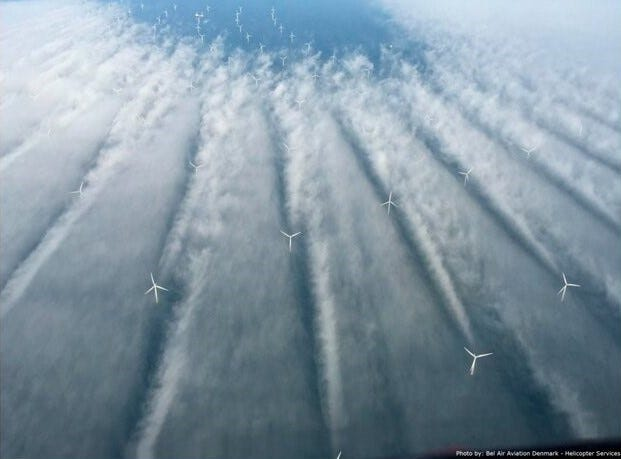
Per the Citigroup analysts, the increasing focus on wind wakes in UK waters has led to a ballooning number of disputes between developers.
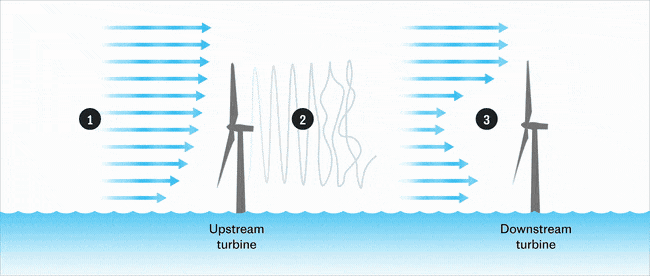
In addition to wake losses, local turbulence in the wake regions creates significant unsteady fatigue loads on the downstream turbines, which shorten their working life.
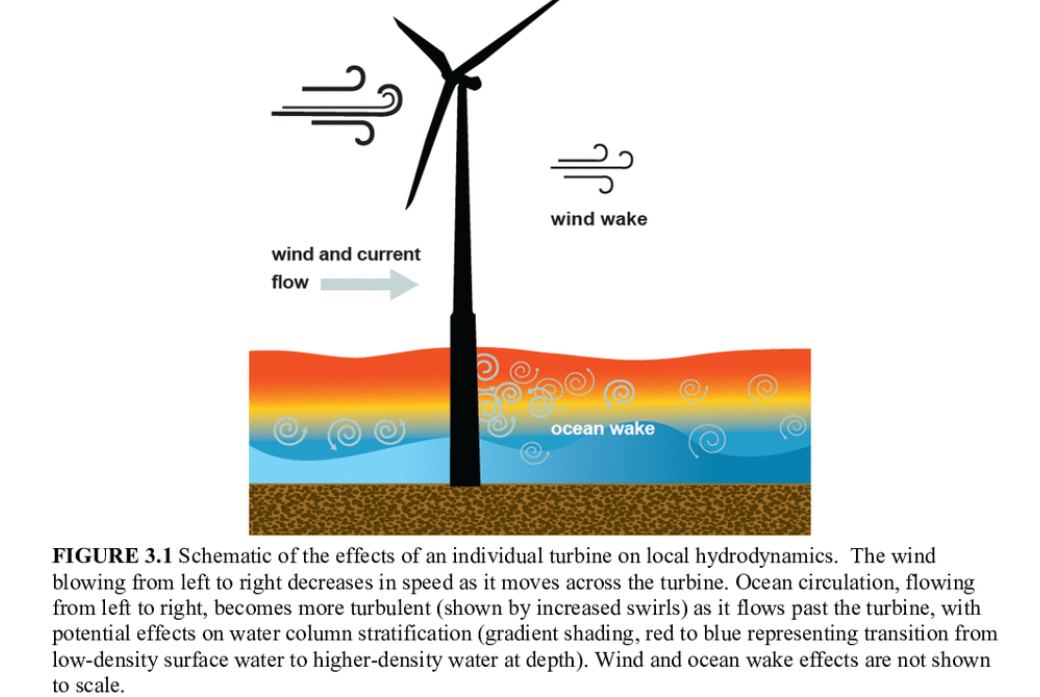
A recent study shows that hydrodynamic conditions in the ocean altered by wind wakes can strongly influence marine primary production (phytoplankton).
The US National Academy of Sciences advised BOEM about the hydrodynamic effects of wind turbines and the potential implications for the endangered North Atlantic right whale (see figure below).
The attached legal petition from Save LBI and Green Oceans, asserts that BOEM improperly amended OCS wind leases at the end of the previous Administration.
The amended language makes it more difficult to cancel leases by stipulating that an OCS wind lease must be suspended for 5 years before it can be cancelled, and that in the event of cancellation, the lessees must be compensated.
The sentence of concern:
Any cancellations are subject to the limitations and protections contained in subsections 5(a)(2)(B) and (C) of the Act (43 U.S.C. § 1334 (a)(2)(B) and (C)). (Those subsections are pasted at the end of this post in their entirety.)
Compensation could be very costly to the Federal govt (taxpayer) given the wild (irrational?) bidding for some leases and subsequent planning and development costs.
See Section 8 of this lease for an example of the amended language. Note that the lease changes are not highlighted or otherwise identified; nor was there any public notice of this change.
The petitioners are requesting that the new lease language be rescinded and that cancellation language in the lease be aligned with the regulations.
(B) that such cancellation shall not occur unless and until operations under such lease or permit shall have been under suspension, or temporary prohibition, by the Secretary, with due extension of any lease or permit term continuously for a period of five years, or for a lesser period upon request of the lessee;
(C)that such cancellation shall entitle the lessee to receive such compensation as he shows to the Secretary as being equal to the lesser of (i) the fair value of the canceled rights as of the date of cancellation, taking account of both anticipated revenues from the lease and anticipated costs, including costs of compliance with all applicable regulations and operating orders, liability for cleanup costs or damages, or both, in the case of an oilspill, and all other costs reasonably anticipated on the lease, or (ii) the excess, if any, over the lessee’s revenues, from the lease (plus interest thereon from the date of receipt to date of reimbursement) of all consideration paid for the lease and all direct expenditures made by the lessee after the date of issuance ofsuch lease and in connection with exploration or development, or both, pursuant to the lease (plus interest on such consideration and such expenditures from date of payment to date of reimbursement), except that (I) with respect to leases issued before September 18, 1978, such compensation shall be equal to the amount specified in clause (i) of this subparagraph; and (II) in the case of joint leases which are canceled due to the failure of one or more partners to exercise due diligence, the innocent parties shall have the right to seek damages for such loss from the responsible party or parties and the right to acquire the interests of the negligent party or parties and be issued the lease in question;
Attached is a court filing challenging Delaware’s approval of the Coastal Construction Plan for that project. Some interesting points from the filing:
Maryland local governments declined to allow the transmission lines from the Maryland Offshore Wind Project to come ashore in their jurisdictions.
The Governor of Delaware agreed to allow the transmission lines to make landfall at the Delaware Seashore State Park.
The transmission pipelines would then traverse the adjacent Delaware Bays, to an inland substation, from which the power would be sent to Maryland.
US Wind applied for a number of permits from the Delaware Department of Natural Resources (DNREC) specific to horizontal directional drilling, laying cable pipelines, and other coastal construction activity.
The approval process, including provisions for public input, was not consistent with State regulations.
The Secretary’s decision to issue the beach construction permit is supported virtually exclusively by documents which were submitted by US Wind after the close of public comment.
Decommissioning and financial assurance information, a favorite BOE topic for both wind and oil/gas, was submitted after the close of the public record.
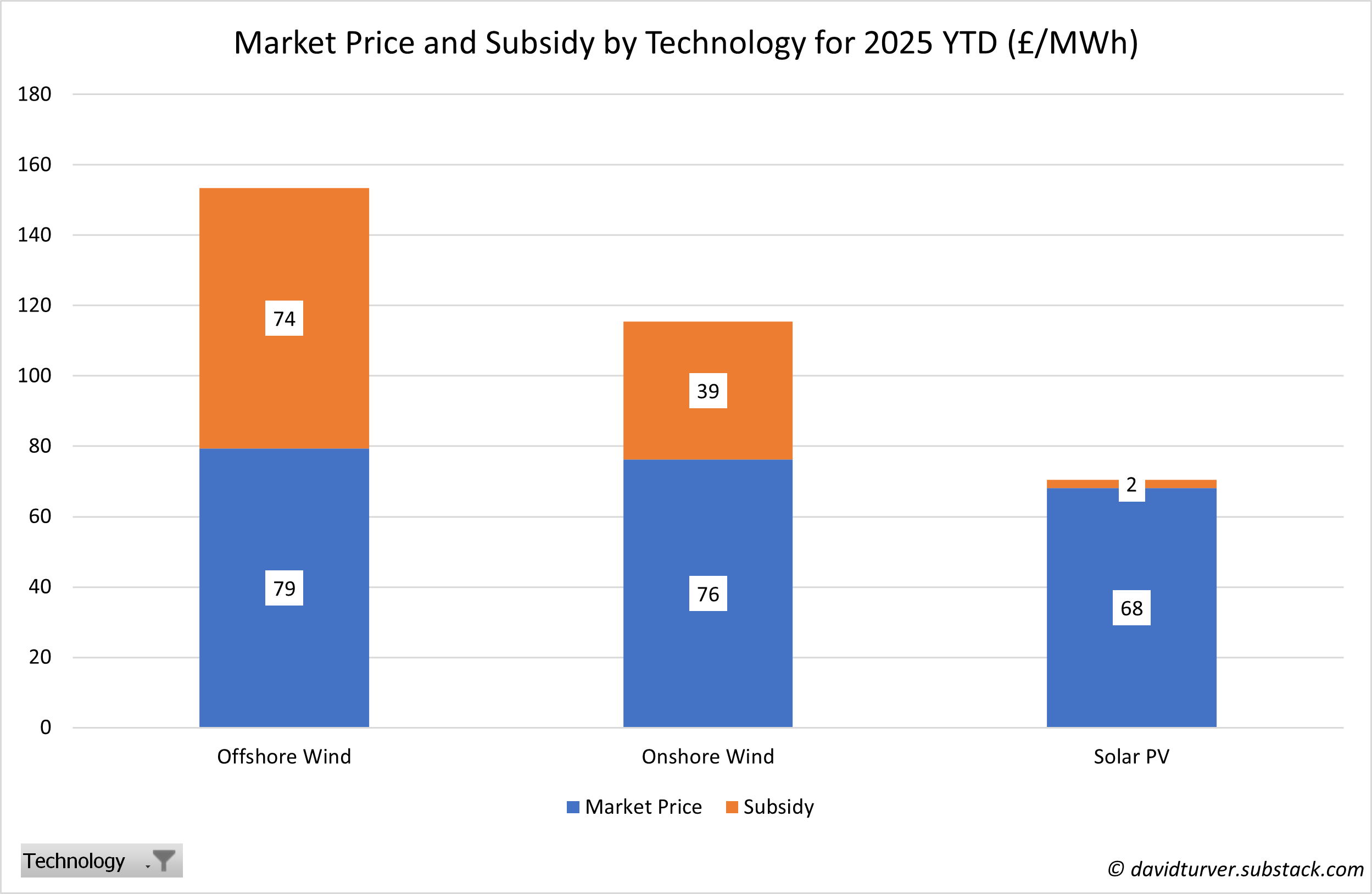
JL Daeschler informs that UK offshore wind energy is 82% foreign-owned. Foreign companies are thus the primary beneficiaries of the UK’s generous renewable energy subsidies (chart below).
“We have been warning for some time that it is crazy for a developed economy to try and run its electricity generation system using technologies that are dependent on the weather. Even though there has been only a relatively modest decline in wind output this year, the operators and owners of wind farms are learning the hard way that it is very difficult to run a business that is at the mercy of the vagaries of the weather. Many of these companies are up to their eyeballs in debt. They better hope the wind blows hard this Autumn and Winter so they can collect higher subsidies, or they will be in real trouble.“
We have consistently raised concerns about decommissioning financial assurance for offshore wind facilities. Turner echoes those concerns noting that the wind industry’s “perilous finances are an even bigger reason to insist that proper funds are set aside to fund decommissioning or the long-suffering taxpayer will be on the hook for another hidden cost of renewables.“
To the planners behind the scenes in Glasgow, Edinburgh, and London who draw borders with maps but never set foot on the land they destroy.
To the investors who calculate profit and pretend it’s about the planet.
And it’s addressed to all who love Scotland, to those who still believe that the Highlands are sacred ground, that wilderness is not a void, but the pulse of something ancient and irreplaceable.
To those who once walked through moorland and silence and felt that rare sense of belonging to something pure.
And to those who now see it slipping away, amidst noise, steel, and greed.
Let’s stand together for what we love! Before it’s too late!
Beyond the Kyle of Sutherland the heart of the Highlands is being remade not by nature, but by contracts, cables, cranes, and lots and lots of money!
For example: In Invershin and Golspie they plan to house 400 workers, 150 here, 250 there, for five years of construction, working around the clock. (As in numerous other places in Scotland)
Diesel trucks will thunder down our single-track roads,shaking cottages and scaring sheep.
Quiet valleys will become supply corridors.
The night will be lit by headlights and engines.
And when they’re finished, silence will not return, because the monster turbines will remain, and with them, endless power lines will be built in the name of the price of progress.
They will stand like giant steel soldiers, an eternal monument to power and greed in the middle of our once pristine nature!
From Spittal to Beauly, a high-voltage line will soon run through the heart and soul of the North, right through forests, moors, and nesting grounds.
They call it a necessary connection. But why?
Because they produce more than they can transport! Because their greed is limitless!
To make a profit, to export, to a faraway market.
This isn’t about clean energy for Scotland.
It’s about feeding the industrial grid, at the expense of our ecosystems, our wildlife, our peace.
The osprey, the golden eagle, the bats that hunt over rivers, all will suffer from what you call development in the name of progress.
Migratory birds will collide with turbines taller than our churches.
Red deer will lose their habitat.
The once living soil will be buried under concrete.
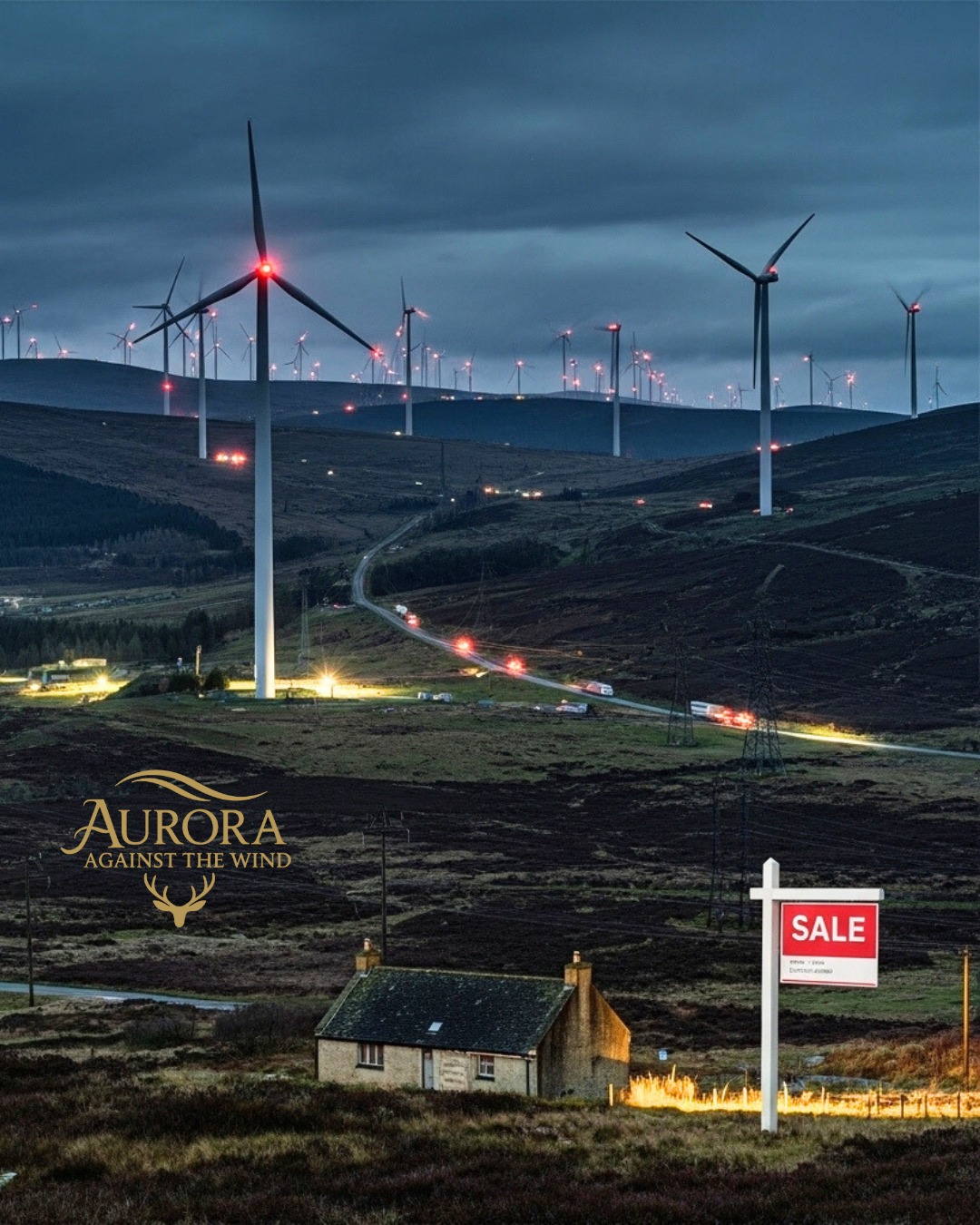
What they will take from us
They will drain the peat bogs our greatest natural carbon stores, and turn them from the lungs of the Highlands into scars.
They will clear forests for turbine foundations and access roads.
Thousands of trees will fall in the name of green energy!
They will carve paths through river valleys where salmon once leaped and otters played.
They will pour thousands of tons of concrete into living soil.
And if you call it green energy I ask:
How green is a forest without trees?
How clean is a wind that smells of diesel?
The Death of the Dark Night
They will fill our skies with red, flashing lights,visible for miles!
A constant warning, the cold heartbeat of industry.
But for the creatures that live here,that light is death.
Bats are disoriented. Birds are drawn to their doom.
And for us, who once saw the aurora dance, it is deep sadness. It moves me to tears to think of what we will lose!
The Milky Way will disappear behind their towers.
The silence of darkness will be gone forever.
The darkness of old gives way to a constant blinking that neither man nor beast can rest.
Their promise of green jobs for us who live here—all false!
They bring contractors, workers, and convoys.
We locals are left with rising electricity prices, broken roads, and a never-ending hum. Radiation pollution day and night! Sound waves are our constant companions! Our houses are rapidly plummeting in price and becoming unsellable!
Instead of Highland idyll, construction noise!
The people of the Highlands are experiencing industrial colonization disguised as green energy. Communities are shrinking while wind turbines are growing.
In the Kyle of Sutherland, there will soon be almost one turbine per inhabitant.
Imagine that: one person, one monster turbine!
A land once characterized by loneliness, now trimmed by rotor blades and power pylons—all climate-neutral, of course!
They call it renewable. But what is being renewed? The money is in their pockets!
An endless hunger for more, disguised as green miracle energy!
A question for the powerful
Do you know what it feels like to live under a sky that never sleeps?
To feel the hum of the power grid in your bones?
To lose the stars one by one and call it progress?
You don’t live here.
You don’t walk these hills in the rain.
You’ve never seen the mist dance or watched the owl fly in the dark night.
You don’t stand by the river at dusk and listen.
You don’t know the natural sounds of the night or the silence when everything is asleep!
You don’t know the starry sky, a wonder with millions of lights that guide your way. You don’t feel the magic when the Northern Lights dance and enchant everything around them.
You only listen to the voice of money.
But let me tell you!
Scotland is not your factory.
The Highlands are not your testing ground.
You cannot pave the North with steel and call it salvation.
You cannot blind the sky and call it clean.
Look up.
The blinking lights that you love so much are not progress.
It is the wilderness’s last breath.
And when the final aurora fades behind your towers, remember:
It was not nature that failed you.
It was you who failed it.
I will fight for every blade of grass and every tree to save the Highlands a piece of their soul!
A Voice from the Highlands, for all who still believe that beauty and silence are worth defending.
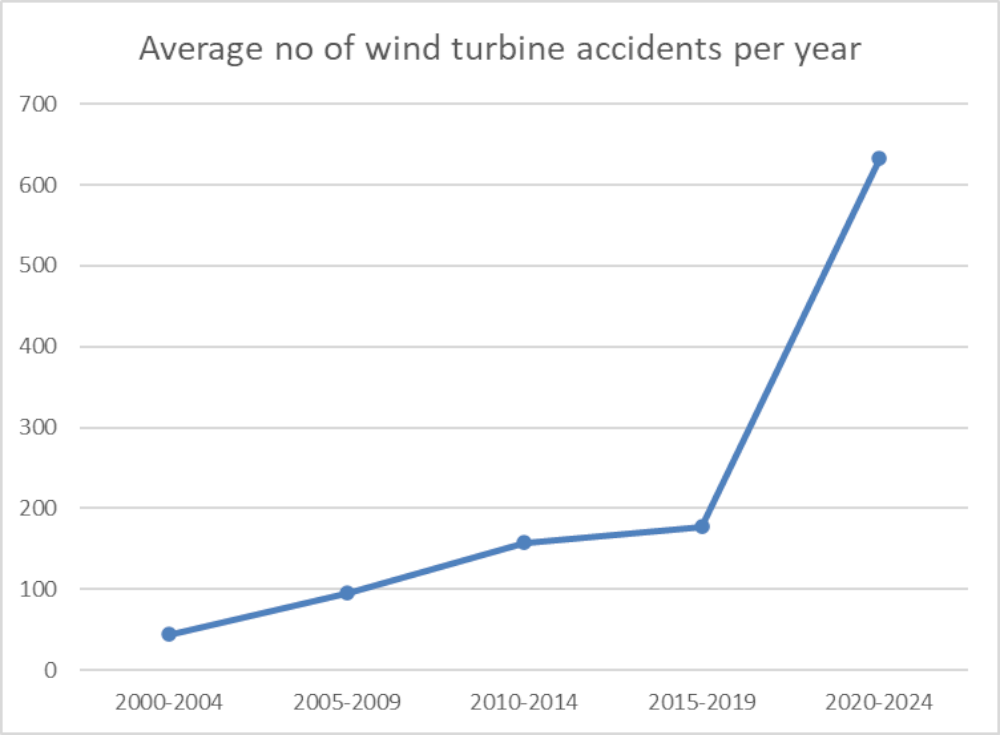
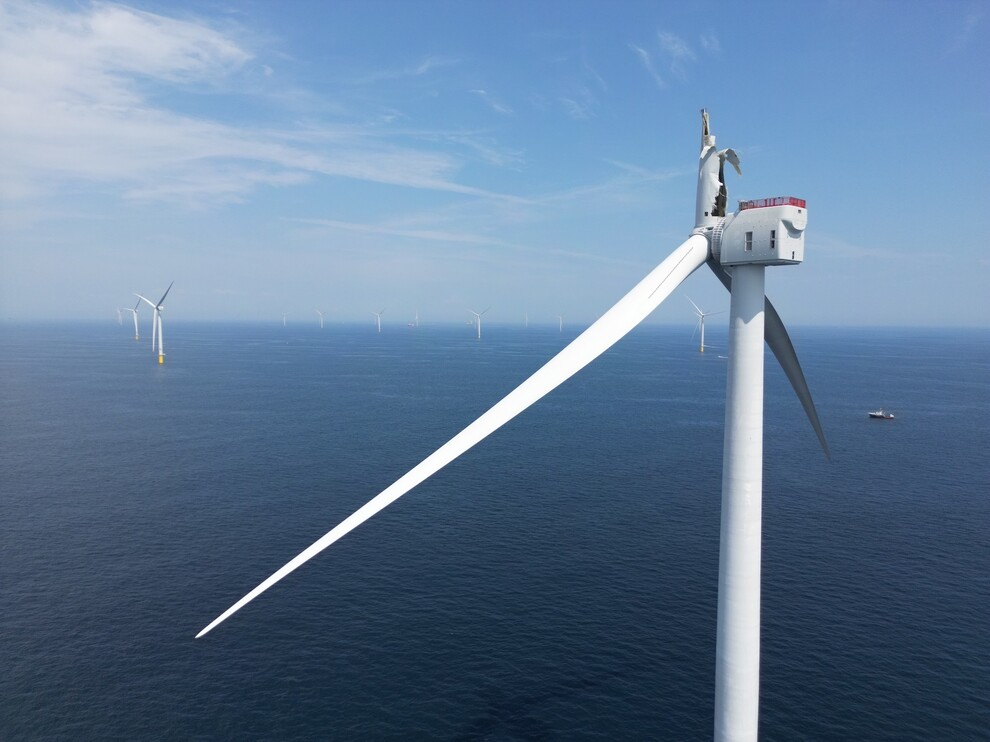
The SAS data indicate that the number of wind turbine incidents has risen sharply in recent years (see chart below). The increased number of turbines worldwide, and perhaps better news coverage of incidents, presumably contributed to the sharp increase. Nonetheless, the growing number of incidents is disconcerting, as is the absence of industry and government summaries and reports.
SAS acknowledges that their list, which is dependent on publicly available reports, is merely the “tip of the iceberg.” For example, the list does not include the June 2, 2025, Empire Wind project fatality.
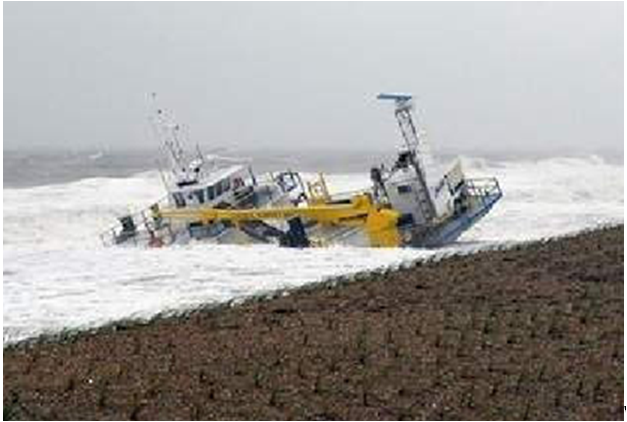
The SAS list does capture the 2018 collapse of the Russell Peterson liftboat, which was collecting data offshore Delaware for a wind project. One worker died and another was seriously endangered. The Coast Guard never issued a report on this tragic incident. Serious questions remain about the positioning of a liftboat in the Mid-Atlantic for several months beginning in March when major storms are likely, the liftboat’s failure mechanisms, the operator’s authority to be conducting this research, and the actions that were taken in preparation for storm conditions.
Updatedincident tables for OCS oil and gas operations. The most recent data are nearly 2 years old. The public has a right to timely information on the type of incidents that are occurring, the operating companies, and the resulting casualties, pollution, and property damage.
A summary of incidents associated with the OCS wind program. From press reports, we know about the fatality during Empire Wind construction. What other incidents have occurred to date?
 What they will take from us
 The Death of the Dark Night
 Bud's Offshore Energy (BOE)
Interesting case: Delaware litigation on approval of the Coastal Construction Permit for the Maryland Offshore Wind Project
Posted in decommissioning, energy policy, Offshore Wind, Regulation, tagged Coastal Construction Plan, court filing, decommissioning, Delaware litigation, Maryland Offshore Wind, public comment, US Wind on October 29, 2025| Leave a Comment »
The Dept. of the Interior is currently reconsidering approval of the Construction and Operations Plan for the Maryland Offshore Wind Project (US Wind).
Attached is a court filing challenging Delaware’s approval of the Coastal Construction Plan for that project. Some interesting points from the filing:
Read Full Post »