Feeds:
Posts
Comments

Archive for the ‘Offshore Wind’ Category

The Jones Act, protectionism at its finest, was enacted 113 years ago, and stipulates that vessels which transport merchandise or people between two US points must be US built, flagged, owned, and crewed. Congress tightened the screws further by ordaining that offshore energy facilities, including wind farms, are US points. That precludes the transportation of wind turbine components from US ports to offshore wind farms.

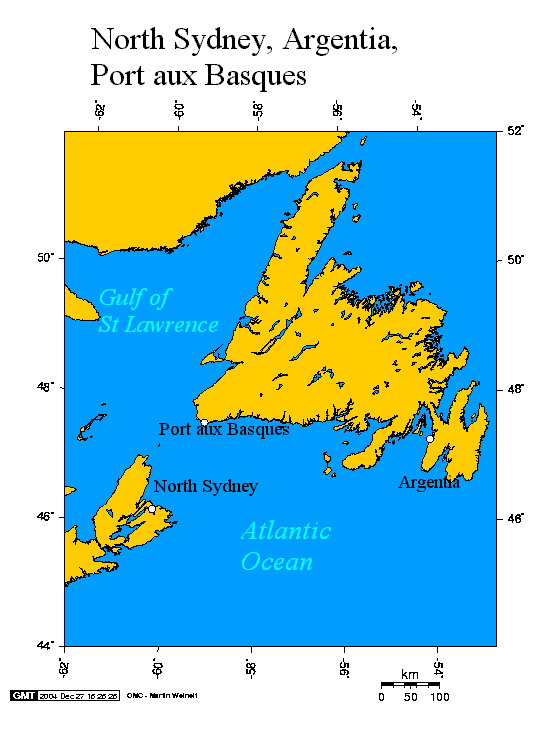
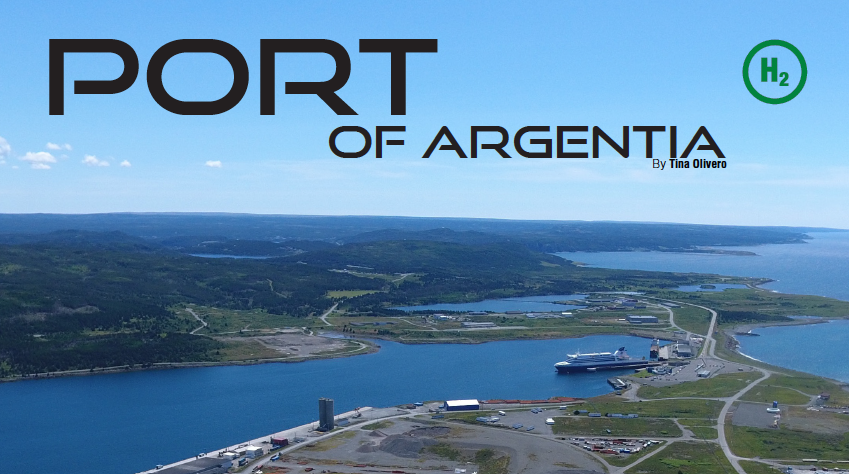
The Jones Act has thus provided an opportunity for the Port of Argentia, a former US Navy base in southeast Newfoundland, and the port is set to become a key node in the offshore wind supply chain. Monopiles constructed in Europe will be stored in Argentia, until they are delivered to US wind farms in the North Atlantic. Kudos to the folks at the Port of Argentia for taking advantage of this opportunity.

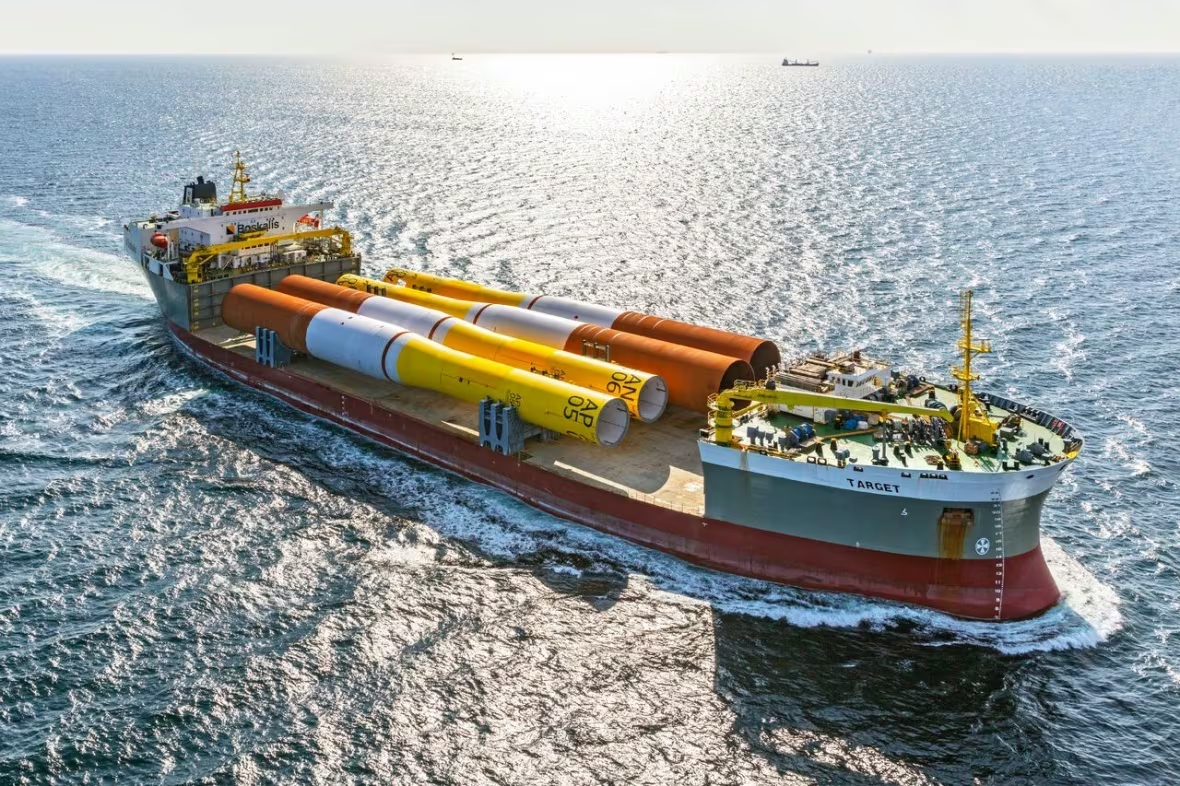
Dutch company Boskalis will be transporting the monopiles, which are expected to land in the Port of Argentia in a few weeks. (Boskalis)

Read Full Post »

Last week I had the privilege of attending a retirement party for Jim Bennett. Jim spent most of his 43 year Federal career in the OCS program focusing on environmental reviews and offshore wind. Most recently he served as Chief of the Offshore Renewable Energy Program. Congratulations to Jim on a long and very successful career!

Read Full Post »

Rick was one of the first Americans on Utah Beach during the D-Day invasion, helped to protect the endangered American Bald Eagle, and was an offshore energy (green hydrogen) pioneer. More about Rick.

Read Full Post »

BSEE will continue to evaluate the process for issuing decommissioning orders and will continue to issue decommissioning orders to jointly and severally liable parties on a case-by-case basis.

Final decommissioning rule (preamble). 4/18/2023

Although the news release for BSEE’s final decommissioning rule asserts that the regulations “provide the certainty requested by industry,” that does not seem to be the case. The main change in the final rule was to delete the reverse chronological order (RCO) provision which called for issuing decommissioning orders to the most recent predecessor first. Instead, BSEE may continue to issue decommissioning orders arbitrarily.

While deleting the RCO provision may be advantageous for the regulator, and in some cases for the public, claiming that the decision provides certainty for industry is quite a stretch. BSEE may continue to issue a decommissioning order to anyone in the ownership chain, whether the company was a recent lessee or one that had owned the lease decades ago. Original or early lessees may be held liable for decommissioning old facilities regardless of subsequent damage, modifications, or neglected maintenance.

The absence of a defined procedure for issuing decommissioning orders may also expose BSEE to new legal challenges, particularly in cases where a company has not held the lease for decades. A 1988 letter from the Director of the Minerals Management Service to Amoco (attached below) explicitly relieves the assignor (predecessor) of decommissioning liability after the lease has been assigned. A revised bonding rule published on May 22, 1997 reversed that policy, but decommissioning liability for leases assigned prior to the 1997 rule may still be very much in question.

Another concern is the split jurisdiction for decommissioning between BSEE and BOEM. The financial, land management, operational, and environmental aspects of decommissioning are inextricably intertwined and attempts to divide these responsibilities between two bureaus with separate regulations is a prescription for gaps, overlap, inconsistency, inefficiency, disputes, and confusion. Decommissioning should be regulated holistically, not with separate “BOEM-only” and “BSEE-only” regulations.

Finally, wind facility decommissioning may prove to be even more challenging given the higher facility density and economic uncertainties. The regulatory regime needs to be clearly established early in the development phase.

Related posts:

Read Full Post »

This comment from Save LBI (Long Beach Island, NJ) on BOEM’s Renewable Energy Modernization Rule (proposed) highlights an important regulatory policy consideration:

Promoting the offshore wind program is a very high BOEM priority. The bureau is charged with deploying 30 gigawatts of offshore wind energy capacity by 2030, which requires extensive advocacy. However, BOEM is also a core regulator for offshore wind projects, and the concern is that their regulatory role could be compromised by their advocacy priorities.

Per Notice to Lessees 2023 N-01, which arguably should have been published for public comment given its regulatory significance, BOEM has retained important responsibilities for wind project development and operations. These include review and approval of construction and operations plans, site assessment plans, and general activities plans. BOEM may also exercise enforcement authority through the issuance of violation notices and the assessment of civil penalties.

BOEM exists because in 2010 the Administration wanted to separate the OCS program’s leasing (sales/advocacy) and safety (regulatory/enforcement) functions. The intent was to avoid conflicting missions (or the appearance thereof) in the post-Macondo era. (More on this in an upcoming post.)

Ironically, the Save LBI comment describes BSEE as “a distinct unit within BOEM.” That may seem to be the case, but BSEE is actually a separate bureau in the Department of the Interior.

Read Full Post »

On 12/14/2022 I posted that California North Floating LLC was a subsidiary of Copenhagen Infrastructure Partners (CIP), and RWE Offshore Wind Holdings, LLC, a German multinational energy company. Andrew Doba, Director of Communications, has informed me that California North Floating is owned solely by CIP, and is not affiliated with RWE in any way. That post has been updated. Many thanks to Andrew for the correction.

Read Full Post »

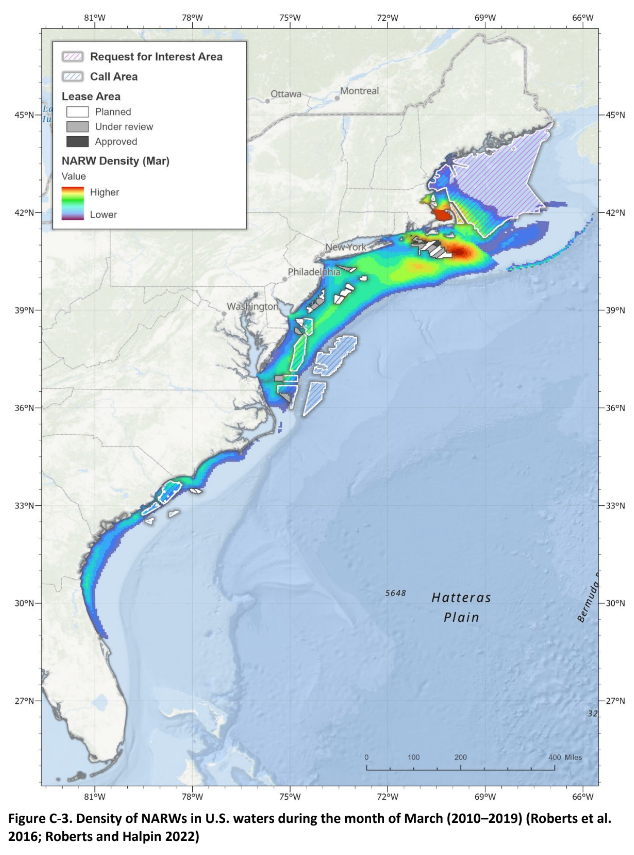
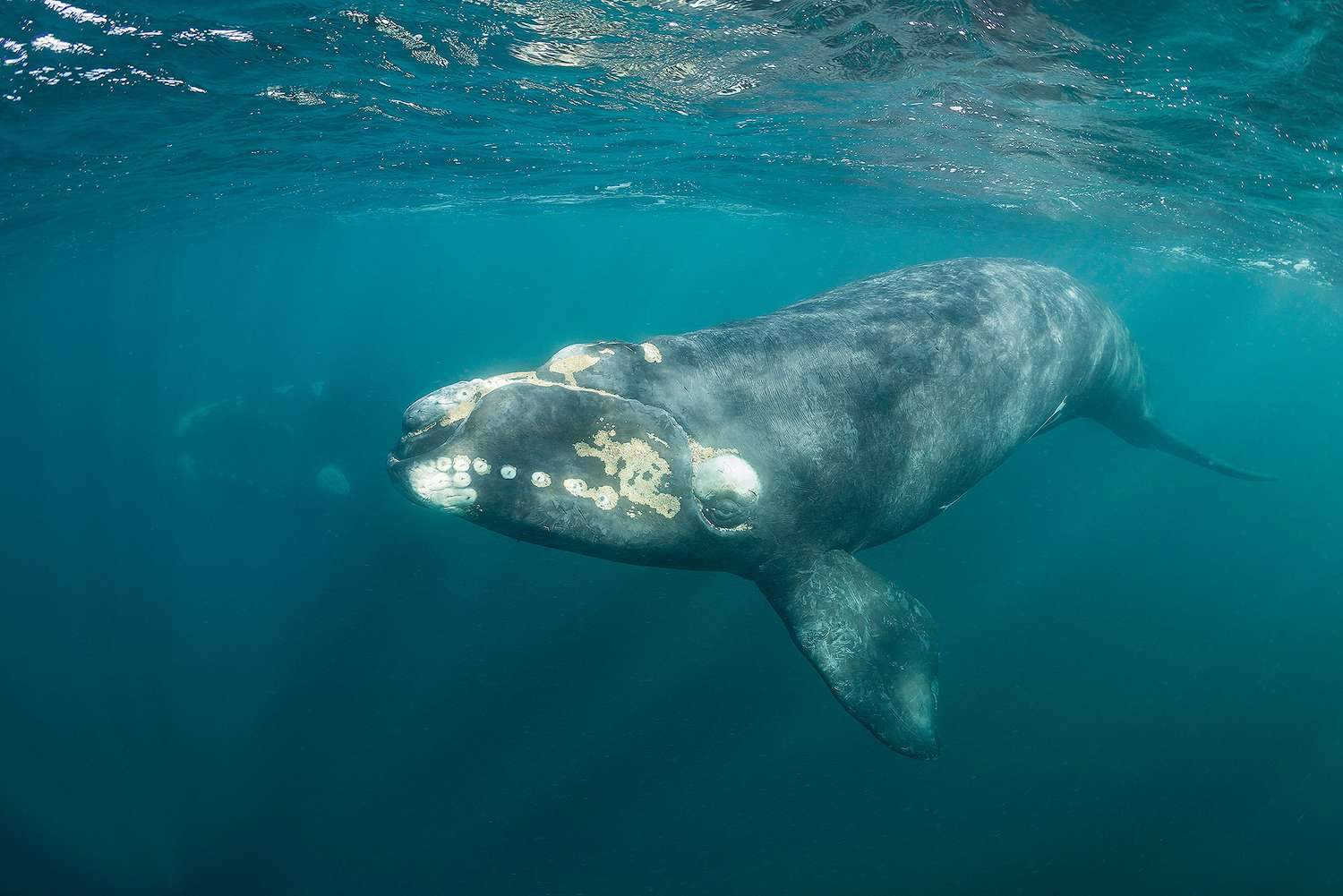
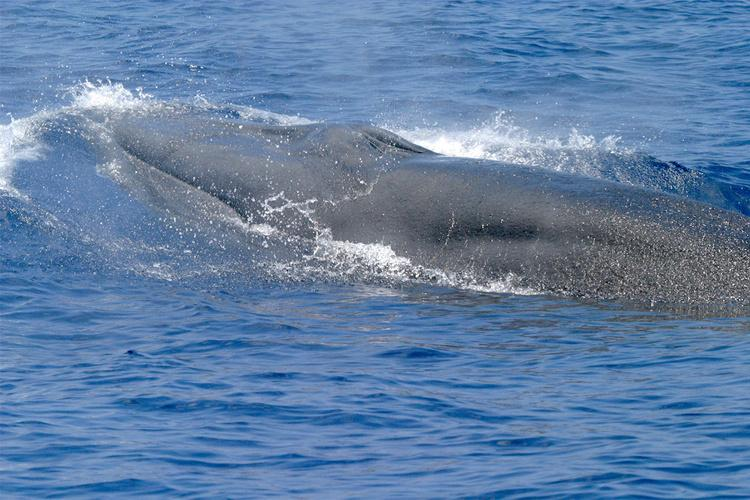
While it’s highly unlikely that wind turbine siting activities are responsible for the alarming number of whale deaths, some of the vociferous wind industry defenders would have been among the first to point the finger at oil and gas operations if there were any in the US Atlantic.

Some quotes from a recent USA Today article followed by BOE comments:

It’s just a cynical disinformation campaign,” said Greenpeace’s oceans director John Hocevar. “It doesn’t seem to worry them that it’s not based in any kind of evidence.” (Comment: World class chutzpah on the part of Greenpeace, the master of disinformation.)

Gib Brogan, a campaign director with Oceana, an international ocean advocacy group, said those opposed to wind power are using a spate of whale deaths in the area as an opportunity. (Comment: Does Oceana suddenly find this type of opportunism to be shocking?)

Groups opposed to clean energy projects spread baseless misinformation that has been debunked by scientists and experts,” said JC Sandberg, chief advocacy officer with the American Clean Power Association, a renewable energy trade group. (Comments: Use of the term “clean energy” is clever advocacy that serves to discredit other forms of energy. All energy sources have pros and cons, environmentally and otherwise. Wind and solar have significant visual, space preemption, navigation, wildlife risk, and intermittency issues, and are heavily dependent on subsidies and mandates. When all issues are considered, one could argue, as we have, that offshore gas, particularly nonassociated gas, is perhaps the environmentally preferred energy alternative.)

Read Full Post »

The National Academies of Sciences, Engineering, and Medicine will establish a standing committee to provide ongoing assistance to the Department of the Interior’s Bureau of Ocean Energy Management (BOEM) in its efforts to manage development of the nation’s offshore wind energy resources and their potential effects on fisheries

NASEM

This seems to be a positive step and the committee members have excellent credentials, but how do you establish such a committee without any representation from the wind industry? Here are the 12 members of the committee.

Read Full Post »

OCNJDaily

While it’s unlikely that the whale strandings are the result of pre-construction activities for offshore wind development, greater transparency on the part of the developer and regulators would be helpful:

  • What surveys and other offshore activities are being conducted? Where?
  • What is the timeframe for these activities?
  • Any sightings of distressed whales?
  • Other anomalous observations?

Absent regular activity updates, accusations and protests are likely to continue and intensify.

Read Full Post »

“Mom” (US govt) strongly and openly favors one child (offshore wind) over the other (offshore oil and gas). As a result, beneficial family synergy is not realized, and neither “child” reaches her full potential.

The wind program was intended to complement the oil and gas program, not replace it.

These articles highlight some of the challenges facing offshore wind:

  • WSJ: Soaring Costs Threaten U.S. Offshore-Wind Buildout
  • Bloomberg: US Ignored Own Scientists’ Warning in Backing Atlantic Wind Farm
  • NJ.com: Offshore wind is on N.J.’s horizon but activists worry of impact to whales, economy, the view

Read Full Post »

« Newer Posts - Older Posts »