Feeds:
Posts
Comments

Archive for the ‘Offshore Wind’ Category

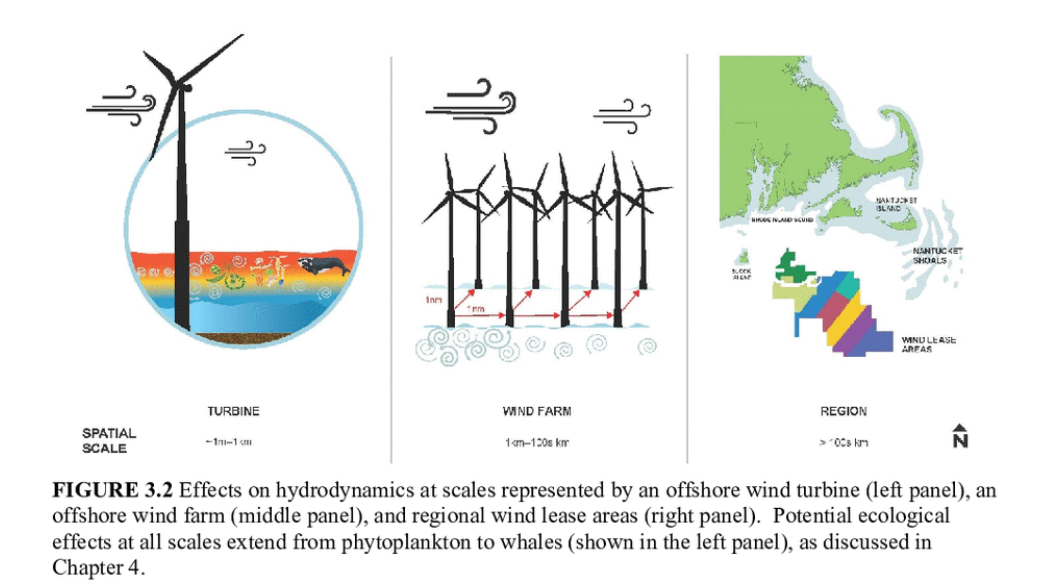
Study: Potential Hydrodynamic Impacts of Offshore Wind Energy on Nantucket Shoals Regional Ecology: An Evaluation from Wind to Whales, National Academies of Sciences, Engineering, and Medicine.

Comments:

  • Kudos to BOEM for sponsoring this important study which identifies the potential ecological effects of offshore wind farms on the endangered North Atlantic Right Whale.
  • BOEM must now consider, and presumably implement, the committee’s recommendations. This could prove to be especially challenging given BOEM’s prominent wind advocacy role.
  • All 9 of the study committee members are scientists with appropriate backgrounds and specialties (see Appendix A of the report).
  • As a rule, the NAS notes potential conflicts of interest in the biographical statements. Two possible conflicts were identified: one committee member was a “compensated member of a review panel for Ortsted’s Offshore Wind Research Plan in 2021,” and another works for a firm that “has been partially funded by offshore wind development companies.”
  • The panel recommends robust monitoring during all phases of wind development and operations in the North Atlantic region. Is that sufficient given that hundreds of turbines could be installed before the data have been acquired and analyzed?
  • The concerns raised by the NAS committee are not new. 18 months ago, NOAA’s Chief of Protected Species cited some of the same concerns in recommending a conservation buffer zone adjacent to Nantucket Shoals.

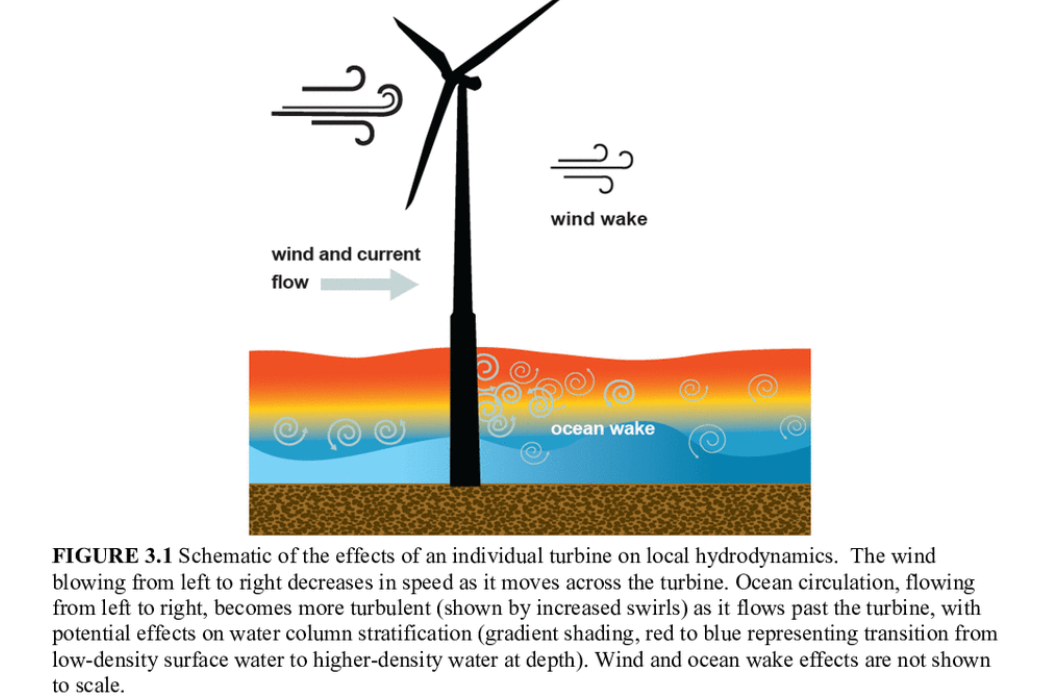
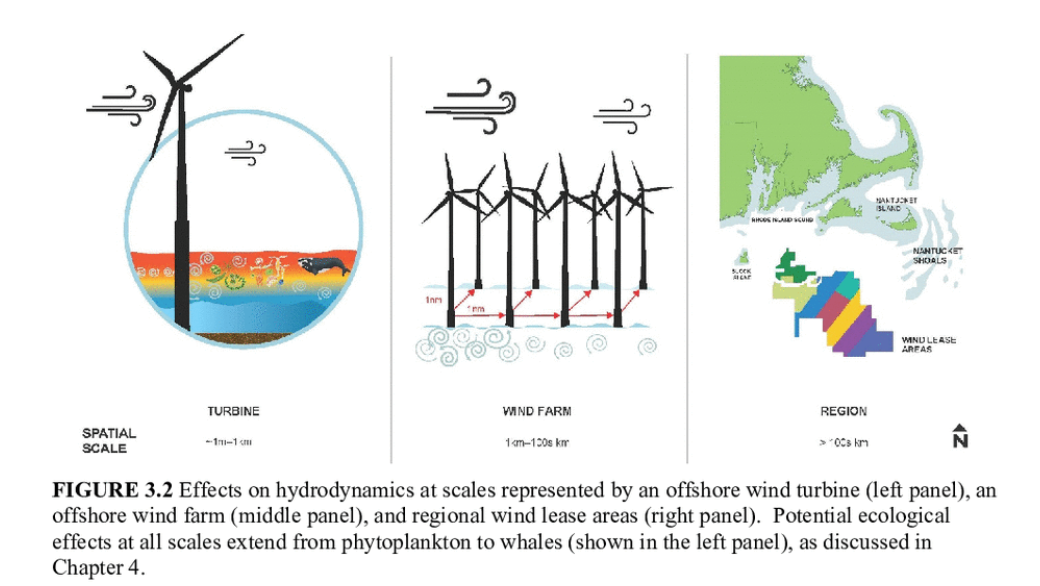
. Background graphics, excerpts, and recommendations are pasted below.

Important excerpts:

  • p.2: A single offshore wind turbine can alter local hydrodynamics by interrupting circulation processes through a wake effect and induce turbulence in the water column surrounding and downstream of the turbine supporting structure, the pile. Moving away from single turbine effects and looking at arrays of turbines in a wind farm or at multiple adjacent offshore wind farms, these effects become more complex with implications for both local and regional circulation.
  • p.4: At the wind farm scale, the potential impacts include reductions in ocean current speeds, stratification, ocean surface wind speed, and deflection of the pycnocline. At the regional scale, perturbations due to offshore wind turbines are difficult to quantify because of the natural processes that drive significant environmental variability across the region.
  • p.6: Recommendation: The Bureau of Ocean Energy Management, National Oceanic Atmospheric Administration, and others should support, and where possible require, the collection of oceanographic and ecological observations through robust integrated monitoring programs within the Nantucket Shoals region and in the region surrounding wind energy areas before and during all phases of wind energy development: surveying, construction, operation, and decommissioning. This is especially important as right whale use of the Nantucket Shoals region continues to evolve due to oceanographic changes and/or the activities and conditions relevant to offshore wind farms.
  • p.7: Recommendation: The Bureau of Ocean Energy Management, National Oceanic Atmospheric Administration, and others should support, and where possible require, oceanographic and ecological modeling of the Nantucket Shoals region before and during all phases of wind energy development: surveying, construction, operation, and decommissioning. This critical information will help guide regional policies that protect right whales and improve predictions of ecological impacts from wind development at other lease sites.

Read Full Post »

NJ Governor Murphy, an offshore wind promoter, is not pleased:

“Today’s decision by Orsted to abandon its commitments to New Jersey is outrageous and calls into question the company’s credibility and competence,” the Democratic governor said. “As recently as several weeks ago, the company made public statements regarding the viability and progress of the Ocean Wind I project.”

6ABC NJ

Perhaps the Governor’s credibility and competence is also taking a hit, as is staking the State’s energy future on highly uncertain, intermittent, and facility-intensive power systems. .

Read Full Post »

A BOE post from last December commented on the seemingly irrational bidding for Atlantic and Pacific wind leases. More recent posts have reported on the woes of Atlantic leaseholders.

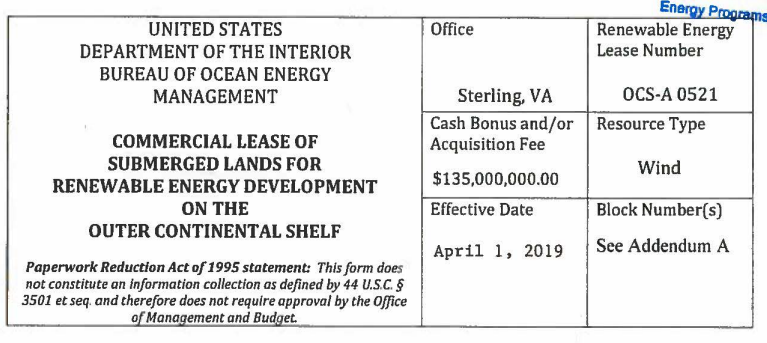
Two Atlantic lessees, Commonwealth Wind and SouthCoast Wind, which paid $135 million for each of their North Atlantic leases, have now agreed to pay $48 million and $60 million respectively to cancel their power purchase agreements with electric utilities. Perhaps the effective date of these leases (see below) reflects on the wisdom of their purchase.🍋

Both Commonwealth Wind and SouthCoast Wind are hoping to rebid their projects in a Massachusetts offshore wind procurement scheduled for next year. 

Commonwealth Magazine

Some northeast states and their public utilities may be in a bit of a bind. Either they accept higher electric rates and the likely public backlash, or they deviate from their staunch anti-gas, anti-nuclear orthodoxy. Similarly, oil companies that have invested heavily in offshore wind may find that they are not just less profitable, but (even) less popular.

Read Full Post »

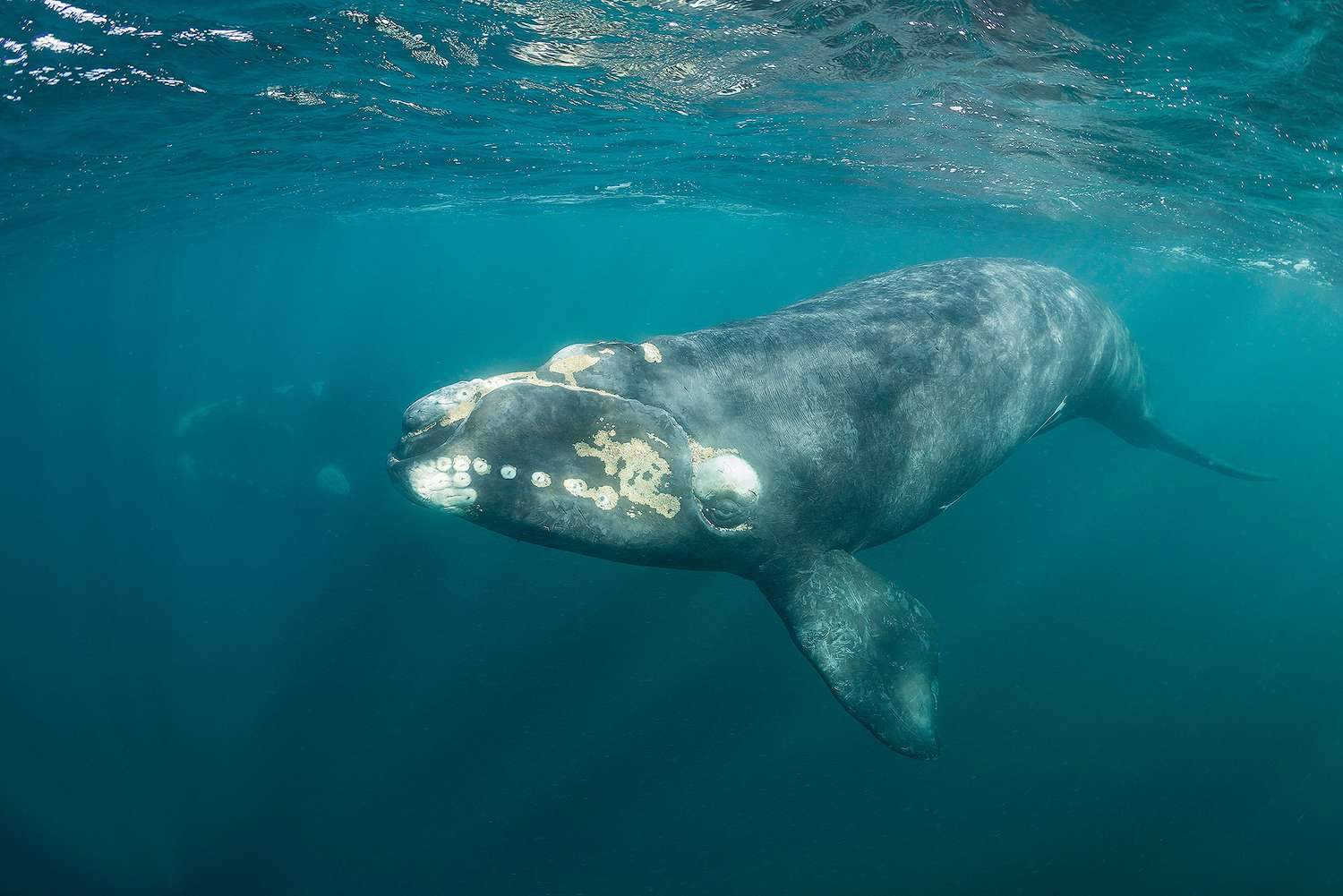
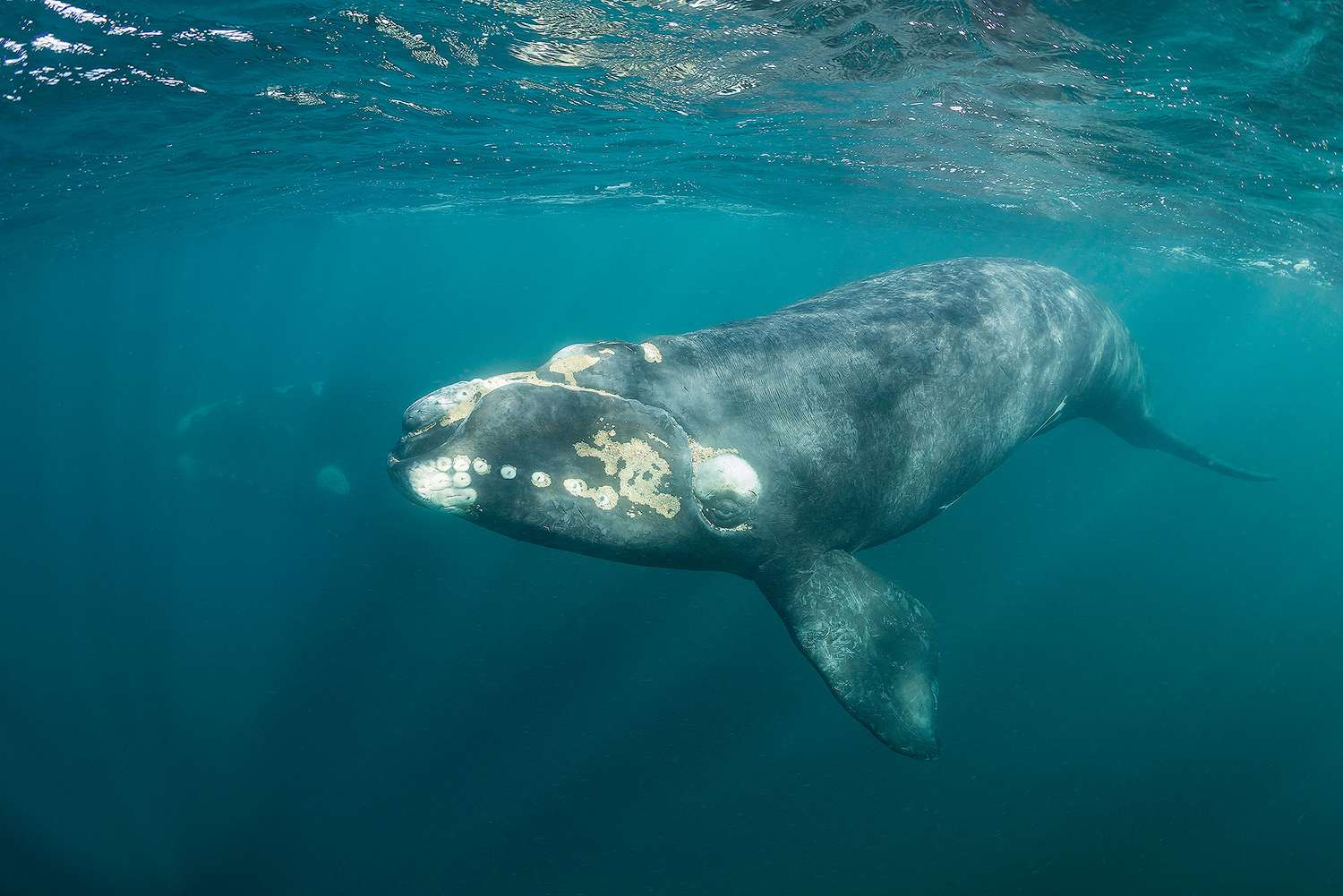
Right whale – Atlantic
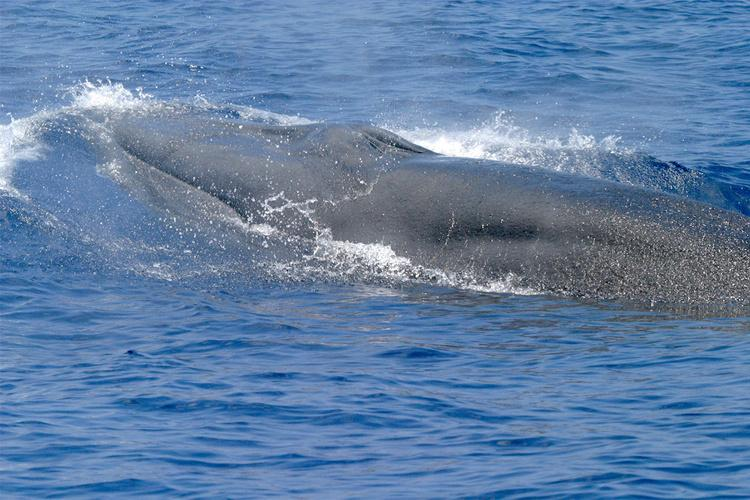
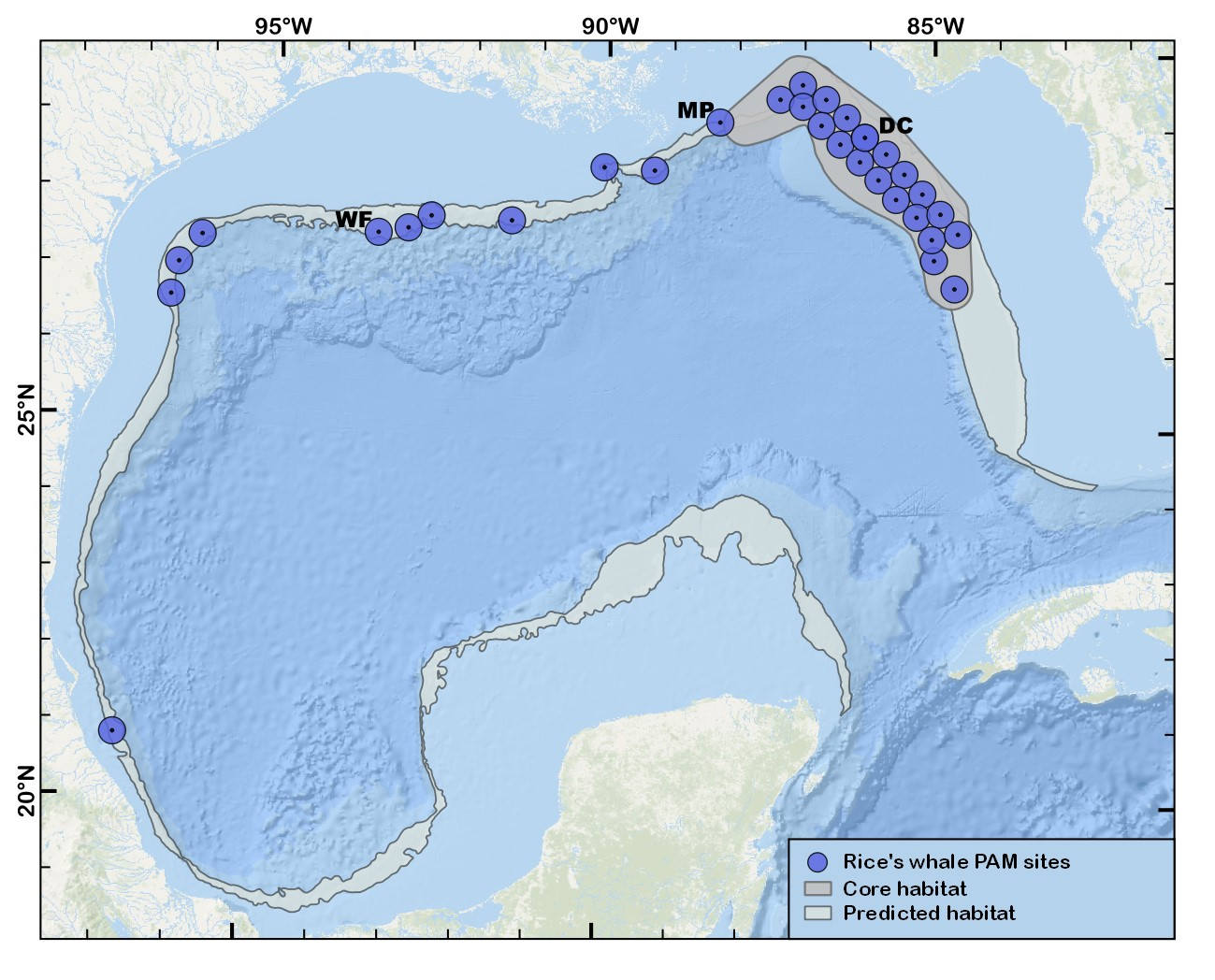
Rice’s whale – Gulf of Mexico

Both species are endangered, but the operating restrictions differ significantly:

North Atlantic wind leases: right whale restrictions GoM Lease sale 261: Rice’s whale restrictions
No leasing prohibitions or turbine-free areas have been established despite concerns raised by NOAA (see attached letter)All of the expanded Rice’s whale area is excluded from leasing (i.e. the entire area between the 100 and 400 m isobaths across the GoM)
seasonal 10 kt max speed for vessels > 65′year round 10 kt max for all vessels
vessel separation distance of 500 m for any sighted right whale or unidentified large marine mammalseparation distance of 500 m for any sighted Rice’s whale; if unsure, must assume whale is Rice’s
no visibility restrictions for vessel operationsvessels must avoid transit between dusk and dawn and other times of low visibility
no automatic identification system (AIS) requirementsvessels > 65′ must have AIS functioning at all times
no documentation requirementsmust maintain records to document compliance

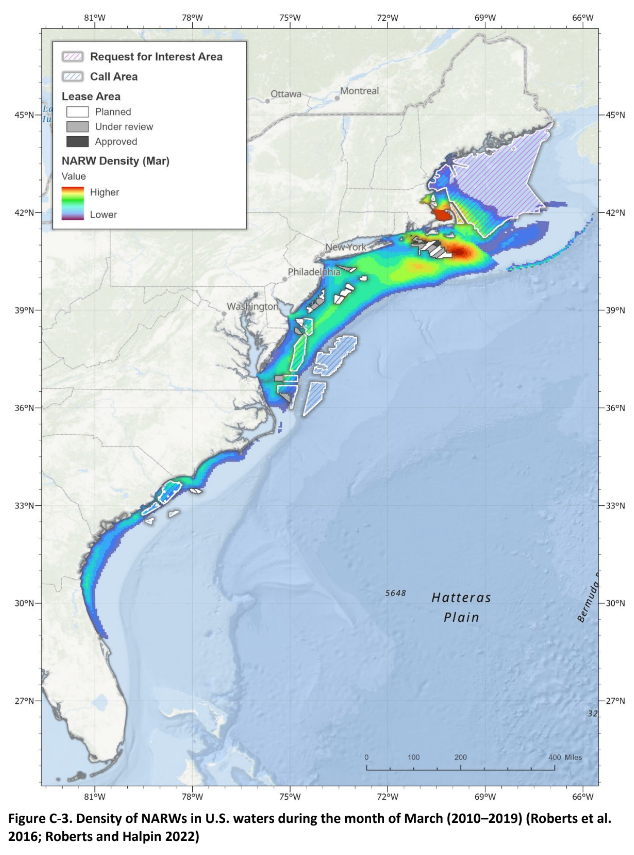
Note (below) the proximity of existing and planned wind leases to moderate to high density RIght whale areas compared to the more speculative expanded Rice’s whale area in the central and western GoM that is predicted based on passive acoustic recordings.

Read Full Post »

In the wake of the disappointing Gulf of Mexico wind sale and Orsted’s recent financial announcement, Equinor and bp have requested a massive increase in the price of electricity to be generated at Empire Wind 1, Empire Wind 2, and Beacon Wind (see map above).

According to the New York State Energy Research and Development Authority, this would result in an average 54% price hike across their portfolio. The strike prices would rise from $118.38 to $159.64/MWh for Empire Wind 1, from $107.50 to $177.84/MWh for Empire Wind 2, and from $118.00 to $190.82/MWh for Beacon Wind.

Read Full Post »

Yesterday was not a good day for US offshore wind. Not only was the Gulf of Mexico wind lease sale disappointing, but Orsted announced US impairments of $2.3 billion causing their share price to fall to the lowest level in more than 4 years.

Unsurprisingly, Orsted management assumes no responsibility for the company’s poor performance, blaming supply chain problems, high interest rates and “a lack of new tax credits.” Outsiders might suggest that there were other factors such as irrational exuberance in the acquisition of wind leases at inflated prices, and unrealistic expectations regarding a complementary power source that is dependent on government mandates and subsidies.

“The situation in U.S. offshore wind is severe,” Chief Executive Mads Nipper told reporters on a conference call.

Reuters

Read Full Post »

Only 1 of the 3 tracts was sold, and the amount bid was a modest $5.6 million. Given the extensive lease sale planning and promotion, this would seem to be a rather embarrassing outcome.

RWE Offshore US Gulf LLC won the Lake Charles tract. Neither of the 2 Galveston tracts received bids. RWE’s headquarters are located in Essen, Germany.

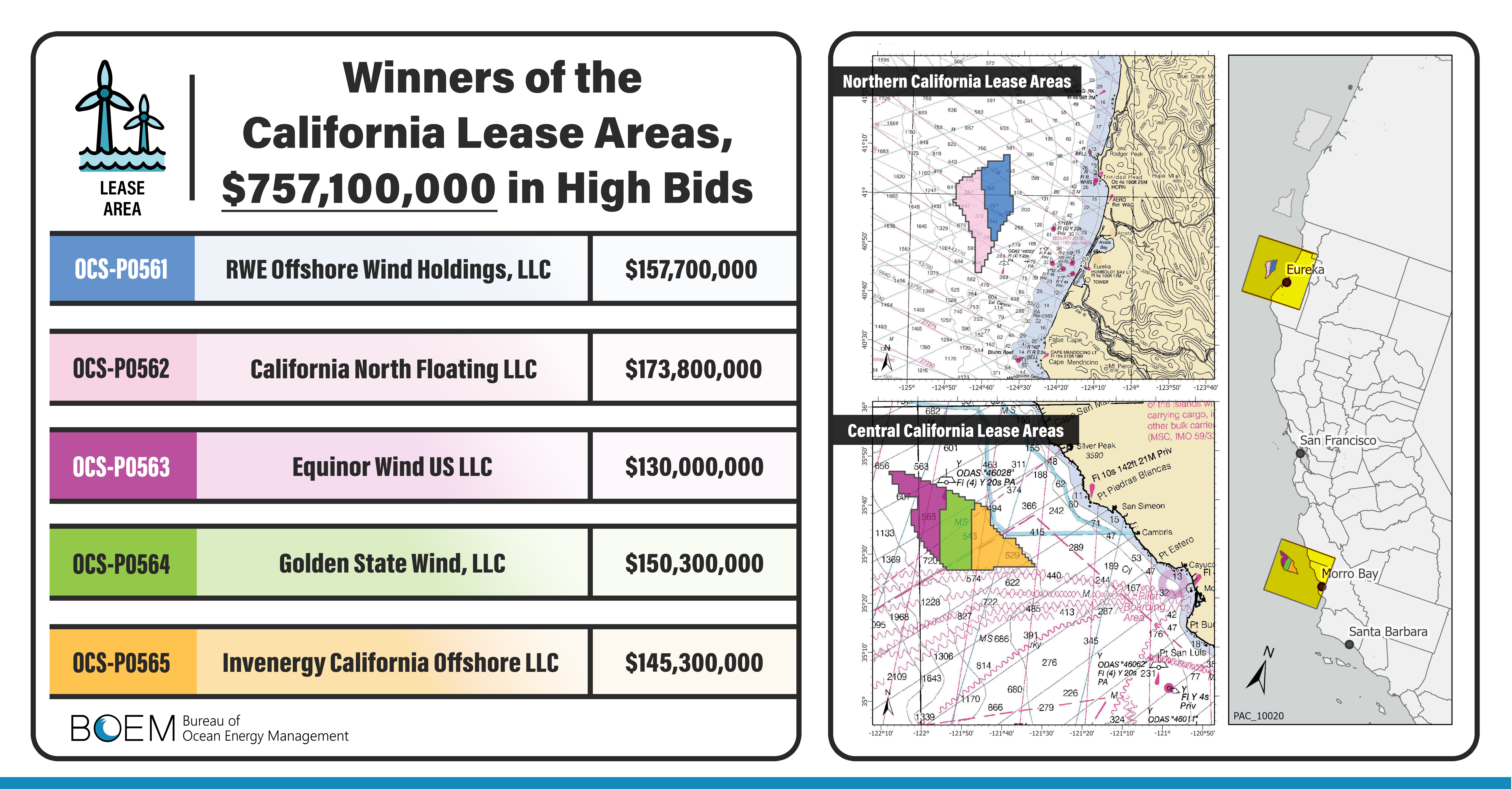
By comparison, the 5 California offshore wind leases, each of which is smaller and in far deeper water than the GoM tracts, received bids of $130 to 173 million. These leases were sold in December 2022. Smaller Atlantic wind tracts have also received much higher bids. State mandates and subsidies no doubt contributed to the inflated bidding in the Atlantic and Pacific.

Read Full Post »

See the Block Island Wind Farm’s reef environment in the BOEM video below.

Read Full Post »

BOEM’s Final Sale Notice for the upcoming Gulf of Mexico wind auction identifies 3 lease areas (see map below). Wind operations in these areas should not significantly conflict with other GoM activities, including oil and gas operations.

Those who followed Exxon’s recent lease acquisitions may be amused by the map below from BOEM’s siting analysis document. The 94 Exxon leases acquired at Oil and Gas Lease Sale 257 (yellow blocks) are misidentified as “Carbon Capture Lease Blocks.” As has been discussed at length on this blog (most recently here), Sales 257 and 259 were oil and gas lease sales. Although Exxon’s intentions are now well known, they may not conduct carbon sequestration operations on these leases unless they are competitively reissued or converted. (Is BOEM’s siting document implying that conversion of the Exxon leases is a fait accompli?) The regulations for such conversions, and for CCS operational activities, have yet to be promulgated. A draft of these regulations is expected later this year, and the comments should be spirited and diverse.

Read Full Post »

Pioneering subsea engineer, Jean Louis Daeschler, is also an acclaimed artist. He recently shared two paintings that are very much on-topic for this blog. The paintings depict a wind turbine installation with support from a jackup vessel, and a drilling operation with jackup rig. The paintings give a sense of the commonality of these mutually supportive industries.

Read Full Post »

« Newer Posts - Older Posts »