China is the world’s largest energy user, moving ahead of the United States, the head of the International Energy Agency said on Tuesday.
Archive for the ‘Uncategorized’ Category
We’re No. 2! – China Surpasses US in Energy Consumption
Posted in Uncategorized on October 13, 2010| Leave a Comment »
Thanksgiving and Columbus Day in North America!
Posted in offshore, Offshore Energy - General, Uncategorized, tagged BOE, Canada, coastline, Columbus Day, EEZ, offshore, Thanksgiving on October 11, 2010| 2 Comments »

In recognition of the earlier fall harvests to our north, Canada celebrates Thanksgiving a month ahead of the US. As a result, Canada’s Thanksgiving coincides with our Columbus Day. So Happy Holiday to folks on both sides of the border, even if you have to work! 🙂
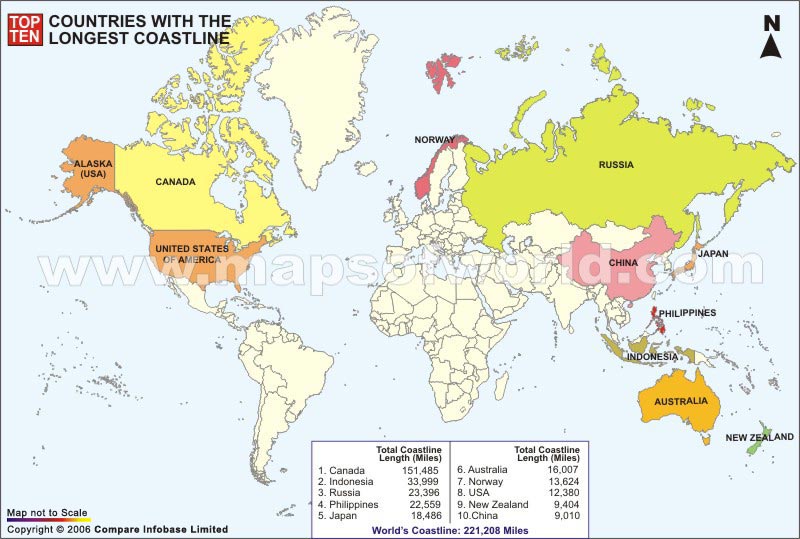
Canada, which is on our minds this week as we get ready for the big conference in Vancouver, is especially significant to our offshore scholars because of its long coastline, by far the longest of any nation (see below and this slightly different Wiki ranking). 80% of the world’s nations have coastlines bordering an open sea, and about 1/3 of all nations have an existing or planned offshore oil and gas program.
Carolita Kallaur Awards to be Presented in Vancouver on 18 October
Posted in Offshore Energy - General, Uncategorized, tagged Carolita Kallaur, IRF, offshore oil, safety, vancouver on October 7, 2010| Leave a Comment »
There is tremendous benefit from collaboration between governments and between industry and governments working together on a global scale. Half of the remaining oil and gas resources are located offshore, and the demand for energy continues to grow. While each country may have unique societal demands that must be addressed, we also share many common technical and environmental challenges as we continue to explore the deep water. Carolita Kallaur, 2001, London
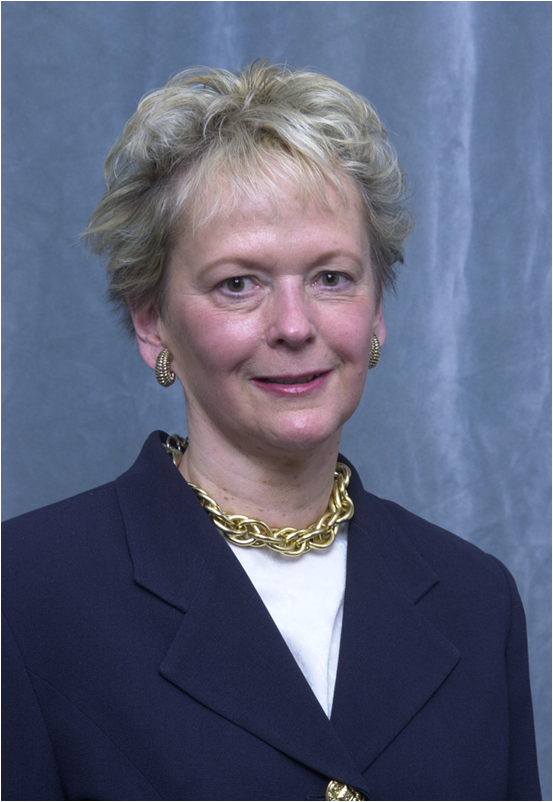
Carolita Kallaur
Carolita Kallaur’s words ring stronger today than ever, and the need for international cooperation on offshore safety issues has never been clearer. Carolita, who directed the US offshore oil and gas program at the end of her outstanding career with the Department of the Interior, was the spirit of offshore safety. Her highest priorities were improving international standards and working together on safety and pollution prevention matters, and she worked tirelessly to promote these objectives.
Carolita also believed in recognizing outstanding organizations and individuals who demonstrated exceptional commitment to safety achievement. She was instrumental in establishing an awards program in Houston that honored these outstanding leaders.
Shortly after she retired in 2002, Carolita contracted amyotrophic lateral sclerosis, an incurable nervous system disorder that is commonly known as ALS or Lou Gehrig’s disease. She died just before Christmas in 2003. Carolita’s indomitable spirit lives on with an awards program that honors outstanding offshore safety leaders. These awards were first presented at the International Regulators’ Offshore Safety Conference in London in 2005, and were again presented at the second conference in Miami in 2007. The International Regulators’ Forum has completed its latest round of deliberations, and will again be presenting Carolita Kallaur Awards at the Vancouver conference on 18 October.
I look forward to joining international leaders in honoring Carolita’s legacy and recognizing the deserving winners of these prestigious safety awards. See you in Vancouver!
Boudreaux and the Gulf Spill
Posted in Uncategorized on October 3, 2010| Leave a Comment »

Boudreaux
Some Cajun humor from a former colleague :):
Boudreaux suddenly quit drinking, took a bath, quit chasing women, quit his poker games and stopped laying around. He started cutting the grass around the church, even painted it and was faithful to be first to attend on Sundays! Father Thibodeaux asked him what about dis wonderful change that had done overtook him. Boudreaux explained, ” I heard “Crisis in the Gulf” and if He’s dat close, I wanna be good to go!
Several interesting items!
Posted in Uncategorized, tagged accidents, Australia, blowouts, Canada, macondo, Newfoundland, NOPSA, offshore oil, safety, safety culture, well control on September 30, 2010| Leave a Comment »
- The Canada-Newfoundland and Labrador Offshore Petroleum Board unveiled their new website. Very impressive!
- Jane Cutler, CEO of NOPSA (Australia), made an outstanding (must-view) presentation on Safety Priorities for 2010. My favorite quote:
Safety culture is how the organization behaves when no one is watching.
Also, NOPSA’s September Newsletter has some interesting updates including information on the jackup failure offshore China.
- Joel Achenbach, a very good reporter, wrote an excellent Washington Post article on that addresses some of Macondo’s human and organizational factors. I do disagree with the deepwater emphasis, particularly his BOP comments. As we have noted on several occasions, subsea BOPs have a far better performance record than surface BOPs. Also, having the stack right at the surface is a hindrance, not a benefit, if the rig is on fire.
And how does a reporter question the humility of engineers? 🙂
Engineers do amazing things, but they aren’t always as smart as they think, nor their systems as robust as they seem on paper.
National Commission Agenda for 27-28 September
Posted in Uncategorized, tagged accidents, Deepwater Horizon, Gulf of Mexico, macondo, National Commission, offshore oil, oil spill on September 24, 2010| Leave a Comment »

The National Commission has a diverse lineup of “heavy hitters” slated for hearings on 27-28 September. CSpan doesn’t have their schedule posted yet for these dates, but I assume they will be broadcasting the hearings live.
Will Oil Discovery Increase Falkland (Malvinas) Tension?
Posted in Uncategorized, tagged Argentina, drilling, Falklands, offshore oil, Rockhopper, UK on September 24, 2010| Leave a Comment »
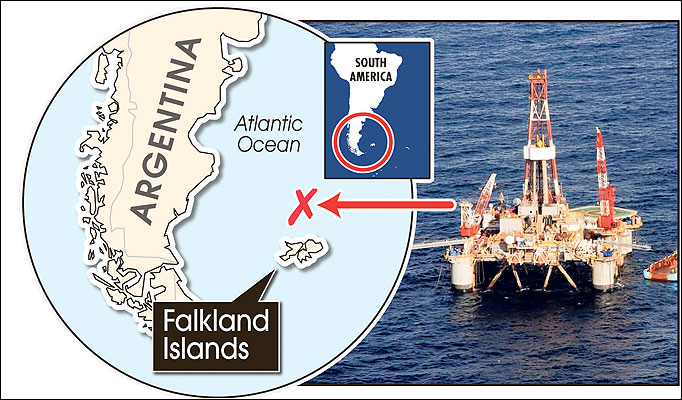
from The Sun
Deepwater drilling may be on hold in US waters, but that is not the case elsewhere. However, drilling in other parts of the world is not free from political tension and intrigue. Of particular interest is a recent discovery well in 450m of water in the North Falkland Basin. From the Buenos Aires Herald:
As President Cristina Fernández de Kirchner prepares to address the UN General Assembly and renew the Argentine claim on the Malvinas Islands sovereignty, British explorer Rockhopper said its controversial oil discovery offshore the islands could have produced double the amount of oil had a test not been besieged by technical problems.
Analysts believe up to 60 BILLION barrels of oil lie in waters off the UK territory.
That estimate would seem to be a considerable stretch (to say the least), but will no doubt complicate the diplomatic challenge facing the UK and Argentina.
“3 beers in the Superdome” analogy
Posted in Uncategorized, tagged beer, Gulf of Mexico, macondo, oil spill, Superdome on September 22, 2010| 2 Comments »

Louisiana Superdome
CBS has caused quite a stir with their short article equating the Macondo spill to 3 beers in the Louisiana Superdome:
“How big was the oil spill in the Gulf? It was equal to pouring three cans of beer into the Superdome.”
Beer in the Superdome? How could that be possible? Certainly not during a Saints game! 🙂
I never liked these types of analogies for the following reasons:
- They imply that you are trying to downplay the problem. The Macondo spill was massive, and it is silly to argue otherwise.
- The spill affected only a portion of the Gulf, so using the volume of the entire Gulf as a denominator is unrealistic. If the spill was diluted by the entire Gulf, it wouldn’t have been necessary to disperse it. Is a spill near Cape Cod diluted by the entire Atlantic Ocean?
- Once oil is on the beach, in a marsh, or on a bird, it doesn’t matter how big the adjacent body of water is. The beach or marsh is still soiled, and the bird is still harmed.
- People whose livelihoods were affected by the spill aren’t comforted by the fact that most of the Gulf was clean.
Congratulations to the Netherlands State Supervision of Mines on their 200th Anniversary!
Posted in Uncategorized, tagged 200th anniversary, Jan de Jong, Netherlands, Queen Beatrix, SSM on September 21, 2010| Leave a Comment »
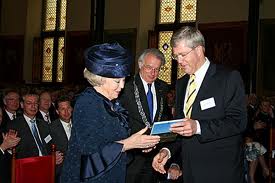
Queen Beatrix recognizes Jan de Jong, Inspector General, and the State Supervision of Mines
200 jaar Staatstoezicht op de Mijnen!
A regulatory agency does not survive for 200 years without the respect and support of elected officials and the public. The State Supervision of Mines (SSM) in the Netherlands has earned its outstanding reputation through sustained excellence and innovation.
SSM regulates all aspects of oil and gas exploration, production, and transportation, wind projects, and mining activities.
To learn more about the SSM, I encourage you to view this 200th anniversary video. At about the 6 minute mark, pay particular attention to SSM’s regulatory philosophy which emphasizes risk assessment and effective management systems. SSM does “not focus on nuts and bolts but on the effectiveness of management systems.”
Congratulations to Jan, Roel, Jos, Michael, and the dedicated professionals of the State Supervision of Mines. Keep going strong through anniversaries 210, 220, and beyond!
Personnel removed from offshore Newfoundland rigs in advance of Igor
Posted in Uncategorized, tagged Grand Banks, Igor, Newfoundland, Ruelokke, transocean on September 21, 2010| Leave a Comment »

Max Ruelokke
As a precaution in advance of Hurricane Igor, all personnel were removed from two Transocean rigs operating offshore Newfoundland. The rigs are the GSF Grand Banks and the Henry Goodrich. Igor headed for Newfoundland after battering Bermuda yesterday.
Max Ruelokke, Chairman and CEO of the Canada-Newfoundland and Labrador Offshore Petroleum Board, told BOE that this is the first time he can recall a Grand Bank’s rig being down-manned to zero in advance of a storm. Personnel are expected to return to both rigs tomorrow.

