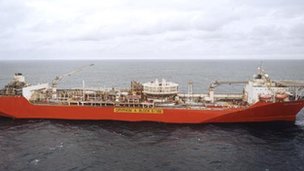
A Maersk Oil-owned FPSO which was damaged during heavy storms in the North Sea in February will be out of action for another year as it heads for drydock repairs. Upstream
Archive for the ‘UK’ Category
Upstream: Gryphon Alpha FPSO down for a year
Posted in accidents, Offshore Energy - General, UK, tagged FPSO, Gryphon Alpha, Maersk, mooring failures, North Sea, UK on May 11, 2011| Leave a Comment »
Interesting UK Safety Items
Posted in accidents, Norway, Offshore Energy - General, Regulation, UK, tagged accidents, gas leaks, HSE, Norway, safety, UK on May 10, 2011| Leave a Comment »
The HSE has told Shell to submit a revised safety case for the Brent Charlie platform after gas was detected on its topsides following leaks on 12 January this year and 27 September 2010, Upstream can reveal.
Shell, which took the decision itself to close the platform after the January incident, has been battling for some time to resolve technically complex issues related to the venting of gas from inside one the platform’s huge concrete legs — Column 1 (C1) — and dispersing it effectively away from the platform.
The operator now expects the ageing Brent field to remain shut down for several more months.
Diving fatality in the UK offshore sector
Posted in accidents, UK, tagged diving, fatality, North Sea, offshore oil and gas, UK on April 15, 2011| Leave a Comment »
Per the Evening Express in Aberdeen:
A DIVER working for an oil company has died at sea.
The 49-year-old oil worker took ill while diving with the Acergy Osprey, operated by Subsea7 which is based in Westhill.
No other information is available at this time.
For North Sea Veterans and Offshore History Buffs
Posted in gas, Norway, offshore, oil, UK, tagged Bjørn Vidar Lerøen, Drops of Black Gold, Dubs, history, How the Oil Came North, John C Milne, North Sea on March 31, 2011| 1 Comment »

John C Milne
“Dubs” is a term used in Aberdeen and northeast Scotland to describe all varieties of mud. That is the first thing I learned in reading John Milne’s excellent book “DUBS, How the Oil Came North.” John’s first job in the offshore industry was with a drilling mud supplier back in 1969 when he was still a college student. John presents a series of amusing and informative anecdotes about hie work experiences between 1969 and 1973 during the early years of North Sea offshore exploration. The book is available through the publisher, PlashMill Press. Good read!
I also recommend Bjørn Vidar Lerøen’s excellent book “Drops of Black Gold,” which

chronicles the history of Statoil and Norwegian offshore oil and gas development. The book includes a now famous 1962 letter from Phillips Petroleum to the Norwegian government. In the letter, Phillips seeks exclusive rights to the entire Norwegian continental shelf in return for conducting a seismic survey program. Hey, nothing wrong with asking! 🙂
Mooring Line Failures, Evacuation at Gryphon Alpha FPSO
Posted in accidents, UK, tagged accidents, FPSO, Gryphon Alpha, mooring failures, UK on February 5, 2011| 3 Comments »
A BBC report (forwarded by Cheryl Anderson) indicates that 70+ workers were safely evacuated from the Gryphon Alpha Floating Production Storage and Offloading facility in the UK sector of the North Sea. Four of the FPSO’s ten mooring lines failed in 30-foot seas and high winds which allowed the vessel to roll up to 12 degrees. 40 essential personnel remained aboard the facility.
While mooring system failures have been relatively common during hurricanes and other major storms (in the Gulf of Mexico, this problem was addressed through comprehensive MMS-industry programs after the 2005 hurricane season), such failures are much less common at floating production facilities. We await the findings of the UK’s inquiry.
UK Parliamentary Report Link and Comment
Posted in accidents, UK, well control incidents, tagged accidents, blowouts, Deepwater Horizon, drilling, Energy and Climate Change Committee, Gulf of Mexico, macondo, parliament, safety, UK, well control on January 6, 2011| 1 Comment »
What?
The blowout in the Gulf of Mexico could have been prevented if the last-line of defence—the blind shear ram on the blowout preventer, located at the well head on the ocean floor—had activated and crushed the drill pipe. Given the importance of this equipment, and the evident dangers of relying on a single device, we urge the HSE to consider prescribing specifically that blowout preventers on the UK Continental Shelf should have two blind shear rams.
Comments:
- The UK government should NOT be commenting on the BOP failure until the US government has completed its forensic testing and investigation.
- The Committee has apparently not paid any attention to the testimony on the BOP issues or the other BOP information that has surfaced. Have they not seen the comments from BP and Transocean or the videos shot on the Q4000?
- Would it have been appropriate for the US government to publish a report on Piper Alpha before Lord Cullen had completed his review?
UK Parliamentary Committee releases post-Macondo report
Posted in accidents, UK, well control incidents, tagged accidents, blowouts, Deepwater Horizon, drilling, Energy and Climate Change Committee, Gulf of Mexico, macondo, North Sea, offshore oil, parliament, safety, UK, well control on January 5, 2011| Leave a Comment »
The UK Energy and Climate Change Committee has released its report entitled “UK Deepwater Drilling – Implications of the Gulf of Mexico oil spill.” We’ll post the report as we get a link.
A moratorium on oil drilling in deep waters off Britain would undermine the country’s energy security, according to a report by lawmakers published on Thursday in response to the BP spill disaster last year.
UK Approves West of Shetlands Deepwater Well
Posted in Offshore Energy - General, oil, UK, tagged Chevron, Deepwater, drilling, offshore oil, UK on October 3, 2010| Leave a Comment »
It was a choice between producing oil and gas here in U.K. waters, where we have one of the most robust safety and regulatory regimes in the world, with all the economic benefits that will bring, or paying to import oil and gas from elsewhere. UK Department of Energy and Climate Change statement
It’s pretty hard to argue with that logic.