Feeds:
Posts
Comments

Archive for the ‘UK’ Category

See the video embedded below or view it here.

Some of us are long-time observers of North Sea operations. Others like JL Daeschler are pioneers who were involved with North Sea exploration and development from the outset. It’s sad to see what is happening to the UK offshore industry.

And for what purpose? Virtue signaling by politicians? Pandering to the international climate cartel? Shutting down North Sea production will have no measurable effect on our climate.

Now that the entire U.S. Atlantic and Pacific, and nearly all of offshore Alaska, are closed to oil and gas leasing, the goal of some is to shut down the Gulf of Mexico. That intent is clear in the 5 year leasing plan that provides for a maximum of 3 sales, the fewest of any 5 year plan in the history of the US offshore program. This is really a 5 year moratorium, not a 5 year leasing plan.

As noted in the post below, GoM production is 1.8 million bopd. BOEM’s reasonable forecast of >2 million bopd through 2027 will not be achieved because of policy decisions, not resource limitations or technical capabilities.

And shame on those who are attributing Hurricane Helene’s destruction to GHG emissions. This is uninformed opportunism at its worst.

Read Full Post »

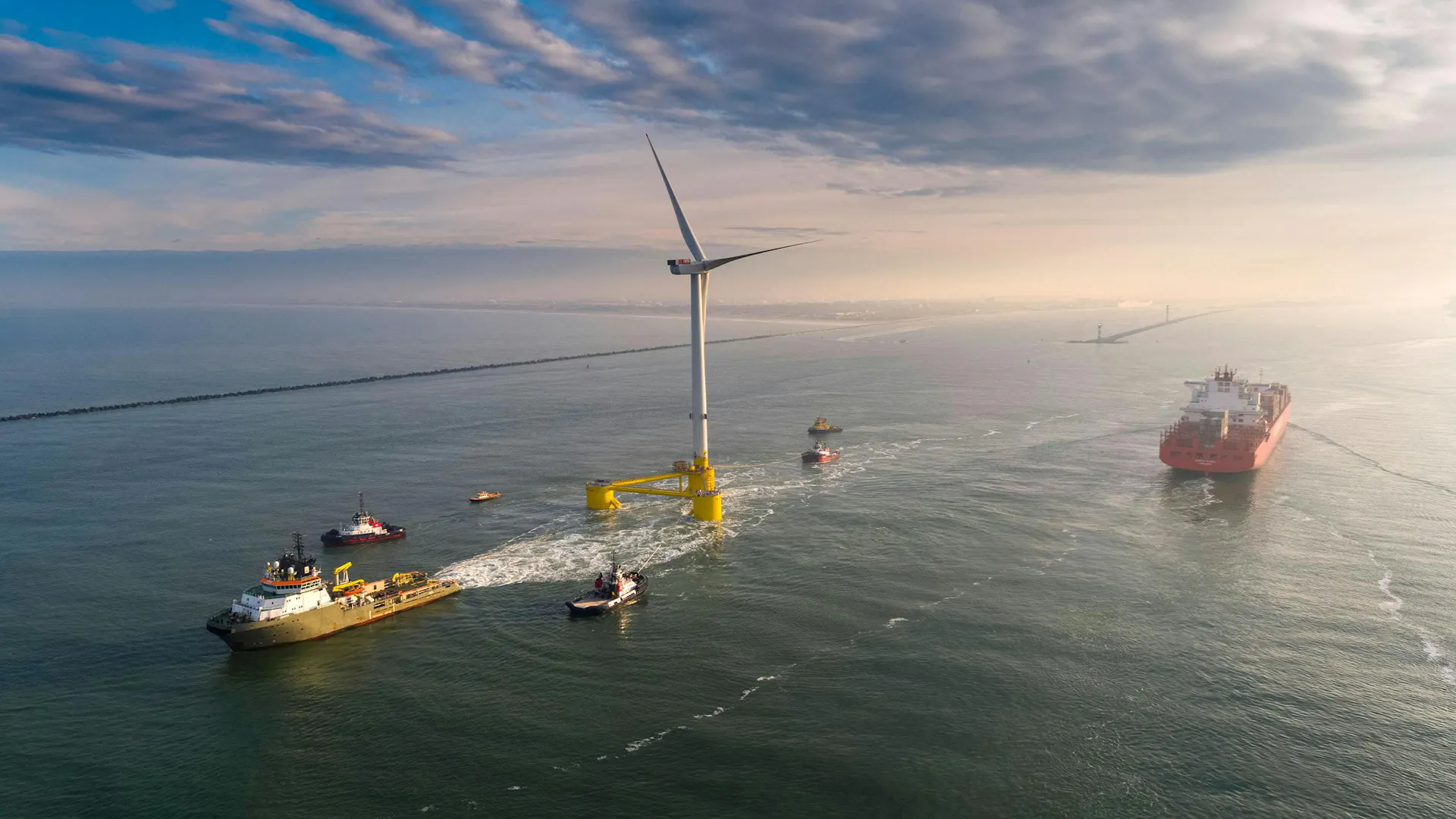
floating turbine being positioned in Kincardine wind farm

The 50 MW Kincardine Offshore Windfarm, which is billed as the “world’s largest floating wind farm,” experienced a £30 million loss in 2023 following a £18 million loss in 2022. The turbines are located 15 km off the coast of Aberdeenshire, in water depths ranging from 60 m to 80 m.

The graphic below summarizes the 2023 financial results, which were even worse than those for the prior years of operation. For those who want more detail, I have attached the 2023 audited financial statement for the wind farm. You can also view audited statements for prior years.

Although BOEM was forced to “postpone” the Oregon wind sale given the absence of bidders, opposition from tribes and county governments, and a last minute letter from the Governor (political cover?), California still seems to be all in on the development of the 5 deepwater wind leases in Federal waters.

Read Full Post »

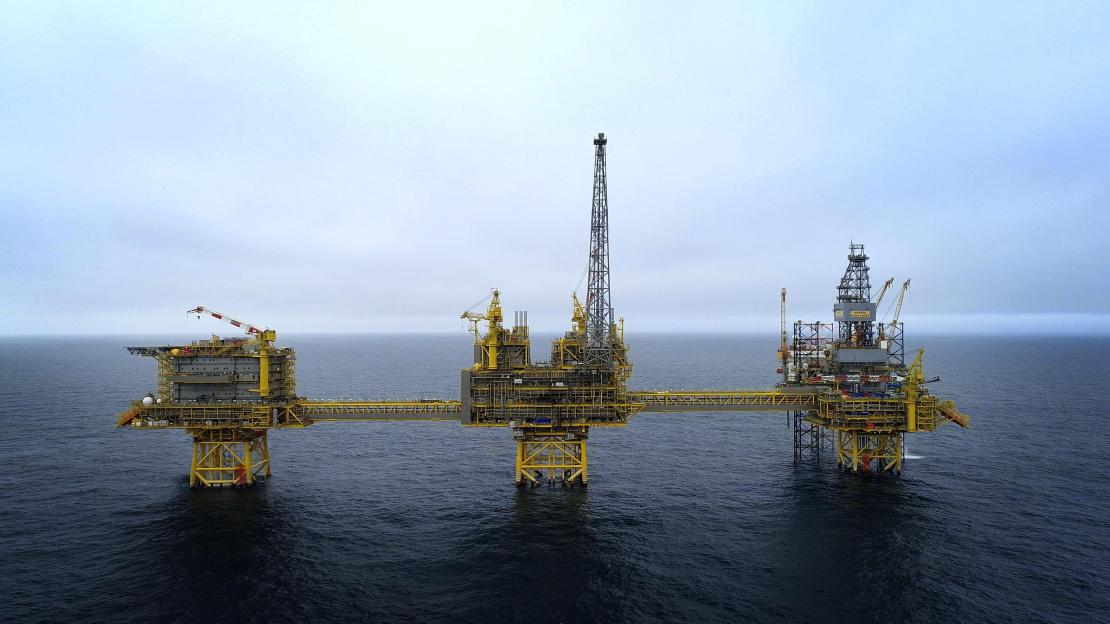
Culzean facilities

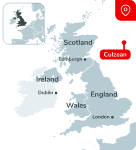
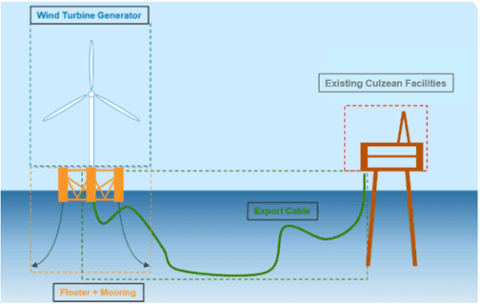
Total has announced plans to install a 3 MW floating wind turbine 2 km west of the Culzean platform, 220 km off the coast of Scotland. This turbine, expected to be fully operational by the end of 2025, will supply around 20% of Culzean’s power requirement. This project is interesting from an R&D standpoint, but makes little sense otherwise. Here’s why:

  • Culzean is a gas condensate field that is capable of meeting 5% of the UK’s gas demand. There is thus ample produced gas to reliably and economically power the platform.
  • Gas will be required to meet 80% of the power requirement even after the wind turbine is operating.
  • In light of installation, maintenance, and decommissioning costs for the floating turbine, the cost of the intermittent wind power will no doubt be much higher than the cost of the power generated by platform gas.
  • Some tax benefits may be associated with adding the wind turbine, but this won’t affect the real costs, other than to perhaps make them higher.
  • In addition to affecting profitability, higher operational costs could reduce the ultimate recovery of gas and condensate from the field.
  • Gas not consumed at the offshore facilities will be marketed and consumed onshore, so there is essentially no net reduction in global CO2 emissions.
  • As JL Daeschler reminds me, the floating turbine complicates operations and could create safety issues: obstruction for helicopters and supply boats to avoid, trenching and installing power cable in a spare “J” tube, and feeding power to an electrical distribution system in accordance with standards and platform specifications. As JL notes, “I think we have plenty to do offshore already!”
  • And what if there are mooring failures and the turbine drifts toward the platforms? Turbine blade failures?
  • Bottom line: adding costs and risks for no apparent benefit.

See a related post on platform electrification in Norway.

Read Full Post »

Some of us remember the Brent Spar saga (1995). The subsequent Brent field decommissioning activities have been less controversial, including the removal of the Brent C topsides on July 9. The Allseas single lift technology is most impressive. Check out the video!

Read Full Post »

Jean-Louis Daeschler, is an artist and pioneering subsea engineer. A native of France (Brittany), he has worked in the offshore industry worldwide and lives in Scotland. His wife is from Singapore and his children and grandchildren live in England and Canada.

Before beginning his engineering career, JL had the distinct honor of exhibiting his artwork at the French National Assembly (Parliament) in Paris (article below). How many offshore engineers can say that? None would be a good guess.

JL also exhibited in le Havre, Singapore, Houston, Edinburgh, Calgary, and elsewhere. He works mainly with acrylics, and his preferred subjects are boats, maritime scenes, harbors and the working environment associated with the sea. Of course!

JL worked on an early semi-submersible rig offshore Malaysia in 1969 (see his account of a serious near-miss), met with George HW Bush when he was building a new rig for Zapata Offshore, was instrumental in the first production in the UK sector of the North Sea (1975) from a converted semi-submersible drilling rig in the Argyll Field, designed a new BOP concept, and holds patents for seabed drilling templates and subsea control systems.

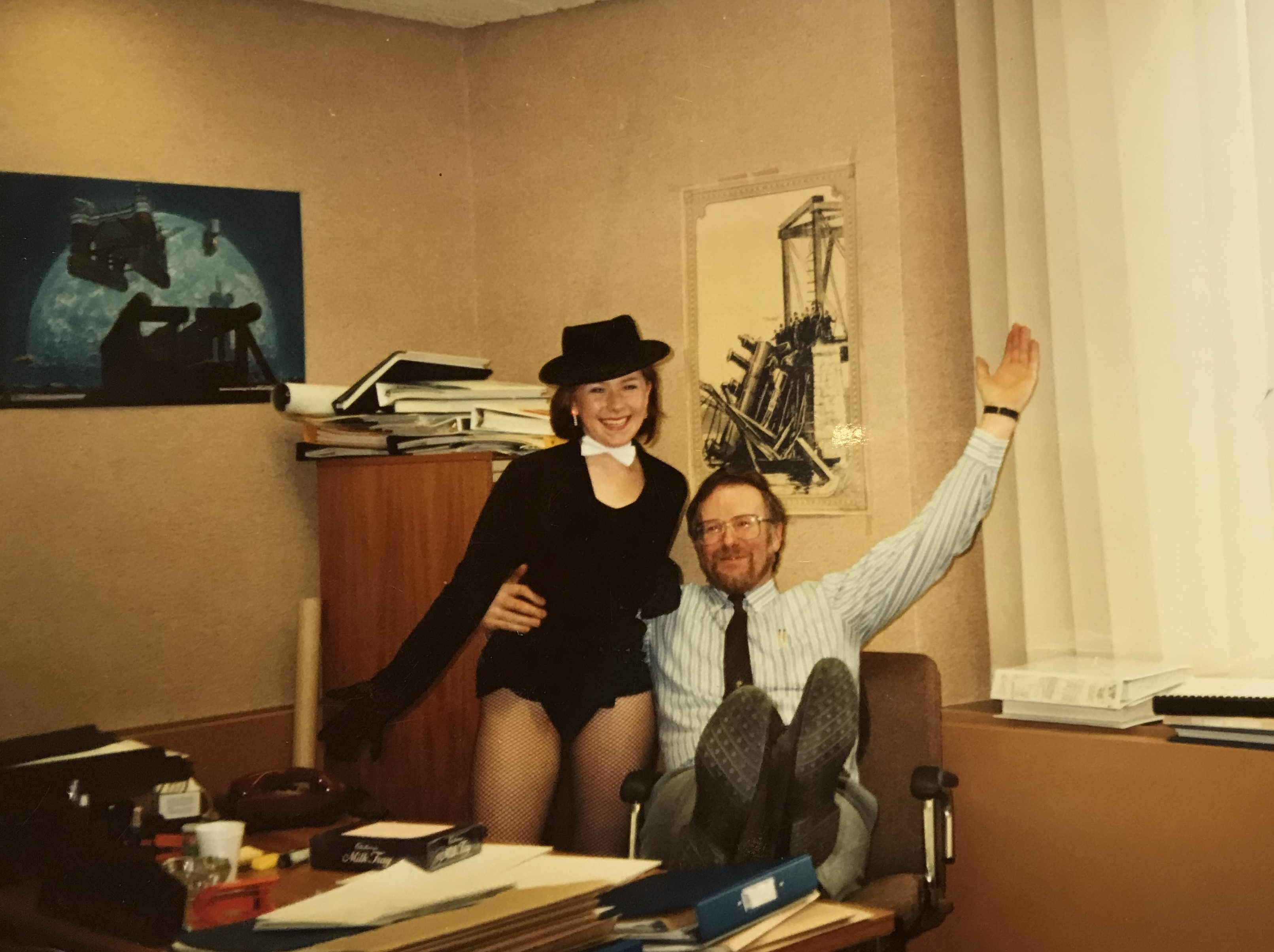
When he was called upon to work in Total’s onshore office, his boss told him “the best offshore job is in the office!” The photo below suggests that JL made the most of those onshore assignments! 😀

JL Daeschler, part of Total’s subsea team, enjoying his onshore assignment in 1985

Congratulations to JL on his many contributions to the offshore industry, art, and society!

Read Full Post »

JL Daeschler, pioneering subsea engineer and BOE contributor, recounted a frightening incident in 1976, a year after UK North Sea production began:

We found ourselves in a drastic situation. While working on a subsea well, the wireline retrievable tubing safety valve got tangled up in the tree area. We had an open well situation and couldn’t cut the wire in the subsea tree. Further, the weather was bad, and keeping on location was difficult. The riser hydraulic release was faulty, so there was an imminent high risk of a “jammed ” subsea tree, bent/damaged riser, and uncontrollable well flow.

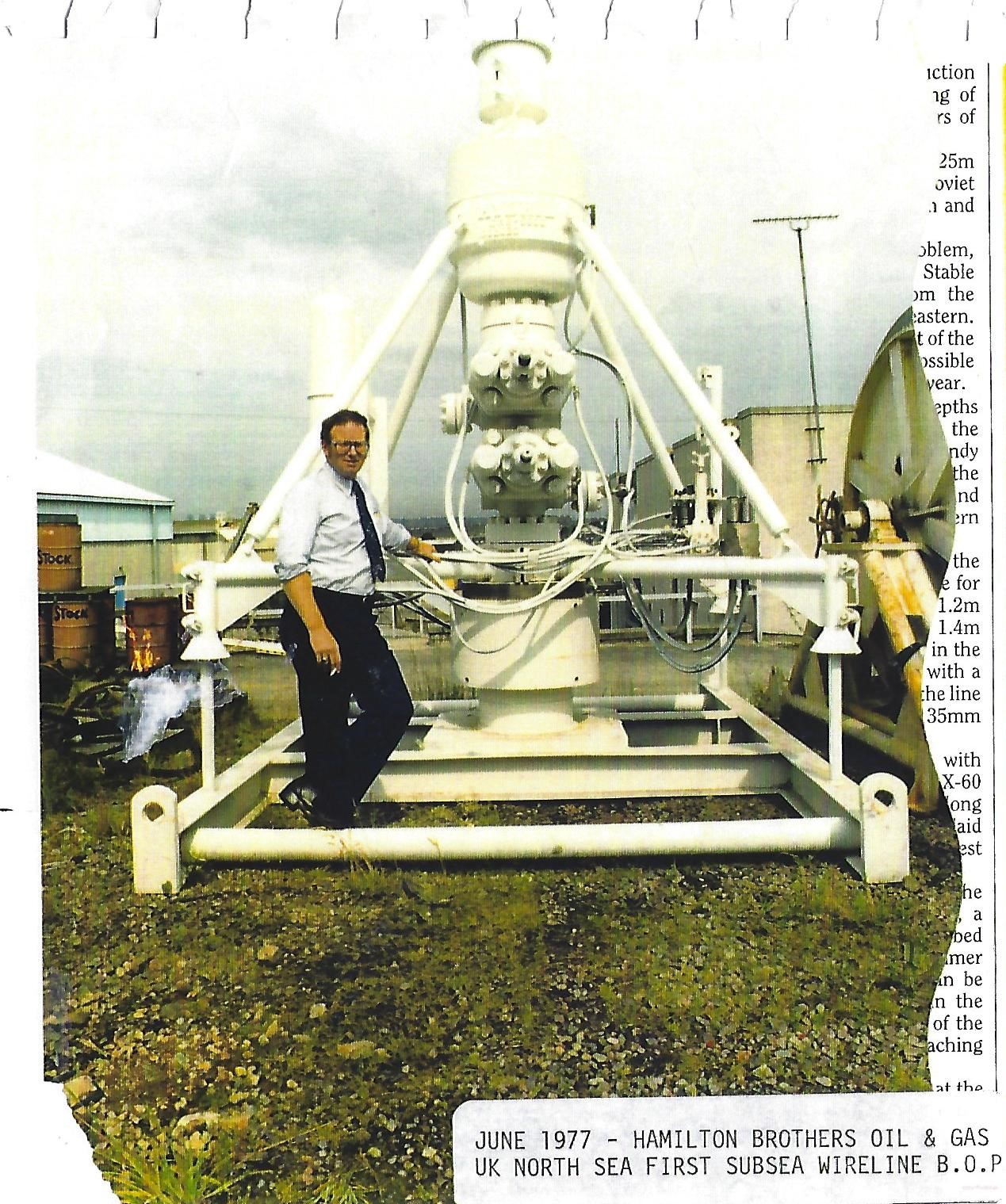
We got through this, but recognized that improved well control capabilities were needed during workover operations. Management decided that any future workover operations on a subsea tree/well would require a small diameter workover BOP with shearing capability immediately above the Xmas tree. A year later, we had the hybrid kit pictured below (with JL). Note that the guide funnels are slim to run on guide lines and not overshoot the guide base posts.

JL’s story reminds us once again that safety achievement is dependent on continuous improvement driven by experience, research, and technological advances.

When I was a young engineer with the US Geological Survey, the OCS safety regulator at the time, my boss and mentor Richard Krahl (known as “Mr. OCS” for his commitment to offshore safety) slammed😀 a copy of the first edition of API RP 14C (Analysis, Design, Installation, and Testing of Safety Systems for Offshore Production Facilities) on my desk and told me to read it carefully. That pioneering process safety document has grown with the offshore industry and is now in its 8th edition.

Similarly, API RP 2A-WSD (Planning, Designing, and Constructing Fixed Offshore Platforms— Working Stress Design) is now in its 22nd edition and API STD 53 (Well Control Equipment Systems for Drilling Wells) is in its 5th edition. There are countless other examples of the progression in safety equipment and practices.

As individuals, companies, agencies, and collectively as an industry, there can be no standing still. Nothing is routine and the challenges continue to grow: deeper wells, more complex geology, higher temperature and pressure, deeper water, harsher environments, remote locations, new security risks, and more. We get better or we get worse, and the latter is not an option. Onward!

Read Full Post »

JL Daeschler is a pioneering subsea engineer and artist extraordinaire who is a native of France (Brittany) and lives in Scotland. He has shared 2 more of his exceptional drawings. (Click on the images to enlarge.)

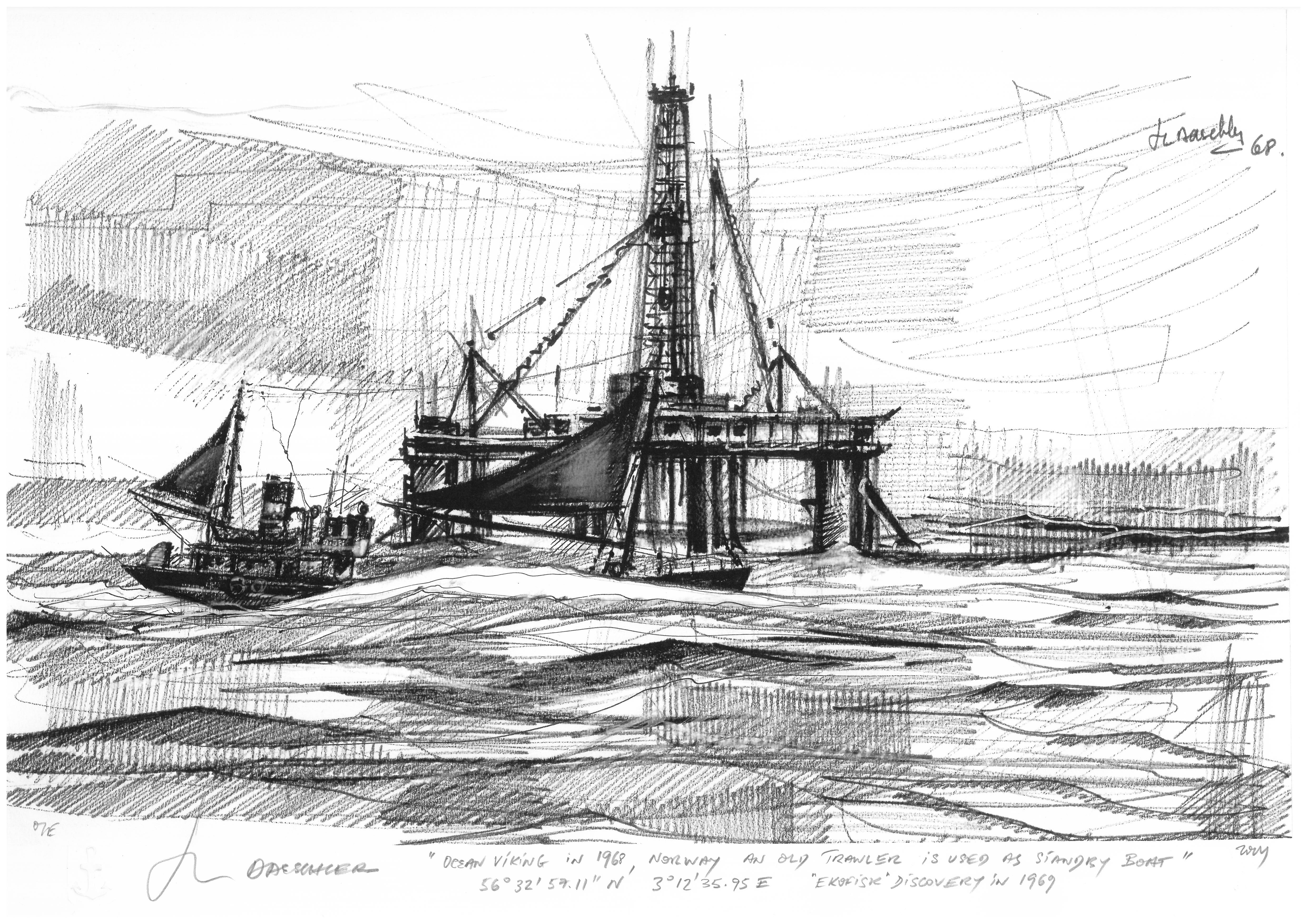
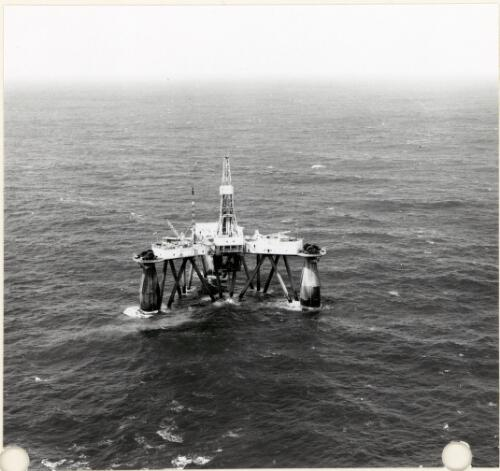
This is a drawing of the Ocean Viking (Odeco) in the Norwegian North Sea in 1968. The rig was built in Oslo as a sister ship to the Ocean Traveler, which was already working at the same location. The Ekofisk field was discovered later in 1969.
The mast-type derrick could be lowered for long ocean tow or bridge clearance. It would have been difficult to evacuate a 100 + personnel to the standby vessel, a decommissioned trawler. Things have changed so much in 56 years!
Inclined jack up legs with rack and pinion drive ( Marathon Le Tourneau), Gulf of Mexico

Read Full Post »

Background:

  • Last summer, Trident Energy exercised multiple options for the use of the Island Innovator semi-submersible (pictured above), extending the duration of the Equatorial Guinea contract to approximately 230 days.
  • The rig arrived in Equatorial Guinea in Nov. 2023.
  • On 7 Feb, a Trident team briefed Equatorial Guinea Minister of Mines and Hydrocarbons Antonio Oburu Ondo about problems with the Innovator’s BOP system. Apparently, Island Drilling, the rig owner, was not present at that meeting.
  • Mr. Ondo subsequently reported that the BOP had serious problems and failed to respond to control system commands.
  • Trident terminated the rig contract on safety grounds.
  • Island has publicly responded that (1) the Trident statements are inaccurate, (2) there have been no critical safety incidents, (3) the BOP has been checked and tested by the OEM representative on the rig and declared safe and ready for operations, and (4) they will challenge the contract termination.

Questions & comments:

  • Since the rig had just arrived on location, the BOP issues were presumably identified during onboard stump testing. Were corrective measures discussed? Why was contract termination deemed necessary?
  • Island’s statement indicates that the rig was tested with the OEM representative present. Presumably those tests were in accordance with API S53 or the ISO equivalent.
  • Had inspections and maintenance also been conducted in accordance with the standard? Did Trident inspect the rig and review maintenance and testing records before signing the contract?
  • Have other companies had similar issues with the Innovator? None have been identified in my web search.
  • Was a bridging document in place to address differences in Trident/Island management systems? If so, what does that document say about BOP inspection and oversight.
  • Why was the drilling contractor not present at the meeting with the Equatorial Guinea authorities? Was Island advised that the contract was being terminated prior to that meeting? Did the authorities speak with Island to hear their side of the story?
  • Does the contract provide for mandatory arbitration in the event of such disagreements?
  • Could other factors have influenced the cancellation decision? I was involved with an arbitration case involving an operator that used safety issues as the reason for terminating an expensive long-term rig contract. The arbitration panel ruled in favor of the drilling contractor resulting in a very large payment to the rig owner. Ironically, serious safety violations by the operating company (but not the drilling contractor) were identified during the arbitration process.
  • Island Drilling is a Norwegian Company with an experienced management team. The Innovator has conducted operations in the Norwegian and UK offshore sectors. These factors typically imply a strong commitment to safe operations.

Hopefully, we’ll be able to learn more about the specifics of this dispute in the near future.

Read Full Post »

Jean-Louis Daeschler, a native of France who lives in Scotland, was a pioneering subsea engineer who worked on rigs worldwide. Below, he recounts a 1969 incident on the Sedco 135 E.

Sedco 135 E

Sept. 1969 on the Sedco 135 E offshore Miri, East Malaysia

At about 10.00 PM the crew was running 24 ” riser pipe. The rig used a 2 stack BOP system. The weather was superb – no wind and a temperature of 26 deg C.

When the 4th joint of riser pipe (45 ft) was picked up through the “V” door and was almost vertical, it unlatched from the elevator. There was a massive clang followed by silence. The riser pipe hit the drill floor, fell backward into the derrick frame and got jammed there. No one was hurt.

The incident would have been much worse if the pipe had fallen through the catwalk, perforated the maindeck, fell into the water, and damaged the the rig’s sponson tanks !!!! A piece of pipe falling overboard turns into a high velocity torpedo. A dropped 13 3/8″ casing joint is sometimes found 400 ft away. Heavy drill collars go almost straight down, which is the worst case given the potential for damage to the wellhead equipment.

I left the office and went to the rig floor, which was silent. Everyone was looking up and down. With the brake tied down, I asked Bill Ellis what we were going to do now. Bill was an experienced 45+ year old driller from Ruidoso New Mexico. His answer was “Go back home to the USA” with a big smile. He was always in control.

Bill demonstrated great leadership; there was no panic or blame. The all-Chinese and Malay crew was listening and smiling. After some rigging up, we got the operations back into swing. We checked the elevator latch and other equipment, laid down the joint that had been stuck, picked up another one, and continued running the riser.

I met again with Bill and Jo, his wife, in Aberdeen in 1975, and we still talked about that night-shift event.

Sadly, in 1976 their young son Clay Ellis passed away on a diving job in the North Sea.

This is life in the oil patch, a great family all over.

JL Daeschler on the Sedco 135 E

Read Full Post »

Hywind Scotland, Equinor

It’s prudent, if not imperative, to tow floating wind turbines to sheltered coastal locations for major maintenance. For that reason, Hywind, the world’s first floating wind farm will be offline for up to 4 months this summer.

Hywind Scotland‘s operator, Norwegian power giant Equinor, says that operational data has indicated that its wind turbines need work. The pilot project has been in operation since 2017.

The five Siemens Gamesa turbines will be towed to Norway this summer. An Equinor spokesperson said, “This is the first such operation for a floating farm, and the safest method to do this is to tow the turbines to shore and execute the operations in sheltered conditions.”

electrek

Published data indicate that Hywind has been the UK’s best performing offshore wind farm. Performance data for Hywind, and a chart illustrating the capacity factors since commissioning, are posted below. The 2024 capacity factor will, of course, be substantially reduced as a result of the essential offsite maintenance.

rolling 12 month capacity factor
ending 5/2022
life capacity
factor
age
(years)
installed
capacity
(MWp)
total elec
generated
(GWh)
power/
unit area spanned
(W/m2)
Hywind Scotland49.5%52.6%4.6306421.0
capacity factor = total energy generated/(hours since commissioning x capacity)

The first US floating turbines are expected to be at these California offshore leases, and Hywind operator Equinor is one of the lessees:

Given the financial challenges facing the offshore wind industry, the still emerging technology, and the risks inherent in California offshore development, the amounts bid on these leases only 13 months ago are stunning.

Some Central Coast residents are not enamoured with “another attempt to industrialize the coast.” Although the turbines will be >20 miles offshore, they will have to be towed to shore for major maintenance. For the Central California leases, nearby harbor areas like Morro Bay (pictured below) would be overwhelmed by the large structures and the maintenance and repair operations. Towing the towers to LA/Long Beach, albeit rather distant from the leases, would seem to be the preferred option for such work.

Ironically, a report for BOEM, points to synergies between the offshore wind industry and oil and gas decommissioning industry. Such synergies will only be possible if longstanding oil and gas decommissioning obstacles are satisfactorily addressed and the offshore wind projects proceed as planned.

Which will come first – platform decommissioning or wind turbine commissioning? For those young enough to find out, what is the over-under for the years until (1) half of those platforms are decommissioned, and (2) half of the wind turbines commissioned? Any number <10 is unrealistic for either.

Morro Bay Harbor

Read Full Post »

« Newer Posts - Older Posts »