Centre Party leader Trygve Slagsvold Vedum: “What we were clear about all along is that beginning the process of linking ourselves more closely to the EU’s dysfunctional electricity market and energy policy is completely out of the question.”
While looking at electric prices and power sharing, consideration should be given to the desirability of transmitting electricity from shore to distant offshore platforms that have ample natural gas for power generation purposes. This practice increases electric prices for consumers and introduces reliability/safety concerns with no net environmental benefits.
Picture of Old Stavanger where former colleague and BOE contributor Odd Bjerre Finnestad (RIP) once lived.Stavanger is both a lovely city and the “Oil Capital of Norway.”
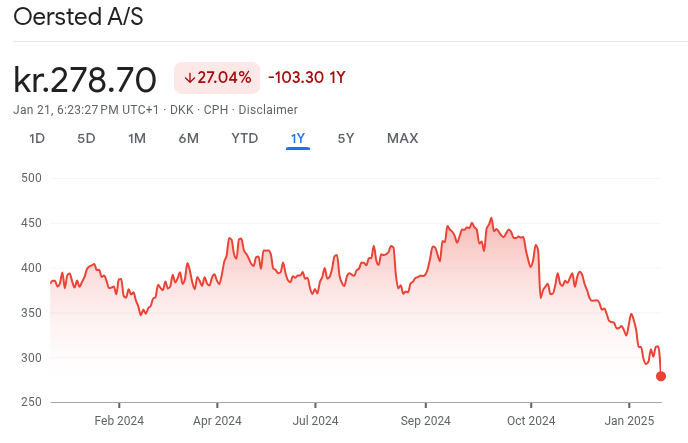
Equinor’s investment of over 26 billion kroner in the Danish wind power company Ørsted has so far been a financial disaster – and now it’s going from bad to worse.
“We are very negative about the whole green initiative, as the return on the investments they make is far too low. When they also buy minority stakes in other green companies that we cannot count on, such as Ørsted, it means that we would rather own other oil companies.” Gaute Eie, Eika Kapitalforvaltning
The market has long been concerned that Equinor will throw money at renewable projects with low or no profitability.
In a recent note, Pareto analysts Tom Erik Kristiansen and Olav Haugerud point out that the Ørsted writedown does not bode well for Equinor’s own US projects either. They foresee a writedown of up to $1.1 billion, given that Equinor faces the same type of challenges as Ørsted.
Eie believes there is no reason why Equinor in particular should have a green initiative:
Aker BP is not doing green, Vår Energi is not doing green, and all the big oil companies are going back on this. Then we’ll see if Equinor has the guts to buy even more Ørsted shares, because now it’s 35 percent cheaper. If they do, we’ll have even fewer Equinor shares.
Sissener believes Equinor should rather focus on dividends and concentrate on oil and gas projects.
– We generally stay away from companies where the state is a major owner, because there you have to be so politically correct all the time. What we need are shareholder-friendly board representatives who know how to run a business and maintain control. In a broader perspective, this helps to destroy trust in Norwegian business.
The two ruling parties in Norway want to cut the two power inter-connectors that link the country with Denmark when they come up for renewal in 2026. The smaller coalition party, the Center Party, wants to revisit similar energy links with the UK and Europe.
A related matter is Norway’s push to power offshore platforms with electricity from shore. This policy makes neither economic nor environmental sense, and introduces new safety and operational risks.
This BOE post cites the obvious (per NPD): “The power from shore projects will lead to an increase in electricity prices in Norway.” The post also presents seven other reasons why powering those facilities from shore is not a good idea.
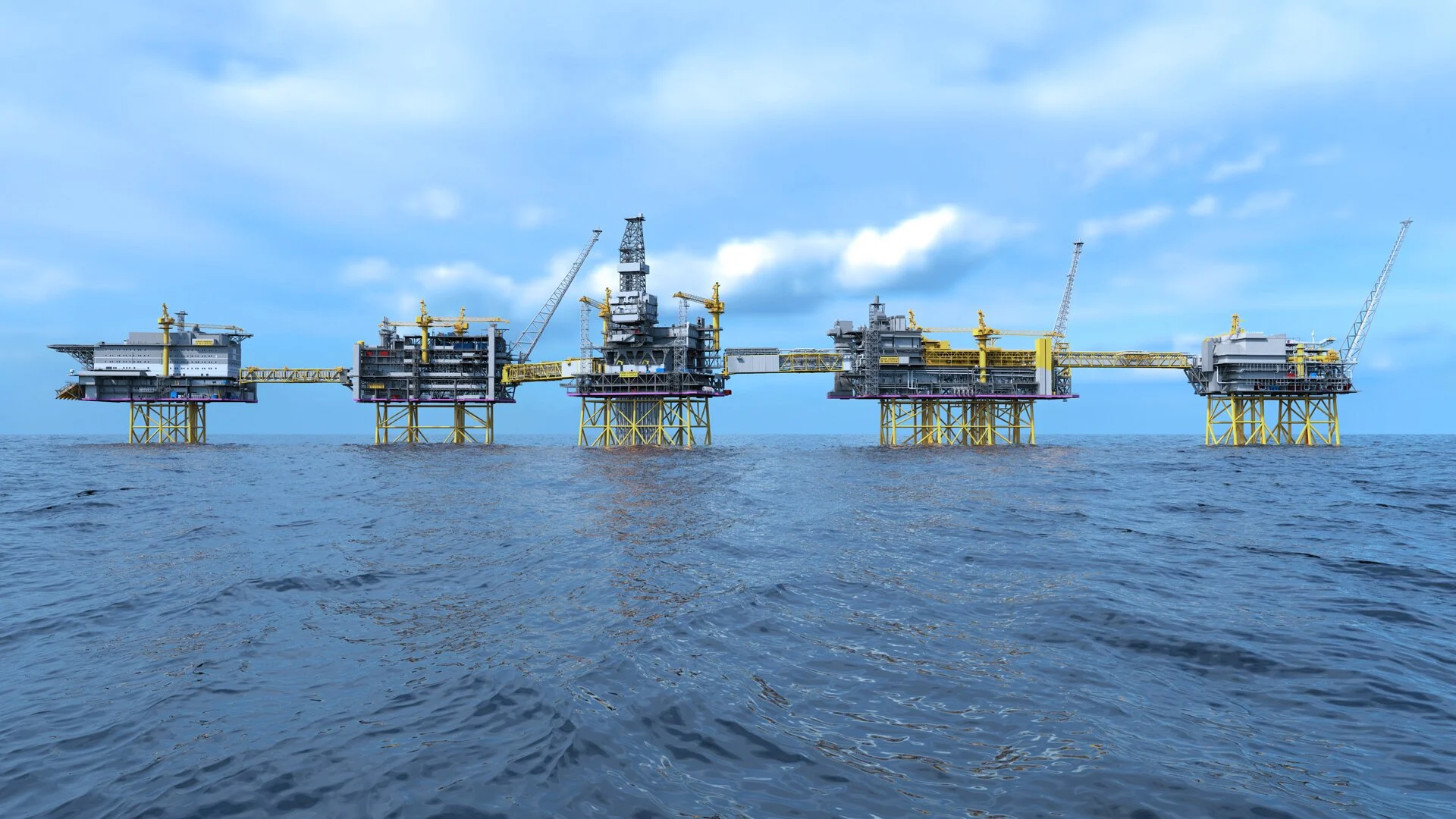
Production from Equinor’s important Johan Sverdrup field, which accounts for 755,000 bopd (36% of Norway’s oil production), was shut-in on Monday as a result of a power outage. Production was in the process of being restored on Tuesday.
According to Equinor, the outage was caused by overheating at an electric converter station onshore.
A 2022 BOE post questioned Norway’s push to power offshore platforms with electricity transmitted from shore. This incident reinforces those concerns. Summary:
Most offshore platforms produce sufficient gas to support their power demands
Assuming gas that is not used to power a platform is marketed and consumed elsewhere, the net (global) reduction in CO2 emissions from electrifying offshore platforms is negligible. (Perhaps there is actually a small increase in net emissions given the power required to transport the gas to markets and the emissions associated with onshore power generation).
Offshore power demands are highly variable, especially when drilling operations are being conducted.
Gas turbines are reliable, and capable of responding to variable power demand. Excess generation capacity is typically provided.
Power from shore increases the cost of platform operations and could decrease ultimate recovery of oil and gas resources.
Per NPD, electrification of the shelf will increase electricity prices for onshore consumers and increase the need for onshore facility investment.
Gas turbines or diesel generators are still necessary to satisfy emergency power needs at the platforms.
Long power cables are vulnerable to damage (accidental or intentional), as are onshore power stations.
I hope the investigation of this incident considers some of these broader electrification policy issues.
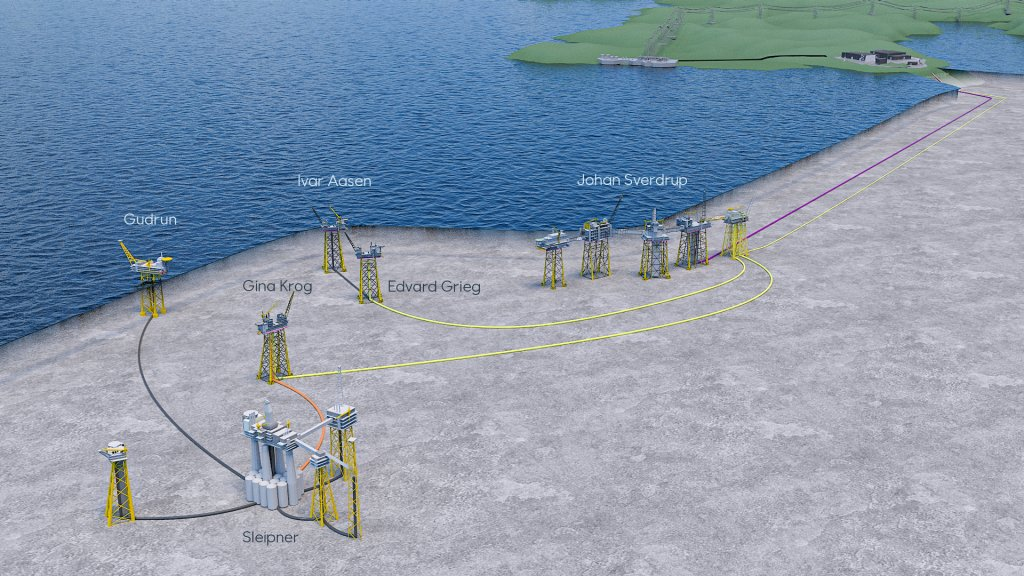
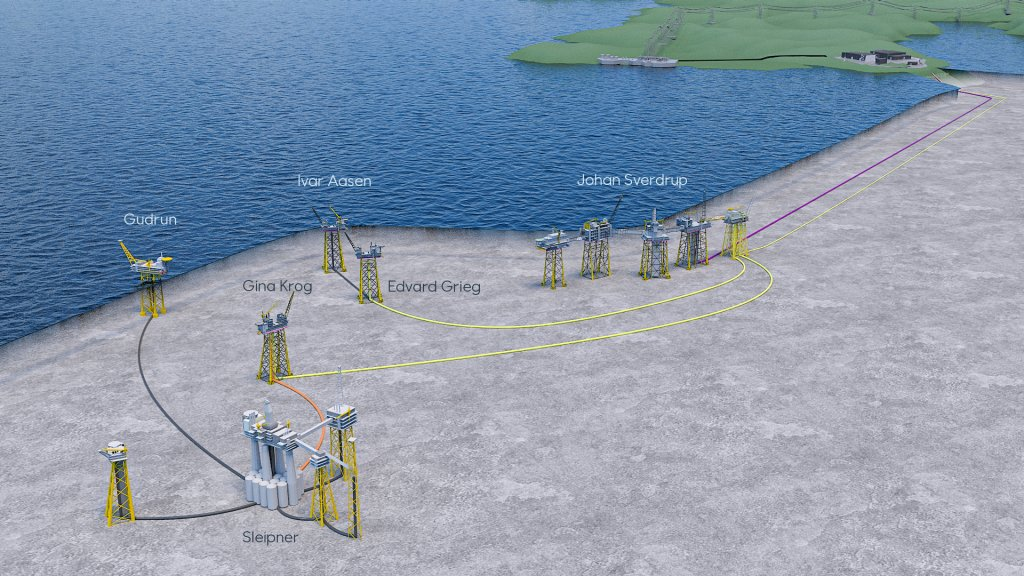
Equinor diagram: The purple cable shows power from shore to Johan Sverdrup phase 1, established in 2018. The yellow power cable shows power from shore to Johan Sverdrup phase 2 and the Utsira High area solution, from 2022. The orange cable shows power from shore to the Sleipner field centre and connected fields from late 2022. Black cable shows existing power cables at Sleipner field centre and to the Gudrun installation.
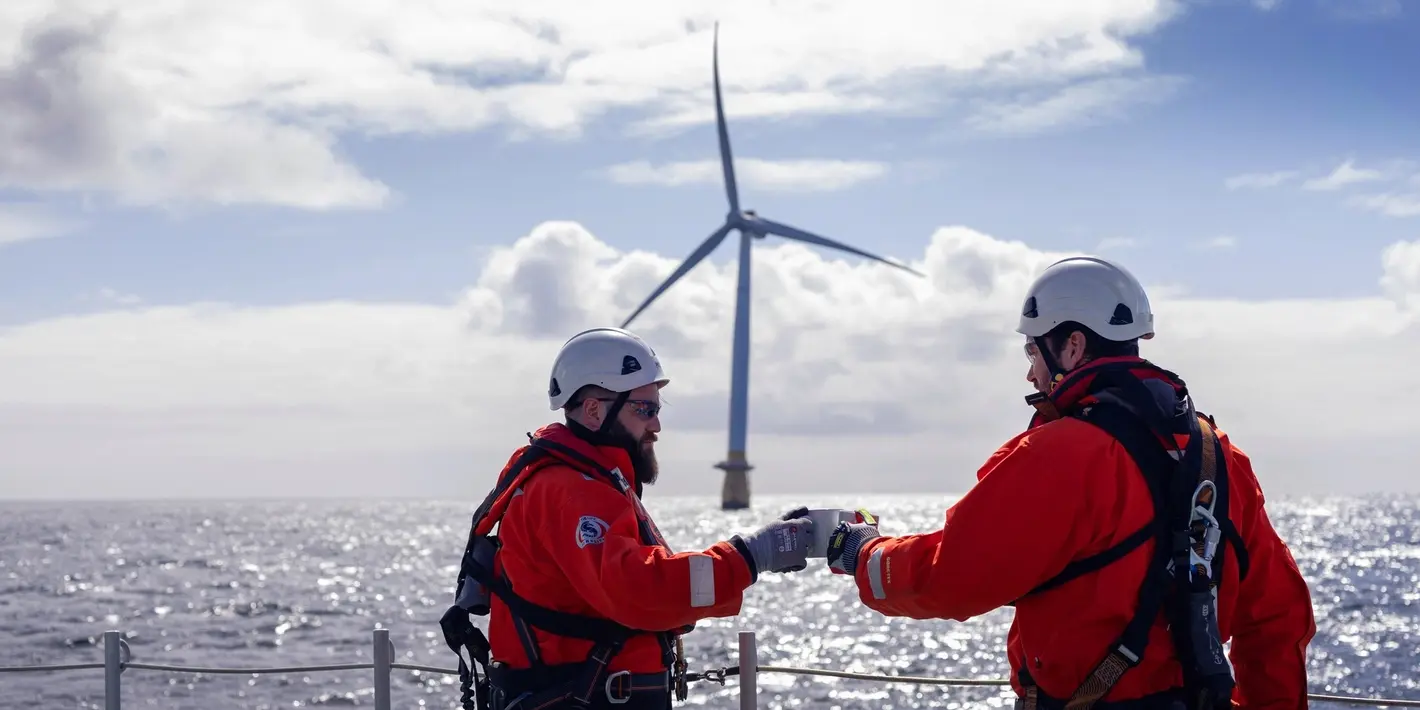
Equinor reports that all 5 Hywind turbines have been returned to service after being towed to Norway as part of a 4-month maintenance campaign.
Even though the turbines had only been in operation since 2017, Equinor puts a positive spin on the 4-month maintenance outage, declaring total victory:
“The successful completion of the maintenance campaign on Hywind Scotland is a testament to the collaborative efforts of our teams and partners. As the world’s first floating offshore wind farm, Hywind Scotland has demonstrated the immense potential of floating wind. Through this maintenance campaign, we’ve gained valuable insights that will help us refine maintenance practices and optimise this technology for the future. By sharing our learnings, we aim to contribute to the growth and development of the floating wind industry.”
Some of the folks in Scotland have a different take as evidenced in this video:
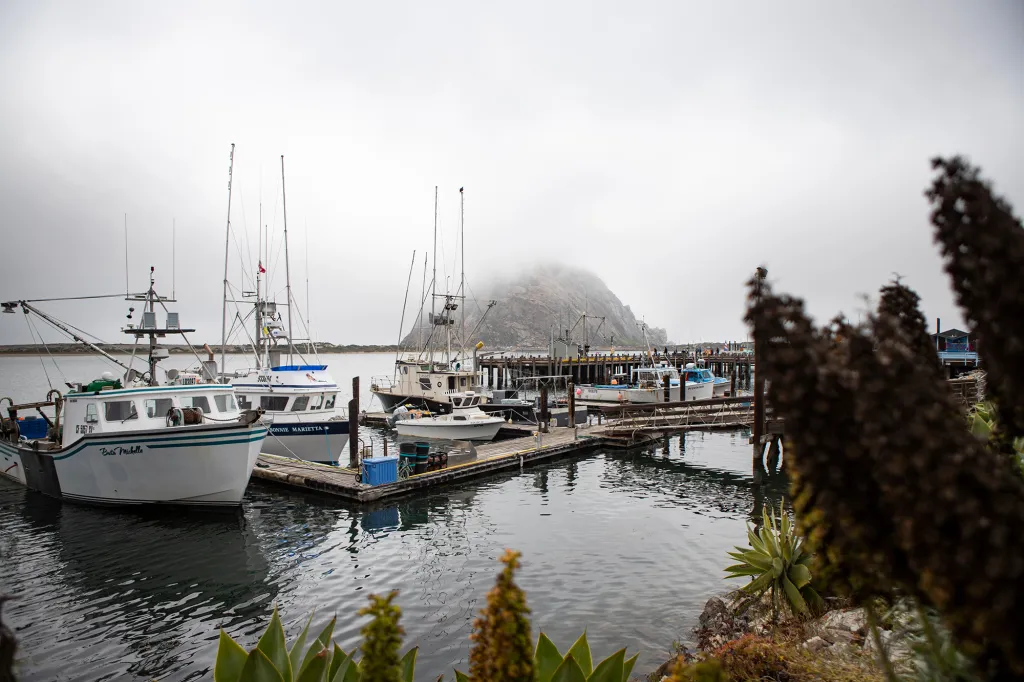
Meanwhile, the turbines planned for offshore Central California will also have to be towed to shore for major maintenance. Nearby harbor areas like Morro Bay (pictured below) would be overwhelmed by the large structures and the maintenance and repair operations. Central Coast residents are not enamored with “another attempt to industrialize the coast.” Towing the towers to LA/Long Beach, albeit rather distant from the leases, would seem to be the preferred option for such work.
Looking forward, the first power generation from floating wind turbines on the Central Coast is forecast for 2034. Betters may want to take the over!
While the Orsted acquisition does not appear to have been directed by the Norwegian government, the State’s 2/3 ownership of the company no doubt influences renewable energy targets and broader corporate strategy.
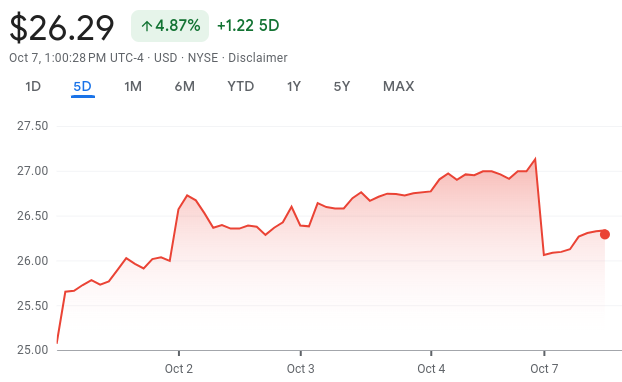
The initial market reaction to the Orsted purchase was negative (see chart below). On a day when most oil companies’ share prices rose in response to the jump in oil prices, Equinor shares opened sharply lower.
On Constitution Day, best wishes to our Norwegian friends!
This JL Daeschler photo was taken in Stavanger harbor in 2003. JL’s wife Debra, a Petrodata Marine editor, is pictured in the foreground. The rig in the background is the Maersk (now Noble) Innovator, a large jackup capable of operating in water depths to 492 ft. The legs are 674 ft (Washington Monument = 555 ft).
Havtil prioritizes risk assessment and publishes their comprehensive annual analysis of safety trends in a timely manner. The 2023 RNNP was posted in Norwegian earlier this year and the summary report is already available in English. RNNP reports are an important safety resource that should be reviewed and discussed wherever oil and gas operations are conducted.
As an example of the breadth of these reviews, the two sets of charts below convey data that are not typically documented by offshore safety regulators. The first set documents near-misses that did not result in injuries, but did expose workers to that risk.
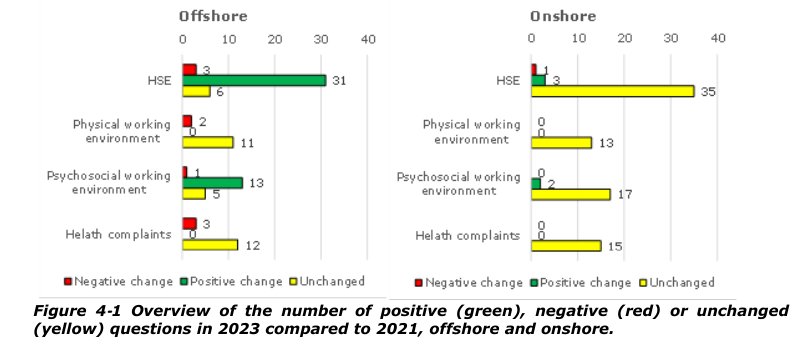
The second set of charts is a summary of worker responses to a survey, a means of assessing the safety culture. The big jump in favorable responses to the HSE questions is encouraging. In particular, the report notes (p. 14) that responses to a question about being pressured not to report incidents has moved in a positive direction in the last two surveys. Hopefully, this is an industry-wide trend.
PSA Norway, now Havtil, has long been a pacesetter in analyzing offshore incident and performance data, and publishing timely, comprehensive assessments. Their key findings for 2023 are pasted below (emphasis added):
Hydrocarbon leaks: four on the NCS in 2023 – the lowest figure since the RNNP survey began. None of them are considered particularly serious.
Well control incidents: 11 in 2023. The level is stable, with the figure unchanged from 2022, and all had a low potential.
Structural damage: three incidents were reported in 2023, a halving from the year before.
Total major accident indicator: the annual value is the lowest ever, and the average for the past three years declined. No particularly serious incidents occurred in 2023.
Personal injuries: no accidents resulting in fatalities occurred in the petroleum sector during 2023, while 25 serious personal injuries were reported. The serious injury frequency rose to 0.6 per million hours worked (back to the 2021 level), and lay within the expected range based on the 10 previous years.
Questionnaire survey: responses to this biennial poll showed an improvement from 2021 in most of the indices for the HSE climate and the psychosocial working environment. Furthermore, some challenges are seen with regard to language and parallel operations leading to hazardous conditions.
Havtil informs me that the complete “Trends in Risk Level (RNNP)” report for 2023 will be available in English later this month. A link to the report will be posted on this blog.
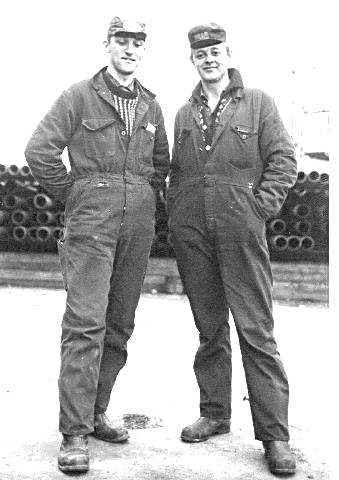
On a related note, JL Daeschler has brought The Norwegian Oil Pioneer Club’s website to my attention. Those interested in the history of North Sea exploration and production should take a look! A couple of pictures from the site are pasted below.
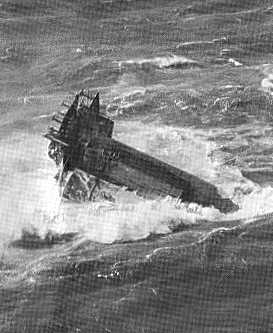
Svein and Axel, North Sea pioneers, 1966Sinking of the Ocean Prince, 1968
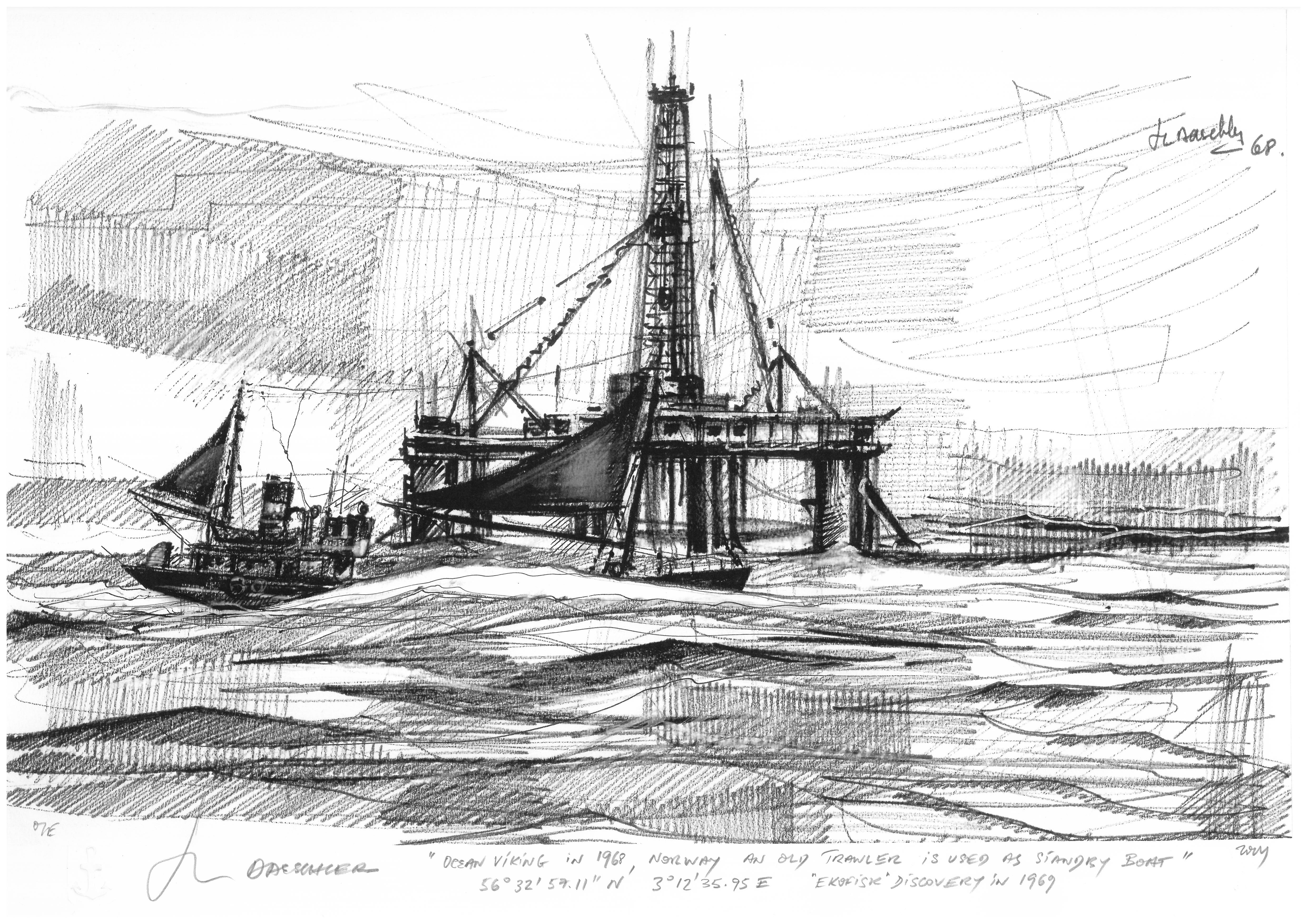
JL Daeschler is a pioneering subsea engineer and artist extraordinaire who is a native of France (Brittany) and lives in Scotland. He has shared 2 more of his exceptional drawings. (Click on the images to enlarge.)
This is a drawing of the Ocean Viking (Odeco) in the Norwegian North Sea in 1968. The rig was built in Oslo as a sister ship to the Ocean Traveler, which was already working at the same location. The Ekofisk field was discovered later in 1969. The mast-type derrick could be lowered for long ocean tow or bridge clearance. It would have been difficult to evacuate a 100 + personnel to the standby vessel, a decommissioned trawler. Things have changed so much in 56 years!Inclined jack up legs with rack and pinion drive ( Marathon Le Tourneau), Gulf of Mexico





 Bud's Offshore Energy (BOE)