Feeds:
Posts
Comments

Archive for the ‘hurricanes’ Category

Data from EIA

1.60 to 1.74 million BOPD were shut-in from 8/28 to 8/31, reducing the average daily production for August to 1.535 million barrels per day, a net reduction of 312,000 BOPD from July. The September production figure will be significantly lower given that more than half of the GoM production was shut-in for 13 days in September and several hundred thousand BOPD were shut-in for the rest of the month. September production will be released at the end of November.

Shell is now anticipating that their GoM production will be fully restored by mid-November.

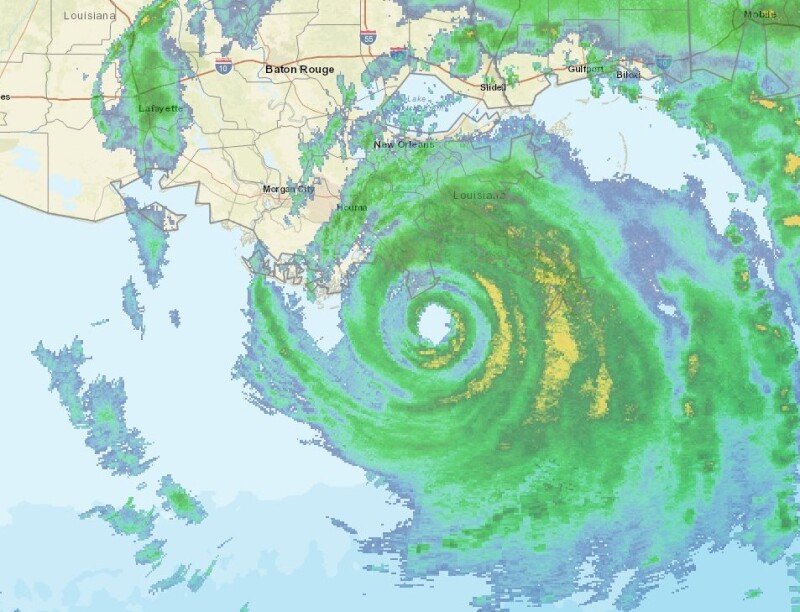
Hurricane_Ida_landfall.jpg
Hurricane Ida – JPT graphic

Read Full Post »

Establishing an OSHA rule takes an average of 7 years, and the process has ranged from 15 months to 19 years between 1981 and 2010, the Government Accountability Office (GAO) reported to Congress in 2012

EHS Daily Advisor

OSHA’s long rule promulgation timeframes are actually quite typical for US regulatory agencies. In some cases, employees work on a single rule for most of their careers! On the plus side, the rigorous internal and public review processes help prevent arbitrary and capricious actions by regulators. However, the long promulgation process often results in regulations that are outdated before they are published. As a result, the entire process repeats and you have a regulatory “do loop.”

To avoid the daunting rulemaking process, regulators often resort to issuing notices, letters, or conditions of approval that accomplish some of their objectives. However, these actions are not always consistent with the rule promulgation requirements of the Administrative Procedures Act and other directives, and are less likely to survive legal challenges.

The optimal approach is for the regulator to establish clear objectives for the operating companies and a schedule for achieving those objectives. This approach was demonstrated following the 2005 hurricane season (Katrina and Rita) when numerous mooring system and other stationkeeping issues were identified. In a face-to-face meeting, Department of the Interior Secretary Gale Norton outlined her concerns and informed offshore operators that there would be no drilling from moored MODUs or jackups during hurricane season until the issues identified during Hurricanes Katrina and Rita were addressed.

The collaborative effort that followed was a resounding success. In addition to addressing station keeping concerns, a comprehensive list of hurricane issues was developed. Industry and government then worked together to assess mitigations and develop new standards and procedures. The essential MODU standards were completed before the 2006 hurricane season, and all of the related concerns were effectively addressed prior to the 2009 hurricane season. Had the government elected to promulgate regulations to address all of these issues, much of this work would have never been completed.


Read Full Post »
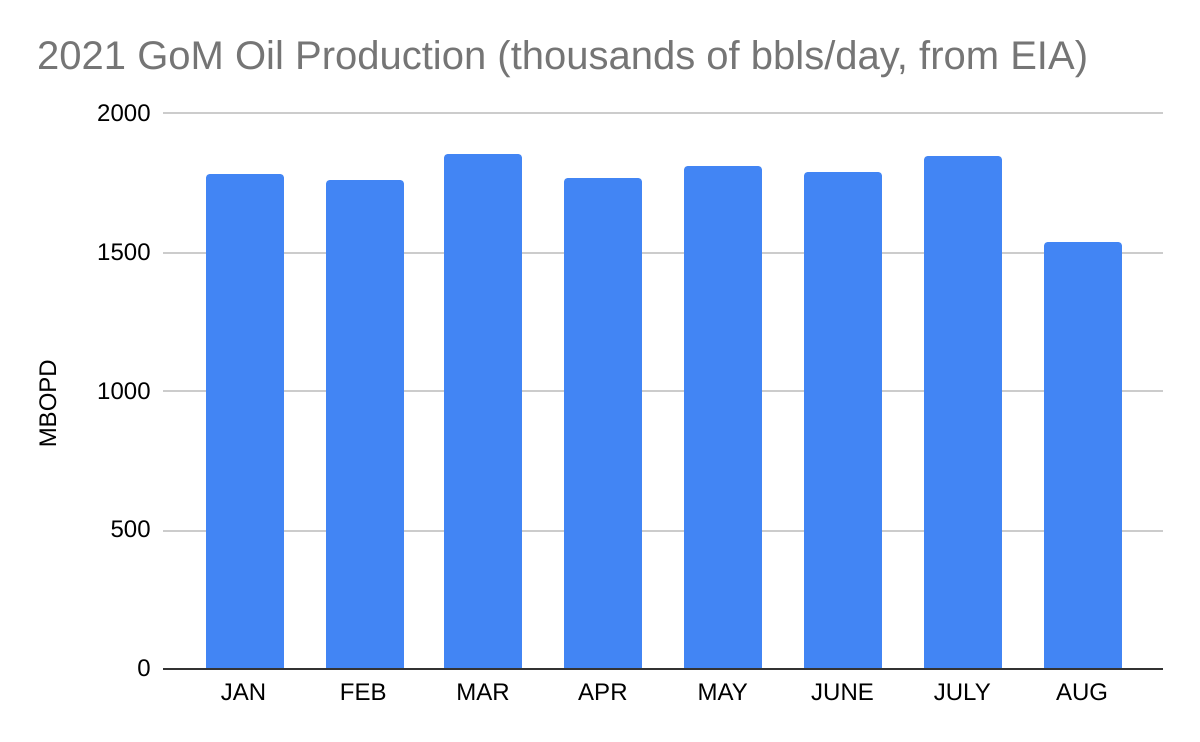
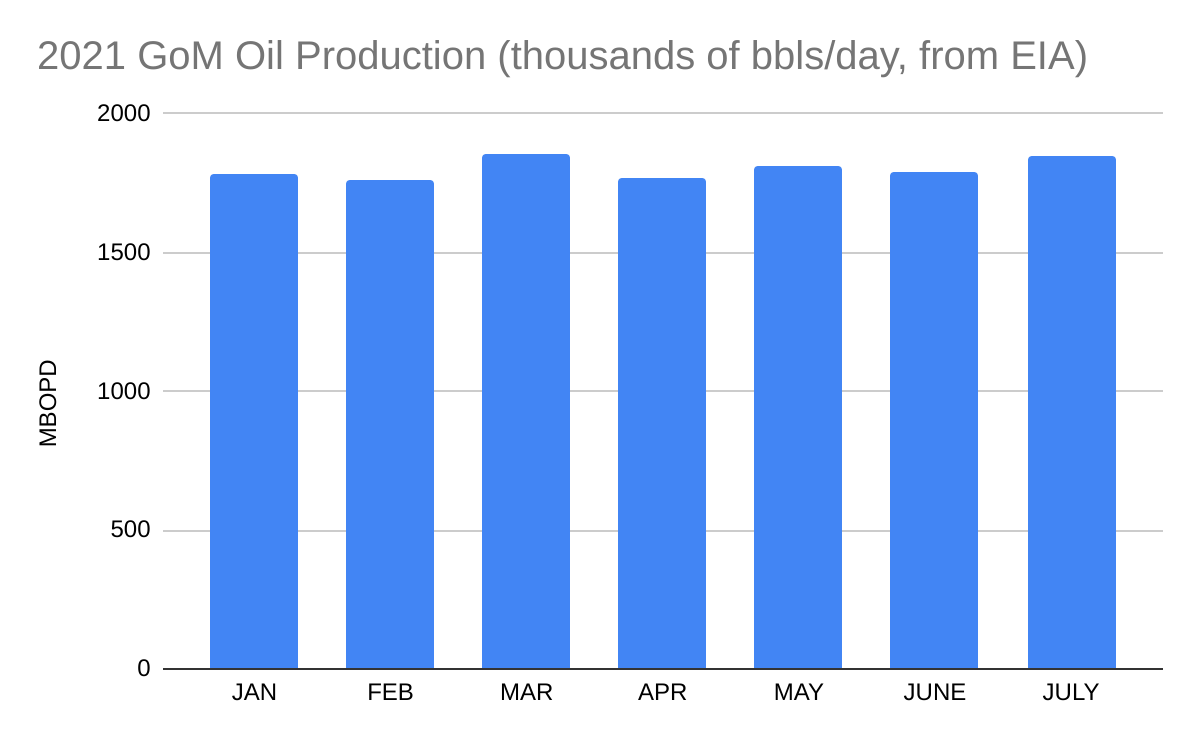
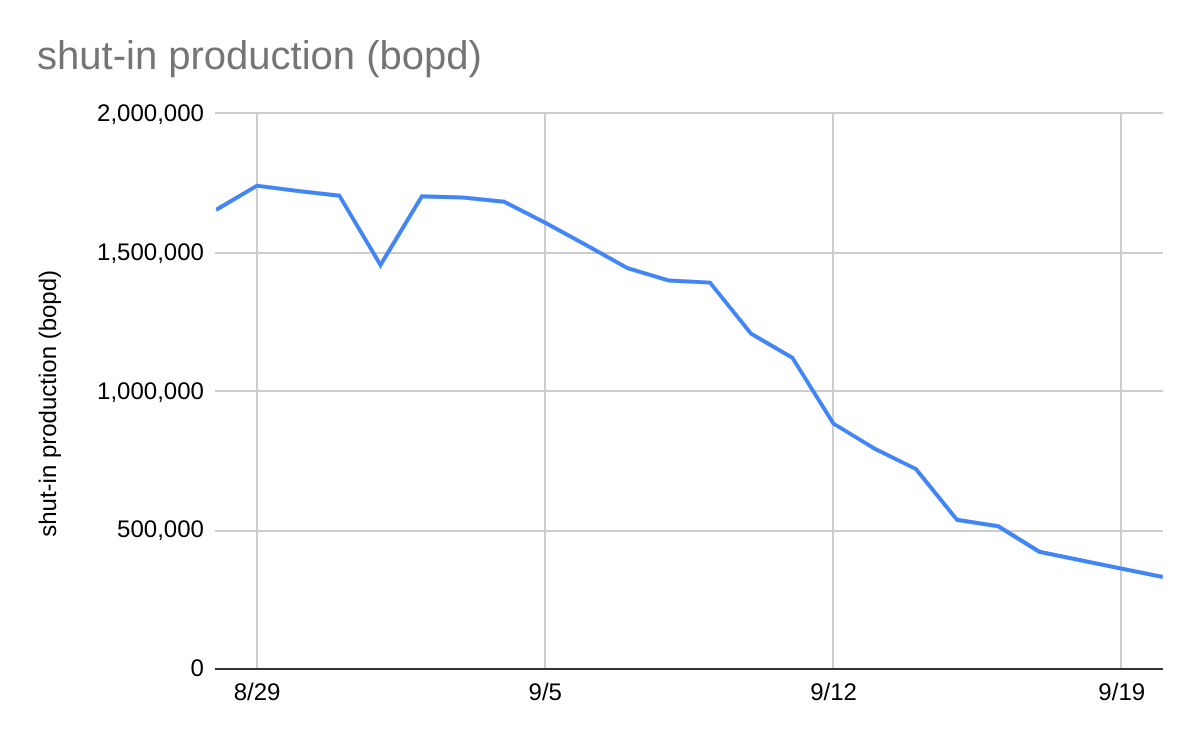
EIA just released the July data, and GoM oil production averaged 1.845 million BOPD, which was consistent with expectations. 2021 production through July was relatively stable averaging from 1.762 to 1.845 million BOPD. This will, of course, change dramatically when the August data are released, and even more so for September. Most production was shut-in for Ida beginning on 8/28 and some production has not yet been restored. Per BSEE’s final update (9/23), about 300,000 BOPD remained shut-in.

The EIA data are plotted below:

Read Full Post »

Shell’s damage assessment of the West Delta 143 (WD 143) platforms revealed significant structural damage. Shell estimates that that the WD-143 “A” platform facilities will be off line for repairs until the end of 2021, and that the facilities on our WD-143 “C” platform will be operational in Q4 2021. Shell expects to resume production from their Olympus platform, which flows across the WD-143 “C” platform, in Q4 2021, and from their Mars and Ursa facilities, which flow across the WD-143 “A” platform, in Q1 2022.

Mars, Olympus, and Ursa account for most of the GoM production that remains shut-in as a result of Hurricane Ida.

Read Full Post »

BSEE data

Read Full Post »

BSEE Data

Read Full Post »

BSEE data

Read Full Post »

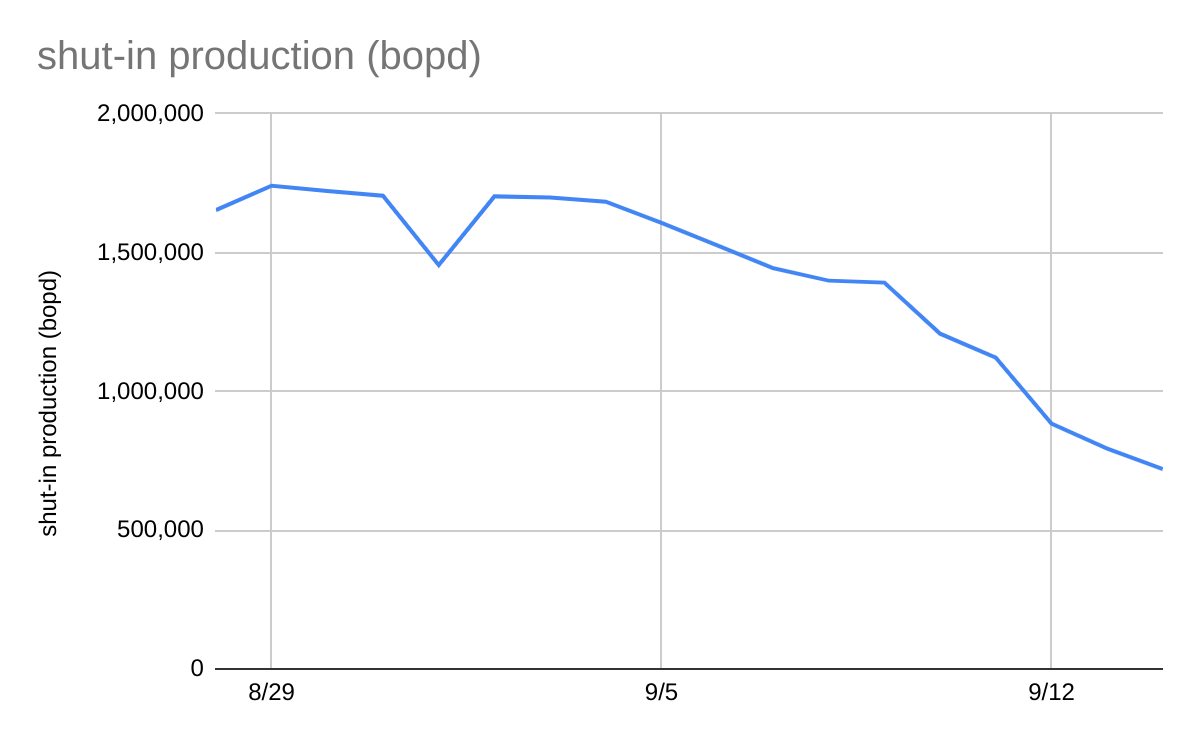
As expected given the magnitude and track of Ida, the necessary inspections, and the onshore damage, most GoM production remains shut-in. (BSEE data)

Read Full Post »

Noble’s Aug. 29 statementNoble’s Sept. 2 statement
Each rig successfully secured its respective well in progress and took evasive actions to avoid the storm’s path.” (No mention of the delay in relocating the Globetrotter II or the rig, riser, and LMRP damage already reported on social media.)“several riser joints and the lower marine riser package separated from the rig during the storm and sank to the seabed.” (Confirms social media reports.)
“All personnel are safe and accounted for.” (No mention of the injuries alluded to in social media reports.)A small number of crew members were treated for minor injuries.” (The actual number was 9, i.e. not a small number, 4 of whom had to be transported to shore for further evaluation.)
“One of the ship’s cofferdams in the moonpool area sustained damage.” (Update: The storm broke part of the hull, which allowed water into some compartments. Per the ship’s master, the vessel was not in distress and not actively taking on water.)

In a proper safety culture, you don’t downplay serious incidents and you never declare victory. Spin control is for politicians, not safety leaders. The Globetrotter II, with 140 workers aboard, was slammed by a major hurricane, perhaps unnecessarily. After the frightening social media reports, Noble released an “all is well” statement that minimized the significance and potential consequences of the delayed rig relocation. Noble continued to downplay the incident when they update their statement 5 days later.

The Coast Guard and BSEE will be investigating the Globetrotter II relocation, and their findings will be of great interest. Noble has historically been a very good drilling contractor with a strong commitment to safe operations. Hopefully, they and others will learn and apply lessons from this and similar events that have occurred in the Gulf and elsewhere. Companies may also want to assess the compatibility of their messaging practices with their commitment to a robust safety culture and continuous improvement.

Read Full Post »

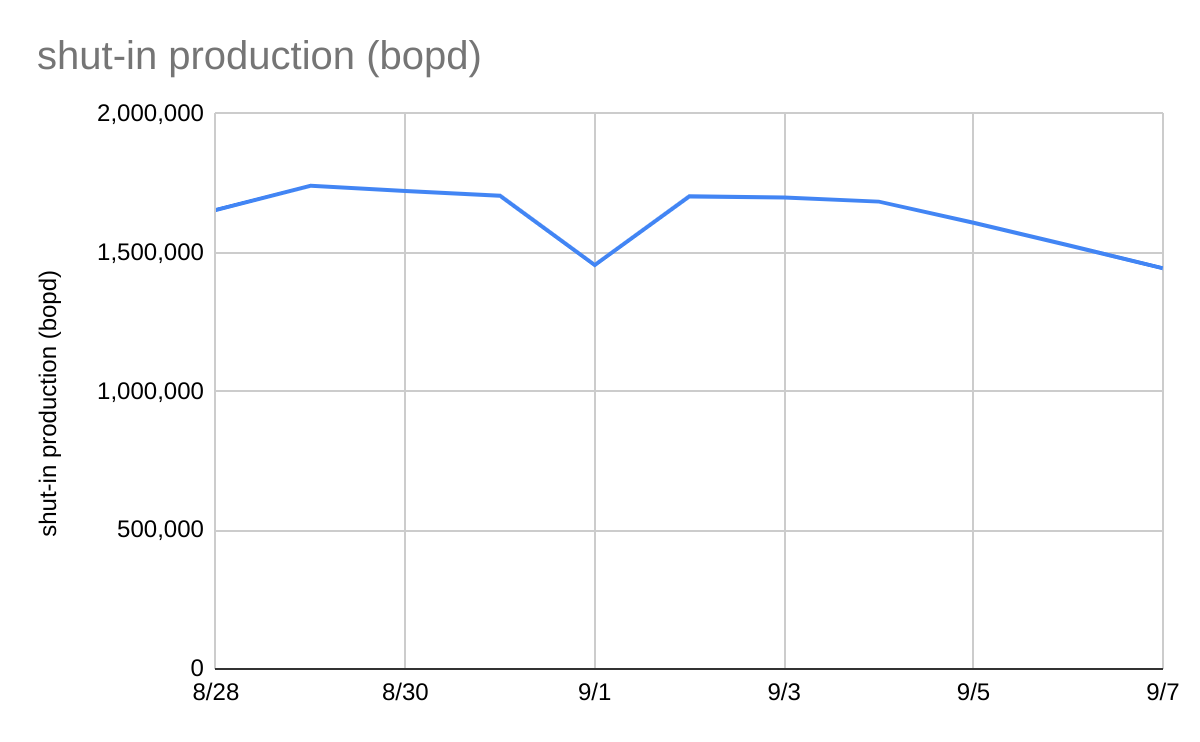
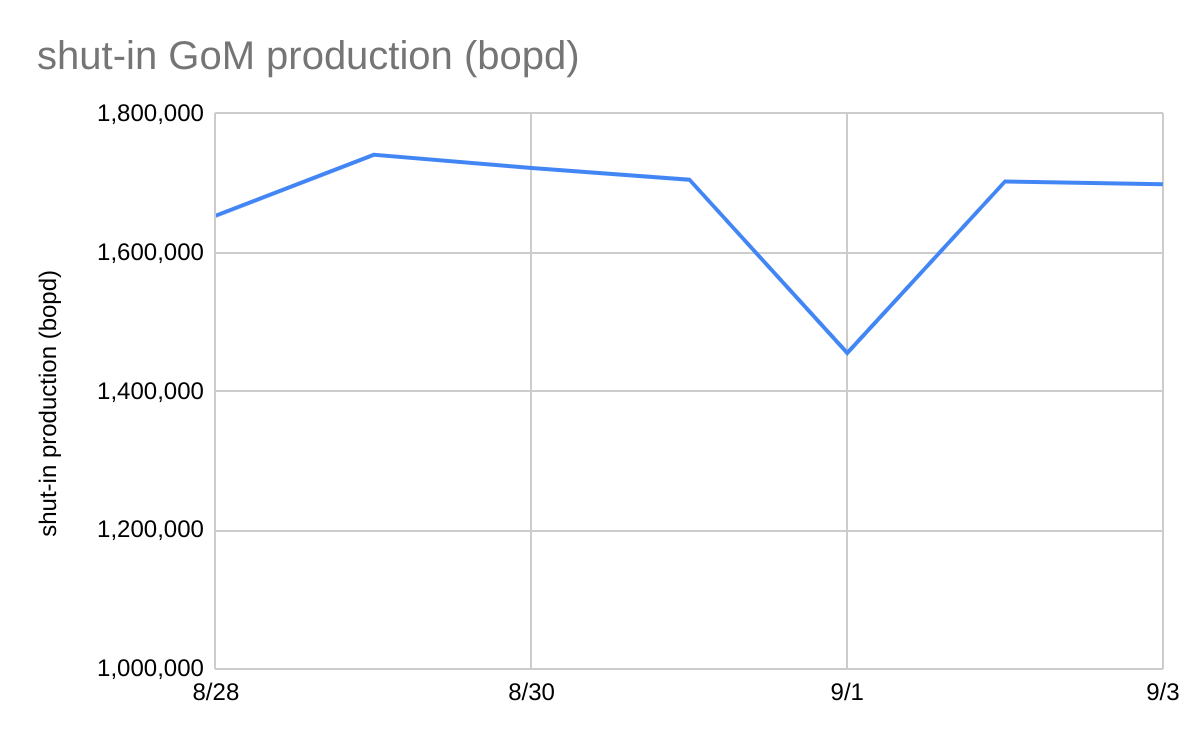
1,698,557 BOPD per BSEE. Updated recovery chart:

Read Full Post »

« Newer Posts - Older Posts »