Feeds:
Posts
Comments

Archive for the ‘energy’ Category

$300 oil?

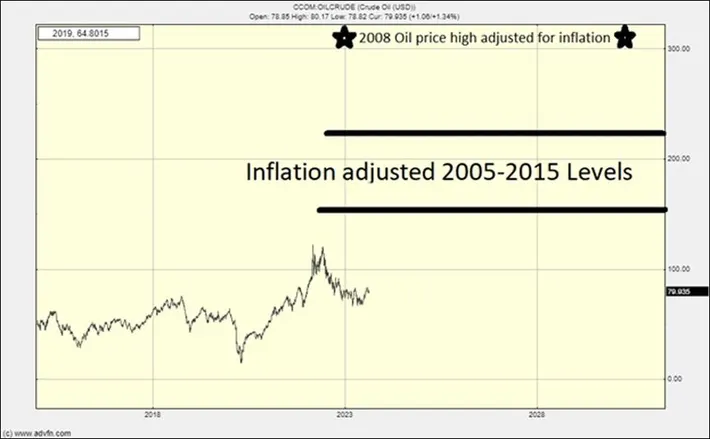
Forbes article: “Oil Is Going To $300 A Barrel”

The title grabs your attention, but the justification isn’t terribly compelling. The author simply adjusts the brief 2008 price spike ($200/barrel) for inflation to justify his forecast.

Per the author:

The thing about commodities like oil is that while they can be acutely volatile because of supply and demand and political events, long term their price is a function of the technology needed to create them and the state of inflation in the denominating economy.

Read Full Post »

Because space requirements and intermittency limit the ultimate potential of other renewable energy super-sources, ultradeep geothermal may be the most exciting energy alternative on the horizon. However, ultradeep geothermal’s enormous potential can only be achieved if we can reliably drill deep beneath the surface and tap into superheated rock. As Quaise Energy’s Carlos Araque, formerly a Schlumberger engineer, has noted: “A lot of the challenges are the same as for oil and gas.”

This short video provides a good summary of the drilling technology that is under development.

Read Full Post »

Linking an excellent article on a renewable energy alternative that BOE has been following closely.

Good assessment:

I’m confident because the externalities that come with wind, solar and batteries, which are the other top candidates, are too large to bear at multi-terawatt scale: too much land, too many minerals, too much labour per unit of energy. Geothermal is very different: it is more like fossil fuels without the carbon. It’s more like nuclear – except fusion doesn’t work yet and fission is controversial.

Carlos Araque

Challenges:

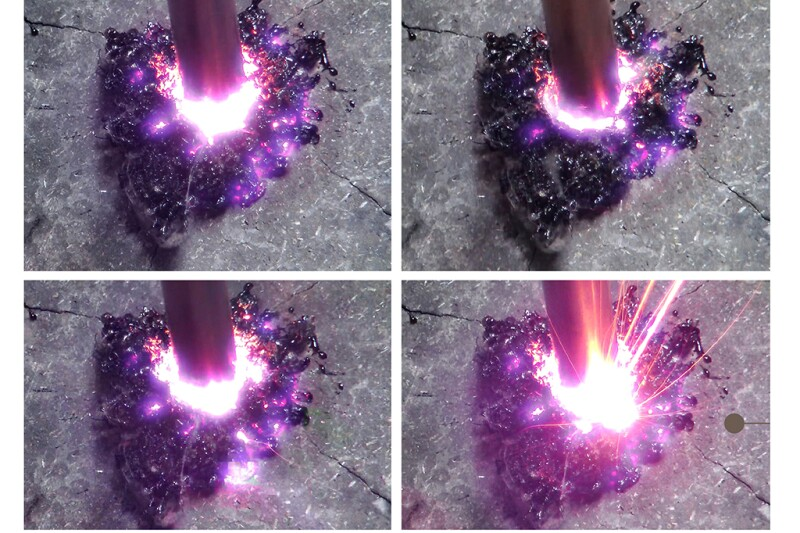
A lot of the challenges are the same as for oil and gas. The subsurface is an uncertain environment. The deeper you go, the more extremes you have, but we’ve come a long way with the oil and gas industry to develop a whole suite of technologies, techniques and measurement systems to minimise that risk. The main challenge is maintaining wellbores from closing in on themselves as you go deeper. There’s a lot of pressure in the rock and these holes eventually will collapse. The way we answer that is by creating a glass wall in the rock as we burn it. When our technology vaporises the rock, it creates a glass wall and that remains on the walls and prevents the hole from collapsing.

Related posts:

Read Full Post »

The Supreme Court will hear a case that could significantly scale back federal agencies’ authority, with implications for regulations affecting the US offshore program. The court could overturn a precedent known as the “Chevron doctrine” that instructs judges to defer to federal agencies when interpreting ambiguous federal laws.

Few Supreme Court doctrines have been stretched more by regulators and lower-court judges than Chevron deference, which says judges should defer to regulators’ interpretations when laws are supposedly ambiguous. The High Court agreed Monday to give Chevron a much-needed legal review.

WSJ

About the Chevron doctrine:

One of the most important principles in administrative law, the “Chevron deference” was coined after a landmark case, Chevron U.S.A., Inc. v. Natural Resources Defense Council, Inc., 468 U.S. 837 (1984). The Chevron deference is referring to the doctrine of judicial deference given to administrative actions. In Chevron, the Supreme Court set forth a legal test as to when the court should defer to the agency’s answer or interpretation, holding that such judicial deference is appropriate where the agency’s answer was not unreasonable, so long as Congress had not spoken directly to the precise issue at question. 

Cornell Law
Market Chess

Read Full Post »

Old York Road near West Olney Avenue. December 14th, 1914.

I saw this old picture and was intrigued by the “Mobiloils” sign. I didn’t think Standard of New York had already evolved into Mobil in 1914. A couple of Wiki excerpts explain:

Following the break-up of Standard Oil in 1911, the “Standard Oil Company of New York” (or ‘Socony’) was founded, along with 33 other successor companies.

Socony merged with Vacuum Oil Company to form Socony-Vacuum. Vacuum Oil had used “Mobiloil” automobile lubricating oil brand since 1904, and by 1918 it became recognizable enough that the company filed it for registration as a trademark (it was registered in 1920)

Note that the Mobil Pegasus was trademarked by Vacuum Oil Company of South Africa.

Mobil Pegasus

Read Full Post »

In addition to the details previously provided, some interesting insights from Envoi, agent for United Oil and Gas, follow:

  • Only 11 exploration wells have ever been drilled in the entire country (comprising an area of around 258,137 kmincluding all the offshore areas), all between 1955 and 1982
  • Hydrocarbon shows were observed in all but one of these wells despite not having tested valid structures, as is evident on the latest data
  • Just 2 of the 11 wells were drilled offshore
  • Extensive onshore fieldwork and seep analysis studies have confirmed mature Eocene and Cretaceous oil-prone source rock potential, with migrated oil identified in onshore wells and outcrop samples. These include Late Cretaceous (Cenomanian-Turonian) aged organic shales exhibiting total organic carbon (TOC) up to 8% with maturity.
  • Modelling also suggests significant oil potential exists in mature Cretaceous source kitchens in both the Walton and Morant basins while shallower Palaeogene shales with TOCs up to 15% could also locally be deep enough to be mature.
  • An independent Prospective Resources Audit completed by Gaffney Cline & Associates in December 2020 estimates that just 11 of the total 21 prospects & leads defined to date contain a combined total unrisked mean prospective recoverable resources in excess of 2.4 Billion STOOIP (stock-tank oil initially in place). Of this, 406 MMbbls is attributable to the Colibri Prospect alone, with an upside of 966 MMbbls STOOIP.
  • United is offering a material interest and potential operatorship to suitably qualified parties in the license in return for a commitment to fund a well to test the Colibri Prospect before January 2026, which would fulfill the obligations for the current Second Exploration Period of the Licence.

Read Full Post »

The Nord Stream discussion begins at the 21 minute mark, but the entire interview is interesting.

Also, Swedish prosecutor Mats Ljungqvist, is apparently unconvinced by the improbable Nord Stream explanation that was fed to the NY Times.

“We don’t rule out anything, but that it is a state actor who is directly or at least indirectly behind this is of course our absolute main scenario, given all the circumstances.”

Mats Ljungqvist

Read Full Post »

Yesterday, Lars Herbst attended the EIA’s Annual Energy Outlook presentation. The slides are attached.

Below is a custom chart from the EIA data tables. While EIA predicts growth in renewable generating capacity, US oil and gas production are nonetheless projected to increase slightly through 2050.

Read Full Post »

“I am of a firm view that the world will need oil and gas for a long time to come,” (Shell Chief Executive) Sawan, who started the job on Jan. 1, told Times Radio in the U.K. on Friday. “As such, cutting oil and gas production is not healthy.

Back in 2021, Shell predicted that its own oil production would decline every year and drop by as much as 18% by 2030. BP had a similar outlook, but CEO Bernard Looney rolled back its climate targets this year and said it will increase investment in exploration and production.

BP and Shell have trailed their U.S. peers in price to earnings ratios. Analysts have said investors interested in exposure to oil and gas have shunned them for putting more money into renewables, while investors focusing on environmental concerns haven’t rewarded them. That’s kept European energy firms trading at a discount.

Barron’s

It will never happen, but a separate company composed of BP and/or Shell upstream US assets would be very attractive to investors.

Read Full Post »

Nothing new or surprising, but an interesting read nonetheless.

All you need to know about how the vaunted ‘energy transition’ is going as 2022 comes to its merciful close is to read the headline of a Reuters story published last week: “Global coal consumption to reach all-time high this year – IEA”.

That isn’t how the narrative surrounding the energy transition assumed this would all be going in the year 2022. Certainly, it isn’t how IEA head Fatih Birol has wanted it to go, given his insistence that “more wind and solar” is the answer to seemingly every energy-related question.

Read Full Post »

« Newer Posts - Older Posts »