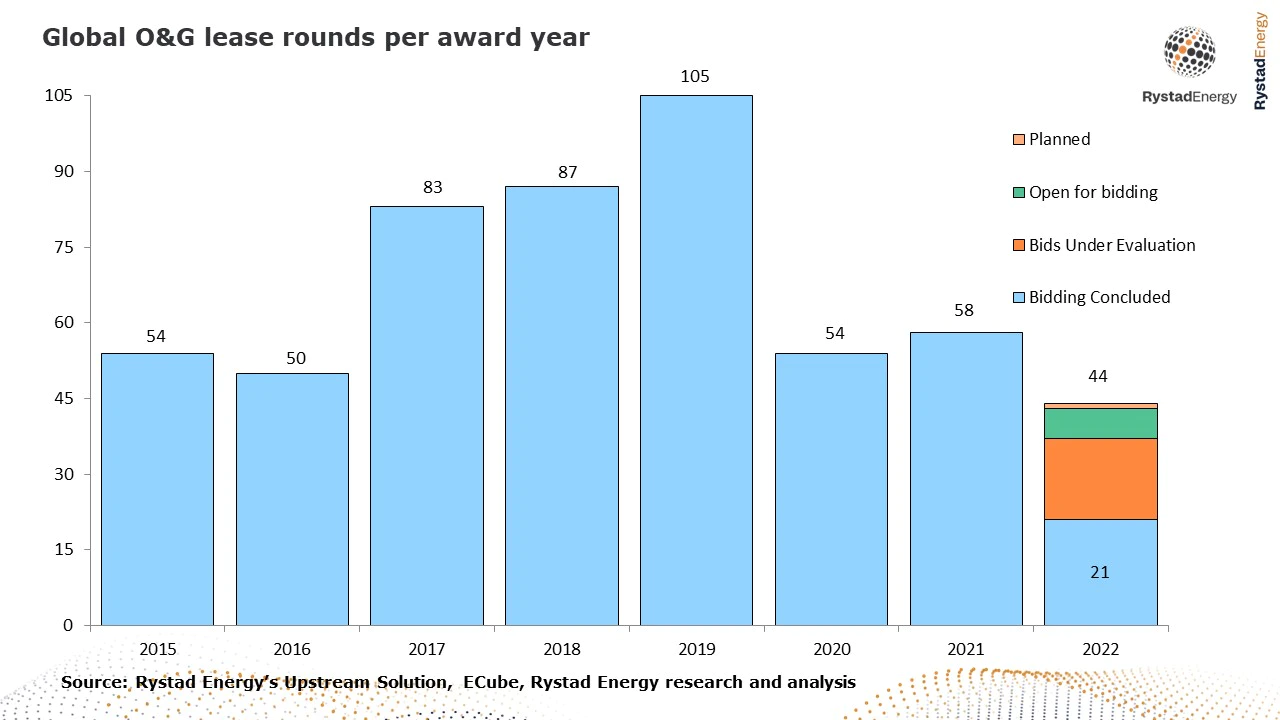
One important action your administration can take to ensure American energy independence is to publish a new Five-Year Outer Continental Shelf Oil and Gas Leasing Plan (“Five-year Plan”) as required under the Outer Continental Shelf Lands Act of 1953. Finalizing the Five-year Plan, with frequent area-wide leases, would help bring millions of additional barrels of U.S. oil to market. According to a recent analysis by Energy and Industrial Advisory Partners, a further delay of federal offshore leasing could result in 500,000 fewer barrels of domestic oil produced per day, 60,000 lost jobs, and a $900 million per year decrease in federal conservation funding. .
The four Democrats are Texas Representatives Vicente Gonzalez, Sylvia Garcia, Henry Cuellar and Lizzie Fletcher.
Meanwhile, the Senate approved language supporting the issuance of a new 5 Year Program ASAP. Four Democrats -Joe Manchin (D-WV), Kyrsten Sinema (D-AZ), John Hickenlooper (D-CO), and Mark Kelly (D-AZ) – voted for the measure.
WASHINGTON, D.C. — The U.S. Department of Energy (DOE) today announced it is initiating a long-term replenishment plan for America’s Strategic Petroleum Reserve (SPR) to ensure that it will continue to deliver on its mission as an available resource to alleviate domestic and global crude oil supply disruptions.The buyback process will begin with a call for bids to repurchase a third of the 180 million emergency barrels released as part of a coordinated action with our international partners …
OCS Lands Act, 43 U.S. Code § 1332 – Congressional declaration of policy
(3)the outer Continental Shelf is a vital national resource reserve held by the Federal Government for the public, which should be made available for expeditious and orderly development, subject to environmental safeguards, in a manner which is consistent with the maintenance of competition and other national needs;
Current reality:
International energy markets (and consumers) are under stress
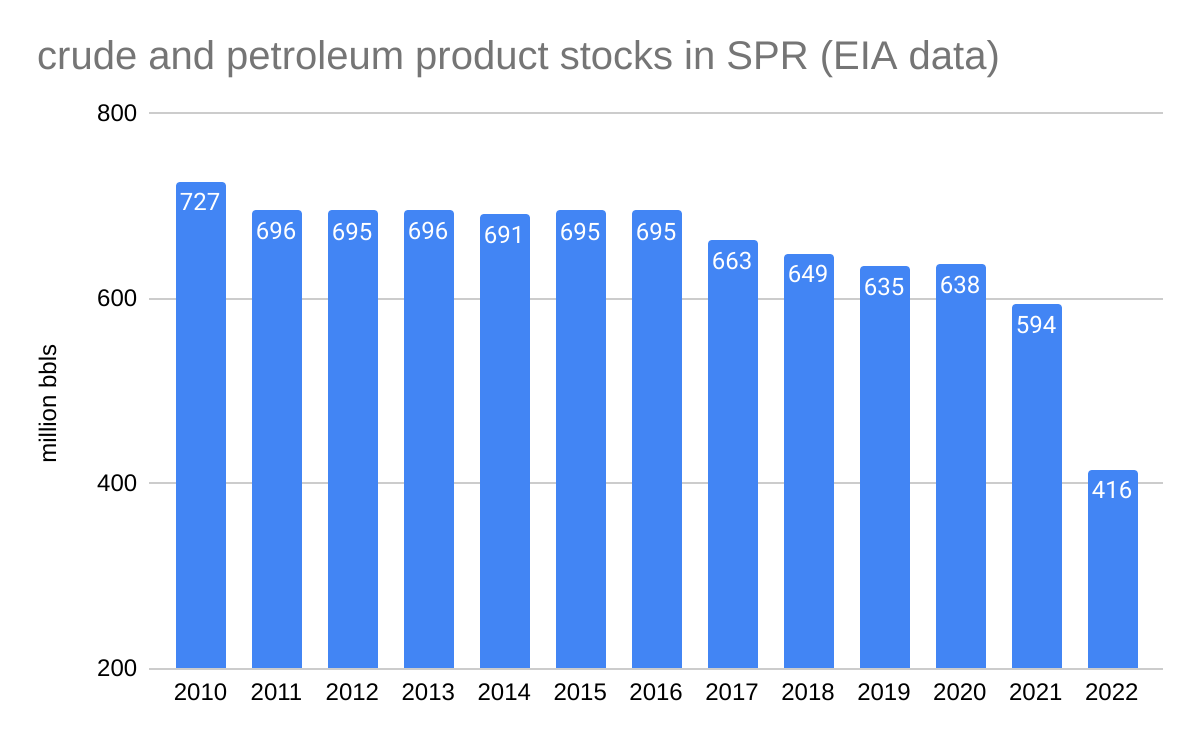
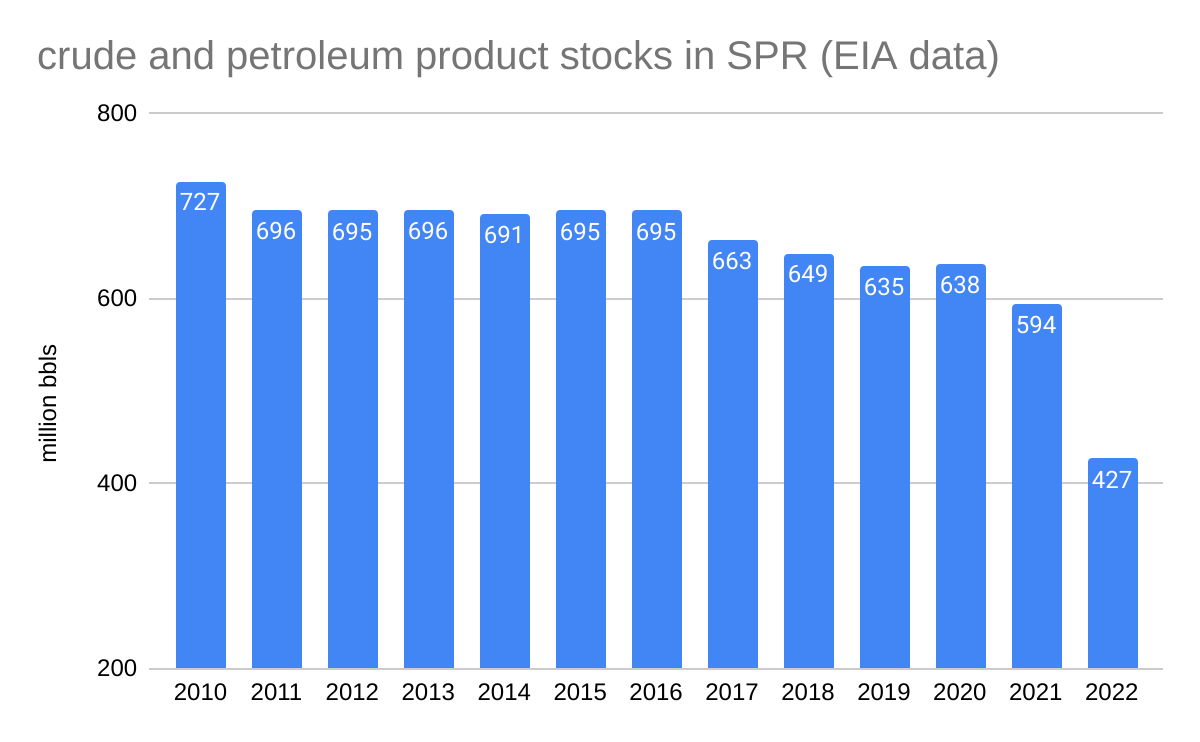
US is withdrawing 1 million BOPD from the Strategic Petroleum Reserve
Very limited access to offshore land for oil and gas operations
Germany will work with the Dutch exploration and production company, ONE-Dyas, to operate a gas field in the North Sea above Schiermonnikoog and the German Wadden island of Borkum, Dutch broadcaster NOS reported on Wednesday.
The announcement was made on Tuesday by Bernd Althusmann, economy minister of the state of Lower Saxony, NOS reported.
“We cannot afford to ask the Netherlands for more gas and continue to refuse to extract our own gas,” Althusmann said.
This article is primarily about Texas shale oil production. Offshore production, particularly in deepwater areas, is much more capital intensive, requires longer lead times, is exclusively on government leases, and is highly regulated by multiple agencies. These factors weigh against quick responses to market conditions. A Bloomberg article about Shell’s Vito project provides a good offshore perspective.
Vito
Another important factor in the offshore sector is that the major oil and gas producers seem to be going through an identity crisis, torn between what they are and what they (aided by some loud and powerful voices) think they should be. The future of these companies is dependent on how they navigate through all of this. The need for oil and gas is clearly not going away (see EIA projection below). Who will provide the supply and where will it be produced?
There are no private offshore lands, and the future of US offshore production is almost entirely in the hands of the Federal government. It has now been 525 days since the last offshore lease sale. The Administration chose not to appeal the DC Federal Court decision vacating Sale 257, leaving that to the State of Louisiana and API (parties that actually support offshore oil and gas leasing).
It’s disappointing that the reasoning behind the judge’s Sale 257 decision has received so little attention, especially given that it hinged on BOEM not analyzing the benefit of high oil prices. (i.e. <leasing = <production = >prices = <intl consumption = < CO2) The decision was issued as Russian troops were amassing on the Ukraine border only 28 days before the invasion. Oil prices (WTI) had already reached $87/bbl and would soon spike to $120/bbl, so the decision embracing higher oil prices was (at best) bad timing. Keep in mind that this was not a matter of BOEM failing to consider GHG issues; BOEM had conducted those assessments. The judge’s decision was specific to BOEM not analyzing the GHG benefits of reduced foreign consumption as a result of the higher prices associated with reduced leasing.
The offshore world lost an outstanding petroleum geologist when my friend and former colleague Paul Post passed away last week. His detailed obituary is linked.
Paul was the world’s leading authority on the oil and gas resource potential of the US Atlantic. He was also a gifted speaker who was skilled at presenting technical data to lay audiences. As Paul explained it, the US Atlantic has not been explored in paleo deep- and ultra-deepwater areas using exploration concepts proven successful in analogous West African and South American settings where massive discoveries have been made.
Paul estimated that the US Atlantic could contain 21.4 billion BOE with the major caveat that the presence of a working petroleum system was required and that could only be determined through drilling. At this point, the probability of major discoveries was thus modest, but the resource potential (should discoveries be made) was massive.
Unfortunately, Paul’s theories may never be tested. Prior to the 2020 elections, our self-described “energy dominance”President cynically withdrew the prospective Mid and South Atlantic areas through 2032. He had already withdrawn the highly prospective Eastern Gulf of Mexico in response to Florida political interests (even though the best EGOM prospects are more than 100 miles from Florida’s coast). Our current energy deficit President seems content to not hold any offshore lease sales while drawing down our strategic reserves.
Oh well, it was a great privilege to have known Paul and worked with such a dedicated professional. I’ll close with a couple of his favorite quotes:
“Uncertainty is an essential and nonnegotiable part of a forecast.”
Nate Silver, The Signal and the Noise
“The time to hesitate is through.”
Jim Morrison, Poet, Songwriter, and Lead Singer of The Doors
The Unleashing American Energy Act requires a minimum of two oil and gas lease sales to be held annually in available federal waters in the Central and Western Gulf of Mexico Planning Area, and in the Alaska Region of the Outer Continental Shelf.
The Securing American Energy and Investing in Resiliency Act requires the Department of the Interior to conduct all remaining offshore oil and gas lease sales in the current leasing plan and issue leases won as a result of Lease Sale 257.
The Strategy to Secure Offshore Energy Act requires the publications of the 2022-27 plan for offshore oil and gas lease sales by the time the current plan expires on June 30, 2022.
This WSJ report, if accurate, reflects the mindset that you can increase oil production on demand when absolutely necessary, and avoid committing to longer term oil and gas supplies. The goal of such thinking is to address supply crises without alienating the uncompromising climate ultras. You suspend lease sales, deny new pipelines, and demonize oil and gas and the people who produce it. When supplies tighten and prices spike, you tap the strategic reserve, appeal to OPEC, talk to Venezuela and Iran, and ask Canada to ship more oil in rail cars or trucks (but no new pipelines please!). .
Below is a pie chart constructed using data from a 2018 DOT report to Congress. For logistical and economic reasons, pipelines are overwhelmingly the crude oil transport method of choice. Rail cars and trucks are called on where there are no pipeline options.
Looking at the systems, one would assume that pipelines have safety and environmental advantages. Loading and unloading hundreds of tanks would seem to be inviting spills, although most would presumably be small. The DOT data bear this out. On a volume transported basis, spill incidents occurred nearly 15 times more frequently for rail cars and trucks than they did for pipelines.
For pipeline(s), an incident occurred approximately once every 720 million gallons of crude oil shipped. For rail, an incident occurred approximately once every 50 million gallons of crude oil shipped. For truck(s), an incident occurred approximately once every 55 million gallons of crude oil shipped.
Looking at the percentage spilled, pipelines also had a significant (7.6 times) advantage over rail, but only a slight advantage over trucks.
Volume of Crude Oil Shipped and Spilled by Pipeline, Rail, and Truck, 2007-2016
Pipeline
volume shipped (k gal)
1,298,630,088
volume spilled (k gal)
13,161
% spilled
0.0010%
Rail
volume shipped (k gal)
23,052,960
volume spilled (k gal)
1,751
% spilled
0.0076%
Truck
volume shipped (k gal)
47,894,868
volume spilled (k gal)
521
% spilled
0.0011%
Because fatalities or hospitalizations were extremely rare, DOT chose not to normalize those data. There were a total of 3 fatalities associated with both pipeline and truck shipments. While no fatalities were associated with rail shipments, DOT noted that 47 deaths resulted from a crude oil derailment in Lac Megantic, Quebec in 2013. BOE further reminds readers that this train was transporting Bakken crude from North Dakota to a refinery in St. John, New Brunswick.
The bottom line is that you have to plan ahead to satisfy future supply needs. This is particularly true for the offshore sector where the lead times are longer, but the production volumes relative to the number of wells and facilities are higher (a good thing). The need for oil and gas is not going away, nor are threats to energy security. There are plenty of people in the U.S. Department of the Interior who understand this. Empower them to safely expedite leasing, exploration, and development!
With regard to shelf drilling activity (<1000′ water depth), a total of 55 wells were started in 2021 and 2022 (first quarter). Only 2 of these wells, both by Walter Oil and Gas, were classified as exploratory. The most active drillers (by far) were Arena Offshore (30 well starts) and Cantium LLC (16 well starts). Ankor, EnVen, and Talos were the only other operators with drilling activity.