Feeds:
Posts
Comments

Archive for the ‘energy policy’ Category

500 days (and counting) since the last US offshore oil and gas lease sale. Abbreviated chronology:

Read Full Post »

Five projects have already been approved by FERC in Louisiana, with seven more in Texas and Mississippi.

New Fortress Energy’s Fast LNG liquefaction solution is particularly interesting.

New Fortress Energy Inc. (NASDAQ: NFE) (together with its affiliates, “NFE”) today announced that it has concurrently filed applications with the U.S. Maritime Administration, the U.S. Coast Guard and U.S. Department of Energy to request all necessary permits and regulatory approvals to site, construct and operate a new offshore LNG liquefaction terminal off the coast of Louisiana (“the Project”) with a capacity of exporting approximately 145 billion cubic feet of natural gas per year, equivalent to approximately 2.8 million tons per annum (MTPA) of LNG.

The Project will be located in federal waters approximately 16 miles off the southeast coast of Grand Isle, Louisiana, and will access abundant U.S. gas supply by leveraging existing infrastructure. Procurement of all long-lead materials is complete and modular assembly of equipment is underway. Subject to the receipt of all required permits and approvals, NFE targets beginning operations in the first quarter of 2023.

businesswire

Read Full Post »

The current 5 year leasing program expires on June 30, 2022. Absent a new program, no lease sales may be held.

We are writing to urge you to develop and implement a new Five-Year Program for oil and gas production in the Gulf of Mexico without delay.

Read Full Post »

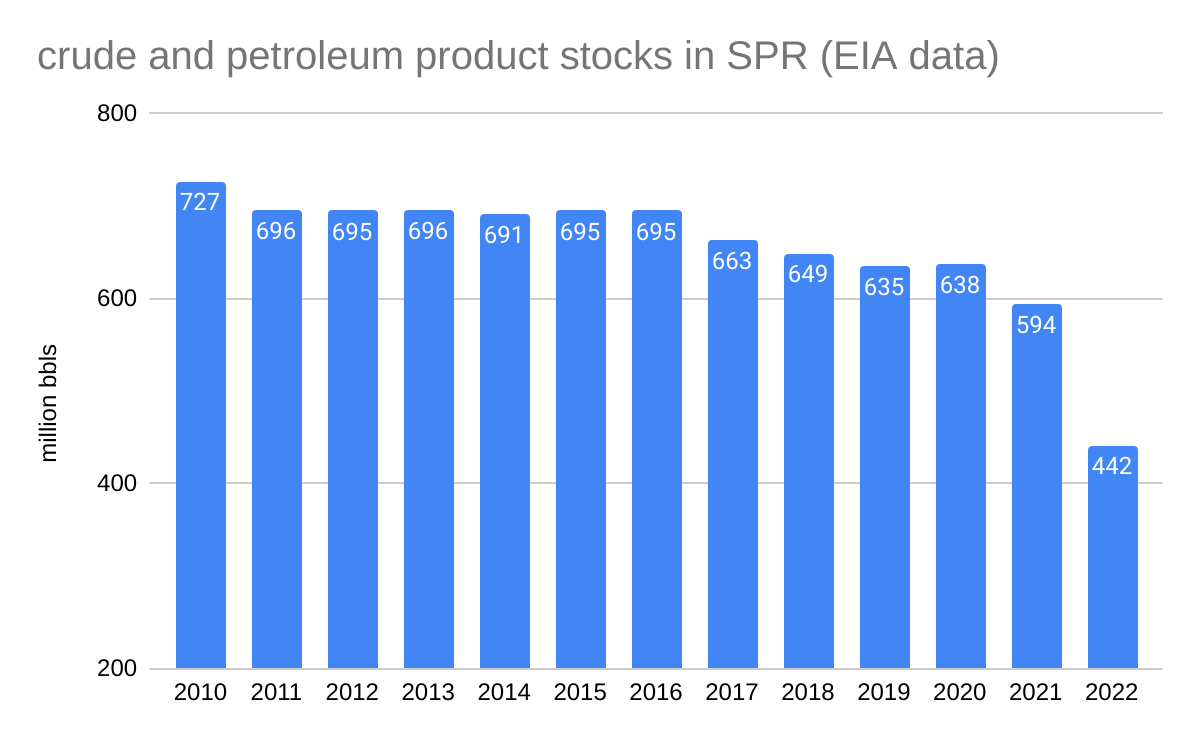
In addition to the obvious concerns about depleting the strategic petroleum reserve, further mortgaging our economic future, and increasing national security risks, the directive to withdrawal 1 million BOPD from the Strategic Petroleum Reserve for 6 months raises a few comments specific to US offshore production:

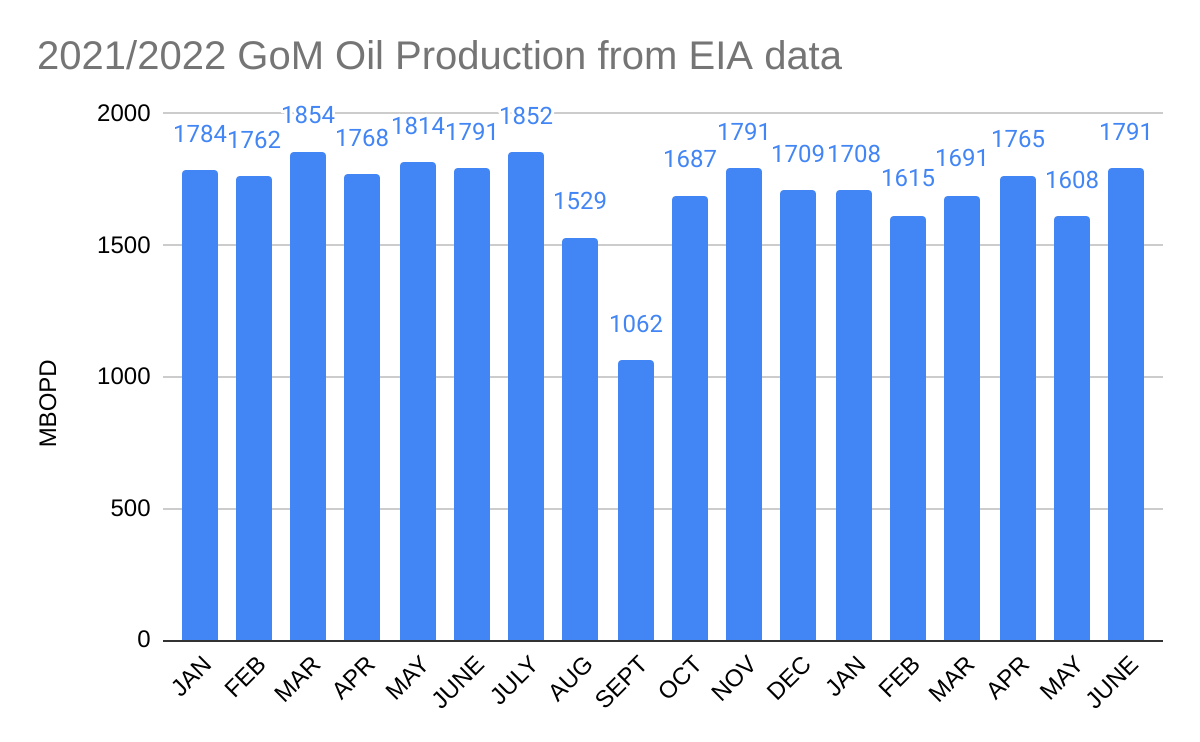
  • The 1 million BOPD withdrawal is equivalent to ~60% of the daily production from the entire Gulf of Mexico offshore sector. How will this massive 6-month withdrawal will effect regional markets and logistics?
  • Will the Dept. of Energy have to assess the GHG effects associated with their withdrawal of oil from the SPR? More specifically, will DOE be required to assess the increase in GHG emissions as a result of the increased foreign oil consumption that will result from the reduction in oil prices? This is what Judge Contreras ordered BOEM to do when he vacated Gulf of Mexico sale 257.
  • If it’s okay to produce and consume oil from the SPR facilities (mapped below), why is new leasing and exploration being constrained in the adjacent Gulf of Mexico?

Read Full Post »

COP26 bans oil industry. Is this helpful?

UAE Energy Minister Suhail al-Mazrouei has most definitely not forgotten:

“I think in COP 26 all the producers felt they were uninvited and unwanted but now we are again superheroes, it’s not going to work like that,” he said.

Reuters

Read Full Post »

Technological advances, most notably horizontal drilling and hydraulic fracturing, and private initiative on private land changed all of that.

“The US is going to emerge this year as the world’s largest LNG exporter, and it is clear that US LNG is a geopolitical asset for the United States and for Europe.”

Daniel Yergin

Read Full Post »

“I am deeply honored to join the Interior Department and continue my public service career on behalf of the American people. I’ve dedicated my life to keeping the public safe, and I look forward to continuing that service alongside the Bureau of Safety and Environmental Enforcement’s incredible career employees,” said Director Sligh.

DOI Press Release

Excellent opening comment. Best wishes to Director Sligh in this very important position. BSEE is critical to our economic future and energy security.

Read Full Post »

  • While the text of the announcement implies otherwise, the new name prioritizes the “transition” over concerns about energy supply, security, and reliability. In that regard, the timing seems questionable.
  • Why not the North Sea Energy Authority (NSEA) or UK Offshore Energy Authority (UKOEA)?
  • Will OPEC+ be impressed? Perhaps China will add a few coal-fired power plants in honor of the name change.
  • Dan Yergin understands that energy transitions are complicated. Quoting Yergin’s outstanding article in the Atlantic:

The term energy transition somehow sounds like it is a well-lubricated slide from one reality to another. In fact, it will be far more complex: Throughout history, energy transitions have been difficult, and this one is even more challenging than any previous shift.

The 19th century is known as the “century of coal,” but, as the technology scholar Vaclav Smil has noted, not until the beginning of the 20th century did coal actually overtake wood as the world’s No. 1 energy source. Moreover, past energy transitions have also been “energy additions”—one source atop another. Oil, discovered in 1859, did not surpass coal as the world’s primary energy source until the 1960s, yet today the world uses almost three times as much coal as it did in the ’60s.

Read Full Post »

“Norway cannot escape the unpleasant fact: this is a form of war profit”, daily paper Dagbladet wrote in an editorial. “While Ukraine is being destroyed, and most other countries are mainly feeling the negative effects of the war, such as higher energy prices, higher food prices and general inflation, we are making a gain”, it said.

thelocal.no

While such introspection is commendable, energy supply issues in Europe would be far worse were it not for Norway’s actions including:

Read Full Post »

EIA

While demand will remain strong, supply is a concern:

“Capex cuts by international oil companies and national oil companies in 2020 was about 35%,” he said. “We’re now showing another 23% reduction in capex levels” from pre-pandemic levels this year. In 2019, E&P companies spent $525 billion, an amount which plummeted to $341 billion in 2021, he added. “We have to get back to $525 billion over several years until 2030 to restore market balance,” McMonigle said. “I’m afraid what we’re seeing with the energy crisis is on our doorstep.”

Joseph McMonigle, World Oil Congress

Read Full Post »

« Newer Posts - Older Posts »