Feeds:
Posts
Comments

Archive for the ‘energy policy’ Category

Per their court filing, Montana, Alabama, Alaska, Arizona, Arkansas, Georgia, Kentucky, Mississippi, Missouri, Nebraska, Oklahoma, Texas, Utah, and West Virginia seek to protect oil and gas production in the Gulf of Mexico and throughout the United States. The States’ brief is rather political, which is not surprising given their support for offshore leasing and the apparent alignment of the Federal defendants and the plaintiffs in support of the decision by Judge Contreras to vacate the sale.

As was expected at the time of the ruling, the court decision on Sale 257 shut down offshore leasing for the remainder of the 2017-22 Five Year Plan. Secretary of the Interior Haaland has promised that a new proposed leasing plan will be released by 6/30/2022, but that is just the start of the lengthy planning process.

Interesting NEPA data from the States’ brief:

  • In 2018 CEQ found that, across the federal government, the average EIS completion time and issuance of a Record of Decision was over 4.5 years and the median was 3.6 years.
  • On average, Interior takes five years and the Department of Transportation 6.5 years to complete an EIS—and that’s not including the usual years of resulting litigation.
  • CEQ found that “across all Federal agencies, draft EISs averaged 586 pages in total, with a median document length of 403 pages.” As a result, “[t]he entire original purpose of doing NEPA analysis has been lost along the way to creating mountains of data and information in the hopes of successfully defending against inevitable litigation.”

Many thanks to the Texas AG for making the States’ brief readily available online. Unfortunately, that is not the case for the other briefs filed in support of the sale.
Read Full Post »

Per a very good OGJ update, API, Louisiana, Chevron, bp, Shell, NOIA, the EnerGeo trade group of geophysical contractors, 14 states filing jointly, and the US Chamber of Commerce have submitted briefs to the US Court of Appeals for the District of Columbia Circuit.

Don’t expect a decision soon. The environmental advocacy groups are not scheduled to file their responses until Aug. 26, after which replies can be filed. No decision is expected before November at the earliest.

Previous posts and background information on Lease Sale 257.

Read Full Post »

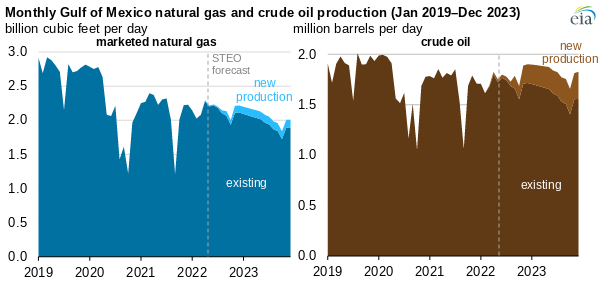
The EIA forecast looks about right. Production from new projects should offset existing field declines and maintain relatively stable volumes over the next 2-3 years. In the intermediate and longer terms we have problems given the dearth of exploratory drilling and new discoveries, and the complete absence of leasing.

Read Full Post »

Kudos to Mike Wirth. It’s nice to see a CEO with some backbone. Most importantly, he defended his employees and their vital contribution to society.

“Chevron and its 37,000 employees work every day to help provide the world with the energy it demands and to lift up the lives of billions of people who rely on these supplies. Notwithstanding these efforts, your Administration has largely sought to criticize, and at times vilify, our industry. These actions are not beneficial to meeting the challenges we face and are not what the American people deserve.”

The comment that follows is interesting. Perhaps he wants to hear from the Climate Policy Office?

“Chevron will engage in this week’s meeting with Secretary Granholm. I encourage you to also send your senior advisors to this meeting, so they too can engage in a robust conversation.”

Here is the full letter.

Read Full Post »

  • Secretary of the Interior Haaland committed to releasing the Proposed Program by June 30, 2022. Will that deadline be met? BOE’s guess is that the deadline will be met. However, the White House Climate Policy Office, which seems to control energy policy, may have other ideas.
  • Number of regions in which lease sales will be proposed: BOE thinks 2, the Gulf of Mexico and Alaska. There is no chance of >2. A GoM only proposed program is possible, but we doubt that Alaska will be eliminated at this early stage.
  • Number of lease sales proposed: BOE guesses a total of 7 sales, 5 in the GoM and 2 in Alaska. The “under” is probably a better bet than the “over,” unless they eschew area-wide GoM sales and propose an increased number of more targeted sales.

For comparison, the previous six 5-Year Programs have included 10-12 GoM sales (11.3 average), 1-8 Alaska sales (4.3 ave.), 0-1 Atlantic sales (0.3 ave.), and no Pacific sales.

Read Full Post »

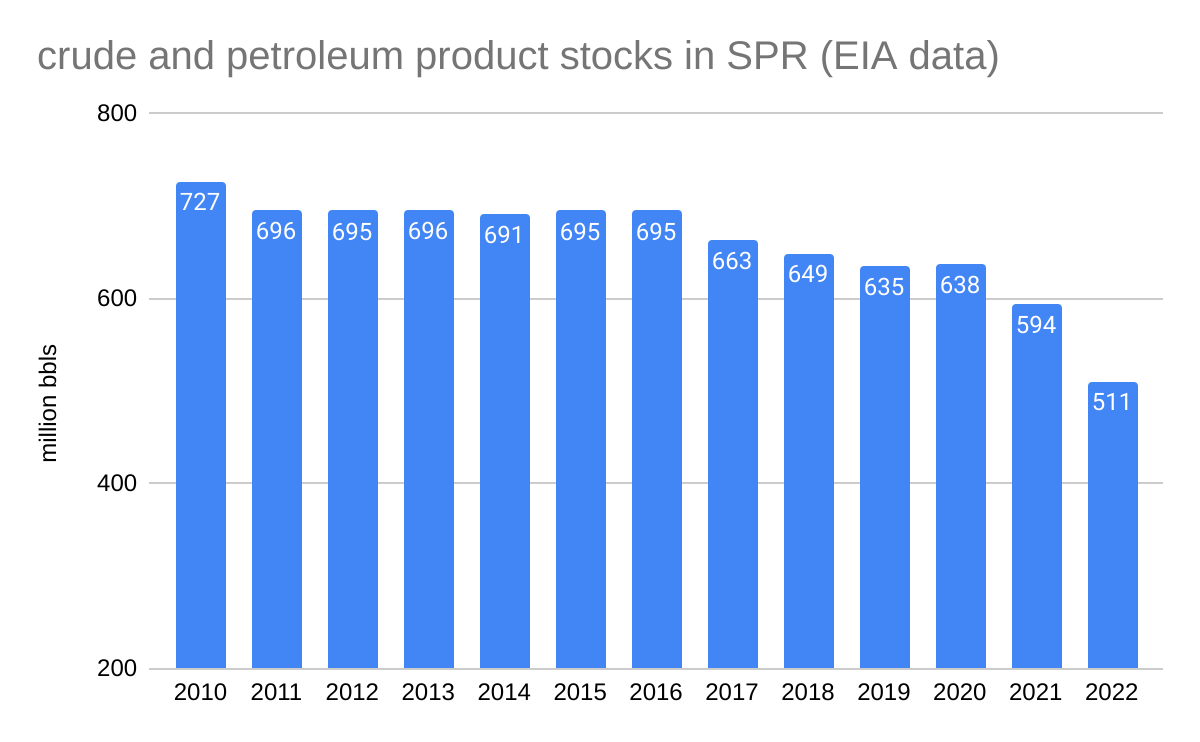
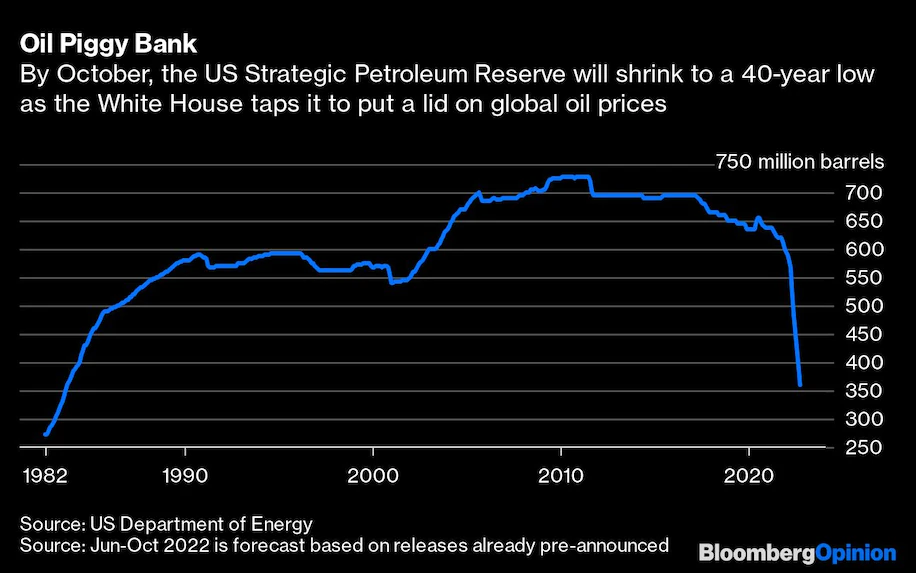
As of June, 2022
Bloomberg projection

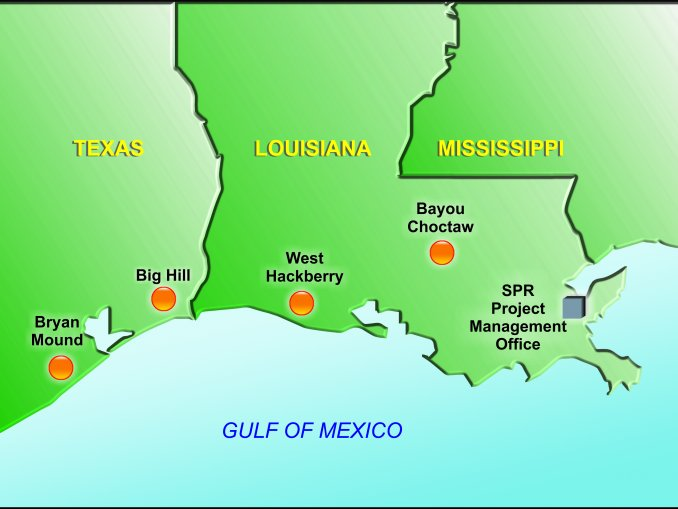
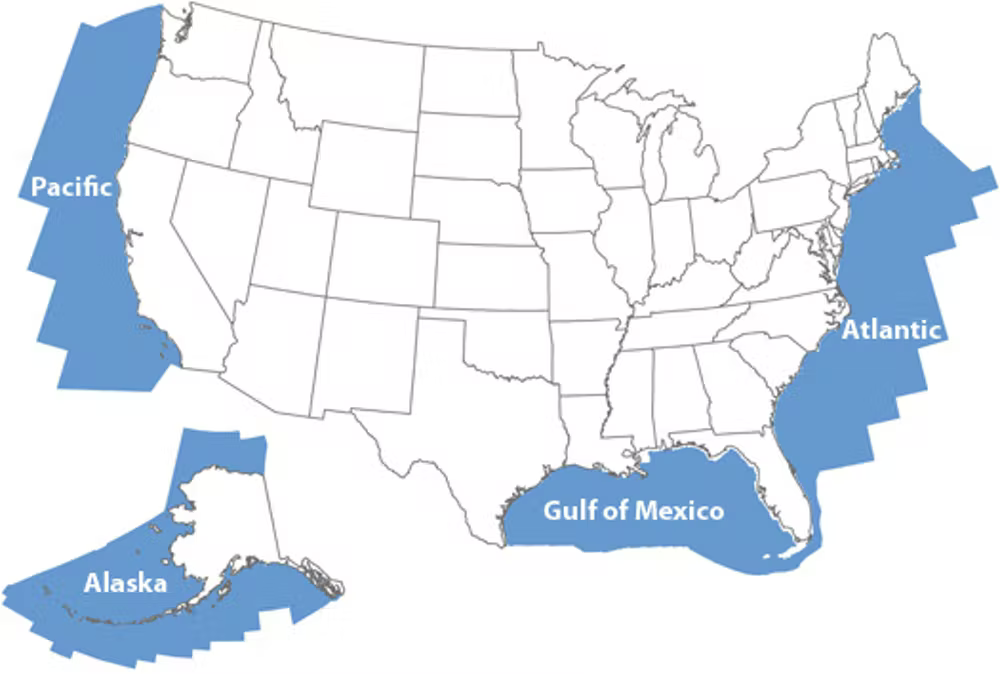
Meanwhile, no new leases have been issued in Federal waters immediately offshore from the SPR sites (see map below) for 580 days, the longest leasing gap since 1958.

Read Full Post »

Forbes

Apple has full control over the price of its products and trounces ExxonMobil’s earnings in every quarter. Apple could slash the price of its products and still make a huge profit. But ExxonMobil can’t slash the price of its products because it doesn’t set the price.

Forbes

Read Full Post »

Good response from Exxon to the White House letter.

In the short term, the U.S. government could enact measures often used in emergencies following hurricanes or other supply disruptions — such as waivers of Jones Act provisions and some fuel specifications to increase supplies. Longer term, government can promote investment through clear and consistent policy that supports U.S. resource development, such as regular and predictable lease sales, as well as streamlined regulatory approval and support for infrastructure such as pipelines.

Exxon

Perhaps Exxon will return to the Gulf of Mexico if the Administration commits to regular and predictable oil and gas lease sales. The company hasn’t drilled a well in the Gulf since 2019.

The longer API letter comments on the fundamentals of refining markets and operations while also addressing the Administration’s “end fossil fuel rhetoric” and negative regulatory signals. Who would want to make major refinery investments under these circumstances?

Read Full Post »

IG Report

We determined that over approximately 5 years, the energy company’s venting and flaring activities exceeded regulatory limits without the required approvals, resulting in a loss of Federal mineral royalties and resources. More specifically, we identified approximately 229,066 MCF of vented and flared natural gas as suspicious or exceeding the allowable amount across four platforms in the Gulf of Mexico between January 2014 and April 2020. We presented our findings to ONRR, which assisted us in analyzing the energy company’s venting and flaring activities and determining the amount of lost Federal mineral royalties. Based on this analysis, ONRR submitted and secured a proof of claim in the amount of $712,857.82 for unpaid mineral royalties during the energy company’s bankruptcy proceeding.

OIG report 6/13/2022

Comments:

  1. The report doesn’t name the company, but one can make an educated guess based on some of the information provided (e.g. number of platforms the company operated, bankruptcy proceedings, etc.)
  2. The regulator usually finds out about false or misleading recordkeeping. Reports from employees, anonymous or otherwise, are a common source of such charges, as was the case here. (In my District in California, a toolpusher informed us that BOP pressure test records were being falsified. This led to multiple felony convictions.)
  3. The IG’s recommendations to BSEE and ONRR are reasonable and appropriate:
    1. Examine venting and flaring reports for patterns that may reflect violations or amounts that exceed permissible limits.
    2. Develop a process to ensure that royalties are being paid for improperly flared or vented gas.
  4. As BOE has previously reported, available public flaring data do not match. These data inconsistencies should be addressed.
  5. BSEE/ONRR should make more detailed flaring/venting data publicly available so differences between facilities and sectors (e.g. deepwater vs. shelf) can be assessed. Efforts should also be made to post these data in a more timely manner. Data for 2021 are still not available.

Read Full Post »

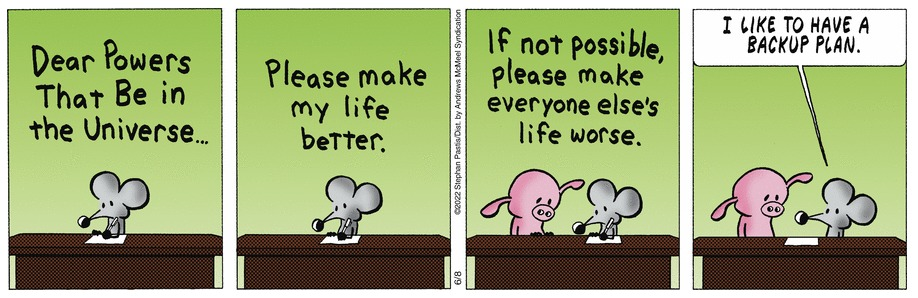
The primary goal of energy policy should be ample, reliable supplies that are sufficient to ensure reasonable consumer prices. The “Backup Plan” (below) is only acceptable in cartoons.

From an offshore energy policy standpoint, remember this:

Gulf of Mexico Lease Sale 257 was vacated on 1/27/2022 because DC Federal Court Judge Contreras ruled that BOEM failed to consider the “positive” effect that higher prices would have on reducing foreign consumption and the associated GHG emissions. Apparently the Court failed to consider that higher oil and gas prices would:

The Administration chose not to appeal that decision, although API and the State of Louisiana have. It has now been 575 days since the last Federal offshore oil and gas lease sale.

Read Full Post »

« Newer Posts - Older Posts »