The quote and graphic are from Jens Christiansen, a Danish physicist and nuclear power advocate.
Energy reality on display (vs. COP theater):

Posted in climate, energy policy, Uncategorized, Wind Energy, tagged COP 28, Denmark, fossil fuel, Jens Christiansen, renewable energy on December 4, 2023| Leave a Comment »
The quote and graphic are from Jens Christiansen, a Danish physicist and nuclear power advocate.
Energy reality on display (vs. COP theater):
Posted in energy policy, Gulf of Mexico, hurricanes, Offshore Energy - General, tagged 2 million bopd, Argos, Gulf of Mexico, hurricanes, oil production, Vito on November 30, 2023| Leave a Comment »
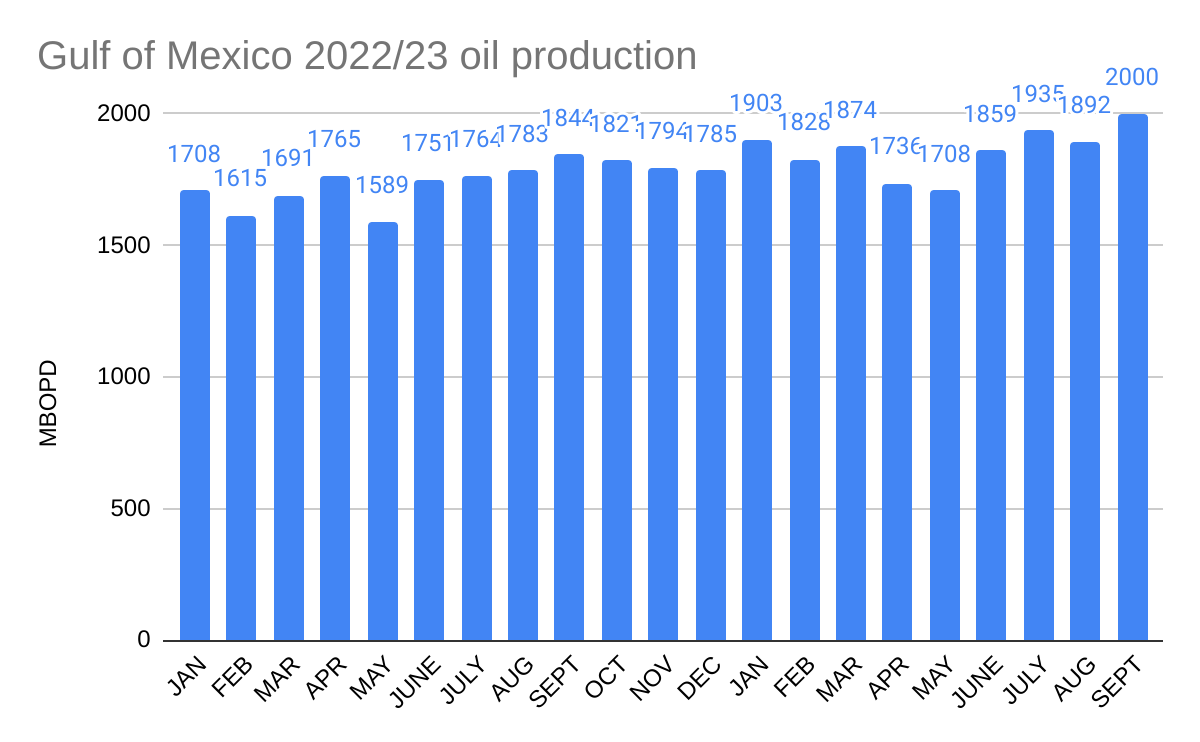
Per EIA, September Gulf of Mexico production averaged 2 million bopd on the button! New production from Vito and Argos were no doubt contributors, as production reached the 2 million bopd mark for only the third month in the history of the OCS program. The other 2 months were in 2019.
Imagine what US offshore production might be if the OCS oil and gas program was actually managed to succeed!
Also, as the official hurricane season comes to a close today, we are fortunate in that there have been no production shut-ins from tropical storms in 2023.

Posted in energy policy, Offshore Energy - General, tagged chicken-egg dilemma, deep sea mining, ISA, regulations, safety management on November 29, 2023| Leave a Comment »

This interesting Scientific American article ends with a short paragraph that our regulatory scholars may want to ponder:
Mining’s larger future will rest largely on how ISA (the International Seabed Authority) finalizes its rule book amid the rush to scour the seafloor. ISA has a rare chance to regulate an industry before the industry has begun.
Thoughts:
Posted in energy policy, Gulf of Mexico, Offshore Energy - General, tagged 5 year leasing plan, Coast Guard, floating production units, Lars Herbst, Shell, Whale on November 17, 2023| Leave a Comment »
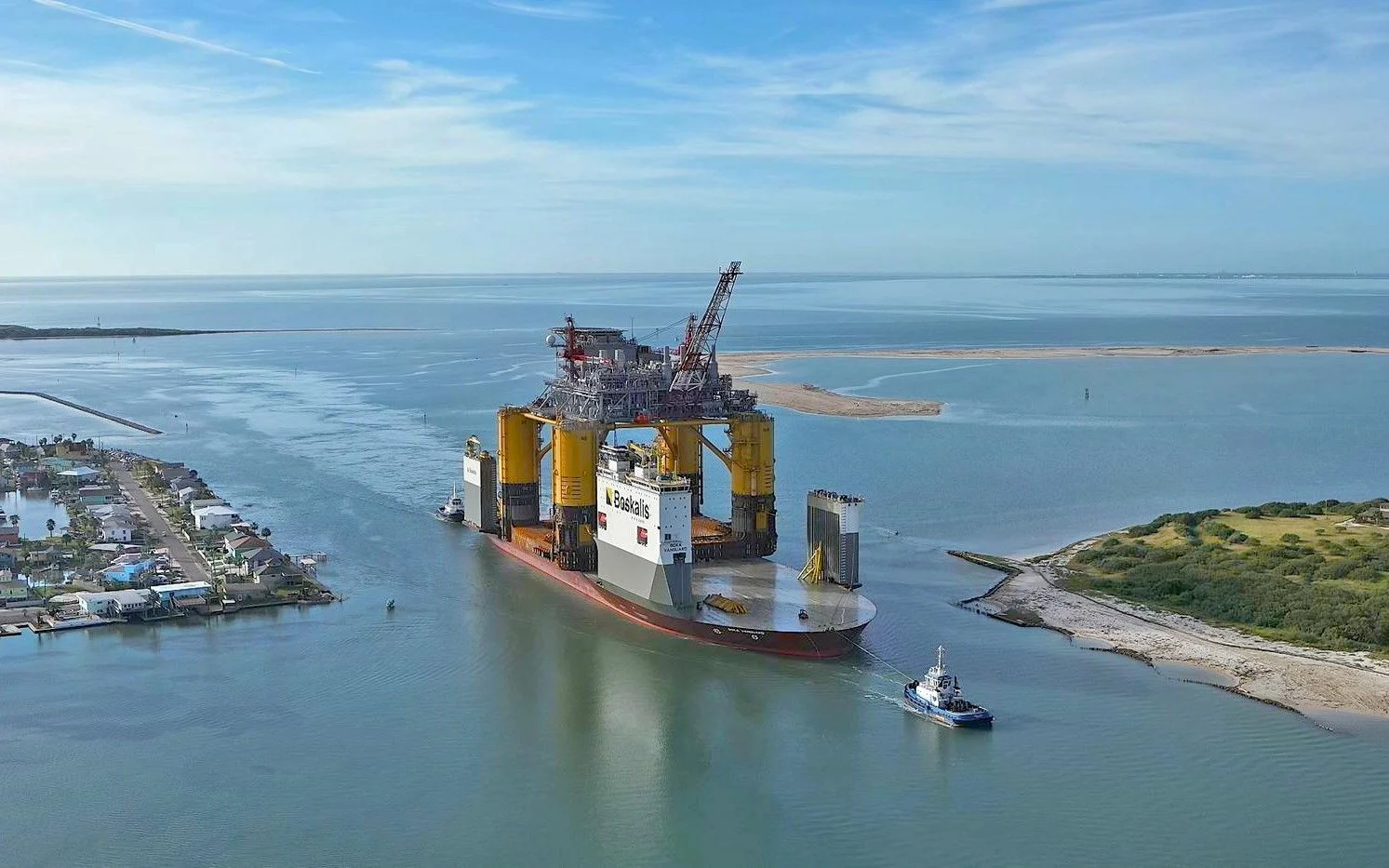
Lars Herbst noted another endangered whale sighting by the US Coast Guard. Unlike their erroneous Rice’s whale report in September (still waiting for their mea culpa), the Coast Guard has gotten this one right. The 25,000 ton Whale is pictured above.
Whale’s species is indeed endangered with the most serious threats coming from a faraway place on the Potomac River. The “newborn” Whale is one of only 15 of its species in the Gulf of Mexico. The entire platformus deepis genus numbers only 59, but their importance to society is enormous (read more).
Perhaps the wise people who control our offshore lands will do more to encourage and support these floating behemoths. Unfortunately, their 5 year management plan is not encouraging in that regard.
Posted in energy policy, Gulf of Mexico, Offshore Energy - General, tagged BOEM, Gulf of Mexico, Lease Sale 261 on November 16, 2023| Leave a Comment »
As a result of the order issued by the United States Court of Appeals for the Fifth Circuit on Nov. 14, 2023, the Bureau of Ocean Energy Management (BOEM) has scheduled Lease Sale 261 for Dec. 20, 2023.
The Gulf of Mexico oil and gas lease sale was originally scheduled for Sept. 27, 2023, and later scheduled for Nov. 8, 2023, in response to judicial orders.
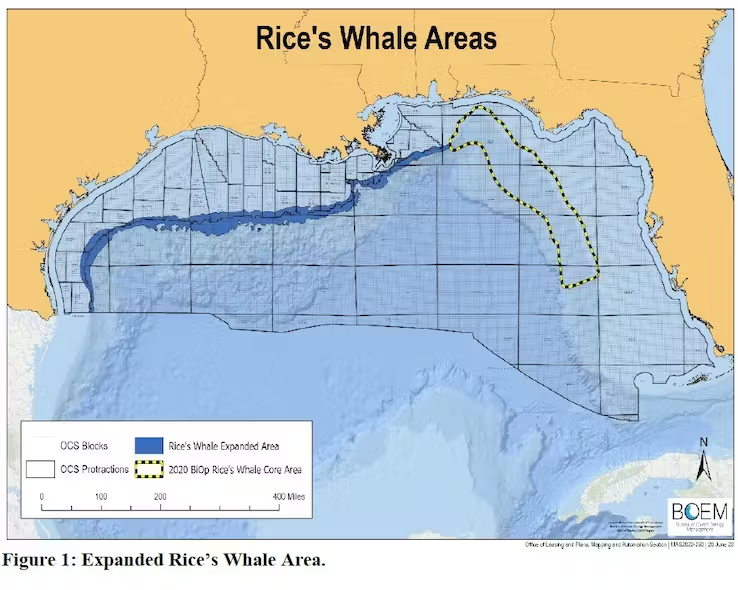
Pursuant to direction from the Court, BOEM will include lease blocks that were previously excluded due to concerns regarding potential impacts to the Rice’s whale population in the Gulf of Mexico. BOEM will also remove portions of a related stipulation meant to address those potential impacts from the lease terms for any leases that may result from Lease Sale 261.
A Final Notice of Sale will be published in the Federal Register on Nov. 20, 2023, and will be available for public inspection on Nov. 17, 2023.
BOEM will live stream the opening of bids at 9 am CDT on Dec. 20, 2023. All terms and conditions of the lease sale are listed in the FNOS. For more information, go to: www.boem.gov/sale-261.
BOEM
Posted in energy policy, Gulf of Mexico, Offshore Energy - General, tagged 5th Circuit, BOEM, Christmas, Lease Sale 261, sale date on November 15, 2023| 2 Comments »
The sale could be held sooner. However, since BOEM asked for 37 days, I’m assuming that the sale will be on December 21.
In the 70 year history of the oil and gas leasing program, this will be the sale date that is closest to Christmas. Yet another major milestone for the offshore program! 😀

Posted in energy policy, Gulf of Mexico, Offshore Energy - General, tagged 5th Circuit, API, BOEM, court ruling, Lease Sale 261, Louisiana, Rice's whale on November 15, 2023| Leave a Comment »
Order is pasted below and attached.
IT IS ORDERED and ADJUDGED that the Intervenors’ appeal is DISMISSED. As for BOEM’s limited appeal as to the timing of the sale, we hereby AMEND the district court’s preliminary injunction only to the extent that the deadline for conducting Lease Sale 261 shall now be thirtyseven days from the date of the issuance of the mandate in this appeal.
IT IS FURTHER ORDERED that each party bear its own costs on appeal.
Background information and related posts.
Posted in climate, energy policy, Offshore Energy - General, UK, tagged annual licensing rounds, North Sea, North Sea Transition Authority, UK, UK EiTi on November 9, 2023| Leave a Comment »
Each annual licensing round will only take place if key tests are met that support the transition to net zero. The first test is that the UK must be projected to import more oil and gas from other countries than it produces at home.
The second is that the carbon emissions associated with the production of UK gas are lower than the equivalent emissions from imported liquefied natural gas.
If both these tests are met, the NSTA will be required to invite applications for new licences annually.
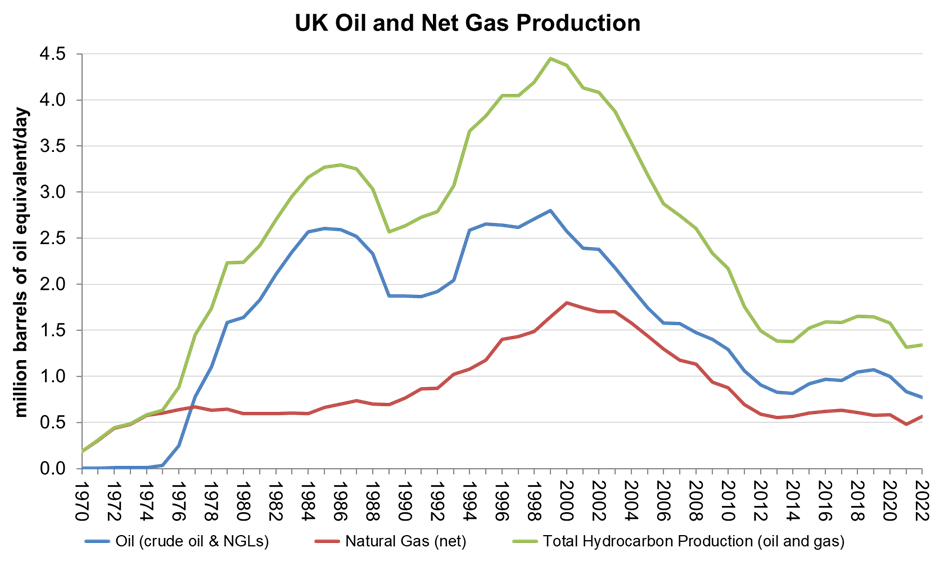
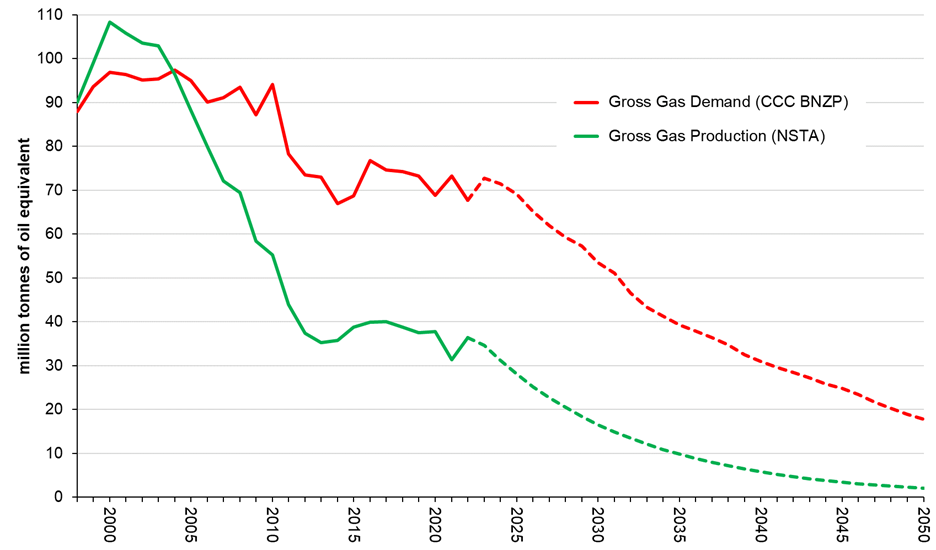
The “key tests” would seem to ensure annual licensing rounds for the foreseeable future. The charts below are from UK EiTi. The first chart illustrates the sharp decline in UK production over the past 20 years. The second and third charts illustrate the large projected gaps between supply and demand, particularly for natural gas.
In 2050, total production of oil and gas is estimated at ~10 million tonnes of oil equivalent. The projected 2050 demand is estimated at ~35 tonnes. For domestic production to exceed imports over the next 20-30 years, resource licensing and field development would have to be very successful and efficient.

With regard to the second test, carbon emissions from the production of UK gas should maintain their advantage over imported LNG given the energy required to liquefy and transport that gas.
It would have perhaps been more transparent to simply stipulate annual licensing rounds, but that would probably not have been politically acceptable.
Posted in energy policy, Offshore Energy - General, tagged Global Petoleum Group, Grenada, missing data, oil and gas exploration on November 8, 2023| Leave a Comment »

From the Amsterdam News:
“Encouraged by the Guyana Suriname finds, several other regional bloc member nations, including Barbados and Jamaica, have been ramping up efforts to attract companies to explore offshore acreages. The most determined of them seems to be Grenada, which is just north of oil and gas producers Trinidad and Venezuela.”
“Officials there say they are preparing to put out bids to attract some of the world’s largest exploration companies, but the 14-month new administration has said the previous government secreted away all the documents and data obtained from a 2018 exploration campaign by a little-known Russian firm, the Global Petroleum Group (GPG).”
“The group had told the previous administration that it had found commercial quantities of oil and gas in a well labeled Nutmeg 2, in about 400 feet of water, and that there were other promising prospects right nearby. But as the current Dickon Mitchell government gets ready to assess the island’s prospects, it has said there is nothing to work with.”
Grenada will no doubt be more careful about whom they issue future exploration licenses to and how they manage the data.
Posted in energy policy, Gulf of Mexico, Offshore Energy - General, tagged 5th Circuit, delay, Lease Sale 261, Rice's whale on November 6, 2023| Leave a Comment »
In light of the 5th Circuit’s order, holding the sale on 11/8 would have been messy for all sides in the Rice’s whale dispute. Seemingly, the only option for holding the sale prior to the Court’s decision on the injunction would have been the following:
Because the RIce’s whale stipulations would affect the value of all deepwater leases, bidders would be rolling the dice on the outcome of the case.
Also, absent legislative action, there will be no lease sale in 2024. This adds to the importance of Sale 261, and making sure the terms are understood.

