Timeframe for government and industry actions following the 2005 hurricane season.
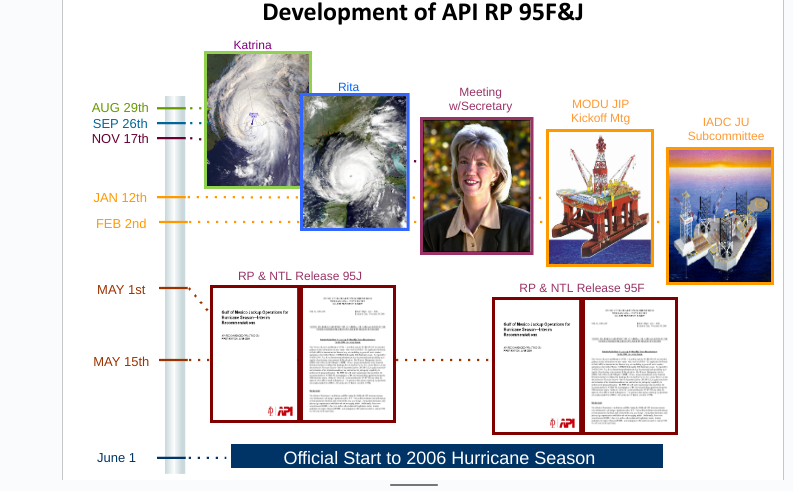
Optimally, the regulator establishes clear objectives for the operating companies and a schedule for achieving those objectives. This approach was demonstrated with great success following the 2005 hurricane season (Katrina and Rita) when numerous mooring system and other stationkeeping issues were identified.
Minerals Management Service Director Johnnie Burton sent a letter (attachment 1) to industry leaders calling for a face-to-face meeting with Department of the Interior Secretary Gale Norton. The Secretary outlined her concerns and informed offshore operators that there would be no drilling from moored mobile drilling units or jackup rigs during the next hurricane season until the issues identified during Hurricanes Katrina and Rita were addressed.
The collaborative effort that followed was a resounding success (2nd attachment). In addition to addressing station keeping concerns, a comprehensive list of hurricane issues was developed. Industry and government then worked together to assess mitigations and develop new standards and procedures. The essential MODU standards were completed before the 2006 hurricane season, and all of the related concerns were effectively addressed prior to the 2009 hurricane season. Had the government elected to promulgate regulations to address all of these issues, much of this work would have never been completed.
Ultra-deep geothermal is arguably the renewable energy resource with the greatest long term potential. It is accessible everywhere, can replace thermal energy sources at existing power plants, and isn’t handicapped by the intermittency, space preemption, aesthetic, and wildlife protection challenges inherent in wind and solar development.
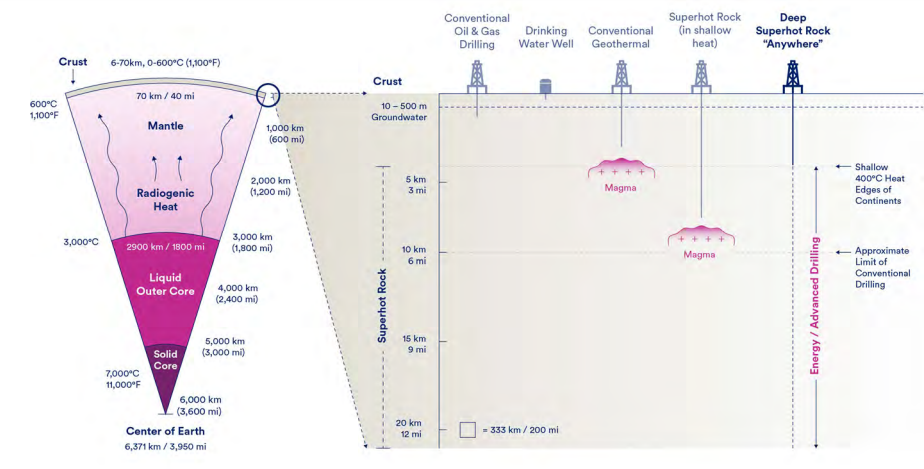
A new study found that rock that fractures at superhot conditions (see diagram above) can be ten times more permeable than rock that fractures at conditions closer to the Earth’s surface, and can also deform more readily.
Why is this important?
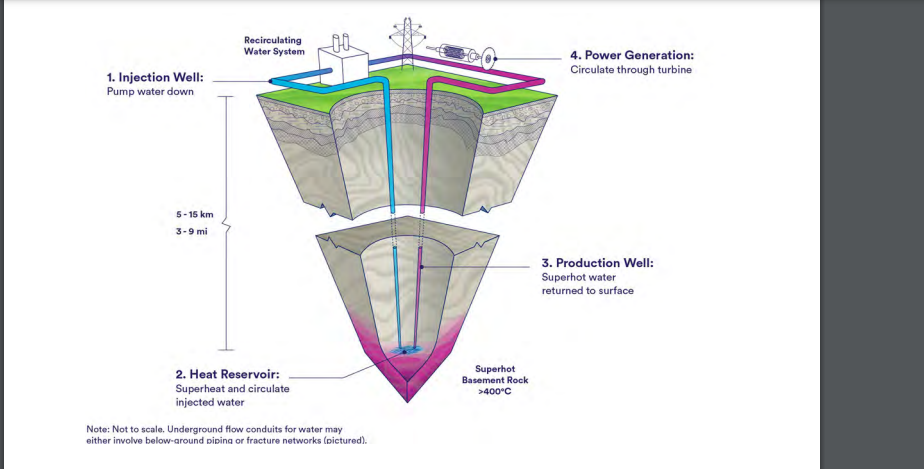
More water can pass through fractures and become supercritical (see diagram below)
The next big step for ultra-deep geothermal is demonstrating the technology to efficiently drill wells to depths of ~20 km. In that regard, we are awaiting Quaise Energy’s field test of their gyrotron drilling system.
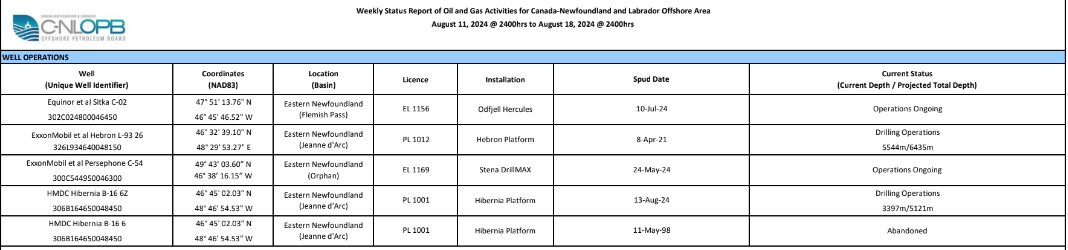
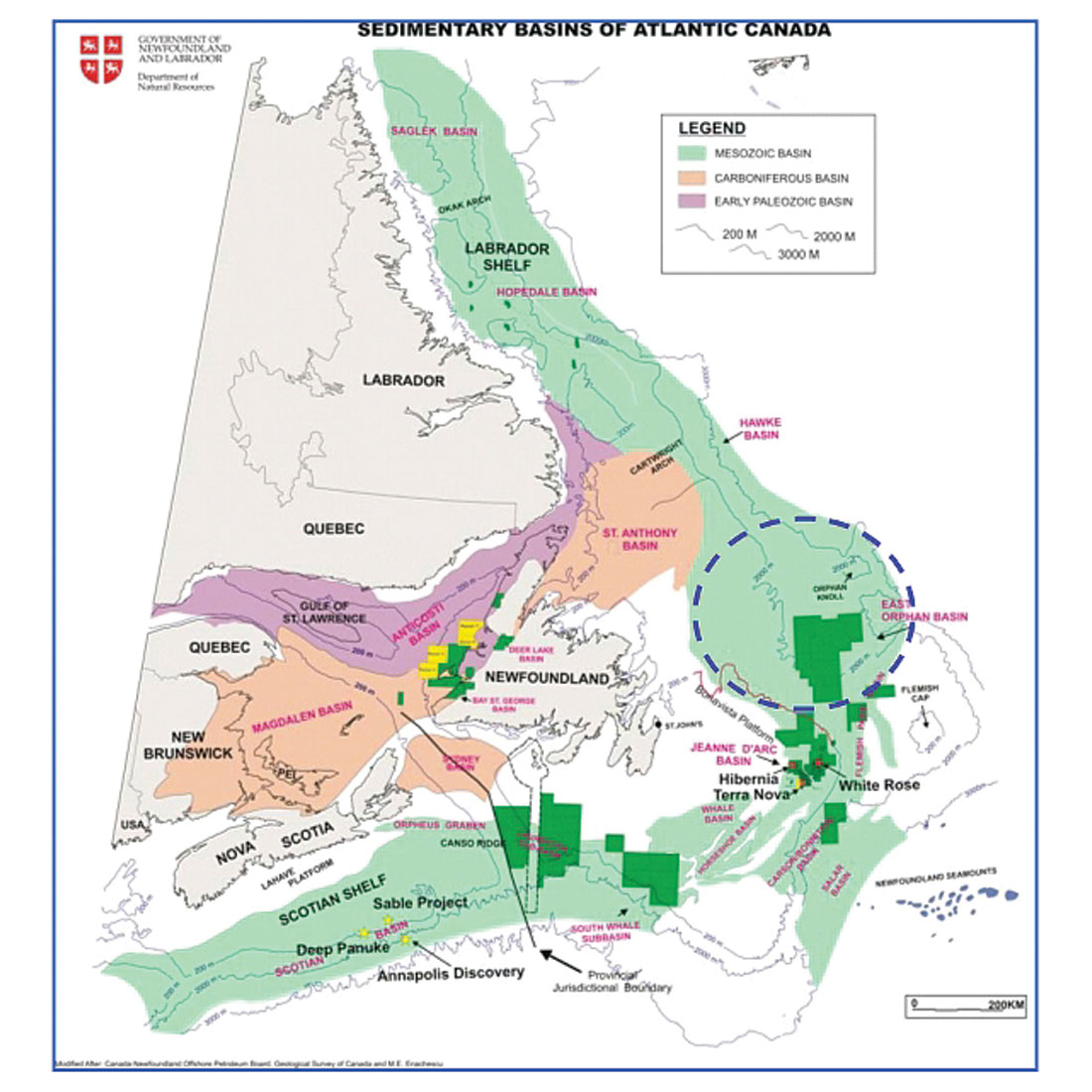
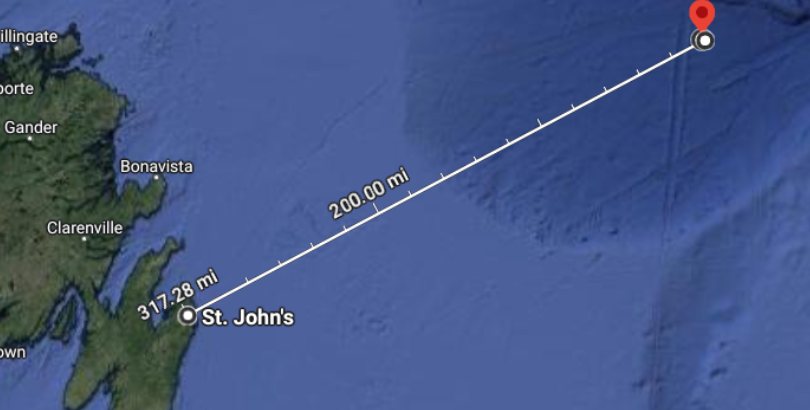
To find the sole exploratory well being drilled in the vast North American Atlantic, you have to exit “wind-only” US waters, head NE to St. John’s, NL (advancing your watch by 1.5 hours 😉), and transit another 317 miles NE to the Stena DrillMAX working for Exxon in the Orphan Basin.
The latest (8/20/2024) CNLOPB report (below) is that operations are ongoing. The well was spudded 3 months ago. That is about all they can disclose without compromising confidentiality. Even seemingly innocuous information like the current and projected well depth provides the opportunity to speculate about geologic conditions and current well activities.
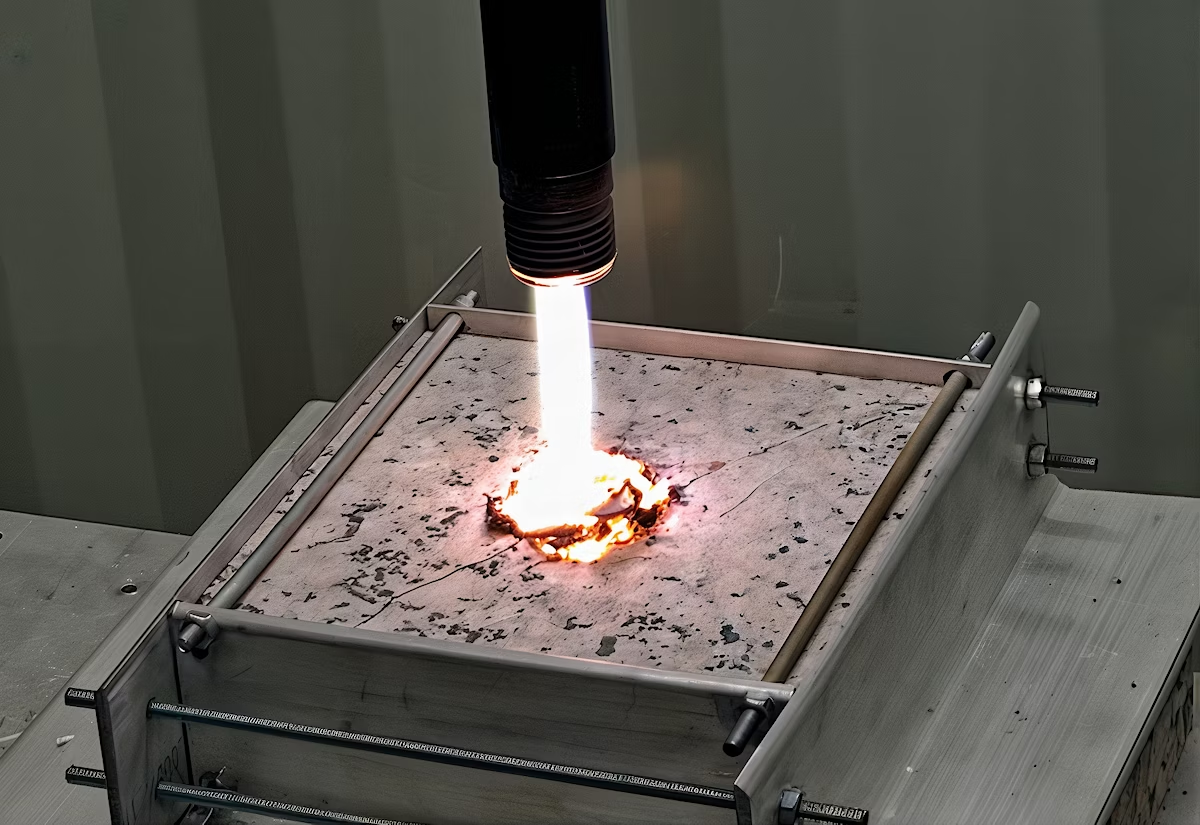
A recent millimeter wave drilling test conducted at the Quaise laboratory, in preparation for upcoming field demonstrations
Ultradeep geothermal has enormous potential for power generation without being handicapped by the intermittency, space preemption, aesthetic, and wildlife protection challenges inherit in wind and solar projects.
Quaise Energy is an exciting company, not only because of ultradeep geothermal’s unlimited energy potential, but also because of their fascinating gyrotron technology that vaporizes hard rock and could enable drilling to depths of 20-30 km and temperatures of >1000° C.
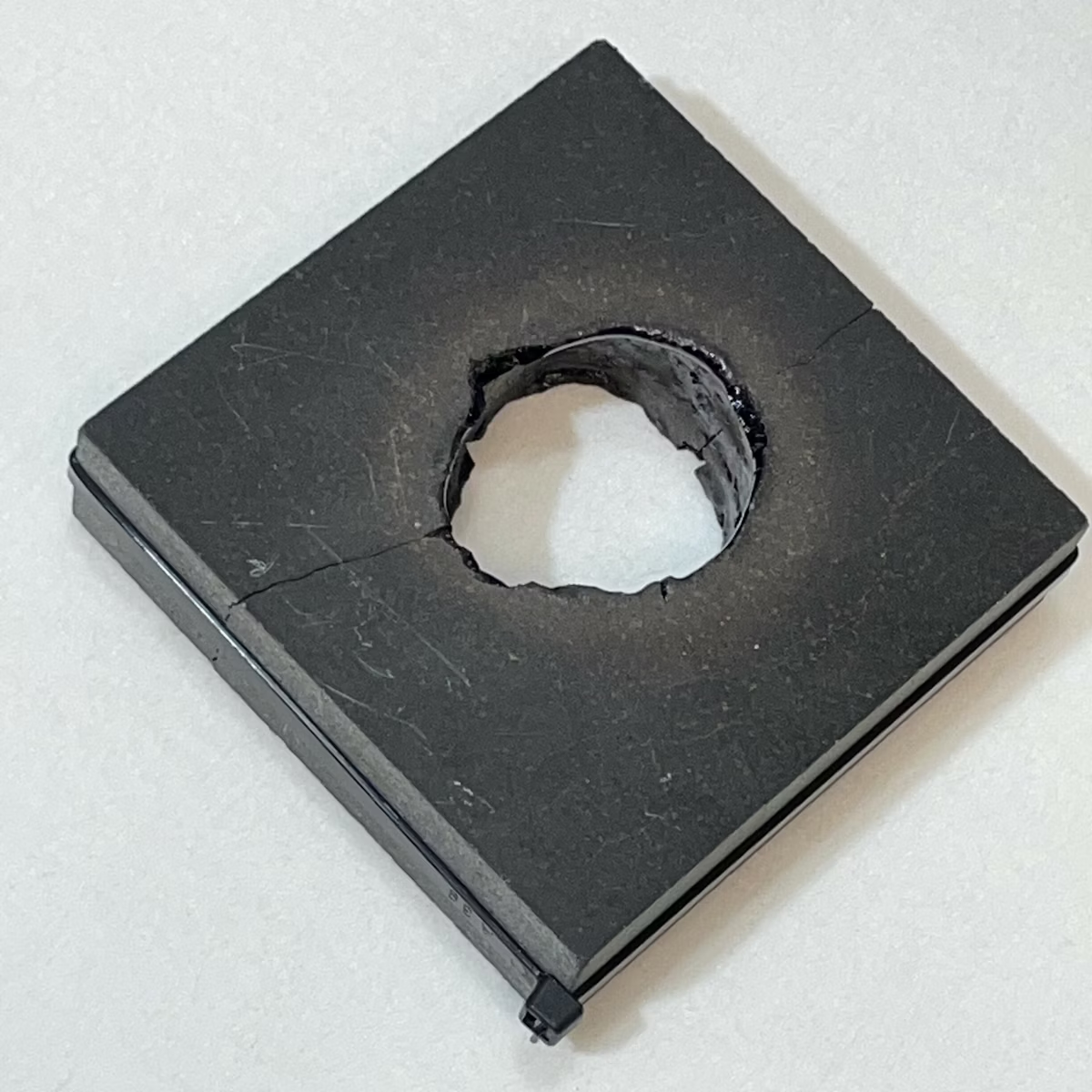
Quaise Energy’s latest update includes some good photos of laboratory tests of their drilling technology. The first field tests of their drilling technology are supposed to be conducted later this year, but no details have been provided.
Quaise describes millimeter waves (MMWs) as follows: “… a portion of the electromagnetic spectrum between microwaves and infrared. Named for their wavelength measuring 1-10 millimeters, MMWs are everywhere yet invisible to the naked eye. The fingerprints of the Big Bang still linger as MMWs all around us in the cosmic microwave background. And if you’re reading this on a phone, chances are it was transmitted by 5G using MMWs.”
The plan is to drill through sedimentary rocks with conventional technology and use MMWs to vaporize basement rock with dielectric heat. There are many hurdles to clear, starting with the field tests, but the enormous energy potential is undeniable.
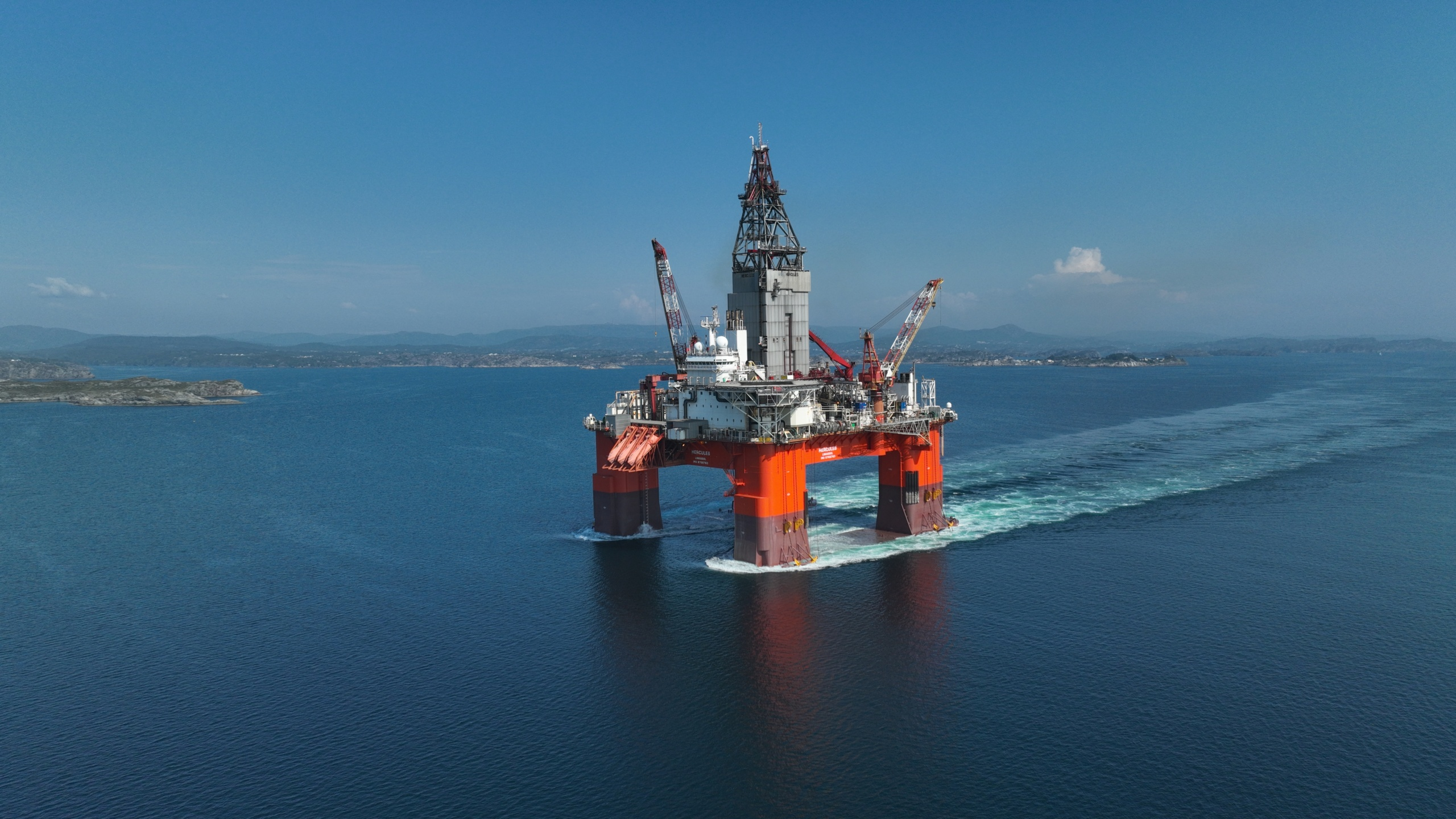
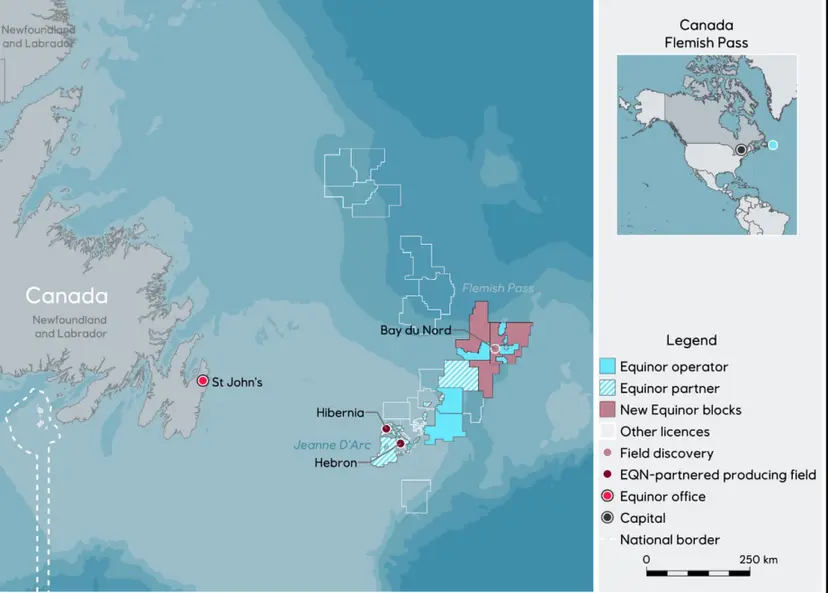
Per the CNLOPB weekly activities report, Equinor spudded the important Sitka C-02 well in the Flemish Pass area on July 10, 2024. This well will help clarify the resource potential in the Bay du Nord project area with the goal of better defining development plans.
Meanwhile, operations on Exxon’s important Persephone well in the Orphan Basin have now been ongoing for 2 months. Some type of announcement by Exxon is expected after operations are completed and the well has been plugged.
Secret Service being scrutinized following assassination attemptHeroic volunteer fire chief Corey Comperatore, who died shielding his family at the Trump rally
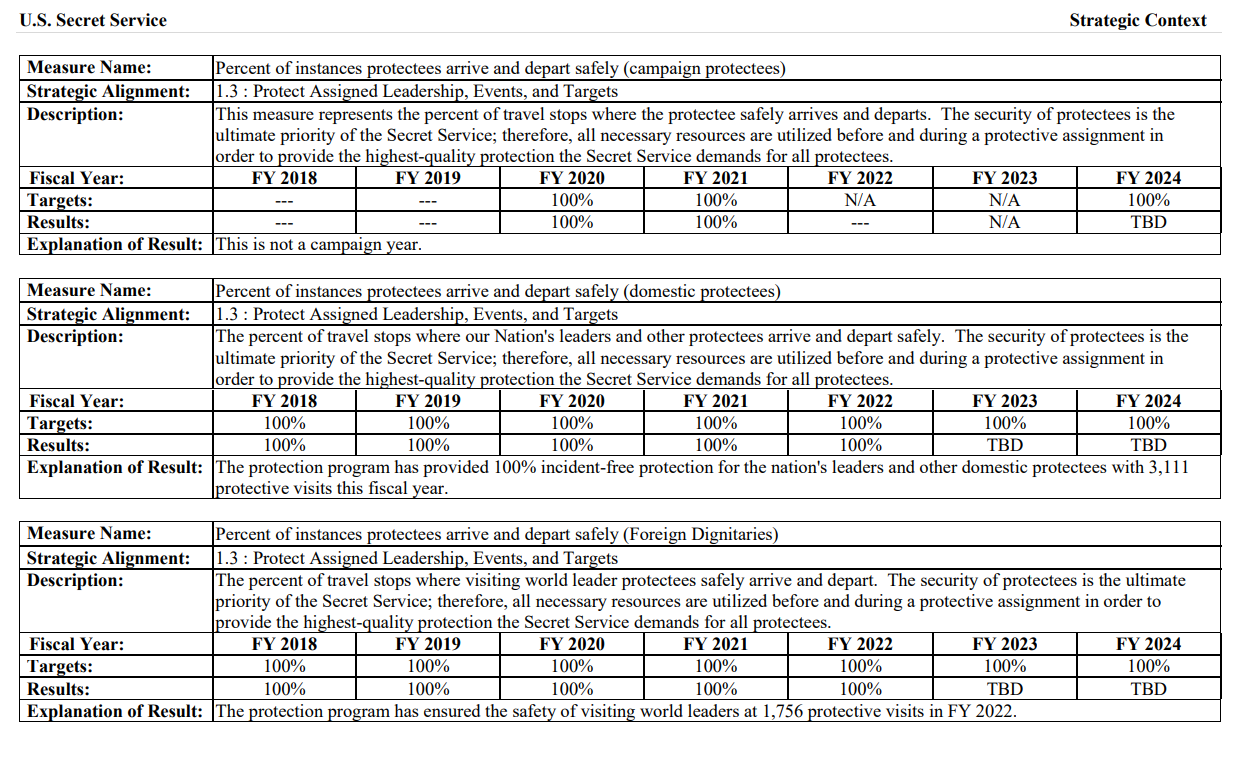
As is the case with many Federal and corporate entities, the Secret Service website is long on promotion and short on substantive details and performance data. The limited “Measurable Impact” statistics on their webpage advise that the Secret Service protected 6623 foreign and domestic visits “without incident” in Fiscal Year 2022, which ended 22 months ago.
Their 2024 budget request overview includes a bit more information (pasted below). The Secret Service gives themselves a perfect score if protectees arrive and depart safely. When your scores are always 100%, your performance measures are clearly inadequate.
Like drilling blowouts, assassinations are low frequency, high consequence events. Prevention requires gathering data on lesser events, identifying leading indicators, and tracking high-potential precursors. You don’t prevent high consequence events by only tracking high consequence events.
Inspections are also critical. Does the Secret Service inspect events to assess protective measures such as verifying that the surrounding areas are cleared and being observed? If so, what do those numbers look like.
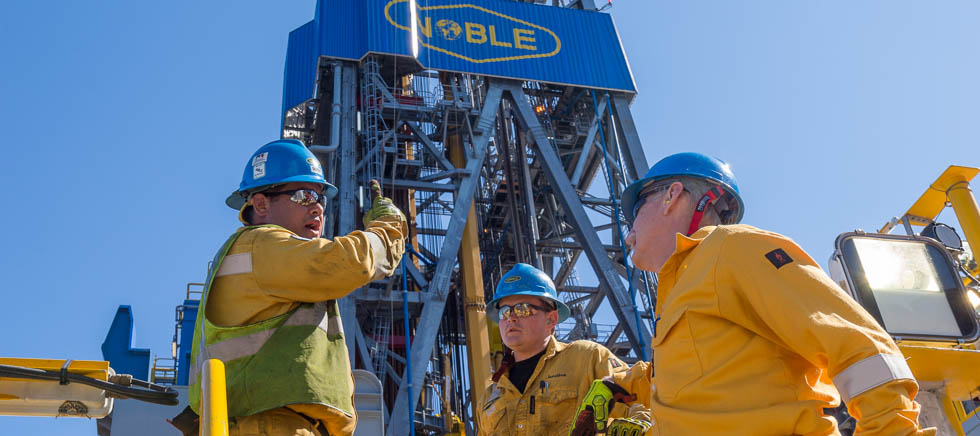
Noble’s acquisition of Diamond Offshore will unite two safety management pioneers and long-time offshore safety leaders. The press release stresses the importance of their “culture commonality around safety, operational excellence and service posture,” and their “shared commitment to these foundational principles is expected to be a driving force toward a successful and seamless integration.” While such statements are common in corporate merger announcements, Noble and Diamond “walked-the-walk” for decades, so their statement is more than corporate lip service.
Diamond Ocean Blackhawk is drilling MC 40 well for Anadarko
Following up on last year’s deepwater diligence post, 4 recent deepwater exploratory wells (table below) were spudded within 4.5 years of the effective date of their leases.
Particularly noteworthy is Anadarko’s well on newly acquired Mississippi Canyon Block 40, which was spudded only 18 months after the lease was acquired. Everything has to be in place for such an outcome: corporate priority, data gathering and analysis, well plan, permitting, and rig contract/availability.
The well was apparently a high priority not just for Anadarko, but also for Chevron and Murphy. MC 40 was acquired by Chevron (bidding alone) at Sale 257 for $4,409,990, the third highest bid at the sale. Murphy had submitted a losing bid of $3 million, but was assigned a 33% share of the lease by Chevron on 12/15/2023. One month earlier, Anadarko had been assigned a 33% interest and became lease operator.
Interestingly, BOEM’s Mean Range of Value (MROV) estimate for the block was only $576,000, so the three companies are seeing something that BOEM doesn’t. We’ll see how this plays out.
According to rig tracker data the Ocean Blackhawk is still on location at MC 40. Per BSEE permitting data, the well was approved to be bypassed in mid-May.
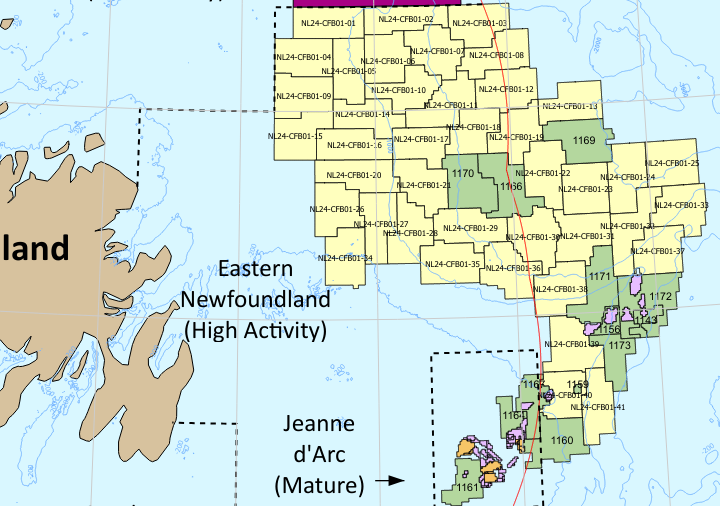
Per rig tracker data, the Stena DrillMAX has been on location at Exxon’s Orphan Basin wellsite since Sunday (19 May). The site is 317 miles (510 km) NE of St. John’s in Block 1169 (~3000 m water depth).
Per this very good resource assessment report for the Govt. of Newfoundland and Labrador, “the Orphan Basin area demonstrates a potentially prolific petroleum system with four main plays (reservoirs and associated seals) sourced by various source rocks (Upper Jurassic, Cretaceous, and Paleogene).“
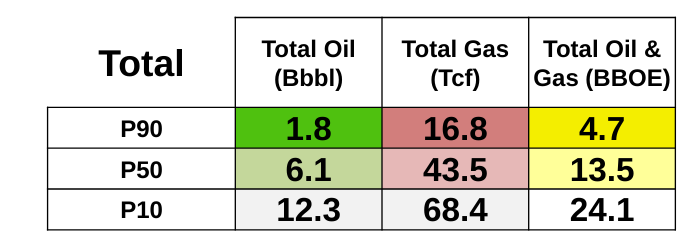
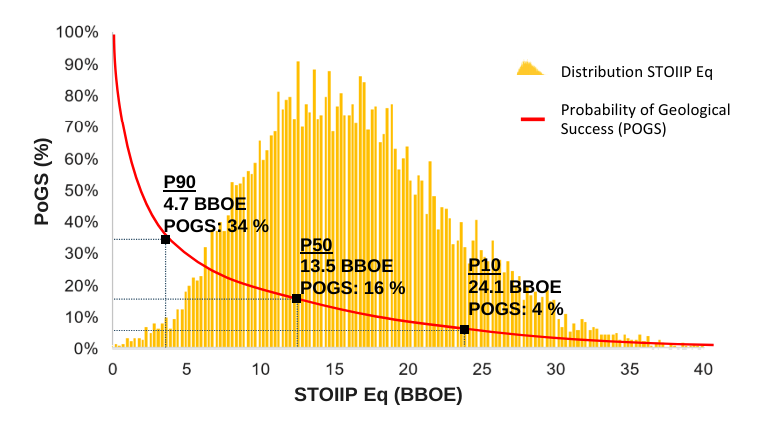
Unrisked resource estimates (theoretical pending confirmation by drilling) at the 90, 50, and 10% probability levels for the Orphan Basin blocks offered for licensing in Nov. 2022:
Taking into account the risks of the geologic model not accurately reflecting the reservoir, seal, charging, and trap components of the petroleum system, the probability of finding 13.5 billion drops to 16% (see plot below). This is still a high probability for a massive wildcat discovery.
This is why you move a state-of-the-art drillship thousands of miles to drill a single exploratory well at a remote location in the North Atlantic. The most likely outcome is negative or inconclusive findings, but the potential for such a major discovery justifies the investment.
The PGOS curve quantifies the probability of success in finding the identified volume of resources in the new Orphan Basin blocks (e.g. there is a 34% chance of finding 4.7 billion BOE and a 16% chance of finding 13.5 billion BOE).







 Bud's Offshore Energy (BOE)