Feeds:
Posts
Comments

Archive for the ‘decommissioning’ Category

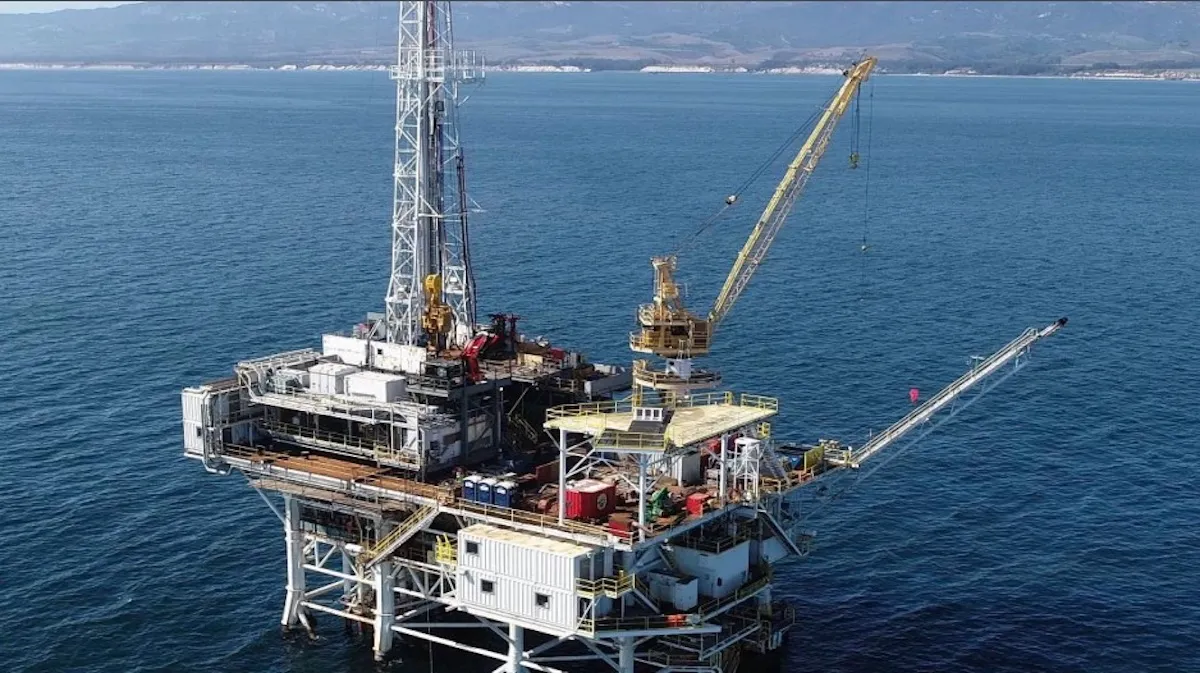
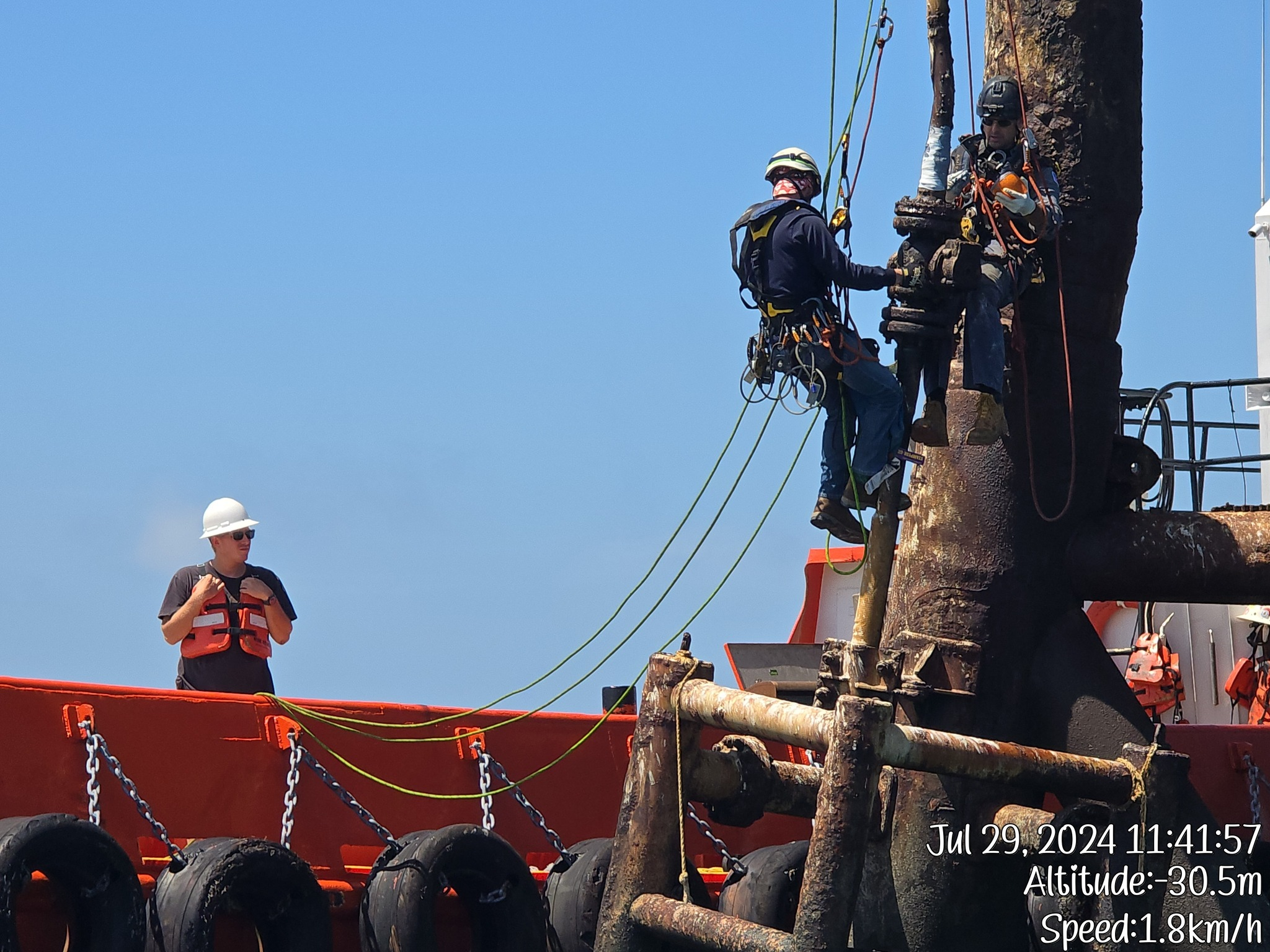
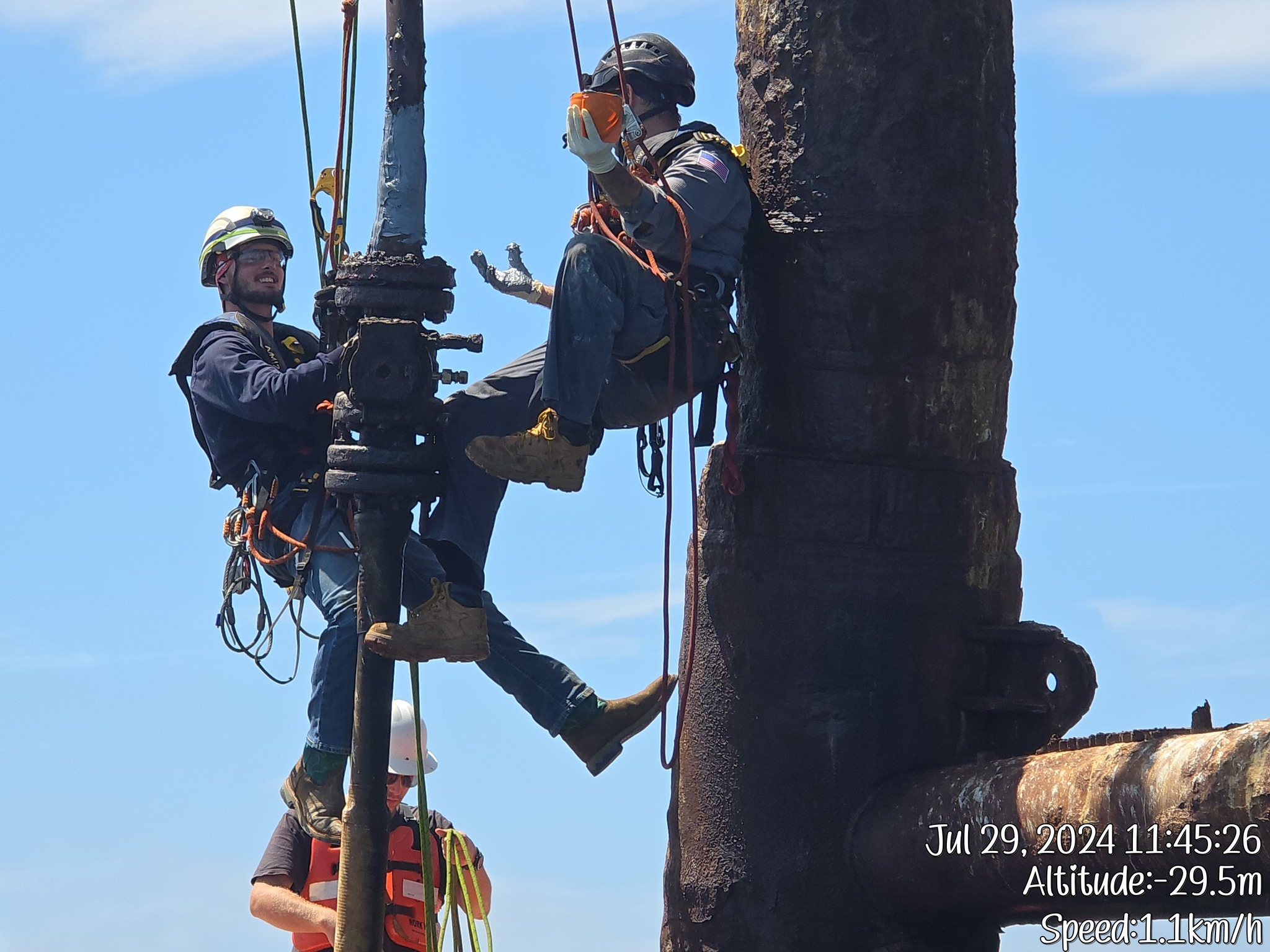
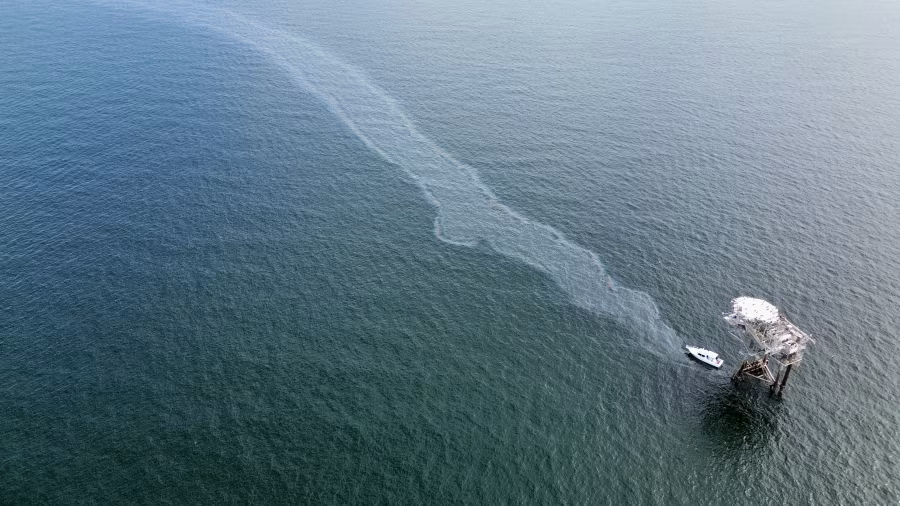
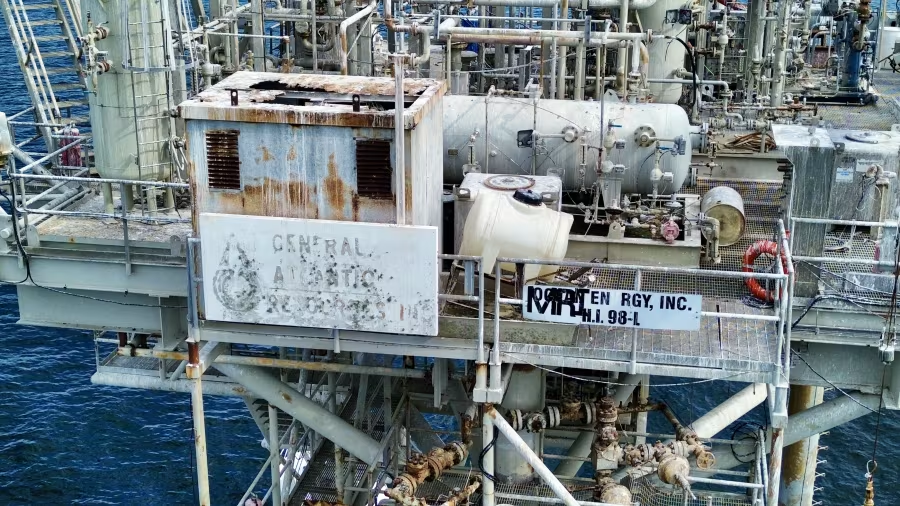
According to the Texas General Lands Office, which provided the above photos, a patch has been applied to the leaking pipeline riser on an abandoned platform in High Island Block 98-L. The gas condensate spray has been stopped.

Crews from the U.S. Coast Guard, Texas General Land Office, and the Texas Railroad Commission monitored the operation. It’s unclear who the responsible party is and who funded and performed the work.

Read Full Post »

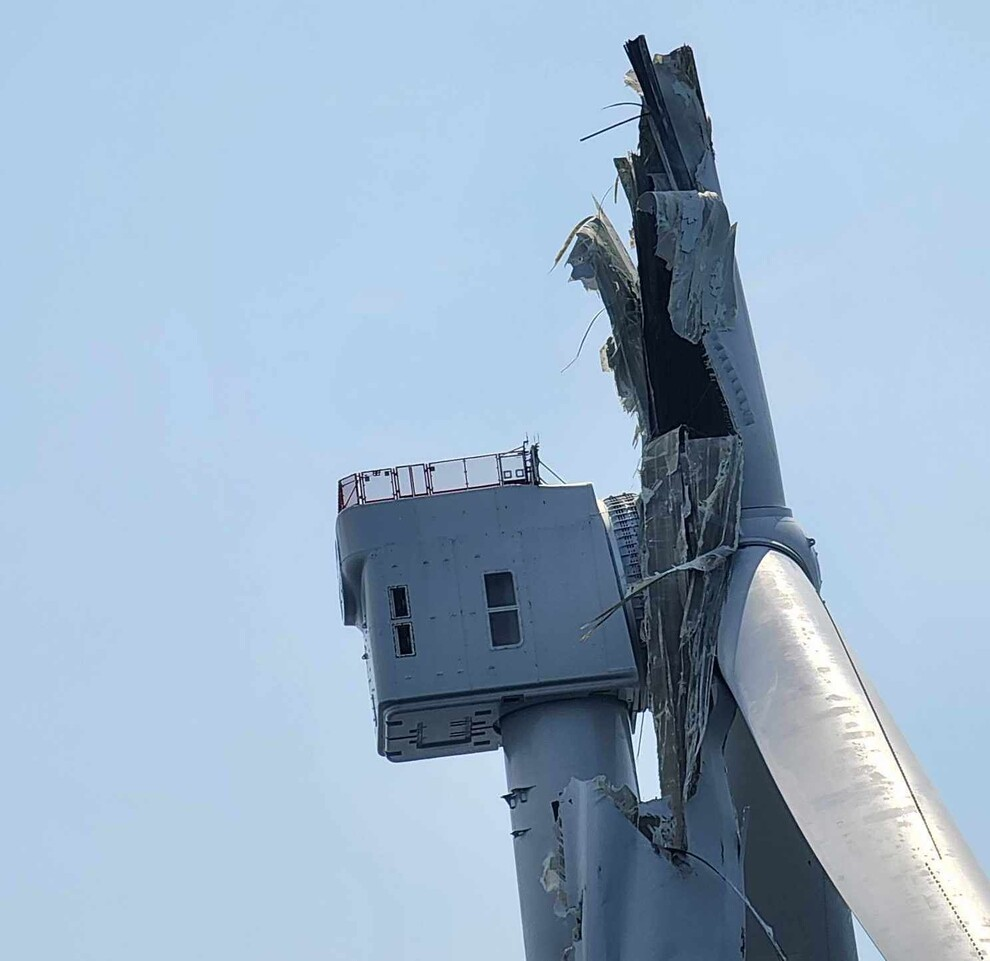
Nantucket Current photo: damaged Vineyard Wind turbine

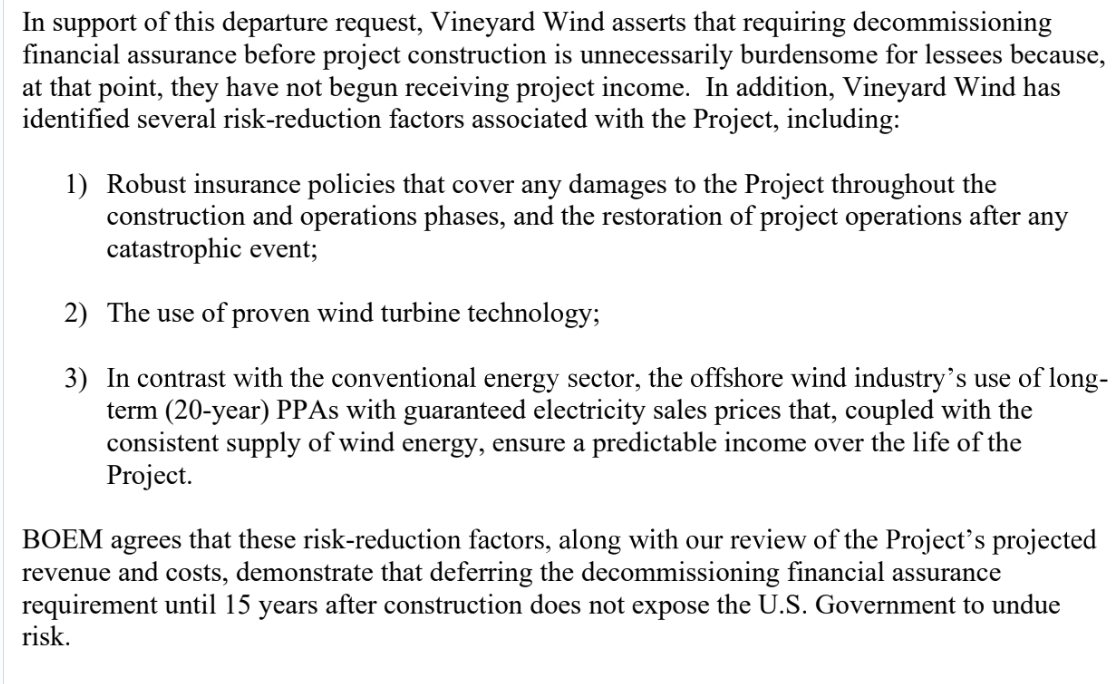
Pasted below is an excerpt from the BOEM letter waiving theβ€œpay as you build” financial assurance requirement for the Vineyard Wind project.

Comments on the 3 risk reduction factors cited in the letter:

Factor 1: Those “robust insurance policies” may soon be tested given the costs associated with the turbine blade incident and potential law suits. (The notice pasted below informs that Nantucket officials will meet on Tuesday to consider litigation. A question for attorneys is the extent to which Nantucket is compromised by their good “Good Neighbor Agreement” with Vineyard Wind. That agreement essentially calls on Nantucket to promote the Vineyard Wind projects in return for payments that seem modest relative to the economic benefits from tourism and fishing.)

Factor 2: To the extent that GE Vernova Haliade-X 13 megawatt turbines are proven technology (and that is very much in doubt), the use of proven technology doesn’t prevent premature abandonment associated with unexpected incidents.

Factor 3: Reliable power generation and predictable long-term income remain to be demonstrated.

Read Full Post »

Pictures from Click2Houston:

This is yet another example of the importance of proper well plugging, platform removal, and decommissioning financial assurance. It’s noteworthy that Texas is among the states suing to block BOEM’s financial assurance rule for Federal waters. A serious collaborative Federal, State, and industry effort to address decommissioning issues is long, long overdue.

Key points from the Facebook post by State Representative Terri Leo Wilson (full post pasted below):

  • 8 miles offshore Galveston County (TX State waters extend 3 marine leagues/9 nautical miles/10.35 statue miles offshore)
  • flowline riser leaking natural gas and condensate (badly corroded platform)
  • no recoverable oil
  • abandoned platform
  • additional research is needed to fully determine ownership of the leak source (???)

HIGH ISLAND BLOCK 98-L INCIDENT :

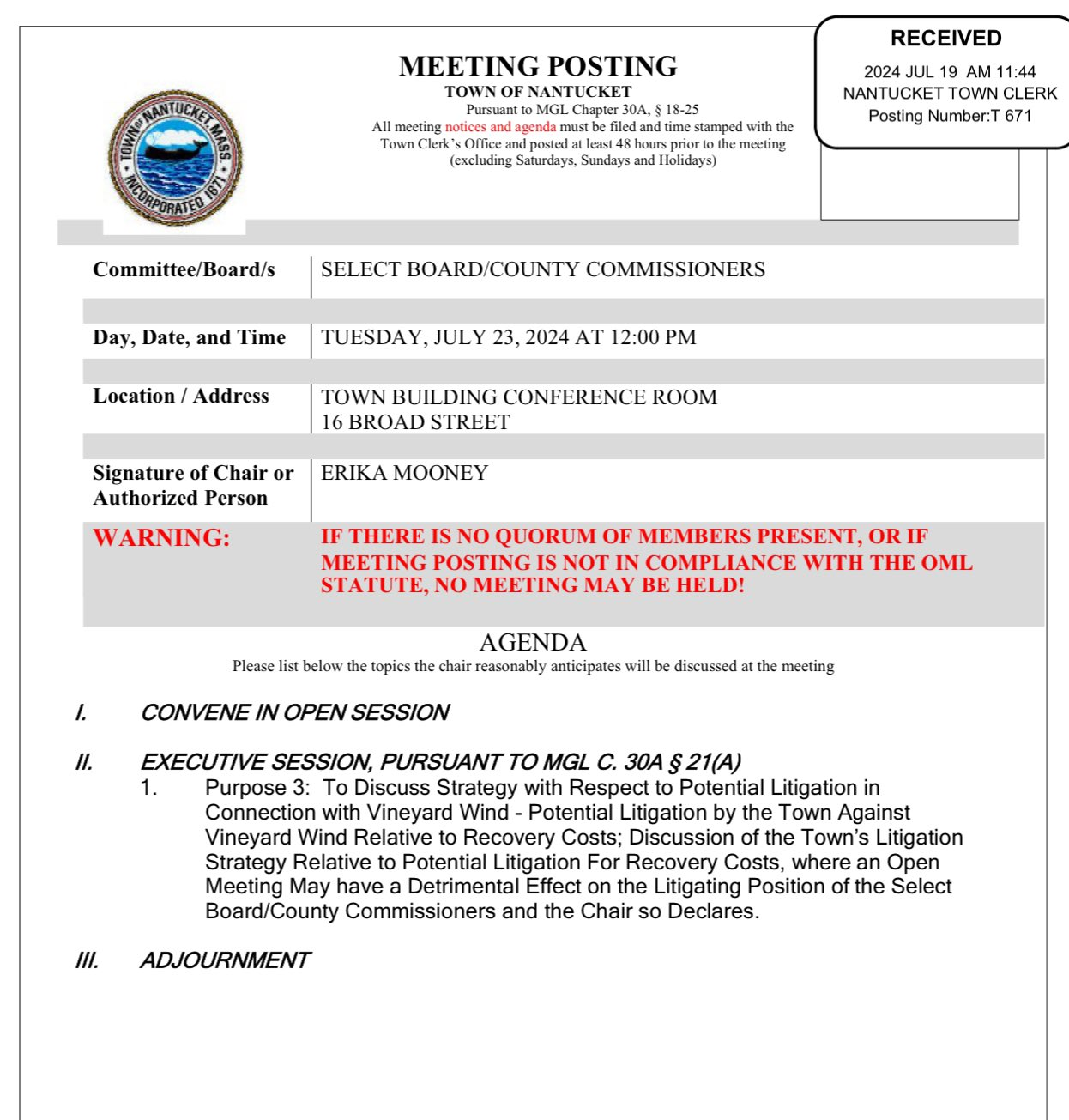
The Texas General Land Office (GLO) is sharing the following information:

On Sunday, July 14, 2024, at 8:00 pm, the Oil Spill La Porte Office Response Officer received notification of a natural gas/oil discharge off the coast of Crystal Beach, Galveston County. The spill was reported to be from a platform in High Island Block 98-L, about eight miles offshore in the Gulf of Mexico. Oil Spill personnel traveled via response boat to investigate on Monday morning and determined the discharge to be from a flowline riser leaking natural gas and condensate. Although the leak can be seen from the water, no recoverable oil was visible. The platform is abandoned, as defined by the Texas Railroad Commission, placing it within the Railroad Commission’s statutory authority for administration. The wells are not covered as part of the GLO’s current well plugging MOU with the Railroad Commission. The platform and associated wells are documented in the Oil Spill program’s abandoned well listings.

On Wednesday, July 17, La Porte office staff, with US Coast Guard and Railroad Commission personnel, inspected the platform area again. The leak is still present but has not increased. Railroad Commission staff stated that additional research is needed to fully determine ownership of the leak source.

The Coast Guard reports receiving a call from Channel 2-KPRC (NBC) in Houston regarding the leak and also seeing social media posts by a local area fishing group.

At this time: No injuries reported, No impact to commerce, No impact to wildlife.

Read Full Post »

Some of us remember the Brent Spar saga (1995). The subsequent Brent field decommissioning activities have been less controversial, including the removal of the Brent C topsides on July 9. The Allseas single lift technology is most impressive. Check out the video!

Read Full Post »

BOEM’s land rush approach to offshore wind leasing will add up to 1086 turbine towers and 28 offshore substations (OSSs) in the Atlantic just from active projects with approved Records of Decision (RODs). (See the table below.) Another 17 active Atlantic commercial projects have yet to reach the ROD stage. Those projects should increase the total number of structures to >3000. Five more Atlantic wind lease sales are scheduled.

projectturbine towersoffshore substations
Coastal VA Offshore Wind2023
Revolution Wind1002
Sunrise Wind941
Atlantic Shores South200up to 10
Ocean Wind 198up to 3
Vineyard Wind 11002
Empire Wind 1 & 21472
New England Wind (phases 1&2)1505

Per the Construction and Operations Plan (COP) for Vineyard Wind, the topsides for a conventional electrical service platform (ESP) (also known as an offshore substation or OSS) are 45 x 70 x 38 m, which is larger in surface area than a typical 6-pile oil and gas platform (~30 x 30 m), and is comparable in size to a large jackup drilling rig.

The Atlantic Shores plan calls for 10 small, 5 medium, or 4 large OSSs. (Uncertainty regarding the number and types of structures seems rather common in wind COPs.) The large OSSs have topsides that are 90 m by 50 m and rise to 63 m above MLLW. These are large offshore structures whether for wind or oil and gas.

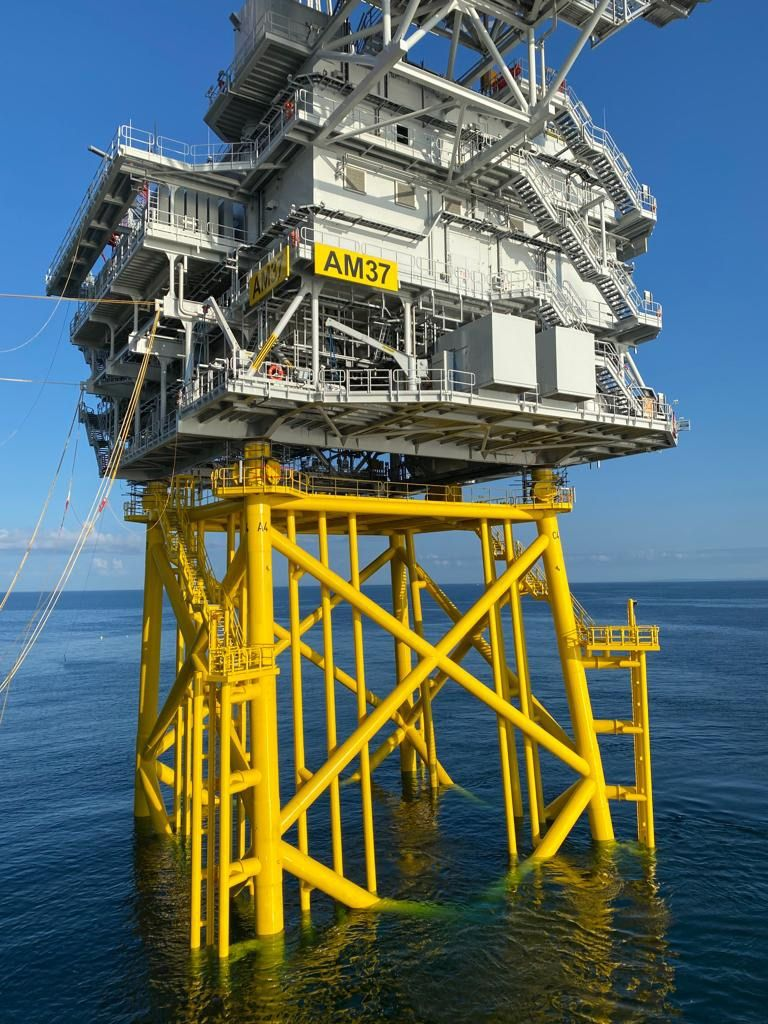
Vineyard Wind ESP

Despite the looming decommissioning obligations, BOEM’s financial assurance requirements have been relaxed to facilitate wind development.

Per BOEM, the β€œRule to Streamline and Modernize Offshore Renewable Energy Development” is intended to β€œmake offshore renewable energy development more efficient, [and] save billions of dollarsUnfortunately, the savings associated with relaxed financial assurance requirements translates to increased risk for power customers and taxpayers.

BOEM signaled their intentions on offshore wind (OSW) decommissioning three years ago when they granted a precedent setting financial assurance waiver to Vineyard Wind. Despite compelling concerns raised by commenters, the β€œstreamlining” regulations codified this decision.

No one knows what the financial future will be for wind projects and the responsible companies. Financial assurance should therefore be established when the structures are installed, not years into the future as allowed by the revised regulations. What leverage will BOEM have then?

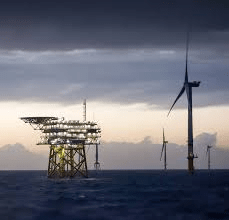
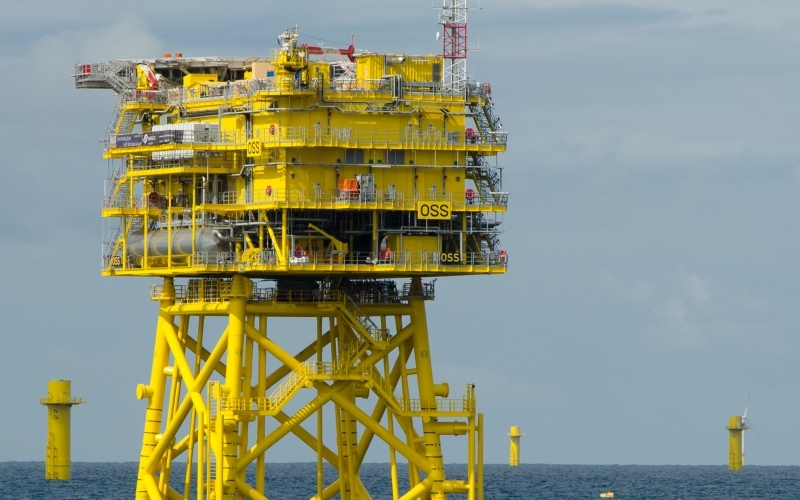
Nordsee One substation, Germany. Rystad Energy projects 137 new power substations offshore continental Europe this decade, requiring $20 billion in total investment.

Read Full Post »

None of the plaintiffs issued a press release or otherwise announced the lawsuit on their websites.

How often do Attorneys General from 3 States sue the Federal government without broadly publicizing their actions? Neither the AG for Louisiana, Texas, nor Mississippi issued a press release to announce their suit to block BOEM’s financial assurance rule.

The limited media coverage of the lawsuit originated from a single Reuters article. Apparently Reuters learned about the suit and reached out to the litigants. Their article quoted Louisiana Attorney General Liz Murrill as follows:

This is a really egregious direct assault on intermediate level producers of oil and gas, and that affects a lot of business in our state,” Murrill told Reuters in an interview.

That quote is all we have from the AGs. Why the absence of announcements:

State of Louisiana et al v. Deb Haaland et al

Plaintiff:State of Louisiana, Louisiana Oil & Gas Association, State of Mississippi, State of Texas, Gulf Energy Alliance, Independent Petroleum Association of America and U S Oil & Gas Association
Defendant:Deb Haaland, U S Dept of Interior, Bureau of Ocean Energy Management, Elizabeth Klein, Steve Feldgus and James Kendall
Case Number:2:2024cv00820
Filed:June 17, 2024
Court:US District Court for the Western District of Louisiana
Presiding Judge:James D Cain
Referring Judge:Thomas P LeBlanc
Nature of Suit:Other Statutes: Administrative Procedures Act/Review or Appeal of Agency Decision
Cause of Action:28 U.S.C. Β§ 2201 Constitutionality of State Statute(s)
Jury Demanded By:None

Read Full Post »

What’s their solution?

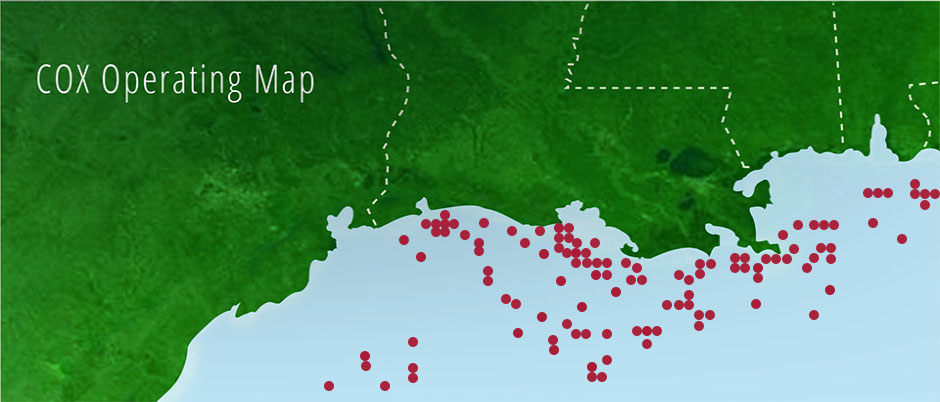
Since the States don’t seem to think there is much risk, perhaps they would like to guarantee decommissioning expenses. Have they looked into the Cox bankruptcy? How about Platforms Hogan and Houchin and the complex decommissioning challenges in the Pacific. Are they comfortable with taxpayer funding for offshore decommissioning?

BOE recently defended the new BOEM rule. If anything, the rule is too lax in that compliance and safety records are not considered in determining financial assurance requirements and lessees may use reserve estimates to reduce supplemental assurance amounts.

Read Full Post »

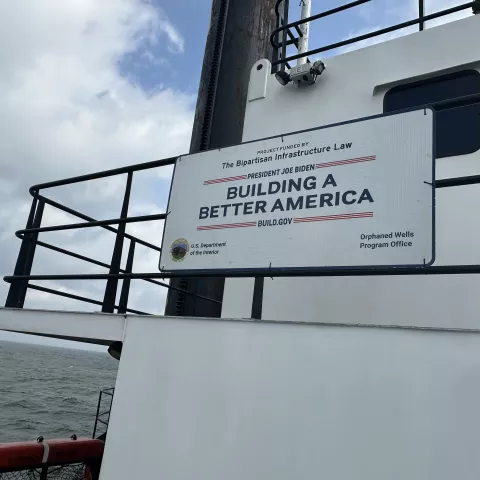
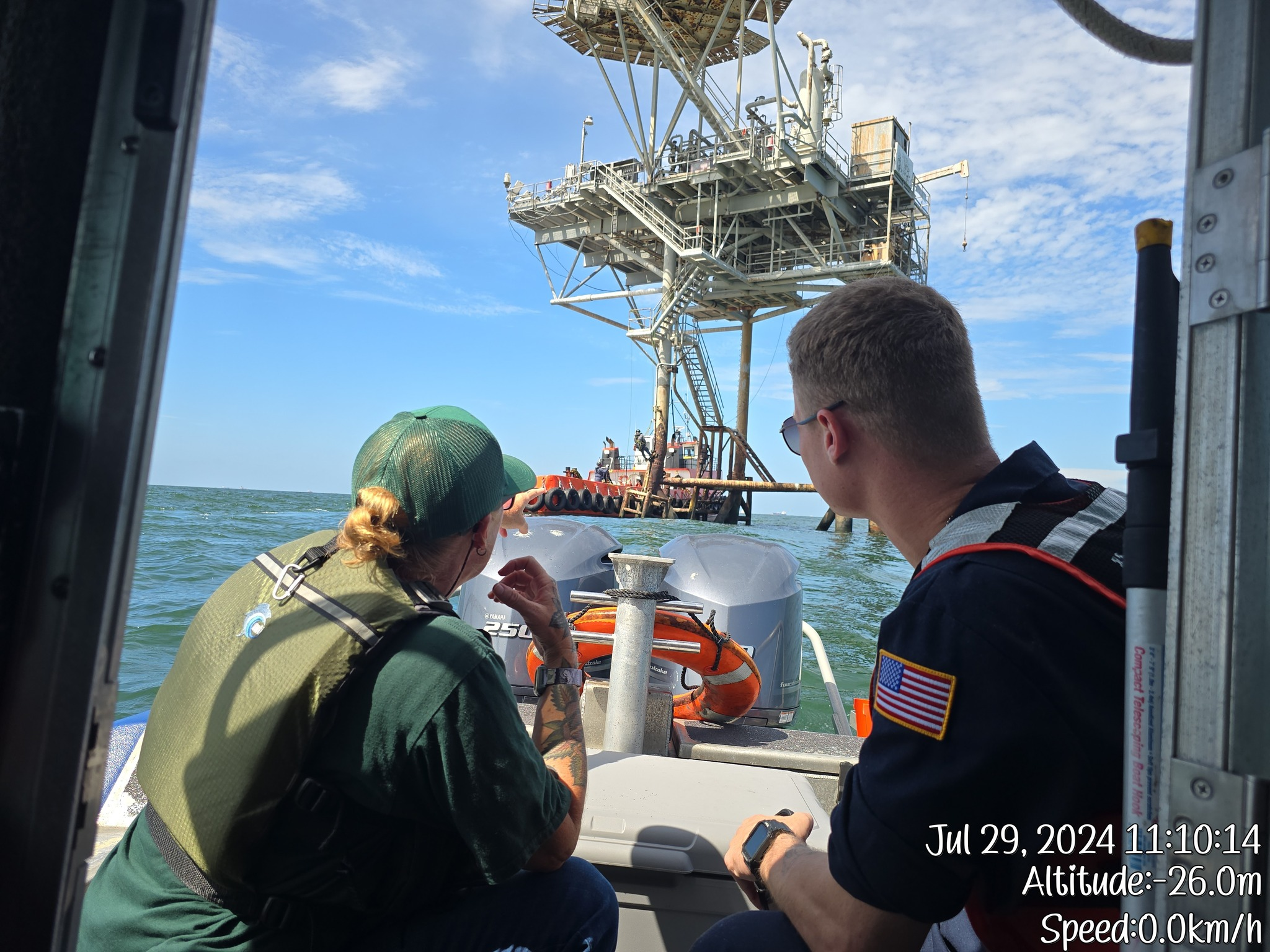
Your tax dollars at work. Highway project? No, Federally funded decommissioning in the Matagorda Island area of the Gulf of Mexico.

This unprecedented use of Federal funds for offshore facility decommissioning does not reflect favorably on lease management practices.

Hopefully, this is not the tip of the iceberg, but most of the estimated $4.5 billion in decommissioning liabilities associated with the Cox bankruptcy loom, as do legal questions regarding liability for Platforms Hogan and Houchin Santa Barbara Channel, and the 1130 remaining pre-1997 platforms. What portion of those liabilities cannot be assigned to prior owners with sufficient financial resources to cover the decommissioning costs?

https://www.youtube.com/watch?v=0nU-Fl-gfUg

Read Full Post »

Neft Dashlari

Lars Herbst brought this interesting article to my attention – Rigs-to-Ruins? Rigs-to-Relics?

“In the 1950s, Soviet engineers built a massive city in the Caspian Sea off the coast of Azerbaijan. It was a network of oil platforms linked by hundreds of kilometers of roads and housing 5,000 workers, with a cinema, a park and apartment blocks. Gradually disintegrating but still closely guarded, this astonishing place inspired a fiery scene in a James Bond movie.

Neft Dashlari (Black Rock), as the town is known, is no doubt the most unique oil town in history – the oil patch’s Venice! πŸ˜‰

In Neft Dashlari’s heyday, some 2,000 drilling platforms were spread in a 30-kilometer circle, joined by a network of bridge viaducts spanning 300 kilometers. Trucks thundered across the bridges and eight-story apartment blocks were built for the 5,000 workers who sometimes spent weeks on Neft Dashlari. The voyage back to the mainland could take anything between six and twelve hours, depending on the type of ship. The island had its own beverage factory, soccer pitch, library, bakery, laundry, 300-seat cinema, bathhouse, vegetable garden and even a tree-lined park for which the soil was brought from the mainland.

Decommissioning lesson: “Dismantling Neft Dashlari properly would probably be more expensive than simply keeping it going with a scaled-down oil production.Sound familiar?

Read Full Post »

Decommissioning financial assurance issues are complex!

This blog has raised significant concerns about BOEM’s decommissioning financial assurance rule, and will continue to comment on decommissioning policy. That said, decommissioning issues are complex and have challenged industry and government in the US and internationally for decades. Add well plugging practices, corrosion, storm risks, reefing vs. total removal, alternative uses for old platforms, and pipeline and seafloor equipment abandonment to the myriad of financial issues and you get a sense of the breadth and complexity of decommissioning issues.

Decommissioning is unique in that the issues divide sectors of the offshore industry that are typically aligned (majors vs. smaller producers). The environmental community is also divided with the reefing and fishing advocates opposing those who insist on complete removal.

Given these divisions, and decommissioning’s operational, environmental, and political complexities, highly partisan assertions are common. A recent article about the financial assurance rule includes a number of such assertions, and provides a framework for discussing some of the more prominent issues. Excerpts from the article and my comments follow.

This costly rule became final on April 15, 2024, but in the 10 months since its initial proposal, BOEM did nothing to alleviate concerns for smaller companies that comprise of 76 percent of oil and gas operators in the Gulf.

Comments:

  • While I concur that shelf operations and the independent companies that conduct them are important, 94% of OCS oil production and 80% of the gas (2023 data) were from deepwater facilities (>1000′ WD) which are largely the domain of the majors (although the participation of independents in the deepwater sector is increasing).
  • In 2023, four majors – Shell, bp, Oxy (Anadarko) and Chevron – accounted for 2/3 of the Gulf’s total oil production.
  • 1467 of the remaining 1527 GoM platforms are in <1000 feet of water and are almost exclusively operated by small producers. So 96% of the platforms are producing only 6% of the oil and 20% of the gas.
  • This dichotomy presents a major challenge for BOEM which must protect the public from decommissioning liabilities without unfairly penalizing small producers.
  • Having worked for respected political appointees from both parties, my experience has been that the smaller producers (somewhat surprisingly) have more political influence than the majors. For this reason, along with the general lack of attention to financial assurance issues in the early years of the offshore program, the standard bond requirement was ridiculously low for much of the program’s history, and supplemental financial assurance assessments were typically inadequate (and still are which is why the new rule was promulgated).
  • Attention to decommissioning issues grew exponentially in the early 1990s. Prior to that time, platform removal, like well plugging, was classified as “abandonment,” a term that was considered too harsh when bankruptcy issues and the Brent Spar controversy in the North Sea attracted worldwide attention.

Records obtained via the Freedom of Information Act show private meetings between Interior officials and representatives of the major oil companies as they cooperated on this rule.

Comments:

  • The linked FOIA records are not at all problematic. They pertain to meetings prior to the publication of the draft rule, which are appropriate and desirable.
  • Some of these meetings were in response to BOEM’s request for input regarding their review of the OCS oil and gas program. Such meetings are particularly helpful when a new administration is trying to assess the direction of the program.
  • Indeed 42 of the 71 pages in the FOIA were official industry comments in response to the BOEM request.
  • Per the Regulations.gov docket on the financial assurance rule, BOEM also met with stakeholders after the proposed rule was published. Those meetings are allowed as long as the regulator simply receives input and does not signal decisions regarding the content of the final rule.
  • The docket shows that BOEM had 8 listening sessions with advocates for independent producers. These included 2 sessions with the Gulf Energy Alliance and 6 sessions with individual independent producers.
  • BOEM also had 2 listening sessions with Oceana, a prominent environmental organization, and multiple sessions with tribal organizations.
  • The only sessions with representatives from major producers were a single session with API and a single session with Shell, the Gulf’s largest producer.
  • These meetings (after the proposed rule was published) are noted in the docket as required.
  • I am concerned that many listening session documents (from all sides of the decommissioning financial assurance issue) were removed from the docket at the direction of OIRA/OMB, purportedly because they included privileged information. This is rather troubling given the number of deletions and the complete absence of information about those meetings. What types of privileged information were these organizations providing and why is there no information whatsoever on these meetings? At a minimum, a list of attendees and general summary for each meeting should have been posted, as was our practice in the past.

Big Oil must think it won’t miss the small competitors the rule will drive from the market.

Comments:

  • There is important synergy between the major producers and independents, and no reason for driving smaller companies from the market.
  • The independents are critical to sustaining the shelf infrastructure and the associated service companies, which helps to facilitate deepwater development. Majors also benefit from partnering with independents on lease acquisitions, development projects, and lease assignments.
  • Financial assurance for decommissioning of transferred assets is the one area of significant conflict, particularly when there have been multiple ownership changes since the facilities were initially transferred.

“Historically, joint and several liability protected these small businesses from the financial demands of surety bonds.”

Comments:

  • Surety bonds, or other forms of financial assurance, have always been required. As previously noted, the amounts were often inadequate.
  • Joint and several liability was not established in the regulations until May 22,1997. Whether companies are liable for facilities transferred prior to that date has yet to be considered in court.
  • 1130 of the 1527 remaining GoM platforms were installed prior to May 22,1997. Many of these platforms were no doubt transferred prior to that date, which means the liability of the initial owner is uncertain.
  • Predecessor liability does not apply to new wells and platforms constructed by the current lessees.
  • Joint and several liability was never intended to relieve current lessees from their financial assurance responsibility, which is why assignors were required to provide such assurance. BOEM is correct in strengthening their enforcement of this requirement.

“The new rule is largely silent on joint and several liability, causing some uncertainty.”

Comment: The joint and several liability provision remains in place at 30 CFR 250.1701(a) BOEM has added language to part 556.704, to clarify, correctly in my opinion, that they may withhold approval of any transfer or assignment of any lease interest if the financial assurance requirements have not been satisfied.

Companies may not be able to acquire the needed financial assurances because the market likely will not even exist.

Comment: The history of small producer failures is no doubt a concern to financial institutions. BOEM offers multiple financial assurance options, some of which have been questioned on this blog. If a company can’t qualify, it’s not the responsibility of the public to assume their decommissioning risks.

What makes matters worse is that all this cost covers a risk that is effectively a rounding error historically and in the context of the royalties flowing from the offshore oil and gas industry. According to BOEM, taxpayers have borne decommissioning liability totaling $58 million – from a single company that lacked predecessor owners of the platform to call on to cover unfunded cleanup costs.

Comments:

  • The $58 million “rounding error” is more like the tip of the iceberg. It’s also a dangerous precedent and major embarrassment for the OCS program.
  • Those who seek to minimize the Federal government’s risk exposure should consider the findings in the 2024 GAO report. Per that report, “BOEM held about $3.5 billion in supplemental bonds to cover between $40 billion and $70 billion in total estimated decommissioning costs as of June 2023.”
  • At the time of the recent Cox bankruptcy, BSEE estimated that decommissioning costs for the Cox platforms would exceed $4.5 billion. The extent to which prior owners can be held accountable for those costs is uncertain.
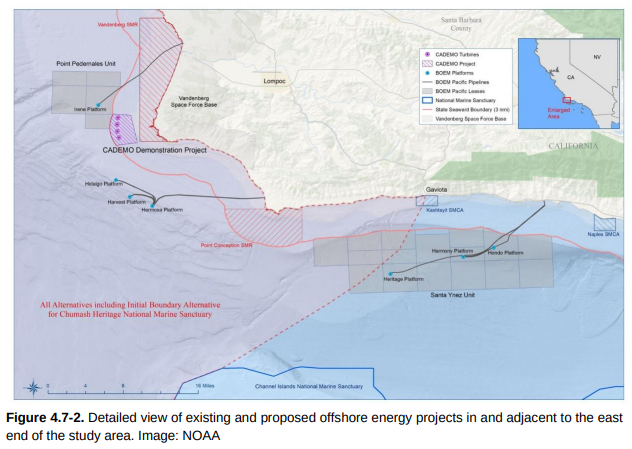
  • When will we find out who will be paying the hundreds of millions needed to decommission long-idled Platforms Hogan and Houchin in the Santa Barbara Channel?
  • Decommissioning financial assurance is a responsibility of lessees, not the taxpayer.

Read Full Post »

« Newer Posts - Older Posts »