Feeds:
Posts
Comments

Archive for the ‘Alaska’ Category

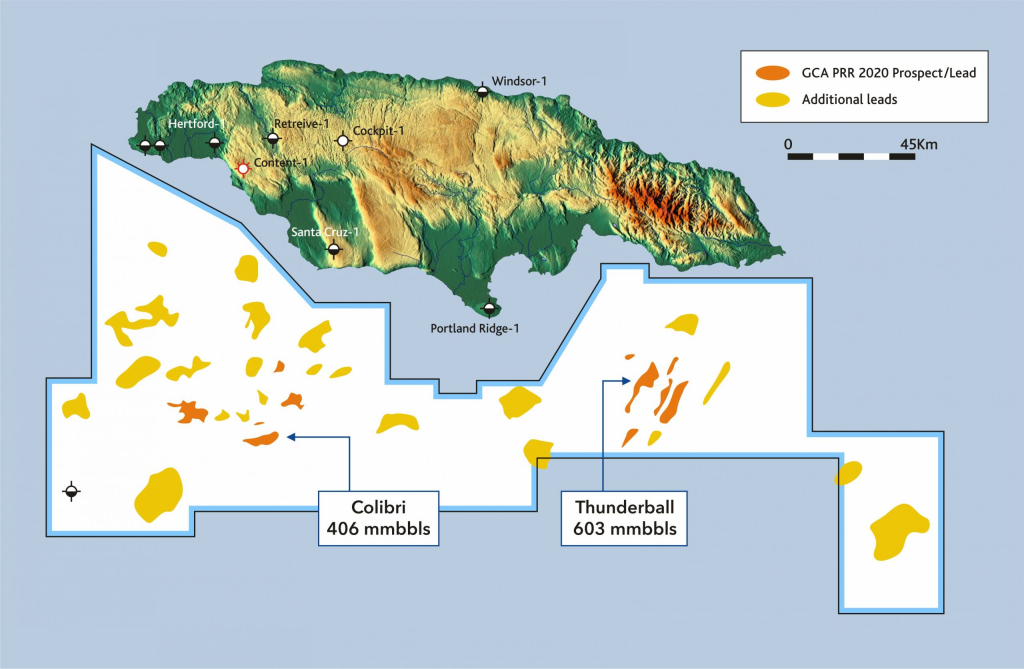
United Oil and Gas excels at promotion and isn’t shy about making bold statements. Can they find a strong partner and move their Jamaican exploration program forward?

The term “string of pearls” was used about 30 years ago to describe discoveries in the Beaufort Sea and on adjacent Alaska lands. Although they were modest individually (by Arctic standards), the sense was that these discoveries would collectively support sustained production in the region. While there has been some success in that regard, the optimistic expectations have not been realized.

Below is a recent United Oil & Gas presentation to prospective investors. Previous Jamaica posts.

Read Full Post »

….as long as they are aligned with the preordained political decision. 😠

No where has this been more apparent over the years than in Alaska. Most recently, the North Slope Borough filed suit to challenge the Bureau of Land Management (BLM) rule making the National Petroleum Reserve in Alaska (NPR-A) off limits to oil and gas development.

Mayor Josiah Patkotak of the North Slope Borough

“The rule would significantly and irrevocably harm the North Slope’s right to self-determination and ability to provide essential services for residents. This suit is filed alongside the complaints of the Voice of the Arctic Inupiat and the State of Alaska, demonstrating the unity of North Slope communities and Alaskans in opposing the BLM’s unjust and unilateral action to harm the livelihoods of the residents of the North Slope,” the borough explained in a press statement.

“When I was sworn in as Mayor of the North Slope Borough, I made a solemn promise to protect and provide essential services for the people of the North Slope Borough. The BLM claims to act on our behalf but what they are truly doing is undermining my ability to fulfill that fiduciary obligation,” said Mayor Josiah Patkotak. “We on the North Slope don’t have the luxury of keeping quiet and waiting for a new industry to swoop in and replace our largest economic driver. We have to speak up for our future as a people.”

Other important points raised in the Must Read Alaska article:

  • NPR-A is entirely within the boundaries of the North Slope Borough (NSB).
  • The NSB represents the ancestral homelands of the Inupiat people.
  • The NSB is the largest employer in the region and provides the majority of essential services depended upon by residents.
  • Taxes on infrastructure account for 95% of the Borough’s revenue.
  • Members of the North Slope Inupiat Tribes, Village Corporations, Regional Corporations, and their elected leaders have been unanimous in their opposition to the rule.
  • The Supreme Court’s decision in Loper, which removed the Chevron Deference, restricts the authority of Federal agencies to take regulatory actions without clear legislative authority.
  • The State of Alaska also filed a lawsuit claiming that the Fed govt had not consulted with affected parties, and that the BLM had exceeded its congressional authorization.

This should be an easy win for Alaska and the NSB.

Read Full Post »

After the announcement of further restrictions on resource development in the National Petroleum Reserve of Alaska (NPR-A), Senator Sullivan (AK) called on the administration to stop sanctioning Alaska and to instead restore sanctions on Iran

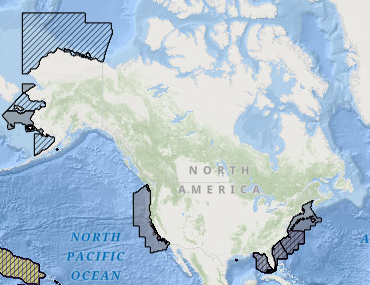
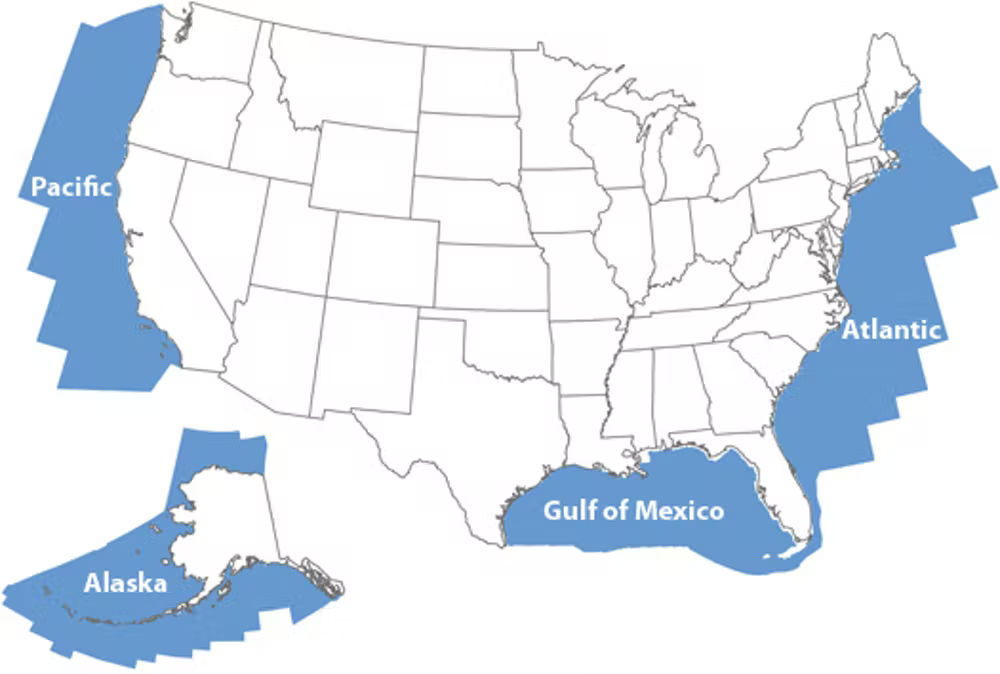
The US OCS is being similarly sanctioned by its own government. The 5 year OCS “leasing plan” not only excludes all areas except the Gulf of Mexico, but authorizes a maximum of only 3 sales, the fewest ever for a 5 year program. The number of sales may well have been zero were it not for the requirement to hold an oil and gas sale during the year prior to the issuance of a lease for wind development.

2024–2029 Proposed Final Program Lease Sale Schedule
CountSale NumberSale YearOCS Region and Program Area
12622025Gulf of Mexico:  GOM Program Area
22632027Gulf of Mexico:  GOM Program Area
32642029Gulf of Mexico:  GOM Program Area
Most limited 5 year leasing program in history

Read Full Post »

The 2023 Safety Honor Roll list will be posted tomorrow.

As background information, below is a summary of compliance data for 2022 and 2023.

The performance of Fieldwood and Cox skewed the 2022 and 2023 data. In 2022, Fieldwood was issued 448 INCs, 26% of the Gulf of Mexico total. In 2023, Cox was by far the leading violator with 718 INCs, 39% of the GoM total (780/43% when Cox affiliates are included). These data point to the importance of considering safety and compliance in approving lease assignments and making supplemental bonding determinations.

20222023
facility inspections33093100
inspection types1085610341
W INCs8091050
CSI INCs530600
FSI INCs376180
total INCs17151830
INCs/facility inspection0.520.59
INCs/inspection type0.160.18
Pacific facility inspections280300
Pacific inspection types802744
Pacific W INCs2211
Pacific CSI INCs1314
Pacific FSI10
Pacific total INCs3625
Pacific INCs/facility inspection0.130.08
Pacific INCS/inspection type0.040.03
Alaska facility inspections85
Alaska inspection types3722
Alaska W INCs01
Alaska CSI INCs01
Alaska FSI INCs00
Alaska INCs total02
Alaska INCs/facility inspection00.4
Alaska INCS/inspection type00.09
INC=incident of noncompliance, W=warning, CSI=component shut-in, FSI=facility shut-in.
No Alaska facilities are located on the Federal OCS. One Alaska facility, Hilcorp’s Northstar island, has wells that are completed on the OCS; hence the limited BSEE inspections.

Read Full Post »

15,531 of the 15,537 comments on the bid adequacy rule were from a single organization, Friends of the Earth. I have no problem with the Friends of the Earth campaign given that their comment letter is pertinent to the topic. Their main point is that the bid adequacy process fails “to factor in the climate and social costs of continued Outer Continental Shelf oil and gas lease sales into the bid process.” Although that may be a reasonable position, those issues are addressed in the programmatic and sale specific environmental reviews which factor into when and where sales are held, tract exclusions, special lease stipulations, and the comprehensive operating regulations. Once bids are submitted, the issue (and the sole purpose of the bid adequacy rule) is whether those bids represent fair market value for the oil and gas resource potential of the leases being offered.

Given that 96.3% of the US OCS is off-limits to oil and gas leasing, only 0.7% is currently open to exploration, and the new 5 year plan includes the fewest lease sales in OCS program history, it’s rather a stretch to argue that environmental concerns are not being prioritized.

The State of Alaska submitted very good comments (attached) that point to the historical differences in Gulf of Mexico and Alaska leasing. The State argues that a simpler approach to determining fair market value would encourage exploration and development on offshore lands that have seen little of either in recent years. Knowing BOEM’s expectations prior to the sale, perhaps through higher minimum bid requirements, would ensure that companies do not underbid and that tracts are successfully leased.

The Gulf of Mexico leasing program of today is looking more like the frontier area leasing of the past. As previously noted, the uncertainty regarding future sales changes the historic GoM leasing dynamic. The next opportunity for purchasing unleased GoM tracts is now a troubling unknown. This would seem to make it less prudent to reject bids based on uncertain prospect evaluations. Absent leasing and exploration, the true resource and revenue potential will never be known.

It was good to see the strong comments submitted by my former Minerals Management Service colleagues Dr. Marshall Rose and Ted Tupper. Marshall, who was our Chief Economist, commented that the proposed rule did not identify the problem and explain how the rule addressed that problem. Ted, a senior statistician, points to past failures of the bid adequacy process and proposes specific changes. It’s great to see the passion that our retired employees have for the program they were so instrumental in developing and managing.

The rule was finalized without any substantive changes.

Read Full Post »

Read Full Post »

Tommy Beaudreau, an Obama appointee during the turbulent months following the Macondo blowout, has announced that he will be leaving the Department of the Interior (DOI) at the end of the month.

Tommy first served as Senior Advisor in the Bureau of Ocean Energy Management, Regulation, and Enforcement (BOEMRE), a transition bureau in the wake of the blowout, and was later named Director of the Bureau of Ocean Energy Management (BOEM), one of the two new bureaus that were established to manage the offshore program. He subsequently served as DOI Chief of Staff, and was appointed Deputy Secretary in 2021.

Tommy was a strong leader and an energy moderate. He was highly regarded by the rank and file in BOEMRE and BOEM.

The press release announcing his departure is very professional with appropriate quotes from Secretary Haaland and Tommy. No reasons for his resignation are provided. However, given his balanced perspective on energy development, it would not be wildly speculative to suggest that he might have been a bit uncomfortable working in the policy bubble that produced documents like the latest offshore leasing plan.

Read Full Post »

That would appear to be the case now that the US Court of Appeals for DC dismissed litigation challenging the sale.

Meanwhile, challenges to Cook Inlet Sale 258 (humble as it was with only one bid) and GoM Sale 259 continue. It’s a great country (if you like endless litigation)!

In addition to Lease Sale 257, the IRA also required Interior to offer three other lease sales in Alaska and the Gulf that it previously declined to hold. Lease Sale 258, in Alaska’s Cook Inlet, was held in December but received only one bid. Earthjustice is challenging that sale. Earthjustice is also challenging Lease Sale 259, in the Gulf of Mexico, which was held in March. Lease Sale 261, also in the Gulf, will be held by September of this year. 

EarthJustice

Read Full Post »

A big step forward:

The Department of Energy approved Alaska Gasline Development Corp’s (AGDC) exports of LNG from the project to countries with which the United States does not have a free trade agreement.

Backers of the roughly $39 billion project hope it will be operational by 2030 if it gets investments and all required permits. The LNG would be exported mainly to countries in Asia.

Reuters

53 years of history in 93 seconds:

The basics:

Alaska LNG

Read Full Post »

Comments on the major offshore provisions:

  • The bill neither repeals nor amends the massive land withdrawals by Presidents Obama, Trump, and Biden that have fenced the OCS program into portions of the central and western Gulf of Mexico. Worse yet, the bill tacitly endorses those withdrawals by specifically stating that they are not affected in any way (Sec. 20114).
  • Sec. 20107 mandates that at least 2 lease sales be held annually in the GoM. The certainty would provide some incremental benefit, but is unlikely to stem the decline in GoM reserves. We are becoming increasingly dependent on the 4% of our OCS that may be leased, about 3/4 of which is not prospective or has limited production potential.
  • The bill also mandates at least 2 sales per year offshore Alaska. What will be offered given that most Alaska areas are off limits? We have seen how little interest there is in the Cook Inlet.
  • Sec. 20601 lowers the revenue to the US Treasury and increases the revenue to Gulf producing states. This would garner further support from those states, but will have little effect on production.
  • Sec. 20106 requires DOI to publish information and report to Congress on the processing of drilling permits. However, delayed drilling permit approvals do not seem to be a significant issue on the OCS.

Read Full Post »

« Newer Posts - Older Posts »