Raphael is a highly regarded offshore safety leader and a positive force for continuous safety achievement in Brazil and internationally.
Archive for the ‘well control incidents’ Category
Raphael Moura (ANP Brazil) interview
Posted in IRF, Offshore Energy - General, Regulation, well control incidents, tagged ANP Brazil, IRF, offshore safety, Raphael Mouro, well control on December 22, 2022| Leave a Comment »
OK, but what do you think about the revisions to the Well Control Rule? 😀
Posted in Offshore Energy - General, Regulation, well control incidents, tagged BSEE Director, comments, Well Control Rule on November 23, 2022| Leave a Comment »
I recommend we Nationalize the Oil and gas industry. I think the government is the right entity at this time to seize all the assets and infrastructure of the cartels. The resources mostly on public lands and water, belong to the USA anyway. It is time we transition more rapidly to renewables to break the leverage of the cartels on governments, and people, to stop wars and profiteering.
People are paying high prices and cartels like API, Exxon, Sinclair are making record profits from American’s purses. All the while escaping the costs of oil spills and leaks, and denying responsibility for climate change disasters and their costs.
Anonymous WCR commenter (0010)
Diverse input on proposed regulations is healthy and desirable. However, comments should not be posted at Regulations.gov unless (1) the commenter is identified and (2) the comments include at least one sentence about the regulation being proposed.
Well Control Rule commenters
Posted in Offshore Energy - General, Regulation, well control incidents, tagged BSEE, commenters, Well Control Rule on November 22, 2022| Leave a Comment »
Per Regulations.gov. BSEE received 30 comments on the proposed revisions to the Well Control Rule, 25 of which have been posted. The other comments were presumably deemed inappropriate for posting per the guidance at Regulations.gov.
Two of the responses were submitted collectively by 8 industry trade associations. Only 3 operating companies commented and their comments largely echoed the trade association responses. Only 2 drilling contractors responded independently. Four service and engineering companies commented.
Three environmental organizations, a group of Atlantic states, a government watchdog, and a law school provided comments.
Three individuals and 4 anonymous or unknown parties commented.
Below is a list of the respondents preceded by their comment identifiers. More to follow.
- 0003 Foley Engineering
- 0004 Frank Adamek
- 0005 Anonymous
- 0006 Project on Government Oversight (POGO)
- 0007 E.P. Danenberger
- 0008 Chevron
- 0009 B. Mercier
- 0010 Anonymous
- 0011 Anonymous
- 0012 Foley Engineering (2nd comment)
- 0013 HMH (?)
- 0014 NYU School of Law
- 0015 Beacon Offshore
- 0016 Shell
- 0017 Diamond Offshore
- 0018 7 industry trade associations: API, IADC, IPAA, NOIA, OOC, EWTC, USOGA
- 0019 NOV (service company)
- 0020 NRDC
- 0021 Oceana
- 0022 Transocean
- 0023 Louisiana Mid-Continent Oil & Gas Association
- 0024 Kinetic Pressure Control Limited
- 0025 Attorneys General of Maryland, Connecticut, Maine, Massachusetts, New York, and North Carolina
- 0026 Ocean Conservancy
- 0027 Rigscope International
Comments on revisions to BSEE’s Well Control Rule
Posted in Offshore Energy - General, Regulation, well control incidents, tagged BSEE, comments, Well Control Rule on November 10, 2022| Leave a Comment »
Comments on the proposed revisions to BSEE’s Well Control Rule are due on Monday (11/14/2022). My comments were submitted yesterday, and I have attached a copy for those who might be interested. Bud
Comments on BSEE’s proposed Well Control Rule are due by Nov. 14
Posted in drilling, Offshore Energy - General, Regulation, well control incidents, tagged BOP, BSEE, comments, Well Control Rule on October 18, 2022| Leave a Comment »
Comments on BSEE’s proposed revisions to the Well Control Rule are due in 27 days (by Nov. 14). Given the fundamental importance of well control to offshore safety and pollution prevention, all interested parties are encouraged to comment. Although some of the proposed revisions are rather nuanced, the document is neither long nor complex.
My completely independent comments are being drafted and will be posted here after they have been submitted to Regulations.gov.
My comments will explain why the proposal may reduce the rigor of the BOP system performance standard and will address a related shear ram issue. The comments will also discuss the management of BOP equipment failure and other safety data, the use of independent third parties and standards development organizations, dual shear rams on surface BOP stacks, ROV intervention capabilities, and BOP test data reporting and management.
Well Control Rule III, IV, or L (depending on which rules you count and how old you are!)
Posted in drilling, Gulf of Mexico, Offshore Energy - General, Regulation, well control incidents, tagged macondo, OCS Order 2, safety record, Well Control Rule on September 20, 2022| Leave a Comment »
Contrary to some post-Macondo commentary, well control has always been the highest priority of the US offshore regulatory program. This was the case regardless of the administration, party in power, responsible bureau, or politics of the day. The first specific well control requirements were in OCS Order No. 2 (Drilling) which dates back to 1958.
Continuous improvement must always be the objective; hence the many revisions to these regulations over the years.
BSEE’s recently proposed Well Control Rule includes updates that should be reviewed by all who are interested in drilling safety and well control regulations. I will be submitting comments to the docket and will post some of those comments on this blog. I hope others take the time to review the relatively brief BSEE proposal and submit comments
Industry comments are typically consolidated which limits the technical discussion and diversity of input. Consensus industry recommendations tend to be less rigorous from a safety perspective than some companies might submit independently. There are also far fewer operating companies than there were in the past. Most of you surely remember Texaco, Gulf, Getty, Amoco, Arco, Mobil, Unocal, and other important offshore operators that have merged into even larger corporations. This further limits the diversity of input.
Of course, the operating company is fully accountable for any safety incident at an OCS facility, including well control disasters like the 1969 Santa Barbara and 2020 Macondo blowouts. This should be ample incentive for comprehensive safety management programs. Unfortunately, risk management, culture, and human/organizational factors are complex, and good intentions don’t always lead to good results.
Although the operating company is legally accountable, the regulator and industry as a whole also bear some responsibility for safety performance. What is the purpose of the regulator if not to prevent safety and environmental incidents? Also, the industry can do better in terms of assessing data, updating standards, and publicly calling out poor performance.
On a more positive note, the offshore industry has collectively had some spectacular well control successes. Perhaps most impressive is this: Prior to 2010, 25,000 wells had been drilled in US Federal waters over the previous 25 years without a single well control fatality, an offshore safety record that was unprecedented in the U.S. and internationally. That number of offshore wells over a 25 year period is by itself a feat that will never again be achieved in any offshore region worldwide. The well control safety record makes that achievement extraordinary.
Excellent update on Gulf of Mexico incident trends
Posted in accidents, Gulf of Mexico, well control incidents, tagged BSEE, Gulf of Mexico, incident trends, Jason Mathews, safety alerts, violations on June 13, 2022| Leave a Comment »
Kudos to BSEE’s Gulf of Mexico Region for their timely safety alerts and comprehensive updates on offshore incidents, trends, and compliance issues. Their most recent update is linked below.
For the past 50 years. my main goal for US offshore operations has been a zero fatality year. Sadly, that goal has never been achieved and will not be achieved this year (see slide 15).
Many casualties are associated with activities that are not perceived to be of high risk. The message on slide 22 of Jason’s presentation is thus very important:
Perceived low risk activities can still result in impactful injuries. Continually risk assess the work being undertaken, no matter if it permitted or nonpermitted work.
Know your personal limits and stop before you reach your limit. Pause and ask for help before you are at your limit.
Jason Mathews, BSEE, 6/7/2022
PTTEP joins the CCS parade
Posted in Australia, CCS, well control incidents, tagged Australia, blowout, CCS, Montara, PTTEP on June 8, 2022| Leave a Comment »
“Our knowledge and expertise in geoscience and petroleum engineering represent advantageous foundation for CCS development, leading us towards our carbon emissions reduction target.”
PTTEP
Those who closely followed Australia’s Montara Inquiry in 2010 may be less convinced about PTTEP’s expertise. The Montara well suspension program was completely irresponsible. Even though the production casing cement was clearly compromised, PTTEP suspended the well without a single barrier in the well bore. The company was extremely lucky to have avoided a major safety, environmental, and economic disaster. Perhaps they are a very different company now; I certainly hope so.

The PTTEP announcement adds to our skepticism about the motives of some CCS proponents. Is CCS prudent public policy? That question is by no means settled and there has been very little opportunity for comment and debate. BOE has raised concerns and there are no doubt many more that have yet to be addressed.
Macondo revisited, Part 6: the shameful prosecution of BP Well Site leaders Vidrine and Kaluza
Posted in accidents, drilling, Gulf of Mexico, Offshore Energy - General, well control incidents, tagged bp, Deepwater Horizon, Kaluza, macondo, Vidrine on April 25, 2022| 1 Comment »
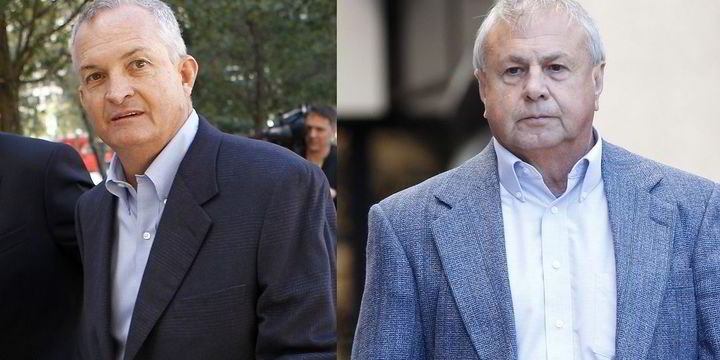
[Disclosure: I assisted the legal team that defended Bob Kaluza. That said, I completely disagreed with the charges against him and Don Vidrine before my involvement in the case.]
Unsurprisingly, there was a lot of tough guy talk in Washington DC after the blowout:
“Our job is basically to keep the boot on the neck of British Petroleum”
Ken Salazar, Secretary of the Interior
Weeks after the explosion, President Obama told NBC’s Matt Lauer he was trying to figure out “whose ass to kick.”
Texas Monthly
It was therefore predictable that the Department of Justice (DOJ) would choose to prosecute BP employees individually. There were BP managers who would have been good candidates, but instead DOJ chose to criminally prosecute the working stiffs – the two BP well site leaders on the rig. They were the lowest ranking BP employees associated with the incident. This was apparently acceptable to BP, since their plea agreement blamed Kaluza and Vidrine’s for their role in overseeing the negative pressure test (#blametheworker). Never mind that:
- BP management was responsible for the well planning and shortcuts that were the root causes of the blowout (see the previous posts in this Macondo series).
- the extent to which the negative pressure test was misconducted and misinterpreted was and remains a topic of dispute.
- there were no regulations or standards requiring this test or explaining how it should be conducted, and BP’s internal guidance was woefully inadequate.
- Bob Kaluza was a temporary replacement for the regular well site leader, had worked primarily onshore, and had never conducted or witnessed a negative pressure test.
- Kaluza and Vidrine were themselves victims and were fortunate to have survived the incident.
Despite all of this, DOJ still chose to prosecute the two well site leaders. However, the weaknesses in the DOJ case became more obvious over time, and DOJ dropped all but a misdemeanor water pollution charge. Vidrine, who had health issues that were exacerbated by the case, accepted a plea deal. Kaluza was confident of his innocence and chose to make his case in court. His defense team was very strong, and the trial was essentially a walkover. After less than 2 hours of deliberation, the jury fully acquitted Bob Kaluza (2/25/2016). Sadly, Don Vidrine passed away the following year.


This Well Control Rule comment, endorsed by 7 trade associations, hit a nerve. Here’s why.
Posted in drilling, Offshore Energy - General, Regulation, well control incidents, tagged BSEE, NTTAA, standards, standards vs. regulations, trade association comments, Well Control Rule on November 30, 2022| Leave a Comment »
The comment (pasted below) by the trade associations asserts that BSEE ignored the requirements of the National Technology Transfer and Advancement Act (NTTAA).
Reaction:
Read Full Post »