Feeds:
Posts
Comments

Archive for the ‘accidents’ Category

From the Australia Resources Minister’s Press Conference on 4 February in Canberra (click for the full transcript):

I might also say that I was in the United States last week and these issues were clearly top of mind in my discussions in Washington (l didn’t know he was here and have seen no US coverage of these meetings.)

I reinforced my previous commitment to work closely with the United States in terms of the consideration of the outstanding recommendations of the Macondo report and our determination to put in place a single national regulator in Australia

Discussions were also held with the companies and the US administration about an international conference we will hold in Western Australia in August of this year, focusing on the recommendations of the Macondo and Montara reports. That conference will be highly technical in nature.

It will in my opinion be a very important regulatory conference because it’s about basically having a look at where we are, what national and international responses can be coordinated, any specifications that might have to be changed so that we get a uniform approach to industry practice and the nature of equipment used. (Is the Minister unaware of the Vancouver conference and the ongoing work among regulators?)

(On the report about the Varanus Island explosion) Firstly I’d love to get my hands on it because I want to fully assess it. But I can’t get access to it at the moment because the WA government has determined it would be inappropriate to release it because it may impinge on potential legal proceedings.


Read Full Post »

From today’s Platts Oilgram News:

Offshore drilling giant Transocean expects to release its internal investigative report next month on last year’s Macondo disaster in the Gulf of Mexico as the first of several milestones toward resolving liability issues, Transocean CEO Steven Newman said February 8.

The BOP section of TO’s report should be very interesting.

Read Full Post »

U.S. OFFSHORE OIL EXPLORATION: MANAGING RISKS TO MOVE FORWARD

Interesting lineup of speakers.

Read Full Post »

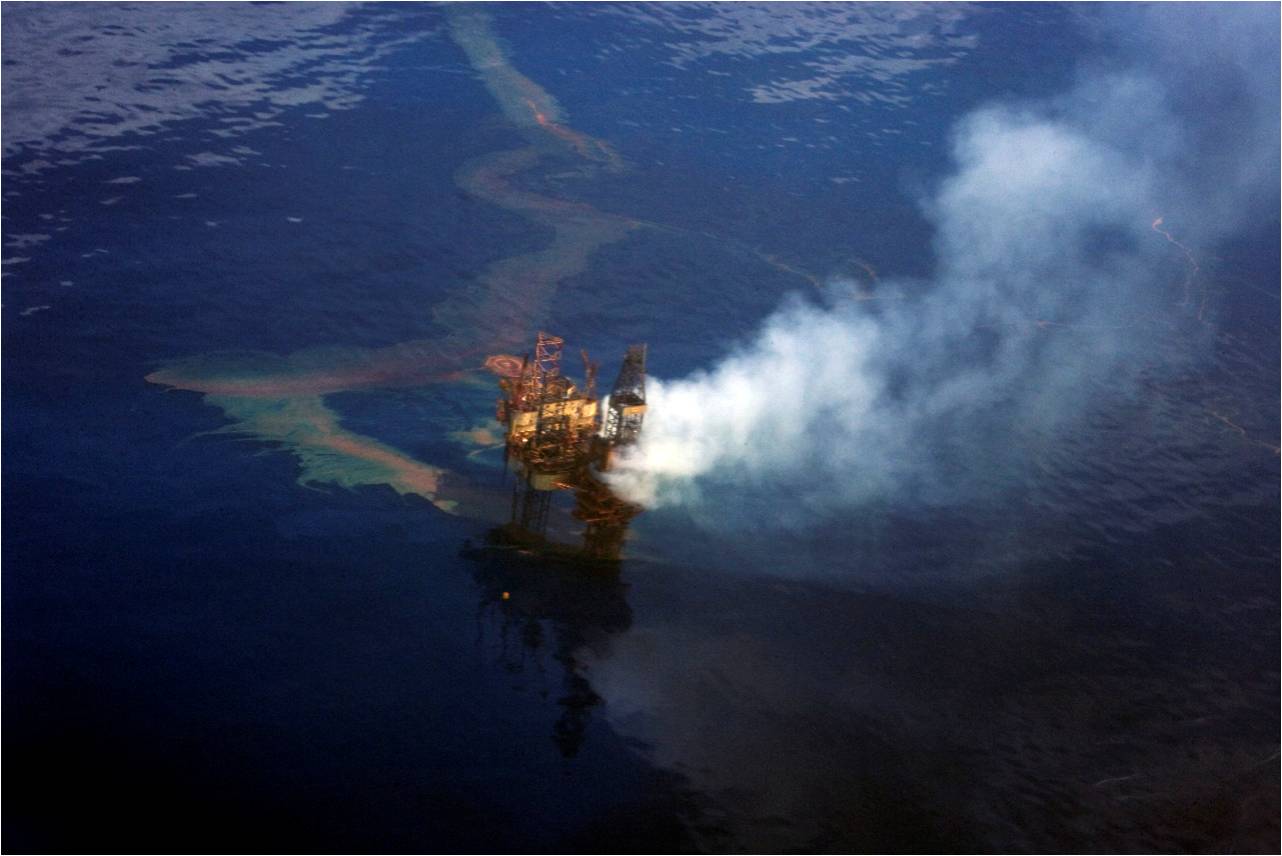
Montara Blowout - Timor Sea

Link

PTTEP will have to report monthly and meet quarterly with Mr Ferguson under a binding agreement for the next 18 months.

Comment: That “penalty” is almost comical. What is the next level of punishment – weekly meetings with Ferguson? Also, shouldn’t the Minister let the regulator oversee PTTEP? Shouldn’t the Minister receive such reports and briefings from the regulator?

There is no disincentive, there’s no penalties. That’s what I think many Australians will be scratching their heads about. Paul Gamblin, WWF WA Director

Comment: I have to agree with the World Wildlife Federation. As one who has been following Monatara since the blowout was first reported and has read every page of the submissions and testimony, it seems inconceivable that PTTEP is able to continue its operations with no apparent penalty.

Read Full Post »

The Canadian Transportation Safety Board’s report on the March 2009 helicopter crash that killed 17 workers offshore Newfoundland will be released on 9 February. This CTV piece provides a good summary of some of the significant issues that have surfaced in the press including:

Pre-crash warnings:

A Canadian investigator who red flagged main gearbox problems months before a Sikorsky helicopter crashed off Newfoundland says he’ll closely read a federal report on what caused the deadly accident.

Criticism of the FAA for their failure to respond:

He forwarded his results to the Federal Aviation Administration, the U.S. agency that originally certified the aircraft, saying he hoped to hear what a deeper probe would find.

FAA says “Not My Job:”

Les Dorr said the agency didn’t send any follow up research it did to Yearwood because it wasn’t under any obligation to do so under international agreements.

Transport Canada says “Not My Job” and points the finger at FAA:

Maryse Durette, a spokeswoman for the agency, says in an email the matter was the FAA’s responsibility and Transport Canada would wait for the original certifier to make recommendations before acting.

While the data suggest that the risk to offshore workers may be greatest when they are travelling to and from a facility, this investigation has received very little attention outside of Canada. That is unfortunate.

Read Full Post »

This cartoon reminded BOE sage Odd Finnestad of the Deepwater Horizon BOP “forensics” testing.

While the BOP testing is now in its 4th month with no official updates and no information on the badly neglected investigation website (where items from last August are listed as the “latest news”), there is online video evidence that gives us good clues about what happened.  However, this is partial evidence, and concerned operators, contractors, and regulators need complete information. While we wait, wells are being drilled around the world without the benefit of even preliminary findings.

When a plane crashes, information is released as soon as possible so that future accidents can be prevented.  Why is that not the case with this investigation? The absence of urgency and transparency is most disappointing.

Read Full Post »

BOE’s Chery Anderson has alerted us that the Petrobras P-33 platform, which had been shut-in at the direction of the Brazilian regulators, has resumed production. Unfortunately, as has been the case with many post-Macondo articles, the author felt compelled to link the Petrobras problem to deep water.

…the accident once again raised concerns about the safety of deep-water oil output in the wake of last year’s disaster in the U.S Gulf of Mexico.

Contrary to popular opinion, water depth was a relatively minor factor in the Macondo blowout, and had nothing to do with the maintenance issues at the P-33 and other Campos basin facilities. Shallow water was a more significant contributing factor to the Montara blowout (batched completions, mudline suspensions, and two-stage platform installation) than deep water was at Macondo.

Read Full Post »

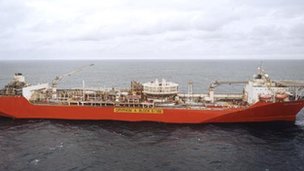
Gryphon Alpha FPSO

A BBC report (forwarded by Cheryl Anderson) indicates that 70+ workers were safely evacuated from the Gryphon Alpha Floating Production Storage and Offloading facility in the UK sector of the North Sea. Four of the FPSO’s ten mooring lines failed in 30-foot seas and high winds which allowed the vessel to roll up to 12 degrees.  40 essential personnel remained aboard the facility.

While mooring system failures have been relatively common during hurricanes and other major storms (in the Gulf of Mexico, this problem was addressed through comprehensive MMS-industry programs after the 2005 hurricane season), such failures are much less common at floating production facilities. We await the findings of the UK’s inquiry.

Read Full Post »

From Platts Oilgram News (3 February 2011):

Mitsui affiliate MOEX Offshore has received invoices from BP seeking $2.64 billion in reimbursement related to the Macondo oil spill in the US Gulf of Mexico, Mitsui said February 2.

A wise attorney (not an oxymoron :)) recently mentioned that you had to be very careful about ventures that you are buying into (as a partner) or selling into (as a contractor or manufacturer). If something horrible happens, your company’s economic future could be jeopardized, even if your role was rather small.

Read Full Post »

Australian Department of Resources, Energy, and Tourism

The Independent Review concluded that the Montara Action Plan effectively responds to the issues identified by the Montara Commission of Inquiry and sets PTTEP Australasia on the path to achieving industry best practice standards for both good oil field practice and good governance.

Comments:

  1. Perhaps the results of the “Independent Review” should have been released before PTTEP announced that it was moving ahead with development of the Montara field.
  2. Macondo was a model operation compared to Montara which was suspended for months with only a flawed casing shoe and a corrosion cap as barriers. When well activities resumed after the suspension, and the corrosion cap was removed, they could have tied back the 13 3/8″ casing and installed the BOP stack, but instead moved to another well so they could optimize efficiency. When the well began to flow, there was no means of even attempting to shut it in or install a surface cap.
  3. PTTEP has not been fined or penalized in any way by the Australian government. I wonder how Commissioner Borthwick and the folks who participated in the Montara Inquiry, which did an admirable job and was very critical of PTTEP, feel about that.

Read Full Post »

« Newer Posts - Older Posts »