Feeds:
Posts
Comments

Archive for the ‘accidents’ Category

Taylor Energy’s Mississippi Canyon Block 20 “A” platform was destroyed by a massive mudslide during Hurricane Ivan in 2004 (see illustrations below). Per Naval Research Laboratory sensors, “Ivan the Terrible” generated freak waves as high as 91 feet, and NRL computer models suggest that wave heights may have exceeded 130 feet. The changes in pressure resulting from the motion of the huge waves triggered the flow of the unstable Mississippi delta sediments. The platform was swept 500 feet downslope and the wells were severed and buried under a deep layer of sediment. That was essentially the end for Taylor Energy, as the company would spend the next 17 years locating and plugging wells, decommissioning piping, collecting seepage, and mitigating pollution. Since 2008, when Taylor sold its remaining oil and gas assets, the company has been solely engaged in the MC-20 response.
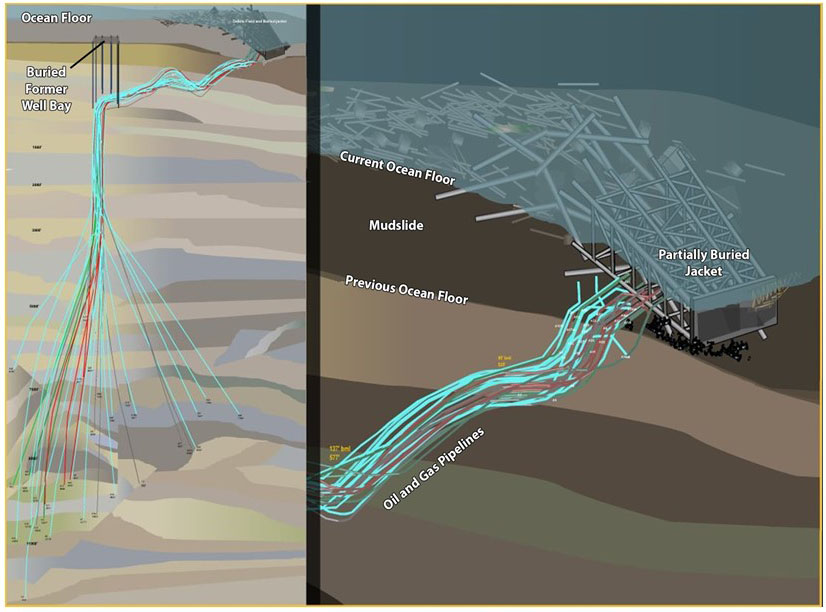
Illustration of the collapsed well jacket and damaged pipes from Taylor Energy’s Mississippi Canyon 20 Platform in the Gulf of Mexico.
NOAA illustration

Last week, Taylor and the Justice Department signed a consent degree that transfers the company’s remaining assets and control of the decommissioning trust fund to the Federal government. Questions remain as to whether the platform and wells could have been better designed to withstand the mudslide (note that the platform was installed and operated by BP prior to being sold to Taylor), and whether more should have been done to mitigate the seepage. Taylor does a good job of making its case at their response website.

Few offshore operators would argue that what happened to Taylor couldn’t happen to them. That would be brash and foolish. Hopefully, the companies that remain have absorbed the lessons of MC-20 and are applying them to their operations and management programs.
Read Full Post »

NBC News Report

LA Times Report

This will be an interesting case given that the root cause of the leak appears to be anchor dragging and the responsible shipping company has yet to be identified. Also, these informed quotes about leak detection from a previous post are highly pertinent:

“My experience suggests this would be a darned hard leak to remotely determine quickly,” said Richard Kuprewicz, a private pipeline accident investigator and consultant. “An opening of this type, on a 17-mile-long (27-kilometer) underwater pipe is very hard to spot by remote indications. These crack-type releases are lower rate and can go for quite a while.”

The type of crack seen in the Coast Guard video is big enough to allow some oil to escape to potentially trigger the low pressure alarm, Kuprewicz said. But because the pipeline was operating under relatively low pressure, the control room operator may have simply dismissed the alarm because the pressure was not very high to begin, he said.

ABC News

Read Full Post »

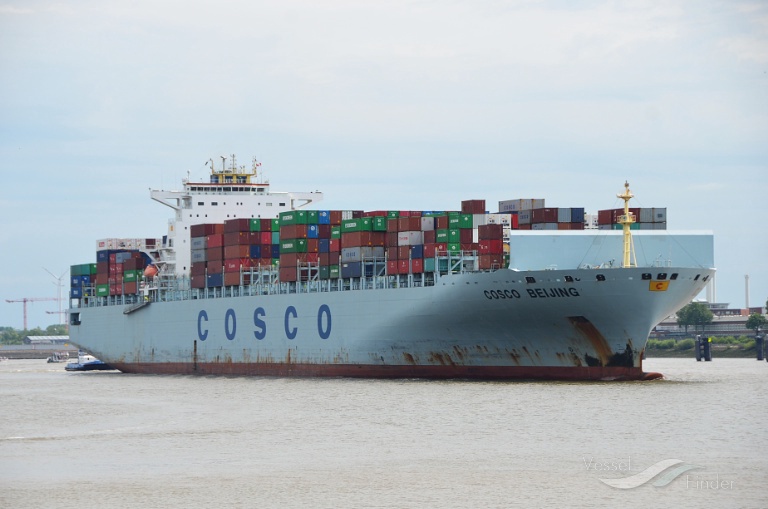
BEIJING photo
Vessel Finder

According to the Coast Guard, investigators determined the ship “was involved in an anchor dragging incident on Jan. 25, 2021 during a heavy weather event that impacted the Ports of L.A. and Long Beach.” The anchor- dragging occurred “in close proximity” to an underwater pipeline later determined to be the source of the October leak that spilled thousands of gallons of oil into the ocean, forcing the closure of beaches and harbors across Orange County.

CBS-LA

The hearings and the liability battles that follow will be most interesting. Those lined up to sue the pipeline operator (Amplify), such as this Huntington Beach disc jockey, may have difficulties.

Read Full Post »

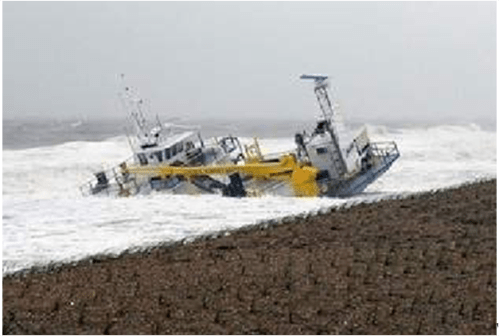
The vessel was conducting research for a proposed offshore wind project. The Coast Guard rescued the 2 crew members, one of whom tragically died. Why has the Coast Guard still not issued an investigation report more than 13 years after the incident? An inquiry was sent to the Coast Guard but no response has been received.

There are serious questions regarding the positioning of a liftboat in the Mid-Atlantic for several months beginning in March when major storms are likely. There are also important questions about the liftboat’s failure mechanisms, the operator’s authority to be conducting this research, and the actions that were taken in preparation for storm conditions.

One worker died and another was seriously endangered. 13 years after the incident, we are still wondering what happened and why.

Read Full Post »

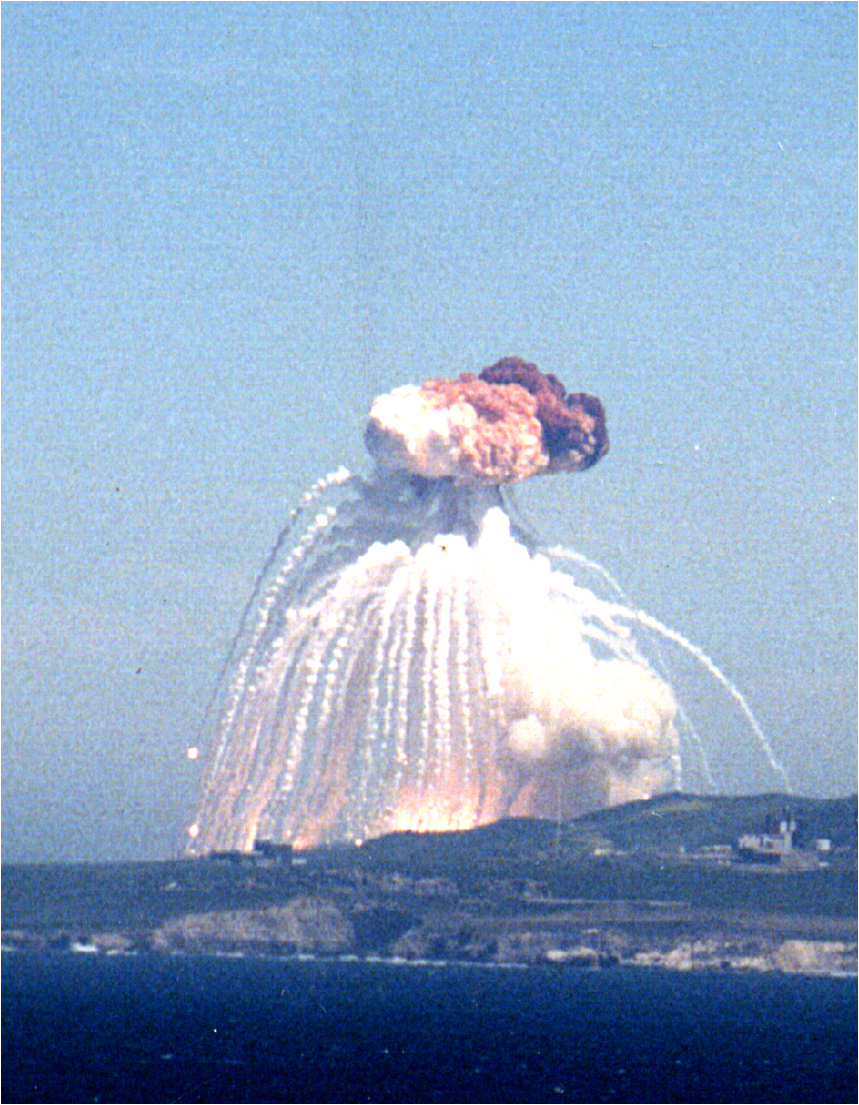
Last week’s successful Falcon 9 launch from Vandenberg Space Force Base (formerly Air Force Base) brought back memories of a less successful Vandenberg launch on April 18, 1986. I was just offshore from the base on Texaco’s Platform Harvest at the time. That is where the photo below was taken.

The Titan rocket carrying a secret spy satellite exploded in a huge orange cloud seconds after the launch. Because this was a classified mission, few residents knew that a launch was occurring. Fifty-eight people were treated for skin and eye irritation. Not a shining moment for the space program, particularly given the Titan failure the previous August and the tragic Challenger disaster earlier in 1986.

Photo taken from Texaco’s Platform Harvest
New York Times archive

Read Full Post »

Due to water currents and a robust emergency clean-up effort, local beaches and ocean were re-opened on Oct. 11. By mid October, walking along the wide, sandy beaches there’s no sign of the spill as dolphins and surfers share the waves against a backdrop of cargo ships, oil rigs and the soft silhouette of Catalina Island.

Santa Cruz Sentinel

Further confirmation of the lower spill volume:

“Right now, there’s high confidence that the spill was approximately 24,696 gallons. The exact number won’t be able to be verified until the investigation has been completed. But there’s high confidence in that number,” Shaye said.

LCDR Shaye to the Sentinel

“Our world environment is very resilient, which is a positive thing,” Shaye said. “As far as the birds and wildlife; there have been some deaths, as happens in this kind of situation. But quite a few have been rehabilitated and released back into their environment.

LCDR Shaye to the Sentinel

Kudos to the responders. The training and response exercises worked!

Read Full Post »

Never Let a Good Crisis Go to Waste - FocusCFO

A group of environmental organizations demanded Wednesday that the Biden administration suspend and cancel oil and gas leases in federal waters off the California coast after a recent crude oil spill.

NBC LA

While not the disaster that some had predicted, this spill is another setback for California offshore production. However, cancellation of the remaining producing leases would be a very difficult and costly proposition for the Federal government. At this time, the Beta Unit operator appears to be minimally responsible for the spill, so what would be the basis for cancelling those leases? Cancelling other producible leases would be even more problematic.

Read Full Post »

A: Not according to this 2012 INGAA study:

Findings of INGAA Study:

  1. 85% of pipeline incidents reported to PHMSA from 2002-2009 occurred irrespective of the age of the pipeline, with just 15% related in some way to the age of the pipeline.
  2. The properties of the steels which comprise natural gas pipelines do not change with time; that is, pipe does not “wear out.”
  3. The fitness of a pipeline for service does not necessarily expire at some point in time.
  4. The integrity of those pipelines for which the fitness for service may degrade with the passage of time can be assessed periodically. Timely repairs – and other mitigation efforts – based on those assessments will ensure the pipeline’s continued fitness for service.
  5. A well-maintained and periodically assessed pipeline can safely transport natural gas indefinitely.

Read Full Post »

This quote from an AP article is consistent with the view expressed here after our review of the inspection reports for the Beta Unit (Platform Elly to shore) pipeline. Further per the AP article:

Safety inspections in 2015, 2017 and 2019 found anomalies in Amplify’s pipeline, including instances of metal loss and three dents that were previously repaired. But several experts who reviewed the reports said the metal loss — which can be a sign of a pipe wall thinning as it corrodes with age — was relatively minor. The dents were not in the same area as the spill.

AP

Read Full Post »

Aqueos 2020 external (ROV) inspection:

The 16” oil pipeline was found to be in good condition with no visible damage or anomalies.
One (1) CP test point that was installed in 2014 was found to be displaced from its location on the pipeline (this was also noted in the 2018 survey), and no damage was noted at the location (Fix #101).

Aqueos inspection report, May 2020

Pipe‐to‐electrolyte potential values recorded were:
 ‐ 921 millivolts (mV) on the 6” gas pipeline
 ‐ 910 millivolts (mV) on the 10” water pipeline
 ‐ 963 millivolts (mV) on the 10” gross fluids pipeline
 ‐ 906 millivolts (mV) on the 16” oil pipeline

As the NACE Standard SP0169‐2013 “Control of External Corrosion on Underground or Submerged Metallic Pipelines” criterion is ‐800 mV, all readings indicate that Cathodic Potential is within specifications.

Aqueos inspection report, May 2020

Metal loss data from Baker Hughes internal inspection (12/2019):

Depth of Metal LossExternal AnomaliesInternal Anomalies
30+%00
20-29%10
10-19%00
total10
Baker Hughes In-line Inspection Report, 12/30/2019

The metal loss findings are consistent with those reported in a previous internal inspection (Baker Hughes, 11/2017).

BSEE has general authority to require pipeline inspections under 30 CFR 250.1005. BSEE, the State Lands Commission, and the operator appear to have implemented an effective inspection program for the Beta Unit.

Read Full Post »

« Newer Posts - Older Posts »