$SOC Field Update: Hydro-testing finalized this morning. System has officially transitioned to Line Fill. Nitrogen displacement by crude is underway. Expecting first oil at Pentland early-mid Jan. The operational window is now locked.
$SOC: Ninth Circuit order grants leave to intervene, but denies the request to stay PHMSA’s Dec. 22 Restart Plan approval and Dec. 23 Emergency Special Permit. Case is expedited and goes on the next available calendar. Briefing: opening Jan. 26, 2026; answering Feb. 17;… pic.twitter.com/YdGeVMu6cI
The December 28 court ruling is consistent with the Department of the Interior’s position that the TRO request be converted to a request for a preliminary injunction. Interior had argued that a preliminary injunction motion could likely be resolved by mid-to-late-January.
The Government also asserted that more time is needed to submit the classified information that is central to the dispute.
Thoughts on this case: A respected colleague recalled this advice from Don Hodel, a widely admired Secretary of the Interior during the Reagan administration: “For all its faults, a contract is a contract, great men and great nations keep their word.”
Another colleague reminded me of the offshore North Carolina oil and gas leases that were suspended in the 1990s. The companies sued the Federal government for breach of contract, and the U.S. Supreme Court ruled 8-1 on June 26, 2000, in Mobil Oil Exploration & Producing Southeast Inc. v. United States, that the government must repay the lessees.
If the suspended Atlantic wind leases are cancelled, the govt would presumably have to compensate lessees for lease purchase and development expenditures. The costs to the Federal govt would be enormous – in the tens of $billions.
All eyes are on the 9th Circuit. No injunction yet. Will the Court intervene to block Sable?
No evidence of intervention by the State.
Does Sable restart production tomorrow?
Traders on edge. Bulls are feeling optimistic. See X post below. 😉
Spend my barrel, parked in a harbor ‘Neath the platform spotlight Pump it up tight, let the oil start flowin’ A little crude movin’ on a federal green light Fits my life, oh so right My Sable Offshore Delight— Victory II (@VictoryII1) December 30, 2025
Summary: “BOEM’s order sets forth no rational basis, cannot be reconciled with BOEM’s own regulations and prior issued lease terms and approvals, is arbitrary and capricious, is procedurally deficient, violates the Outer Continental Shelf Lands Act (“OCSLA”), and infringes upon constitutional principles that limit actions by the Executive Branch. This Court must therefore vacate the Order and enjoin BOEM from taking further action with respect to that Order.”
Key points raised by Dominion:
Dominion Energy Virginia (DEV) has spent approximately $8.9 billion to develop CVOW to date, which is over two-thirds of the total projected cost of $11.2 billion.
BOEM and Interior afforded DEV no advance warning or due process regarding the Order for CVOW.
The Order alleges no CVOW violation or deficiency.
The Order points to unnamed “national security threats” based on a November 2025 “additional assessment regarding the national security implications of offshore wind projects” by DoD, “including the rapid evolution of relevant adversary technologies and the resulting direct impacts to national security from offshore wind projects” generally.
The Order deems this information “new” and “classified” without any justification or detail. Moreover, as BOEM and DoD should know, certain DEV officials have security clearances to receive and review classified information, yet never were afforded such an opportunity prior to issuance of the Order.
DEV is suffering more than $5 million per day in losses solely for costs relating to vessel services associated with the Order. DEV is also incurring losses related to additional storage costs for the significant amount of equipment, idle workforce, contractual penalties, and additional costs.
Agencies are required to consider costs and benefits in their decision-making
Agencies are required to consider alternatives in their decision-making.
The CVOW Order unlawfully deprives DEV of a property interest without due process.
Dominion’s weakest argument follows (bad State legislation shouldn’t dictate Federal energy policy):
CVOW is critical to Virginia’s legislative clean energy directive and DEV’s commitment to achieving net-zero emissions. The VCEA requires the transition of Virginia’s electric grid to 100 percent non-carbon producing energy generation by 2045. Va. Code § 56-585.5. The VCEA also states that the construction of Virginia offshore wind facilities is in the public interest. Va. Code § 56-585.1:11 (C)(1).
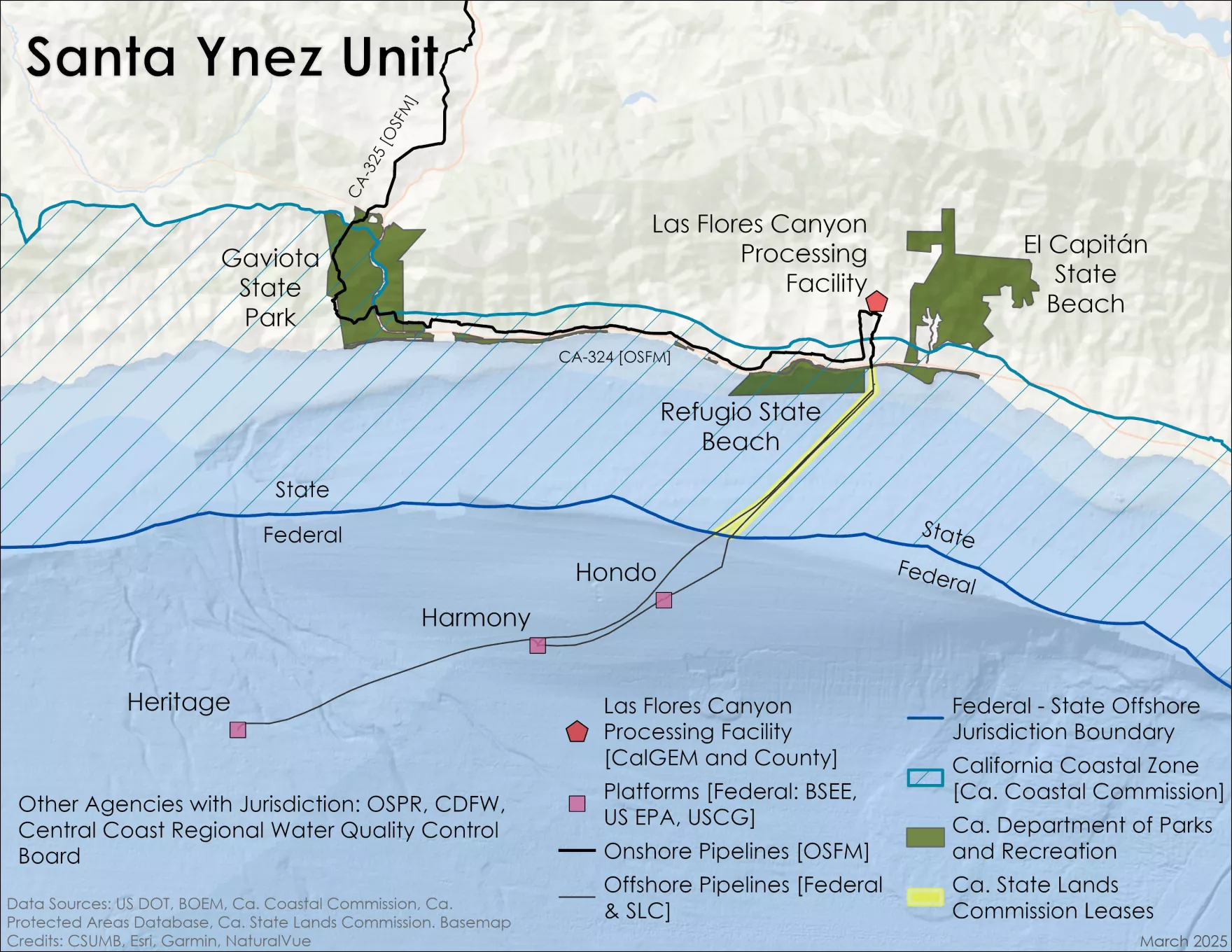
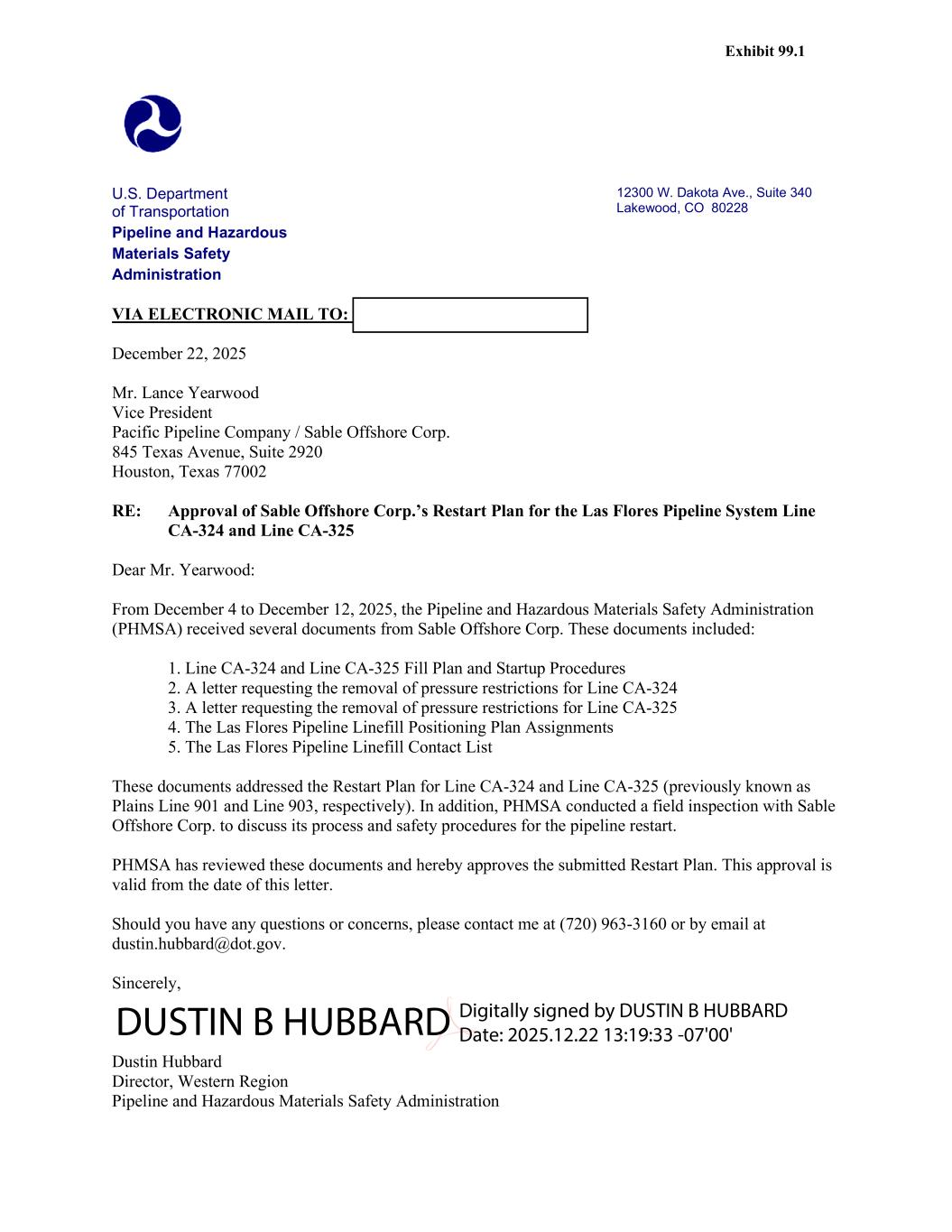
Attached are PHMSA’s Christmas week Emergency Special Permit and Permit Analysis document. Is the path clear to restart SYU production before New Year’s day?
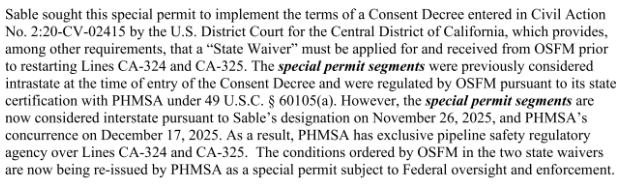
Three excerpts from the first attachment are pasted below. The last paragraph on p. 2 succinctly explains PHMSA’a emergency permit:
PHMSA was able to assume jurisdiction from the State because the pipeline transports Federal OCS oil and is thus inherently interstate. The perceived problem with a PHMSA takeover had been the court approved Consent Decree that was executed following the 2015 Refugio pipeline spill. That Decree specifies that the State Fire Marshal must approve a restart of the pipeline. The first paragraph on p. 2 of the permit explains PHMSA’s position that the Consent Decree has been superseded.
The provision pasted below (p. 4 of the permit) seems contradictory in that it stipulates compliance with the Consent Decree. However, PHMSA apparently sees no contradiction in that references to the Fire Marshal (OSFM) should now be read as references to PHMSA. PHMSA presumably included this provision to reaffirm the need to comply with the technical requirements in the Decree.
The second attachment is PHMSA’s analysis of the special permit. Note that the permit expires in 60 days. Public notice and opportunity for comment would be required for a renewal.
Environmental organizations reacted quickly to the PHMSA permit, filing an emergency motion in the 9th circuit (third attachment). Observations:
Impressive effort given the time crunch. The PHMSA permit was issued on 12/23, just 3 days prior to the court filing. No Christmas break for those folks!
If you wonder why the petition was filed with the 9th Circuit (seemed convenient given the 9th Circuit’s reputation), a filing at the Circuit level is required for appeals of PHMSA orders.
Petitioners strongest argument: Sable is not entitled to emergency relief, as there is no real emergency. PHMSA asserts that EO 14156, which declared a National Energy Emergency, supports the emergency permit.
The petitioners environmental doom prediction is not compelling. PHMSA’s position is that the mitigations they are imposing (reduced operating pressure, inline inspections, testing and sampling, etc) provide protection equal to or greater than than the corrosion remediation requirement that is being waived.
The petitioners asked the Court for relief no later than 12/26. That date has passed. Will there be a ruling today?
Barring an injunction, odds are that Sable restarts production prior to New Year’s Day, when a requirement (SB 237) for a new Coastal Development Plan, takes effect.
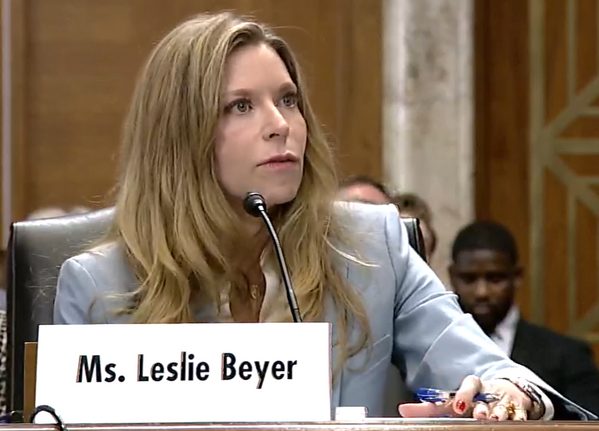
Leslie Beyer, Assistant Secretary for Land and Minerals Management (ASLM), has stepped down from her post as the leader of the Dept of the Interior’s offshore energy programs. She was the senior official at this month’s BGG1 lease sale, and made strong remarks about the importance of the offshore oil and gas program. Ms. Beyer was confirmed by the Senate in September.
Lanny Erdos, Director, Office of Surface Mining Reclamation and Enforcement, has been named Acting ASLM.
This leaves the offshore energy program without a confirmed Asst. Secretary and with Acting Directors at both BOEM (Matthew Giacona) and BSEE (Kenny Stevens).
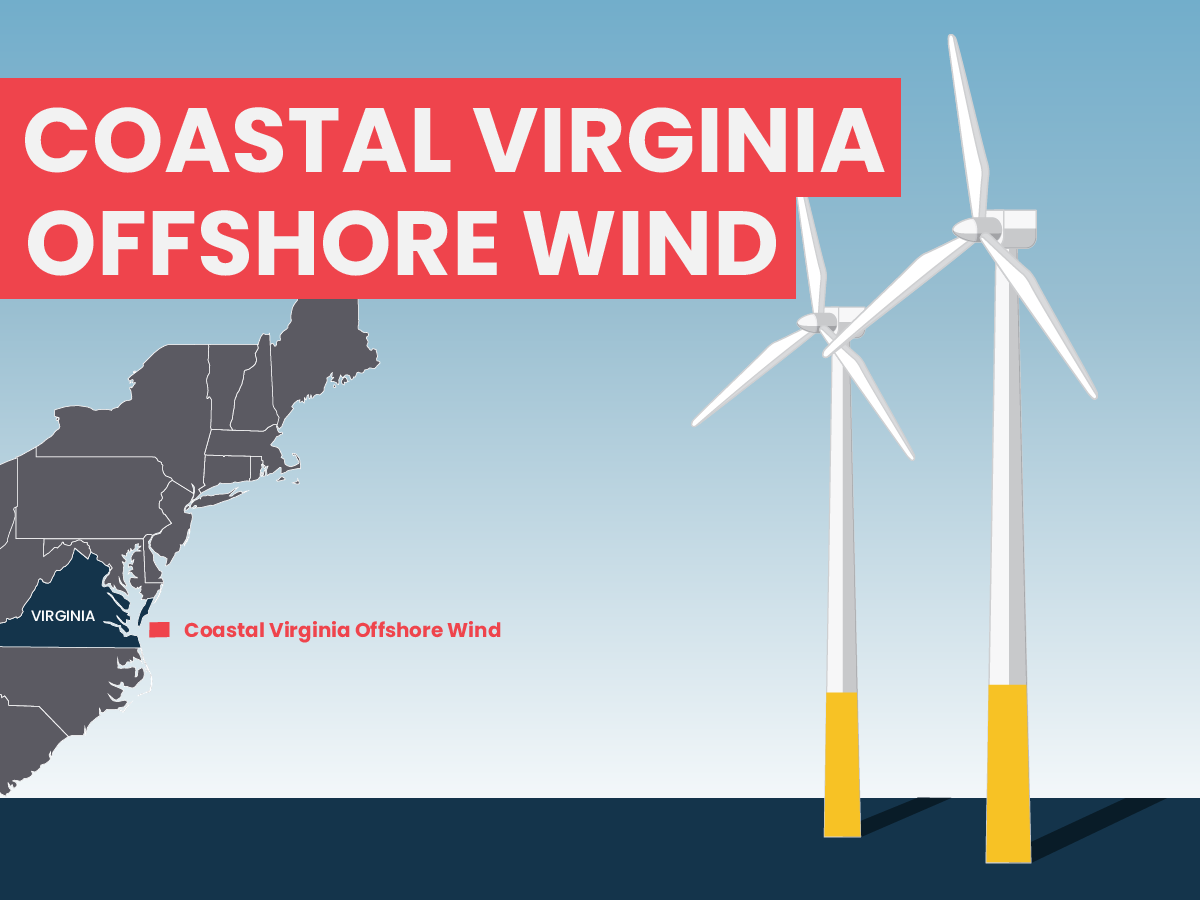
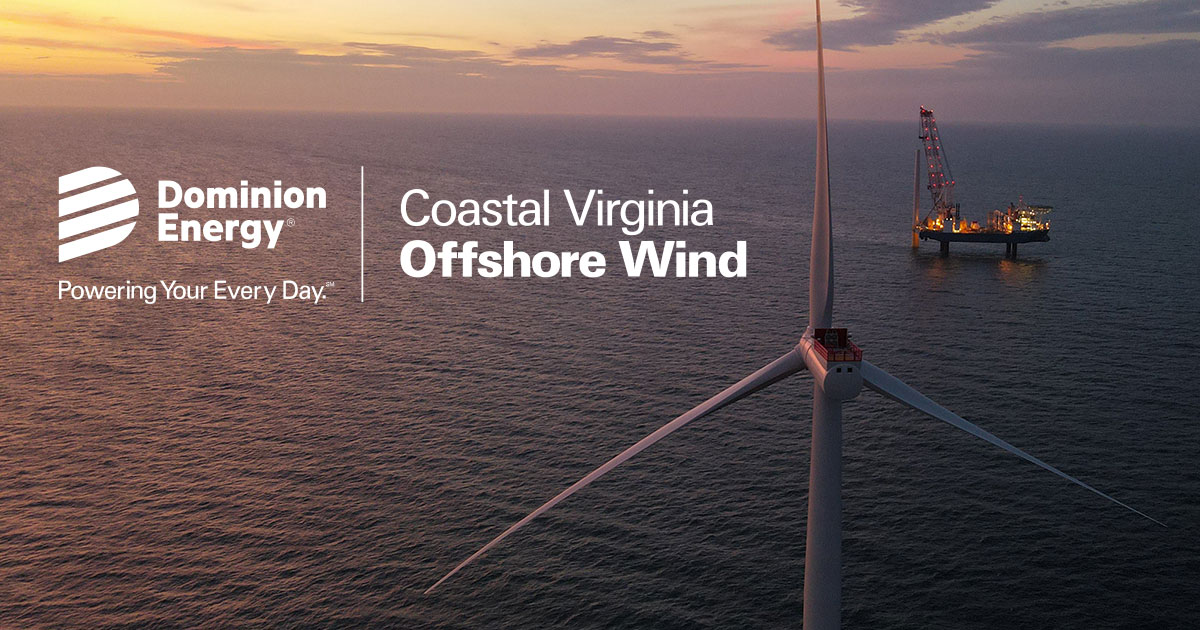
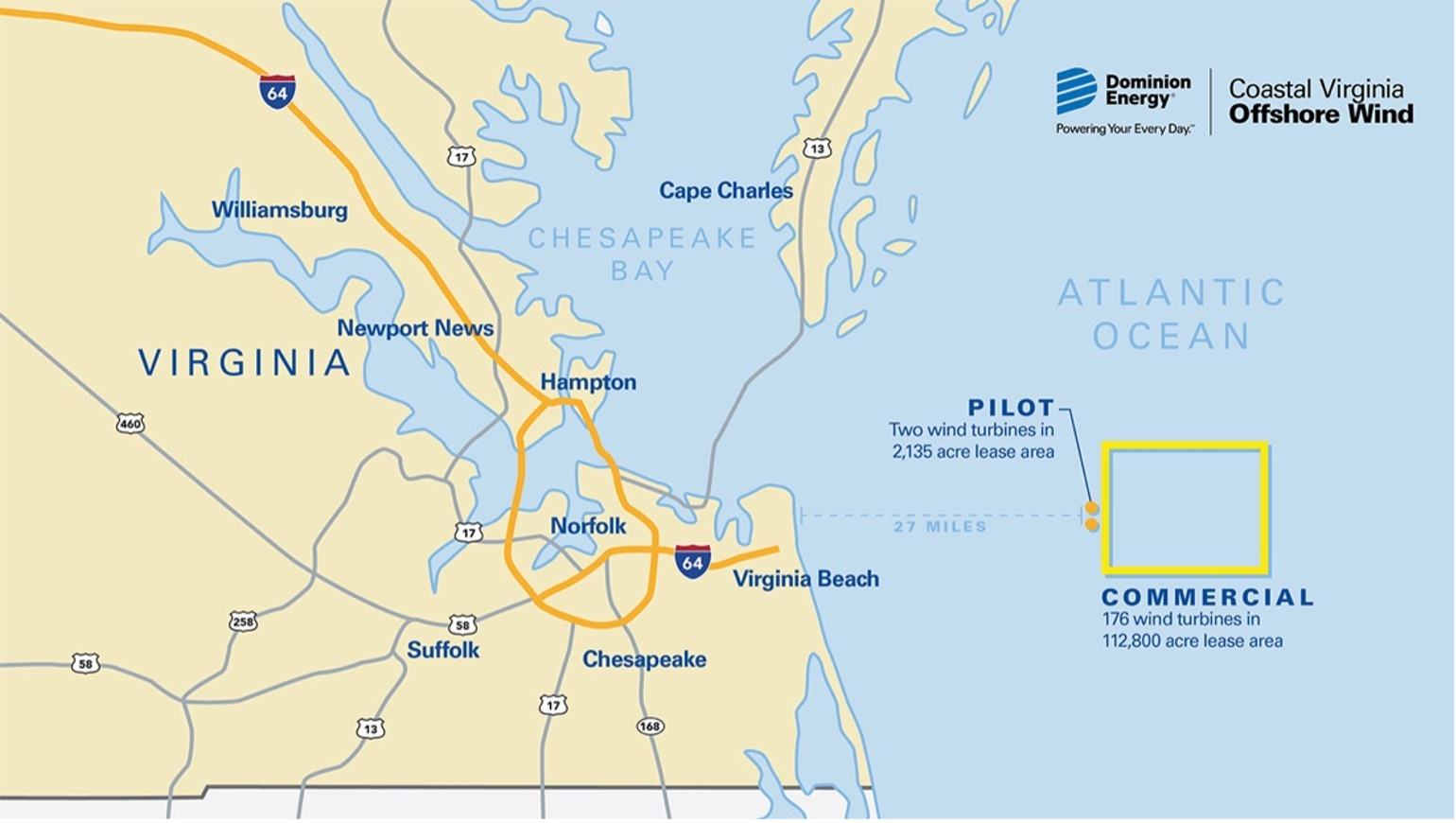
Coastal Virginia Offshore Wind (CVOW) is no ordinary renewable project. It was created by legislative command. The 2020 Virginia Clean Economy Act (VCEA) declared Dominion’s 2.6-gigawatt wind farm “in the public interest,” effectively tying the hands of the State Corporation Commission and guaranteeing Dominion full cost recovery and profit. The risk doesn’t sit with shareholders — it sits with Virginia’s ratepayers.
The Thomas Jefferson Institute opposed that structure from the start. We warned that forcing captive customers to underwrite an unproven, high-cost project located in a hurricane prone region would expose Virginians to escalating bills with little accountability. Yet when a group recently asked the federal government to shut CVOW down, we declined to join. Why? Because government shouldn’t pick winners and losers — not when it mandates projects, and not when it stops them. Especially when a project is in its final stretch and no economic analysis of such a decision has been completed (or shared).
Virginia’s offshore wind story shows how risky it is when government drives energy decisions by decree. One administration mandates a massive buildout; the next halts it over security fears. Businesses can’t plan around that. Ratepayers shouldn’t have to pay for it.





 Bud's Offshore Energy (BOE)