Conceptually, this technologically advanced polymetallic nodules collection system looks great. The big challenge that John Smith sees is with the number of moving parts. The numerous manipulators operating at such depths could be prone to breakdowns which reduce recovery rates and significantly increase operating costs.
Archive for November, 2025
(1) No bids for tracts in the Eastern Newfoundland or Labrador South regions; (2) C-NLOER incident announcements
Posted in accidents, Canada, energy policy, tagged C-NLOER, incident reporting, Newfoundland, no bids on November 14, 2025| Leave a Comment »
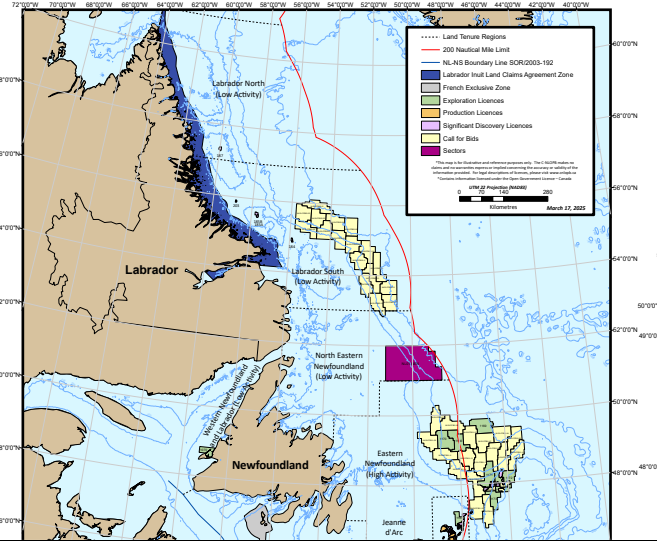
The Canada-Newfoundland Labrador Offshore Energy Regulator (C-NLOER) informs that once again no bids were received for tracts in the Eastern Newfoundland or Labrador South regions. According to this article, the outcome (no bids)was the same from 2021-2024.
Difficult operating conditions, high costs, and relatively modest oil price projections are no doubt factors contributing to the absence of bids. Energy NL has also pointed to the “complex, inconsistent and burdensome regulatory system” as a contributing factor.
Newfoundland’s newly elected Premier, Tony Wakeham, has said his Progressive Conservative Government will advocate for the cancellation of the emissions cap as it is a cap on production. He also supports incentives for offshore oil and gas projects such as an investment tax credit or the former Petroleum Incentive Program and indicated he would work with Energy NL to review incentives that could be implemented provincially.
The C-NLOER is committed to “review its land tenure system in collaboration with governments and others, to identify opportunities to enhance competitiveness in the Canada-Newfoundland and Labrador Offshore Area.”
On a separate policy matter, C-NLOER is applauded for announcing offshore safety/environmental incidents, including significant near misses, without delay. In the US, you have to scour BSEE investigation reports to find out about significant incidents or wait a year or more until the incident table is updated. This is inexcusable!
Area identification for marine minerals offshore American Samoa; request for minerals sale in the Atlantic
Posted in energy policy, tagged American Samoa, area identification, Atlantic, heavy mineral sands, Impossible Metals, lease sale request, marine minerals, Odyssey Marine, RFI on November 13, 2025| Leave a Comment »
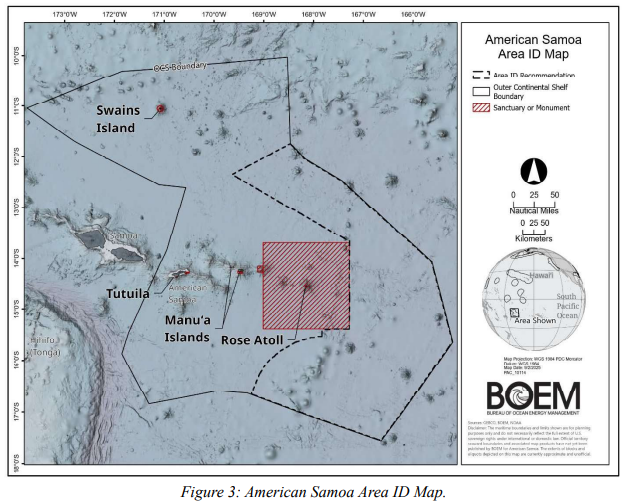
BOEM completed the area identification (outlined in diagram above) for marine minerals offshore American Samoa. The full decision memorandum is attached.
In response to BOEM’s Request for Information, Impossible Metals confirmed their interest in the identified area. Several other companies also expressed interest. The Governor and a number of other parties submitted interesting comments, which are summarized on p. 2 of the attachment.
The first two steps in a process that could ultimately lead to a mineral lease sale have thus been completed. Steps 3 to 6 remain. (See below)
- Request for Information and Interest (RFI) published in the Federal Register. complete
- Identification of Areas to be considered for leasing. complete
- Environmental Analysis for the lease sale.
- Proposed Leasing Notice Published in the Federal Register.
- Leasing Notice Published in the Federal Register.
- Competitive Lease Sale
Meanwhile, Odyssey Marine has requested a critical minerals lease sale in the Atlantic.
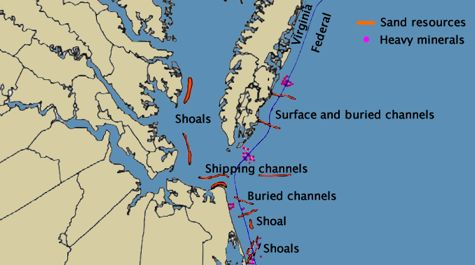
The proposed lease area, located within the U.S. outer continental shelf (OCS) off the Mid-Atlantic coast, is highly prospective for heavy mineral sands rich in titanium, zirconium, rare earth elements (REEs), and phosphate.
This would be a shelf dredging operation rather than the deepwater module collection being proposed for the Pacific.
Turbine blade failures are too common
Posted in accidents, energy policy, Offshore Wind, tagged Lars Herbst, Plymouth, Scotland Against Spin, Siemens Gamesa, turbine blade failure, Vineyard Wind on November 12, 2025| Leave a Comment »
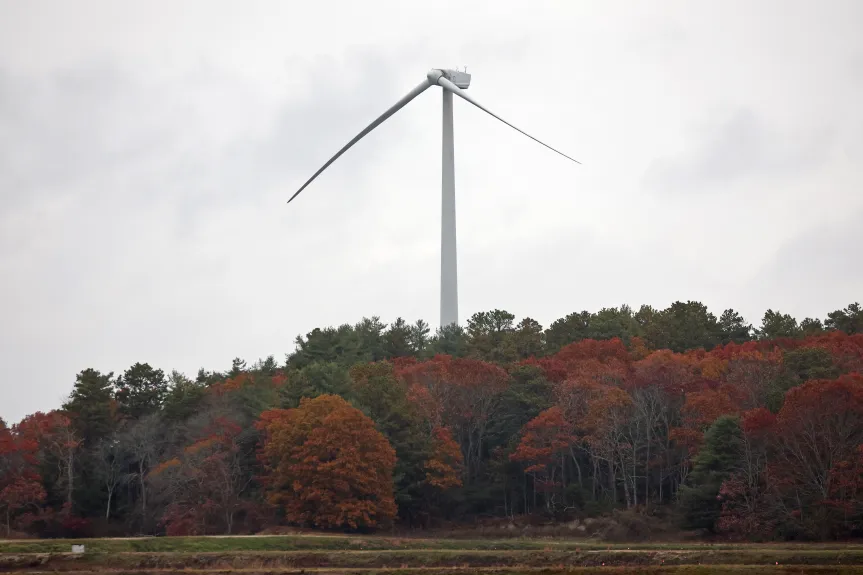
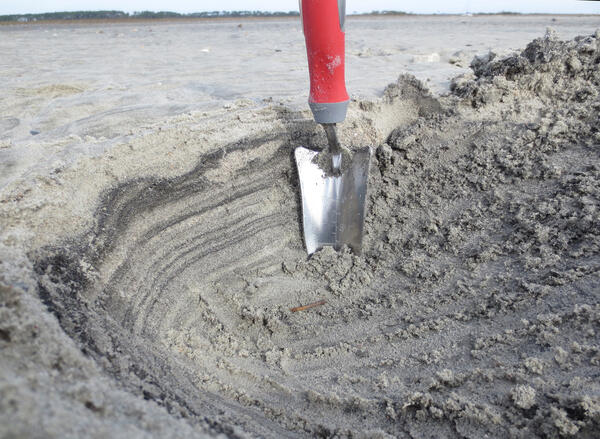
Friday’s turbine blade failure in Plymouth MA is perhaps getting added attention given its proximity to the 7/13/2024 Vineyard Wind blade failure offshore Nantucket. The Plymouth blade landed in a nearby cranberry bog (video and picture below).
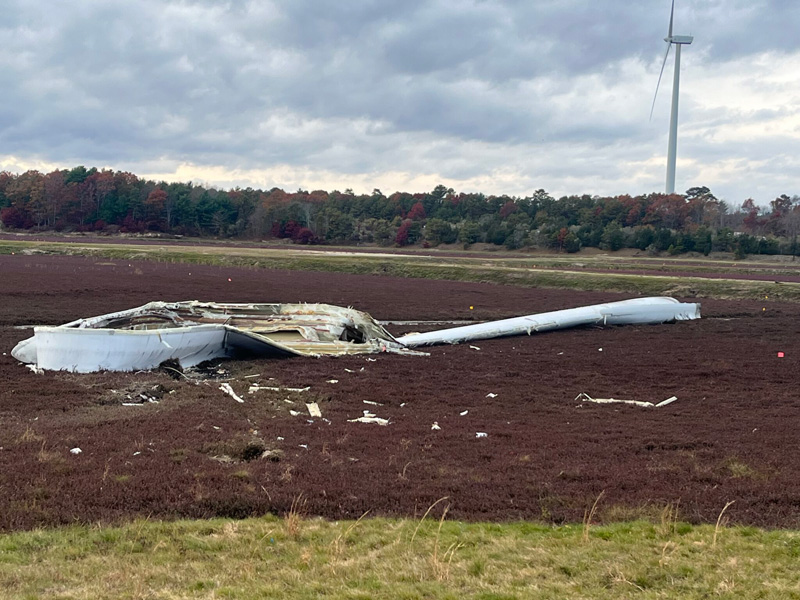
Per the MV Times, the turbines for the Plymouth project were manufactured by Gamesa, which is now part of Siemens Gamesa. Both the South Fork Wind and Revolution Wind projects off the coast of the Martha’s Vineyard are being developed by Ørsted using turbines from Siemens Gamesa. Coastal Virginia Offshore Wind, the largest offshore wind project in the United States, is also being developed with Siemens Gamesa turbines. This is not to imply a higher degree of risk for those turbines. Vineyard Wind, where the only US offshore failure has occurred to date, is using GE Vernova turbines.
Unfortunately, turbine blade failures are much too common. Last October, Lars Herbst reported, based on a Wind Power article, that “with an estimated 700,000 blades in operation globally, there are, on average, 3,800 incidents of blade failure each year.” Lars noted that the annual blade failure rate of about 0.5% translates to 1.5% of all operating wind turbines experiencing a blade failure every year, a remarkably high failure frequency.
Scotland Against Spin data indicate that blade failure is the second most common accident type in the wind industry, and the most common cause of accidents at operational wind turbine sites. SAS reports further that pieces of blade are documented as travelling up to one mile, and have gone through the roofs and walls of nearby buildings.
Lastly, we are still awaiting BSEE’s report on the Vineyard Wind failures so we can better understand what happened and why.
Sparring over 5 Year Leasing Plan leaks
Posted in energy policy, Offshore Energy - General, tagged 5 year leasing plan, Alaska, California, eastern Gulf of Mexico, Gov. Newsom on November 11, 2025| Leave a Comment »
Per the Washington Post, the Administration’s 5 Year Oil & Gas leasing plan will include (in addition to the Central and Western Gulf):
- Six offshore lease sales between 2027 and 2030 in areas along the California coast
- Expansion of leasing into the Eastern Gulf of America (Gulf of Mexico per the Post)
- 20 sales offshore Alaska through 2031 (presumably this includes the mandated Cook Inlet sales)
One Big Beautiful Lease Sale? We shall see.
Posted in energy policy, Gulf of Mexico, Offshore Energy - General, tagged BBG1, big beautiful Gulf of America, Gulf of America lease sale, low rental rates, low royalty rates on November 11, 2025| Leave a Comment »

The first ever Gulf of America oil and gas lease sale 😉 will be held on Dec. 10, 2025. Instead of numbering the sale sequentially (i.e. Sale 262), the sale has been designated OCS Oil and Gas One Big Beautiful Bill Act Lease Sale 1 (BBG1). 🙄 This change is a bit too cute for some of us old-timers, but we’ll judge the sale by its results, not its name.
The Notice of Sale is attached. The terms are very attractive, with the lowest allowable royalty rate (1/8th) on all shelf and deepwater leases. Note the comparison of royalty rates in the table below. The 6.25% difference for deepwater leases is substantial when you consider their high production potential.
| Gulf Sale No. | Date | % royalty: <200m water depth | % royalty: >200m water depth |
| 256 | 11/18/2020 | 12.5 | 18.75 |
| 257 | 11/17/2021 | 12.5 | 18.75 |
| 258 | 12/30/2022 | 18.75 | 18.75 |
| 259 | 3/29/2023 | 18.75 | 18.75 |
| 261 | 12/20/2023 | 18.75 | 18.75 |
| BBG1 | 12/10/2025 | 12.5 | 12.5 |
The rental rates for the BBG1 Sale are also very attractive compared to Sale 261:
| Water Depth | Sale 261 rental rates ($/ac) | BBG1 Sale rental rates ($/ac) |
| 0 to <200m | years 1-5: $10 year 6: $20 year 7: $30 year 8+: $40 | years 1-5: $7 year 6: $14 year 7: $21 year 8+: $28 |
| 200 to <400m | years 1-5: $16 year 6: $32 year 7: $48 year 8+: $64 | years 1-5: $11 year 6: $22 year 7: $33 year 8+: $44 |
| 400+ m | years 1-5: $16 year 6: $22 year 7: $22 year 8+: $22 | years 1-5: $11 year 6: $16 year 7: $16 year 8+: $16 |
Will the bidding reflect the very favorable lease terms?
Offshore floating solar is probably not a great idea
Posted in Offshore Energy - General, Uncategorized, tagged BAMBOO, beach debris, floating solar, Netherlands, Nymphaea Aurora, Oceans of Energy, offshore solar on November 10, 2025| 2 Comments »
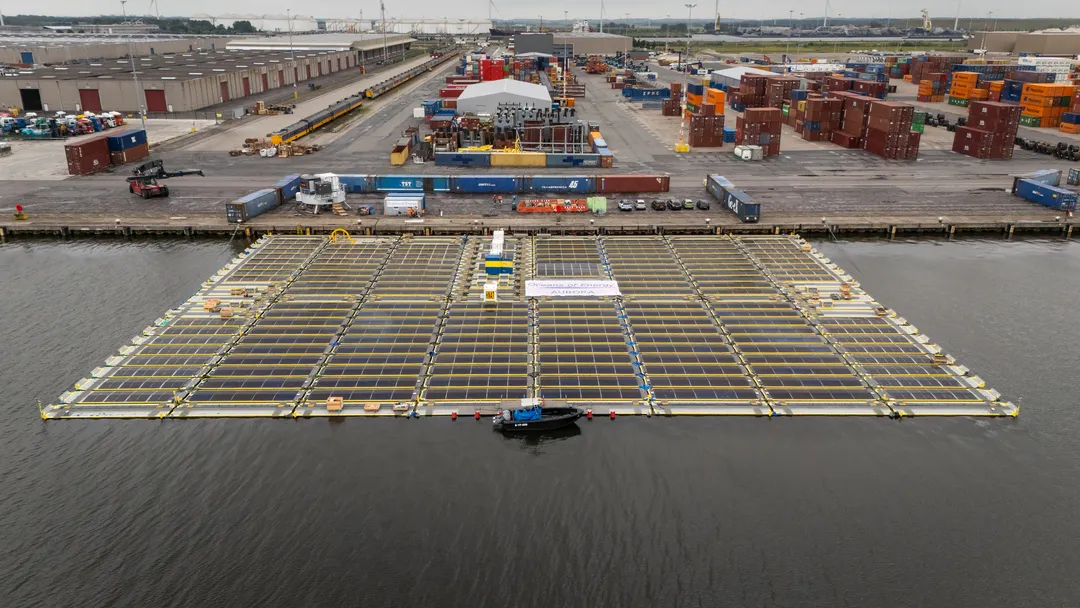
“Highlights” from a very good Sealetters account on the Nymphaea Aurora (Netherlands): from massive hype to media silence
26 June 2025 – Festive inauguration: A festive ceremony is held in the Port of Amsterdam by Oceans of Energy to celebrate the successful assembly of the world’s first commercial offshore solar farm “Nymphaea Aurora”. The solar farm is 18.5 kilometers off the Dutch coast near Egmond aan Zee, and consists of 1,400 photovoltaic panels mounted on 196 flotation segments. It is larger than a football field with the expectation to scale up.
9 August 2025 – First fire: Soon after installation at sea Nymphaea Aurora is on fire.
5 September 2025 – Second fire: A second fire breaks out in Nymphaea Aurora. The Dutch Coast Guard extinguishes the fire. Both fires were caused by overheating due to strong solar radiation and faulty panel connectors. The developer calls it a kind of technical childhood disease that is typical for new technology. (Seriously?☹)
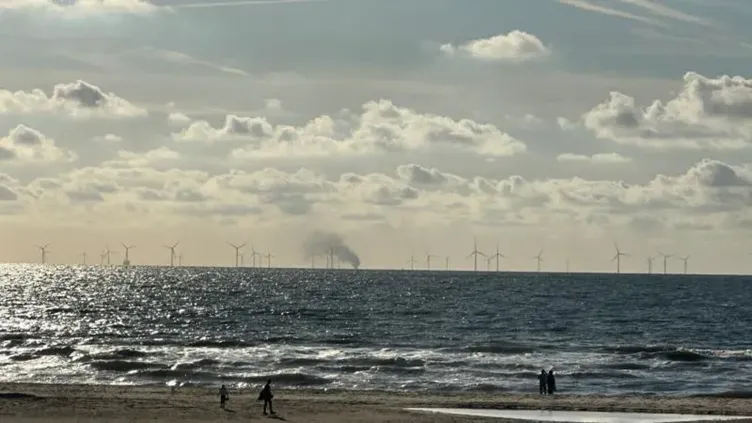
19 September 2025 – Debris from solar farm starts washing up on the beaches
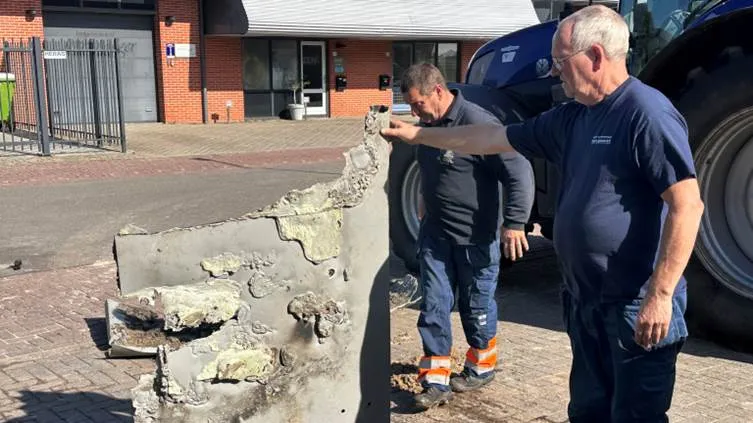
20 September 2025: Debris is found all over the beaches of Egmond, Bergen and Schoorl, varying from 20 to 30 cm sized pieces to tiny polystyrene foam fragments. Parts of Nymphaea Aurora wash up on Texel, an island further north on the Dutch coast (photo below).
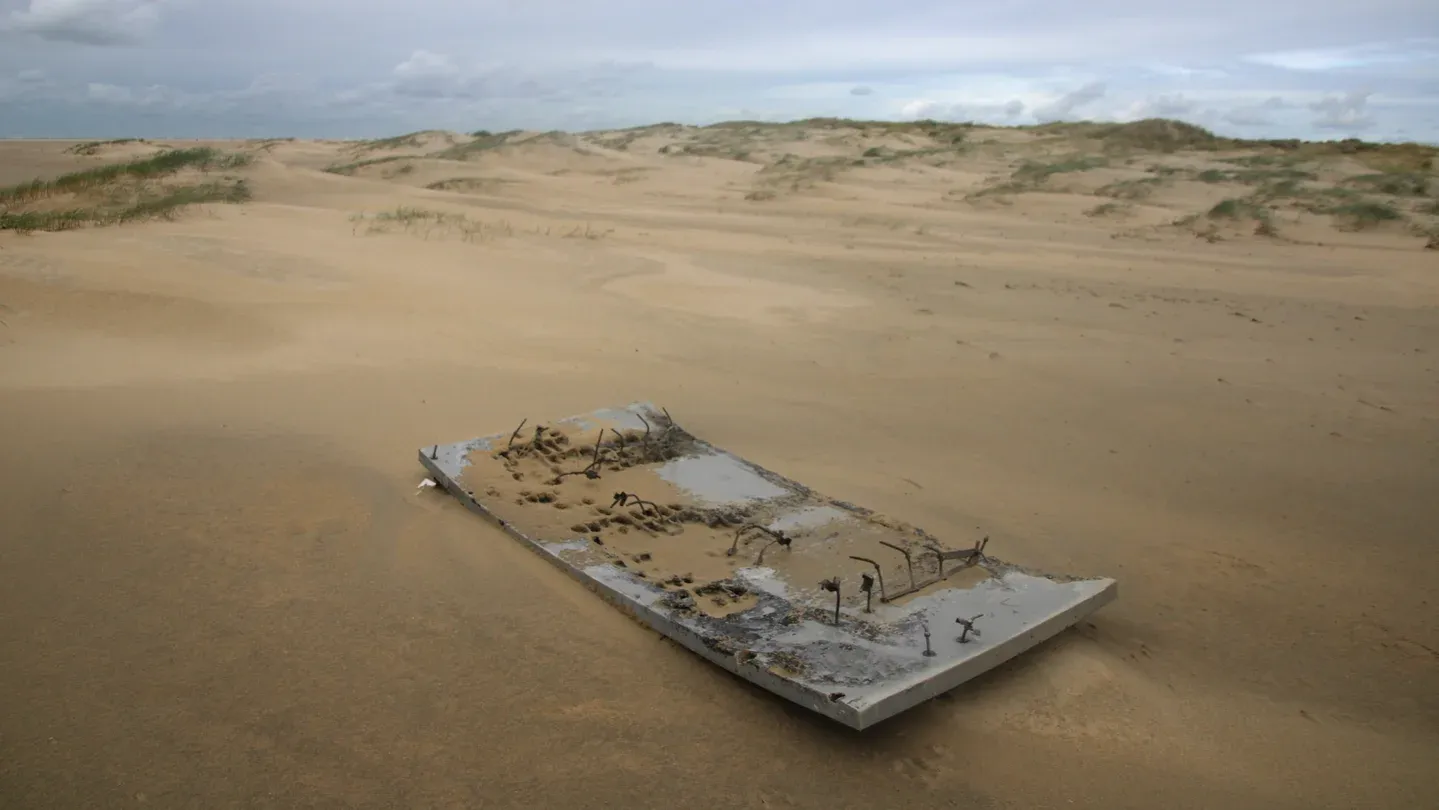
4 October 2025: Storm batters the Netherlands with wind speeds between 75 and 90 kilometers per hour hitting Noord-Holland. No news about Nymphaea Aurora.
7 November 2025: No news from the developer, Oceans of Energy, since since 27th June 2025 and no updates on LinekdIn since 21 September 2025. It has been very quiet from ‘The company that brought Offshore Solar in high waves from a (perceived) impossibility to a reality.’ It is probably no longer at sea.
You can read the full account here.
Note that the development of Nymphaea Aurora received funding from the European Union’s Horizon Europe research and innovation program under the project BAMBOO, Grant Agreement number 101136142. Funding is reported to be €7 million. “The project seeks to reduce emissions significantly and have a net-positive impact on the marine ecosystem.“
Natural seeps thought to be the cause of oiled seabirds offshore Santa Barbara
Posted in California, seeps, tagged Cheryl Anderson, oil seeps, oiled birds, Santa Barbara on November 9, 2025| Leave a Comment »
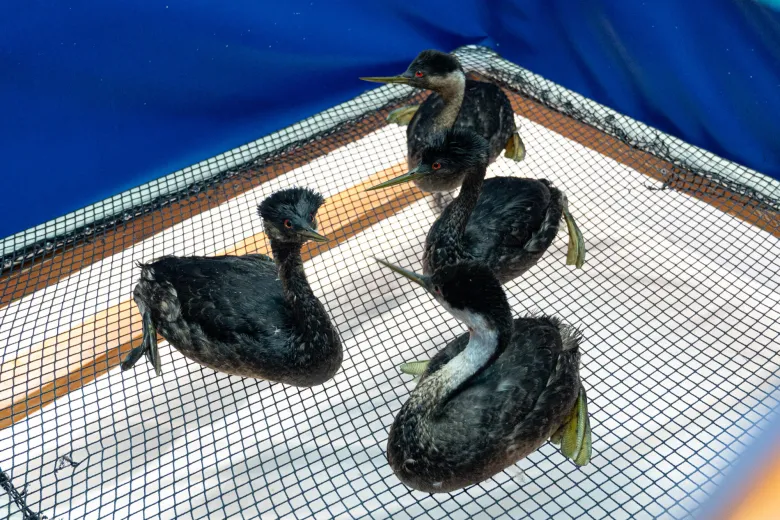
Noozhawk: “A natural oil seep off the Santa Barbara coast has coated more than 100 seabirds in oil, leaving them in a life-threatening state, according to the nonprofit International Bird Rescue.”
For more about natural seeps, see “Slick Talk About Seeps.” The attached Oil Spill Fact Sheet (2002) by Cheryl Anderson, the world’s foremost authority on oil spill occurrence rates, and a 2012 update, may also be of interest.
Will offshore operations be affected if the shutdown continues?
Posted in Gulf of Mexico, Offshore Energy - General, Regulation, tagged BSEE, flying offshore, govt shutdown, inspections, permitting, work without pay on November 7, 2025| Leave a Comment »

To date, BSEE has used carryover funds and offsetting collections from inspection, rental, and cost recovery fees to continue their priority permitting and inspection programs during the govt shutdown. However, these funds are limited.
At some point, BSEE will have to stop issuing new permits. If the shutdown continues, the next step could be to curtail drilling and production operations. Needless to say, this would not be completely unacceptable.
In the meantime, BSEE employees continue to work without pay. Flying offshore everyday to inspect operations is no picnic and can be hazardous. I lost a colleague in a helicopter crash and others have been injured. It’s shameful that these people are not being paid while members of congress are!
John Smith’s Sable litigation update
Posted in California, Offshore Energy - General, pipelines, Regulation, tagged California, John B Smith, litigation, OS&T, Sable Offshore, Santa Barbara County, Santa Ynez Unit on November 6, 2025| 1 Comment »
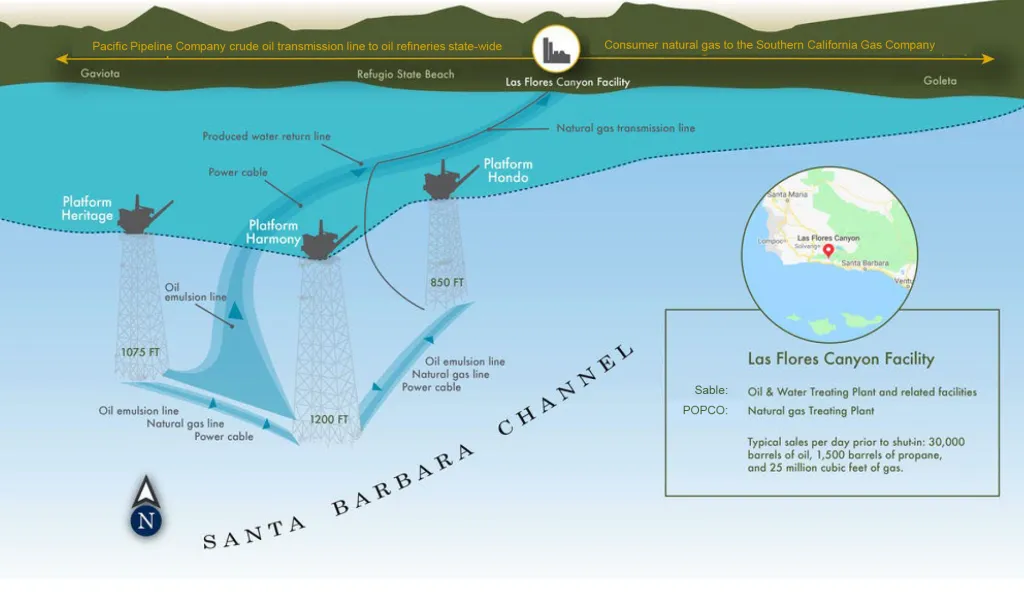
Attached is John Smith’s comprehensive summary of lawsuits related to Sable Offshore’s attempts to restart Santa Ynez Unit production.
If you are keeping score, there are 10 separate cases including a class action lawsuit filed by investors. New legal battles are sure to follow given Sable’s OS&T strategy. Per John:
“The combined legal challenges, injunctions, and restraining orders have significantly delayed Sable’s restart plans and prompted the company to pursue an Offshore Storage and Treatment Vessel (OS&T) strategy, which was utilized to process SYU production in federal waters from 1981 – 1994, and transport oil to markets using tankers.“
 Bud's Offshore Energy (BOE)