Feeds:
Posts
Comments

Archive for April, 2024

Add Dunkelflaute to the list of interesting and expressive compound German words. Die Dunkelflaute is a dark lull, a period of time in which minimal energy can be generated by the sun or wind. More specifically in German:

Die Dunkelflaute als sogenanntes Kofferwort beschreibt das gleichzeitige Auftreten von Dunkelheit und Windflaute. Diese Wetterlage entsteht typischerweise im Winter und sorgt für geringe Erträge aus Solar- und Windenergie bei gleichzeitig saisonal hohem Strombedarf. Eine Dunkelflaute kann mehrere Tage andauern. Kommen zu Dunkelheit und Windflaute noch niedrige Temperaturen hinzu, die für gewöhnlich den Strombedarf weiter ansteigen lassen, spricht man auch von “kalter Dunkelflaute.”

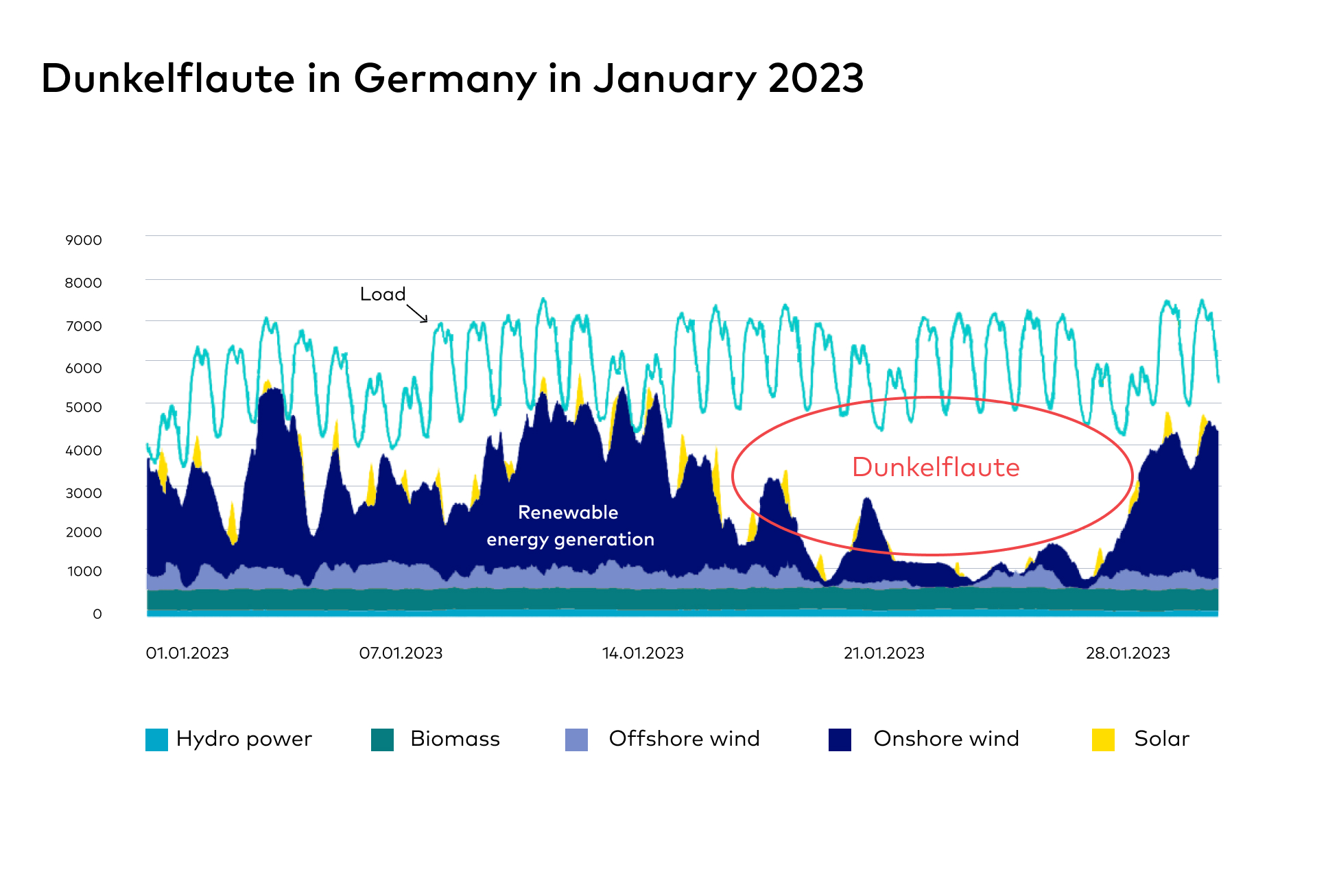
Note the prolonged Dunkelflaute (below) during which renewables provided minimal power in the middle of winter.
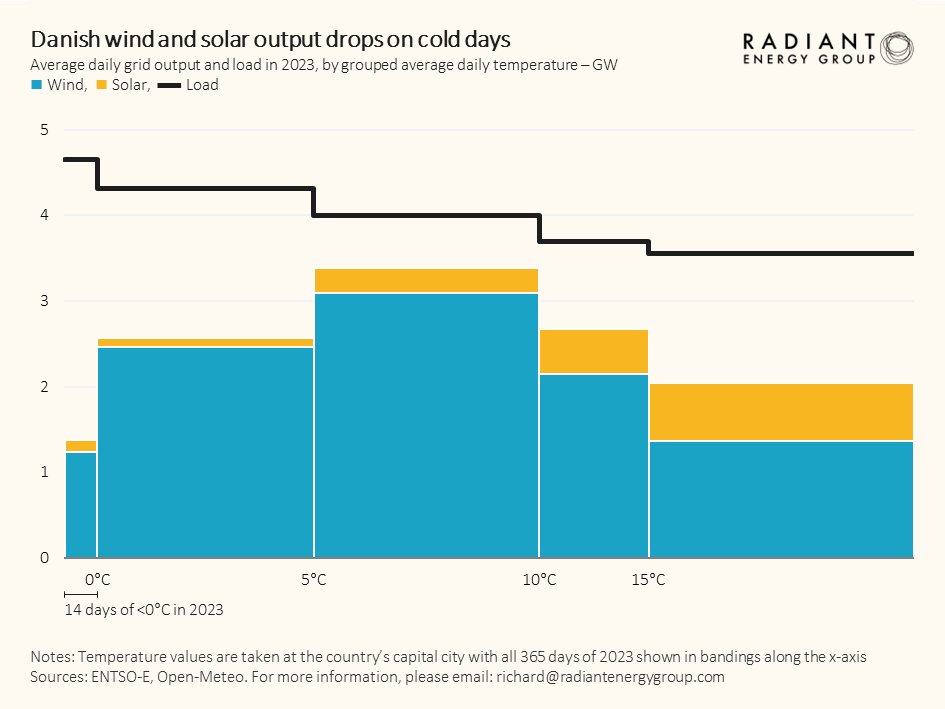
Unsurprisingly, wind and solar output are the lowest when the temperatures are the coldest. See the Danish summary for 2023 below. Note that wind output was also low when temperatures were above 15 deg. C.
Regional wind energy grids are not always an effective solution as Danish physicist Jens Christiansen, a nuclear energy advocate, has illustrated:

‘The wind always blows somewhere.’ Is that really true though? Here I’ve looked at the capacity factors of wind from five northern European countries in August The winds seem highly correlated, and there is almost a week-long period without significant wind anywhere.

Christiansen illustrates Denmark’s reliance on imported electricity:
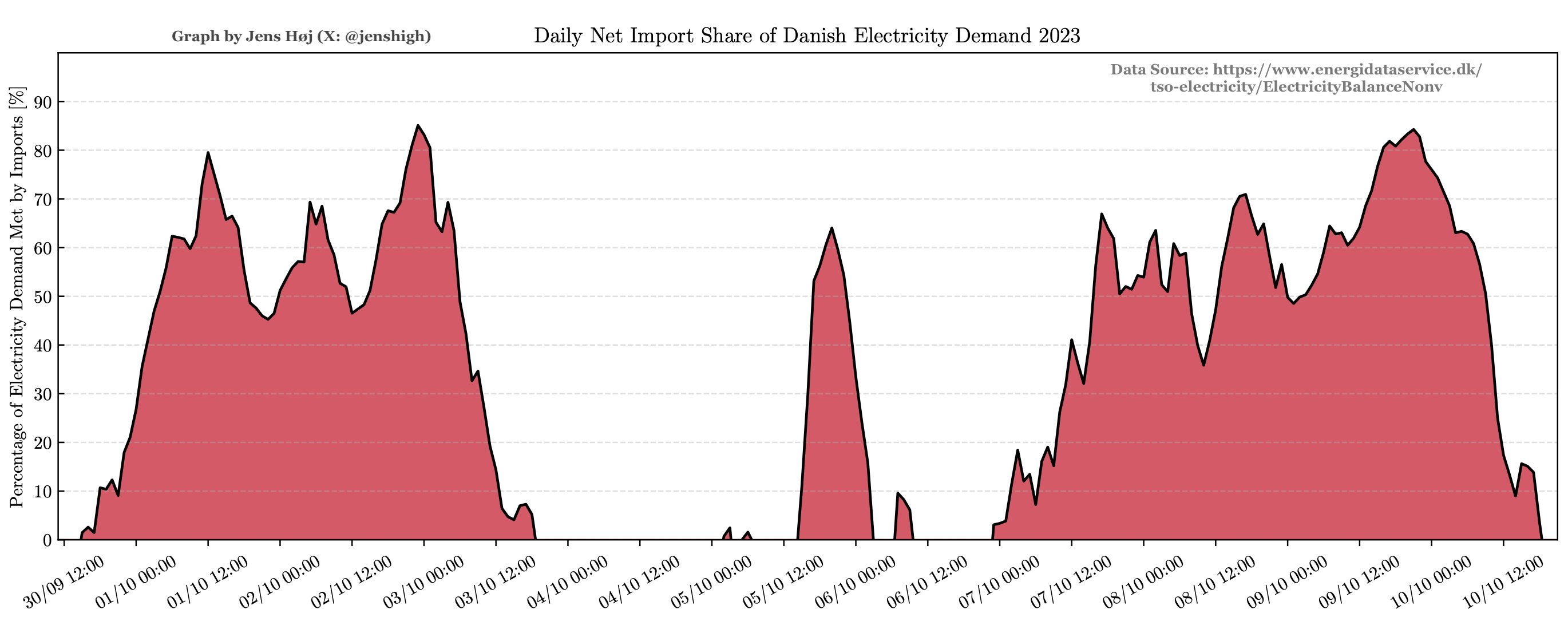
Paraphrasing Margaret Thatcher: “The problem with electricity imports is that you eventually run out of other people’s electricity.” In the U.S., California imports more electricity than any other state and typically receives between one-fifth and one-third of its electricity supply from outside of the state.

Given that massive battery storage is well beyond current capabilities and restrictions on electricity consumption and economic growth are undesirable, redundant or complementary power sources are essential for a reliable grid. Natural gas power generation is most responsive to variable demand, and is thus a good complement to variable sources like wind turbines and solar panels.
Read Full Post »

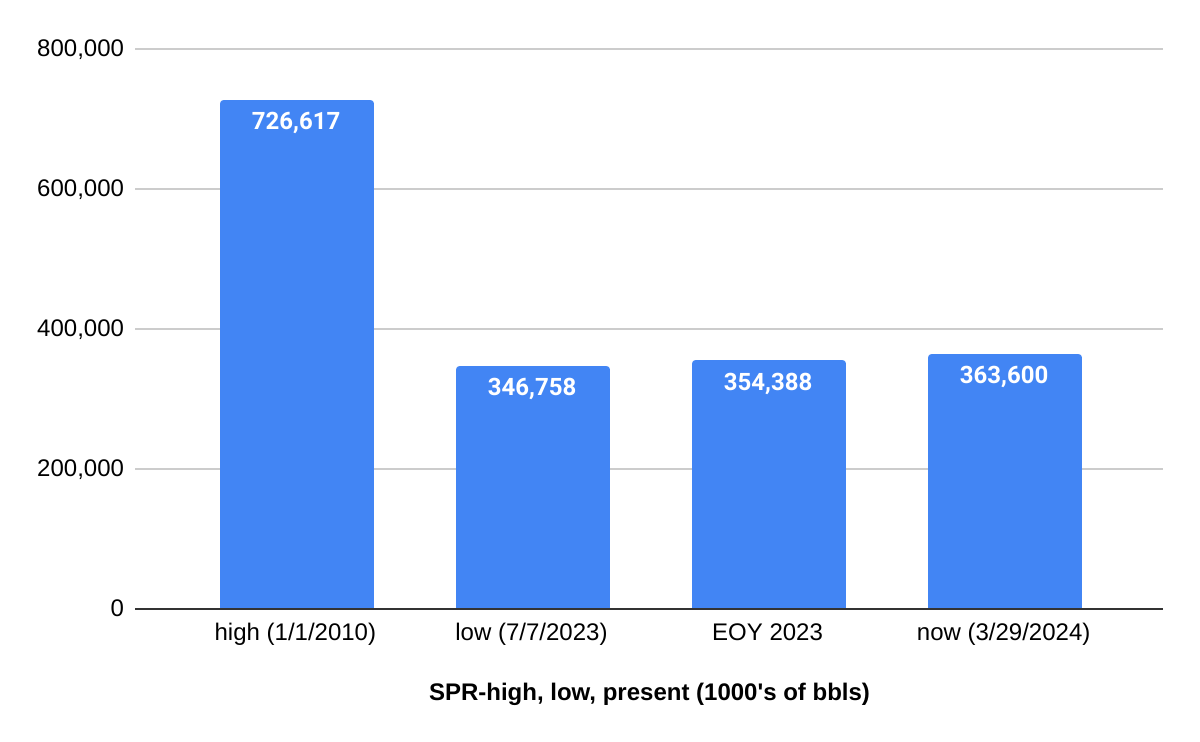
After announcing that the planned 40 million barrel SPR refill would be the equivalent of the massive 180 million barrel withdrawal, DOE has halted the refill at < half the planned amount. There is no end in sight for the SPR deficit (chart below).

Citing rising oil prices, the DOE said, “We will not award the current solicitations for the Bayou Choctaw SPR site and will solicit available capacity as market conditions allow.” Three million barrels of oil had been slated for delivery to the Bayou Choctaw SPR site in August and September.

Forbes

Read Full Post »

14 of the high bids at Gulf of Mexico Lease Sale 259 were rejected. Did those tracts receive bids at sale 261? What was the net gain or loss of revenue? See the summary bullets and table below

  • 6 of the 14 tracts received no bids whatsoever
  • 5 of the 14 tracts received higher bids that were accepted.
  • 2 tracts received substantially higher bids that were again rejected
  • 1 tract received a lower bid that was accepted
  • net bonus revenue gain to the govt from the bid rejections (pending re-offering at future sales): $1,032,877
  • net bonus revenue gain = 0.27% of the total high bids at sale 261
  • net loss in future rental and royalty payments: ????

For a net bonus revenue gain to date of only 1/4 of one per cent, 8 of the 14 sale 259 tracts with rejected high bids remain closed to exploration. The timing of any future sales is very much in doubt given the minimalist 5 year leasing plan and the associated legal challenges.

Current bid evaluation practices only make sense if regular lease sales are held on a predictable schedule, as has historically been the case.

Meanwhile, 100% of the improper CCS bids (199/199) were accepted at the last 3 oil and gas lease sales.

area and blockSale 259 rejected high bid – companySale 261 high bidbid acceptedgovt gain (loss*)
DC 6222,101,836 – Shell615,628 – Shellyes(1,486,208)
GC 173307,107 – Woodsideno bidNA(307,107)
GC 5471,783,498 – Chevronno bidNA(1,783,498)
GC 5911,291,993 – Chevronno bidNA(1,291,993)
GC 642605,505 – Anadarkono bidNA(605,505)
GC 777583,103 – bpno bidNA(583,103)
AT 51,551,130 – Anadarko5,215,628 – Shellyes3,664,498
AT 133607,107 – Woodsideno bidNA(607,107)
KC 745707,777 – Beacon2,422,222 – Beaconno(2,422,222)
KC 789707,777 – Beacon2,143,299 – Beaconno(2,143,299)
WR 794724,744 – Beacon1,487,624 – Beaconyes762,880
WR 795774,242 – Beacon5,301,107 – Woodsideyes4,526,865
WR 796774,242 – Beacon3,310,107 – Woodsideyes2,535,865
WR 750724,744 – Beacon1,498,555 – Beaconyes773,811
total govt. gain1,032,877
*Loss based on rejected sale 261 high bid. If no sale 261 bid, loss based on sale 259 high bid. These tracts could receive bids at a future sale.

Read Full Post »

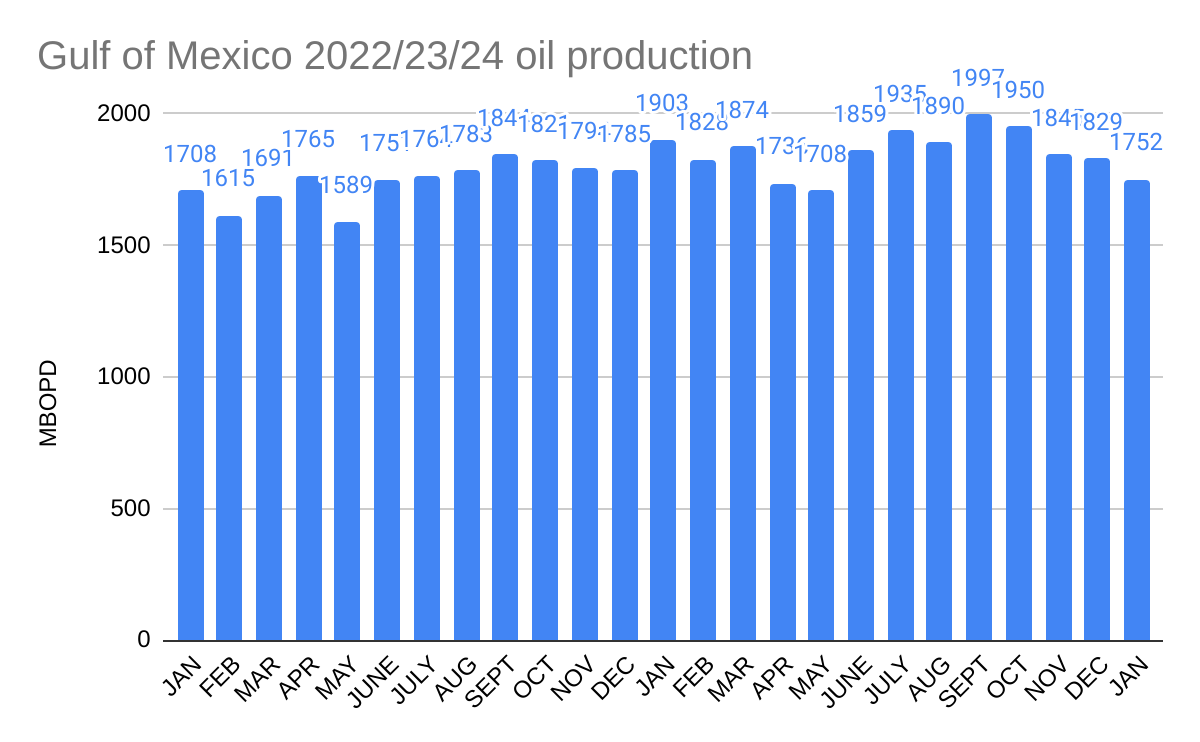
Average GoM oil production from Nov. to Jan. was more than 130,000 BOPD below the July to Oct. average. Production in Jan. 2024 was 245,000 BOPD lower than Sept. 2023 production. (See the table and chart below.)

The production shut-ins associated with the mysterious November sheen in the Main Pass area were no doubt a contributing factor to the decline, but the magnitude and duration of those shut-ins has not been disclosed. The source of the sheen has apparently still not been determined, nor has any information been provided on the status of the Federal investigation. The absence of transparency is disappointing.

production monthGoM oil production (BOPD, 1000’s)
Jan. 20241752
Dec. 20231829
Nov. 20231845
Oct. 20231950
Sept 20231997
Aug. 20231890
July 20231935
EIA data

Read Full Post »

…. and gets slammed. 😁

Read Full Post »

« Newer Posts